
Medical offices use electricity all day. Lights, computers, patient monitors, and medical machines all depend on steady power. Because of this, healthcare facilities need specialized electrical wiring systems.
A normal office usually powers computers, lights, and printers. A medical office is different. It must support sensitive equipment and protect patient safety. Even small clinics often use machines that need stable and reliable power.
In Lakeland, Florida, medical offices must follow strict electrical rules. These rules come from the National Electrical Code (NEC), NFPA healthcare standards, and the Florida Building Code. These guidelines help keep patients, staff, and equipment safe.
Medical equipment often needs more power than normal office devices. Some machines also require their own circuits. Others must keep running during a power outage. Because of this, healthcare wiring systems are carefully planned.
For example, a dental office may use:
-
Dental chairs
-
X-ray machines
-
Sterilization equipment
-
Digital imaging systems
Each of these devices uses electricity in different ways. If the wiring system is not designed correctly, circuits may overload, or equipment may stop working. Because of this, electricians plan the electrical system before construction begins. They look at several things, including:
-
Total power demand
-
Dedicated circuits for large equipment
-
Backup power systems
-
Proper grounding for safety
-
Electrical panel capacity
Good planning helps prevent future problems. It also allows the clinic to add new equipment later without major upgrades.
Healthcare technology continues to grow each year. Many clinics now use digital imaging, electronic medical records, and connected monitoring devices. These tools increase the need for reliable electrical systems.
For this reason, many medical offices in Lakeland upgrade their wiring when they renovate or expand. A strong electrical system helps equipment run smoothly and keeps the clinic operating safely.
What Is Medical Office Specialized Electrical Wiring?
Medical office specialized electrical wiring refers to electrical systems built for healthcare spaces. These systems provide power for medical equipment, lighting, computers, and safety systems. Unlike regular office wiring, healthcare electrical systems must meet stricter safety rules. They must also support sensitive medical devices.
Many healthcare facilities need this type of wiring, including:
-
Family medicine clinics
-
Dental offices
-
Urgent care centers
-
Imaging clinics
-
Physical therapy offices
-
Outpatient surgical centers
Why Healthcare Electrical Systems Are Different
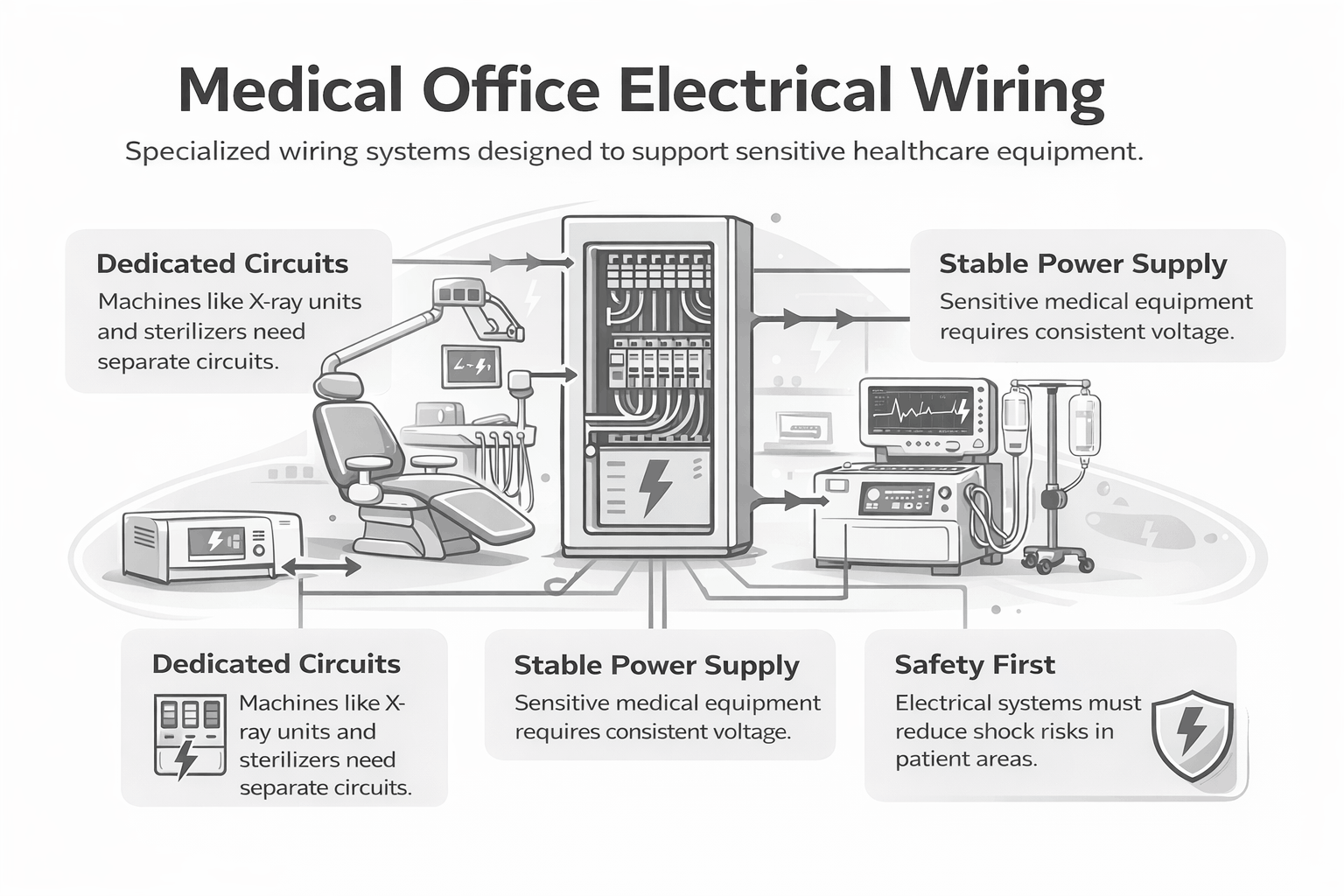
Healthcare spaces create special electrical challenges. Many patients connect directly to medical equipment during treatment. Because of this, electrical safety becomes very important.
Medical machines are also sensitive to power changes. Even small voltage drops can affect how equipment works. For this reason, healthcare electrical systems include extra protection.
Some key differences include:
-
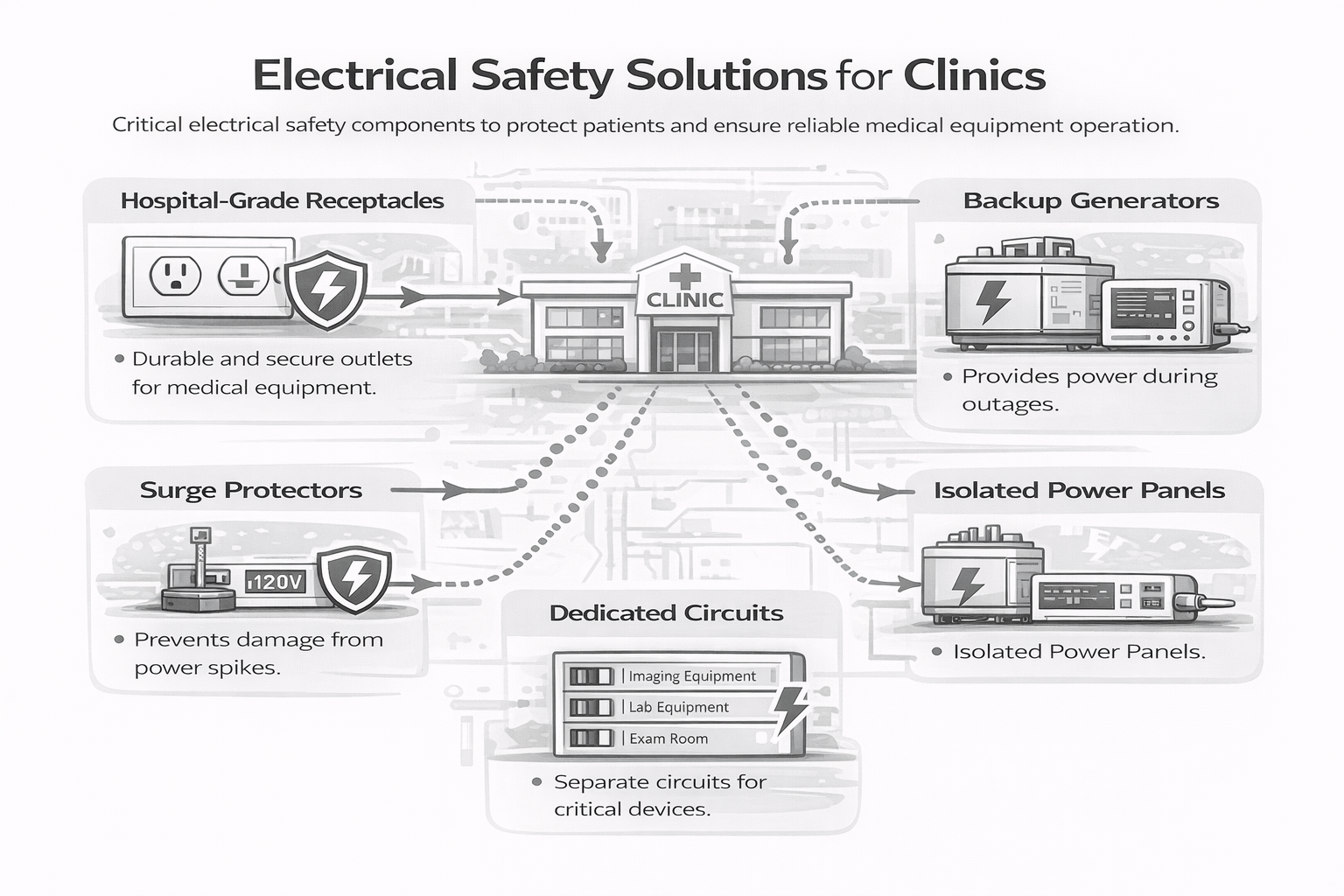
Dedicated circuits for medical equipment
-
Backup power systems for outages
-
Strong grounding systems
-
Hospital-grade electrical outlets
-
Protection from power fluctuations
These features help keep equipment working properly. They also help protect patients and medical staff from electrical hazards. The National Electrical Code, especially Article 517, explains how healthcare electrical systems should be installed.
Types of Facilities Covered Under Medical Electrical Codes
Many people think healthcare electrical rules only apply to hospitals. In reality, smaller clinics must follow them too. Any facility that treats patients may fall under healthcare electrical regulations.
Examples include:
-
Primary care clinics
-
Dental offices
-
Diagnostic laboratories
-
Outpatient procedure centers
-
Specialty medical practices
Even small clinics with exam rooms may need to follow healthcare electrical standards. Because of this, proper electrical planning is important. Wiring systems must support medical equipment while meeting strict safety rules.
Experienced electricians understand these requirements. With proper installation, medical offices can run safely and avoid costly electrical problems.
Electrical Code Requirements for Medical Offices in Florida
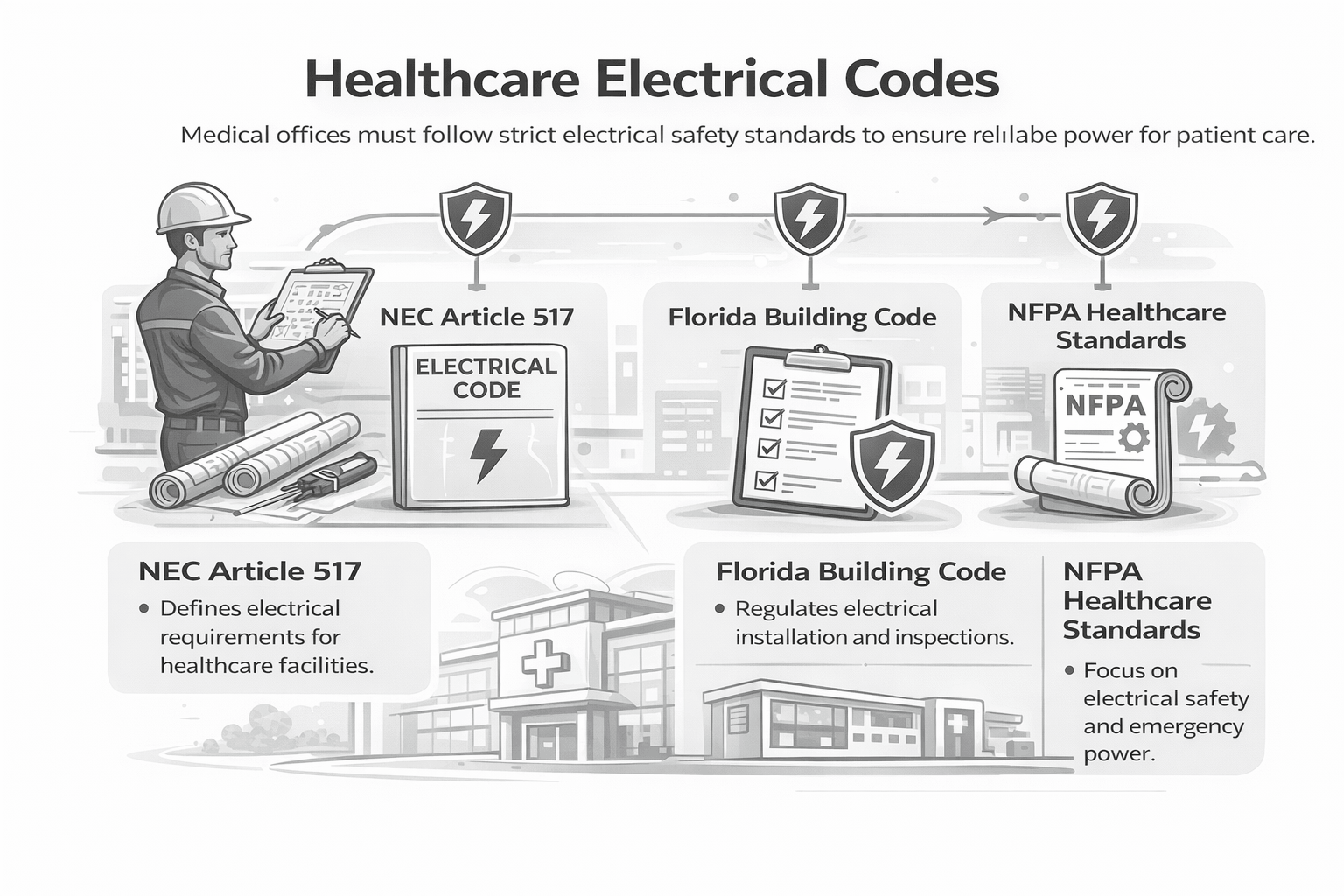
Electrical safety rules play an important role in healthcare facilities. Medical equipment must run safely and reliably at all times. For this reason, medical offices in Lakeland must follow several electrical codes. These rules explain how electrical systems should be designed and installed.
The main standards include:
-
The National Electrical Code (NEC)
-
NFPA healthcare safety standards
Together, these codes help ensure electrical systems remain safe in medical environments.
National Electrical Code (NEC) for Healthcare Facilities
The National Electrical Code, often called the NEC, sets electrical safety rules across the United States. Healthcare facilities follow special sections of this code. One of the most important is NEC Article 517, which focuses on medical spaces.
This section explains the requirements for:
-
Wiring methods
-
Grounding systems
-
Patient care areas
-
Circuits for medical equipment
-
Emergency power systems
These rules help reduce electrical risks around patients. They also help critical equipment keep running during emergencies.
Florida Building Code Electrical Requirements
Medical offices in Florida must also follow the Florida Building Code. This code works together with the NEC but includes state-specific requirements.
The Florida Building Code covers areas such as:
-
Electrical safety standards
-
Energy efficiency rules
-
Installation requirements
-
Permit and inspection procedures
Before a medical office can open, electrical systems must pass inspections. Local building officials in Lakeland review the installation to confirm it meets state and national codes.
NFPA Standards for Healthcare Electrical Systems
Healthcare electrical systems also follow guidelines from the National Fire Protection Association (NFPA). These standards focus on patient safety and emergency power.
Two important NFPA standards include:
NFPA 99 focuses on electrical safety around patients and medical equipment. NFPA 110 explains how backup generators and standby power systems should operate during power outages. Together, these standards help medical offices maintain reliable electrical systems and protect patient safety.
Key Components of Medical Office Electrical Wiring Systems
Medical offices use more than basic wiring. Their electrical systems include several parts that help equipment run safely and reliably. Each part plays a role in supporting patient care and protecting sensitive devices.
When electricians design a medical office electrical system, they focus on safety, reliability, and code compliance. The wiring must support medical equipment while also preventing electrical hazards.
Some of the most important components include:
-
Essential electrical systems
-
Isolated power systems
-
Grounding and bonding systems
-
Dedicated circuits for equipment
-
Electrical panels with proper capacity
These components work together to provide steady power and protect both patients and staff.
Essential Electrical System (EES)
Many healthcare facilities use an Essential Electrical System, often called an EES. This system provides backup power when the main electrical supply fails.
Medical equipment cannot simply shut down during an outage. Patient monitors, lighting, and certain medical devices must keep running. The essential electrical system helps make this possible.
In most healthcare facilities, the EES is divided into three main branches.
Life Safety Branch
The life safety branch powers systems that help people exit safely during emergencies. Examples include:
-
Exit lighting
-
Fire alarm systems
-
Emergency lighting in hallways
-
Alarm and communication systems
These systems must turn on quickly when power is lost.
Critical Branch
The critical branch supplies electricity to equipment used in patient care.
This may include:
-
Patient monitoring systems
-
Medical equipment used during procedures
-
Task lighting in treatment areas
-
Selected electrical outlets in patient rooms
These circuits help medical staff continue care during power interruptions.
Equipment Branch
The equipment branch powers building systems that support medical operations.
Examples include:
-
HVAC systems
-
Medical air compressors
-
Sterilization equipment
-
Mechanical pumps
Without these systems, medical facilities cannot function properly.
Isolated Power Systems
Some procedure rooms require isolated power systems. These systems reduce the risk of electrical shock in areas where patients are connected to medical equipment.
An isolated power system separates electrical circuits from the building’s grounding system. This reduces the chance of dangerous current flowing through a patient.
These systems usually include:
-
Isolation transformers
-
Line isolation monitors
-
Ungrounded electrical circuits
Line isolation monitors alert staff if the system detects a fault or possible shock hazard. Isolated power systems are common in areas where electrical safety is critical, such as procedure rooms and operating environments.
Grounding and Bonding Requirements
Grounding is one of the most important safety features in a medical electrical system. It helps direct stray electrical current safely into the ground. In healthcare spaces, grounding systems must be very reliable. Medical electrical codes often require redundant grounding paths to increase safety.
Common grounding methods include:
-
Equipment grounding conductors
-
Metallic conduit systems
-
Bonding between electrical components
-
Grounded electrical panels
Proper grounding helps prevent electrical shock and protects sensitive equipment from damage.
Bonding is also important. It connects the metal parts of electrical equipment so they remain at the same electrical potential. This reduces the risk of voltage differences that could harm patients or staff. Because of these safety needs, grounding and bonding must be carefully installed and inspected in medical offices.
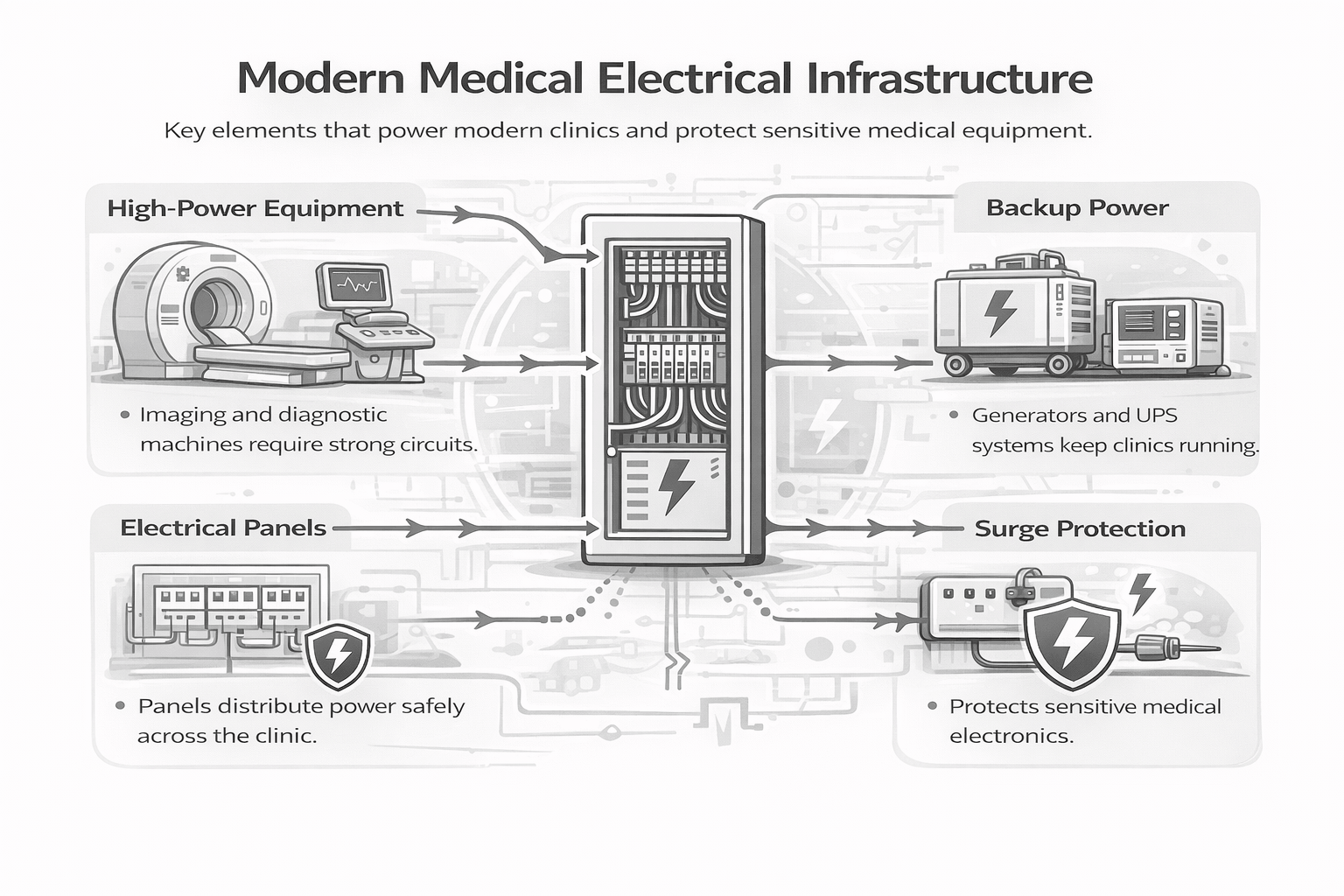
Electrical Infrastructure Needed for Modern Medical Offices
Modern medical offices use many types of electrical equipment. From imaging systems to computers, every device depends on reliable power. Because of this, clinics need a strong electrical infrastructure that can support both daily work and future growth.
Unlike a standard office, a medical clinic may use several high-power machines. These devices must operate safely and without interruption. If the electrical system is not designed correctly, equipment may malfunction, or circuits may trip.
For this reason, electricians plan the infrastructure carefully. They evaluate power demand, circuit layout, and safety requirements before installation begins.
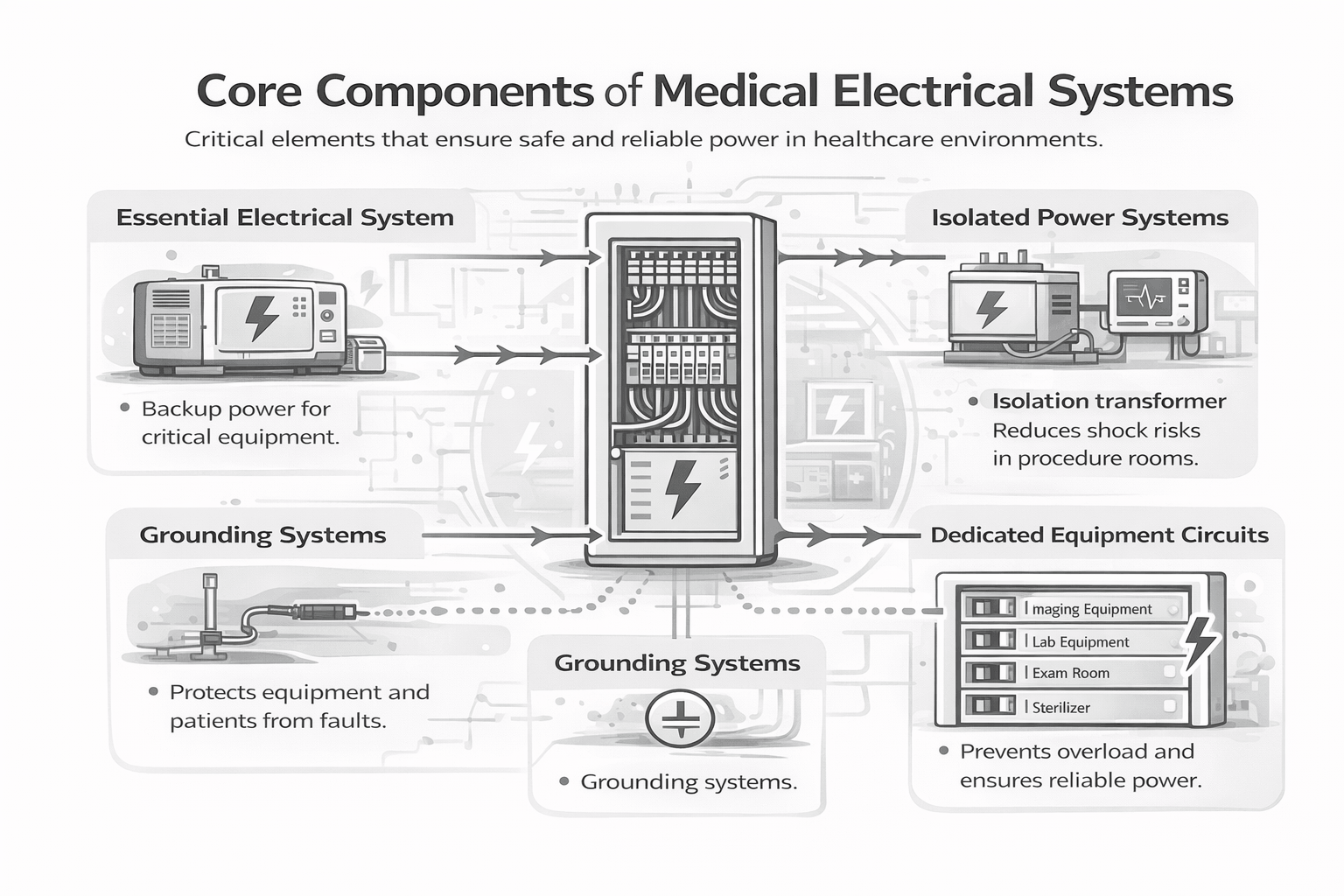
A typical medical electrical infrastructure includes:
-
Dedicated circuits for medical equipment
-
Electrical panels with enough capacity
-
Backup power systems
-
Surge protection for sensitive devices
-
Proper grounding systems
These elements help ensure the clinic runs smoothly and safely.
Medical Equipment Power Requirements
Medical equipment often requires more power than regular office devices. Some machines also need special voltage levels or dedicated circuits. For example, many diagnostic tools must operate with stable and uninterrupted power. If the voltage drops or fluctuates, the equipment may produce inaccurate results.
Common medical devices that require dedicated electrical circuits include:
-
X-ray machines
-
CT scanners
-
Ultrasound systems
-
Dental chairs
-
Sterilization units
-
Laboratory equipment
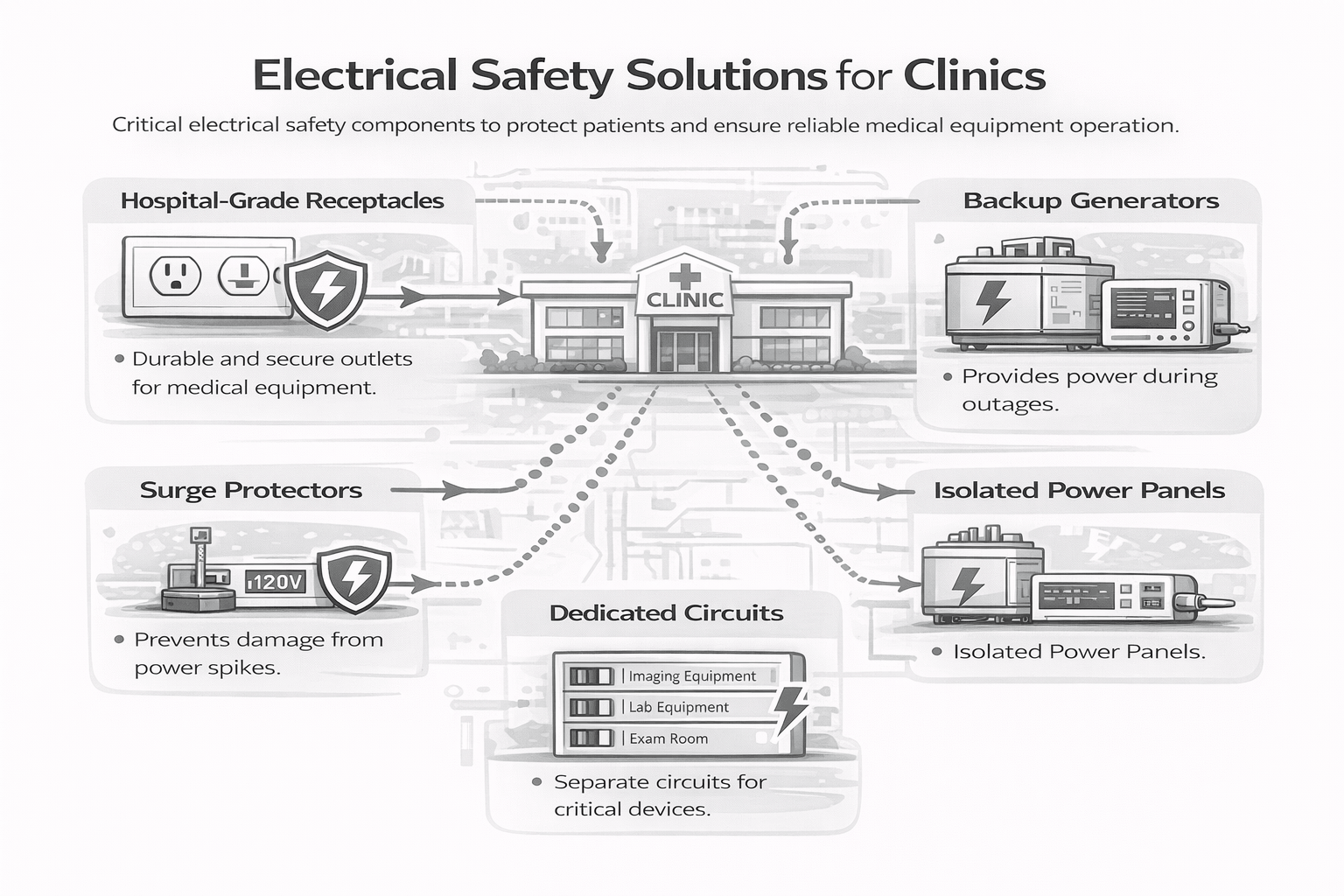
These devices may use high power or operate continuously during the day. Because of this, electricians usually install separate circuits for each major piece of equipment. Dedicated circuits help prevent overloads and keep equipment running properly.
Electrical panels must also have enough capacity to support all devices. If a clinic expands or adds new machines later, the system should still handle the extra load. Good planning allows medical offices to upgrade equipment without needing major electrical changes.
Backup Power Systems
Backup power is very important in healthcare facilities. Medical equipment often needs to continue working even during a power outage. Without backup power, a clinic could lose lighting, computers, and important medical devices. This can interrupt patient care and create safety risks.
For this reason, many medical offices install backup power systems. Common backup solutions include:
-
Emergency generators
-
Battery backup systems
Generators provide electricity during longer power outages. They usually start automatically when the main power fails. UPS systems provide short-term backup power. These systems help keep computers and sensitive equipment running until generators start.
Backup systems are especially important for equipment such as:
-
Patient monitoring devices
-
Electronic medical record systems
-
Imaging equipment
-
Laboratory machines
With reliable backup power, medical offices can continue operating during electrical interruptions.
Lighting Systems for Healthcare Facilities
Lighting is another important part of medical electrical systems. Clinics require clear, bright lighting so staff can examine patients and perform procedures safely.
Different areas of a medical office may require different types of lighting. Common healthcare lighting includes:
-
Examination room lighting
-
Procedure room lighting
-
Waiting area lighting
-
Hallway and corridor lighting
-
Emergency lighting
Examination and procedure rooms often use focused lighting that allows doctors to see clearly during patient care. Emergency lighting is also required in many healthcare spaces. These lights turn on automatically if the main power fails. They help patients and staff move safely through the building during an outage.
Proper lighting improves safety and comfort inside the clinic. It also helps medical professionals perform their work more effectively.
Patient Care Areas and Electrical Safety Requirements
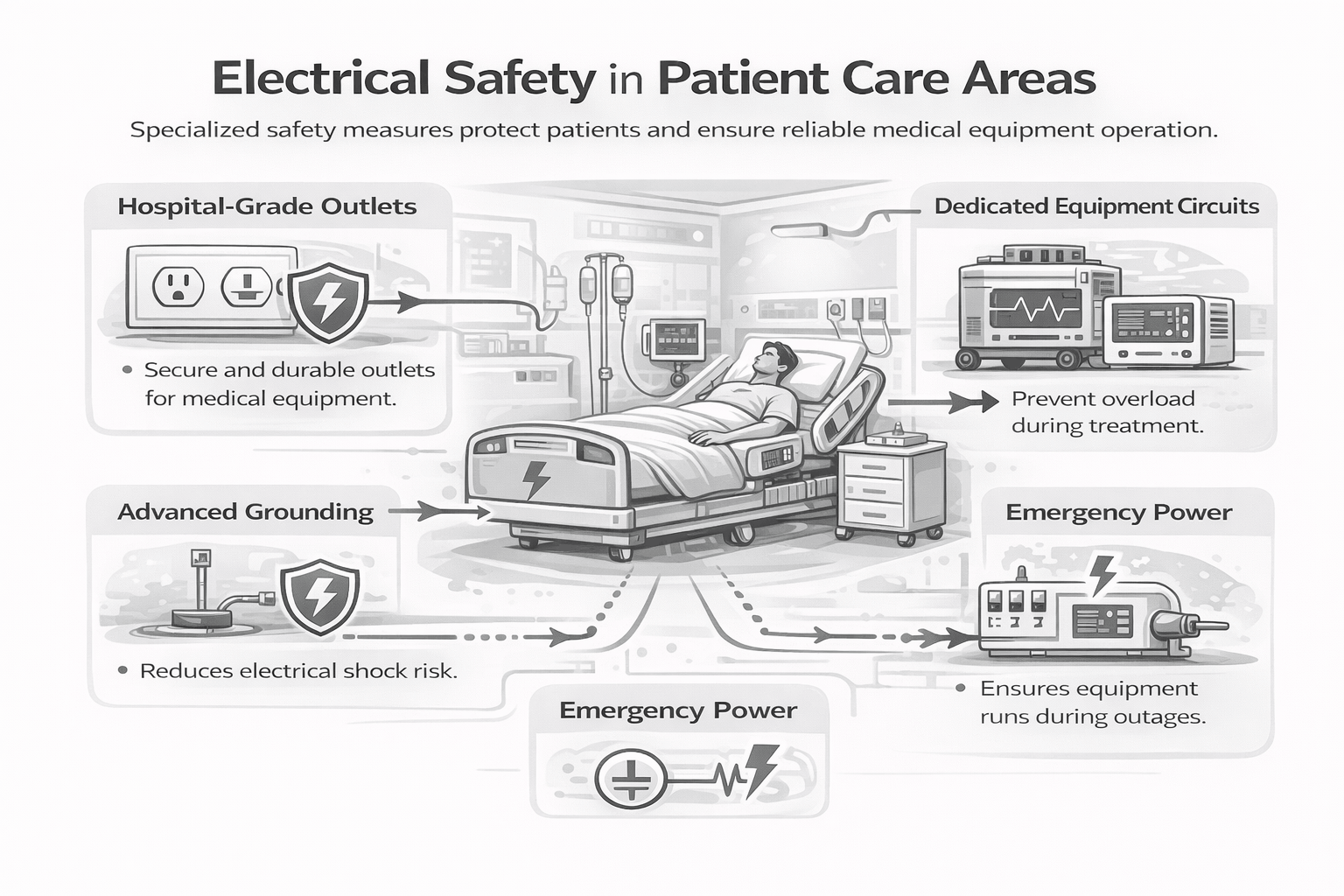
Patient care areas need extra electrical safety. In these spaces, patients may connect to medical devices during exams or procedures. Because of this, the wiring system must reduce the risk of electrical shock.
Electrical codes place strict rules on how power systems work in these areas. The goal is simple: keep patients safe and ensure medical equipment works without problems.
Electricians must follow clear guidelines when installing wiring in treatment spaces. These rules apply to outlets, circuits, grounding systems, and equipment connections.
Key safety requirements often include:
-
Hospital-grade electrical outlets
-
Dedicated circuits for medical equipment
-
Proper grounding systems
-
Reliable backup power
-
Electrical protection devices
Together, these features create a safer environment for both patients and healthcare staff.
Types of Patient Care Spaces
Electrical codes divide medical spaces into different categories. Each category has different safety requirements. Understanding these categories helps electricians design the right wiring system for each room.
Common patient care areas include:
General care areas
These spaces are used for routine medical exams and treatments. Examples include:
-
Examination rooms
-
Patient consultation rooms
-
Physical therapy areas
Electrical systems in these spaces must still follow healthcare safety rules, but the equipment risk is usually lower.
Critical care areas
Critical care spaces support patients who rely heavily on medical equipment.
Examples include:
-
Intensive care rooms
-
Emergency treatment rooms
-
Procedure rooms
These areas often require stronger electrical protection and reliable backup power.
Procedure rooms
Procedure rooms are used for minor medical procedures. Because patients may connect directly to medical equipment, electrical safety becomes even more important. In these rooms, electricians may install additional grounding systems or isolated power systems to reduce shock risk.
Receptacle Requirements in Patient Areas
Electrical outlets in medical spaces must meet higher safety standards than normal outlets.
Healthcare facilities often use hospital-grade receptacles. These outlets are designed to hold plugs securely and reduce the chance of accidental disconnection.
Other outlet safety features may include:
-
Ground-fault protection
-
Tamper-resistant design
-
Durable construction for medical equipment
Many treatment rooms also require several outlets. Medical staff often use multiple devices at the same time, such as monitors, computers, and diagnostic tools. Because of this, proper outlet placement is important during electrical planning.
Medical Equipment Safety Standards
Medical equipment must operate safely around patients. Electrical systems play a large role in making this possible. Sensitive devices often require:
-
Stable voltage levels
-
Reliable grounding
-
Dedicated circuits
-
Protection from electrical noise
Electrical noise refers to small disturbances in power lines that can affect electronic equipment. In medical settings, these disturbances can reduce device accuracy. For this reason, electricians design wiring systems that limit interference and protect equipment performance.
Regular inspection and maintenance are also important. Over time, wiring systems and outlets can wear out. Routine checks help ensure the electrical system continues to meet safety standards. When electrical systems follow healthcare codes, medical staff can focus on patient care without worrying about power problems.
Low-Voltage Systems in Medical Offices
Modern medical offices rely on more than electrical power. Many daily operations depend on low-voltage systems. These systems support communication, data transfer, and security throughout the clinic.
Low-voltage wiring carries less electrical current than standard power wiring. Even though it uses less power, it plays a major role in how a medical office operates.
These systems connect medical equipment, computers, and communication tools. They also help doctors and staff access patient information quickly. Common low-voltage systems found in medical offices include:
-
Network and data cabling
-
Nurse call systems
-
Intercom and paging systems
-
Security cameras
-
Access control systems
-
Fire alarm systems
Together, these systems improve communication, safety, and workflow inside the clinic.
Network and Data Cabling for Medical Devices
Healthcare facilities rely heavily on data networks. Many medical devices connect directly to a computer system or internal network. This allows staff to store and access patient records, imaging results, and test data quickly.
Common devices connected to clinic networks include:
-
Imaging machines
-
Patient monitoring systems
-
Electronic medical record systems
-
Diagnostic equipment
-
Laboratory machines
These devices use structured network cabling, often called Ethernet or data cabling. Reliable network wiring is important because many medical systems share information across different rooms or departments. If the network fails, staff may lose access to patient data or imaging results.
Because of this, electricians and network specialists install organized cabling systems that support fast and reliable data transfer.
Nurse Call and Communication Systems
Communication systems help medical staff respond quickly to patient needs. Many healthcare facilities use nurse call systems. These systems allow patients to alert medical staff when they need help.
In a clinic environment, communication systems may also include:
-
Staff paging systems
-
Intercom systems
-
Internal communication devices
-
Emergency alert systems
These tools improve response times and help staff communicate more efficiently during busy hours. In larger clinics or outpatient centers, communication systems can connect multiple departments, so staff members stay informed throughout the facility.
Security and Access Control Systems
Security systems are another important part of low-voltage wiring in medical offices. Healthcare facilities must protect patient records, expensive equipment, and restricted areas.
Common security systems include:
-
Video surveillance cameras
-
Access control systems
-
Alarm systems
-
Electronic door locks
Access control systems allow clinics to limit who enters certain areas. For example, medication storage rooms or equipment rooms may only allow authorized staff.
Security cameras also help monitor entrances, hallways, and waiting areas. Because these systems operate continuously, reliable wiring and proper installation are essential. A well-designed low-voltage system helps medical offices maintain both safety and privacy.
Electrical Design Considerations for Medical Clinics
Electrical design plays a big role in how a medical office operates. A good design supports medical equipment, protects patients, and keeps the clinic running smoothly.
Unlike a standard office, a medical clinic may use many devices at the same time. Imaging machines, computers, lighting systems, and medical tools all draw power from the electrical system.
Because of this, electricians and engineers plan the electrical layout carefully before installation begins. The goal is to create a system that is safe, reliable, and ready for future growth.
Important design factors usually include:
-
Total electrical load of the building
-
Placement of electrical panels
-
Dedicated circuits for medical equipment
-
Grounding and safety systems
-
Space for future expansion
With proper planning, clinics can avoid electrical problems and operate more efficiently.
Load Calculations for Medical Equipment
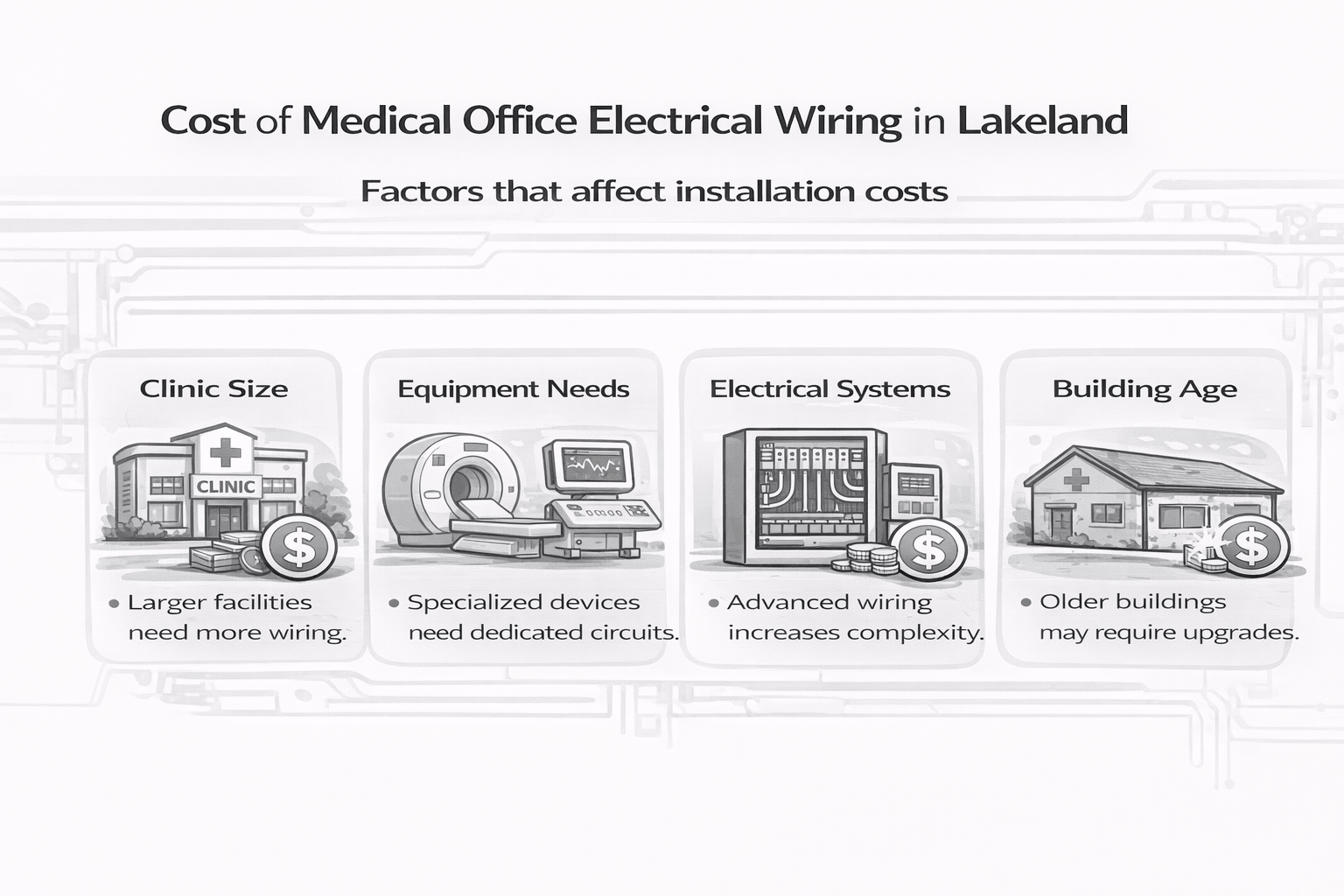
Before installing wiring, electricians must calculate the electrical load of the facility. Load refers to the total amount of electricity the building will use.
Medical equipment can use a large amount of power. Because of this, accurate load calculations are very important. Electricians often review equipment specifications to determine power needs. They also consider how many devices will run at the same time.
Load calculations usually include power demand for:
-
Diagnostic equipment
-
Computers and network systems
-
Lighting systems
-
HVAC equipment
-
Sterilization devices
These calculations help electricians determine the size of electrical panels, wiring, and circuit breakers. If the system is too small, circuits may trip often. If it is too large, the installation may become unnecessarily expensive. A balanced design helps the clinic run safely and efficiently.
Electrical Panel Placement and Capacity
Electrical panels distribute power throughout the medical office. These panels must be easy to access and large enough to support the building’s electrical needs.
Proper panel placement allows electricians to perform maintenance safely. It also makes future upgrades easier. Designers often consider several factors when placing panels, such as:
-
Distance from patient care areas
-
Accessibility for maintenance
-
Space for additional circuits
-
Protection from moisture or damage
In many medical offices, separate panels may be installed for different areas of the building. For example, one panel may supply general lighting and office equipment. Another may support medical devices or specialized equipment. This type of organization helps reduce overloads and makes troubleshooting easier if electrical problems occur.
Future Expansion Planning
Medical technology continues to change. Clinics often add new equipment as they grow or upgrade services. Because of this, electrical systems should allow room for future expansion. Planning for expansion may include:
-
Installing larger electrical panels
-
Leaving extra space for new circuits
-
Designing flexible wiring layouts
-
Planning for additional equipment loads
This approach saves time and money later. Without expansion planning, clinics may need major electrical upgrades when they add new equipment. By planning ahead, medical offices can continue growing without disrupting daily operations.
Proper electrical design supports both current needs and future improvements. It also helps ensure the clinic remains safe, efficient, and ready for new medical technology.
Electrical Installation Process for Medical Offices
Installing electrical systems in a medical office requires careful planning. The work must follow strict safety codes and support many types of medical equipment.
Unlike a typical office installation, medical electrical systems require detailed design and inspection. Electricians must ensure the wiring supports patient care areas, diagnostic equipment, and backup power systems. The installation process usually follows several clear steps. Each step helps ensure the system is safe and reliable.
The main stages include:
-
Planning and electrical design
-
Permitting and inspections
-
Wiring installation and equipment connection
-
System testing and final approval
Following this process helps medical offices meet safety standards and avoid electrical problems later.
Planning and Engineering Design
Every medical electrical project begins with planning. Electricians and engineers review the building layout and determine the power requirements for the facility.
During this stage, they examine:
-
The type of medical equipment used
-
Total electrical load for the building
-
Placement of electrical panels
-
Backup power requirements
-
Wiring routes and circuit layout
Designers must also ensure the system meets healthcare electrical codes. These rules guide how circuits, outlets, and grounding systems are installed in medical environments. Careful planning helps prevent overloads and ensures the system supports all equipment safely.
Permitting and Inspections
Medical electrical installations must pass several inspections before the facility can operate. Local authorities in Lakeland review electrical plans and issue permits before work begins. These permits confirm the project follows building and electrical codes.
During installation, inspectors may review different stages of the work. Typical inspections include:
-
Electrical permit approval
-
Rough wiring inspection
-
Equipment connection inspection
-
Final electrical inspection
Each inspection helps verify the system is installed correctly and safely.
Installation and Testing
Once the design and permits are approved, electricians begin installing the electrical system. This stage includes several important tasks.
Electricians may install:
-
Electrical panels
-
Circuit wiring
-
Hospital-grade outlets
-
Grounding systems
-
Backup power connections
After installation, the system must be tested. Testing ensures that circuits work correctly and that equipment receives stable power.
Technicians often check:
-
Voltage levels
-
Circuit performance
-
Backup power activation
-
Grounding systems
Once testing is complete and inspections are approved, the electrical system is ready for use. A properly installed system helps medical offices operate safely and reliably for many years.
Benefits of Hiring a Licensed Medical Electrical Contractor in Lakeland
Medical electrical systems are complex. They must support sensitive equipment while meeting strict healthcare safety rules. Because of this, hiring a licensed electrical contractor with medical facility experience is very important.
A qualified contractor understands the electrical needs of healthcare environments. They also know how to follow the codes that apply to medical offices in Florida.
Working with an experienced electrician helps clinics avoid costly mistakes and safety risks.
Some key benefits include:
-
Proper installation that follows healthcare electrical codes
-
Safe wiring for sensitive medical equipment
-
Reliable power systems for patient care areas
-
Reduced risk of electrical hazards
-
Long-term system reliability
Choosing the right contractor can make a major difference in the safety and performance of a medical office electrical system.
Compliance With Healthcare Electrical Codes
Medical offices must follow several electrical standards. These rules protect patients and ensure equipment works safely. Licensed electricians understand these requirements and know how to apply them during installation.
Important code areas include:
-
Patient care area wiring requirements
-
Hospital-grade outlet installation
-
Proper grounding systems
-
Dedicated circuits for medical equipment
-
Emergency and backup power systems
Without proper code compliance, a clinic may fail inspections or face safety issues later. Experienced contractors ensure the electrical system meets all local and national requirements.
Safety and Liability Protection
Electrical safety is especially important in healthcare environments. Patients may be connected to medical devices during treatment, which increases the risk of electrical hazards. Professional electricians install systems designed to reduce these risks.
Proper installation helps prevent:
-
Electrical shocks
-
Equipment malfunctions
-
Circuit overloads
-
Fire hazards
Licensed contractors also carry insurance and follow professional safety standards. This helps protect both the clinic and the contractor during electrical work.
Long-Term System Reliability
Medical offices depend on electrical systems every day. If the power system fails, equipment may stop working and patient care may be interrupted. A professional installation helps ensure the electrical system remains reliable for many years.
Experienced electricians design systems that:
-
Handle high equipment loads
-
Provide stable power for sensitive devices
-
Allow future expansion
-
Reduce maintenance problems
With proper installation and maintenance, medical offices can operate smoothly without frequent electrical issues. Reliable electrical infrastructure helps clinics focus on patient care rather than technical problems.
Leave a Reply