
Annual Standby Generator Service Plan in Lakeland, Florida

Annual Standby Generator Service Plan in Lakeland, Florida

Power outages are common in Central Florida, especially during storm season. Strong winds, heavy rain, and lightning can damage power lines and cause extended outages. When the grid goes down, many homeowners in Lakeland rely on standby generators to keep their homes running.

A standby generator starts automatically when utility power fails. It keeps important systems running, including lighting, refrigerators, air conditioning, and medical equipment. However, a generator can only do its job if it is properly maintained.

Like any engine-driven equipment, standby generators require routine service. Oil breaks down over time, batteries weaken, and filters collect dirt. Without regular maintenance, these small issues can grow into major problems.

That is why many homeowners choose an annual standby generator service plan. A professional maintenance plan helps keep the generator in good condition year after year. It also reduces the risk of unexpected breakdowns when the power goes out.

In a place like Lakeland, where storms can arrive quickly, having a reliable generator is essential. Regular service ensures the system will start when it is needed most.

Why Standby Generator Maintenance Is Essential for Lakeland Homes

Standby generators are designed to provide reliable backup power. However, they are still mechanical systems with moving parts and electrical components. Over time, these parts wear down or become dirty.

Routine maintenance helps prevent small issues from turning into major failures. For homeowners in Lakeland, regular generator service is especially important because of the region’s weather conditions and frequent storms.

Frequent Storms and Power Outages in Central Florida

Central Florida experiences severe weather throughout the year. Hurricanes and tropical storms can cause long power outages. Even smaller storms can damage power lines or overload the electrical grid.

Lakeland residents often experience outages caused by:

  • Lightning strikes

  • Tropical storms and hurricanes

  • Strong wind events

  • Heavy rain and flooding

  • Summer heat that strains the power grid

During these situations, a standby generator becomes a home’s primary power source. If the generator fails to start, the home may be left without electricity for hours or even days.

Routine generator maintenance helps ensure the system is ready before storm season arrives.

How Maintenance Prevents Generator Failure

Many generator problems develop slowly over time. Small issues may go unnoticed until the generator attempts to start during an outage.

Common problems caused by poor maintenance include:

  • Weak or dead batteries

  • Old or contaminated engine oil

  • Clogged air filters

  • Dirty spark plugs

  • Fuel system problems

A professional service technician checks these components during routine maintenance. They can identify worn parts early and replace them before they cause a failure. This preventive approach greatly improves the reliability of the generator.
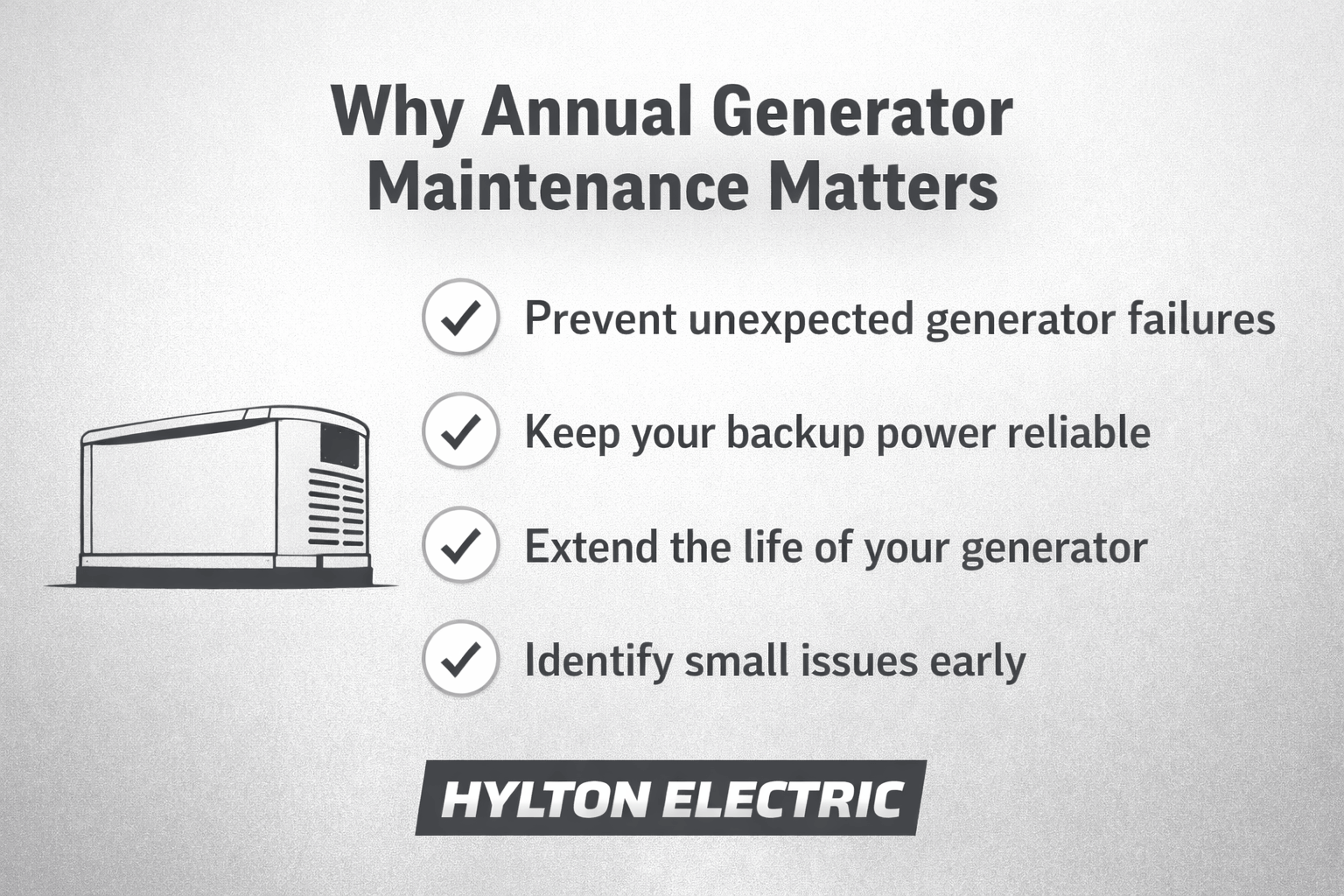
Minimalist grayscale graphic showing a standby generator with the title “Why Annual Generator Maintenance Matters” and a checklist of benefits, branded with Hylton Electric.

Extending the Lifespan of Your Generator

Standby generators represent a significant investment for homeowners. Most systems are expected to last many years, but their lifespan depends heavily on maintenance.

A well-maintained standby generator can often last 15 to 20 years. In contrast, a neglected unit may experience serious mechanical problems much sooner.

Regular service helps protect key components such as:

  • The engine

  • The alternator

  • Electrical control systems

  • Fuel delivery components

What Is an Annual Standby Generator Service Plan?

An annual standby generator service plan is a scheduled maintenance program provided by a professional electrician or generator technician. The plan ensures that the generator receives routine inspection, testing, and servicing each year.

Instead of waiting for problems to appear, the service plan focuses on preventive care. Technicians check important components, replace worn parts, and verify that the generator operates correctly.

For many homeowners, this type of plan offers peace of mind. They know their backup power system is being monitored by professionals who understand how the equipment works.

Purpose of a Generator Maintenance Plan

The primary goal of a generator maintenance plan is to keep the system reliable. Backup generators are rarely used until an outage occurs. Because of this, problems can develop without being noticed.

A service plan helps prevent these issues through regular inspections and scheduled service.

Key purposes of a maintenance plan include:

  • Preventing unexpected generator failure

  • Identifying small problems before they worsen

  • Maintaining proper engine performance

  • Ensuring the generator starts during an outage

  • Protecting the homeowner’s investment

Regular service also helps maintain warranty coverage for many generator manufacturers.

How Annual Service Plans Work

Most generator service plans are simple and straightforward. A technician schedules a maintenance visit once a year, usually before the storm season begins. During the service appointment, the technician performs a full inspection and maintenance check.

Typical service plan visits may include:

  • Engine oil and filter replacement

  • Battery testing

  • Inspection of electrical connections

  • Fuel system checks

  • Air filter inspection

  • Operational testing of the generator

Some companies also offer additional benefits as part of their service plans. These may include priority scheduling, service reminders, or discounted repairs.

Who Needs a Generator Service Plan?

Any homeowner with a standby generator can benefit from a maintenance plan. Even new generators require routine service to remain in good condition.

Service plans are especially helpful for:

  • Homes that experience frequent power outages

  • Families that rely on medical equipment

  • Houses with large electrical loads

  • Homeowners who travel frequently

  • Properties located in storm-prone areas

For many Lakeland homeowners, a generator is more than a convenience. It protects comfort, safety, and essential household systems. Regular maintenance ensures that protection remains dependable year after year.

What Is Included in an Annual Generator Maintenance Service?

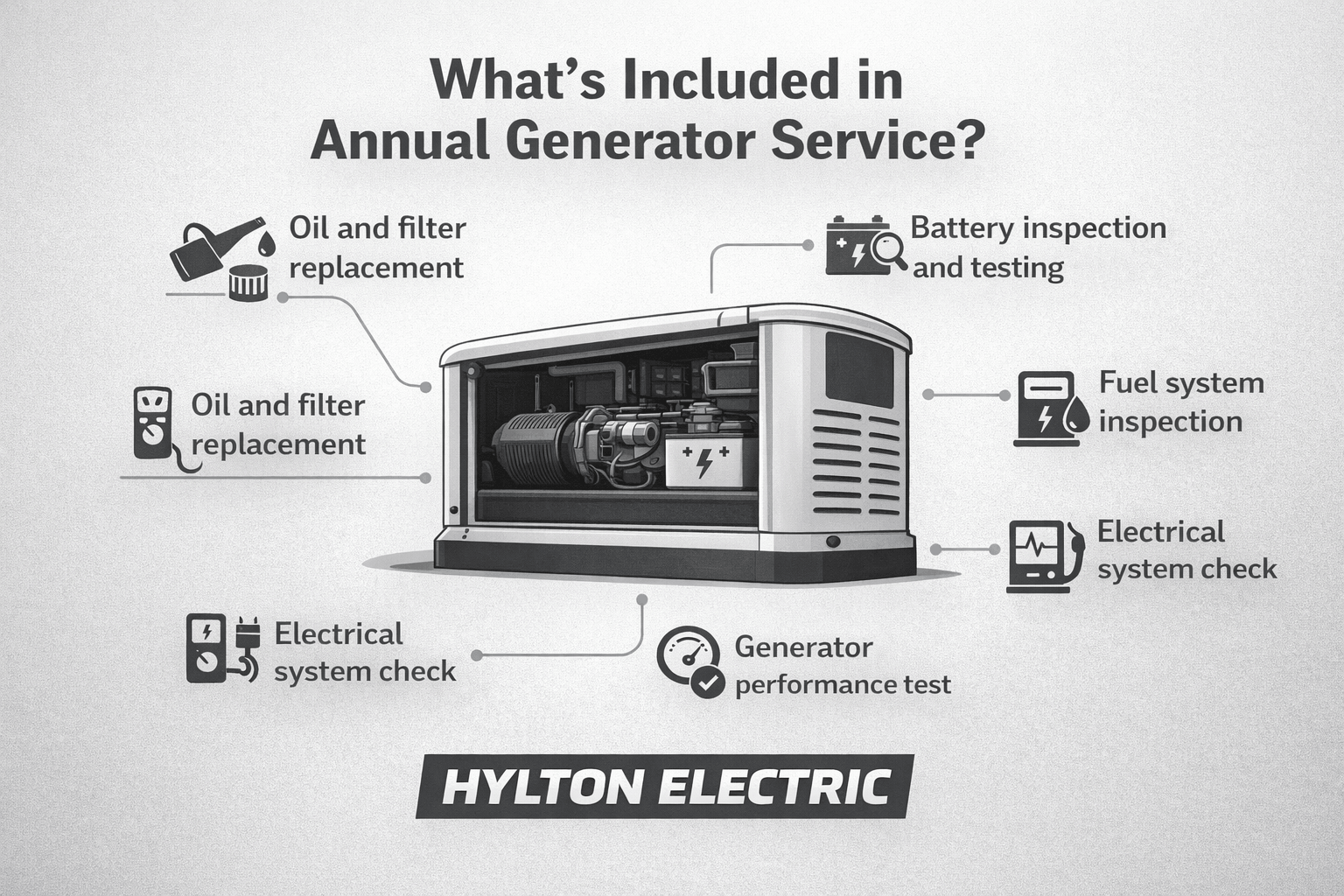
A standby generator contains many mechanical and electrical components. To keep it operating properly, technicians must inspect, clean, and test these parts on a regular basis. An annual maintenance service focuses on preventive care. The goal is to detect wear early and keep the system ready for the next power outage.

During a professional service visit, the technician performs a full inspection of the generator. They check engine performance, electrical output, and overall system condition. If they find worn parts or early signs of damage, they can recommend repairs before the problem becomes serious.
Minimalist grayscale graphic showing a standby generator with the title “Why Annual Generator Maintenance Matters” and a checklist of benefits, branded with Hylton Electric.

Engine Oil and Filter Replacement

The generator engine relies on clean oil to operate smoothly. Over time, engine oil breaks down and collects contaminants. If the oil becomes too dirty, it can cause internal engine wear.

During routine service, the technician typically:

  • Drains the old engine oil

  • Installs fresh oil that meets manufacturer specifications

  • Replaces the oil filter

Fresh oil helps the engine run smoothly and reduces friction between moving parts. This simple step plays a major role in extending the life of the generator.

Battery Inspection and Testing

The battery is one of the most important parts of a standby generator. When utility power fails, the battery provides the initial power needed to start the engine.

Unfortunately, generator batteries often fail without warning. Many generators that fail to start during outages do so because of a weak or dead battery.

During maintenance, technicians usually:

  • Test battery voltage and charging levels

  • Inspect battery cables and terminals

  • Clean corrosion from connections

  • Check the battery charger

If the battery shows signs of weakness, the technician may recommend replacement. This prevents unexpected starting failures.

Fuel System Inspection

The fuel system supplies the engine with the energy it needs to generate electricity. Any problem in this system can stop the generator from operating.

Technicians inspect several fuel-related components during maintenance, including:

  • Fuel lines

  • Fuel pressure levels

  • Fuel filters

  • Gas connections and fittings

For natural gas and propane generators, the technician ensures the fuel supply is stable and free from leaks. These checks help ensure the generator can run continuously during an extended outage.

Spark Plug and Ignition System Inspection

Spark plugs ignite the fuel mixture inside the engine. If spark plugs become worn or dirty, the generator may struggle to start or run inefficiently.

During annual maintenance, technicians often:

  • Inspect spark plugs for wear

  • Replace plugs if necessary

  • Check ignition components

  • Verify proper engine ignition timing

Healthy ignition components help the generator start quickly and run smoothly.

Electrical System and Control Panel Check

Standby generators rely on sophisticated control systems. These electronic components monitor the power supply and automatically start the generator during outages.

Technicians inspect several electrical elements, such as:

  • Wiring connections

  • Control board functions

  • Voltage output

  • System diagnostics and alerts

They also check the automatic transfer switch, which transfers power from the utility grid to the generator. This component must function correctly for the generator to power the home safely.

Air Filter Replacement and Cleaning

Engines require clean airflow to operate efficiently. Air filters prevent dust and debris from entering the engine. Over time, air filters can become clogged. A restricted air filter can reduce engine performance and increase fuel consumption.

During service, technicians may:

  • Inspect the air filter

  • Clean debris around the intake area

  • Replace the filter if it is dirty or damaged

Clean airflow helps the engine maintain proper combustion and efficient operation.

Load Testing

One of the most important parts of generator maintenance is load testing. This test verifies that the generator can handle the electrical demands of the home.

During a load test, technicians run the generator while simulating real electrical usage. They measure several performance factors, including:

  • Voltage stability

  • Frequency output

  • Engine response under load

  • Overall system reliability

This test ensures the generator can deliver consistent power when the home needs it most.

Recommended Generator Maintenance Schedule

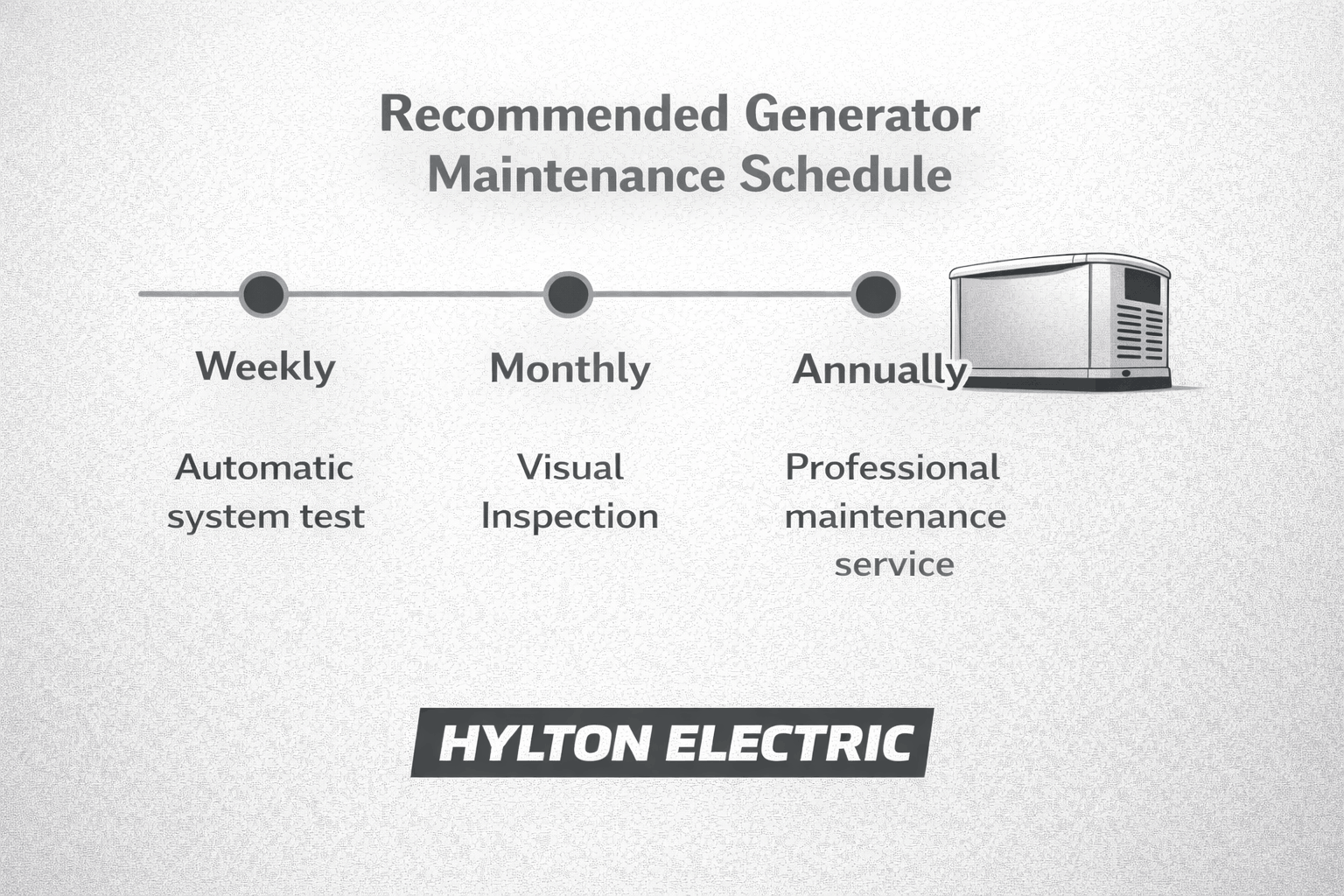
While standby generators operate automatically, they still require regular attention. Following a consistent maintenance schedule helps prevent unexpected failures and keeps the system ready for emergencies.

Generator maintenance typically occurs at several different intervals. Some checks can be performed by the homeowner, while others require professional service.
Power outages are common in Central Florida, especially during storm season. Strong winds, heavy rain, and lightning can damage power lines and cause extended outages. When the grid goes down, many homeowners in Lakeland rely on standby generators to keep their homes running. A standby generator starts automatically when utility power fails. It keeps important systems running, including lighting, refrigerators, air conditioning, and medical equipment. However, a generator can only do its job if it is properly maintained. Like any engine-driven equipment, standby generators require routine service. Oil breaks down over time, batteries weaken, and filters collect dirt. Without regular maintenance, these small issues can grow into major problems. That is why many homeowners choose an annual standby generator service plan. A professional maintenance plan helps keep the generator in good condition year after year. It also reduces the risk of unexpected breakdowns when the power goes out. In a place like Lakeland, where storms can arrive quickly, having a reliable generator is essential. Regular service ensures the system will start when it is needed most. Why Standby Generator Maintenance Is Essential for Lakeland Homes Standby generators are designed to provide reliable backup power. However, they are still mechanical systems with moving parts and electrical components. Over time, these parts wear down or become dirty. Routine maintenance helps prevent small issues from turning into major failures. For homeowners in Lakeland, regular generator service is especially important because of the region’s weather conditions and frequent storms. Frequent Storms and Power Outages in Central Florida Central Florida experiences severe weather throughout the year. Hurricanes and tropical storms can cause long power outages. Even smaller storms can damage power lines or overload the electrical grid. Lakeland residents often experience outages caused by: Lightning strikes Tropical storms and hurricanes Strong wind events Heavy rain and flooding Summer heat that strains the power grid During these situations, a standby generator becomes a home’s primary power source. If the generator fails to start, the home may be left without electricity for hours or even days. Routine generator maintenance helps ensure the system is ready before storm season arrives. How Maintenance Prevents Generator Failure Many generator problems develop slowly over time. Small issues may go unnoticed until the generator attempts to start during an outage. Common problems caused by poor maintenance include: Weak or dead batteries Old or contaminated engine oil Clogged air filters Dirty spark plugs Fuel system problems A professional service technician checks these components during routine maintenance. They can identify worn parts early and replace them before they cause a failure. This preventive approach greatly improves the reliability of the generator. Extending the Lifespan of Your Generator Standby generators represent a significant investment for homeowners. Most systems are expected to last many years, but their lifespan depends heavily on maintenance. A well-maintained standby generator can often last 15 to 20 years. In contrast, a neglected unit may experience serious mechanical problems much sooner. Regular service helps protect key components such as: The engine The alternator Electrical control systems Fuel delivery components What Is an Annual Standby Generator Service Plan? An annual standby generator service plan is a scheduled maintenance program provided by a professional electrician or generator technician. The plan ensures that the generator receives routine inspection, testing, and servicing each year. Instead of waiting for problems to appear, the service plan focuses on preventive care. Technicians check important components, replace worn parts, and verify that the generator operates correctly. For many homeowners, this type of plan offers peace of mind. They know their backup power system is being monitored by professionals who understand how the equipment works. Purpose of a Generator Maintenance Plan The primary goal of a generator maintenance plan is to keep the system reliable. Backup generators are rarely used until an outage occurs. Because of this, problems can develop without being noticed. A service plan helps prevent these issues through regular inspections and scheduled service. Key purposes of a maintenance plan include: Preventing unexpected generator failure Identifying small problems before they worsen Maintaining proper engine performance Ensuring the generator starts during an outage Protecting the homeowner’s investment Regular service also helps maintain warranty coverage for many generator manufacturers. How Annual Service Plans Work Most generator service plans are simple and straightforward. A technician schedules a maintenance visit once a year, usually before the storm season begins. During the service appointment, the technician performs a full inspection and maintenance check. Typical service plan visits may include: Engine oil and filter replacement Battery testing Inspection of electrical connections Fuel system checks Air filter inspection Operational testing of the generator Some companies also offer additional benefits as part of their service plans. These may include priority scheduling, service reminders, or discounted repairs. Who Needs a Generator Service Plan? Any homeowner with a standby generator can benefit from a maintenance plan. Even new generators require routine service to remain in good condition. Service plans are especially helpful for: Homes that experience frequent power outages Families that rely on medical equipment Houses with large electrical loads Homeowners who travel frequently Properties located in storm-prone areas For many Lakeland homeowners, a generator is more than a convenience. It protects comfort, safety, and essential household systems. Regular maintenance ensures that protection remains dependable year after year. What Is Included in an Annual Generator Maintenance Service? A standby generator contains many mechanical and electrical components. To keep it operating properly, technicians must inspect, clean, and test these parts on a regular basis. An annual maintenance service focuses on preventive care. The goal is to detect wear early and keep the system ready for the next power outage. During a professional service visit, the technician performs a full inspection of the generator. They check engine performance, electrical output, and overall system condition. If they find worn parts or early signs of damage, they can recommend repairs before the problem becomes serious. Engine Oil and Filter Replacement The generator engine relies on clean oil to operate smoothly. Over time, engine oil breaks down and collects contaminants. If the oil becomes too dirty, it can cause internal engine wear. During routine service, the technician typically: Drains the old engine oil Installs fresh oil that meets manufacturer specifications Replaces the oil filter Fresh oil helps the engine run smoothly and reduces friction between moving parts. This simple step plays a major role in extending the life of the generator. Battery Inspection and Testing The battery is one of the most important parts of a standby generator. When utility power fails, the battery provides the initial power needed to start the engine. Unfortunately, generator batteries often fail without warning. Many generators that fail to start during outages do so because of a weak or dead battery. During maintenance, technicians usually: Test battery voltage and charging levels Inspect battery cables and terminals Clean corrosion from connections Check the battery charger If the battery shows signs of weakness, the technician may recommend replacement. This prevents unexpected starting failures. Fuel System Inspection The fuel system supplies the engine with the energy it needs to generate electricity. Any problem in this system can stop the generator from operating. Technicians inspect several fuel-related components during maintenance, including: Fuel lines Fuel pressure levels Fuel filters Gas connections and fittings For natural gas and propane generators, the technician ensures the fuel supply is stable and free from leaks. These checks help ensure the generator can run continuously during an extended outage. Spark Plug and Ignition System Inspection Spark plugs ignite the fuel mixture inside the engine. If spark plugs become worn or dirty, the generator may struggle to start or run inefficiently. During annual maintenance, technicians often: Inspect spark plugs for wear Replace plugs if necessary Check ignition components Verify proper engine ignition timing Healthy ignition components help the generator start quickly and run smoothly. Electrical System and Control Panel Check Standby generators rely on sophisticated control systems. These electronic components monitor the power supply and automatically start the generator during outages. Technicians inspect several electrical elements, such as: Wiring connections Control board functions Voltage output System diagnostics and alerts They also check the automatic transfer switch, which transfers power from the utility grid to the generator. This component must function correctly for the generator to power the home safely. Air Filter Replacement and Cleaning Engines require clean airflow to operate efficiently. Air filters prevent dust and debris from entering the engine. Over time, air filters can become clogged. A restricted air filter can reduce engine performance and increase fuel consumption. During service, technicians may: Inspect the air filter Clean debris around the intake area Replace the filter if it is dirty or damaged Clean airflow helps the engine maintain proper combustion and efficient operation. Load Testing One of the most important parts of generator maintenance is load testing. This test verifies that the generator can handle the electrical demands of the home. During a load test, technicians run the generator while simulating real electrical usage. They measure several performance factors, including: Voltage stability Frequency output Engine response under load Overall system reliability This test ensures the generator can deliver consistent power when the home needs it most. Recommended Generator Maintenance Schedule While standby generators operate automatically, they still require regular attention. Following a consistent maintenance schedule helps prevent unexpected failures and keeps the system ready for emergencies. Generator maintenance typically occurs at several different intervals. Some checks can be performed by the homeowner, while others require professional service. Weekly Generator Checks (Homeowner Tasks) Most standby generators perform automatic self-tests each week. During these test cycles, the generator briefly runs to ensure that major systems are functioning. Homeowners should occasionally observe these tests and perform a quick visual inspection. Weekly checks may include: Confirming the generator completed its self-test Checking indicator lights on the control panel Listening for unusual noises during the test run Making sure the generator area is clear of debris These quick checks help homeowners notice problems early. Monthly Generator Maintenance Once a month, homeowners can perform a slightly more detailed inspection of the generator. Monthly tasks may include: Checking the oil level Inspecting the generator enclosure for damage Looking for fuel leaks Clearing leaves, dirt, or debris around the unit Keeping the generator area clean helps maintain proper airflow and prevents overheating. Annual Professional Generator Service While basic inspections are helpful, professional maintenance is still necessary. A trained technician has the tools and knowledge needed to inspect the generator fully. Annual service typically includes: Oil and filter replacement Battery testing Spark plug inspection Fuel system checks Electrical system diagnostics Load testing Signs Your Standby Generator Needs Immediate Service Even with routine maintenance, generators can develop problems over time. Recognizing early warning signs helps homeowners address issues before the next outage occurs. If a generator begins to behave differently, it may require professional inspection. Generator Fails to Start A generator that does not start during its test cycle is a serious warning sign. Several issues could cause this problem. Common causes include: Weak or dead battery Faulty starter motor Fuel supply problems Control system faults If the generator fails to start, it should be inspected as soon as possible. Warning Lights or Error Codes Modern standby generators use digital control panels to display system alerts. These warnings help homeowners identify potential problems. Common alerts may include: Maintenance reminders Low battery warnings System fault codes Engine performance alerts Ignoring these warnings can lead to larger mechanical issues. Unusual Noises or Vibrations Generators normally produce a steady engine sound while operating. If the unit begins to make unusual noises, it may indicate internal problems. Possible causes include: Loose engine components Exhaust system issues Worn bearings Engine misfires Unusual vibrations can also signal mounting or engine problems that require attention. Poor Power Output Generators must deliver consistent voltage to power a home safely. If the electrical output becomes unstable, appliances may not operate correctly. Signs of poor generator output include: Flickering lights Appliances shutting off unexpectedly Generator shutting down under load Irregular voltage readings These symptoms may indicate alternator issues, wiring problems, or control system faults. A professional technician should inspect the system to determine the cause. Cost of an Annual Standby Generator Service Plan in Lakeland The cost of a standby generator service plan can vary depending on several factors. These include the generator size, the type of fuel system, and the level of maintenance included in the plan. While pricing may differ between service providers, most homeowners in Lakeland can expect predictable annual maintenance costs. Regular generator service is often far less expensive than major repairs. When small issues are caught early, technicians can fix them before they damage the engine or electrical components. For many homeowners, an annual maintenance plan provides both convenience and long-term savings. Average Generator Maintenance Costs Basic generator service plans usually cover routine inspections and maintenance once per year. These plans are designed to keep the system running reliably without requiring frequent service visits. Typical cost ranges may include: Basic annual maintenance plan: $300 to $400 Comprehensive service plan: $400 to $600 or more Individual service visit without a plan: $200 to $350 These prices may include common maintenance tasks such as oil changes, battery testing, system diagnostics, and operational testing. However, the cost may increase if parts need replacement or if additional repairs are required. What Influences Service Plan Pricing Several factors can affect the final cost of a generator service plan. Larger systems or older generators may require more time and parts during maintenance. Common pricing factors include: Generator size and power capacity Fuel type, such as natural gas or propane Age and condition of the generator Accessibility of the installation location Additional inspections or service visits Generators that operate frequently may also require more frequent maintenance. Because every system is different, service providers often recommend a maintenance plan based on the generator model and usage. Is a Generator Service Plan Worth the Cost? Many homeowners wonder whether a service plan is necessary. While generators can operate for long periods without issues, neglecting maintenance increases the risk of failure. An annual service plan can help homeowners avoid: Unexpected generator breakdowns Emergency repair costs Engine damage from poor lubrication Electrical system failures When a generator fails during a power outage, the consequences can be costly and inconvenient. Regular maintenance reduces these risks and helps ensure dependable backup power. Benefits of a Professional Generator Maintenance Plan A standby generator is designed to provide reliable power during emergencies. However, that reliability depends on proper care. Professional maintenance plans help ensure the generator operates correctly when the power goes out. Routine service offers several long-term advantages for homeowners in Lakeland. Reliable Backup Power During Outages The most important benefit of regular maintenance is reliability. A properly maintained generator is far more likely to start and run when the home loses power. During a storm or grid failure, homeowners rely on the generator to support essential systems such as: Refrigerators and freezers Air conditioning systems Lighting and outlets Security systems Medical equipment Regular maintenance helps ensure the generator responds immediately during these situations. Improved Generator Efficiency Engines that receive routine service operate more efficiently. Clean filters, fresh oil, and properly adjusted components allow the generator to run smoothly. Efficient operation can provide several advantages: Lower fuel consumption Reduced engine strain Stable electrical output Less mechanical wear These improvements help maintain consistent performance during extended outages. Early Detection of Problems Professional technicians can identify problems that homeowners may not notice. Small signs of wear can indicate larger issues developing inside the system. Examples of early warning signs include: Weak batteries Oil leaks Loose electrical connections Dirty fuel filters By addressing these problems early, homeowners can avoid expensive repairs later. Extended Equipment Lifespan Generators are built to last many years, but proper maintenance is necessary to achieve their full lifespan. Routine service protects the generator’s most important components, including: The engine Electrical alternators Fuel delivery systems Cooling components With regular maintenance, many standby generators can operate reliably for 15 to 20 years or more. DIY Generator Maintenance vs Professional Service Some generator maintenance tasks are simple enough for homeowners to perform. However, many inspections and repairs require specialized tools and training. Simple Maintenance Homeowners Can Perform Homeowners can safely perform several basic maintenance checks between professional service visits. Common homeowner tasks include: Keeping the generator area clean and clear Checking for debris or leaves around the unit Monitoring warning lights on the control panel Listening for unusual noises during test cycles Inspecting the generator enclosure for visible damage These simple checks can help identify potential problems early. Maintenance Tasks That Require an Electrician Many generator systems contain complex electrical and mechanical components. Professional technicians are trained to inspect and repair these systems safely. Tasks that usually require professional service include: Engine diagnostics and repairs Electrical system testing Automatic transfer switch inspection Fuel system repairs Load testing and voltage testing Attempting to perform these tasks without proper training can damage the generator or create safety risks. For this reason, professional maintenance remains an important part of generator care. Choosing the Best Generator Service Company in Lakeland, Florida Selecting the right service provider is an important decision for homeowners. A qualified technician ensures the generator is maintained correctly and safely. When searching for generator service in Lakeland, several factors can help homeowners identify a reliable company. Look for Licensed and Insured Electricians Generator maintenance involves electrical systems, fuel connections, and engine components. Because of this, technicians should have proper training and licensing. A licensed electrician or generator technician can: Inspect electrical systems safely Diagnose generator problems accurately Perform repairs according to local codes Insurance coverage is also important. It protects both the homeowner and the contractor during service visits. Experience with Standby Generators Not all electricians specialize in generator maintenance. It is helpful to choose a company with experience working on standby generators. Experienced technicians often work with major generator brands such as: Generac Kohler Briggs & Stratton Familiarity with these systems helps technicians diagnose issues more quickly and perform maintenance according to manufacturer guidelines. Availability During Power Outages Power outages can occur at any time, especially during storms. A reliable generator service provider should be available when urgent issues arise. Helpful service features may include: Emergency repair services Fast response times during outages Priority service for maintenance plan customers These services can make a significant difference when a generator problem occurs during severe weather. Transparent Maintenance Plans A reputable service company should clearly explain what its maintenance plan includes. Homeowners should understand what services are covered before signing an agreement. Transparent plans usually provide: Clear pricing information Detailed maintenance checklists Service reminders for annual visits Written reports after inspections This level of transparency helps homeowners feel confident that their generator is receiving proper care. Why Regular Generator Maintenance Is Especially Important in Florida Florida’s climate creates unique challenges for electrical equipment. Standby generators installed in Lakeland operate in conditions that can affect both mechanical and electrical components. Heat, humidity, and storms all place stress on generator systems. Because of these environmental factors, regular maintenance becomes even more important. Routine inspections help identify weather-related wear before it affects generator performance. Homeowners who maintain their generators regularly are more likely to have reliable backup power during severe weather events. High Humidity and Corrosion Florida is known for its high humidity levels. Moist air can gradually affect metal parts inside and around the generator. Over time, moisture may lead to: Corrosion on electrical connections Rust on engine components Battery terminal corrosion Damage to wiring and connectors Routine maintenance helps technicians identify corrosion early. Cleaning connections and protecting components can prevent larger electrical problems later. Storm Debris and Environmental Exposure Lakeland experiences strong storms throughout the year. High winds and heavy rain can bring leaves, dirt, and debris into the generator area. If debris builds up around the generator, it may: Restrict airflow to the engine Cause overheating Block ventilation openings Create fire hazards Technicians inspect the generator enclosure and surrounding area during maintenance visits. Keeping the area clean ensures the generator can operate safely during extended outages. Heat and Engine Performance High temperatures can also affect generator performance. Florida summers place additional stress on engines and batteries. Extreme heat may cause: Faster oil breakdown Reduced battery life Increased engine wear Higher cooling system demands Routine service helps ensure the generator can handle these conditions. Fresh oil, clean filters, and proper system checks help the generator operate reliably even during the hottest months. Tips to Keep Your Standby Generator in Good Condition Between Services While professional maintenance is essential, homeowners can also take simple steps to keep their generator in good shape between service visits. These small tasks help maintain safe operation and reduce the chance of problems during an outage. Some helpful maintenance habits include: Keep the area around the generator clear of leaves and debris Trim nearby plants or shrubs that block airflow Check the generator enclosure for visible damage Monitor indicator lights on the control panel Listen for unusual sounds during the generator’s weekly test cycle Homeowners should also ensure that the generator has proper clearance around it. Most manufacturers recommend keeping at least several feet of open space around the unit to allow proper ventilation. If any warning lights appear or unusual behavior occurs, it is best to contact a professional technician for inspection. Schedule Your Annual Standby Generator Service in Lakeland A standby generator provides reliable backup power during outages. However, like any engine system, it needs regular maintenance to stay dependable. Routine service helps ensure the generator starts quickly and runs properly when the power goes out. Without maintenance, issues like weak batteries, dirty filters, or worn parts can prevent the system from working when you need it most. An annual standby generator service plan keeps maintenance simple. A technician inspects the system, checks key components, and tests the generator to make sure it operates correctly. In Lakeland, storms, heat, and humidity can put extra strain on generators. Regular maintenance helps prevent unexpected breakdowns and extends the life of the equipment. If your generator hasn’t been serviced recently, scheduling a professional inspection can help ensure it’s ready to keep your home powered during the next outage. Schedule Your Annual Standby Generator Service Plan in Lakeland If your generator hasn’t been serviced recently, now is a good time to schedule maintenance. Regular care helps ensure your system starts quickly and runs reliably during power outages. At Hylton Electric, we offer professional annual standby generator service plans in Lakeland, Florida, to keep your backup power system in top condition. Our team inspects, tests, and maintains your generator so it’s ready when you need it most. Call: +1 863-624-7000 Email: ray@hylton-electric.com We’re here to help keep your home powered and protected. FAQs About Annual Standby Generator Service Plan How often should a standby generator be serviced? Most manufacturers recommend servicing a standby generator at least once a year or after about 200 hours of operation. Regular maintenance helps keep the engine, fuel system, and electrical components working properly. Typical annual service includes: Oil and filter replacement Battery testing Air filter inspection Electrical system checks What is included in an annual standby generator service plan? An annual service plan usually includes a complete inspection and maintenance check of the generator system. The goal is to prevent failures and ensure reliable operation. Common service tasks include: Changing engine oil and replacing filters Testing the battery and charging system Inspecting fuel lines and connections Checking electrical output and wiring Running the generator under load Some plans may also include service reminders and priority scheduling during outages. Why is generator maintenance important in Lakeland, Florida? Lakeland homeowners often rely on generators during storms and severe weather. Without regular maintenance, the generator may fail when it is needed most. Florida’s climate also creates additional challenges, such as: High humidity that can cause corrosion Storm debris around outdoor equipment Heat that affects batteries and engine performance Routine maintenance helps protect the generator and ensures dependable backup power during outages. How much does an annual standby generator service plan cost? The cost of a generator maintenance plan varies depending on the system size and service provider. However, most homeowners can expect predictable annual costs. Typical price ranges include: Basic service plans: $300–$400 per year Comprehensive maintenance plans: $400–$600 or more Costs may increase if replacement parts are needed. Even so, regular maintenance is usually cheaper than emergency repairs or major generator damage. What happens if a standby generator is not maintained? Skipping maintenance can lead to several problems that affect generator reliability. Over time, oil breaks down, batteries weaken, and filters become clogged. Without routine service, homeowners may experience: Generators that fail to start during outages Reduced engine performance Electrical output problems Higher repair costs Regular inspections help catch these issues early and keep the generator operating safely. Can homeowners perform their own generator maintenance? Homeowners can perform some basic checks, but most maintenance tasks should be handled by a professional technician. Simple tasks homeowners can do include: Checking indicator lights Clearing debris around the generator Monitoring weekly test cycles How long does a standby generator maintenance visit take? A typical generator maintenance visit takes about one to two hours, depending on the generator size and condition. During the appointment, technicians usually: Inspect major components Replace oil and filters if needed Test the battery and charging system Run performance checks If additional repairs are needed, the technician may schedule a follow-up visit to complete the work. How long do standby generators usually last? With proper maintenance, many standby generators can last 15 to 20 years or longer. The lifespan depends on several factors, including usage, environmental conditions, and service history. Routine maintenance helps extend equipment life by: Reducing engine wear Preventing electrical problems Keeping fuel systems clean Neglected generators may experience serious mechanical problems much earlier. What are the signs a generator needs immediate service? Several warning signs indicate a generator may need professional inspection. Ignoring these symptoms can lead to system failure. Common warning signs include: Generator fails to start during test cycles Warning lights or error codes appear Unusual noises or vibrations Flickering lights or unstable power output If any of these problems occur, a technician should inspect the generator as soon as possible. What is a generator load test? A load test checks how well the generator performs under real electrical demand. This test confirms that the generator can safely power a home during an outage. During the test, technicians measure: Voltage output Frequency stability Engine performance under load Load testing helps verify that the generator can handle the electrical requirements of the home. Does a standby generator require oil changes? Yes, standby generators require regular oil changes just like car engines. Engine oil lubricates moving parts and prevents internal damage. Over time, oil becomes contaminated with dirt and heat breakdown. During maintenance service, technicians typically: Drain the old oil Install fresh oil recommended by the manufacturer Replace the oil filter Regular oil changes help maintain engine performance and reliability. How often should generator batteries be replaced? Generator batteries usually last three to five years, but extreme heat and humidity can shorten their lifespan. Because the battery starts the generator during an outage, it is one of the most critical components. During maintenance visits, technicians typically: Test battery voltage Check the charging system Inspect battery terminals Replacing weak batteries early helps prevent starting failures. Do standby generators run automatic self-tests? Yes, most modern standby generators perform weekly or bi-weekly automatic self-tests. These tests briefly run the engine to confirm the system is working properly. During the test cycle, the generator checks: Engine operation Control system functions Electrical output What is the role of the automatic transfer switch? The automatic transfer switch (ATS) is a key part of a standby generator system. It detects when utility power fails and automatically switches the home’s electrical supply to the generator. When utility power returns, the transfer switch safely switches the home back to the main power grid. Because this component controls power transfer, technicians inspect it during annual maintenance. Can weather damage a standby generator? Yes, severe weather can affect outdoor generators. While generators are designed for outdoor use, storms can still cause issues. Weather-related problems may include: Debris blocking ventilation openings Water exposure during heavy rain Corrosion caused by humidity Regular inspections help ensure the generator enclosure and internal components remain protected. How can homeowners keep their generator in good condition between services? Homeowners can help maintain their generator by performing a few simple tasks between professional maintenance visits. Helpful habits include: Keeping the area around the generator clean Removing leaves and debris Checking indicator lights on the control panel Listening during weekly test cycles These quick checks help identify potential issues early. Is a generator service plan worth it? For many homeowners, a service plan provides convenience and peace of mind. Instead of remembering maintenance schedules, the service provider handles inspections and routine servicing. Benefits of a service plan include: Regular preventive maintenance Early detection of mechanical problems Reduced risk of emergency repairs Priority service during outages These advantages help ensure reliable backup power when it is needed most. Do generators require maintenance even if they rarely run? Yes. Even generators that rarely operate still require regular maintenance. Oil can degrade over time, batteries lose charge, and fuel systems may develop problems. Because generators often sit unused until an outage occurs, preventive maintenance is essential. Annual service helps ensure the system is ready to start immediately when power is lost. Can generator maintenance help reduce repair costs? Yes, preventive maintenance often reduces long-term repair costs. Small issues discovered during routine service are usually inexpensive to fix. For example, technicians may identify: Loose wiring connections Dirty air filters Weak batteries Addressing these problems early prevents more serious engine or electrical damage. Who should perform standby generator maintenance in Lakeland? Generator maintenance should be handled by licensed electricians or experienced generator technicians. These professionals understand both the electrical and mechanical systems involved. Qualified technicians can safely: Inspect the electrical output Perform load testing Diagnose engine problems Repair fuel and ignition systems Minimalist grayscale infographic titled “Recommended Generator Maintenance Schedule” showing weekly automatic system tests, monthly visual inspections, and annual professional generator maintenance
Weekly Generator Checks (Homeowner Tasks)

Most standby generators perform automatic self-tests each week. During these test cycles, the generator briefly runs to ensure that major systems are functioning. Homeowners should occasionally observe these tests and perform a quick visual inspection.

Weekly checks may include:

  • Confirming the generator completed its self-test

  • Checking indicator lights on the control panel

  • Listening for unusual noises during the test run

  • Making sure the generator area is clear of debris

These quick checks help homeowners notice problems early.

Monthly Generator Maintenance

Once a month, homeowners can perform a slightly more detailed inspection of the generator. Monthly tasks may include:

  • Checking the oil level

  • Inspecting the generator enclosure for damage

  • Looking for fuel leaks

  • Clearing leaves, dirt, or debris around the unit

Keeping the generator area clean helps maintain proper airflow and prevents overheating.

Annual Professional Generator Service

While basic inspections are helpful, professional maintenance is still necessary. A trained technician has the tools and knowledge needed to inspect the generator fully.

Annual service typically includes:

  • Oil and filter replacement

  • Battery testing

  • Spark plug inspection

  • Fuel system checks

  • Electrical system diagnostics

  • Load testing

Signs Your Standby Generator Needs Immediate Service

Even with routine maintenance, generators can develop problems over time. Recognizing early warning signs helps homeowners address issues before the next outage occurs.

If a generator begins to behave differently, it may require professional inspection.

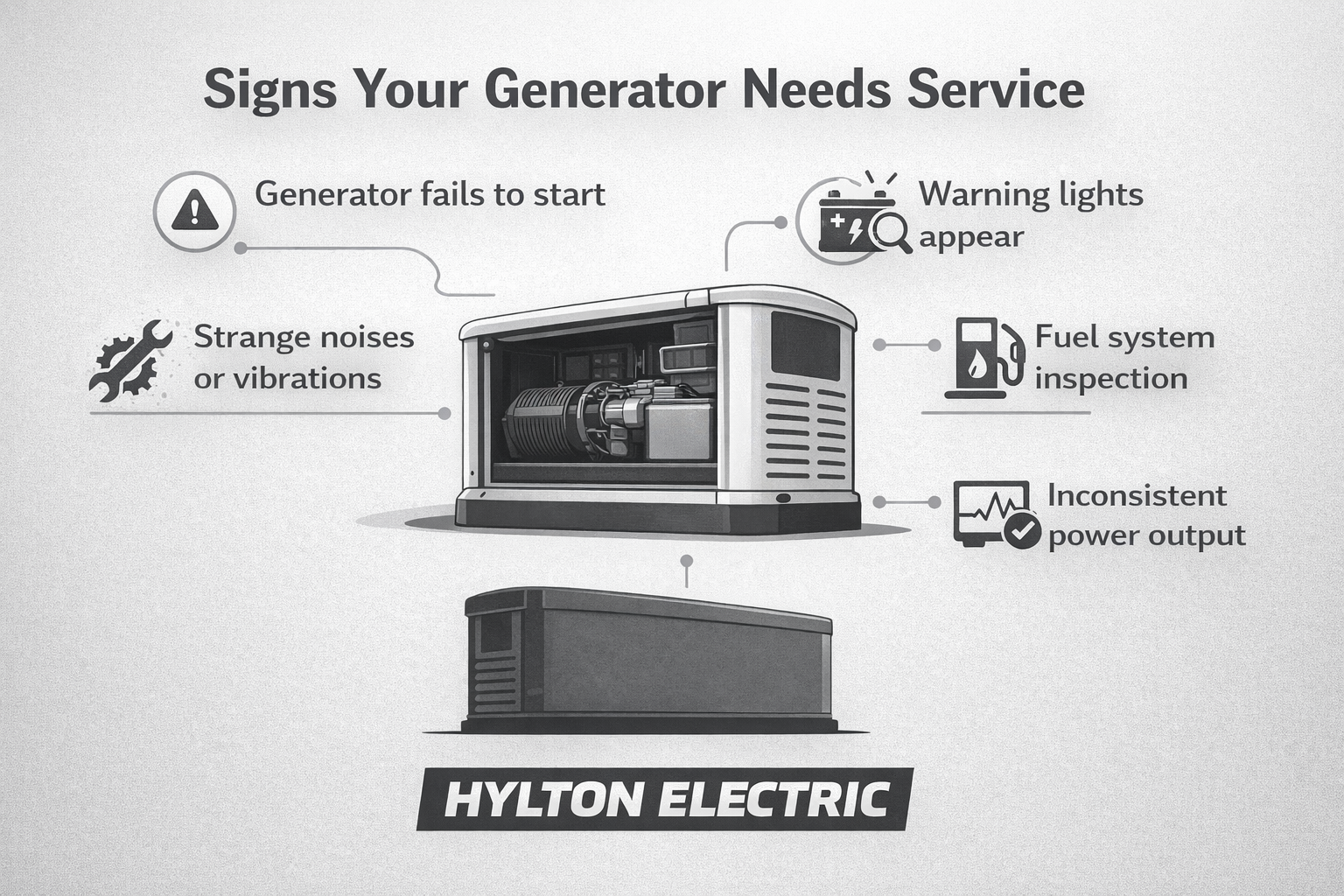
Minimalist grayscale infographic titled “Signs Your Generator Needs Service” showing common warning signs like generator failing to start,

Generator Fails to Start

A generator that does not start during its test cycle is a serious warning sign. Several issues could cause this problem. Common causes include:

  • Weak or dead battery

  • Faulty starter motor

  • Fuel supply problems

  • Control system faults

If the generator fails to start, it should be inspected as soon as possible.

Warning Lights or Error Codes

Modern standby generators use digital control panels to display system alerts. These warnings help homeowners identify potential problems.

Common alerts may include:

  • Maintenance reminders

  • Low battery warnings

  • System fault codes

  • Engine performance alerts

Ignoring these warnings can lead to larger mechanical issues.

Unusual Noises or Vibrations

Generators normally produce a steady engine sound while operating. If the unit begins to make unusual noises, it may indicate internal problems.

Possible causes include:

  • Loose engine components

  • Exhaust system issues

  • Worn bearings

  • Engine misfires

Unusual vibrations can also signal mounting or engine problems that require attention.

Poor Power Output

Generators must deliver consistent voltage to power a home safely. If the electrical output becomes unstable, appliances may not operate correctly.

Signs of poor generator output include:

  • Flickering lights

  • Appliances shutting off unexpectedly

  • Generator shutting down under load

  • Irregular voltage readings

These symptoms may indicate alternator issues, wiring problems, or control system faults. A professional technician should inspect the system to determine the cause.

Cost of an Annual Standby Generator Service Plan in Lakeland

The cost of a standby generator service plan can vary depending on several factors. These include the generator size, the type of fuel system, and the level of maintenance included in the plan. While pricing may differ between service providers, most homeowners in Lakeland can expect predictable annual maintenance costs.

Regular generator service is often far less expensive than major repairs. When small issues are caught early, technicians can fix them before they damage the engine or electrical components. For many homeowners, an annual maintenance plan provides both convenience and long-term savings.

Average Generator Maintenance Costs

Basic generator service plans usually cover routine inspections and maintenance once per year. These plans are designed to keep the system running reliably without requiring frequent service visits.

Typical cost ranges may include:

  • Basic annual maintenance plan: $300 to $400

  • Comprehensive service plan: $400 to $600 or more

  • Individual service visit without a plan: $200 to $350

These prices may include common maintenance tasks such as oil changes, battery testing, system diagnostics, and operational testing. However, the cost may increase if parts need replacement or if additional repairs are required.

What Influences Service Plan Pricing

Several factors can affect the final cost of a generator service plan. Larger systems or older generators may require more time and parts during maintenance.

Common pricing factors include:

  • Generator size and power capacity

  • Fuel type, such as natural gas or propane

  • Age and condition of the generator

  • Accessibility of the installation location

  • Additional inspections or service visits

Generators that operate frequently may also require more frequent maintenance. Because every system is different, service providers often recommend a maintenance plan based on the generator model and usage.

Is a Generator Service Plan Worth the Cost?

Many homeowners wonder whether a service plan is necessary. While generators can operate for long periods without issues, neglecting maintenance increases the risk of failure.

An annual service plan can help homeowners avoid:

  • Unexpected generator breakdowns

  • Emergency repair costs

  • Engine damage from poor lubrication

  • Electrical system failures

When a generator fails during a power outage, the consequences can be costly and inconvenient. Regular maintenance reduces these risks and helps ensure dependable backup power.

Benefits of a Professional Generator Maintenance Plan

A standby generator is designed to provide reliable power during emergencies. However, that reliability depends on proper care. Professional maintenance plans help ensure the generator operates correctly when the power goes out.
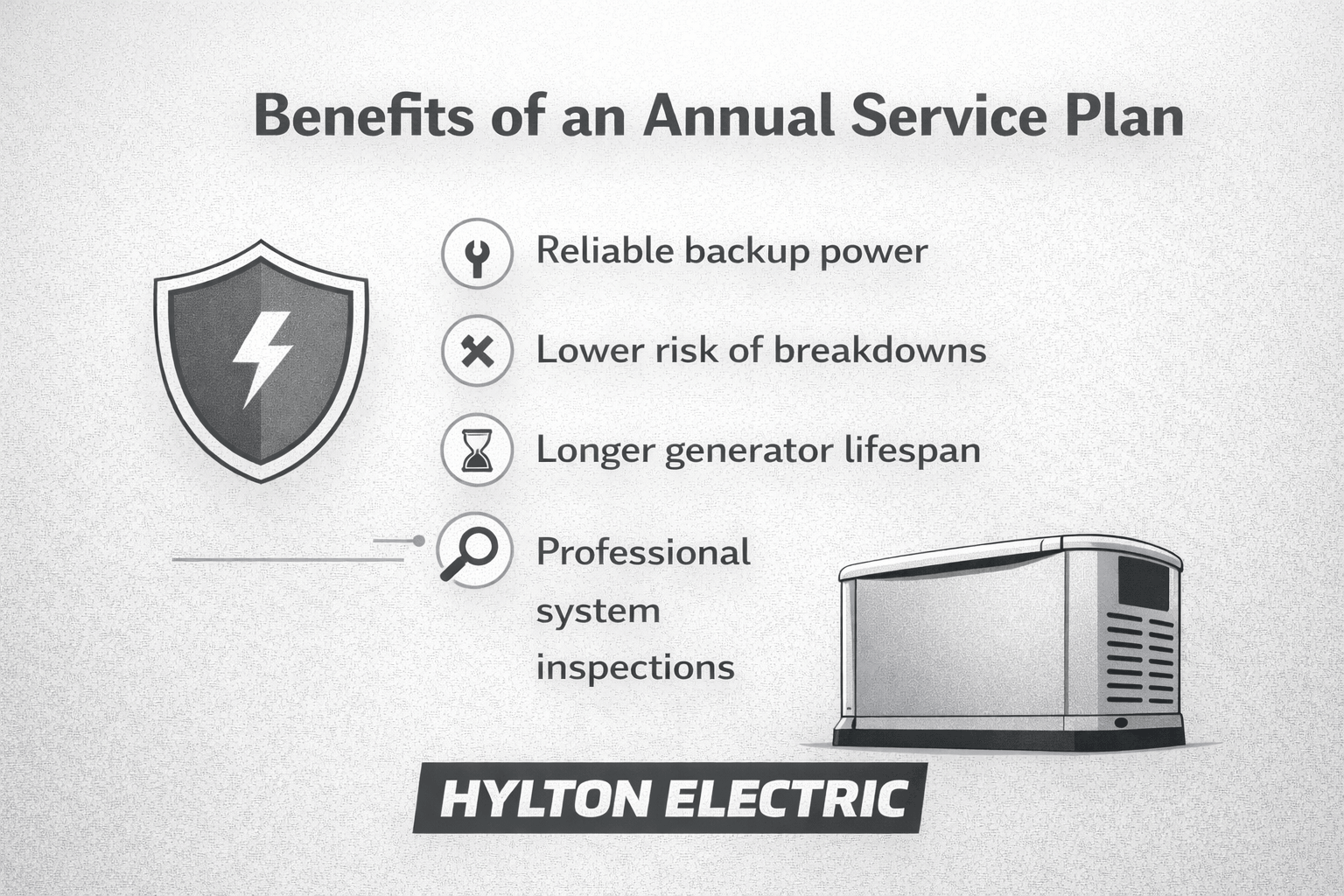
Minimalist grayscale infographic titled “Benefits of an Annual Service Plan” showing advantages like reliable backup power, lower risk of breakdowns, longer generator lifespan

Routine service offers several long-term advantages for homeowners in Lakeland.

Reliable Backup Power During Outages

The most important benefit of regular maintenance is reliability. A properly maintained generator is far more likely to start and run when the home loses power.

During a storm or grid failure, homeowners rely on the generator to support essential systems such as:

  • Refrigerators and freezers

  • Air conditioning systems

  • Lighting and outlets

  • Security systems

  • Medical equipment

Regular maintenance helps ensure the generator responds immediately during these situations.

Improved Generator Efficiency

Engines that receive routine service operate more efficiently. Clean filters, fresh oil, and properly adjusted components allow the generator to run smoothly.

Efficient operation can provide several advantages:

  • Lower fuel consumption

  • Reduced engine strain

  • Stable electrical output

  • Less mechanical wear

These improvements help maintain consistent performance during extended outages.

Early Detection of Problems

Professional technicians can identify problems that homeowners may not notice. Small signs of wear can indicate larger issues developing inside the system. Examples of early warning signs include:

  • Weak batteries

  • Oil leaks

  • Loose electrical connections

  • Dirty fuel filters

By addressing these problems early, homeowners can avoid expensive repairs later.

Extended Equipment Lifespan

Generators are built to last many years, but proper maintenance is necessary to achieve their full lifespan. Routine service protects the generator’s most important components, including:

  • The engine

  • Electrical alternators

  • Fuel delivery systems

  • Cooling components

With regular maintenance, many standby generators can operate reliably for 15 to 20 years or more.

DIY Generator Maintenance vs Professional Service

Some generator maintenance tasks are simple enough for homeowners to perform. However, many inspections and repairs require specialized tools and training.

Simple Maintenance Homeowners Can Perform

Homeowners can safely perform several basic maintenance checks between professional service visits. Common homeowner tasks include:

  • Keeping the generator area clean and clear

  • Checking for debris or leaves around the unit

  • Monitoring warning lights on the control panel

  • Listening for unusual noises during test cycles

  • Inspecting the generator enclosure for visible damage

These simple checks can help identify potential problems early.

Maintenance Tasks That Require an Electrician

Many generator systems contain complex electrical and mechanical components. Professional technicians are trained to inspect and repair these systems safely.

Tasks that usually require professional service include:

  • Engine diagnostics and repairs

  • Electrical system testing

  • Automatic transfer switch inspection

  • Fuel system repairs

  • Load testing and voltage testing

Attempting to perform these tasks without proper training can damage the generator or create safety risks. For this reason, professional maintenance remains an important part of generator care.

Choosing the Best Generator Service Company in Lakeland, Florida

Selecting the right service provider is an important decision for homeowners. A qualified technician ensures the generator is maintained correctly and safely. When searching for generator service in Lakeland, several factors can help homeowners identify a reliable company.
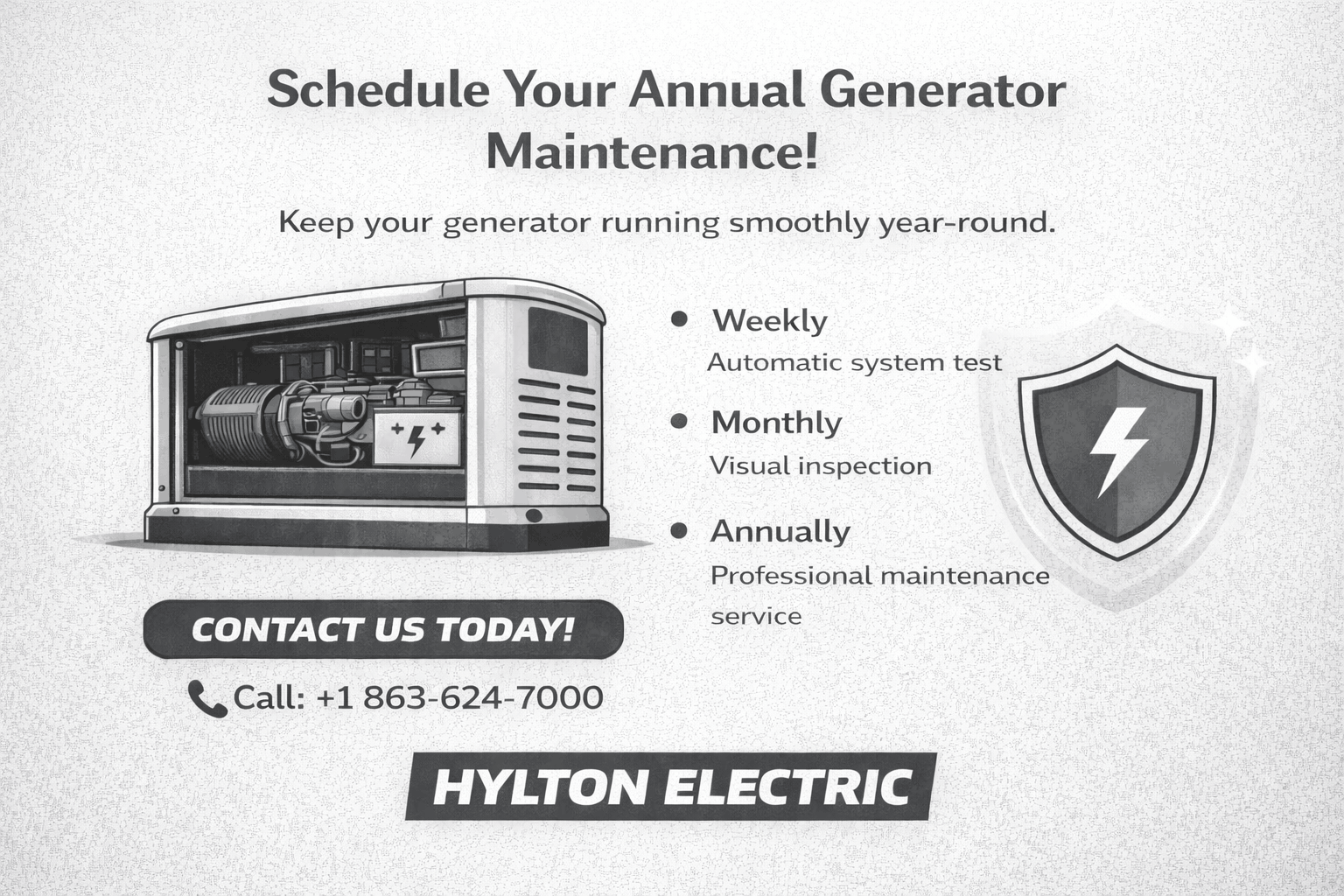
At Hylton Electric, we offer professional annual standby generator service plans in Lakeland.

Look for Licensed and Insured Electricians

Generator maintenance involves electrical systems, fuel connections, and engine components. Because of this, technicians should have proper training and licensing.

A licensed electrician or generator technician can:

  • Inspect electrical systems safely

  • Diagnose generator problems accurately

  • Perform repairs according to local codes

Insurance coverage is also important. It protects both the homeowner and the contractor during service visits.

Experience with Standby Generators

Not all electricians specialize in generator maintenance. It is helpful to choose a company with experience working on standby generators. Experienced technicians often work with major generator brands such as:

  • Generac

  • Kohler

  • Briggs & Stratton

Familiarity with these systems helps technicians diagnose issues more quickly and perform maintenance according to manufacturer guidelines.

Availability During Power Outages

Power outages can occur at any time, especially during storms. A reliable generator service provider should be available when urgent issues arise. Helpful service features may include:

  • Emergency repair services

  • Fast response times during outages

  • Priority service for maintenance plan customers

These services can make a significant difference when a generator problem occurs during severe weather.

Transparent Maintenance Plans

A reputable service company should clearly explain what its maintenance plan includes. Homeowners should understand what services are covered before signing an agreement.

Transparent plans usually provide:

  • Clear pricing information

  • Detailed maintenance checklists

  • Service reminders for annual visits

  • Written reports after inspections

This level of transparency helps homeowners feel confident that their generator is receiving proper care.

Why Regular Generator Maintenance Is Especially Important in Florida

Florida’s climate creates unique challenges for electrical equipment. Standby generators installed in Lakeland operate in conditions that can affect both mechanical and electrical components. Heat, humidity, and storms all place stress on generator systems.

Because of these environmental factors, regular maintenance becomes even more important. Routine inspections help identify weather-related wear before it affects generator performance. Homeowners who maintain their generators regularly are more likely to have reliable backup power during severe weather events.

High Humidity and Corrosion

Florida is known for its high humidity levels. Moist air can gradually affect metal parts inside and around the generator.

Over time, moisture may lead to:

  • Corrosion on electrical connections

  • Rust on engine components

  • Battery terminal corrosion

  • Damage to wiring and connectors

Routine maintenance helps technicians identify corrosion early. Cleaning connections and protecting components can prevent larger electrical problems later.

Storm Debris and Environmental Exposure

Lakeland experiences strong storms throughout the year. High winds and heavy rain can bring leaves, dirt, and debris into the generator area. If debris builds up around the generator, it may:

  • Restrict airflow to the engine

  • Cause overheating

  • Block ventilation openings

  • Create fire hazards

Technicians inspect the generator enclosure and surrounding area during maintenance visits. Keeping the area clean ensures the generator can operate safely during extended outages.

Heat and Engine Performance

High temperatures can also affect generator performance. Florida summers place additional stress on engines and batteries.

Extreme heat may cause:

  • Faster oil breakdown

  • Reduced battery life

  • Increased engine wear

  • Higher cooling system demands

Routine service helps ensure the generator can handle these conditions. Fresh oil, clean filters, and proper system checks help the generator operate reliably even during the hottest months.

Tips to Keep Your Standby Generator in Good Condition Between Services

While professional maintenance is essential, homeowners can also take simple steps to keep their generator in good shape between service visits. These small tasks help maintain safe operation and reduce the chance of problems during an outage.

Some helpful maintenance habits include:

  • Keep the area around the generator clear of leaves and debris

  • Trim nearby plants or shrubs that block airflow

  • Check the generator enclosure for visible damage

  • Monitor indicator lights on the control panel

  • Listen for unusual sounds during the generator’s weekly test cycle

Homeowners should also ensure that the generator has proper clearance around it. Most manufacturers recommend keeping at least several feet of open space around the unit to allow proper ventilation.

If any warning lights appear or unusual behavior occurs, it is best to contact a professional technician for inspection.

Schedule Your Annual Standby Generator Service in Lakeland

A standby generator provides reliable backup power during outages. However, like any engine system, it needs regular maintenance to stay dependable.

Routine service helps ensure the generator starts quickly and runs properly when the power goes out. Without maintenance, issues like weak batteries, dirty filters, or worn parts can prevent the system from working when you need it most.

An annual standby generator service plan keeps maintenance simple. A technician inspects the system, checks key components, and tests the generator to make sure it operates correctly.

In Lakeland, storms, heat, and humidity can put extra strain on generators. Regular maintenance helps prevent unexpected breakdowns and extends the life of the equipment.

Contact Hylton Electric Today!

If your generator hasn’t been serviced recently, now is a good time to schedule maintenance. Regular care helps ensure your system starts quickly and runs reliably during power outages.

At Hylton Electric, we offer professional annual standby generator service plans in Lakeland, Florida, to keep your backup power system in top condition. Our team inspects, tests, and maintains your generator so it’s ready when you need it most.

We’re here to help keep your home powered and protected.

FAQs About Annual Standby Generator Service Plan

How often should a standby generator be serviced?

Most manufacturers recommend servicing a standby generator at least once a year or after about 200 hours of operation. Regular maintenance helps keep the engine, fuel system, and electrical components working properly.

Typical annual service includes:

  • Oil and filter replacement

  • Battery testing

  • Air filter inspection

  • Electrical system checks

What is included in an annual standby generator service plan?

An annual service plan usually includes a complete inspection and maintenance check of the generator system. The goal is to prevent failures and ensure reliable operation.

Common service tasks include:

  • Changing engine oil and replacing filters

  • Testing the battery and charging system

  • Inspecting fuel lines and connections

  • Checking electrical output and wiring

  • Running the generator under load

Some plans may also include service reminders and priority scheduling during outages.

Why is generator maintenance important in Lakeland, Florida?

Lakeland homeowners often rely on generators during storms and severe weather. Without regular maintenance, the generator may fail when it is needed most.

Florida’s climate also creates additional challenges, such as:

  • High humidity that can cause corrosion

  • Storm debris around outdoor equipment

  • Heat that affects batteries and engine performance

Routine maintenance helps protect the generator and ensures dependable backup power during outages.

How much does an annual standby generator service plan cost?

The cost of a generator maintenance plan varies depending on the system size and service provider. However, most homeowners can expect predictable annual costs.

Typical price ranges include:

  • Basic service plans: $300–$400 per year

  • Comprehensive maintenance plans: $400–$600 or more

Costs may increase if replacement parts are needed. Even so, regular maintenance is usually cheaper than emergency repairs or major generator damage.

What happens if a standby generator is not maintained?

Skipping maintenance can lead to several problems that affect generator reliability. Over time, oil breaks down, batteries weaken, and filters become clogged.

Without routine service, homeowners may experience:

  • Generators that fail to start during outages

  • Reduced engine performance

  • Electrical output problems

  • Higher repair costs

Regular inspections help catch these issues early and keep the generator operating safely.

Can homeowners perform their own generator maintenance?

Homeowners can perform some basic checks, but most maintenance tasks should be handled by a professional technician. Simple tasks homeowners can do include:

  • Checking indicator lights

  • Clearing debris around the generator

  • Monitoring weekly test cycles

How long does a standby generator maintenance visit take?

A typical generator maintenance visit takes about one to two hours, depending on the generator size and condition. During the appointment, technicians usually:

  • Inspect major components

  • Replace oil and filters if needed

  • Test the battery and charging system

  • Run performance checks

If additional repairs are needed, the technician may schedule a follow-up visit to complete the work.

How long do standby generators usually last?

With proper maintenance, many standby generators can last 15 to 20 years or longer. The lifespan depends on several factors, including usage, environmental conditions, and service history.

Routine maintenance helps extend equipment life by:

  • Reducing engine wear

  • Preventing electrical problems

  • Keeping fuel systems clean

Neglected generators may experience serious mechanical problems much earlier.

What are the signs a generator needs immediate service?

Several warning signs indicate a generator may need professional inspection. Ignoring these symptoms can lead to system failure.

Common warning signs include:

  • Generator fails to start during test cycles

  • Warning lights or error codes appear

  • Unusual noises or vibrations

  • Flickering lights or unstable power output

If any of these problems occur, a technician should inspect the generator as soon as possible.

What is a generator load test?

A load test checks how well the generator performs under real electrical demand. This test confirms that the generator can safely power a home during an outage.

During the test, technicians measure:

  • Voltage output

  • Frequency stability

  • Engine performance under load

Load testing helps verify that the generator can handle the electrical requirements of the home.

Does a standby generator require oil changes?

Yes, standby generators require regular oil changes just like car engines. Engine oil lubricates moving parts and prevents internal damage.

Over time, oil becomes contaminated with dirt and heat breakdown. During maintenance service, technicians typically:

  • Drain the old oil

  • Install fresh oil recommended by the manufacturer

  • Replace the oil filter

Regular oil changes help maintain engine performance and reliability.

How often should generator batteries be replaced?

Generator batteries usually last three to five years, but extreme heat and humidity can shorten their lifespan. Because the battery starts the generator during an outage, it is one of the most critical components.

During maintenance visits, technicians typically:

  • Test battery voltage

  • Check the charging system

  • Inspect battery terminals

Replacing weak batteries early helps prevent starting failures.

Do standby generators run automatic self-tests?

Yes, most modern standby generators perform weekly or bi-weekly automatic self-tests. These tests briefly run the engine to confirm the system is working properly.

During the test cycle, the generator checks:

  • Engine operation

  • Control system functions

  • Electrical output

What is the role of the automatic transfer switch?

The automatic transfer switch (ATS) is a key part of a standby generator system. It detects when utility power fails and automatically switches the home’s electrical supply to the generator.

When utility power returns, the transfer switch safely switches the home back to the main power grid. Because this component controls power transfer, technicians inspect it during annual maintenance.

Can weather damage a standby generator?

Yes, severe weather can affect outdoor generators. While generators are designed for outdoor use, storms can still cause issues.

Weather-related problems may include:

  • Debris blocking ventilation openings

  • Water exposure during heavy rain

  • Corrosion caused by humidity

Regular inspections help ensure the generator enclosure and internal components remain protected.

How can homeowners keep their generator in good condition between services?

Homeowners can help maintain their generator by performing a few simple tasks between professional maintenance visits.

Helpful habits include:

  • Keeping the area around the generator clean

  • Removing leaves and debris

  • Checking indicator lights on the control panel

  • Listening during weekly test cycles

These quick checks help identify potential issues early.

Is a generator service plan worth it?

For many homeowners, a service plan provides convenience and peace of mind. Instead of remembering maintenance schedules, the service provider handles inspections and routine servicing.

Benefits of a service plan include:

  • Regular preventive maintenance

  • Early detection of mechanical problems

  • Reduced risk of emergency repairs

  • Priority service during outages

These advantages help ensure reliable backup power when it is needed most.

Do generators require maintenance even if they rarely run?

Yes. Even generators that rarely operate still require regular maintenance. Oil can degrade over time, batteries lose charge, and fuel systems may develop problems.

Because generators often sit unused until an outage occurs, preventive maintenance is essential.

Annual service helps ensure the system is ready to start immediately when power is lost.

Can generator maintenance help reduce repair costs?

Yes, preventive maintenance often reduces long-term repair costs. Small issues discovered during routine service are usually inexpensive to fix.

For example, technicians may identify:

  • Loose wiring connections

  • Dirty air filters

  • Weak batteries

Addressing these problems early prevents more serious engine or electrical damage.

Who should perform standby generator maintenance in Lakeland?

Generator maintenance should be handled by licensed electricians or experienced generator technicians. These professionals understand both the electrical and mechanical systems involved.

Qualified technicians can safely:

  • Inspect the electrical output

  • Perform load testing

  • Diagnose engine problems

  • Repair fuel and ignition systems


Leave a Reply

Your email address will not be published. Required fields are marked *