Electric vehicles are becoming common in many homes. As more drivers switch to EVs, the need for reliable home charging grows. Charging at home is simple, convenient, and often cheaper than public charging stations.
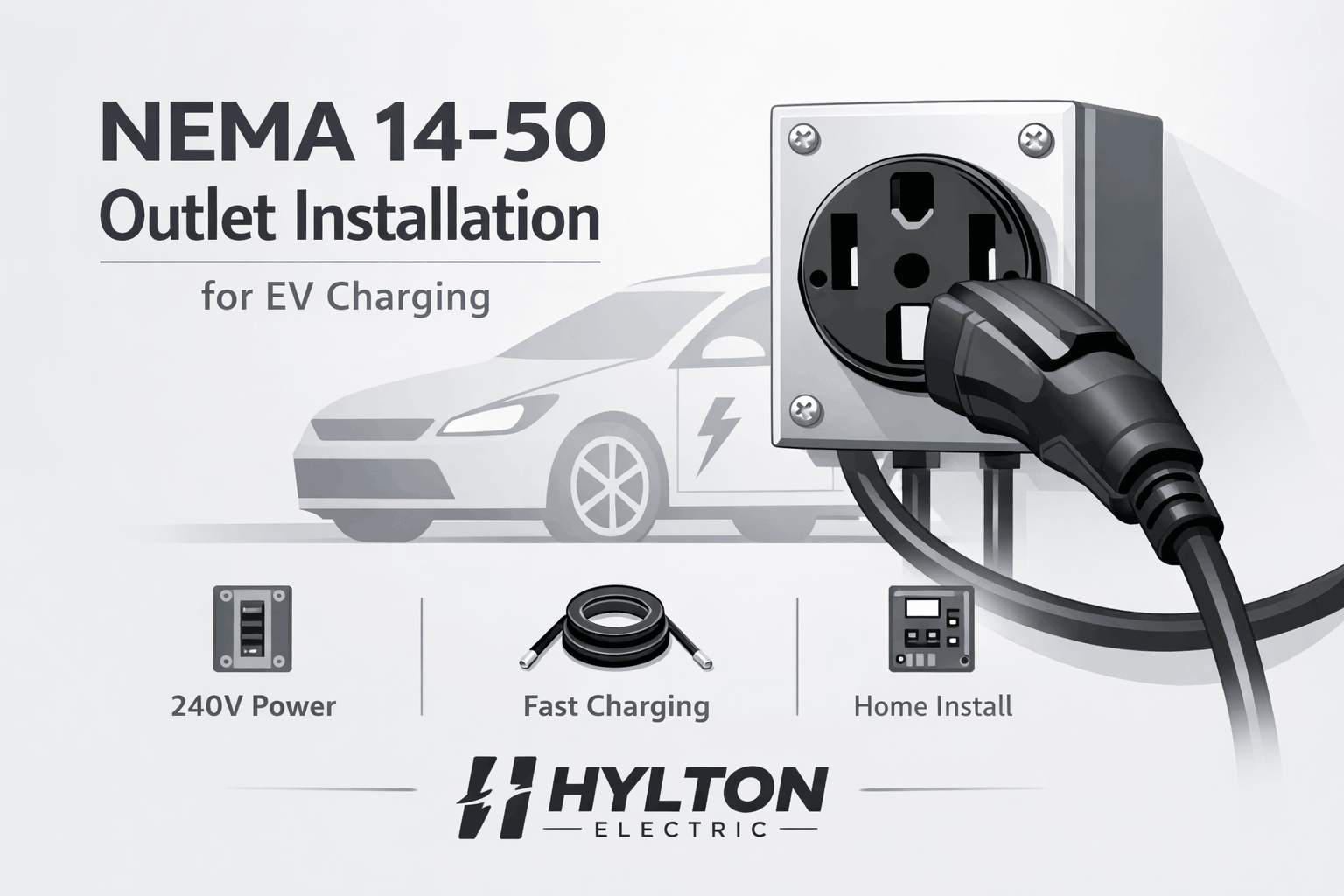
Many homeowners choose a NEMA 14-50 outlet for EV charging because it supports Level 2 charging. This type of outlet delivers much more power than a standard household outlet. As a result, vehicles charge faster and more efficiently.
A basic wall outlet provides 120 volts of power. This is known as Level 1 charging. While it works, it charges very slowly. In most cases, it only adds a few miles of driving range per hour.
A NEMA 14-50 outlet provides 240 volts of power. This higher voltage allows EV chargers to deliver stronger and faster charging. For many drivers, this means a full charge overnight.
Installing a dedicated EV charging outlet also improves convenience. Instead of searching for public chargers, drivers can simply plug in their vehicle at home. This saves time and makes daily driving easier.
In this guide, we will explain everything homeowners need to know about NEMA 14-50 outlet installation for EV charging, including:
-
What a NEMA 14-50 outlet is
-
How it powers Level 2 EV chargers
-
Electrical requirements for installation
-
Costs and safety considerations
-
When professional installation is necessary
Understanding these basics helps homeowners make better decisions when preparing their home for electric vehicle charging.
What Is a NEMA 14-50 Outlet?
A NEMA 14-50 outlet is a heavy-duty electrical receptacle designed to handle large amounts of power. It is commonly used for equipment that requires 240-volt electricity and high amperage.
Before electric vehicles became popular, these outlets were most often used for appliances such as electric ranges, RV hookups, and welding equipment. Today, they are also one of the most common outlets used for home EV charging setups.
Because electric vehicles require steady power for long charging sessions, this outlet type works well for Level 2 charging equipment.
Definition of a NEMA 14-50 Receptacle
The name NEMA 14-50 comes from standards created by the National Electrical Manufacturers Association. These standards define how electrical plugs and outlets are built.
The numbers in the name describe the outlet’s electrical design.
-
14 refers to the plug configuration, which includes four wires.
-
50 refers to the outlet’s maximum rating of 50 amps.
A NEMA 14-50 outlet includes four connection points:
This design allows the outlet to safely deliver large amounts of electricity for heavy electrical loads. Because EV chargers draw power for long periods, the wiring and connections must be strong and reliable.
Electrical Specifications of a NEMA 14-50 Outlet
A NEMA 14-50 outlet is designed to handle high electrical demand. These outlets are commonly installed on a dedicated 240-volt circuit.
Typical electrical specifications include:
-
Voltage: 240 volts
-
Maximum amperage: 50 amps
-
Continuous charging load: about 40 amps
-
Wiring configuration: two hot wires, one neutral, and one ground
Electrical systems follow what is called the 80 percent rule for continuous loads. EV chargers fall into this category because they operate for several hours at a time. This means a 50-amp circuit usually supports about 40 amps of continuous charging power.
With this level of power, many Level 2 chargers can deliver up to 9.6 kilowatts of charging capacity. That amount of energy can add a significant driving range to an electric vehicle each hour.
Why EV Chargers Use NEMA 14-50 Outlets
Many EV charger manufacturers design their equipment to plug directly into a NEMA 14-50 outlet. This setup offers several advantages for homeowners.
First, installation is usually simpler than a hardwired charging station. Electricians can install a dedicated outlet, and the charger simply plugs in.
Second, it allows for flexibility. If a homeowner upgrades their charger in the future, they can unplug the old unit and install a new one without rewiring the circuit.
Third, the outlet provides enough power for most residential charging needs. For many electric vehicles, this setup can fully recharge the battery overnight.
Other benefits include:
-
Faster charging compared to standard outlets
-
Compatibility with many EV charger brands
-
Easy replacement or upgrade of charging equipment
-
Widely recognized electrical standard
Because of these advantages, the NEMA 14-50 outlet has become one of the most popular choices for home EV charging installations.
How NEMA 14-50 Outlets Power Level 2 EV Charging
Electric vehicles can charge in different ways depending on the power source available. The speed of charging depends largely on the voltage and amperage of the electrical supply.
A NEMA 14-50 outlet allows homeowners to use Level 2 EV charging, which is much faster than standard charging methods. Understanding the difference between charging levels helps explain why this outlet type is widely used.
Level 1 vs Level 2 Charging Explained
Level 1 charging uses a standard 120-volt household outlet. This type of outlet exists in every home and does not require special installation. However, Level 1 charging is very slow. In many cases, it only adds 3 to 5 miles of driving range per hour of charging. For drivers with long daily commutes, this may not provide enough energy overnight.
Level 2 charging uses a 240-volt electrical circuit, which delivers more power to the vehicle. This higher voltage allows the charger to transfer electricity much faster. As a result, drivers can recharge their vehicles much more quickly.
Key differences include:
Level 1 Charging
Level 2 Charging
-
Uses a 240-volt circuit such as a NEMA 14-50 outlet
-
Much faster charging speed
-
Suitable for overnight charging
-
Common for home EV charging setups
Because of these advantages, many homeowners install a dedicated outlet to support Level 2 charging.
Charging Speed With a NEMA 14-50 Outlet
When connected to a NEMA 14-50 outlet, many EV chargers operate at up to 40 amps of continuous power. This allows the charger to deliver roughly 9 to 10 kilowatts of charging power, depending on the vehicle and charger design.
With this level of power, charging speeds increase significantly. In many cases, the system can add 20 to 30 miles of driving range per hour. For many electric vehicles, this means the battery can charge overnight while the car is parked in the garage. This convenience is one of the main reasons homeowners install a dedicated EV charging outlet.
Vehicles Compatible With NEMA 14-50 Charging
Many electric vehicles support Level 2 charging through a NEMA 14-50 outlet when used with the correct charging equipment.
Common examples include:
Most EV charging stations designed for home use can connect to this outlet type. Because of this compatibility, homeowners can often install the outlet once and use it for different vehicles over time.
As electric vehicles become more common, installing a NEMA 14-50 outlet for EV charging helps prepare a home for future transportation needs.
Electrical Requirements for Installing a NEMA 14-50 Outlet
Installing a NEMA 14-50 outlet for EV charging requires more than simply adding a receptacle to the wall. Electric vehicles draw a large amount of power for long periods. Because of this, the electrical system must be designed to safely support the load.
Before installation begins, electricians review several factors. They check the electrical panel capacity, available breaker space, wiring requirements, and local code rules. These steps help ensure the charging outlet operates safely and reliably.
A properly installed EV charging outlet usually includes:
-
A dedicated 240-volt circuit
-
A 50-amp double-pole breaker
-
Heavy-gauge wiring
-
Proper grounding and safety protection
These components work together to deliver stable power for Level 2 EV charging.
Dedicated 240-Volt Circuit
A NEMA 14-50 outlet must be connected to a dedicated electrical circuit. This means the outlet is the only device connected to that circuit.
Electric vehicle chargers draw power continuously for several hours. If other appliances shared the same circuit, the wiring could become overloaded. Overloaded circuits can lead to:
For this reason, EV charging circuits are always installed separately from other household outlets. A dedicated circuit ensures the charger receives steady power while protecting the rest of the electrical system.
Breaker Requirements
Every EV charging outlet must connect to the home’s electrical panel through a circuit breaker. The breaker protects the wiring from overheating and prevents electrical overload.
For a NEMA 14-50 installation, electricians typically install:
A double-pole breaker connects to both hot wires in a 240-volt circuit. This allows the circuit to deliver the full voltage needed for Level 2 charging. When the charger draws more current than the circuit allows, the breaker shuts off power automatically. This protects the wiring and charging equipment.
Some modern installations also use GFCI breakers, depending on local electrical codes.
Wire Size Requirements
Wire size plays a major role in EV charging safety. Because charging equipment pulls large amounts of power, the wiring must be thick enough to handle the current without overheating.
For most NEMA 14-50 outlet installations, electricians use:
This wire size is designed to carry up to 50 amps safely over typical residential distances. In some situations, different wire types may be required. For example:
Voltage drop occurs when electricity loses power over long distances. Using the proper wire size ensures the charger receives a stable voltage. Professional electricians calculate these factors during installation.
GFCI Protection Requirements
Many electrical codes now require Ground Fault Circuit Interrupter (GFCI) protection for EV charging outlets. A GFCI device monitors the flow of electricity in the circuit. If it detects an imbalance, it shuts off power immediately. This helps prevent electric shock.
GFCI protection is especially important for outlets installed in:
Depending on the installation, the GFCI protection may come from:
-
A GFCI circuit breaker
-
A GFCI outlet device
Local electrical codes determine which method is required. Because code requirements change over time, homeowners should always consult a licensed electrician before installing a NEMA 14-50 outlet for EV charging.
Where to Install a NEMA 14-50 Outlet for EV Charging
Choosing the right location for the outlet is just as important as the electrical installation itself. The outlet must be placed where the EV charger can easily reach the vehicle while staying protected from damage.
In most homes, the outlet is installed in the garage near the vehicle parking area. However, outdoor installations are also possible when necessary.
Electricians consider several factors when choosing the installation location:
-
Distance from the electrical panel
-
Parking position of the vehicle
-
Cable length of the EV charger
-
Environmental conditions
Planning the location carefully helps ensure convenient charging and safe operation.
Garage Installations
Garage installations are the most common option for home EV charging outlets. A garage provides protection from the weather and reduces the risk of damage to electrical equipment. It also allows homeowners to charge their vehicle overnight in a secure location.
Electricians usually install the outlet:
-
On the wall near the front or side of the vehicle
-
At a comfortable height above the floor
-
Close enough for the charging cable to reach the vehicle port
This placement keeps the cable organized and prevents it from becoming a tripping hazard.
Some homeowners also install a wall-mounted EV charging station near the outlet. The charger plugs into the NEMA 14-50 receptacle and stays mounted on the wall for daily use.
Outdoor EV Charger Outlet Installation
Not every home has a garage. In those cases, EV charging outlets can be installed outdoors. Outdoor installations require additional protection to keep electrical components safe from weather conditions.
Electricians typically install:
These components protect the outlet from rain, dust, and temperature changes. Outdoor outlets are often installed near the driveway where the vehicle parks regularly. When properly installed, outdoor EV charging outlets can provide the same performance as indoor installations.
Ideal Distance From the Electrical Panel
The distance between the electrical panel and the outlet affects both installation cost and complexity. When the outlet is located close to the panel, installation is usually faster and less expensive. However, if the charger must be placed far from the panel, the electrician may need to run longer wiring through walls, ceilings, or underground conduit.
Longer wiring runs can increase installation costs because they may require:
Because of this, electricians often recommend installing the outlet as close to the electrical panel as possible, while still maintaining convenient access for charging. Planning the location in advance can help reduce installation costs while ensuring reliable EV charging.
Step-by-Step Overview of NEMA 14-50 Outlet Installation
Installing a NEMA 14-50 outlet for EV charging involves several electrical steps. The work must follow electrical codes and safety standards. Because EV chargers use high power for long periods, proper installation is critical.
Licensed electricians follow a structured process when installing the outlet. This process ensures the circuit can safely deliver the required voltage and amperage.
The installation usually includes:
-
Evaluating the electrical panel
-
Running a new 240-volt circuit
-
Installing the outlet box and receptacle
-
Testing the system for proper operation
Each step helps create a safe and reliable EV charging setup.
Step 1: Electrical Load Calculation
The first step is checking the home’s electrical capacity. Electricians must confirm that the electrical panel can support a new EV charging circuit.
Homes already run many electrical appliances, such as:
-
Air conditioners
-
Electric water heaters
-
Ovens and ranges
-
Laundry equipment
-
Lighting and outlets
Adding an EV charger increases the total electrical demand. If the panel cannot support the additional load, the electrician may recommend a panel upgrade or service upgrade.
During the load calculation, electricians evaluate:
-
Total electrical service capacity
-
Current household electrical usage
-
Available space for new breakers
-
Future electrical demand
This evaluation ensures the EV charging circuit will operate safely without overloading the system.
Step 2: Running the New Circuit
Once the panel capacity is confirmed, the electrician installs a new 240-volt circuit for the EV charging outlet.
This step usually includes:
-
Installing a 50-amp double-pole breaker in the panel
-
Running heavy-gauge wiring from the panel to the outlet location
-
Installing conduit where required
-
Securing the wiring inside walls or along ceilings
In many homes, electricians run the wiring through the garage walls or ceiling. If the outlet is outdoors, the wiring may run through protective conduit. Proper routing of the wiring protects it from damage and keeps the installation compliant with electrical codes.
Step 3: Installing the 14-50 Receptacle
After the wiring reaches the outlet location, the electrician installs the NEMA 14-50 receptacle inside an electrical box. This part of the installation requires careful wiring connections.
The electrician connects:
-
Two hot wires
-
One neutral wire
-
One grounding wire
Each connection must be tightened properly to prevent overheating. Loose connections can cause electrical resistance, which may lead to heat buildup during charging.
High-quality receptacles designed for EV charging are often recommended. These outlets are built to handle repeated use and long charging sessions.
Once the receptacle is installed, the outlet cover and mounting hardware are secured.
Step 4: Testing the Outlet
The final step is testing the installation. Electricians use specialized tools to verify that the outlet is delivering the correct electrical power. These tests confirm that the wiring and breaker function properly.
Typical tests include:
-
Checking the 240-volt output
-
Verifying proper grounding
-
Confirming breaker operation
-
Inspecting wiring connections
After testing, the EV charger can be plugged into the outlet and tested with the vehicle. Proper testing ensures the system is safe and ready for daily EV charging.
Electrical Code and Permit Requirements
Electrical installations must follow local safety codes. These codes exist to protect homes from electrical hazards and ensure systems operate safely. Installing a NEMA 14-50 outlet for EV charging usually requires permits and inspections. These steps confirm that the work meets electrical standards.
Following code requirements protects homeowners and prevents problems with insurance or future property inspections.
National Electrical Code (NEC) Rules for EV Charging
In the United States, most electrical systems follow the National Electrical Code (NEC). The NEC provides safety guidelines for electrical installations, including EV charging circuits. One important rule is that EV chargers are considered continuous electrical loads.
A continuous load operates for three hours or longer. Because EV charging often lasts several hours, the circuit must be designed to handle this demand safely.
The NEC requires circuits to follow the 80 percent rule for continuous loads. This means a 50-amp circuit typically supports about 40 amps of continuous charging current. This rule helps prevent overheating and protects wiring from excessive stress.
Other NEC guidelines address:
Electricians follow these standards during installation.
Permit Requirements for EV Charger Installation
Most cities and counties require electrical permits when installing a new 240-volt circuit. The permit process allows local authorities to review the installation before and after the work is completed.
Typical permit steps include:
-
Submitting installation details
-
Scheduling the electrical work
-
Requesting a final inspection
During the inspection, an electrical inspector verifies that the installation meets local codes and safety standards. Permit requirements may vary depending on the location. However, obtaining permits helps ensure the installation is safe and properly documented.
Why Electrical Inspections Are Important
Electrical inspections are an important part of the installation process.
An inspector reviews the work to confirm that:
-
Wiring is installed correctly
-
The breaker size matches the circuit
-
Grounding and bonding are properly connected
-
The outlet installation meets electrical code requirements
These inspections protect homeowners from unsafe wiring conditions. They also provide documentation that the electrical work was completed legally and professionally. If the home is sold in the future, inspection records can help verify that the EV charging outlet installation meets safety standards.
Cost of Installing a NEMA 14-50 Outlet for EV Charging
The cost of installing a NEMA 14-50 outlet for EV charging can vary depending on several factors. Some installations are simple and require minimal electrical work. Others may involve running long wiring routes or upgrading the electrical panel.
In many homes, the installation is straightforward. A licensed electrician installs a dedicated 240-volt circuit, adds a breaker, and mounts the outlet near the vehicle parking area.
However, every home’s electrical system is different. The final price depends on the layout of the house, the condition of the electrical panel, and local permit requirements. Understanding these cost factors helps homeowners plan their EV charging setup more accurately.
Average Installation Cost
For many homes, installing a NEMA 14-50 outlet is relatively affordable compared to installing a full hardwired EV charging station.
Typical price ranges include:
-
Basic outlet installation: $400 to $1,000
-
Moderate installation with longer wiring: $1,000 to $1,800
-
Complex installations: $2,000 or more
In some cases, homeowners may also install a Level 2 EV charger along with the outlet. Charging equipment itself may cost:
These chargers plug directly into the NEMA 14-50 outlet.
Although prices vary by region, most homeowners find that installing a home charging outlet is far less expensive than relying on public charging stations over time.
Factors That Affect Installation Cost
Several factors influence the final cost of installing an EV charging outlet.
Distance from the Electrical Panel
The farther the outlet is from the panel, the more wiring is required.
Longer wiring runs may involve:
This increases both material costs and labor time.
Electrical Panel Capacity
If the electrical panel has available capacity and breaker space, installation is usually straightforward. However, if the panel is already near its limit, electricians may recommend upgrades.
Possible upgrades include:
These upgrades can increase installation costs significantly.
Installation Location
Where the outlet is installed also affects the price. Indoor garage installations are often simpler because the wiring can run through nearby walls or ceilings.
Outdoor installations may require:
These materials increase the overall project cost.
Permit and Inspection Fees
Local governments often require electrical permits for EV charging installations.
Permit costs vary by location but may include:
-
Permit application fees
-
Inspection fees
Although these costs are usually small compared to the total project, they are still part of the installation budget.
Panel Upgrade Costs
Some homes need electrical upgrades before installing a NEMA 14-50 outlet. Older homes may have 100-amp electrical service, which can become overloaded when large appliances and EV chargers operate together. In these situations, electricians may recommend upgrading to 200-amp service.
Typical service upgrade costs may range from:
While this increases upfront costs, it provides additional electrical capacity for future needs, such as:
-
Electric vehicles
-
Heat pumps
-
Electric water heaters
-
Home battery systems
For many homeowners, upgrading the electrical system also increases the overall value and functionality of the home.
Common Problems With NEMA 14-50 EV Charging Outlets
A properly installed NEMA 14-50 outlet for EV charging is reliable and safe. However, like any electrical system, problems can occur if components wear out or if installation is not done correctly. Understanding these issues helps homeowners recognize warning signs early and avoid damage to charging equipment.
Overheating Outlets
One of the most common issues with EV charging outlets is overheating. Electric vehicles draw continuous power for long charging sessions. If the outlet connections are weak or the receptacle is not designed for EV charging, heat may build up.
Possible causes include:
Overheating may cause:
Using commercial-grade receptacles designed for EV charging helps reduce this risk.
GFCI Breaker Tripping
Another issue homeowners sometimes experience is frequent GFCI breaker tripping. EV chargers contain internal electronics that monitor electrical current. These systems can sometimes trigger sensitive GFCI protection devices.
Possible reasons include:
When this occurs, electricians may check the wiring or recommend breaker adjustments.
Worn or Loose Outlets
EV charging outlets experience frequent use. Plugging and unplugging the charger repeatedly can cause wear over time.
Signs of a worn outlet include:
If the outlet becomes loose, it should be replaced promptly. Loose electrical connections increase resistance and can cause overheating. Replacing the outlet with a heavy-duty EV-rated receptacle helps improve long-term reliability.
NEMA 14-50 vs Hardwired EV Chargers
Homeowners installing an EV charging system often choose between two main options:
Both options support Level 2 charging, but they differ in installation method and flexibility. Understanding the differences helps homeowners choose the setup that fits their needs.
Advantages of Plug-In EV Chargers
Plug-in EV chargers connect directly to a NEMA 14-50 outlet. This setup offers several practical benefits.
Advantages include:
If the homeowner upgrades to a newer charging unit, they can simply unplug the old charger and plug in the new one. This flexibility makes plug-in systems popular for residential EV charging.
Advantages of Hardwired EV Chargers
Hardwired chargers connect directly to the electrical wiring without using an outlet. These systems often support higher charging speeds and may offer improved reliability.
Benefits include:
-
Higher maximum charging power
-
Permanent electrical connection
-
Reduced risk of outlet wear
-
Cleaner installation appearance
Hardwired chargers are common in commercial installations but are also used in some residential setups.
Which Option Is Better?
Both charging setups work well when installed properly. A NEMA 14-50 outlet installation is often the best choice for homeowners who want flexibility and lower installation costs.
Hardwired systems may be preferred when:
-
Higher charging speeds are required
-
Electrical codes limit outlet installations
-
The homeowner wants a permanent charger setup
A licensed electrician can help determine which option works best for the home’s electrical system.
Safety Tips for EV Charging Outlet Installations
Electric vehicle charging places a steady load on a home’s electrical system. Because of this, safety must always be the top priority during installation and daily use.
A NEMA 14-50 outlet for EV charging can operate safely for many years when installed correctly. However, improper installation or poor-quality equipment can increase the risk of electrical problems.
Following a few basic safety guidelines helps protect the home, the charging equipment, and the vehicle.
Some of the most important safety practices include proper installation, using high-quality electrical components, and regularly checking the outlet for signs of wear.
Always Hire a Licensed Electrician
Installing a 240-volt circuit is not a typical DIY project. EV charging circuits carry high voltage and high current. Mistakes during installation can lead to overheating, electrical damage, or safety hazards.
A licensed electrician understands how to:
-
Size the electrical circuit correctly
-
Install proper wiring and breakers
-
Follow national and local electrical codes
-
Test the outlet for safe operation
Professional installation ensures the charging system operates safely under continuous electrical load.
Use EV-Rated Electrical Components
Not all electrical outlets are designed for long charging sessions. Some low-quality receptacles may wear out quickly when used for EV charging.
Electricians often recommend commercial-grade or EV-rated NEMA 14-50 outlets. These outlets are designed to handle repeated use and continuous power flow.
Using high-quality components helps prevent:
Although heavy-duty outlets cost slightly more, they provide better long-term reliability.
Avoid Extension Cords
Extension cords should never be used for EV charging equipment. Electric vehicle chargers draw a large amount of electricity for extended periods.
Extension cords are not designed to handle this type of continuous load. Using one can cause:
-
Voltage drop
-
Overheating cables
-
Electrical fire hazards
EV chargers should always plug directly into the dedicated NEMA 14-50 outlet.
Inspect the Outlet Regularly
Homeowners should check the charging outlet periodically for signs of wear or damage.
Warning signs may include:
If any of these issues appear, charging should stop immediately until the outlet is inspected by an electrician. Regular inspections help detect small issues before they become serious electrical problems.
When to Upgrade Your Electrical Panel for EV Charging
Many homes can support EV charging without major electrical upgrades. However, some electrical panels may not have enough capacity to handle the additional load. When installing a NEMA 14-50 outlet, electricians check whether the existing electrical system can safely support the new circuit. If the panel lacks capacity, upgrading the electrical system may be necessary.
Signs Your Electrical Panel Needs an Upgrade
Several signs may indicate that the electrical panel is not large enough to support EV charging.
Common indicators include:
-
The electrical panel has no available breaker space
-
The home uses a 100-amp service panel
-
Breakers trip frequently when large appliances run
-
The home already uses many electric appliances
Older homes often have smaller electrical systems designed for lower power usage. As modern appliances and EV charging increase demand, these systems may struggle to keep up.
In these cases, electricians may recommend upgrading the electrical service.
Benefits of a Service Upgrade
Upgrading the electrical panel provides several long-term advantages.
Benefits may include:
-
Supporting EV charging without overloading circuits
-
Increasing electrical capacity for future appliances
-
Improving the reliability of the home’s electrical system
-
Preparing the home for modern energy technology
Many homeowners plan electrical upgrades when installing EV charging because it prepares the home for future energy needs.
For example, a larger electrical service may also support:
-
Electric heat pumps
-
Solar energy systems
-
Home battery storage
-
Additional EV chargers
Although upgrades add upfront cost, they often improve the home’s overall electrical performance.
Choosing the Right EV Charger for a NEMA 14-50 Outlet
Once the outlet is installed, the next step is choosing the right Level 2 EV charger. Many home charging stations are designed to plug directly into a NEMA 14-50 outlet. Selecting the right charger helps ensure reliable charging and convenient daily use.
Features to Look for in a Level 2 Charger
Modern EV chargers offer a variety of useful features. Some homeowners prefer simple chargers, while others choose advanced models with smart technology.
Common features include:
Adjustable charging current can be helpful when the home’s electrical system has limited capacity. This feature allows homeowners to lower the charging power if necessary.
Smart chargers also allow drivers to schedule charging during off-peak electricity hours, which may reduce energy costs.
Popular EV Chargers With NEMA 14-50 Plug
Several well-known EV chargers are designed to connect to a NEMA 14-50 outlet.
Examples include:
These chargers support Level 2 charging and work with most electric vehicles using standard connectors or adapters. Because they plug into a standard outlet, they can be replaced or upgraded easily in the future.
Future Trends in Home EV Charging
Electric vehicle charging technology continues to improve as more drivers switch to electric transportation. Home charging systems are becoming smarter, faster, and more energy efficient.
Several trends are shaping the future of residential EV charging.
Smart Load Management
New charging systems can automatically adjust power usage based on the home’s electrical demand. For example, if large appliances are running, the charger may temporarily reduce charging power. This prevents the electrical system from becoming overloaded. Smart load management allows more homes to install EV charging without upgrading their electrical panels.
Solar EV Charging
Some homeowners now connect EV chargers to home solar energy systems. Solar panels can generate electricity during the day, and that energy can be used to charge electric vehicles. This reduces reliance on grid electricity and lowers energy costs over time. As solar technology becomes more common, solar-powered EV charging will likely grow.
Bidirectional Charging Technology
Future EV chargers may allow vehicles to send power back to the home. This technology is often called vehicle-to-home charging. In this setup, an electric vehicle battery can provide backup power during outages. Although this technology is still developing, it may become more common in residential energy systems.
Conclusion: Is a NEMA 14-50 Outlet the Right Choice for EV Charging?
A NEMA 14-50 outlet installation is one of the most practical ways to support Level 2 EV charging at home. It provides the power needed for faster charging while remaining flexible and easy to upgrade.
Compared to standard household outlets, a NEMA 14-50 outlet delivers significantly more power. This allows many electric vehicles to recharge overnight.
Installing the outlet requires:
Because EV charging places a continuous load on the electrical system, professional installation is always recommended. For many homeowners, installing a NEMA 14-50 outlet is a simple step that makes electric vehicle ownership far more convenient. With the right installation and equipment, a home EV charging setup can provide reliable performance for many years.
Need Help Installing a NEMA 14-50 Outlet for EV Charging?
If you’re thinking about installing a NEMA 14-50 outlet for EV charging, the process should always start with a professional evaluation of your electrical system.
At Hylton Electric, we help homeowners install safe, code-compliant EV charging outlets that work reliably every day. Whether you need a new 240-volt circuit, a panel upgrade, or a complete NEMA 14-50 outlet installation, our electricians can help you set it up the right way.
Have questions or ready to schedule service?
We’re always happy to help you power your EV safely and keep your home’s electrical system running smoothly.
FAQs: NEMA 14-50 Outlet Installation
What is a NEMA 14-50 outlet used for in EV charging?
A NEMA 14-50 outlet is a 240-volt electrical receptacle commonly used for Level 2 electric vehicle charging. It provides significantly more power than a standard household outlet, allowing EVs to charge faster.
Typical uses include:
For EV owners, the outlet allows a charger to deliver up to about 40 amps of continuous power, making overnight charging possible for many electric vehicles.
How fast can an EV charge with a NEMA 14-50 outlet?
Charging speed depends on the vehicle and charger, but most setups using a NEMA 14-50 outlet provide Level 2 charging.
Typical performance includes:
-
Around 20–30 miles of driving range per hour
-
Charging power up to 9.6 kW
-
Full battery recharge overnight for many EV models
This is much faster than Level 1 charging from a regular 120-volt outlet, which usually adds only a few miles of range per hour.
Do I need a dedicated circuit for a NEMA 14-50 EV charging outlet?
Yes. A NEMA 14-50 outlet for EV charging must be installed on a dedicated circuit. Electric vehicles draw a continuous electrical load for several hours.
A dedicated circuit prevents electrical overload and ensures stable charging. The circuit usually includes:
Sharing the circuit with other appliances could cause breaker trips, overheating, or reduced charging performance.
What wire size is required for a NEMA 14-50 outlet installation?
Most NEMA 14-50 outlet installations require 6-gauge copper wire. This wire size safely carries the electrical current needed for a 50-amp circuit.
Typical wiring setup includes:
-
Two hot wires
-
One neutral wire
-
One ground wire
If the outlet is far from the electrical panel, electricians may recommend thicker wiring to reduce voltage drop and maintain stable charging power.
Can I install a NEMA 14-50 outlet myself?
While it may be possible for experienced individuals, most homeowners should hire a licensed electrician.
Installing a 240-volt EV charging outlet requires:
-
Electrical load calculations
-
Proper breaker installation
-
Correct wire sizing
-
Compliance with electrical codes
Mistakes can lead to overheating, electrical damage, or safety hazards. Professional installation ensures the outlet operates safely under continuous charging loads.
Does a NEMA 14-50 outlet require GFCI protection?
Many electrical codes now require GFCI protection for EV charging outlets, especially when installed in garages or outdoor locations.
A GFCI device protects against electrical shock by shutting off power if it detects an imbalance in current flow.
GFCI protection may come from:
Local electrical codes determine which method is required for the installation.
How much does it cost to install a NEMA 14-50 outlet for EV charging?
Installation costs vary depending on the home’s electrical system and the distance from the electrical panel.
Typical cost ranges include:
-
$400–$1,000 for simple installations
-
$1,000–$2,000 for more complex wiring runs
-
Higher costs if a panel upgrade is required
Factors that affect price include wiring distance, permit requirements, electrical panel capacity, and installation location.
Where should a NEMA 14-50 outlet be installed for EV charging?
Most homeowners install the outlet in a garage near the parking area. This allows the charging cable to reach the vehicle easily.
Common installation locations include:
Electricians usually recommend installing the outlet as close to the electrical panel as practical to reduce wiring costs and installation complexity.
Is a NEMA 14-50 outlet better than a hardwired EV charger?
Both options support Level 2 charging, but they serve slightly different needs.
A NEMA 14-50 outlet setup offers:
Hardwired chargers may allow higher charging power and a more permanent installation. Many homeowners choose the outlet option because it allows easy upgrades or equipment replacement later.
Can all electric vehicles charge with a NEMA 14-50 outlet?
Most electric vehicles can charge using a NEMA 14-50 outlet when paired with a compatible Level 2 charging station.
Common compatible vehicles include:
Because it is a widely used electrical standard, the NEMA 14-50 outlet installation works with many EV chargers available today.

Leave a Reply