
If you’re planning an industrial project in Florida, one of the first questions is simple: how much will it cost to hire the right electrical contractor?
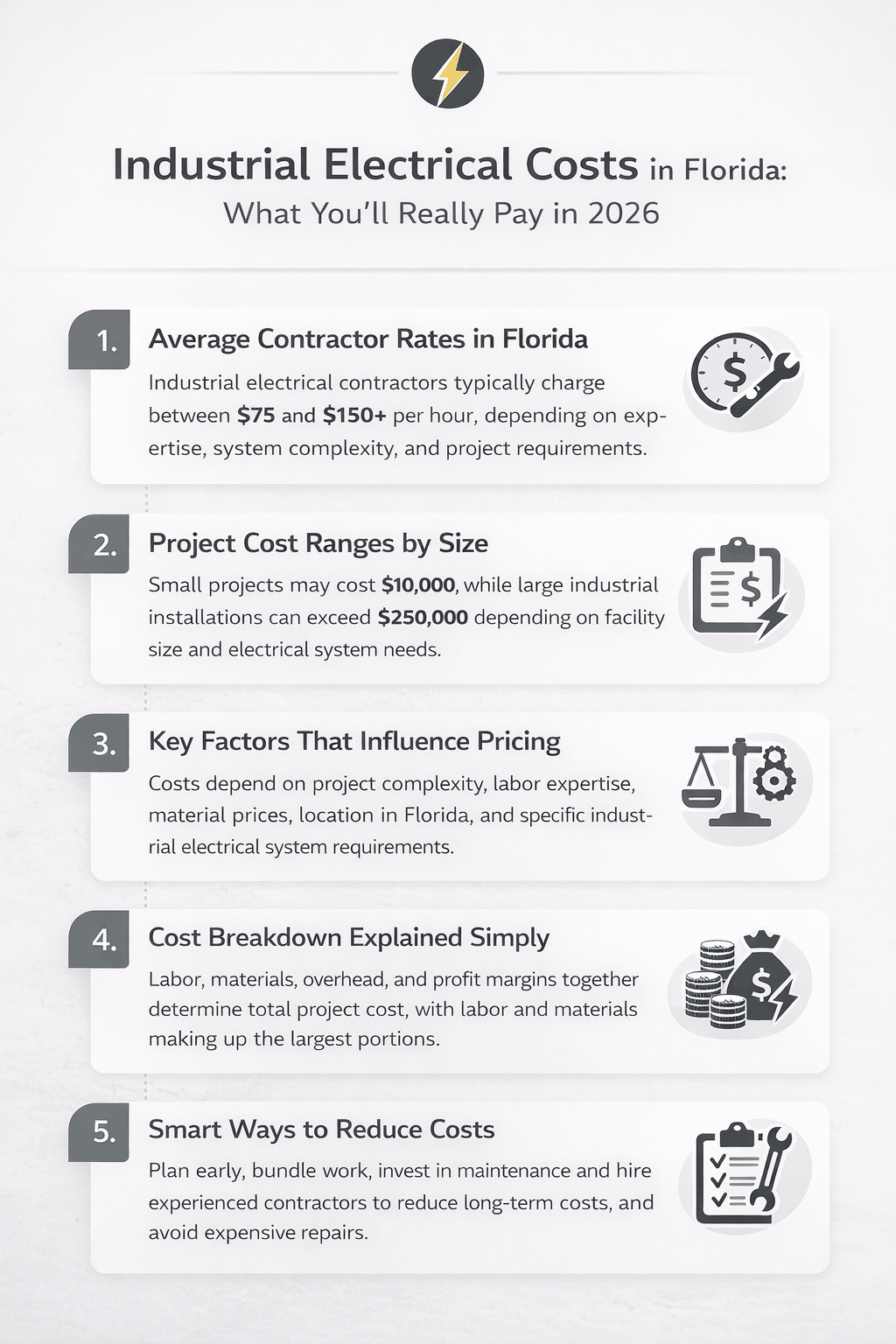
The short answer is that most industrial electrical contractors charge between $75 and $150+ per hour, depending on skill level, project size, and system complexity. However, that number only tells part of the story.
Industrial electrical work is very different from residential or even standard commercial jobs. It involves heavy-duty systems, strict safety standards, and specialized expertise. Because of that, pricing can vary widely.
For example, wiring a small warehouse is very different from installing power systems in a manufacturing plant. One may take a few days, while the other can run for months. As a result, costs can range from a few thousand dollars to several hundred thousand.
In this guide, we’ll break everything down in plain terms. You’ll learn what affects pricing, what you should expect to pay, and how to budget your project the right way.
Average Cost of Industrial Electrical Contractors in Florida
Understanding average pricing helps you plan better. While every project is unique, there are clear cost ranges across Florida.
Hourly Rates Breakdown
Most industrial electrical contractors charge by the hour for smaller jobs or service work. Rates depend on experience and specialization.
-
Basic industrial electrical work: $75–$95 per hour
-
Licensed, experienced contractors: $95–$125 per hour
-
Highly specialized experts (PLC, automation, heavy systems): $125–$150+ per hour
In general, the more complex your system, the higher the hourly rate. For example, a contractor working on motor controls or automation systems will charge more than one for handling basic wiring.
Also, keep in mind that industrial electricians often work in teams. So, hourly costs may multiply based on crew size.
Flat-Rate vs Project-Based Pricing
For larger industrial jobs, contractors usually don’t charge hourly. Instead, they provide a project-based quote.
This type of pricing includes:
-
Labor costs
-
Materials and equipment
-
Project management
-
Overhead and profit margin
Flat-rate pricing is common for:
-
New construction projects
-
Full system installations
-
Large upgrades or retrofits
This approach gives you a clear total cost upfront. However, changes in scope can still increase the final price.
Minimum Service Fees & Call-Out Charges
Even small jobs come with base costs. Most contractors in Florida charge a minimum service fee, which typically covers the first hour.
-
Typical minimum charge: $100–$200
-
Emergency or after-hours service: higher rates
So, even if the job takes only 30 minutes, you’ll still pay the minimum fee.
For urgent repairs, expect premium pricing. Emergency calls often cost significantly more due to availability and risk.
Cost Per Project Type (Industrial Electrical Work)
Industrial electrical costs vary the most based on the type of project. Below is a clear breakdown to help you estimate your budget.
New Industrial Construction Projects
New construction is one of the most expensive types of electrical work. It involves designing and installing complete systems from scratch.
Typical costs depend on facility size and power needs.
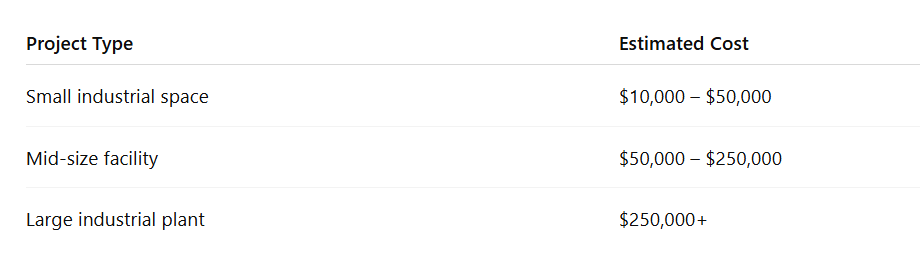
These projects include:
-
Main power distribution
-
Panel installation
-
Lighting systems
-
Backup power systems
Larger facilities often require custom engineering, which increases cost.
Equipment Installation & Machinery Wiring
Industrial facilities rely on heavy machinery. Installing and wiring this equipment requires specialized skills.
Common examples include:
-
Conveyor systems
-
Motor controls
-
PLC (programmable logic controllers)
-
Production line equipment
Costs typically range from $5,000 to $100,000+, depending on complexity. If your system includes automation, expect higher costs due to programming and testing.
Electrical System Upgrades
Upgrading an existing system is common in older facilities. These projects improve safety, efficiency, and capacity.
Typical upgrades include:
-
Electrical panel replacements
-
3-phase power upgrades
-
Energy-efficient lighting systems
Costs vary based on how much of the system needs replacement. Smaller upgrades may cost a few thousand dollars, while full system upgrades can reach six figures.
Maintenance & Repair Services
Ongoing maintenance helps prevent costly breakdowns. Many industrial businesses choose service contracts to keep systems running smoothly.
There are two common options:
-
Preventive maintenance contracts: Lower long-term cost
-
On-demand repairs: Higher cost per visit
Emergency repairs can be expensive, especially if downtime affects production. Because of that, many facilities invest in regular maintenance to avoid disruptions.
Key Factors That Affect Industrial Electrical Costs in Florida
Industrial electrical pricing is not fixed. Several factors shape the final cost. Understanding these helps you plan better and avoid surprises.

Project Size and Complexity
Larger projects cost more, but not always in a straight line. A small job may have a higher cost per unit. In contrast, large projects benefit from scale. Still, complex systems increase labor time and design effort.
For example:
-
Simple wiring in a storage facility → lower cost
-
Multi-system installation in a manufacturing plant → much higher cost
Complex layouts, tight deadlines, and custom requirements all push costs up.
Type of Industrial Facility
Not all industrial spaces are the same. Each type has different electrical needs.
Common facility types include:
-
Manufacturing plants
-
Warehouses and distribution centers
-
Food processing facilities
-
Data centers
For instance, a data center requires backup power and precision systems. On the other hand, a warehouse may need basic lighting and distribution. Because of that, costs can vary widely.
Labor Skill Level Required
Labor is one of the biggest cost drivers. Basic electrical work costs less. However, specialized work requires experienced professionals.
Higher-cost roles include:
-
PLC programmers
-
Automation specialists
-
High-voltage system experts
These professionals charge more because their work is critical and highly technical. Also, skilled labor reduces errors, which saves money in the long run.
Materials and Equipment Costs
Material prices can change often. In fact, they are a major part of your total budget.
Key materials include:
-
Copper wiring
-
Conduit and fittings
-
Panels and breakers
-
Switchgear and transformers
When material prices rise, project costs increase as well. In addition, industrial-grade equipment is more expensive than standard components.
Permits, Codes, and Compliance in Florida
Florida has strict electrical and building codes. These rules protect safety but also add to the cost.
You may need to pay for:
-
Permits
-
Inspections
-
Code compliance updates
If a project fails inspection, rework can increase expenses. Therefore, hiring a qualified contractor from the start is essential.
Location Within Florida
Where your project is located also affects pricing. Costs tend to be higher in major metro areas such as:
-
Miami
-
Fort Lauderdale
Moderate in cities like:
-
Tampa
-
Orlando
Lower in rural areas. Labor availability, demand, and local regulations all play a role. Even travel time can affect contractor pricing.
Industrial vs Commercial Electrical Costs (Important Comparison)
Many business owners assume industrial and commercial electrical work costs the same. That is not the case.
Key Differences in Pricing
Industrial electrical work is more complex. It involves heavier systems and stricter requirements.
Main differences include:
-
Higher voltage systems
-
Larger load capacities
-
More advanced equipment
Because of this, industrial projects often cost significantly more than commercial ones.
Why Industrial Projects Cost More
There are clear reasons behind the higher cost. First, safety standards are stricter. Industrial environments carry more risk, so systems must be built to handle heavy loads safely. Second, systems are often custom-designed. Unlike commercial setups, industrial work is rarely “one-size-fits-all.” Third, downtime can be expensive. Contractors must work efficiently to avoid disrupting operations. This adds pressure and cost.
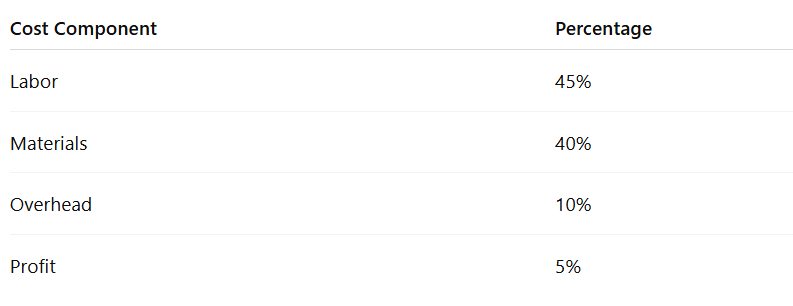
Cost Breakdown: Where Your Money Goes
It helps to understand how your budget is divided. This gives you a clearer picture of where your investment goes.
Labor Costs (40–60%)
Labor is usually the largest portion of the cost.
This includes:
-
Electricians
-
Engineers
-
Project managers
Highly skilled teams cost more, but they also deliver better results.
Materials (30–50%)
Materials take up a large share of the budget.
This includes:
-
Wiring and conduit
-
Panels and breakers
-
Industrial equipment
High-quality materials cost more upfront but last longer.
Overhead & Profit (10–20%)
Contractors include overhead and profit in their pricing.
Overhead covers:
-
Insurance
-
Tools and equipment
-
Administrative costs
Profit ensures the contractor can sustain operations and deliver quality work.
Sample Cost Breakdown Table
Hidden Costs Most Businesses Overlook
When budgeting for industrial electrical work, many costs are easy to miss. These hidden expenses can quickly add up if you’re not prepared.

Downtime Costs
Downtime is often the most expensive part of any industrial project.
If your operations stop, you lose:
-
Production output
-
Revenue
-
Employee productivity
Even a few hours of downtime can cost more than the electrical work itself. That’s why planning and scheduling are critical.
Emergency Repairs
Unexpected failures happen. However, emergency repairs come at a premium.
You may pay for:
-
After-hours labor rates
-
Rush service fees
-
Immediate part replacements
These costs are often much higher than planned work. In many cases, they could have been avoided with regular maintenance.
Inspection Failures & Rework
If your project doesn’t meet code requirements, you may need to redo part of the work.
This can lead to:
-
Additional labor costs
-
New materials
-
Project delays
Working with an experienced contractor helps reduce this risk.
Maintenance Neglect
Skipping maintenance might save money in the short term. However, it usually leads to bigger problems later.
Without regular checks:
-
Systems wear out faster
-
Small issues turn into major failures
-
Repair costs increase
Preventive maintenance is often the more cost-effective choice over time.
How to Reduce Industrial Electrical Costs (Without Cutting Corners)
Reducing costs doesn’t mean sacrificing quality. In fact, smart planning can save money while improving results.
Plan Projects in Advance
Early planning helps avoid rushed decisions.
Benefits include:
-
Better pricing
-
More contractor availability
-
Fewer unexpected changes
Last-minute projects often cost more due to urgency.
Bundle Work Together
Combining multiple tasks into one project can reduce costs.
For example:
-
Upgrading panels and wiring at the same time
-
Scheduling maintenance with upgrades
This approach saves on labor and mobilization costs.
Invest in Preventive Maintenance
Routine maintenance helps you avoid expensive repairs.
It allows you to:
-
Catch problems early
-
Extend equipment life
-
Reduce downtime
Over time, this can lead to significant savings.
Choose the Right Contractor (Not Just the Cheapest)
The lowest price is not always the best option.
A more experienced contractor may:
-
Finish the job faster
-
Reduce errors
-
Ensure compliance
In the long run, quality work saves money.
How to Choose the Right Industrial Electrical Contractor in Florida
Choosing the right contractor is one of the most important decisions you’ll make. It directly affects cost, safety, and project success.
Licensing & Certifications
Always verify that your contractor is properly licensed in Florida.
This ensures:
-
Compliance with state laws
-
Proper training and qualifications
Unlicensed work can lead to serious issues and added costs.
Experience with Industrial Systems
Industrial projects require specific expertise.
Look for experience in:
-
3-phase power systems
-
Automation and PLCs
-
Heavy equipment wiring
Contractors with industrial experience are better prepared for complex jobs.
Insurance & Liability Coverage
Proper insurance protects your business.
Make sure the contractor has:
-
General liability insurance
-
Workers’ compensation
This reduces your risk in case of accidents or damage.
Portfolio & Past Projects
A strong track record matters.
Ask for:
-
Previous project examples
-
Case studies
-
Client references
This gives you confidence in their ability to handle your project.
Questions to Ask Before Hiring
Before you commit, ask clear questions:
-
What types of industrial projects have you completed?
-
Do you offer maintenance plans?
-
How do you handle unexpected costs?
-
What is your estimated timeline?
These answers help you make a more informed decision.

Industrial Electrical Cost Examples (Real-World Scenarios)
Looking at real-world examples makes pricing easier to understand.
Small Warehouse Upgrade
-
Panel upgrade and lighting improvements
-
Estimated cost: $8,000 – $25,000
This type of project is straightforward but still requires proper planning.
Manufacturing Plant Installation
-
Full electrical system setup
-
Includes machinery wiring and distribution systems
-
Estimated cost: $100,000 – $500,000+
Costs increase based on size and system complexity.
Emergency Repair Case
-
Sudden system failure during operations
-
Emergency service call and repairs
Typical costs:
-
Planned repair: $2,000 – $5,000
-
Emergency repair: $5,000 – $15,000+
This shows how urgent situations can significantly increase costs.
Florida Electrical Regulations and Their Impact on Costs
Electrical work in Florida is not just about installation. It must meet strict state and local regulations. These rules protect safety, but they also affect your overall cost.
State Licensing Requirements
In Florida, electrical contractors must be properly licensed.
This ensures they have:
-
Verified training and experience
-
Knowledge of state codes
-
Legal authorization to perform work
Hiring a licensed contractor may cost more upfront. However, it reduces the risk of poor work, fines, or project delays.
Building Codes & Compliance Costs
Florida follows strict building and electrical codes. Every industrial project must meet these standards.
This often includes:
-
System design approvals
-
Multiple inspections
-
Code-compliant materials
If your project fails inspection, you may need to fix and resubmit. That means extra time and added cost.
OSHA & Safety Standards
Industrial environments come with higher risks. Because of that, safety regulations are stricter.
Contractors must follow OSHA guidelines, which may require:
-
Protective equipment
-
Safety training
-
Proper installation methods
These safety steps add to labor time. Still, they are essential for protecting workers and your facility.
Future Trends Affecting Industrial Electrical Costs in Florida
Industrial electrical costs are not static. Several trends are shaping pricing across Florida.
Rising Material Costs
Material prices continue to change, especially for:
-
Copper wiring
-
Steel conduit
-
Electrical components
Supply chain issues and demand can push prices higher. As a result, project costs may increase over time.
Automation & Smart Systems
More facilities are moving toward automation.
This includes:
-
Smart control systems
-
PLC-based operations
-
Energy monitoring systems
These systems cost more upfront. However, they improve efficiency and reduce long-term expenses.
Energy Efficiency Regulations
Energy efficiency is becoming a bigger focus.
Businesses are investing in:
-
LED lighting upgrades
-
Energy-efficient equipment
-
Power management systems
While these upgrades require investment, they often lower operating costs over time.
Cost Comparison: Hiring vs In-House Electrical Team
Some businesses consider building an in-house electrical team. Others prefer hiring contractors. Each option has its pros and cons.
Pros of Hiring Contractors
Hiring a contractor offers flexibility and expertise.
Benefits include:
-
Access to specialized skills
-
No long-term payroll costs
-
Scalable workforce based on project size
This is ideal for large or complex projects.
Pros of In-House Teams
An in-house team can handle ongoing needs.
Advantages include:
-
Faster response time
-
Better familiarity with your facility
-
Long-term cost control for frequent work
However, hiring and maintaining a team can be expensive.
Which Option is Better?
The right choice depends on your needs.
-
For large, one-time projects → contractors are usually better
-
For ongoing maintenance → in-house teams may make sense
Many businesses use a mix of both for the best results.
Final Thoughts: Budgeting Smart for Industrial Electrical Work in Florida
Hiring an industrial electrical contractor in Florida is a major investment. Costs can vary widely, but the key is understanding what drives pricing.
To recap:
-
Hourly rates typically range from $75 to $150+
-
Project costs depend on size, complexity, and materials
-
Planning ahead helps control expenses
-
Choosing the right contractor is critical
In the end, the cheapest option is not always the best. Quality work reduces downtime, improves safety, and saves money over time.
When you approach your project with a clear plan, a realistic budget, and an experienced contractor, you set yourself up for long-term success.
Have a project in mind? Call +1 863-624-7000 or email ray@hylton-electric.com. We’ll give you clear pricing and honest advice—no pressure, just real help.
FAQs About the Cost of Hiring an Industrial Electrical Contractor in Florida
How much does an industrial electrical contractor cost per hour in Florida?
Industrial electrical contractors in Florida typically charge between $75 and $150+ per hour, depending on experience and specialization. Entry-level work costs less, while advanced systems like automation or PLC programming fall on the higher end.
Several factors influence hourly rates:
-
Skill level of the electrician
-
Complexity of the system
-
Project urgency (emergency vs scheduled)
For example, a simple wiring repair may stay near the lower range. However, work involving heavy machinery or control systems will cost more. In many cases, contractors also send a team, which increases the total hourly cost. Because of this, it’s important to understand both the hourly rate and how many workers will be on-site.
What is the average cost of a full industrial electrical installation?
The cost of a full industrial electrical installation can range widely, typically from $10,000 to $250,000+, depending on facility size and system complexity.
Key cost drivers include:
-
Size of the building
-
Power requirements
-
Equipment and machinery integration
For smaller facilities like warehouses, costs may stay on the lower end. However, large manufacturing plants or processing facilities often require extensive systems, which increase pricing. These projects usually include power distribution, lighting, panels, and backup systems. Because each project is unique, contractors often provide custom quotes instead of fixed averages.
Why are industrial electrical projects so expensive?
Industrial electrical work is more expensive because it involves complex systems and strict safety standards. Unlike residential jobs, these projects require specialized knowledge and equipment.
Costs increase due to:
-
High-voltage and heavy-load systems
-
Custom engineering and design
-
Strict compliance with safety codes
In addition, downtime risks are high. Contractors must complete work efficiently to avoid interrupting operations. This adds pressure and requires experienced teams. While the upfront cost may seem high, proper installation reduces long-term risks and prevents costly failures.
What factors affect industrial electrical costs the most?
Several factors influence the cost of industrial electrical work. Understanding these helps you budget more accurately.
The main factors include:
-
Project size and complexity
-
Type of facility (warehouse, plant, etc.)
-
Labor skill level required
-
Material and equipment costs
For example, a simple upgrade will cost far less than a full system installation. Similarly, specialized work like automation or PLC programming increases labor costs. Location within Florida also plays a role, as labor rates vary by region.
Is industrial electrical work more expensive than commercial work?
Yes, industrial electrical work is generally more expensive than commercial work. This is because industrial systems are larger, more complex, and require specialized expertise.
Key differences include:
-
Higher voltage systems
-
Heavy machinery integration
-
Advanced control systems
Commercial projects often involve standard lighting and wiring. In contrast, industrial work may include automation, motor controls, and custom setups. These factors increase both labor and material costs. As a result, industrial projects require more planning and higher budgets.
How can I reduce industrial electrical project costs?
You can reduce costs by planning carefully and making smart decisions early in the project.
Effective ways to save include:
-
Planning work in advance to avoid rush fees
-
Bundling multiple tasks into one project
-
Investing in preventive maintenance
Choosing the right contractor is also important. While a lower quote may seem appealing, experienced contractors often complete work faster and with fewer errors. Over time, this reduces repair and downtime costs. In short, smart planning leads to better savings.
What is the typical minimum charge for an electrician in Florida?
Most industrial electrical contractors in Florida charge a minimum service fee of $100 to $200, which usually covers the first hour of work.
This applies even if the job is small or quick. The fee covers:
-
Travel time
-
Initial inspection
-
Basic labor
For emergency or after-hours calls, the minimum charge may be higher. Because of this, it’s often more cost-effective to combine small tasks into one visit rather than scheduling multiple service calls.
Do industrial electricians charge differently from residential electricians?
Yes, industrial electricians typically charge more than residential electricians due to the complexity of their work.
Differences include:
-
Higher skill requirements
-
More advanced systems
-
Greater safety risks
Residential work focuses on homes and simple systems. In contrast, industrial work involves heavy equipment, high-voltage systems, and automation. These factors require specialized training and experience, which increases pricing. As a result, industrial electrical services come at a premium.
What is included in an industrial electrical contractor’s quote?
An industrial electrical quote usually includes all major cost components needed to complete the project.
This often covers:
-
Labor costs
-
Materials and equipment
-
Project management
-
Overhead and profit
For large projects, quotes may also include design and engineering work. However, changes in project scope can increase the final cost. That’s why it’s important to review the quote carefully and ask questions before starting.
How long do industrial electrical projects usually take?
Project timelines vary based on size and complexity. Small jobs may take a few days, while large projects can take several weeks or months.
Factors that affect timelines include:
-
Project scope
-
Availability of materials
-
Permit approvals
For example, a simple upgrade may be completed quickly. However, full system installations require planning, inspections, and testing. Working with an experienced contractor helps keep the project on schedule.
Are permits required for industrial electrical work in Florida?
Yes, most industrial electrical projects in Florida require permits and inspections. These ensure the work meets safety and building codes.
Permits are typically needed for:
-
New installations
-
Major upgrades
-
System modifications
Failing to obtain permits can result in fines or project delays. In addition, unpermitted work may not pass inspection. A licensed contractor will handle permits and ensure compliance, which helps avoid problems later.
What is the cost difference between planned and emergency electrical work?
Emergency electrical work is usually much more expensive than planned work.
The price difference comes from:
-
After-hours labor rates
-
Urgent scheduling
-
Limited preparation time
For example, a repair that costs $3,000 when planned may rise to $10,000 or more during an emergency. In addition, downtime costs can increase overall expenses. Preventive maintenance is the best way to avoid these situations.
How much do industrial electricians make in Florida?
Industrial electricians in Florida typically earn between $22 and $35 per hour, depending on experience and location.
Factors that affect wages include:
-
Skill level
-
Certifications
-
Industry demand
Highly specialized electricians, such as those working with automation systems, may earn more. Contractor rates are higher because they include business costs, overhead, and profit margins. Understanding wages helps explain why contractor pricing varies.
What is 3-phase power, and why does it cost more?
3-phase power is a type of electrical system commonly used in industrial settings. It provides more efficient and stable power for heavy equipment.
It costs more because:
-
Installation is more complex
-
Equipment is more expensive
-
Safety requirements are stricter
While the upfront cost is higher, 3-phase systems are more reliable and efficient. For many industrial facilities, they are essential for operations.
Is preventive maintenance worth the cost?
Yes, preventive maintenance is usually worth the investment. It helps identify problems before they become serious.
Benefits include:
-
Reduced downtime
-
Lower repair costs
-
Longer equipment lifespan
Without maintenance, small issues can turn into major failures. Over time, this leads to higher costs. Regular inspections and servicing help keep systems running smoothly and avoid unexpected expenses.
How do material costs impact electrical project pricing?
Material costs play a major role in total project pricing. In many cases, they make up 30–50% of the total cost.
Key materials include:
-
Copper wiring
-
Panels and breakers
-
Conduit and fittings
Prices for these materials can change due to market conditions. When material costs rise, project costs increase as well. Choosing quality materials may cost more upfront but reduces long-term maintenance expenses.
Can I get a fixed price for an industrial electrical project?
Yes, many contractors offer fixed-price quotes for large projects. This is common for new construction or major installations.
Fixed pricing typically includes:
-
Labor
-
Materials
-
Project management
This approach provides cost clarity upfront. However, changes in scope can still increase the final price. It’s important to define project details clearly before work begins.
What should I look for in an industrial electrical contractor?
Choosing the right contractor is critical for project success.
Look for:
-
Proper licensing and insurance
-
Experience with industrial systems
-
Strong portfolio and references
Also, ask about timelines, pricing structure, and past projects. A qualified contractor will provide clear answers and realistic estimates. This helps ensure your project is completed safely and efficiently.
Does location within Florida affect electrical costs?
Yes, location can influence pricing. Costs are often higher in major cities and lower in rural areas.
Factors include:
-
Labor demand
-
Cost of living
-
Travel distance
For example, projects in Miami may cost more than those in smaller towns. Understanding regional differences helps you plan your budget more accurately.
Is it better to hire a contractor or build an in-house electrical team?
The best option depends on your needs.
Hiring a contractor is ideal for:
-
Large or complex projects
-
Specialized work
An in-house team works better for:
-
Ongoing maintenance
-
Frequent repairs
Many businesses use a mix of both. Contractors handle major work, while in-house teams manage daily needs. This approach offers flexibility and cost control.
Leave a Reply