
Electrical fires are a serious risk for commercial properties. They can start without warning and spread quickly. In many cases, the cause is not a major failure but a small issue that went unnoticed—such as a loose connection or an overloaded circuit.
In a growing city like Lakeland, businesses depend heavily on reliable electrical systems. Offices, retail stores, warehouses, and restaurants all use high-powered equipment every day. As demand increases, so does the risk of overheating, equipment failure, and fire hazards.
Because of this, regular electrical fire prevention inspections are not optional—they are essential. These inspections help identify problems early, reduce downtime, and keep your property compliant with safety codes.
In this guide, you will learn what these inspections include, why they matter in Lakeland, and how they help protect your business, employees, and investment.
What Is an Electrical Fire Prevention Inspection?
An electrical fire prevention inspection is a detailed check of your electrical system. Its main goal is to find risks before they turn into fires.
A licensed electrician reviews key components, including:
-
Electrical panels
-
Wiring systems
-
Circuit breakers
-
Connected equipment
Instead of waiting for something to fail, this process focuses on prevention. It helps catch hidden issues early, when they are easier and less costly to fix.
Why These Inspections Matter
Electrical problems are one of the leading causes of commercial fires. Many of these incidents could be avoided with routine inspections.
Here’s why they matter:
-
Early problem detection: Small issues like loose wires or heat buildup are found before they become dangerous
-
Improved safety: Protects employees, customers, and property
-
Reduced downtime: Prevents unexpected outages that disrupt business operations
-
Lower repair costs: Fixing minor issues is far cheaper than dealing with fire damage
In simple terms, inspections give you control. Instead of reacting to emergencies, you stay ahead of them.
Difference Between Inspection and Maintenance
It is common to confuse inspection with maintenance. However, they serve different roles.
Inspection focuses on:
-
Identifying risks
-
Testing system performance
-
Documenting issues
Maintenance focuses on:
-
Fixing identified problems
-
Replacing worn components
-
Preventing future failures
Both are important. An inspection tells you what is wrong. Maintenance ensures those issues are corrected. When used together, they create a complete safety system.
Why Electrical Fire Prevention Is Critical in Lakeland, Florida
Local Risk Factors
Lakeland’s environment creates unique challenges for electrical systems.
-
High humidity: Moisture can lead to corrosion inside panels and connections
-
Heat: High temperatures increase the risk of overheating and system strain
-
Frequent storms: Lightning and power surges can damage equipment
Over time, these factors weaken electrical components. Without regular inspections, these problems often go unnoticed until failure occurs.
Commercial Growth in Lakeland
Lakeland continues to expand. New businesses, warehouses, and commercial spaces are being developed across the area.
With this growth comes increased electrical demand:
-
Larger systems
-
Higher energy usage
-
More complex equipment
As systems become more complex, the chances of hidden faults also increase. Regular inspections help ensure that these systems remain safe as they scale.
Local Fire Authority Inspections
In Lakeland, commercial properties must follow fire safety regulations enforced by local authorities.
Fire departments conduct routine inspections to check:
-
Electrical safety
-
Fire alarm systems
-
Code compliance
Failing to meet these requirements can lead to:
-
Fines
-
Delays in business operations
-
Increased liability
By scheduling regular electrical inspections, businesses stay prepared and compliant at all times.
Common Causes of Electrical Fires in Commercial Buildings
Faulty Wiring and Aging Systems
Older wiring systems are one of the most common causes of electrical fires. Over time, insulation breaks down, and connections become loose.
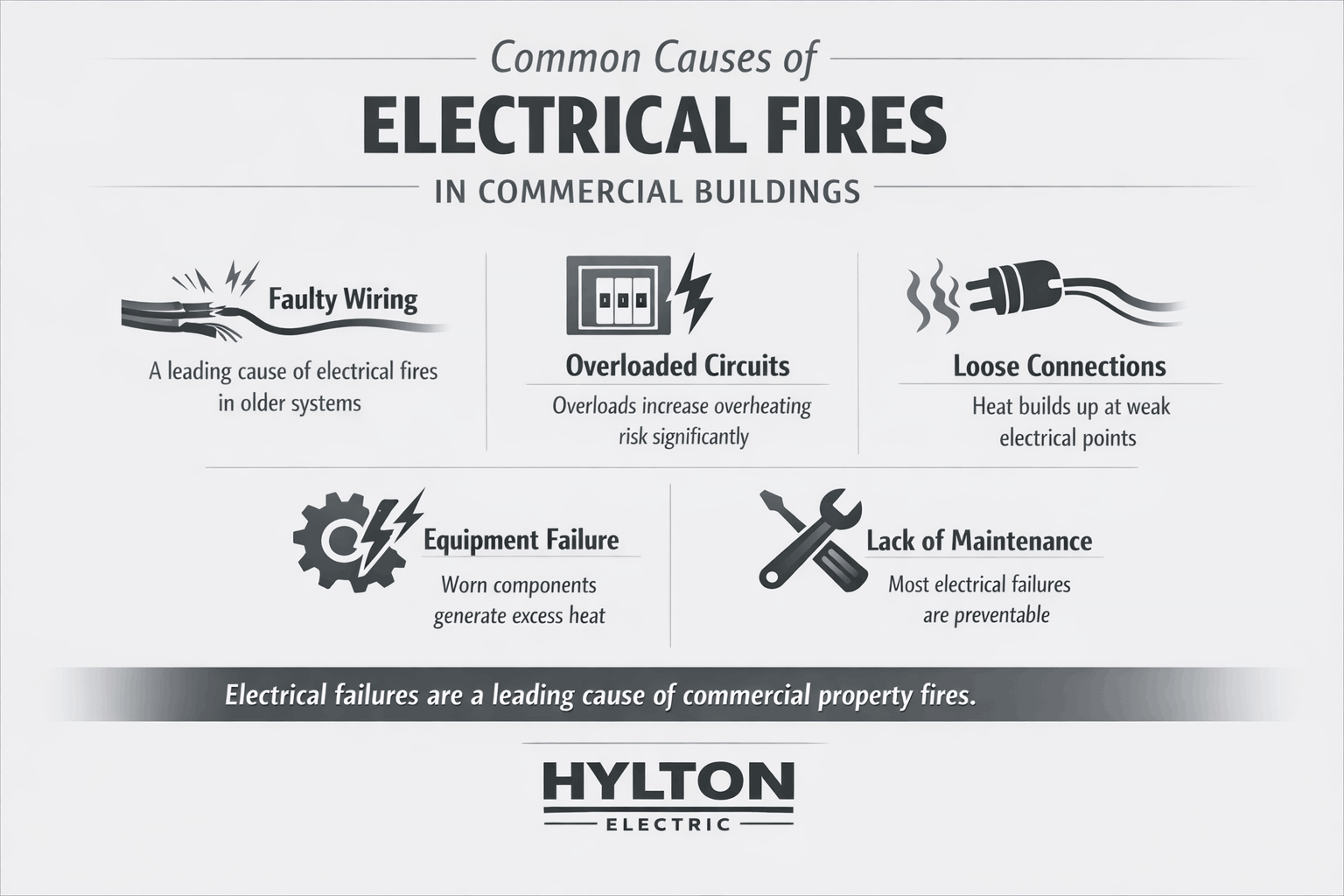
This can lead to:
-
Heat buildup inside the walls
-
Arcing between wires
-
Increased fire risk
Buildings that have not been updated in years are especially vulnerable.
Overloaded Circuits
Modern businesses use more equipment than ever before. When too many devices run on the same circuit, it can exceed safe limits.
Common signs include:
-
Frequent breaker trips
-
Warm outlets or panels
-
Flickering lights
If ignored, overloaded circuits can overheat and start a fire.
Equipment Failure
Electrical equipment does not last forever. Motors, transformers, and breakers can fail due to wear and tear. When equipment begins to fail, it often generates excess heat. Without inspection, these warning signs may go unnoticed.
Lack of Preventive Maintenance
Dust, dirt, and debris can build up inside electrical panels and equipment. This reduces efficiency and traps heat.
Without routine cleaning and maintenance:
-
Systems run hotter
-
Components wear out faster
-
Fire risks increase
Human Errors
Mistakes during installation or repair can create serious hazards.
Examples include:
-
Improper wiring
-
Loose connections
-
Incorrect breaker sizing
Even small errors can lead to major consequences if not corrected early.
What Is Included in an Electrical Fire Prevention Inspection?
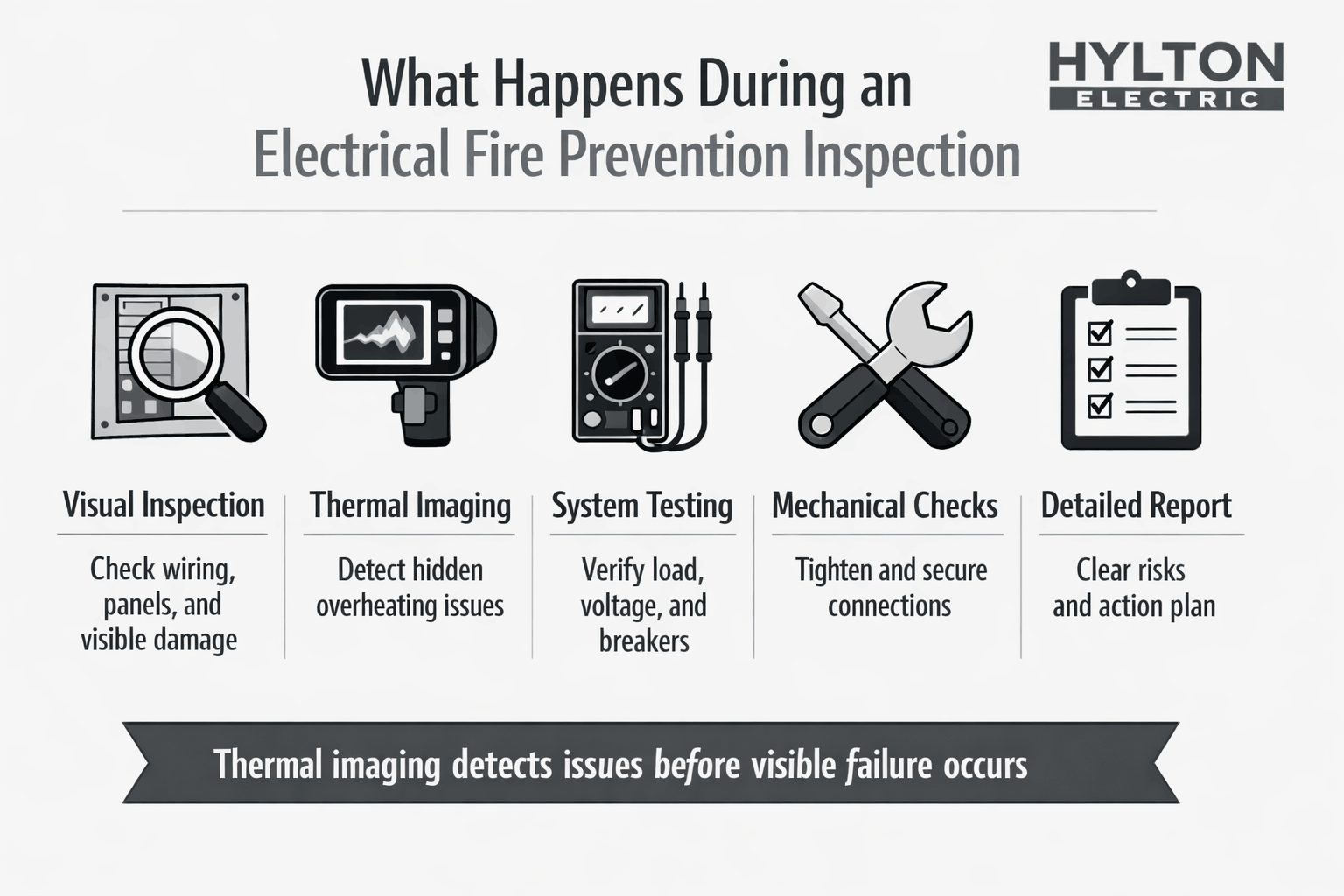
Visual Inspection
The first step in any inspection is a detailed visual review. This helps identify obvious risks before moving into advanced testing.
An electrician will check:
-
Condition of wiring and insulation
-
Signs of wear, corrosion, or overheating
-
Panel accessibility and proper labeling
-
Evidence of burn marks or discoloration
This step may seem basic, but it often reveals issues that have been developing for months or even years.
Infrared Thermal Imaging (Critical Step)
Not all electrical problems are visible. Some develop inside components where they cannot be seen. That’s where thermal imaging becomes essential. Infrared cameras detect heat patterns in electrical systems. This allows electricians to find hotspots before they lead to failure.
Common components scanned include:
-
Electrical panels
-
Circuit breakers
-
Switchgear
-
Transformers
-
Motors
If a connection is loose or overloaded, it will show as a temperature increase. Fixing it early prevents serious damage and reduces fire risk.
Electrical Testing
After the visual and thermal checks, electricians perform system testing. This step confirms that everything is operating within safe limits.
Typical tests include:
-
Voltage testing
-
Load and balance checks
-
Circuit breaker performance testing
-
Grounding system verification
These tests help identify hidden issues that may not show visible signs but still pose a risk.
Mechanical Checks
Electrical systems also have mechanical components that require attention. Loose or worn parts can create resistance, which leads to heat buildup.
During this phase, electricians will:
-
Tighten connections to proper torque levels
-
Inspect moving parts
-
Check for vibration-related wear
This ensures the system remains stable and secure during daily operation.
Documentation and Reporting
Every professional inspection ends with a detailed report. This document is important for both safety and compliance.
A standard report includes:
-
Summary of findings
-
Identified risks with severity levels
-
Photos (including thermal images)
-
Recommended repairs or upgrades
This gives business owners a clear action plan. It also serves as proof of compliance during audits or insurance reviews.
NFPA Standards for Electrical Fire Prevention Inspections
NFPA 70 (National Electrical Code)
The National Fire Protection Association developed NFPA 70, also known as the National Electrical Code (NEC).
This code focuses on:
-
Safe installation of electrical systems
-
Proper wiring methods
-
Equipment standards
While it does not cover maintenance, it sets the foundation for safe system design.
NFPA 70B (Electrical Maintenance Standard)
NFPA 70B is directly related to fire prevention. It focuses on maintaining electrical systems over time.
It includes guidance on:
-
Routine inspections
-
Preventive maintenance schedules
-
Testing procedures
-
Record keeping
For commercial properties, following NFPA 70B helps reduce the risk of unexpected failures and fire hazards.
NFPA 72 (Fire Alarm Systems)
NFPA 72 covers fire detection and alarm systems. While it is not limited to electrical systems, it plays a key role in overall safety.
It ensures:
-
Fire alarms function correctly
-
Detection systems respond quickly
-
Emergency alerts are reliable
When combined with electrical inspections, it provides a complete safety approach.
How These Codes Work Together
Each NFPA standard serves a different purpose, but they are designed to work together.
-
NFPA 70 → Safe installation
-
NFPA 70B → Ongoing maintenance
-
NFPA 72 → Fire detection and response
Together, they create a full system that helps prevent fires, detect risks early, and protect both people and property.
Florida Fire Prevention Code Requirements
Overview of Florida Fire Code
The Florida Fire Prevention Code is the main standard for fire safety across the state. It is based on national guidelines but adapted for local conditions.
It covers:
-
Fire prevention systems
-
Electrical safety requirements
-
Inspection procedures
The code is updated regularly to reflect new safety practices and technologies.
Local Enforcement in Lakeland
In Lakeland, local fire authorities enforce these regulations through routine inspections.
They review:
-
Electrical system safety
-
Fire protection systems
-
Overall code compliance
Businesses are expected to maintain safe conditions at all times, not just during inspections.
Consequences of Non-Compliance
Ignoring fire prevention requirements can lead to serious consequences.
These may include:
-
Fines and penalties
-
Failed inspections
-
Temporary business closure
-
Increased insurance costs
More importantly, non-compliance increases the risk of electrical fires, which can cause severe damage and safety hazards.
How Often Should Electrical Inspections Be Done?
Recommended Frequency
Electrical inspections should be done on a regular schedule. This helps catch issues early and keeps systems running safely.
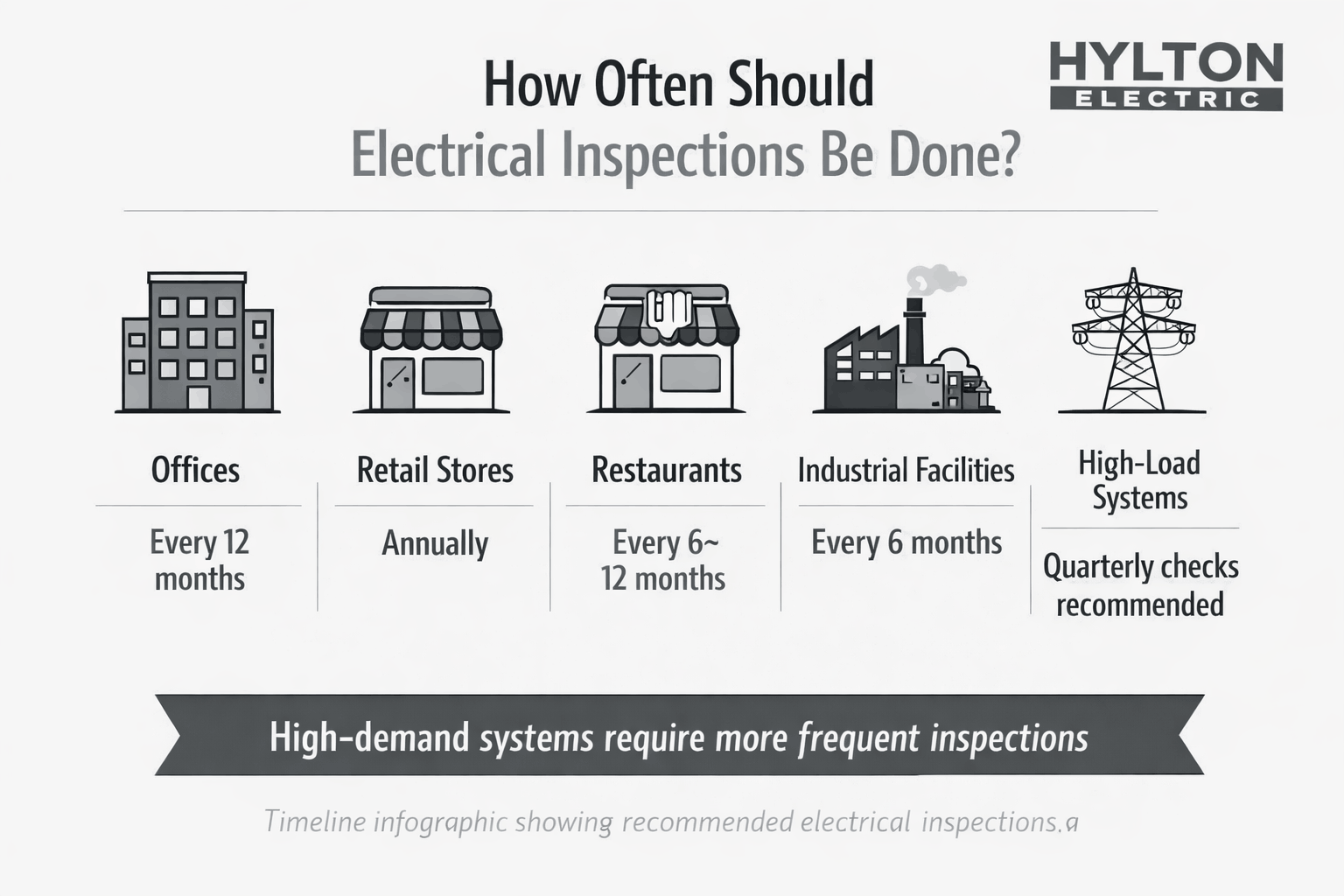
For most commercial properties:
-
Annual inspections are recommended as a baseline
-
Infrared thermal scans should be done at least once a year
-
High-risk systems may require more frequent checks
This schedule aligns with general safety guidelines and helps reduce long-term risk.
Industry-Based Frequency
Different businesses have different electrical demands. Because of this, inspection frequency can vary by industry.
-
Office buildings
-
Lower load demand
-
Inspection: once per year
-
-
Retail stores
-
Moderate usage with lighting and HVAC
-
Inspection: once per year
-
-
Restaurants
-
Heavy equipment usage
-
Inspection: every 6–12 months
-
-
Industrial facilities and warehouses
-
High load and continuous operation
-
Inspection: every 6 months or as needed
-
Adjusting the inspection schedule based on usage ensures better safety and performance.
Signs You Need an Immediate Inspection
Sometimes, waiting for a scheduled inspection is not enough. Certain warning signs indicate that your system needs attention right away.
Watch for:
-
Flickering or dimming lights
-
Frequent circuit breaker trips
-
Burning smells near outlets or panels
-
Warm or discolored outlets
-
Unusual buzzing sounds
If any of these occur, it is best to schedule an inspection immediately. Acting early can prevent serious damage.
Benefits of Electrical Fire Prevention Inspections
Reduced Fire Risk
The main benefit is simple—lower risk of electrical fires.
By identifying issues early, inspections help prevent:
-
Overheating components
-
Electrical arcing
-
System failures
This keeps your building and occupants safe.
Lower Energy Costs
Faulty or inefficient electrical systems often waste energy. Loose connections and overloaded circuits can reduce system performance.
Regular inspections help:
-
Improve efficiency
-
Reduce unnecessary energy use
-
Lower monthly utility costs
Over time, these savings can be significant.
Insurance Compliance
Many insurance providers expect businesses to maintain safe electrical systems.
Regular inspections can:
-
Support insurance requirements
-
Reduce liability risks
-
Help with claims if issues arise
Without proper documentation, claims may be delayed or denied.
Increased Equipment Lifespan
Electrical equipment is a major investment. When systems overheat or operate under stress, they wear out faster.
Inspections help:
-
Extend equipment life
-
Reduce repair frequency
-
Maintain consistent performance
This leads to better long-term value.
Business Continuity
Unexpected electrical failures can stop operations immediately. For many businesses, even a short outage can result in lost revenue.
Preventive inspections help:
-
Avoid sudden breakdowns
-
Maintain reliable operations
-
Reduce downtime
This keeps your business running smoothly.
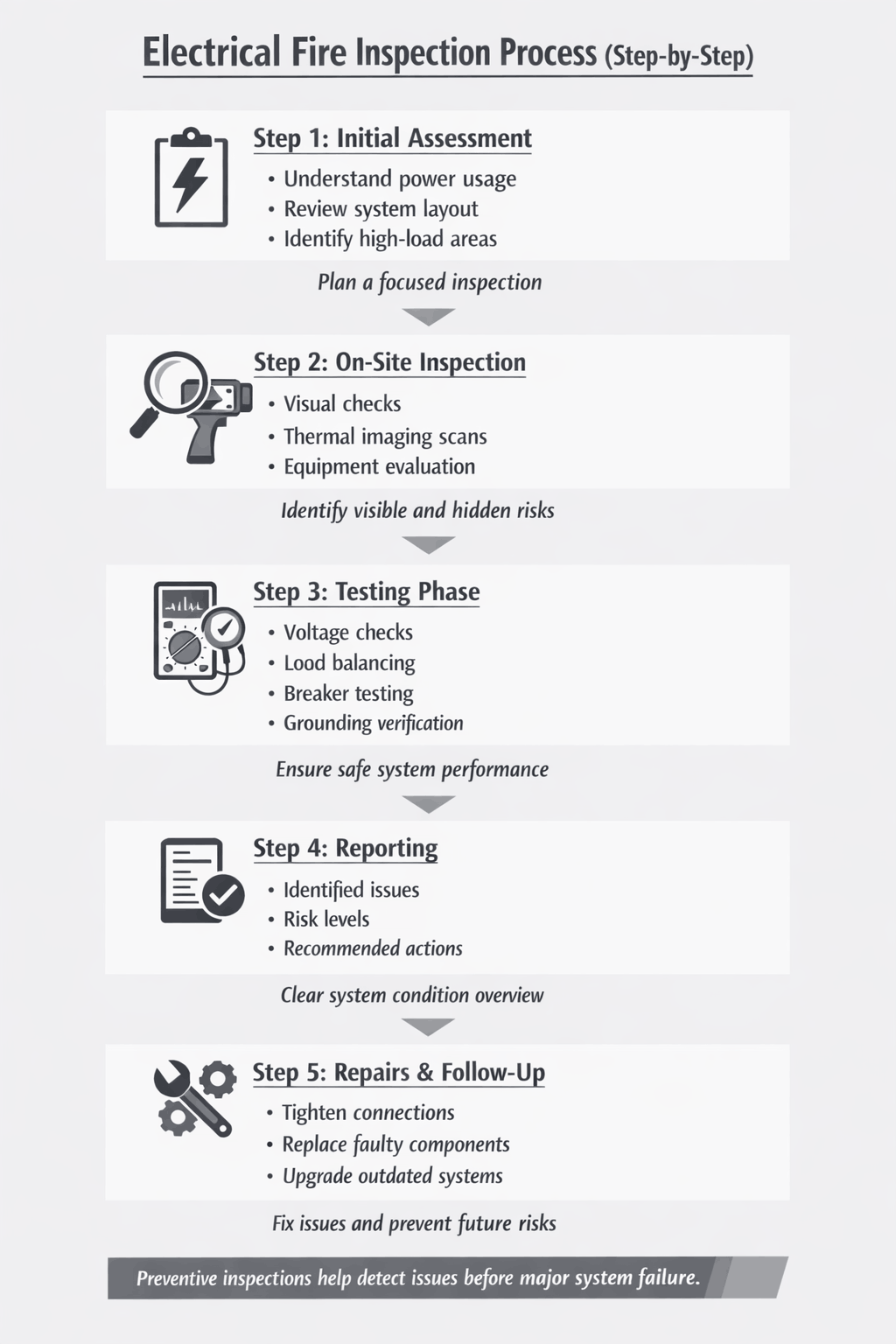
Electrical Fire Inspection Process (Step-by-Step)
Step 1: Initial Assessment
The process begins with a review of your property and electrical system.
This includes:
-
Understanding power usage
-
Reviewing system layout
-
Identifying high-load areas
This step helps the electrician plan a focused inspection.
Step 2: On-Site Inspection
Next comes the physical inspection of the system.
This includes:
-
Visual checks
-
Thermal imaging scans
-
Equipment evaluation
The goal is to identify both visible and hidden risks.
Step 3: Testing Phase
After inspection, detailed testing is performed to verify system performance.
Tests may include:
-
Voltage checks
-
Load balancing
-
Breaker testing
-
Grounding verification
This ensures everything is operating within safe limits.
Step 4: Reporting
Once the inspection is complete, a report is created.
This report outlines:
-
Identified issues
-
Risk levels
-
Recommended actions
It gives you a clear understanding of your system’s condition.
Step 5: Repairs and Follow-Up
The final step is addressing any issues found during the inspection.
This may include:
-
Tightening connections
-
Replacing faulty components
-
Upgrading outdated systems
Follow-up inspections may also be scheduled to confirm that all issues have been resolved.
Cost of Electrical Fire Prevention Inspection in Lakeland
Average Cost Factors
The cost of an inspection can vary depending on several factors.
Key factors include:
-
Size of the building
-
Complexity of the electrical system
-
Type of inspection performed
-
Equipment used (such as thermal imaging)
Larger and more complex systems typically require more time and resources.
Typical Price Range
While costs can vary, general ranges include:
-
Small commercial properties → lower cost range
-
Medium-sized buildings → moderate cost
-
Large industrial facilities → higher cost
It’s best to request a custom quote based on your specific property.
Return on Investment (ROI)
An inspection is not just a cost—it is an investment in safety and reliability.
Benefits include:
-
Preventing costly fire damage
-
Avoiding emergency repairs
-
Reducing insurance risks
-
Improving system efficiency
In many cases, the cost of an inspection is far lower than the cost of a single electrical failure.
Choosing the Right Electrical Inspection Company in Lakeland
Key Qualities to Look For
Not all electrical contractors offer the same level of service. Choosing the right company makes a big difference in safety and results.
Look for:
-
Licensed and insured electricians: Ensure work meets professional and legal standards
-
Experience with commercial systems: Commercial setups are more complex than residential ones
-
Knowledge of NFPA standards: Helps ensure full compliance with safety codes
-
Use of advanced tools: Thermal imaging and testing equipment improves accuracy
A qualified company will focus on both safety and long-term reliability.
Questions to Ask Before Hiring
Before scheduling an inspection, ask a few key questions. This helps you understand their process and expertise.
-
Do you follow NFPA 70B maintenance guidelines?
-
Do you provide detailed inspection reports?
-
Is thermal imaging included in your service?
-
Are your inspections compliant with Florida codes?
Clear answers to these questions show professionalism and transparency.
Red Flags to Avoid
Some contractors may offer low prices but cut corners. This can lead to missed issues and higher risks.
Watch out for:
-
No written reports or documentation
-
Very quick inspections with limited testing
-
Lack of certifications or licensing
-
Vague or unclear recommendations
A proper inspection takes time and attention to detail.
Preventive Maintenance Tips to Avoid Electrical Fires
Regular Maintenance Checklist
Routine maintenance plays a major role in fire prevention. Small steps can prevent major problems.
Follow this basic checklist:
-
Inspect wiring for damage or wear
-
Keep electrical panels clean and free of dust
-
Ensure panels remain accessible
-
Check for loose connections
-
Monitor load balance across circuits
Staying consistent with these checks improves system safety.
Upgrade Outdated Systems
Older systems may not handle modern electrical demands. As equipment usage increases, outdated components can become unsafe.
Consider upgrading:
-
Electrical panels
-
Circuit breakers
-
Wiring systems
Upgrades improve both safety and performance, especially in older buildings.
Employee Safety Practices
Employees also play a role in preventing electrical hazards. Simple habits can reduce risk significantly.
Encourage:
-
Reporting electrical issues immediately
-
Avoiding overloaded outlets
-
Using equipment properly
-
Keeping electrical areas clear
A well-informed team adds an extra layer of protection.
Commercial vs Residential Electrical Fire Inspections
Key Differences
Commercial and residential inspections are not the same. The commercial systems are larger and more complex.
Commercial inspections:
-
Involve higher voltage systems
-
Include heavy equipment and machinery
-
Require detailed testing and documentation
Residential inspections:
-
Focus on smaller systems
-
Simpler layouts
-
Fewer compliance requirements
Because of this, commercial inspections require more expertise and planning.
Compliance Requirements
Commercial properties must meet stricter safety standards.
These include:
-
Regular inspections
-
Detailed documentation
-
Compliance with fire and electrical codes
Residential properties have fewer requirements, but safety is still important in both cases.
Future Trends in Electrical Fire Prevention
Smart Monitoring Systems
New technology is changing how electrical systems are managed.
Smart systems can:
-
Monitor performance in real time
-
Detect unusual activity
-
Alert users to potential issues
This allows problems to be addressed before they become serious.
Predictive Maintenance
Instead of reacting to failures, businesses are now using data to predict them.
Predictive systems analyze:
-
Load patterns
-
Temperature changes
-
Equipment behavior
This helps identify risks early and plan maintenance more effectively.
IoT Sensors in Electrical Systems
Internet-connected sensors are becoming more common in commercial buildings.
These sensors:
-
Track system conditions continuously
-
Provide real-time alerts
-
Improve overall system visibility
As technology improves, these tools will become a standard part of fire prevention strategies.
Why Your Lakeland Business Needs Regular Electrical Inspections
Legal Protection
Staying compliant with safety codes helps protect your business from legal issues.
Regular inspections:
-
Ensure adherence to regulations
-
Reduce liability risks
-
Provide documentation during audits
Financial Protection
Electrical fires can cause serious financial damage. Repairs, downtime, and lost inventory can add up quickly.
Preventive inspections help:
-
Avoid major repair costs
-
Reduce the risk of business interruption
-
Protect long-term investments
Safety of Employees and Customers
Safety should always be the top priority. Electrical hazards can put lives at risk if not addressed.
Regular inspections help:
-
Identify hidden dangers
-
Maintain a safe environment
-
Build trust with employees and customers
Electrical issues often go unnoticed until it is too late. A simple inspection today can prevent major problems tomorrow.
If you want to keep your business safe, efficient, and compliant, now is the time to act. Schedule a professional electrical fire prevention inspection and make sure your system is working as it should.
- Phone number: +1 863-624-7000
- Email: ray@hylton-electric.com
FAQs About Electrical Fire Prevention Inspection Lakeland
What is an electrical fire prevention inspection?
An electrical fire prevention inspection is a detailed evaluation of your electrical system to identify risks before they cause a fire. It focuses on key components like panels, wiring, and breakers.
It typically includes:
-
Visual inspection of wiring and equipment
-
Thermal imaging to detect overheating
-
Electrical testing for performance
This proactive approach helps prevent failures, reduce hazards, and keep your business compliant with safety standards.
Why are electrical fire inspections important for businesses?
Electrical fires can cause serious damage, downtime, and safety risks. Inspections help detect issues early, before they escalate.
They are important because they:
-
Reduce fire hazards
-
Protect employees and customers
-
Prevent costly repairs
In addition, regular inspections show that your business follows safety practices, which is important for insurance and compliance.
How often should a commercial electrical inspection be performed?
Most commercial properties should schedule inspections at least once a year. However, frequency depends on usage and risk level.
For example:
-
Offices → annually
-
Restaurants → every 6–12 months
-
Industrial facilities → every 6 months
If your system shows warning signs like overheating or breaker trips, an immediate inspection is recommended.
What are the most common causes of electrical fires?
Electrical fires often start due to small issues that go unnoticed over time.
Common causes include:
-
Faulty or aging wiring
-
Overloaded circuits
-
Loose electrical connections
-
Equipment failure
Regular inspections help identify these risks early and prevent dangerous situations from developing.
What does an electrical inspection include?
A professional inspection covers multiple layers of your electrical system to ensure safety and performance.
It usually includes:
-
Visual checks for damage or wear
-
Thermal imaging to detect hotspots
-
Load and voltage testing
-
Detailed reporting with recommendations
This comprehensive process ensures that both visible and hidden issues are identified.
Is thermal imaging necessary during an inspection?
Yes, thermal imaging is one of the most effective tools for fire prevention. It detects heat patterns that are not visible to the naked eye.
It helps identify:
-
Overloaded circuits
-
Loose connections
-
Failing components
By catching these issues early, thermal imaging plays a critical role in preventing electrical fires.
Are electrical inspections required by law in Florida?
Commercial properties in Florida must follow the Florida Fire Prevention Code, which includes electrical safety requirements.
Local authorities in Lakeland enforce these regulations through routine inspections. Businesses are expected to maintain safe systems at all times.
Failing to comply can result in fines, failed inspections, or operational delays.
How long does an electrical fire inspection take?
The duration of an inspection depends on the size and complexity of the property.
In general:
-
Small buildings → a few hours
-
Medium properties → half to full day
-
Large facilities → full day or more
A thorough inspection takes time, as multiple tests and checks are performed to ensure accuracy.
Can electrical inspections reduce insurance premiums?
In many cases, yes. Insurance providers prefer businesses that actively manage risk.
Regular inspections can:
-
Demonstrate compliance
-
Reduce liability
-
Support claims documentation
While not guaranteed, maintaining a safe electrical system may help lower premiums or improve coverage terms.
What are signs that my building needs an inspection immediately?
Certain warning signs indicate urgent electrical issues that should not be ignored.
Watch for:
-
Burning smells
-
Flickering lights
-
Frequent breaker trips
-
Warm outlets or panels
If you notice any of these, schedule an inspection right away to prevent further damage or fire risk.
What is the difference between electrical inspection and maintenance?
Inspection and maintenance are related but serve different purposes.
-
Inspection identifies problems and risks
-
Maintenance fixes those problems and prevents future issues
Both are necessary. Inspections guide what needs to be repaired, while maintenance ensures your system stays in safe working condition.
Do older buildings need more frequent electrical inspections?
Yes, older buildings are more likely to have outdated wiring and worn components.
These systems may:
-
Struggle with modern electrical demand
-
Have degraded insulation
-
Contain hidden hazards
Because of this, older properties should be inspected more frequently to ensure safety and compliance.
What industries need electrical inspections the most?
All businesses benefit from inspections, but some industries face higher risks due to heavy electrical usage.
High-risk industries include:
-
Restaurants
-
Manufacturing facilities
-
Warehouses
-
Healthcare facilities
These environments rely on continuous power, making regular inspections essential.
Can electrical fires start without warning signs?
Yes, electrical fires can develop without obvious signs, especially if issues occur inside walls or panels.
Hidden risks include:
-
Loose internal connections
-
Overheating components
-
Undetected system faults
This is why routine inspections are critical, even if everything appears to be working normally.
What happens if my property fails an electrical inspection?
If your property fails an inspection, you will receive a report outlining the issues.
Next steps usually include:
-
Addressing identified hazards
-
Completing required repairs
-
Scheduling a follow-up inspection
Taking action quickly helps restore compliance and reduces the risk of further problems.
How much does an electrical fire prevention inspection cost?
Costs vary depending on several factors, including building size and system complexity.
Typical considerations:
-
Small properties → lower cost
-
Larger facilities → higher cost
-
Thermal imaging → may add to cost
Although there is an upfront expense, inspections often save money by preventing major repairs.
Who is qualified to perform electrical inspections?
Electrical inspections should always be performed by licensed and experienced electricians.
Look for professionals who:
-
Understand commercial systems
-
Follow NFPA guidelines
-
Use proper testing equipment
Hiring qualified experts ensures accurate results and reliable recommendations.
Can regular inspections prevent all electrical fires?
While no system can eliminate all risks, regular inspections significantly reduce the chances of electrical fires.
They help by:
-
Identifying hazards early
-
Ensuring systems operate safely
-
Supporting ongoing maintenance
Combined with proper repairs, inspections are one of the most effective prevention methods.
What is included in an electrical inspection report?
An inspection report provides a clear overview of your system’s condition.
It usually includes:
-
Summary of findings
-
Identified risks and severity levels
-
Photos or thermal images
-
Recommended actions
This document helps you prioritize repairs and maintain compliance with safety standards.
Why should I schedule regular inspections instead of waiting for problems?
Waiting for problems often leads to higher costs and greater risks. Electrical issues rarely fix themselves and usually worsen over time.
Regular inspections help:
-
Detect problems early
-
Reduce emergency repairs
-
Maintain system efficiency
A proactive approach keeps your business safe and avoids unexpected disruptions.
Leave a Reply