
The latest electricity data from the U.S. Energy Information Administration (EIA) paints a clear picture: power is getting more expensive across the United States—and the reasons go far beyond simple inflation. This isn’t just another routine energy report. It’s a warning sign.
From rising residential electricity rates to volatile fuel costs and shifting demand patterns, the January 2026 Electricity Monthly Update reveals a complex and evolving energy landscape. And if you’re a homeowner, business owner, or contractor in the electrical space, this matters more than ever.
Let’s break it down in simple terms—and then go deeper into what this really means.
The Big Headline: Electricity Prices Are Climbing Fast
The most important takeaway is this:
-
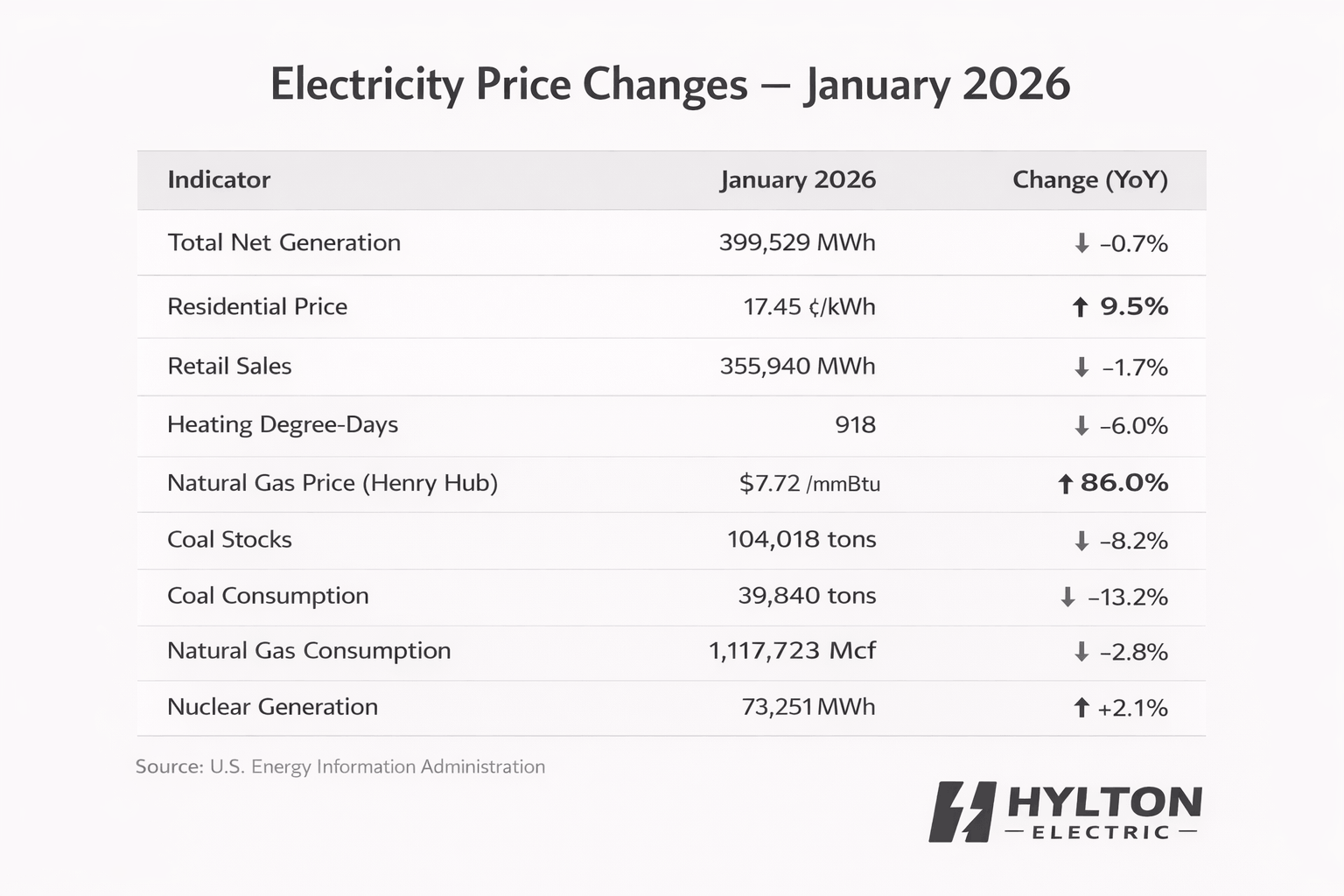
Residential electricity prices rose 9.5% year-over-year
-
Overall, electricity prices increased by 8.3% nationwide
-
The average residential rate reached 17.45 cents per kWh
That’s not a small jump. It’s a significant increase in a single year.
And it’s not just homes:
-
Commercial electricity prices: +6.4%
-
Industrial electricity prices: +11.4%
-
Transportation sector: +29.3% (huge spike)
What does this mean?
Electricity is becoming a bigger expense across the board. Whether it’s your monthly home bill or operating costs for a business, energy is eating up more of the budget.
But Here’s the Twist: People Are Using LESS Electricity
You might expect that higher demand is pushing prices up—but that’s not exactly what’s happening.
-
Total electricity sales fell by 1.7%
-
Residential usage dropped 4.7%
-
Industrial usage dipped slightly as well
So we have a strange situation: Prices are rising, even while consumption is falling
My take: This is a classic sign of structural pressure in the energy system—not just demand-driven pricing. In simple terms, electricity is getting more expensive to produce and deliver, regardless of how much people use.
Why Are Prices Rising? The Real Drivers
Let’s break down the main causes behind these increases.
1. Natural Gas Prices Exploded
One of the biggest shocks in the report:
-
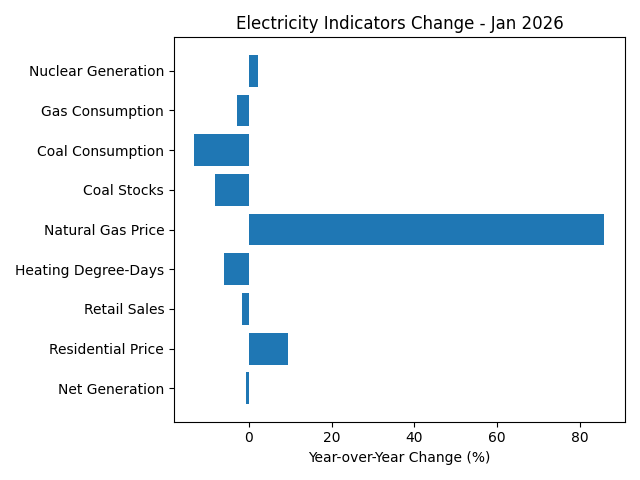
Natural gas prices (Henry Hub) jumped 86% year-over-year
That’s massive. Since natural gas is a primary fuel for electricity generation in the U.S., this directly impacts electricity prices.
My opinion: This is the single biggest driver. When gas prices spike this hard, electricity rates almost have no choice but to follow.
2. Extreme Weather Is Driving Demand Spikes
Weather played a major role:
-
A winter storm in the Southeast pushed demand near all-time highs
-
The Northeast saw higher electricity generation due to colder temperatures
At the same time:
-
Other regions had warmer weather, reducing demand
What this means: The grid is becoming more sensitive to weather extremes. Instead of stable seasonal demand, we’re seeing sharp spikes and drops.
My take: This volatility increases costs. Utilities must prepare for peak demand—even if it only happens occasionally.
3. Fuel Supply Pressures
-
Coal stockpiles dropped by 5% month-over-month
-
Coal consumption fell 13.2%
-
Natural gas consumption also declined slightly
This suggests a shifting fuel mix and potential supply constraints.
My opinion: We’re in an awkward transition phase—moving away from coal but still heavily dependent on natural gas. That creates instability.
4. Regional Imbalances
Not all areas are affected equally:
-
Northeast electricity generation increased 8.2%
-
Most other regions saw declines
Some states saw massive price increases:
-
Washington D.C.: +30.3%
-
Pennsylvania: +21.7%
-
Maryland: +20.9%
My take: This uneven distribution shows how fragmented the U.S. energy system still is. Location matters more than ever.
A Deeper Issue: Electricity Is Becoming Less Predictable
One of the most overlooked insights in this report is not just that prices are rising, but that the system itself is becoming harder to predict.
We’re seeing:
-
Demand spikes due to weather events
-
Fuel price volatility
-
Regional inconsistencies
-
Declining consumption but rising costs
My opinion: This is not a short-term problem. It’s a structural shift in how electricity markets operate.
What This Means for Homeowners
If you own a home, here’s the reality:
1. Your Bills Will Likely Keep Rising
Even if you use less electricity, you may still pay more. That’s already happening.
2. Efficiency Matters More Than Ever
With rising rates, small improvements can make a big difference:
-
LED lighting
-
Smart thermostats
-
Upgraded panels and circuits
My take: Energy efficiency is no longer optional—it’s financial protection.
3. Electrical Systems Need to Be Upgraded
Older homes are especially vulnerable:
-
Outdated panels
-
Inefficient wiring
-
Lack of modern load management
With higher costs, inefficiencies become expensive fast.
What This Means for Businesses
Businesses face an even bigger impact.
1. Operating Costs Are Rising
Electricity is a core expense for:
-
Offices
-
Warehouses
-
Retail spaces
-
Manufacturing
An 8–11% increase is not small—it affects margins.
2. Demand Management Is Becoming Critical
Businesses that manage peak usage can reduce costs significantly.
3. Electrification Is a Double-Edged Sword
While many businesses are moving toward electric systems (EVs, heat pumps, etc.), rising electricity prices complicate that transition.
My opinion: Electrification is still the future—but it needs smarter planning.
The Bigger Picture: Energy Transition Challenges
This report highlights something deeper: The energy transition is not smooth.
We’re seeing:
-
Declining coal use
-
Heavy reliance on natural gas
-
Increasing renewable integration (not detailed here, but ongoing)
But the transition is creating price instability.
My take: We’re in the “messy middle” phase of energy transformation.
And during this phase:
-
Costs go up
-
Systems are stressed
-
Consumers feel the pressure
What Should You Do Right Now?
Let’s make this practical.
For Homeowners
-
Get an electrical inspection
-
Upgrade inefficient systems
-
Monitor energy usage
-
Consider smart home upgrades
For Businesses
-
Audit energy usage
-
Optimize peak demand
-
Invest in efficient equipment
-
Plan for long-term energy costs
And For Property Owners & Investors
-
Energy efficiency increases property value
-
Lower operating costs attract tenants
-
Upgraded electrical systems are a selling point
Final Thoughts: This Is Just the Beginning
The January 2026 report is not a one-time spike—it’s part of a trend.
Key signals:
-
Prices are rising faster than inflation
-
Fuel markets are unstable
-
Demand patterns are changing
-
The grid is under pressure
My honest opinion: Electricity is becoming one of the most important cost factors in modern life—and most people are still underestimating it.
Bottom Line
-
Electricity prices are rising sharply
-
The causes are complex (fuel costs, weather, system changes)
-
Usage is decreasing—but costs are still going up
-
The energy system is becoming less predictable
And most importantly: This trend is likely to continue
If you’re in the electrical, construction, or property space, this is not just news—it’s an opportunity. Because when costs rise and systems get more complex, people need experts more than ever.
For more updates, check our blog page. If you need professional electrical services in Lakeland, Florida, and nearby regions, call us at +1 863-624-7000.
FAQs – Electricity Prices Updates 2026
What is causing electricity prices to rise in 2026?
Electricity prices are increasing due to a combination of fuel costs, weather impacts, and energy system changes.
Key reasons include:
-
Natural gas prices surged by 86% year-over-year
-
Increased operational and supply costs
-
Extreme weather events affecting demand
-
Ongoing transition away from coal
Since natural gas is a major source of electricity generation, rising fuel prices are the biggest driver behind higher electricity rates.
How much have electricity prices increased in 2026?
Electricity prices have increased across all sectors in early 2026.
Here’s a quick breakdown:
-
Residential: +9.5%
-
Commercial: +6.4%
-
Industrial: +11.4%
-
Transportation: +29.3%
-
Overall average: +8.3% nationwide
This shows a broad rise in electricity costs affecting both households and businesses.
Are people using more or less electricity in 2026?
Interestingly, electricity usage has decreased—even as prices rise.
-
Total electricity sales dropped by 1.7%
-
Residential usage fell by 4.7%
-
Industrial usage declined slightly
This means consumers are using less electricity, but still facing higher bills due to rising production and supply costs.
Why are electricity bills higher even when usage is lower?
Electricity bills are rising because the cost of producing electricity has increased, not because people are using more power.
Main factors include:
-
Higher fuel costs (especially natural gas)
-
Infrastructure and grid maintenance expenses
-
Supply chain and energy transition pressures
So even reduced consumption does not guarantee lower bills.
How does natural gas impact electricity prices?
Natural gas is one of the most important fuels used for electricity generation in the U.S.
In 2026:
-
Natural gas prices increased by 86%
This directly affects electricity pricing because:
-
Power plants rely heavily on gas
-
Higher fuel costs increase generation costs
-
These costs are passed on to consumers
In simple terms: when gas prices go up, electricity prices follow.
What role does weather play in electricity price changes?
Weather has become a major factor in electricity demand and pricing.
For example:
-
A winter storm in the Southeast pushed demand near peak levels
-
The Northeast saw 8.2% higher generation due to colder temperatures
At the same time, warmer regions saw reduced demand.
This creates unpredictable demand spikes, which increase system costs and impact electricity prices.
Is electricity generation increasing or decreasing in 2026?
Electricity generation is slightly decreasing overall, but varies by region.
-
Total U.S. generation decreased by 0.7%
-
The Northeast saw an increase due to colder weather
-
Most other regions experienced declines
This uneven pattern reflects changing demand and weather conditions.
How are coal and energy supplies affecting electricity prices?
Coal usage is declining, but the transition is not smooth.
Key changes include:
-
Coal stockpiles dropped by 5%
-
Coal consumption decreased by 13.2%
-
Natural gas remains heavily relied upon
This shift creates a supply imbalance, which contributes to price volatility and higher electricity costs.
Which areas are seeing the biggest electricity price increases?
Electricity price changes vary by location.
Some of the largest increases include:
-
Washington D.C.: +30.3%
-
Pennsylvania: +21.7%
-
Maryland: +20.9%
Meanwhile, a few states saw slight decreases, showing that electricity pricing is highly regional.
Will electricity prices continue to rise in the future?
Electricity prices may continue to rise or remain elevated due to ongoing challenges in the energy sector.
Key factors include:
-
Fuel price volatility
-
Weather-related demand changes
-
Energy system transition
-
Infrastructure costs
While prices may fluctuate, long-term pressure on electricity costs is expected.
How can homeowners reduce electricity costs in 2026?
Homeowners can take several steps to lower electricity bills despite rising prices:
-
Upgrade to energy-efficient appliances
-
Install LED lighting
-
Use smart thermostats
-
Upgrade outdated electrical panels
-
Reduce unnecessary power usage
These improvements help reduce energy waste and improve efficiency.
How can businesses manage rising electricity costs?
Businesses need a more strategic approach to control energy expenses.
Effective steps include:
-
Conducting energy audits
-
Managing peak electricity usage
-
Upgrading to efficient equipment
-
Improving electrical infrastructure
-
Planning for long-term energy costs
Energy efficiency is now a key factor in maintaining profitability.
Why is the electricity system becoming less predictable?
The electricity system is becoming more complex due to multiple changing factors.
These include:
-
Fluctuating fuel prices
-
Weather-driven demand spikes
-
Regional supply differences
-
Transition away from traditional energy sources
As a result, electricity pricing and demand are harder to predict than before.
Leave a Reply