
Electrical work is a big part of running and growing a business in Florida. Whether you are opening a new location, upgrading equipment, or remodelling your space, permits are often required before any work begins. These permits are not just a formality. They help ensure your electrical systems are safe, reliable, and built to current code.
At the same time, the permit process can feel confusing. Rules vary by city, timelines are not always clear, and missing one step can lead to delays or extra costs. Many business owners run into problems simply because they do not know what to expect.
This guide breaks everything down in simple terms. You will learn all about Florida electrical permit requirements, how the process works, what it costs, and how to avoid common mistakes. With the right information and a licensed contractor, you can keep your project moving and avoid unnecessary setbacks.
Understanding Florida Electrical Permit Requirements
What types of electrical work require permits
Most commercial electrical projects in Florida require a permit. This applies to both new construction and existing buildings.
Common examples include:
-
Installing new electrical systems
-
Upgrading electrical panels
-
Rewiring offices or retail spaces
-
Adding lighting or power circuits
-
Installing generators, EV chargers, or solar systems
Even small upgrades can require approval if they affect wiring or load capacity. When in doubt, it is always safer to check with your contractor or local building department.
Work that may be exempt from permits
Not every job requires a permit. Minor repairs and simple replacements are often exempt.
These may include:
-
Replacing light fixtures without changing wiring
-
Swapping switches or outlets
-
Minor maintenance work
However, the definition of “minor” can vary by city or county. What is allowed in one area may require a permit in another. Because of this, it is important to confirm before starting any work.
Skipping this step can lead to delays or penalties later.
State vs local permit requirements explained
Florida sets the overall rules for electrical work, but local governments handle permits. This means each city or county has its own process.
The state provides the foundation through building codes and licensing laws. Local building departments enforce those rules and manage approvals.
For example, the permit process in Miami may differ from the process in Tampa or Orlando. Fees, timelines, and required documents can vary.
Because of these differences, working with a contractor who understands local requirements is important. It helps avoid confusion and keeps your project moving.
Key codes governing electrical permits in Florida
Electrical work in Florida must follow specific codes. These codes set the standard for safety and performance.
The two main ones are:
The NEC focuses on how electrical systems should be installed. It covers wiring methods, grounding, load calculations, and safety rules.
The Florida Building Code adopts the NEC and adds state-specific requirements. Together, they guide how commercial electrical systems are designed and inspected.
Following these codes is not optional. Permits and inspections are based on them, and failing to meet them can lead to failed inspections or rework.
Key Electrical Safety & Permit Statistics (U.S. & Industry Data)
- 2,380 nonfatal electrical injuries occurred in 2020, showing how common electrical hazards still are in workplaces.
- Construction leads in electrical fatalities, with over 900 deaths in recent data, one of the main sectors requiring strict permit compliance.
- Electrical incidents account for about 4% of all workplace deaths, reinforcing the importance of code-compliant installations and inspections.
- OSHA conducted 34,696 inspections in 2024, showing active enforcement of safety standards tied to permits and code compliance.
Types of Electrical Permits for Businesses in Florida

Commercial electrical permits
Commercial electrical permits apply to most business properties. This includes offices, retail stores, restaurants, and warehouses.
If your project involves installing, upgrading, or modifying electrical systems, you will likely need this permit. It covers work such as lighting systems, panel upgrades, and circuit installations.
These permits ensure your electrical setup can handle the building’s load safely. They also confirm that everything meets current code requirements before the space is used.
Industrial electrical permits
Industrial permits are used for facilities with heavy electrical demand. This includes manufacturing plants, processing facilities, and large-scale operations.
These projects often involve complex systems such as:
-
High-voltage equipment
-
Large machinery connections
-
Specialised control systems
Because of the higher risk, inspections are usually more detailed. Plans must clearly show load calculations and system design. If your business relies on equipment or production lines, this type of permit is essential.
Specialty permits
Some electrical work requires a separate or specialised permit. These are common in modern commercial projects.
Examples include:
-
Solar panel installations
-
Fire alarm systems
-
Low-voltage wiring (data, security, communications)
-
EV charging stations
Each of these systems has its own requirements. In many cases, additional inspections are needed before approval.
If your project includes more than one system, you may need multiple permits. Your contractor will usually handle this as part of the planning process.
Temporary and emergency permits
Temporary permits are used when power is needed for a short period. This often applies to construction sites or temporary business setups.
Emergency permits are issued when urgent repairs are required. For example, after storm damage or electrical failure, work may begin quickly, followed by permit approval.
These permits help restore power fast while still keeping the project within legal requirements.
Florida Electrical Licensing and Its Role in Permits
Certified vs registered electrical contractors
Florida recognises two main types of electrical contractors: certified and registered.
- A certified contractor can work anywhere in the state. They meet statewide licensing requirements and can pull permits across Florida.
- A registered contractor is limited to a specific local area. Their license is valid only in the city or county where it was issued.
For businesses with multiple locations, certified contractors often make more sense. They provide consistency across different regions.
Why can only licensed contractors pull permits
In Florida, most electrical permits must be pulled by a licensed contractor. This rule protects both the property owner and the public.
Licensed contractors are trained to follow electrical codes and safety standards. They are also responsible for the quality of the work.
If something goes wrong, the contractor is held accountable. This reduces risk for business owners.
Hiring an unlicensed individual may seem cheaper at first. However, it can lead to failed inspections, fines, or even legal issues. In many cases, unpermitted work must be removed and redone.
Electrical contractor license requirements (2026)
To become a licensed electrical contractor in Florida, individuals must meet strict requirements.
These typically include:
-
Several years of work experience (often 4 or more)
-
Passing a state certification exam
-
Submitting an application with proof of qualifications
-
Carrying liability insurance
Some contractors also complete ongoing education to stay current with code updates. These requirements ensure that licensed professionals understand both technical work and safety regulations.
DBPR and Electrical Contractors’ Licensing Board overview
Electrical licensing in Florida is managed by the Department of Business and Professional Regulation (DBPR). Within this department, the Electrical Contractors’ Licensing Board oversees contractor licensing.
This board handles:
-
Reviewing license applications
-
Approving qualified contractors
-
Enforcing rules and standards
Business owners can verify a contractor’s license through the DBPR system. This is an important step before starting any project.
Working with a properly licensed contractor helps your project move smoothly. It also ensures that permits, inspections, and approvals are handled the right way.
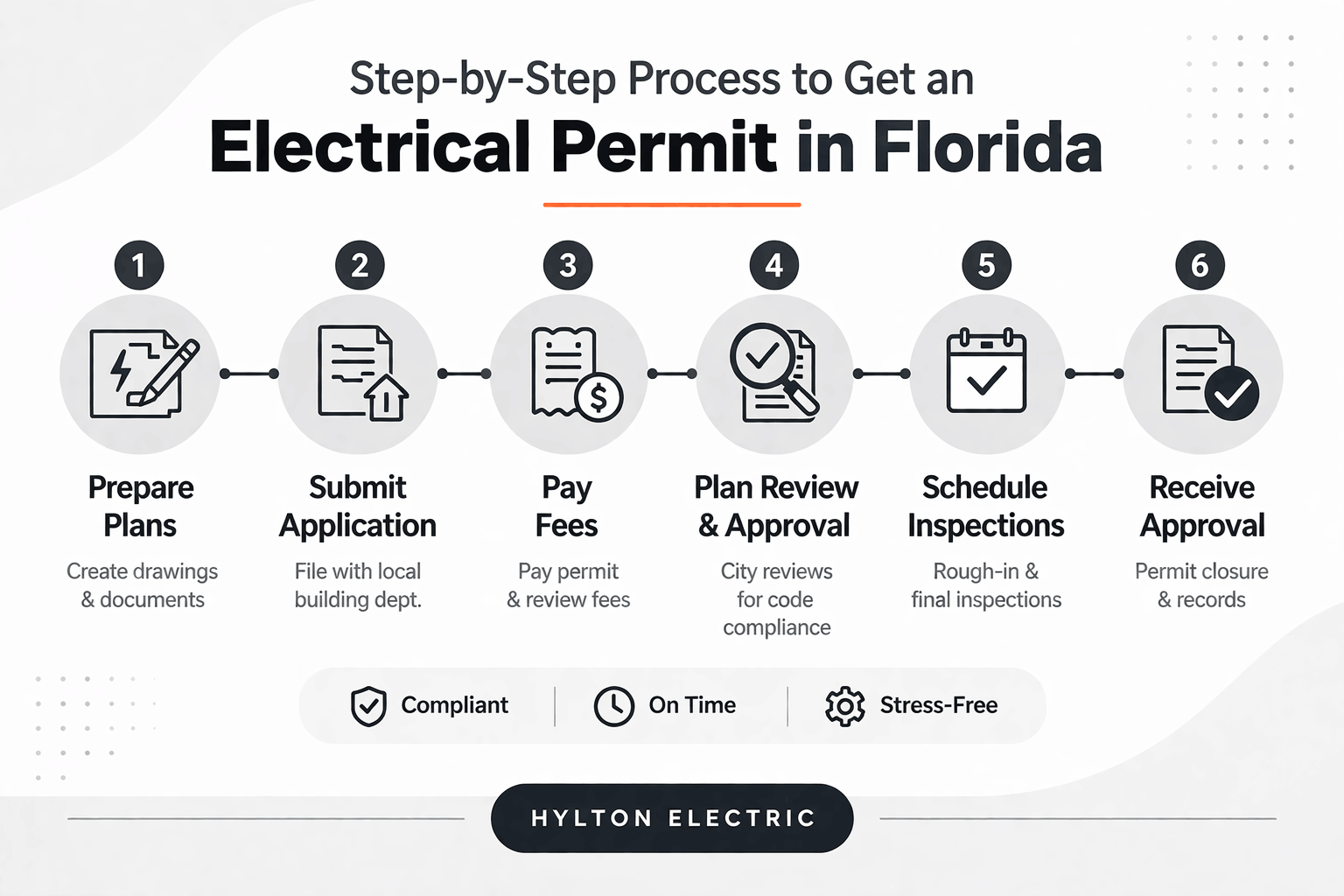
Step-by-Step Process to Get an Electrical Permit in Florida
Step 1: Prepare project plans and documents
Every permit starts with clear documentation. For commercial work, this usually includes electrical drawings and load calculations.
Your contractor will outline the scope of work. This may cover panel layouts, circuit details, and equipment specs. For larger projects, engineered plans may be required.
Accurate plans help avoid delays later. If details are missing, the application may be rejected or sent back for corrections.
Step 2: Submit permit application
Once the plans are ready, the permit application is submitted to the local building department.
Many Florida cities now offer online portals. Others still allow in-person submissions. The application typically includes:
-
Project details
-
Contractor license information
-
Scope of work
-
Supporting documents
Your contractor usually handles this step. They also communicate with the city if any clarification is needed.
Step 3: Pay permit fees
After submission, the next step is paying the required fees. These vary based on the size and type of project.
Fees may include:
-
Base permit fee
-
Plan review fee
-
Administrative costs
Some cities calculate fees based on project value, while others use flat rates for certain types of work.
Paying fees on time helps keep the process moving without delays.
Step 4: Plan review and approval
The building department reviews your plans to ensure they meet code requirements.
If everything looks good, the permit is approved. If not, you may receive comments or corrections. These must be addressed before moving forward.
This step can take a few days for small projects or several weeks for larger ones. Clear and complete plans can speed things up.
Step 5: Schedule inspections
Once the permit is approved, work can begin. During the project, inspections are required at key stages.
Common inspections include:
-
Rough-in inspection (before walls are closed)
-
Final inspection (after work is complete)
Your contractor schedules these with the local inspector. Work must pass each stage before moving forward.
Step 6: Receive permit closure and approval
After passing the final inspection, the permit is closed.
This means the work meets all code requirements and is officially approved. You may receive a certificate of completion or similar documentation.
Keeping this record is important. It can be useful for future renovations, property sales, or insurance purposes.
Electrical Permit Costs in Florida (2026)
Average permit fees for commercial projects
Electrical permit costs in Florida can vary widely. Small projects may cost under $100, while larger commercial jobs can reach several thousand dollars.
Typical ranges include:
-
Minor electrical work: $50 – $300
-
Mid-size commercial upgrades: $300 – $1,500
-
Large-scale projects: $1,500+
The final cost depends on the scope of work, location, and complexity.
Additional costs businesses should expect
Permit fees are only one part of the total cost. There are often additional expenses tied to the process.
These may include:
-
Plan review fees
-
Inspection fees
-
Reinspection fees (if work fails inspection)
-
Expedited processing fees (in some areas)
These costs can add up, especially if the project runs into delays.
Contractor licensing costs (for reference)
While business owners do not pay for contractor licenses directly, it helps to understand the investment contractors make.
Licensing costs can include:
-
Application fees
-
Exam fees
-
Insurance coverage
-
Continuing education
These expenses are one reason why hiring a qualified contractor may cost more upfront. However, it often saves money in the long run by reducing errors and delays.
Cost-saving tips for businesses
There are several ways to keep permit-related costs under control.
-
Submit complete and accurate plans
-
Hire experienced, licensed contractors
-
Avoid last-minute changes to the project
-
Schedule inspections on time
-
Bundle multiple electrical upgrades into one permit when possible
Planning ahead makes a big difference. It helps reduce unexpected fees and keeps your project on budget.
Electrical Inspections in Florida: What to Expect
Types of inspections required
Electrical inspections happen at different stages of your project. Each one checks a specific part of the work.
The most common inspections include:
-
Rough-in inspection – takes place before walls or ceilings are closed
-
Final inspection – completed after all work is finished
For larger commercial jobs, there may be additional inspections. These can include service inspections, equipment checks, or system-specific reviews.
Each step must pass before moving forward. Skipping an inspection can delay the entire project.
Common reasons inspections fail
Inspection failures are more common than many business owners expect. In most cases, the issue is preventable.
Typical reasons include:
-
Work not meeting the current electrical code
-
Improper grounding or bonding
-
Overloaded circuits
-
Loose or incomplete wiring
-
Missing labels or documentation
Even small mistakes can cause a failure. When that happens, corrections must be made before scheduling a reinspection.
How to prepare for inspections
Good preparation helps inspections go smoothly. Contractors usually follow a checklist before calling the inspector.
Key steps include:
-
Double-check all wiring and connections
-
Confirm code compliance
-
Ensure panels and equipment are labelled
-
Clear access to electrical areas
-
Complete all work before the final inspection
Being prepared saves time and avoids repeat visits.
Timeline for inspections and approvals
Inspection timelines vary by location and workload. In many areas, inspections can be scheduled within a few days.
However, delays can happen due to:
-
High demand in busy cities
-
Incomplete work at the time of inspection
-
Failed inspections requiring corrections
Planning ahead and scheduling early helps keep your project on track.
Local Permit Differences Across Florida Cities
Why do permit rules vary by city or county
Florida has statewide codes, but local governments manage permits. This means each city or county can have its own process.
Differences may include:
-
Application methods
-
Required documents
-
Fee structures
-
Inspection schedules
Understanding local rules is key to avoiding delays.
Examples of major Florida jurisdictions
Large cities often have more detailed permit systems due to higher demand.
For example:
-
Miami may require more detailed plan reviews
-
Orlando often uses digital permit systems
-
Tampa may have different inspection timelines
Each jurisdiction has its own workflow. What works in one city may not apply in another.
How to check local permit requirements
The best way to confirm requirements is through the local building department.
You can usually:
-
Visit the city’s official website
-
Use online permit portals
-
Contact the permitting office directly
Your contractor will often handle this step, but it helps to stay informed.
Tips for multi-location businesses
If your business operates in multiple Florida cities, consistency is important.
Helpful tips include:
-
Work with contractors familiar with each area
-
Keep standardised documentation ready
-
Track permits and inspections for each location
-
Plan for slight differences in timelines and costs
This approach reduces confusion and keeps projects organised.
Common Electrical Permit Mistakes Businesses Make
Starting work without a permit
One of the most common mistakes is beginning work before approval.
This can lead to:
-
Fines or penalties
-
Work stoppages
-
Required removal of completed work
It may also delay inspections and approvals later.
Hiring unlicensed contractors
Choosing an unlicensed contractor can create serious problems.
Risks include:
-
Poor workmanship
-
Failed inspections
-
Legal liability
In many cases, unlicensed work must be redone by a licensed professional.
Incomplete or incorrect applications
Missing details in your permit application can slow everything down.
Common issues include:
-
Incomplete plans
-
Incorrect project descriptions
-
Missing contractor information
These mistakes often lead to rejected applications or revision requests.
Ignoring inspection requirements
Skipping inspections or scheduling them too late can delay your project. Each stage must be approved before moving forward. Ignoring this process can result in failed inspections or permit issues.
Electrical Code Updates in 2026 (What Businesses Should Know)
Key NEC updates affecting commercial projects
Electrical codes change to improve safety and keep up with new technology. In 2026, several updates to the National Electrical Code (NEC) affect commercial properties.
Some important changes include:
-
Expanded requirements for surge protection
-
Updated rules for grounding and bonding
-
New safety standards for high-load equipment
-
Increased focus on energy efficiency
These updates may affect how systems are designed and installed. If your project uses older plans, updates may be required before approval.
Florida-specific code changes
Florida follows the NEC but also includes state-level updates through the Florida Building Code.
These changes often address:
-
Weather-related risks such as storms and flooding
-
Energy efficiency requirements
-
Regional construction standards
Because Florida faces unique environmental conditions, these rules are especially important for long-term safety.
How code changes impact permits and inspections
Code updates directly affect permits. Plans must meet the latest standards at the time of submission.
If your project does not meet the current code:
-
The permit may be delayed
-
Corrections will be required
-
Inspections may fail
Working with a contractor who stays updated on code changes helps avoid these issues.
Timeline: How Long Electrical Permits Take in Florida
Typical approval timelines
Permit timelines vary based on the project size and location.
General timelines include:
-
Small projects: a few days to 1 week
-
Mid-size commercial work: 1–3 weeks
-
Large projects: several weeks or more
Faster approvals are more likely when applications are complete and accurate.
Factors that delay permits
Delays are common, but many can be avoided.
The most common causes include:
-
Missing or incomplete documents
-
Plan review corrections
-
High workload in busy cities
-
Changes to the project after submission
Each delay adds time and can increase costs.
How to speed up permit approvals
There are a few simple ways to keep the process moving.
-
Submit clear and detailed plans
-
Double-check all documents before applying
-
Respond quickly to correction requests
-
Work with experienced contractors familiar with local rules
Good planning helps reduce waiting time and keeps your project on schedule.
Insurance and Compliance Requirements for Electrical Work
Required insurance for contractors
Licensed electrical contractors in Florida must carry insurance.
This usually includes:
-
General liability insurance
-
Workers’ compensation coverage
These policies protect both the contractor and the business owner if something goes wrong.
Why insurance matters for business owners
Insurance adds an extra layer of protection. If an accident happens during the project, coverage helps reduce financial risk.
Without proper insurance, business owners may be exposed to:
-
Property damage costs
-
Injury claims
-
Legal expenses
Always confirm that your contractor has active coverage before work begins.
Compliance with OSHA and safety standards
Electrical work must also meet workplace safety rules.
The Occupational Safety and Health Administration (OSHA) sets standards for safe working conditions. These include proper equipment use, hazard protection, and safe installation practices.
Following these rules helps prevent accidents and keeps your project compliant.
Renewals, Updates, and Ongoing Compliance
Permit expiration rules
Electrical permits do not last forever. Most permits expire if work does not begin or progress within a set time.
In many areas:
-
Work must start within a few months
-
Inspections must occur within a certain timeframe
If a permit expires, you may need to reapply and pay fees again.
License renewal requirements
Electrical contractors must renew their licenses regularly.
In Florida, this typically happens every two years. Contractors must also complete continuing education to stay updated on code changes.
This ensures they remain qualified to perform work safely and correctly.
Keeping up with changing regulations
Electrical rules can change over time. Staying informed helps avoid compliance issues.
Business owners can:
-
Work with knowledgeable contractors
-
Check updates from local building departments
-
Plan projects with current codes in mind
This reduces the risk of delays and unexpected changes.
Florida Electrical Permit Requirements for Special Businesses
Renovations and tenant improvements
Many businesses update their spaces over time. Even small renovations may require electrical permits.
Examples include:
-
Office remodels
-
Retail layout changes
-
Lighting upgrades
If wiring or circuits are affected, a permit is usually required.
New construction projects
New buildings require full electrical permitting from start to finish.
This includes:
-
Initial system design
-
Multiple inspections
-
Final approval before occupancy
These projects often involve detailed planning and longer timelines.
Solar and renewable energy installations
Solar systems are becoming more common for businesses in Florida.
These projects often require:
-
Separate electrical permits
-
Utility approval
-
Additional inspections
Meeting both local and utility requirements is important for approval.
EV charging station installations
Electric vehicle charging stations are growing in demand.
Installing these systems requires:
-
Load calculations
-
Dedicated circuits
-
Permit approval and inspection
Proper planning ensures your system can handle the added demand safely.
Benefits of Hiring a Professional Electrical Contractor
Faster permit approvals: Experienced contractors understand the permit process. They know what documents are needed and how to avoid common issues. This helps speed up approvals and reduce delays.
Reduced risk of inspection failures: A skilled contractor follows current codes and standards. This lowers the chance of failed inspections. Fewer failures mean fewer delays and lower costs.
Code compliance and safety: Professional contractors ensure your electrical systems meet all requirements. This protects your business, employees, and customers.
Long-term cost savings: While hiring a licensed contractor may cost more upfront, it often saves money over time.
You avoid:
-
Rework costs
-
Fines or penalties
-
Ongoing maintenance issues
Quality work leads to fewer problems later.

Florida Electrical Permit Checklist for Businesses
Pre-application checklist
Before applying, make sure you have:
-
Detailed project plans
-
A licensed electrical contractor
-
Required documents and specifications
Application checklist
During the application process, confirm:
-
Forms are complete
-
Fees are paid
-
Documents are submitted correctly
Inspection checklist
Before inspections, ensure:
-
Work meets code requirements
-
Electrical systems are complete
-
Panels and components are labelled
FAQs About Florida Electrical Permit Requirements for Businesses
What is required for an electrical permit in Florida?
To understand Florida electrical permit requirements, you need a licensed electrical contractor and detailed project information. The contractor usually handles the application with the local building department.
Key requirements include:
-
Complete permit application
-
Electrical plans or scope of work
-
Contractor license details
-
Payment of applicable fees
In most commercial cases, plans must show load calculations and system layout. Once submitted, the city reviews the documents before issuing approval. Inspections are also required before final sign-off. Having complete and accurate documentation from the start helps avoid delays and keeps the process smooth.
Can a business owner pull their own electrical permit in Florida?
In most cases, business owners cannot pull their own electrical permits for commercial work. Florida law requires a licensed electrical contractor to handle permits for anything beyond minor repairs.
This rule exists to protect safety and ensure compliance. A licensed contractor:
-
Understands electrical codes
-
Takes responsibility for the work
-
Coordinates inspections
If a business owner tries to bypass this requirement, it can lead to fines, failed inspections, or project delays. For commercial properties, it is always best to work with a qualified contractor who can manage the entire permit process correctly.
How much does an electrical permit cost in Florida?
Electrical permit costs in Florida vary depending on the size and type of project. Smaller jobs cost less, while large commercial projects can be more expensive.
Typical cost factors include:
-
Project scope and complexity
-
Local city or county fees
-
Plan review charges
-
Inspection fees
For example, minor work may cost under $300, while larger commercial jobs can reach several thousand dollars. Additional fees may apply if inspections fail or require rescheduling. Planning ahead and submitting accurate documents can help control costs and prevent unexpected charges.
How long does it take to get an electrical permit in Florida?
The timeline for getting an electrical permit depends on the project and location. Smaller jobs are usually approved faster than large commercial projects.
Typical timelines include:
-
Small projects: a few days to 1 week
-
Medium projects: 1 to 3 weeks
-
Large projects: several weeks or more
Delays can happen if documents are incomplete or corrections are required. High demand in certain cities can also slow things down. To speed up the process, submit complete plans and respond quickly to any feedback from the building department.
What types of electrical work require a permit in Florida?
Most electrical work in Florida requires a permit, especially for commercial properties. This includes both new installations and upgrades.
Common examples include:
-
Electrical panel upgrades
-
New wiring or circuits
-
Lighting installations
-
Generator or EV charger installation
Even smaller projects may require approval if they affect wiring or system capacity. The safest approach is to check with your contractor or local building department before starting any work. This helps avoid fines and ensures everything meets code.
Are there any electrical jobs that do not require a permit?
Some minor electrical tasks may not require a permit, but this depends on local rules. Generally, simple repairs and replacements are exempt.
Examples may include:
-
Replacing light fixtures
-
Changing outlets or switches
-
Minor maintenance work
However, if the work involves new wiring or changes to the electrical system, a permit is usually required. Since rules vary by city, it is always best to confirm before starting. Skipping this step can lead to problems during inspections or future renovations.
What happens if you do electrical work without a permit in Florida?
Doing electrical work without a permit can lead to serious consequences. Florida takes code compliance seriously, especially for commercial properties.
Possible outcomes include:
-
Fines or penalties
-
Stop-work orders
-
Required removal of completed work
-
Issues with insurance claims
In some cases, you may need to redo the work with proper permits and inspections. This can increase both time and cost. Getting a permit from the start helps avoid these risks and keeps your project on track.
Who is responsible for pulling the electrical permit?
In Florida, the licensed electrical contractor is usually responsible for pulling the permit. They handle the application, submit documents, and coordinate inspections.
Their responsibilities include:
-
Filing the permit application
-
Ensuring plans meet code requirements
-
Scheduling inspections
-
Addressing corrections if needed
This setup ensures accountability and protects the business owner. It also helps keep the process organised and efficient. Always confirm that your contractor will handle permits before starting the project.
What inspections are required for electrical permits?
Electrical permits require inspections at different stages of the project. These inspections ensure the work meets safety and code standards.
Common inspections include:
-
Rough-in inspection before walls are closed
-
Final inspection after completion
For larger projects, additional inspections may be required. Inspectors check wiring, grounding, and overall system safety. Passing each inspection is necessary before moving forward. Proper preparation helps avoid delays and repeat visits.
What are common reasons electrical inspections fail?
Inspection failures are usually caused by avoidable mistakes. Even small issues can lead to delays if not addressed.
Common reasons include:
-
Code violations
-
Improper grounding
-
Incomplete installations
-
Loose or incorrect wiring
When an inspection fails, corrections must be made before scheduling a reinspection. This can add time and cost to the project. Working with an experienced contractor helps reduce the risk of failure.
How do local permit requirements vary in Florida?
Permit requirements can vary by city or county in Florida. While the state sets general rules, local governments manage the process.
Differences may include:
-
Application procedures
-
Required documents
-
Permit fees
-
Inspection timelines
For example, larger cities may have more detailed review processes. Because of these differences, it is important to understand local requirements before starting. A contractor familiar with the area can help avoid confusion and delays.
What codes regulate electrical work in Florida?
Electrical work in Florida is regulated by established safety codes. These codes ensure systems are installed correctly and safely.
The main codes include:
-
National Electrical Code (NEC)
-
Florida Building Code (FBC)
The NEC covers technical standards like wiring and grounding. The Florida Building Code adds state-specific requirements. All permits and inspections are based on these codes. Following them is essential for approval and long-term safety.
Do electrical permits expire in Florida?
Yes, electrical permits can expire if work does not begin or progress within a certain time. The exact timeframe depends on the local jurisdiction.
Typical rules include:
-
Work must start within a few months
-
Inspections must occur regularly
If a permit expires, you may need to reapply and pay fees again. This can delay your project and increase costs. Staying on schedule and communicating with your contractor helps prevent expiration.
What is included in an electrical permit application?
An electrical permit application includes key details about the project. This helps the building department review and approve the work.
Typical components include:
-
Project description
-
Electrical plans or drawings
-
Contractor license information
-
Estimated project value
Some projects may also require load calculations or engineering documents. Submitting complete and accurate information is important. Missing details can lead to delays or rejection.
Can multiple electrical projects be covered under one permit?
In some cases, multiple electrical tasks can be included under one permit. This depends on the scope of work and local rules.
This approach may include:
-
Combining upgrades into one project
-
Covering related electrical work in the same building
Bundling work can save time and reduce fees. However, the project must be clearly defined in the application. Your contractor can advise whether combining work is allowed and beneficial.
How can businesses speed up the permit approval process?
There are several ways to reduce delays and get permits approved faster. Preparation is the most important factor.
Helpful steps include:
-
Submitting complete and accurate plans
-
Hiring experienced contractors
-
Responding quickly to correction requests
-
Avoiding last-minute project changes
Clear communication with the building department also helps. When everything is organized from the start, approvals tend to move much faster.
What insurance is required for electrical contractors in Florida?
Licensed electrical contractors in Florida must carry specific insurance coverage. This protects both the contractor and the client.
Required coverage usually includes:
-
General liability insurance
-
Workers’ compensation
This insurance covers property damage, injuries, and workplace risks. Business owners should always verify coverage before starting a project. It adds an extra layer of protection and reduces financial risk.
Do solar and EV installations require separate permits?
Yes, solar systems and EV charging stations often require separate permits. These systems have specific requirements and may involve additional approvals.
Key considerations include:
-
Dedicated electrical circuits
-
Utility company coordination
-
Additional inspections
Because these systems affect power usage and safety, they are reviewed carefully. Working with a contractor experienced in these installations helps ensure a smooth approval process.
What role does a contractor play in the permit process?
A licensed contractor plays a central role in the permit process. They manage most of the steps from start to finish.
Their responsibilities include:
-
Preparing and submitting applications
-
Ensuring code compliance
-
Scheduling inspections
-
Handling corrections
This support helps business owners avoid mistakes and delays. It also ensures that the project meets all legal and safety requirements.
Why are electrical permits important for businesses?
Electrical permits are essential for safety, compliance, and long-term reliability. They ensure that all work meets current standards.
Key benefits include:
-
Reduced risk of electrical hazards
-
Compliance with local laws
-
Protection for insurance claims
-
Increased property value
Skipping permits can lead to serious problems later. For businesses, following the proper process helps protect both people and investments.
Leave a Reply