
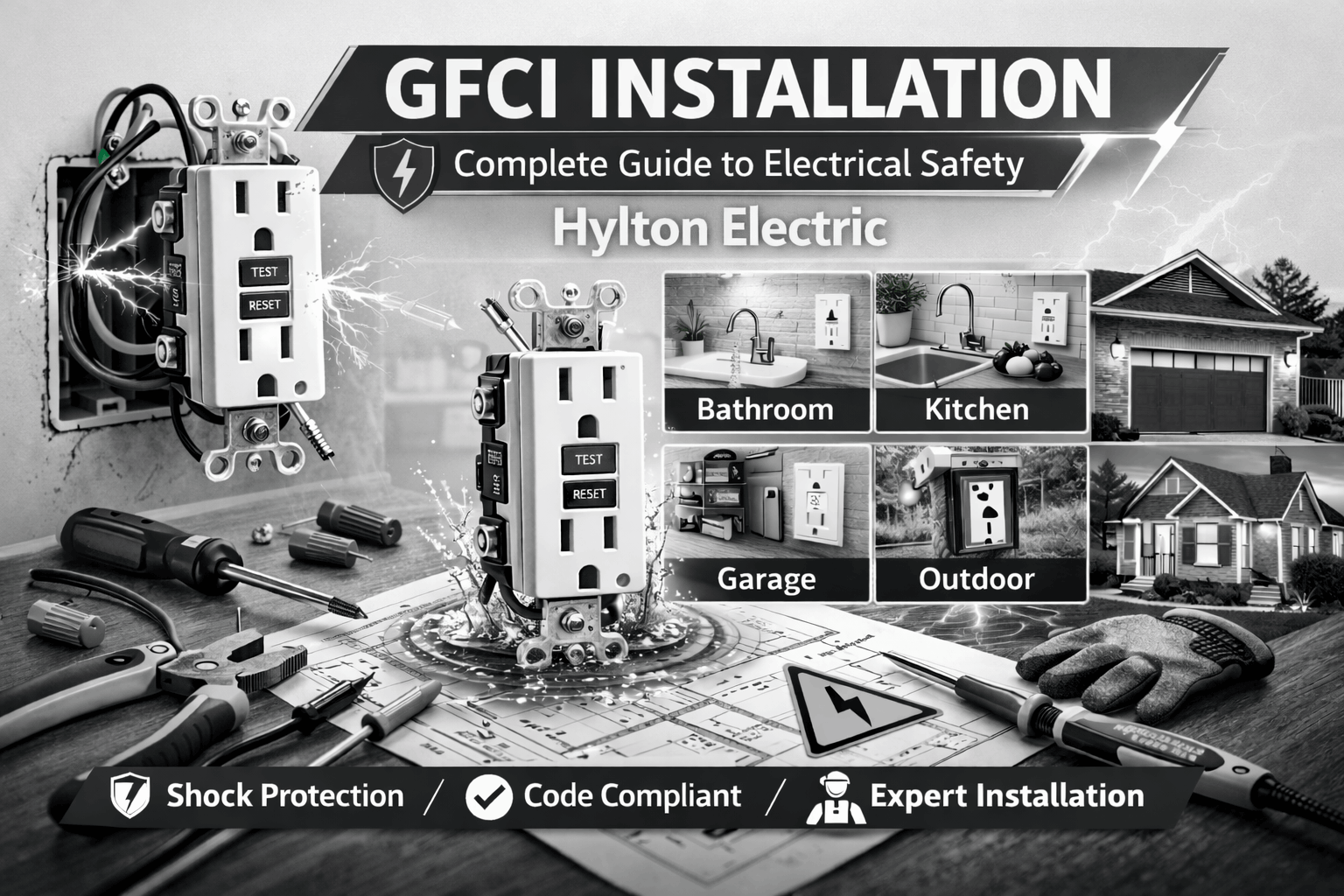
Electricity makes modern life easier. But it can also be dangerous when systems are not properly protected. In areas like kitchens, bathrooms, garages, and outdoor spaces, the risk of electrical shock is much higher. This is because water lowers the body’s resistance to electricity. Even a small fault in wiring or an appliance can cause a serious injury.
That is why Ground Fault Circuit Interrupter (GFCI) devices are now required in many parts of a home. A proper GFCI installation helps protect people from electric shock. It also reduces the chance of electrical fires caused by damaged wiring or moisture exposure.
Whether you are upgrading an older outlet or installing a new circuit, understanding how GFCIs work is important for safety and code compliance.
What Is a Ground Fault Circuit Interrupter (GFCI)?
A Ground Fault Circuit Interrupter, or GFCI, is a safety device that protects you from electrical shock. It shuts off power automatically when it detects a ground fault.
A ground fault happens when electricity moves outside its intended path. For example, power may travel through water, metal, or even a person. When this happens, it creates a dangerous situation.
A standard outlet does not detect this type of problem. However, a GFCI outlet constantly monitors the electrical current flowing through the circuit. If it senses even a small imbalance between the hot and neutral wires, it disconnects the power within milliseconds.
Simple Definition of a GFCI Outlet
In simple terms, a GFCI outlet:
-
Monitors the flow of electricity
-
Detects unsafe current leaks
-
Cuts power immediately when a fault occurs
-
Helps prevent electrocution
-
Reduces electrical fire risks
This quick response is what makes GFCI protection essential in moisture-prone areas.
Why GFCI Installation Is Important for Home Safety
Electric shock accidents often happen in everyday locations such as bathrooms or kitchens. Many of these incidents are caused by faulty wiring, worn-out outlets, or appliances used near water.
GFCI protection reduces these risks by stopping power before serious injury occurs. Installing GFCI outlets in the right areas offers several safety benefits:
-
Prevents electric shock
-
Reduces fire hazards
-
Protects children and elderly residents
-
Improves electrical system reliability
-
Meets modern building code requirements
-
Increases home resale value
In fact, building codes now require GFCI protection in many residential locations.

Because of these risks, upgrading to GFCI outlets is considered one of the most effective electrical safety improvements a homeowner can make.
How GFCI Outlets Work
A GFCI outlet may look similar to a standard receptacle. However, it has built-in sensors that monitor electrical flow at all times. Electricity normally flows through two wires:
-
Hot wire (carries power to the device)
-
Neutral wire (returns power to the panel)
In a safe system, the amount of current leaving the outlet should match the amount returning. A GFCI device checks this balance continuously. If it detects a difference of even 4 to 6 milliamps, it assumes that electricity is escaping the circuit.
This may happen because of:
-
Water contact
-
Damaged insulation
-
Faulty appliances
-
Contact with a person
When this imbalance occurs, the GFCI shuts off power instantly.

This automatic shut-off feature helps prevent serious injuries. It also ensures that your electrical system meets current safety standards.
Types of GFCI Devices Used in Residential Electrical Systems
Not all GFCI devices are the same. In residential electrical systems, different types are used depending on where protection is needed. Some protect a single outlet. Others protect an entire circuit. Understanding the difference helps you choose the right option for your home improvement project.
GFCI Receptacle Outlet
A GFCI receptacle is the most common type used in homes. It replaces a standard wall outlet and provides protection at that location. These outlets usually have:
-
A TEST button
-
A RESET button
-
Built-in ground fault protection
In many cases, one GFCI receptacle can also protect other outlets connected to the same circuit. This is called downstream protection. For example, installing one GFCI outlet in a bathroom may protect additional outlets on the same wiring path. This makes receptacle-based GFCI installation both cost-effective and practical.
GFCI Circuit Breaker
A GFCI circuit breaker is installed directly in the electrical panel. Instead of protecting a single outlet, it protects the entire branch circuit.
This includes:
-
All outlets
-
Light fixtures
-
Hardwired equipment
This type of protection is useful in:
-
Garages
-
Outdoor circuits
-
Kitchen appliance circuits
-
Basement wiring systems
Although it costs more than a receptacle outlet, it provides wider protection.
Portable GFCI Devices
Portable GFCI devices are used for temporary protection. They are often plugged into standard outlets when using:
-
Lawn equipment
-
Power tools
-
Pressure washers
-
Extension cords outdoors
They are commonly used on construction sites or during outdoor maintenance tasks. Portable units are not a replacement for permanent GFCI installation. However, they add an extra layer of safety when working in wet or damp conditions.
Where Are GFCI Outlets Required in a Home?
Electrical codes require GFCI protection in areas where electricity and moisture are likely to come into contact. These rules are based on safety research and are part of modern residential wiring standards.
Required Indoor Locations
GFCI outlets should be installed in the following indoor areas:
-
Bathrooms
-
Kitchen countertops
-
Laundry rooms
-
Garages
-
Unfinished basements
-
Wet bars
-
Crawl spaces
In kitchens, GFCI protection is required for outlets near sinks or countertop surfaces. Bathrooms must have at least one GFCI-protected outlet installed near the sink.
Required Outdoor Locations
Outdoor electrical outlets must also be GFCI-protected. These include outlets located:
-
On exterior walls
-
Near patios or decks
-
Around swimming pools
-
In garden or landscape areas
-
Near hot tubs or spas
Weather-resistant GFCI outlets are typically used outdoors for added durability. Installing protection in these locations helps reduce shock risk caused by rain, standing water, or damp surfaces.
NEC 2023 GFCI Code Updates Homeowners Should Know
Electrical codes are updated regularly to improve home safety. Recent updates now require GFCI protection in additional residential areas. Some of the latest requirements include:
-
Kitchen appliance outlets must be protected
-
Garage circuits up to 50 amps require protection
-
Pool equipment receptacles must be protected
-
Basement outlets must be protected
-
Break room sink outlets require GFCI protection
These updates aim to reduce accidents caused by ground faults in everyday household environments. Meeting these requirements helps ensure that your electrical system passes inspection and follows current safety standards.
Tools and Materials Needed for GFCI Installation
Before starting any electrical work, it is important to gather the right tools and materials. Using proper equipment helps ensure safe and code-compliant GFCI outlet installation. It also reduces the chance of wiring errors during the process.
Even a simple outlet upgrade requires careful handling of electrical connections.
Essential Tools Checklist
You will need the following basic tools to install a GFCI outlet safely:
-
Voltage tester
-
Flathead screwdriver
-
Phillips screwdriver
-
Wire stripper
-
Needle-nose pliers
-
Electrical tape
-
Utility knife
-
Flashlight
A non-contact voltage tester is especially important. It helps confirm that the power is off before you begin working on the outlet.
Materials Required
In addition to tools, you will need:
-
GFCI outlet (15A or 20A depending on circuit)
-
Wall faceplate
-
Wire connectors (wire nuts)
-
Mounting screws
-
Electrical box (if replacement is needed)

Using the correct outlet rating ensures that the device functions properly and does not overload the circuit.
Step-by-Step GFCI Outlet Installation Guide
Installing a GFCI outlet is not very complex. However, each step must be followed carefully to avoid wiring mistakes. Always turn off power at the breaker panel before beginning the installation process.
Step 1 – Turn Off Power at the Breaker
Locate the correct circuit breaker in your electrical panel. Switch it off to disconnect power from the outlet. Use a voltage tester to confirm that the outlet is no longer live.
Step 2 – Remove the Existing Outlet
Unscrew the wall plate and outlet mounting screws. Carefully pull the outlet out from the electrical box. Do not touch any wires until power has been tested.
Step 3 – Identify the Wires
You will typically see three types of wires inside the box:
-
Black wire – Hot
-
White wire – Neutral
-
Bare or green wire – Ground
Some boxes may contain additional wires connected to downstream outlets.
Step 4 – Connect the LINE Terminals
Attach:
-
Black (hot) wire to the brass LINE terminal
-
White (neutral) wire to the silver LINE terminal
The LINE terminals supply power to the GFCI outlet itself.
Step 5 – Connect the LOAD Terminals (If Needed)
If you want the GFCI to protect additional outlets on the same circuit, connect the downstream wires to the LOAD terminals.
This allows the installed device to provide protection to other connected receptacles.
Step 6 – Mount the GFCI Outlet
Gently push the wires back into the electrical box. Secure the GFCI outlet with mounting screws. Attach the wall plate.
Step 7 – Restore Power and Test
Turn the breaker back on. Press the RESET button on the GFCI outlet. Then press the TEST button to ensure that the power shuts off correctly. If the outlet trips and resets properly, the installation is complete.
Installing a GFCI Breaker Instead of an Outlet
In some cases, installing a GFCI outlet may not provide enough protection. This is especially true when multiple outlets or fixtures are connected to the same branch circuit. A GFCI circuit breaker offers a wider level of protection.
Instead of protecting one outlet, it protects the entire electrical circuit. This includes:
-
All connected receptacles
-
Lighting fixtures
-
Permanently wired equipment
-
Outdoor outlets on the same circuit
This makes it a suitable option for:
-
Garage circuits
-
Basement wiring
-
Kitchen appliance circuits
-
Outdoor electrical systems
How a GFCI Breaker Works
A GFCI breaker performs the same safety function as a receptacle outlet. However, it is installed inside the electrical panel. It monitors the electrical current flowing through the entire circuit. If it detects a ground fault, it disconnects power at the breaker level. This stops electricity before it reaches any connected device or outlet.
Basic Installation Process
Installing a GFCI breaker involves working inside the main service panel. This task requires extra care because live components may still be present even when the main breaker is turned off.
The general installation steps include:
-
Turning off the main breaker
-
Removing the panel cover
-
Connecting the hot wire to the breaker
-
Connecting the neutral wire to the neutral terminal
-
Attaching the breaker to the panel bus bar
-
Connecting the breaker’s neutral pigtail to the neutral bar
Once installed, the breaker should be tested using its built-in test button. Because this process involves panel work, many homeowners choose to hire a licensed electrician.
LINE vs LOAD Wiring Explained (Common DIY Mistake)
One of the most common problems during GFCI outlet installation is incorrect wiring between the LINE and LOAD terminals. Every GFCI receptacle has two sets of terminals:
-
LINE terminals – supply incoming power
-
LOAD terminals – protect downstream outlets
Connecting these incorrectly can prevent the outlet from working properly.
What Happens When LINE and LOAD Are Reversed?
Improper wiring can cause several issues:
-
The outlet will not reset
-
Power may not flow to connected devices
-
Downstream outlets remain unprotected
-
Safety protection fails during a fault
In some cases, the outlet may appear to function normally but will not trip during a ground fault. This creates a hidden safety risk.
When to Use LOAD Terminals
LOAD terminals should only be used when you want to protect additional outlets connected to the same circuit. If you are replacing a single outlet and do not need downstream protection, connect only the LINE terminals.

Correct wiring ensures that the outlet trips properly when a fault occurs.
How to Test a GFCI Outlet After Installation
After installation, testing the outlet is essential. Every GFCI receptacle includes built-in TEST and RESET buttons.
Follow these steps:
-
Press the RESET button to activate the outlet
-
Plug in a small device such as a lamp
-
Press the TEST button
-
Confirm that the power shuts off
-
Press RESET again to restore power
If the outlet fails to trip during testing, the wiring should be inspected immediately. Monthly testing is recommended to maintain proper protection.
Common GFCI Installation Mistakes to Avoid
Even though installing a GFCI outlet seems simple, small mistakes can reduce its effectiveness. In some cases, improper installation may prevent the device from providing shock protection.
Below are some of the most common GFCI wiring and installation errors homeowners make.
-
Reversing LINE and LOAD wires
-
Leaving loose wire connections
-
Ignoring the ground wire
-
Using the wrong outlet rating
-
Overfilling the electrical box
-
Skipping post-installation testing
Loose connections can cause the outlet to trip frequently. Incorrect wiring may stop the outlet from resetting. In both cases, the safety feature may not work during an actual ground fault.
Taking time to double-check connections helps ensure reliable protection.
Signs You Need to Replace a GFCI Outlet
GFCI outlets do not last forever. Over time, internal components may wear out due to power surges, moisture exposure, or frequent tripping. A faulty outlet may fail to trip when needed. This increases the risk of electrical shock.
You may need to replace your GFCI outlet if you notice:
-
Frequent or random tripping
-
The outlet will not reset
-
No power after pressing RESET
-
Physical cracks or burn marks
-
TEST button does not shut off the power
Most GFCI outlets last between 7 and 10 years under normal use. Regular testing can help detect early signs of failure.
GFCI Outlet Installation Cost Breakdown
The cost of GFCI installation depends on several factors. These include wiring condition, outlet location, and whether professional service is required.

DIY Installation Cost
If you are replacing an existing outlet, the cost is usually limited to materials.
Typical expenses include:
-
GFCI outlet device
-
Faceplate
-
Basic wiring supplies
DIY installation may cost between $15 and $40 per outlet.
Professional Installation Cost
Hiring a licensed electrician increases the upfront cost. However, it ensures code compliance and long-term reliability.
Professional installation may cost between:
-
$100 to $250 per outlet
Additional labor charges may apply for:
-
Panel upgrades
-
Outdoor installations
-
Old wiring systems
-
New circuit installation
Understanding these factors helps homeowners plan their electrical upgrades more effectively.
Leave a Reply