
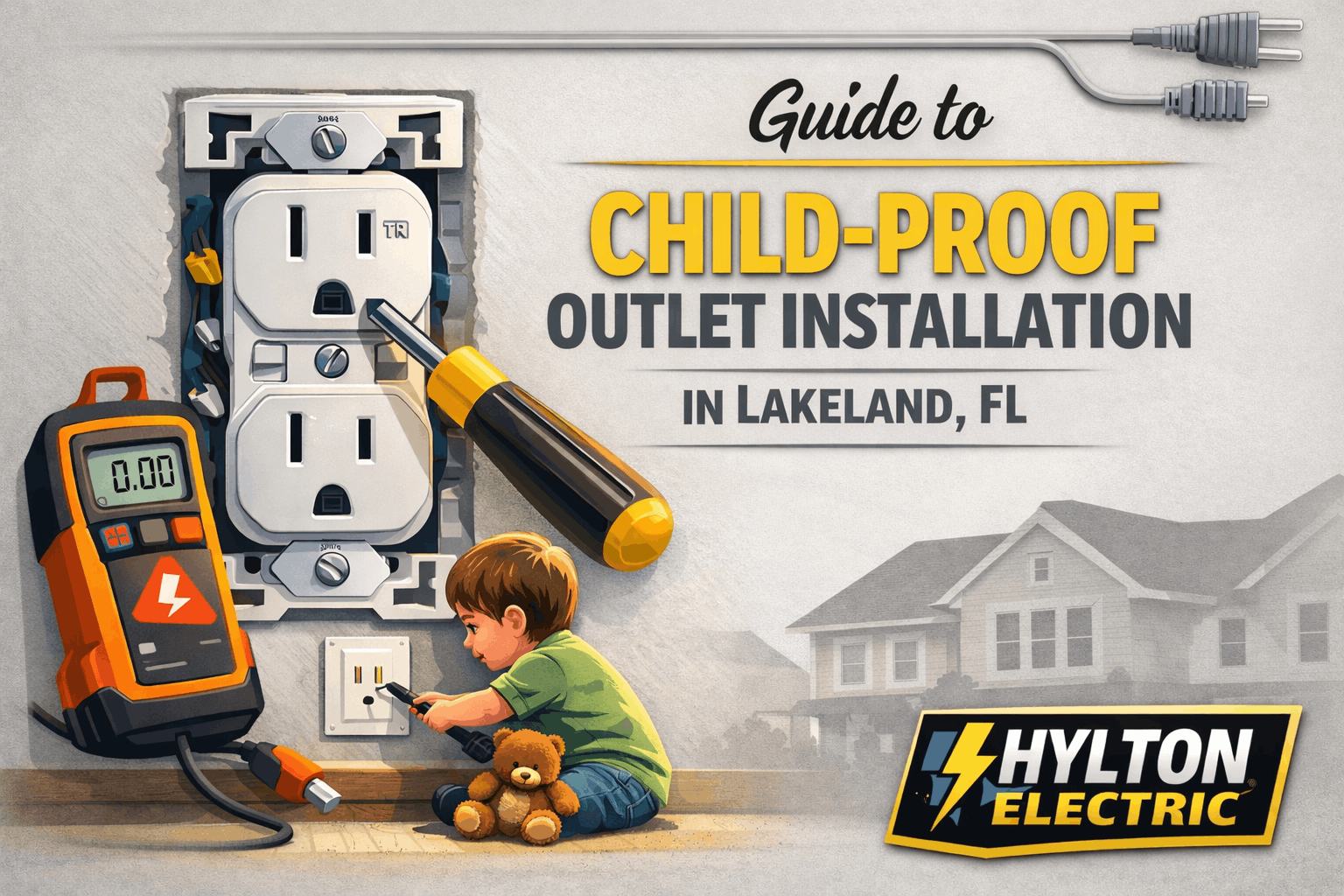
Why Child-Proof Electrical Outlets Are Important for Lakeland Homes
Electrical injuries in homes often happen when no one is watching. A child may touch or tamper with an outlet in just a few seconds. Even a brief moment of contact with live electricity can cause harm.
In many Lakeland homes, especially older ones, standard outlets are still in place. These outlets have open slots. They do not include built-in safety features. This increases the chance of accidental contact with live electrical parts.
Tamper-resistant outlets help reduce this risk. They include an internal shutter system that blocks access unless equal pressure is applied to both slots at the same time. This means a normal plug works fine. However, small objects cannot enter the outlet easily.
Here is a simple comparison of safety risks between standard outlets and child-proof outlets:
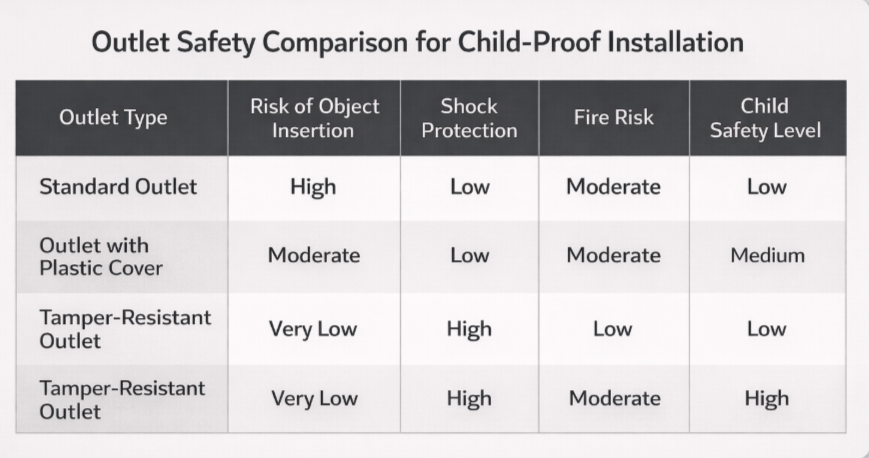
As shown above, tamper-resistant receptacles offer a higher level of safety. They provide built-in protection that does not rely on removable parts.
Common Electrical Hazards for Children at Home
Many outlet-related hazards are easy to overlook. Yet, they may already exist in your home.
Some of the most common risks include:
-
Inserting metal objects into outlets
-
Contact with loose or cracked receptacles
-
Electrical burns from exposed wiring
-
Sparks from damaged outlet connections
-
Overloaded outlets causing heat buildup
-
Water contact in kitchens or bathrooms
Each of these problems can increase the chance of electrical shock or fire. Regular inspection and timely outlet upgrades can help prevent these issues.
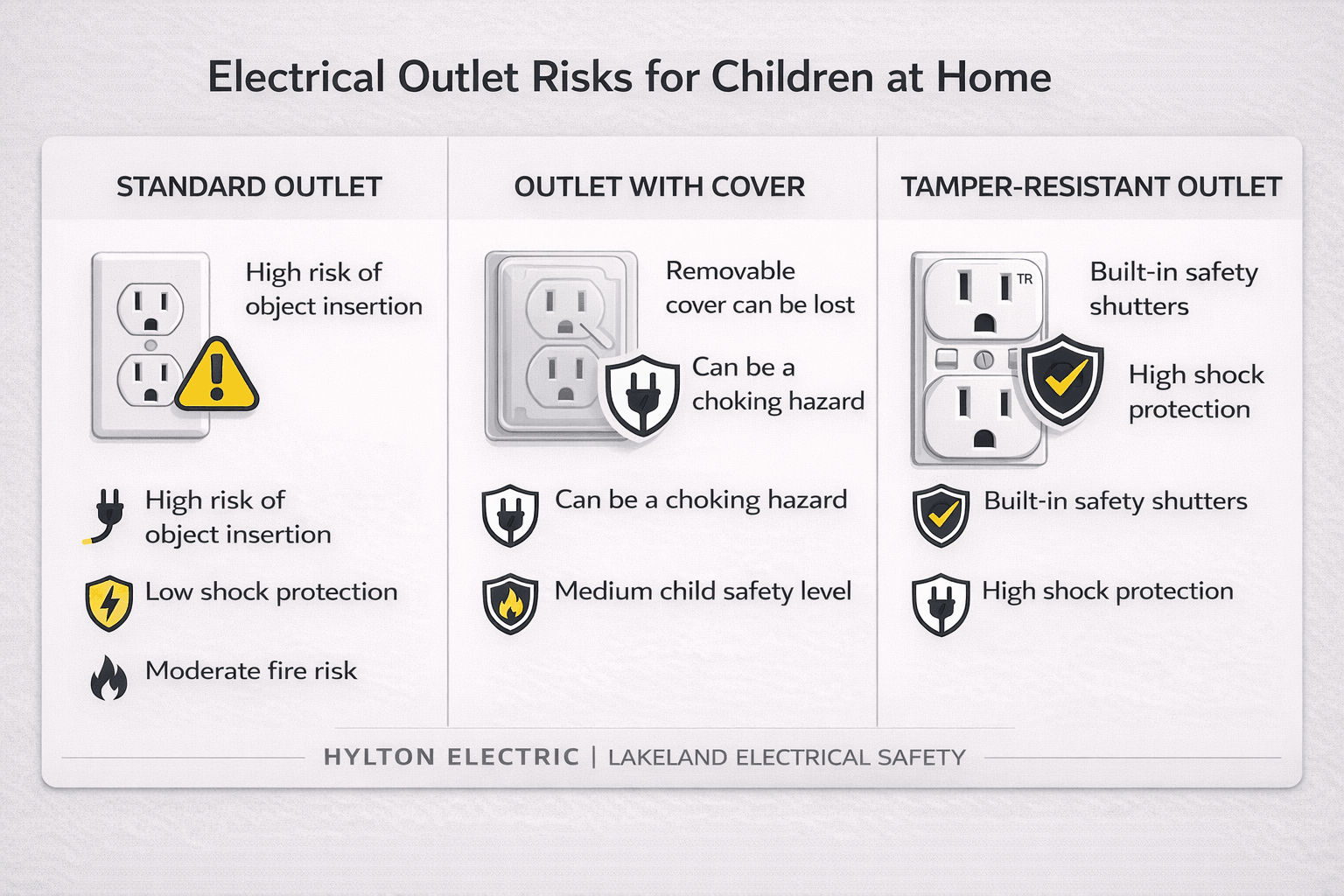
What Is a Child-Proof Outlet?
A child-proof outlet is also known as a tamper-resistant receptacle, or TR outlet. At first glance, it looks like a regular electrical outlet. However, it includes an added safety feature inside the socket.
Behind the faceplate, TR outlets have spring-loaded shutters. These shutters remain closed unless equal pressure is applied to both plug slots. When a normal plug is inserted, the shutters open safely. Once the plug is removed, they close again.
This design helps prevent children from inserting objects into the outlet. It also reduces the risk of accidental electric shock.
Below is a quick comparison between standard outlets and tamper-resistant outlets:
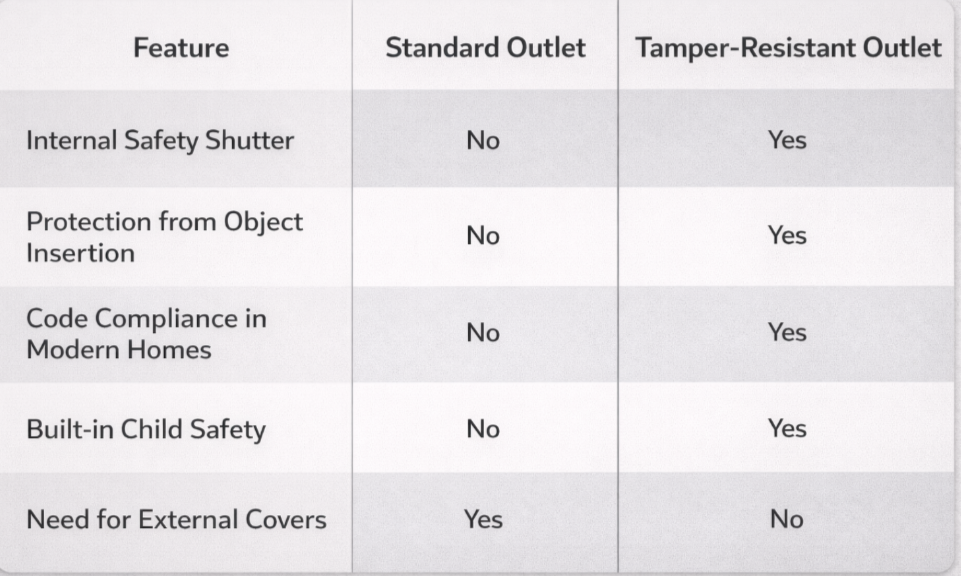
Tamper-resistant outlets provide constant protection. Unlike plastic covers, they do not need to be removed or replaced. This makes them a safer and more reliable option for homes with children.
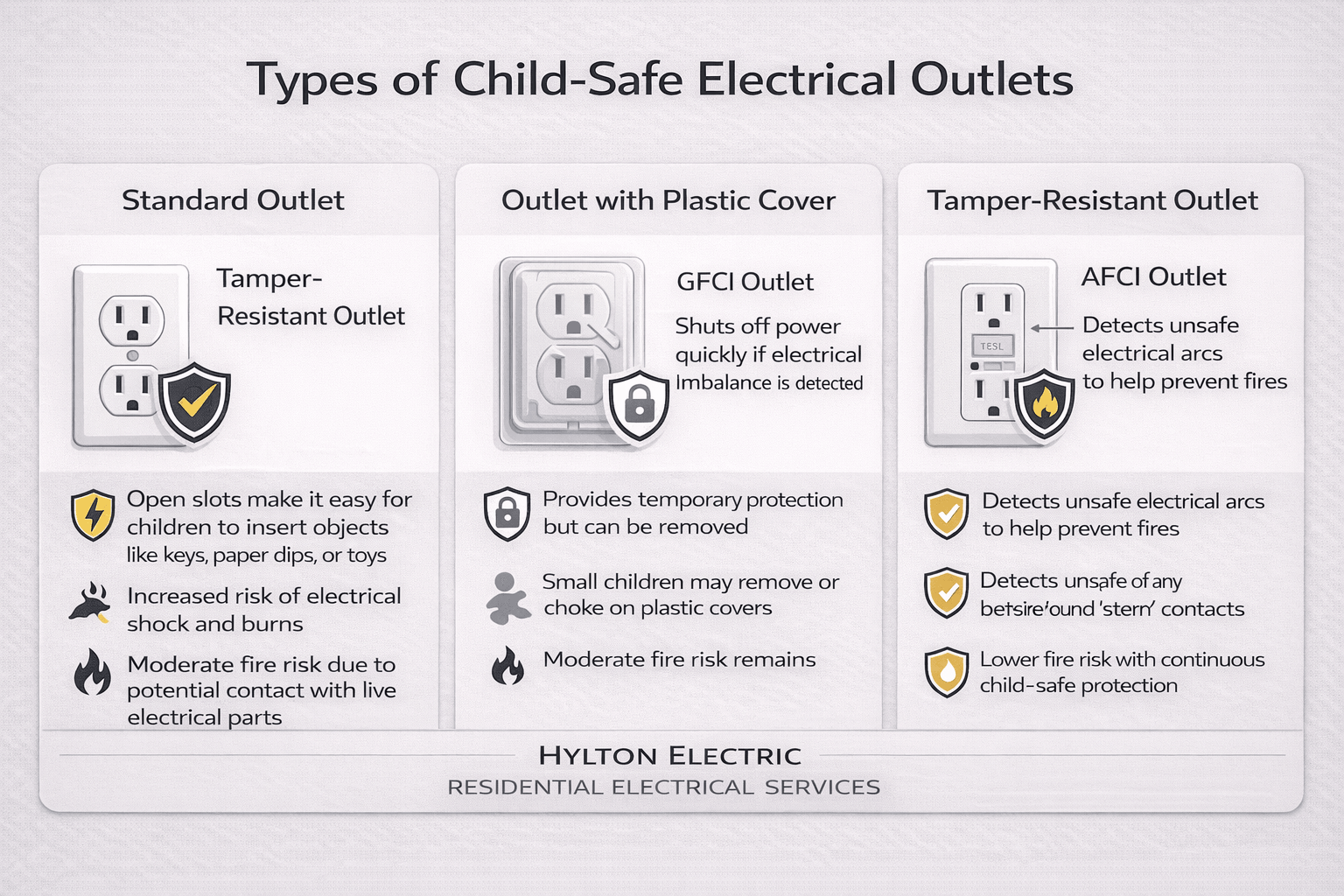
Types of Child-Safe Electrical Outlets Available
Not all child-safe outlets are the same. Different outlet types provide protection in different ways. Some focus on preventing object insertion. Others protect against electrical shock or wiring faults.
Choosing the right type depends on where the outlet is installed and how it will be used. In many Lakeland homes, electricians install a mix of outlet types to improve overall safety.
Tamper-Resistant Receptacles (TRR)
Tamper-resistant receptacles are the most common child-safe outlets used today. These outlets include an internal shutter system that blocks access to live electrical contacts.
They allow normal plugs to enter with equal pressure on both prongs. However, objects such as paper clips or small toys cannot open the shutter.
TR outlets are now required in most modern homes. They are often installed in:
-
Bedrooms
-
Living rooms
-
Hallways
-
Dining areas
-
Playrooms
-
Nurseries
They provide constant protection without the need for removable covers.
GFCI Tamper-Resistant Outlets
Ground Fault Circuit Interrupter (GFCI) outlets offer protection against electric shock. These outlets monitor the flow of electricity in a circuit.
If they detect an imbalance in current, they shut off power within seconds. This helps prevent serious injury, especially in wet areas.
GFCI outlets are usually installed in:
-
Kitchens
-
Bathrooms
-
Laundry rooms
-
Garages
-
Outdoor outlets
Many newer GFCI outlets are also tamper-resistant. This means they offer both shock protection and child safety in one device.
AFCI Outlets for Arc Fault Protection
Arc Fault Circuit Interrupter (AFCI) outlets protect against electrical fires. These outlets detect unsafe electrical arcs inside wiring.
Arcing may occur when:
-
Wiring becomes loose
-
Insulation is damaged
-
A child inserts an object into an outlet
-
A cord is pinched behind furniture
When an arc fault is detected, the AFCI shuts off power to the circuit. This helps reduce the risk of overheating and fire.
Weather-Resistant Outdoor Child-Safe Outlets
Outdoor outlets face more exposure to moisture and dirt. Weather-resistant outlets are built to handle these conditions.
They are often installed in:
-
Patios
-
Porches
-
Backyards
-
Pool areas
-
Exterior walls
Many outdoor outlets also include tamper-resistant shutters for added safety.
Smart Safety Outlets with Locking Features
Some modern outlets include built-in smart features. These may allow homeowners to:
-
Turn power on or off remotely
-
Set usage schedules
-
Lock outlets when not in use
While not required by code, smart outlets can add an extra layer of safety in homes with small children.
Are Child-Proof Outlets Required by Electrical Code?
Yes. Tamper-resistant outlets have been required in new residential construction since the 2008 update to the National Electrical Code (NEC). This code applies to most living areas inside a home. It was introduced to reduce electrical injuries among children. In many cases, homes built before this update may still have older outlets installed. These outlets may not include built-in safety features.
Where TR Outlets Are Required in Modern Homes
Tamper-resistant outlets are typically required in:
-
Bedrooms
-
Living rooms
-
Hallways
-
Kitchens
-
Bathrooms
-
Basements
-
Dining rooms
-
Playrooms
Upgrading older outlets to meet current safety standards can improve protection for both children and adults.
Child-Proof Outlet Covers vs Tamper-Resistant Outlets
Many homeowners in Lakeland start with plastic outlet covers when trying to improve safety for their children. These covers are easy to install and widely available. However, they are usually meant to be a short-term solution.
Over time, outlet covers may loosen or break. In some cases, toddlers can remove them. This creates both a shock risk and a choking hazard.
Tamper-resistant outlets offer a more reliable option. They include built-in shutters that protect the outlet at all times. There are no removable parts involved. This means the safety feature remains in place without daily attention.
Outlet Covers
Outlet covers are placed over the face of an outlet. They block access to the plug slots when not in use.
Common issues with outlet covers include:
-
Easy for children to remove
-
Can become a choking hazard
-
May be forgotten after unplugging devices
-
Require frequent replacement
-
Do not meet modern electrical code on their own
While they may help for a short period, they do not provide permanent protection.
Tamper-Resistant Receptacles
Tamper-resistant receptacles improve safety through internal design. They do not rely on added parts or external covers. Key advantages include:
-
Built-in safety shutters
-
Continuous protection
-
Code compliance
-
No removable pieces
-
Lower risk of shock or burns
Below is a simple comparison of both options:
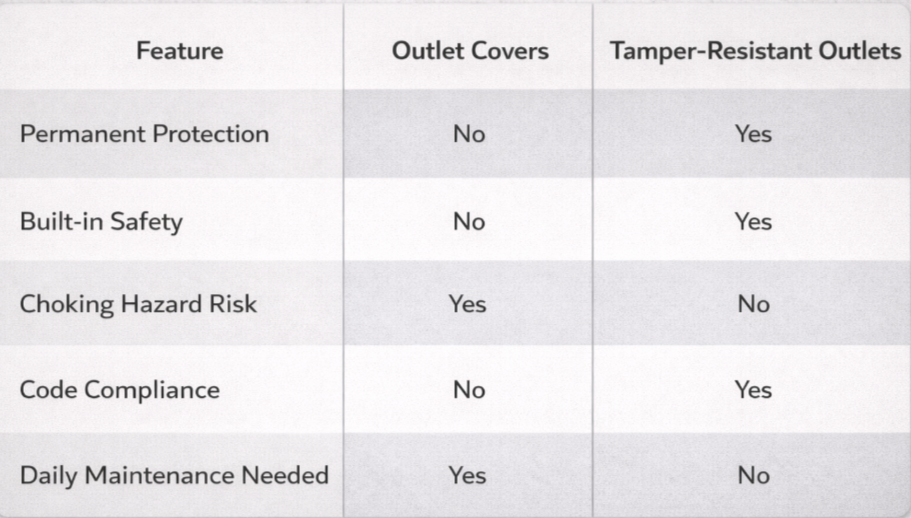
Because of these benefits, many electricians recommend upgrading to tamper-resistant outlets instead of using plastic covers alone.
GFCI vs Tamper-Resistant Outlets: What’s the Difference?
It is common for homeowners to confuse GFCI outlets with tamper-resistant outlets. While both improve safety, they protect against different types of electrical risks.
Tamper-resistant outlets are designed to prevent object insertion. They protect children from touching live electrical parts inside the outlet. GFCI outlets protect against electric shock caused by current leakage. This type of risk often occurs in areas where water is present.
TR Outlet Benefits
Tamper-resistant outlets help by:
-
Blocking foreign objects
-
Preventing accidental contact
-
Reducing shock risk for children
-
Providing code-compliant protection
They are mainly used in dry indoor areas.
GFCI Outlet Benefits
GFCI outlets help by:
-
Detecting current imbalance
-
Cutting power quickly
-
Reducing electrocution risk
-
Protecting in wet environments
They are required in kitchens, bathrooms, garages, and outdoor locations. Some outlets combine both TR and GFCI protection. These are often installed in areas where both child safety and moisture protection are needed.
TR Outlets and Fire Prevention Benefits
Child-proof outlets do more than protect against electrical shock. They can also help reduce the risk of electrical fires inside your home.
When a child inserts a metal object into a standard outlet, it may create a short circuit. This can cause heat buildup in the wiring behind the wall. In some cases, it may lead to melted insulation or damaged conductors.
Over time, this type of damage can increase the chance of an electrical fire. Tamper-resistant outlets help prevent this by blocking foreign objects from entering the socket. This reduces the chance of:
-
Electrical arcing
-
Short circuits
-
Wiring overheating
-
Insulation damage
-
Internal outlet failure
In addition, outlets that remain in good condition are less likely to spark when devices are plugged in. This helps maintain safe electrical flow throughout the circuit. Even small changes, such as upgrading older outlets, can lower fire risk in homes with young children.
Child-Proofing Older Homes in Lakeland
Many homes in Lakeland were built before 2008. At that time, tamper-resistant outlets were not required by the electrical code. As a result, these homes may still include standard outlets without built-in safety features.
Older homes may also have:
-
Two-prong outlets
-
Worn receptacles
-
Outdated wiring
-
No GFCI protection in wet areas
These conditions can increase the chance of electrical shock or fire. Upgrading outlets in older homes helps bring the electrical system closer to modern safety standards.
Electrical Safety Upgrades for Older Homes
When improving child safety in older homes, electricians often recommend:
-
Replacing standard outlets with TR outlets
-
Installing GFCI outlets in kitchens and bathrooms
-
Inspecting wiring connections
-
Checking grounding systems
-
Evaluating panel capacity
These steps help improve both outlet safety and overall electrical performance.
Signs You Should Upgrade Your Outlets
Some outlets may already show signs of wear or damage. Ignoring these warning signs can increase safety risks over time.
You may need to upgrade your outlets if you notice:
-
Loose plugs that fall out easily
-
Warm or discolored outlet covers
-
Cracks in the faceplate
-
Sparks when plugging in devices
-
Burn marks around the slots
-
Missing “TR” marking on outlet face
Addressing these issues early can help prevent larger electrical problems later.
How Many Outlets Should Be Child-Proofed?
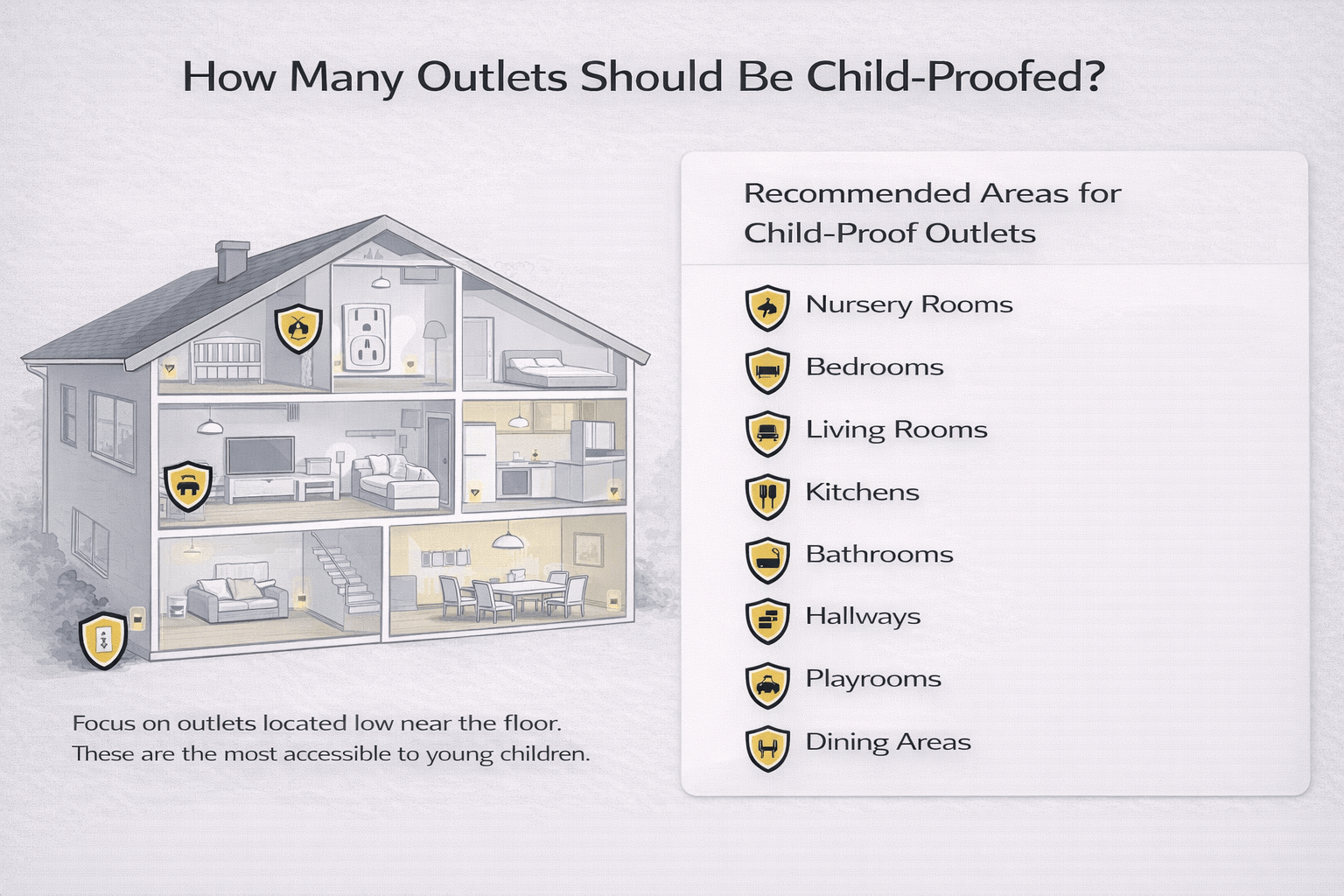
Many homeowners ask if they should upgrade just a few outlets or the entire home. While it may seem enough to child-proof outlets in a nursery or playroom, children often move freely from room to room. Because of this, partial upgrades may leave other areas exposed to risk. A better approach is to review outlet safety on a room-by-room basis.
Room-by-Room Recommendations
Child-proof outlets are strongly recommended in:
-
Nursery rooms
-
Bedrooms
-
Living rooms
-
Kitchens
-
Bathrooms
-
Hallways
-
Playrooms
-
Dining areas
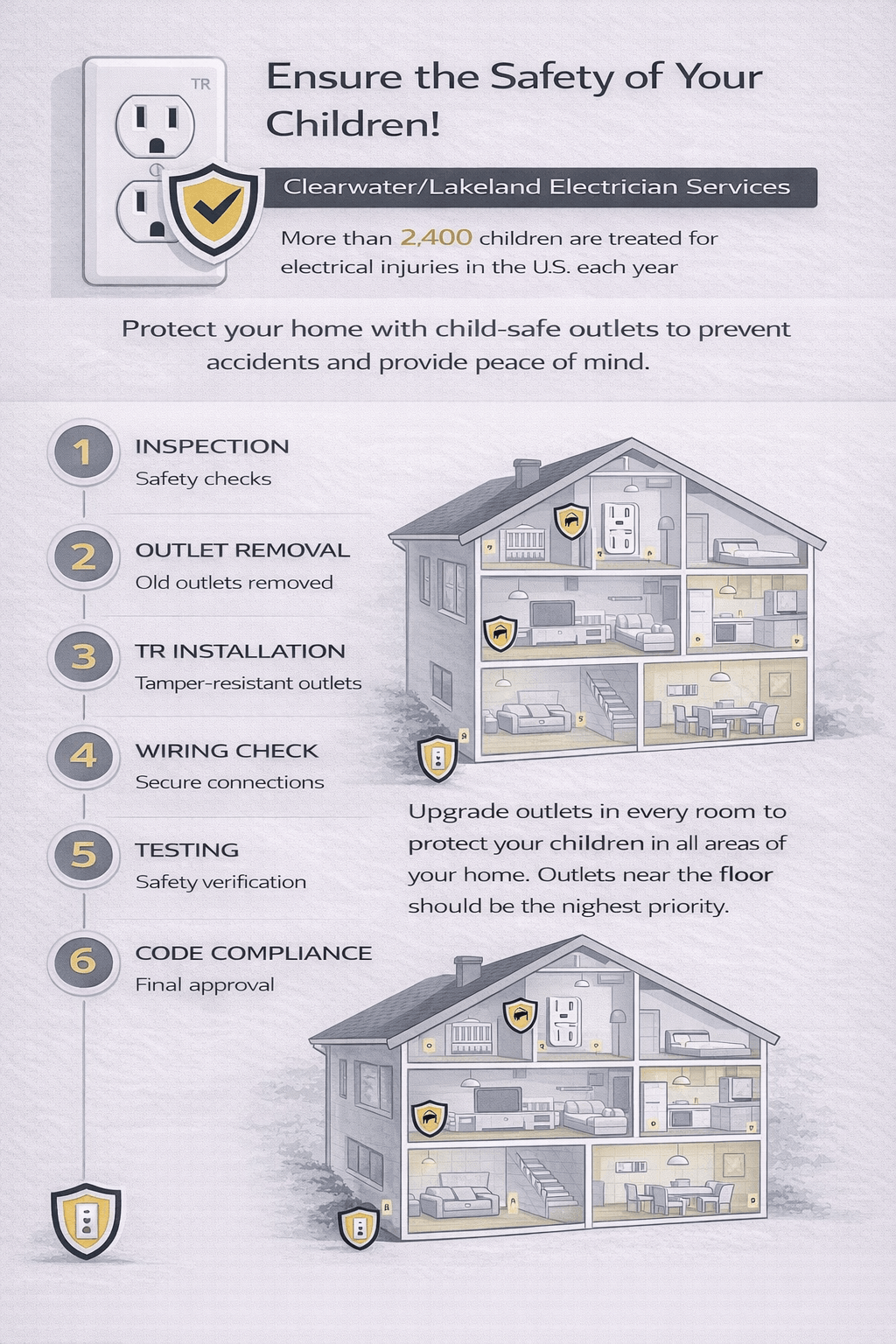
Outlets located near the floor should receive priority. These are the most accessible to young children. In many cases, electricians suggest a whole-home upgrade. This helps ensure that safety features are present throughout the living space.
Best Areas in Your Home to Install Child-Safe Outlets
Some areas of the home present a higher electrical risk than others. These spaces often combine accessible outlets with moisture, foot traffic, or frequent appliance use.
Common installation areas include:
-
Bedrooms and nurseries
-
Kitchen countertops
-
Bathroom walls
-
Garage workspaces
-
Laundry rooms
-
Outdoor patios
-
Basement living areas
Each of these locations may benefit from a specific type of outlet, such as TR, GFCI, or AFCI protection.
Can You Install Child-Proof Outlets Yourself?
Some homeowners consider installing tamper-resistant outlets on their own. While this may seem simple, electrical work involves certain risks. Even a small wiring mistake can affect how the outlet functions.
DIY Installation Risks
Common problems during DIY outlet installation include:
-
Improper grounding
-
Loose terminal connections
-
Reversed polarity
-
Damaged wiring insulation
-
Failure to meet code requirements
-
Risk of electrical shock during installation
In addition, incorrect installation may prevent safety features from working as intended. For this reason, many homeowners choose to have outlets installed by a licensed electrician.
Professional Child-Proof Outlet Installation Process
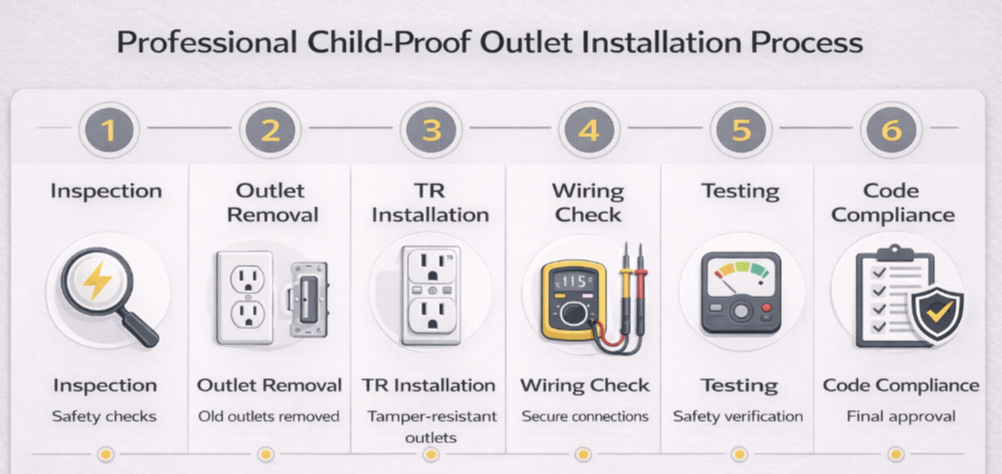
Having child-proof outlets installed by a licensed electrician helps ensure that each outlet works safely and meets current electrical standards. While the process is usually quick, it includes several important steps to confirm proper wiring and protection.
Step-by-Step Installation
A typical installation process may include:
-
Electrical safety inspection
-
Evaluation of existing outlets
-
Removal of old receptacles
-
Installation of tamper-resistant or GFCI outlets
-
Verification of wiring connections
-
Grounding check
-
Safety testing of each outlet
-
Final compliance review
These steps help confirm that the new outlet provides both safe operation and long-term reliability.
Maintenance and Testing of Child-Proof Outlets
Like any electrical device, child-proof outlets should be checked from time to time. Regular inspection helps ensure that safety features remain in good working condition. Over time, normal use may affect outlet performance.
You can maintain outlet safety by:
-
Testing GFCI outlets monthly
-
Checking for loose faceplates
-
Inspecting for cracks or wear
-
Watching for signs of overheating
-
Scheduling periodic electrical inspections
If an outlet stops holding a plug securely or shows damage, it should be replaced.
Cost of Child-Proof Outlet Installation in Lakeland, FL
Upgrading to child-proof outlets is often one of the more affordable home safety improvements. Costs may vary depending on:
-
Number of outlets replaced
-
Type of outlet installed
-
Wiring condition
-
Accessibility of the installation area
While tamper-resistant outlets may cost slightly more than standard outlets, they provide added protection without the need for external covers. Many homeowners see this upgrade as a worthwhile investment in long-term home safety.
Additional Electrical Safety Tips for Families
Upgrading to child-proof outlets is a strong first step. However, there are other safety habits that can help reduce electrical risks at home. Simple precautions can improve protection for both children and adults.
Helpful safety tips include:
-
Avoid overloading outlets with multiple devices
-
Keep electrical cords out of reach
-
Replace damaged plugs or cords
-
Use surge protectors where needed
-
Do not run cords under rugs or furniture
-
Keep outlets dry in wet areas
-
Unplug unused appliances
Taking these steps can lower the chance of shock, overheating, or electrical fire.
Why Hire a Licensed Electrician in Lakeland?
Electrical work may appear simple on the surface. Yet, even a minor wiring error can affect safety and performance. A licensed electrician has the training needed to:
-
Install outlets correctly
-
Confirm proper grounding
-
Meet National Electrical Code standards
-
Inspect wiring connections
-
Test outlet performance
-
Reduce fire risk
Professional installation can also help prevent future repair costs related to faulty wiring or damaged outlets.
Why Choose Hylton Electric for Child-Proof Outlet Installation in Lakeland?
When improving electrical safety for your home, it helps to work with a team that understands both modern safety standards and local housing needs. Hylton Electric provides residential outlet upgrades designed to support:
-
Code-compliant installations
-
Safe wiring practices
-
Reliable outlet performance
-
Affordable safety improvements
-
Fast scheduling options
Upgrading your outlets with the right equipment can make your living space safer for children and pets alike.
Final Thoughts: Making Your Lakeland Home Safer for Children
Electrical safety is an important part of home safety. Upgrading to child-proof outlets can help reduce the risk of shock, burns, and fire. For families in Lakeland, replacing older outlets with tamper-resistant options is a practical way to support a safer living environment.
If your home still includes standard outlets, it may be time to consider an upgrade. Small improvements today can help prevent larger problems later. Need safer outlets at home?
Call +1 863-624–7000 today to schedule your child-proof outlet installation in Lakeland and improve electrical safety where it matters most.
Child-Proof Outlet Installation FAQs
What is child-proof outlet installation?
Child-proof outlet installation involves replacing standard outlets with Tamper-Resistant Receptacles (TRRs) that include internal spring-loaded shutters to prevent foreign object insertion. These shutters only open when equal pressure is applied by a standard plug, helping reduce the risk of electrical shock or burns.
Key Methods for Child-Proofing Outlets
-
Tamper-Resistant Receptacles (TRRs): Built-in shutters block access unless both plug prongs are inserted simultaneously
-
Sliding Outlet Covers: Automatically close after unplugging a device
-
Plug Caps: Temporary plastic covers that block socket openings
Are tamper-resistant outlets required in Lakeland homes?
Tamper-resistant outlets are required in most modern residential construction under the National Electrical Code (NEC). Homes built after 2008 generally include TR outlets to reduce electrical injuries in children.
Common Required Installation Areas
-
Bedrooms
-
Living rooms
-
Kitchens
-
Hallways
-
Bathrooms
Older Lakeland homes may still have standard outlets unless upgraded.
How do tamper-resistant outlets protect children?
Tamper-resistant outlets contain internal safety shutters that block access to live electrical parts unless equal pressure is applied to both plug slots at the same time.
Safety Features of TR Outlets
-
Prevent insertion of small objects
-
Close automatically when unplugged
-
Reduce accidental contact with wiring
These features help lower the chance of electrical shock.
What is the difference between outlet covers and TR outlets?
Outlet covers are removable plastic caps placed over sockets, while TR outlets provide built-in internal protection.
Outlet Covers vs TR Outlets
-
Covers are temporary
-
Covers may loosen or break
-
TR outlets provide constant protection
-
TR outlets meet modern electrical code
Built-in protection makes TR outlets a safer long-term option.
Do child-proof outlets prevent electrical fires?
Child-proof outlets help reduce fire risk by preventing foreign objects from entering the socket and causing electrical arcing or short circuits.
Fire Risk Reduction Benefits
-
Blocks object insertion
-
Reduces internal wiring damage
-
Prevents overheating
-
Limits spark formation
Lower electrical stress can improve outlet safety.
Can I install child-proof outlets myself?
While it may seem simple, outlet installation involves working with live wiring and grounding systems.
Common DIY Installation Risks
-
Improper grounding
-
Loose wiring
-
Reversed polarity
-
Electrical shock
Incorrect wiring may prevent safety features from functioning properly.
How long does outlet installation take?
Outlet replacement is usually completed during a short service visit, depending on the number of outlets being upgraded.
Factors That Affect Installation Time
-
Total outlets replaced
-
Wiring condition
-
Outlet location
-
Accessibility
Whole-home upgrades may take longer.
Are TR outlets safe for household appliances?
Appliance Compatibility
-
Works with common plug types
-
Allows normal electrical flow
-
Maintains internal protection
Do child-proof outlets wear out over time?
Signs of Wear
-
Loose plug fit
-
Cracked faceplate
-
Reduced shutter tension
Should all outlets in a home be child-proofed?
Upgrading outlets throughout the home offers better safety than replacing only a few.
Recommended Rooms
-
Nursery
-
Bedrooms
-
Living areas
-
Kitchens
-
Hallways
Whole-home upgrades improve protection.
What are GFCI tamper-resistant outlets?
GFCI outlets shut off power when an imbalance in electrical current is detected.
Common Installation Areas
-
Kitchens
-
Bathrooms
-
Garages
-
Outdoor areas
Some GFCI outlets include TR shutters.
Are older Lakeland homes at higher electrical risk?
Homes built before 2008 may lack tamper-resistant outlets.
Possible Safety Concerns
-
Standard open-slot outlets
-
Worn receptacles
-
Outdated wiring
-
Missing GFCI protection
Upgrading improves safety.
What signs indicate outlet replacement is needed?
Damaged outlets may increase shock or fire risk.
Warning Signs Include
-
Warm outlet surface
-
Loose plugs
-
Burn marks
-
Cracks
-
Sparks
Do TR outlets require maintenance?
Regular inspection helps maintain safe outlet performance.
Basic Maintenance Steps
-
Check for cracks
-
Test GFCI outlets
-
Inspect plug retention
-
Watch for overheating
Are outdoor outlets child-safe?
Outdoor outlets may include weather-resistant and tamper-resistant features.
Outdoor Safety Benefits
-
Moisture resistance
-
Object insertion protection
-
Improved exterior safety
Can child-proof outlets improve home value?
Electrical safety upgrades may improve resale appeal.
Potential Benefits
-
Updated electrical system
-
Code compliance
-
Reduced hazard risk
Safety improvements may support property value.
Do TR outlets protect against shock in wet areas?
TR outlets block object insertion but do not detect leakage current.
Recommended for Wet Areas
-
GFCI outlets
-
TR/GFCI combination outlets
-
Moisture-resistant covers
These reduce electrocution risk.
How many outlets are typically upgraded?
The number depends on home size and layout.
Common Upgrade Areas
-
Bedrooms
-
Living rooms
-
Kitchens
-
Hallways
Is outlet testing necessary after installation?
Testing confirms safe operation after installation.
The Testing Helps
-
Verify wiring
-
Confirm grounding
-
Detect faults
When should you upgrade your outlets?
Outlet upgrades are often recommended during:
-
Renovation projects
-
Home purchases
-
Wiring updates
-
Family safety improvements
Timely replacement improves safety.
Leave a Reply