
Electric vehicles are becoming more common across Lakeland and nearby areas. As more homeowners switch to EVs, charging at home has become a practical need rather than a luxury. This is where a Level 2 EV charger makes a real difference.
A Level 2 charger gives you faster, more reliable charging compared to a standard wall outlet. Instead of waiting an entire day to charge your vehicle, you can wake up to a full battery. That convenience alone is why many homeowners are upgrading.
In Florida, daily driving often includes longer commutes, errands, and weekend trips. A faster home charger helps you stay ready without planning around public stations. It also reduces dependence on crowded or unreliable charging spots.
This guide is built for homeowners who want clear answers. You’ll learn how Level 2 chargers work, what installation involves, and what costs to expect in Lakeland. We’ll also cover permits, panel requirements, and how to choose the right setup for your home.
If you’re planning to install a Level 2 EV charger Lakeland soon, this will help you make informed decisions without confusion.
What Is a Level 2 EV Charger and How Does It Work?
A Level 2 EV charger is a home charging system that uses a 240-volt power supply. It is similar to what large appliances like dryers or ovens use. This higher voltage allows your vehicle to charge much faster than a basic outlet.
Most modern EV owners choose Level 2 charging because it balances speed, cost, and practicality. It’s the standard for residential installations.
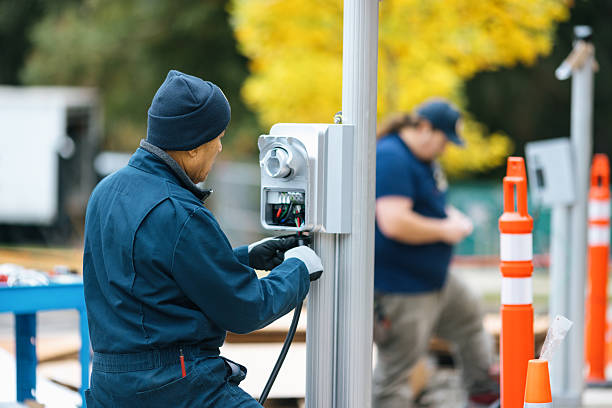
Definition and Power Requirements (240V System)
Level 2 chargers run on a dedicated 240-volt circuit. This setup requires professional installation by a licensed electrician.
Here’s what that means in simple terms:
-
Your electrical panel must support a new 240V breaker
-
The charger gets its own circuit for safety
-
Charging speeds increase significantly
On average, a Level 2 charger adds about 25 to 45 miles of range per hour. That makes overnight charging more than enough for daily driving.
Key Components of a Level 2 Charger Setup
A proper installation includes more than just the charger itself. Several parts work together to create a safe and efficient system.
Main components include:
-
Charging unit mounted on a wall or pedestal
-
Dedicated breaker inside your electrical panel
-
Heavy-duty wiring and conduit
-
Charging cable and connector
-
Optional smart features like WiFi control
Some homeowners choose smart chargers that allow scheduling and energy tracking. These features help reduce electricity costs over time.
Level 1 vs Level 2 vs DC Fast Charging
Not all EV charging options are the same. Each level serves a different purpose.
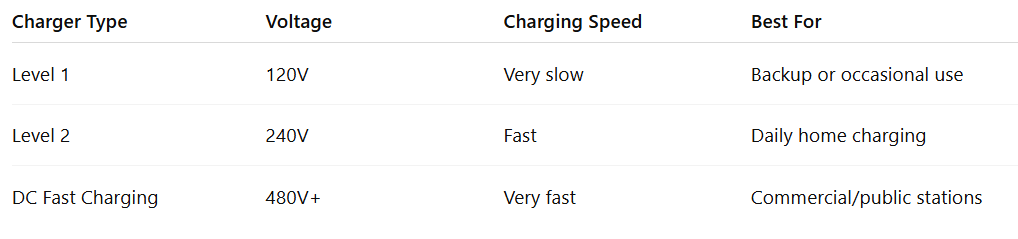
Level 1 charging uses a standard outlet but can take over 24 hours for a full charge. DC fast chargers are powerful but are not designed for residential use.
Level 2 sits in the middle. It offers speed without the high infrastructure cost of commercial systems. That’s why it has become the go-to choice for homeowners in Lakeland.
Benefits of Installing a Level 2 EV Charger at Home
Upgrading to a Level 2 EV charger is not just about faster charging. It changes how you use your vehicle every day. For many homeowners in Lakeland, it quickly becomes part of a more convenient routine.
Let’s look at the real, practical benefits.
Faster Charging for Daily Use
Speed is the biggest advantage. A Level 2 charger can fully charge most EVs overnight. That means you start each day with a full battery. With a basic outlet, charging can take more than a full day. That delay does not work well for busy schedules.
With Level 2:
-
You gain 25–45 miles of range per hour
-
Overnight charging becomes the norm
-
You avoid planning your day around charging
This makes a big difference if you drive often or have a longer commute.
Convenience and Energy Savings
Charging at home is simple. You plug in your vehicle and walk away. There is no need to stop at public charging stations or wait in line. Over time, this also saves money.
Here’s how:
-
Home electricity is cheaper than public charging rates
-
You avoid peak pricing at commercial stations
-
Smart chargers let you charge during off-peak hours
Many homeowners schedule charging at night when rates are lower. This small change can reduce your monthly energy cost.
Increased Property Value in Florida
Homes with EV-ready features are becoming more attractive across Florida. Buyers are starting to look for properties that already support electric vehicles.
Installing a Level 2 charger can:
-
Make your home stand out in the market
-
Appeal to future EV owners
-
Add a modern, energy-efficient upgrade
As EV adoption continues to grow, this becomes a practical long-term investment rather than just a convenience upgrade.
Smart Charging and Solar Integration Options
Modern Level 2 chargers come with smart features that improve control and efficiency.
Many systems now offer:
-
Mobile app control
-
Charging schedules
-
Energy usage tracking
If your home uses solar power, some chargers can also integrate with your system. This allows you to charge your vehicle using renewable energy when available. Even without solar, smart charging helps you manage usage and avoid unnecessary costs.
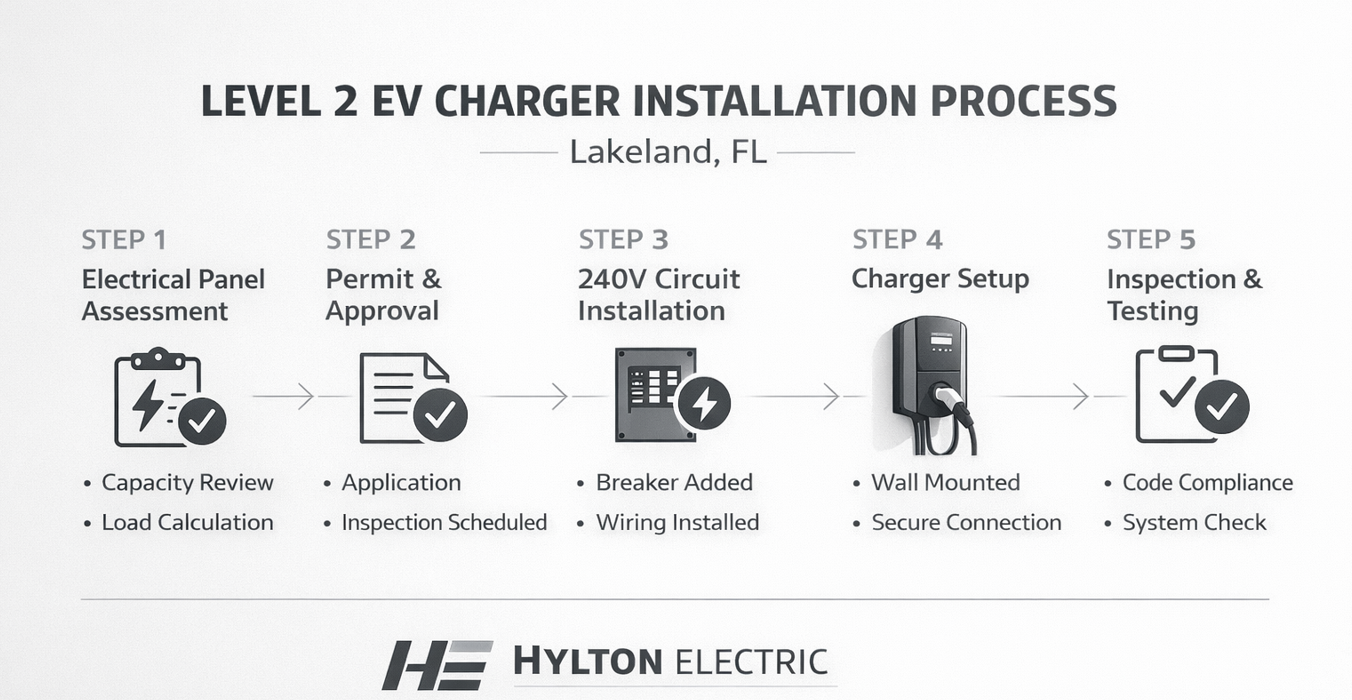
Level 2 EV Charger Installation Process (Step-by-Step)
Installing a Level 2 charger is a structured process. It involves electrical work, permits, and safety checks. A licensed electrician ensures everything is done correctly and up to code.
Here’s what the process usually looks like in Lakeland.
Step 1: Electrical Panel Assessment
The first step is checking your electrical panel. Not every home is ready for a Level 2 charger without adjustments.
An electrician will:
-
Review your panel capacity
-
Check available breaker space
-
Calculate your current electrical load
If your panel can handle the additional demand, installation can move forward. If not, upgrades may be needed.
Step 2: Permit Application in Lakeland / Polk County
Most EV charger installations require a permit. This ensures the work meets local safety standards.
The permit process typically includes:
-
Submitting electrical plans
-
Paying a small fee
-
Scheduling an inspection
A professional electrician usually handles this for you, which keeps things simple and avoids delays.
Step 3: Installing a Dedicated Circuit
A Level 2 charger needs its own circuit. This prevents overload and ensures safe operation.
During this step:
-
A 240V breaker is installed
-
Wiring is run from the panel to the charger location
-
Conduit is added for protection
The exact setup depends on the distance between your panel and the installation point.
Step 4: Mounting the Charger
Next, the charger is installed in your chosen location. Most homeowners prefer a garage, but outdoor setups are also common.
The electrician will:
-
Mount the unit securely
-
Connect all wiring
-
Ensure proper placement for easy access
Outdoor installations require weather-resistant equipment and proper sealing.
Step 5: Inspection and Final Testing
Once installation is complete, an inspection may be required. This confirms that everything meets electrical codes.
After approval:
-
The system is tested
-
Charging performance is verified
-
Safety checks are completed
At this point, your charger is ready for daily use.
Cost of Level 2 EV Charger Installation in Lakeland, FL
One of the first questions homeowners ask is simple: how much will this cost? The answer depends on your home’s electrical setup, the charger you choose, and how complex the installation is. In Lakeland, most installations fall within a predictable range, but there are a few variables to keep in mind.
Average Installation Cost Breakdown
For most homes, the total cost of installing a Level 2 EV charger ranges between $1,000 and $5,500+.
Here’s a closer look at where that money goes:
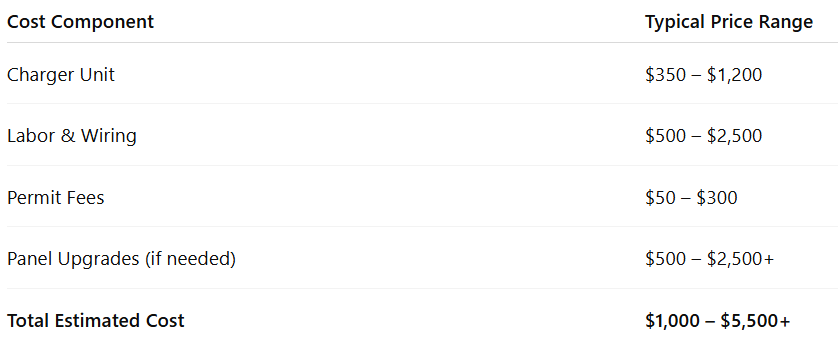
Homes with simple layouts and available panel space usually stay on the lower end. More complex projects can increase costs quickly.
Cost Scenarios Explained
Every home is different. These common scenarios help set expectations.
Basic Installation ($1,000 – $2,000)
-
The panel has available capacity
-
The charger is installed close to the panel
-
Minimal wiring required
Moderate Installation ($2,000 – $4,000)
-
Longer wiring distance
-
Minor panel adjustments
-
Indoor or partial outdoor setup
Complex Installation ($4,000 – $7,000+)
-
Full panel upgrade required
-
Long-distance wiring or trenching
-
Outdoor installation with added protection
Understanding which category your home falls into helps you plan more accurately.
What Increases Installation Costs?
Several factors can push the price higher. Most of them are tied to your home’s electrical setup.
Key cost factors include:
-
Distance between panel and charger location
-
Limited space in your electrical panel
-
Older wiring or outdated systems
-
Outdoor installations requiring weatherproofing
-
Trenching for detached garages or driveways
Even small details, like wall material or routing obstacles, can affect labor time.
Do You Need a Panel Upgrade for EV Charger Installation?
Not every home is ready for a Level 2 charger right away. Your electrical panel plays a major role in whether upgrades are needed.
Signs Your Panel Needs an Upgrade
An electrician will check your system before installation. These are common signs that an upgrade may be required:
-
Your home has a 100-amp panel
-
There is no space for a new breaker
-
Lights flicker when large appliances run
-
Your panel already feels overloaded
If your system cannot safely handle the extra load, an upgrade becomes necessary.
Panel Upgrade Costs in Florida
Panel upgrades vary depending on the size and condition of your current system.
Typical cost range:
-
$500 to $2,500 for minor upgrades
-
$2,500+ for full panel replacements
While this adds to the upfront cost, it improves overall electrical safety and supports future upgrades.
Alternatives to a Full Panel Upgrade
In some cases, you can avoid a full upgrade by using smarter solutions.
Options include:
-
Load management systems that balance power usage
-
Installing a subpanel
-
Choosing a lower amperage charger
These options can reduce costs while still allowing safe installation.
Permits, Codes, and Regulations in Lakeland, FL
Electrical work must follow local codes. EV charger installation is no exception. Permits and inspections help ensure everything is safe and up to standard in Lakeland.
Polk County Permit Requirements
Most Level 2 charger installations require an electrical permit. This applies whether the charger is installed indoors or outdoors.
The permit process usually includes:
-
Submitting basic project details
-
Paying a small fee
-
Scheduling an inspection after installation
Working with a licensed electrician makes this process much easier. They handle paperwork and ensure everything meets local rules.
NEC Code Requirements (Article 625)
EV charger installations must follow the National Electrical Code (NEC), specifically Article 625.
Key requirements include:
-
A dedicated circuit for the charger
-
Proper grounding and bonding
-
Correct breaker sizing
-
Weatherproof protection for outdoor units
These rules are in place to prevent overload, fire risk, and long-term system damage.
Inspection Process Explained
After installation, an inspection may be required before final approval.
During inspection:
-
Wiring and connections are checked
-
Breaker sizing is verified
-
Installation quality is reviewed
Once approved, your charger is ready for daily use with full confidence in safety.
Choosing the Right Level 2 EV Charger for Your Home
Not all chargers are the same. The right choice depends on your vehicle, your home setup, and how you plan to use it.
Plug-In vs Hardwired Chargers
There are two main installation types.
Plug-in chargers:
-
Easier to install
-
Can be removed or replaced easily
-
Use a 240V outlet
Hardwired chargers:
-
Permanently connected
-
Cleaner look with fewer exposed parts
-
Often preferred for outdoor setups
Both options work well. The choice depends on your preference and installation conditions.
Smart Charger Features to Consider
Many homeowners now choose chargers with built-in smart features.
These can include:
-
Mobile app control
-
Charging schedules
-
Energy usage tracking
-
Alerts and notifications
These features help you manage charging more efficiently and reduce energy costs over time.
Popular EV Charger Brands
Some brands are known for reliability and performance.
Common choices include:
-
Tesla Wall Connector
-
ChargePoint Home Flex
-
JuiceBox
-
Grizzl-E
Each offers different features, so it’s worth comparing based on your needs.
Indoor vs Outdoor EV Charger Installation
The location of your charger affects both cost and performance.
Garage Installation Benefits
Installing inside a garage is the most common option.
Benefits include:
-
Protection from the weather
-
Lower installation cost
-
Longer equipment lifespan
It also keeps your setup clean and organized.
Outdoor Installation Considerations
Outdoor setups work well when a garage is not available.
However, they require:
-
Weatherproof equipment
-
Proper sealing and protection
-
Slightly higher installation costs
With the right setup, outdoor chargers are just as reliable as indoor ones.
Conclusion: Is Level 2 EV Charger Installation Worth It?
For most homeowners in Lakeland, the answer is yes. A Level 2 EV charger adds convenience, saves time, and makes daily driving easier. It also prepares your home for the future as electric vehicles become more common.
If you want a reliable installation done right the first time, reach out to Hylton Electric. Call +1 863-624-7000 or email ray@hylton-electric.com to get started.
FAQs About Level 2 EV Charger Installation Lakeland, FL
How long does it take to install a Level 2 EV charger at home?
Most Level 2 EV charger installations are completed within a few hours. In simple cases, the job can be done the same day. However, timing depends on your home’s setup in Lakeland.
If your electrical panel has enough capacity and the charger is installed close by, the process is quick. More complex projects may take longer due to permits, panel upgrades, or wiring distance.
Typical timeline includes:
-
Panel inspection and preparation
-
Running wiring and installing the charger
-
Final testing and inspection
If permits are required, that can add a few days. A licensed electrician usually handles everything, which keeps the process smooth and efficient.
Do I need a permit to install a Level 2 EV charger in Lakeland?
Yes, most installations require a permit. This ensures the work meets local electrical codes and safety standards.
The permit process usually involves:
-
Submitting basic installation details
-
Paying a small fee
-
Scheduling a final inspection
While it may seem like an extra step, permits protect your home and investment. They also help avoid issues if you sell your property later.
A licensed electrician typically manages the entire process. This includes paperwork, coordination, and inspection scheduling. That way, you don’t have to deal with technical requirements or delays on your own.
Can I install a Level 2 EV charger myself?
Technically, it is possible, but it is not recommended. A Level 2 charger requires a 240-volt circuit, which involves advanced electrical work.
DIY installation carries risks such as:
-
Improper wiring
-
Overloaded circuits
-
Code violations
-
Fire hazards
Most local regulations also require licensed professionals for this type of work. Hiring an electrician ensures proper installation, code compliance, and long-term safety.
In addition, many charger manufacturers require professional installation to maintain the warranty. Choosing a licensed expert gives you peace of mind and protects your investment.
How much will my electric bill increase with a Level 2 charger?
Your electric bill will increase, but the amount depends on how often you charge and your driving habits.
On average:
-
Charging an EV costs much less than gasoline
-
Monthly increases typically range from $30 to $100
-
Costs vary based on local electricity rates
You can manage costs by:
-
Charging during off-peak hours
-
Using smart charging features
-
Monitoring energy usage
Even with the increase, most homeowners find EV charging more affordable than fueling a gas-powered vehicle. Over time, the savings can be significant.
What size breaker is required for a Level 2 EV charger?
Most Level 2 chargers require a 40 to 60 amp breaker, depending on the charger’s power rating.
Here’s a simple breakdown:
-
32-amp charger → 40-amp breaker
-
40-amp charger → 50-amp breaker
-
48-amp charger → 60-amp breaker
The correct size ensures safe operation and prevents overheating. Your electrician will match the breaker size with the charger specifications and your panel capacity.
Installing the right breaker is critical for both safety and performance. It also ensures your system meets electrical code requirements.
Can my existing electrical panel support a Level 2 charger?
It depends on your panel’s capacity and current load. Many newer homes can support a Level 2 charger without major upgrades.
However, older homes may need adjustments.
An electrician will check:
-
Total panel capacity (100A, 150A, 200A)
-
Available breaker space
-
Current power usage
If your panel is near its limit, upgrades or alternatives may be required. These could include a subpanel or load management system.
A proper assessment helps avoid overload and ensures safe, reliable charging.
What is the difference between a plug-in and hardwired EV charger?
The main difference is how the charger connects to your electrical system.
Plug-in chargers:
-
Connect to a 240V outlet
-
Easier to install or replace
-
Offer flexibility
Hardwired chargers:
-
Permanently connected
-
More secure connection
-
Often required for higher power setups
Both options work well. Your choice depends on your home setup, charger type, and personal preference. Many homeowners choose hardwired systems for a cleaner and more permanent solution.
Is it cheaper to charge an EV at home or at public stations?
Charging at home is usually cheaper. Electricity rates for residential use are lower than public charging fees.
Here’s why:
-
Public stations often include service fees
-
Prices can vary based on demand
-
Fast chargers are more expensive
At home, you benefit from:
-
Stable energy rates
-
Off-peak pricing options
-
No waiting time
Over time, home charging offers better value. It also gives you more control over your energy usage.
Where is the best place to install an EV charger at home?
The best location depends on your parking setup. Most homeowners choose a garage for convenience and protection.
Ideal locations include:
-
Garage walls near your parking space
-
Driveway areas for outdoor setups
-
Close proximity to your electrical panel
Keeping the charger near the panel reduces installation costs. It also improves efficiency.
Your electrician can help you choose the best spot based on layout, safety, and accessibility.
Can a Level 2 charger be installed outdoors?
Yes, many Level 2 chargers are designed for outdoor use. They are built to handle weather conditions when installed properly.
Outdoor installations require:
-
Weatherproof chargers
-
Proper sealing and conduit
-
GFCI protection
While outdoor setups may cost slightly more, they work just as well as indoor installations.
Choosing the right equipment ensures long-term durability and safe operation.
What happens if my panel does not have enough capacity?
If your panel cannot handle the added load, upgrades may be necessary. This is common in older homes.
Options include:
-
Upgrading to a higher-capacity panel
-
Installing a subpanel
-
Using a load management system
Each option depends on your home’s electrical setup and budget.
An electrician will recommend the most practical solution. This ensures safe charging without overloading your system.
Are there rebates or tax credits for EV charger installation?
Yes, homeowners may qualify for federal tax credits. These incentives help reduce installation costs.
The federal program may offer:
-
Up to 30% of installation costs
-
Maximum credit of $1,000
Eligibility depends on your location and installation details.
Some utility companies may also offer additional incentives. It’s worth checking current programs before installation.
Will installing an EV charger increase my home value?
In many cases, yes. Homes with EV-ready features are becoming more attractive to buyers.
Benefits include:
-
Added convenience for future owners
-
Modern electrical upgrades
-
Increased market appeal
As EV adoption grows, this feature becomes more valuable. While it may not drastically raise your home price, it can make your property stand out.
How far can the charger be from the electrical panel?
There is no strict limit, but distance affects cost. Longer distances require more wiring and labor.
Factors to consider:
-
Length of conduit and wiring
-
Obstacles like walls or concrete
-
Installation complexity
Keeping the charger close to the panel reduces costs. However, electricians can still install systems farther away if needed.
What maintenance does a Level 2 EV charger require?
Level 2 chargers require very little maintenance. Most systems are designed for long-term use.
Basic care includes:
-
Keeping the unit clean
-
Checking cables for wear
-
Updating software for smart chargers
Routine inspections help ensure everything stays in good condition. If any issues arise, a licensed electrician can quickly address them.
Can multiple EVs share one Level 2 charger?
Yes, but not at the same time unless you use a dual-port charger. Most single chargers can be shared by switching between vehicles.
Options include:
-
Manually unplugging and switching cars
-
Installing a dual-port charger
-
Scheduling charging times
For households with multiple EVs, planning your charging routine helps avoid delays.
Does a Level 2 charger work with all electric vehicles?
Most Level 2 chargers are compatible with all major EV brands. They use a standard connector.
Exceptions include:
-
Tesla vehicles (may require an adapter)
Many chargers now support multiple connector types. This ensures compatibility with different vehicles.
Before buying, confirm that the charger matches your vehicle’s requirements.
What safety features are included in Level 2 chargers?
Modern chargers include built-in safety features to protect your home and vehicle.
Common features include:
-
Overcurrent protection
-
Ground fault protection
-
Temperature monitoring
-
Automatic shutoff
These features ensure safe operation during daily use. Proper installation further enhances safety.
Can I use solar power with a Level 2 EV charger?
Yes, many homeowners pair EV chargers with solar systems. This allows you to charge your vehicle using renewable energy.
Benefits include:
-
Lower electricity costs
-
Reduced environmental impact
-
Better energy efficiency
Some smart chargers can integrate directly with solar systems. This helps optimize energy usage throughout the day.
What should I look for when hiring an electrician for EV charger installation?
Choosing the right electrician is important for safety and quality.
Look for:
-
Proper licensing and insurance
-
Experience with EV charger installations
-
Knowledge of local codes
-
Clear pricing and communication
A qualified electrician ensures the job is done correctly the first time. This helps avoid future issues and keeps your system running smoothly.
Leave a Reply