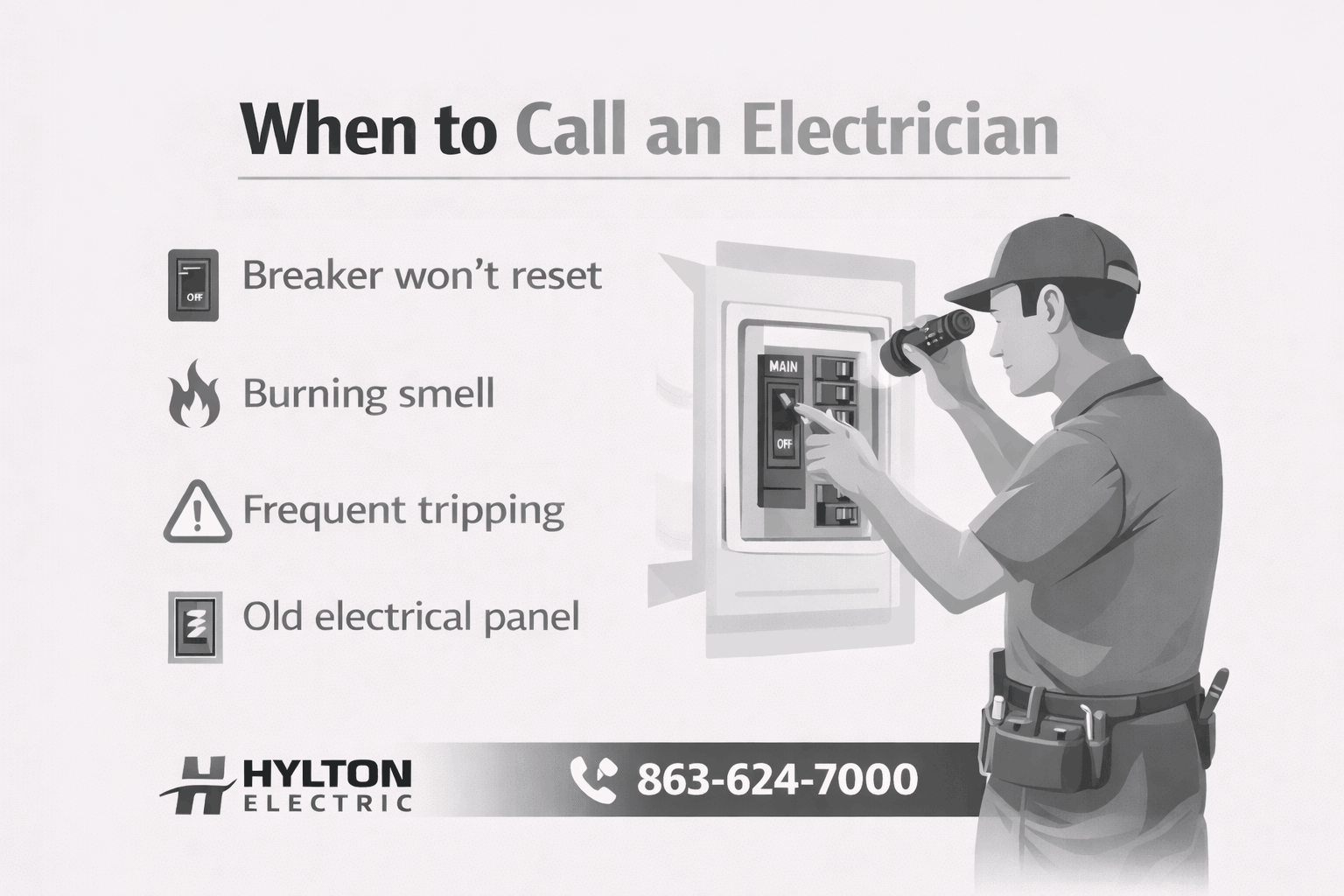
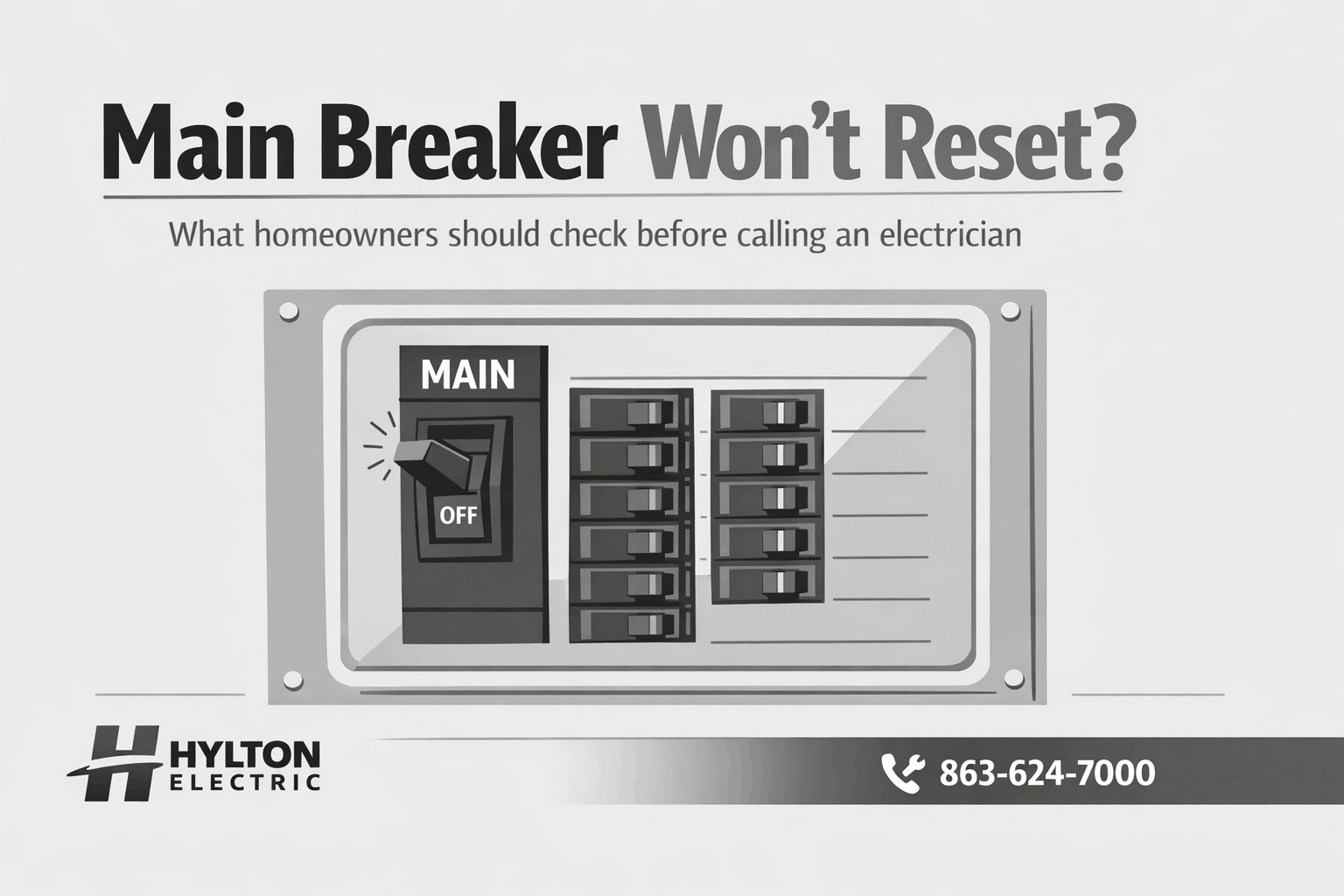
Home electrical panel with main breaker switch illustrating troubleshooting when a breaker won’t reset.

Main Breaker Won’t Reset? Here’s What You Should Do

When the power suddenly goes out in your home, the first place most people check is the electrical panel. Often, the issue is a tripped breaker. In many cases, flipping it back on solves the problem. But sometimes the main breaker won’t reset, and that can be confusing or even a little alarming.

The main breaker controls electricity for your entire home. When it trips, everything connected to your electrical system loses power. This safety feature protects your wiring, appliances, and home from serious electrical damage.

If your circuit breaker won’t reset, there is usually a reason. It could be something simple, like too many devices running at the same time. Other times, it may point to a deeper electrical issue such as damaged wiring, a short circuit, or a faulty breaker.

The good news is that there are several safe steps you can try before calling an electrician. Understanding why a breaker trips and what to check first can save time and reduce stress.

In this guide, we will explain:

  • How a main circuit breaker works

  • Why a breaker may refuse to reset

  • What steps should you take to troubleshoot the issue safely

  • When it’s time to call a professional electrician

By the end, you will have a clear idea of what might be happening inside your electrical panel and what to do next.

Understanding How a Main Circuit Breaker Works

Before troubleshooting the problem, it helps to understand what the main breaker actually does. Many homeowners only notice the panel when something stops working. Yet this small device plays a very important role in your home’s electrical safety.

Your electrical panel receives power from the utility company and distributes it throughout the house. The main circuit breaker sits at the top of the panel and acts as the master control switch.

If something goes wrong in your electrical system, the breaker shuts off power automatically. This prevents overheating, damaged wiring, and electrical fires.

Think of the breaker as a safety guard. Instead of letting electricity flow uncontrollably, it cuts the power when the current becomes unsafe.
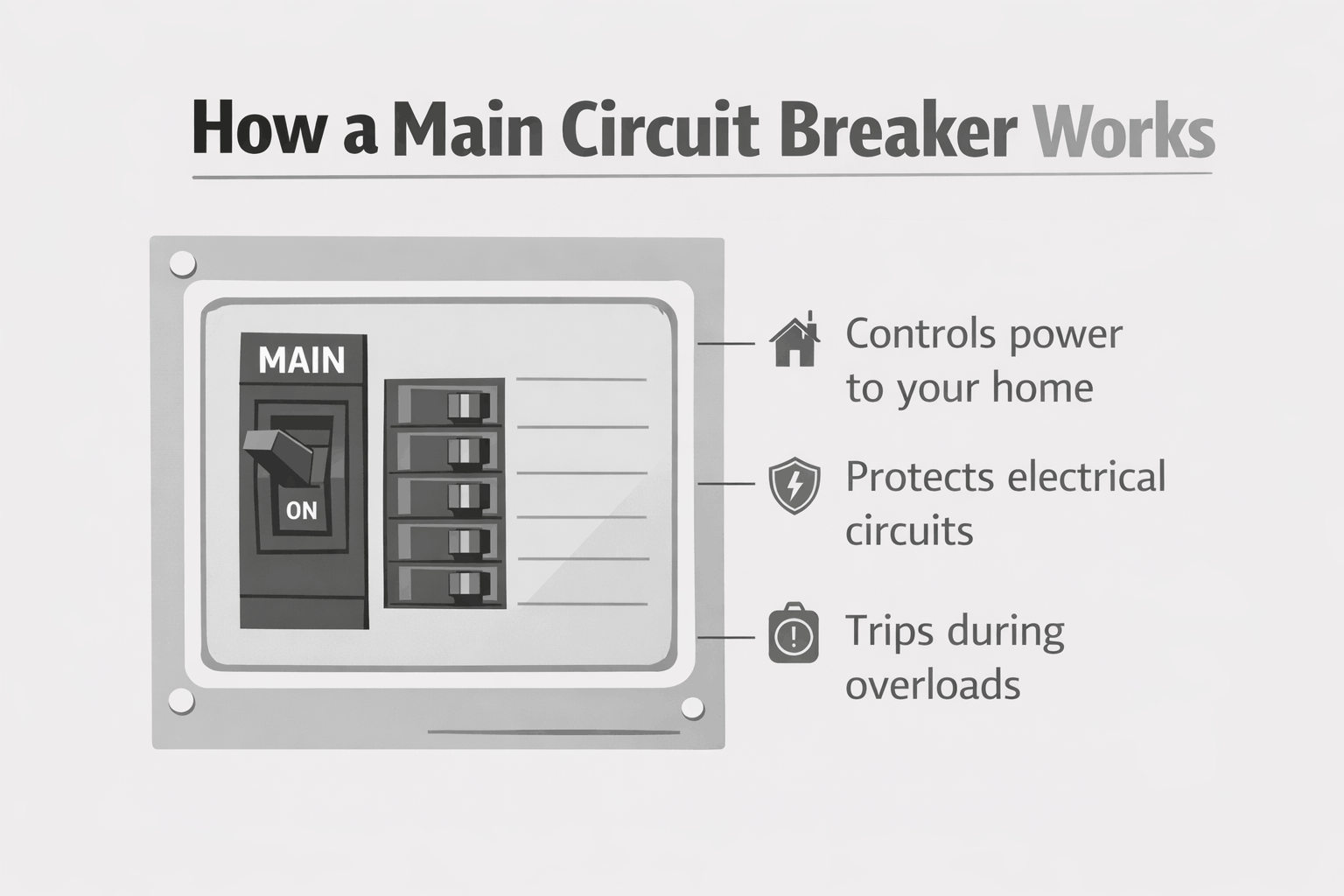
Minimal electrical panel diagram explaining how a main circuit breaker controls power and protects home circuits.

What Is a Main Breaker?

The main breaker is the large switch located inside your electrical panel. Unlike smaller breakers that control individual circuits, the main breaker controls the entire electrical supply to your home.

When you turn it off, power to the whole house shuts down. When it is on, electricity flows from the utility line to the rest of your circuits.

Here are a few key things to know about the main breaker:

  • It protects your entire electrical system.

  • It controls all branch circuits in the panel.

  • It shuts off power during serious electrical faults.

  • It also allows electricians to safely work on your electrical panel.

In most homes, the main breaker is rated between 100 and 200 amps, depending on the size of the electrical service. This rating tells you how much electrical current your home can safely handle at one time.

Because the main breaker handles so much power, it trips only when the electrical system detects a serious problem. When it refuses to reset, it often means something in the system needs attention.

Why Breakers Trip in the First Place

Circuit breakers are designed to trip when they detect unsafe electrical conditions. This may feel inconvenient, but it is actually protecting your home.

Several issues can cause a breaker to trip.

1. Electrical overload

An overload happens when too many devices pull electricity from the same circuit. For example, running a microwave, toaster, and coffee maker on one circuit may exceed its limit.

2. Short circuits

A short circuit occurs when a hot wire touches a neutral wire. This causes a sudden surge of electrical current, which the breaker immediately stops.

3. Ground faults

A ground fault happens when electricity flows outside its intended path and moves toward the ground. This often occurs in areas with moisture, such as kitchens, bathrooms, or outdoor outlets.

4. Faulty appliances

Sometimes the issue is not the wiring but a device plugged into the circuit. Damaged appliances can draw too much current or cause electrical faults.

When any of these problems occur, the breaker trips to stop electricity from flowing. If the underlying problem remains, the breaker may refuse to reset or trip again right away.

Signs Your Main Breaker Won’t Reset

When a breaker trips normally, resetting it is simple. You switch it fully to the off position and then turn it back on. Power returns, and everything works again. However, when the main breaker will not reset, you may notice a few warning signs.

One common sign is that the breaker immediately flips back to the tripped position after you turn it on. This usually means there is still an electrical fault somewhere in the system.

Another sign is when the breaker handle feels stuck or loose. Mechanical wear inside the breaker can sometimes prevent it from locking into place. Homeowners may also notice other symptoms around the electrical panel.

Common warning signs include:

  • The breaker will not stay in the ON position

  • The handle stays in the middle or tripped position

  • The breaker trips again immediately after resetting

  • You hear buzzing or humming from the panel

  • There is a faint burning smell near the breaker box

  • The electrical panel feels warm to the touch

If any of these issues appear, the breaker is reacting to something that needs attention. Sometimes it is a simple overload. Other times, it may indicate a more serious wiring problem. Either way, the next step is to understand what could be causing the breaker to refuse to reset.
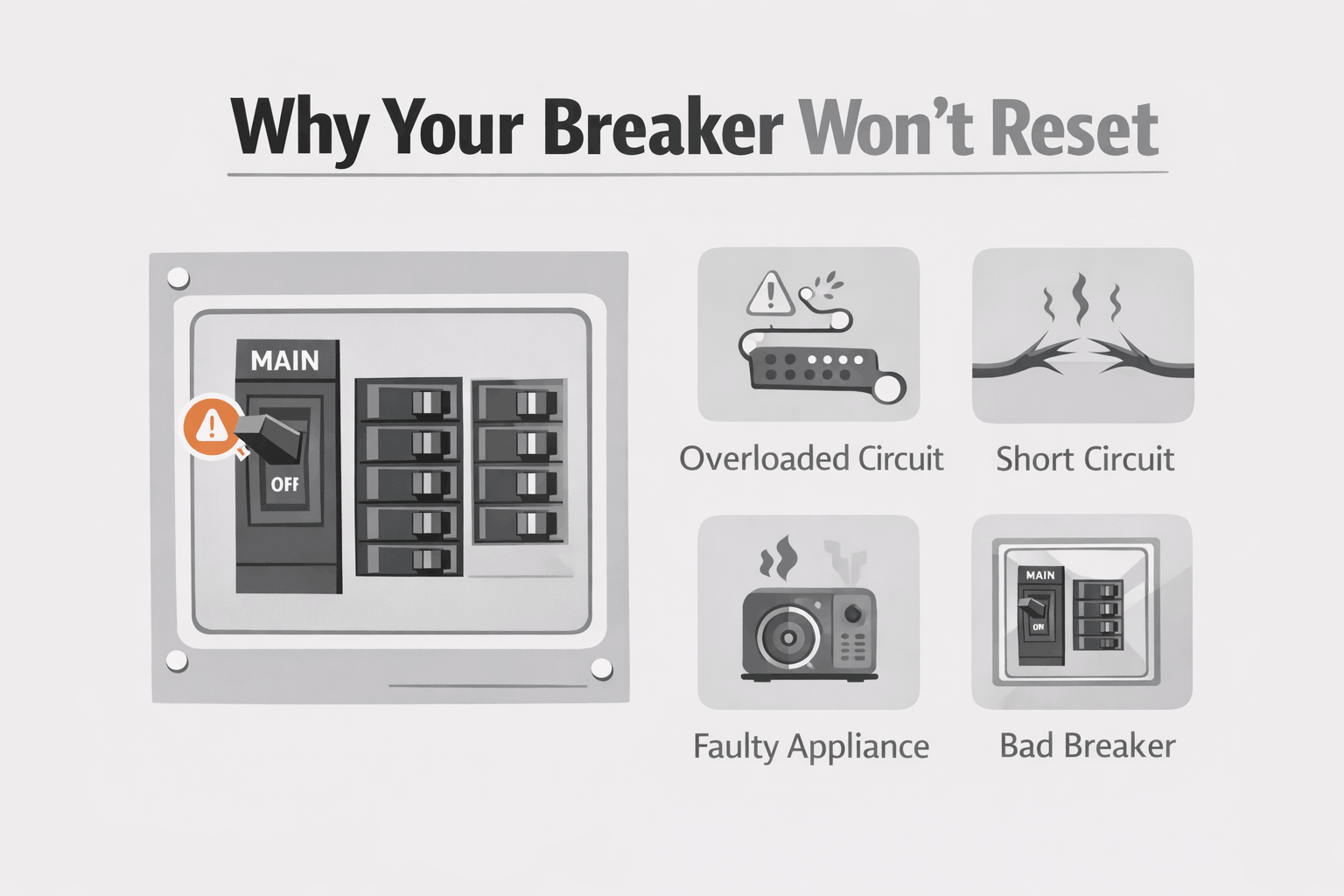
Common Reasons a Main Breaker Won’t Reset

If your main breaker won’t reset, the issue usually comes from something happening inside the electrical system. Breakers are designed to shut off power when they detect unsafe conditions. When the problem continues, the breaker may trip again immediately.

In some cases, the cause is simple. Too many appliances may be running at once. Other times, the problem may involve damaged wiring, a faulty appliance, or even a worn-out breaker.

Below are the most common reasons a circuit breaker won’t reset in a home.

1. Electrical Overload

An electrical overload happens when a circuit draws more electricity than it can safely handle.

Every circuit in your home has a limit. When too many devices run at the same time, the current rises above that limit. The breaker then shuts off power to prevent overheating.

This often happens in rooms where several appliances run together.

Examples include:

  • Kitchen appliances running at the same time

  • Space heaters plugged into regular outlets

  • Multiple electronics connected through one power strip

  • Hair dryers and bathroom heaters running together

Older homes are especially vulnerable to overloads because electrical systems were designed for fewer devices. Modern homes use many more appliances, which increases electrical demand.

If an overload caused the problem, turning off or unplugging devices may allow the breaker to reset.

2. Short Circuit Problems

A short circuit is a more serious electrical issue. It happens when a hot wire touches a neutral wire inside the electrical system. This creates a sudden surge of electrical current. Because the current rises so quickly, the breaker shuts off power almost instantly.

Short circuits can happen for several reasons:

  • Damaged or worn electrical wiring

  • Loose wire connections inside outlets

  • Faulty switches or light fixtures

  • Damaged appliance cords

When a short circuit occurs, the breaker usually trips immediately after resetting. This is a strong sign that an electrician should inspect the circuit. Short circuits can generate heat and sparks, which makes them a potential fire risk if ignored.

3. Ground Fault Issues

A ground fault happens when electricity leaves its normal path and travels toward the ground. This often occurs when a hot wire touches metal, water, or another grounded surface.

Ground faults are common in areas where moisture is present.

For example:

  • Kitchens

  • Bathrooms

  • Laundry rooms

  • Outdoor outlets

Because water conducts electricity, even small faults can create dangerous conditions. That is why many homes use GFCI outlets in these areas. If a ground fault occurs, the breaker trips to protect people from electric shock. When the fault remains, the breaker may refuse to reset.

4. Faulty or Aging Circuit Breaker

Sometimes the issue is not the wiring but the breaker itself. Circuit breakers contain mechanical parts that can wear out over time. After many years of use, the internal mechanism may fail to hold the switch in the ON position.

Signs of a failing breaker may include:

  • The breaker will not stay in the ON position

  • The switch feels loose or weak

  • The breaker trips more often than usual

  • The panel shows signs of overheating

If the breaker itself is damaged, resetting it will not solve the problem. In this situation, the breaker usually needs to be replaced by a licensed electrician.

5. Loose Electrical Connections

Loose wiring inside the electrical system can also cause breakers to trip repeatedly. When electrical connections loosen, electricity may jump across small gaps. This creates heat and small electrical arcs. Over time, this can damage outlets, switches, and wiring.

Loose connections may occur in several places:

  • Inside electrical outlets

  • At switch terminals

  • Inside junction boxes

  • Within the electrical panel

Because loose wiring can create fire hazards, it should always be inspected by a professional electrician.

6. A Problem With an Appliance

Sometimes the problem is not the breaker or wiring at all. Instead, a faulty appliance may be drawing too much electricity. When a device develops internal electrical problems, it can trip the breaker each time it runs.

Common appliances that may cause breaker issues include:

  • Air conditioning systems

  • Refrigerators

  • Microwaves

  • Dishwashers

  • Washing machines

  • Portable heaters

A simple way to test this is by unplugging appliances and trying to reset the breaker again. If the breaker stays on after removing a device, that appliance may be the cause.

In that case, the appliance should be repaired or replaced before using it again.

Tripped breaker illustration showing common causes like overloads, short circuits, faulty appliances, and damaged breakers.

Step-by-Step: What to Do When Your Main Breaker Won’t Reset

When your main breaker will not reset, it is important to move slowly and safely. Electrical panels carry significant voltage, so rushing through troubleshooting can create risks. Fortunately, there are several simple steps homeowners can try before calling an electrician.

These steps help identify whether the issue is an overload, a faulty appliance, or a more serious electrical problem.

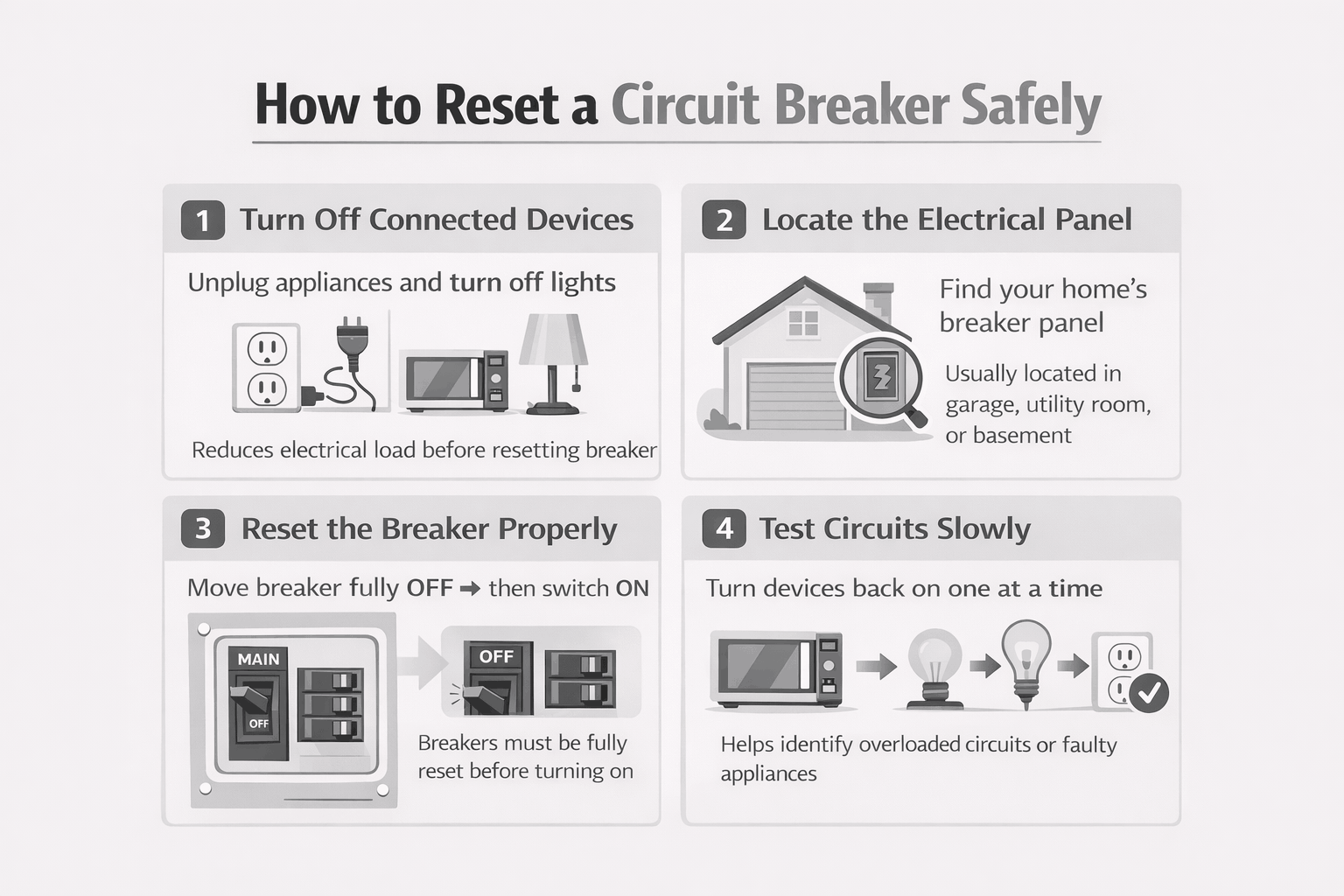
Step 1: Turn Off or Unplug Devices

Start by reducing the electrical load on your system. Go around your home and unplug large appliances and electronics. Also turn off lights and switches connected to the affected circuits.

Focus especially on high-power devices such as:

  • Space heaters

  • Microwaves

  • Coffee makers

  • Window air conditioners

  • Hair dryers

Removing these devices lowers the demand on the electrical system. If the breaker tripped due to an overload, this step may allow it to reset normally.

Step 2: Fully Reset the Breaker

Many homeowners do not realise that breakers must be reset in a specific way. When a breaker trips, it usually rests in the middle position between ON and OFF. Simply pushing it toward ON will not reset it.

Instead, follow this process:

  1. Push the breaker fully to the OFF position

  2. Wait a few seconds

  3. Flip it firmly back to the ON position

This resets the internal mechanism inside the breaker. If the breaker stays on, power should return to your home.

Step 3: Check for Immediate Tripping

After resetting the breaker, watch what happens. If the breaker stays on, the issue may have been temporary. You can begin reconnecting appliances one at a time. However, if the breaker trips again immediately, it usually indicates a deeper electrical issue.

Possible causes include:

  • A short circuit in the wiring

  • A ground fault in a circuit

  • A faulty appliance still connected to the system

In these cases, further troubleshooting may be needed.

Step 4: Inspect for Visible Damage

Next, take a careful look around the electrical panel area. You do not need to open the panel itself, but you can check for warning signs around it.

Look for:

  • Burn marks near outlets or the panel

  • Melted insulation on wires

  • A burning or plastic smell

  • A warm or hot breaker panel

These signs can indicate overheating or electrical damage. If you notice any of these warning signals, it is best to stop troubleshooting and contact a professional electrician.

Step 5: Reset Individual Breakers

Another useful troubleshooting method involves isolating the circuit that may be causing the issue.

Follow these steps:

  1. Turn all smaller branch breakers OFF

  2. Reset the main breaker

  3. Turn circuits back on one at a time

If the main breaker trips when a certain circuit turns on, that circuit likely contains the problem. This process helps narrow down where the electrical fault may be located.

However, if the breaker continues to trip even with all circuits off, the issue may involve the main breaker itself or the incoming electrical service.

Step-by-step infographic explaining how homeowners safely reset a tripped circuit breaker using simple troubleshooting steps.

When You Should NOT Try to Reset a Breaker

Resetting a breaker is usually safe when it trips occasionally. However, there are situations where trying to reset it again can make the problem worse. In some cases, repeatedly flipping the breaker can even create a fire risk.

Breakers trip for a reason. If the underlying electrical problem remains, the breaker will keep shutting off power to protect the system. Because of this, it is important to recognise warning signs that require professional help.

You should stop resetting the breaker if you notice any of the following.

  • A burning smell coming from the electrical panel

  • Smoke or sparks near outlets or the breaker box

  • The breaker trips immediately every time you reset it

  • You see melted wires or burn marks

  • The electrical panel feels hot or unusually warm

  • There has been water exposure near the panel or outlets

These signs may indicate serious electrical problems such as damaged wiring, short circuits, or overheating components.

For example, if wiring inside a wall becomes damaged, electricity may arc between wires. Each time the breaker resets, the same dangerous condition returns. Over time, this can damage insulation and increase the risk of an electrical fire.

Water is another major concern. If moisture reaches outlets, wiring, or the electrical panel, electricity may travel through unintended paths. This creates ground faults and shock hazards.

In situations like these, it is best to leave the breaker off and contact a licensed electrician. A professional can safely inspect the system and identify the source of the problem.

When to Call a Licensed Electrician

Some electrical issues are simple to fix. For example, unplugging a high-power appliance may stop an overload from happening again. But when the main breaker will not reset, the problem can involve deeper parts of the electrical system.

A licensed electrician has the training and tools to diagnose electrical faults safely. Attempting complex electrical repairs without experience can be dangerous.

You should consider calling an electrician if any of these situations occur.

  • The main breaker refuses to reset even after unplugging devices

  • The breaker trips repeatedly within a short time

  • You suspect damaged wiring inside the walls

  • The electrical panel is older or outdated

  • The breaker switch feels loose or worn

  • You notice burning smells, buzzing sounds, or heat near the panel

Frequent breaker trips often mean the electrical system is under stress. This can happen when homes add new appliances without upgrading the electrical panel.

For example, modern homes use more power than houses built decades ago. Air conditioners, electric vehicle chargers, and large kitchen appliances all increase electrical demand.

If the panel cannot safely support this load, an electrician may recommend solutions such as:

  • Replacing a faulty breaker

  • Repairing damaged wiring

  • Installing dedicated circuits for appliances

  • Upgrading the electrical panel

These upgrades help the electrical system run safely and prevent future breaker problems.

How Electricians Diagnose a Breaker That Won’t Reset

When homeowners call for electrical troubleshooting, electricians follow a careful process to locate the problem. Electrical issues can come from many different sources, so a proper inspection is important before making repairs.

First, the electrician checks the electrical panel. They examine the main breaker, wiring connections, and surrounding components for signs of overheating or damage.

Next, they may perform load testing on the circuits. This helps determine whether any circuits are drawing too much electricity.

Electricians may also inspect outlets, switches, and junction boxes throughout the home. If loose wiring or damaged insulation exists, these areas can reveal the problem.

Some of the common steps electricians use include:

  • Checking for loose or burned wires inside the panel

  • Testing circuits for short circuits or ground faults

  • Inspecting outlets and switches for damage

  • Measuring electrical load on different circuits

  • Identifying faulty appliances connected to the system

If the breaker itself is defective, replacing it may solve the issue. However, if the electrical panel is older or overloaded, a larger upgrade may be necessary.

Electrical panels typically last 25 to 40 years. After that time, breakers may wear out, and wiring connections may loosen. A professional inspection helps ensure the system is safe and operating properly.

Preventing Breaker Problems in the Future

Once the issue is resolved, homeowners often want to avoid the same problem happening again. While some electrical faults occur unexpectedly, many breaker trips can be prevented with simple habits and regular maintenance.

A well-maintained electrical system runs more efficiently and safely. Below are a few ways to reduce the chances of future breaker problems.

Avoid Circuit Overloads

Overloading circuits is one of the most common reasons breakers trip. Try to spread electrical usage across multiple circuits rather than relying on one outlet or power strip.

Helpful habits include:

  • Avoid plugging too many devices into one outlet

  • Use separate circuits for high-power appliances

  • Limit the use of space heaters on shared circuits

  • Unplug devices that are not in use

These steps reduce the demand placed on a single circuit.

Maintain Your Electrical Panel

Your electrical panel should remain accessible and in good condition.

Basic maintenance tips include:

  • Keep the area around the panel clear

  • Do not store items directly in front of it

  • Schedule periodic electrical inspections

  • Watch for unusual sounds or heat coming from the panel

Routine inspections help detect loose connections and ageing components before they cause problems.

Use Dedicated Circuits for Large Appliances

Many large appliances require their own circuits to operate safely.

These appliances include:

  • Air conditioning systems

  • Electric ovens and stoves

  • Clothes dryers

  • Refrigerators

  • Electric vehicle chargers

Dedicated circuits ensure these devices receive enough power without overloading other parts of the system.

Upgrade Old Electrical Systems

Older homes were not designed for the level of electricity modern households use today. As a result, outdated panels often struggle to support newer appliances and electronics.

If your home still uses an older electrical panel, upgrading may improve both safety and reliability.

Electrical upgrades may include:

  • Installing a larger electrical panel

  • Adding new circuits for modern appliances

  • Updating outdated breakers

  • Improving grounding and surge protection

These improvements help the electrical system handle current energy demands more safely.

hylton electric

Conclusion: Don’t Ignore a Breaker That Won’t Reset

A main breaker that won’t reset is more than just an inconvenience. It is your electrical system’s way of warning you that something needs attention.

In some situations, the cause may be simple. An overloaded circuit or faulty appliance can often be identified quickly. Unplugging devices and resetting the breaker may restore power without further issues. However, if the breaker continues to trip or refuses to reset, the problem may involve damaged wiring, a short circuit, or a failing breaker.

Electrical problems should never be ignored. Addressing them early helps prevent larger issues such as equipment damage or electrical fires. If your main breaker won’t reset, the safest step is to have the system inspected by a qualified electrician. A professional can diagnose the issue, repair faulty components, and ensure your electrical system is operating safely.

Need help with a breaker problem?

Call Hylton Electric today at +1 863-624-7000 or email ray@hylton-electric.com to schedule an inspection. Our team is always happy to answer questions and help you keep your home’s electrical system safe and reliable.

FAQs About the Main Breaker Won’t Reset

Why won’t my main breaker reset?

If your main breaker won’t reset, it usually means there is still an electrical problem somewhere in the system. Breakers are designed to trip to protect your home from overheating wires or electrical faults.

Common reasons include:

  • Circuit overload from too many appliances

  • A short circuit in the wiring

  • A ground fault caused by moisture

  • A faulty breaker or damaged appliance

Before resetting, unplug devices and try again. If the breaker trips immediately, the issue likely needs professional inspection.

What should I do if my circuit breaker keeps tripping?

When a breaker trips repeatedly, it is reacting to an unsafe electrical condition. Resetting it without finding the cause will only trigger it again.

Start with these steps:

  • Unplug high-power appliances

  • Turn off the lights and electronics on that circuit

  • Reset the breaker once

If the breaker trips again, a short circuit, an overloaded circuit, or a faulty appliance may be involved. In that case, an electrician should inspect the electrical panel and wiring.

Is it safe to keep resetting a breaker?

Resetting a breaker once or twice is generally safe if the cause was a temporary overload. However, repeatedly resetting a breaker is not recommended.

This can be dangerous because:

  • It ignores the underlying electrical problem

  • Faulty wiring could overheat

  • Electrical components may become damaged

If the breaker keeps tripping, leave it off and investigate the cause. Persistent electrical faults should always be handled by a licensed electrician.

What causes a breaker to trip immediately after resetting?

If a breaker trips the moment you switch it back on, it usually means a serious electrical fault exists on the circuit.

Common causes include:

  • Short circuits in wiring

  • Ground faults from moisture

  • A damaged appliance plugged into the circuit

  • Loose or burned wiring connections

This immediate reaction is the breaker doing its job. Instead of forcing it back on, unplug devices and test the circuit again.

Can a circuit breaker go bad over time?

Yes, circuit breakers can wear out over time. Although they are built to last many years, the internal mechanism can weaken after repeated use.

Signs of a failing breaker may include:

  • The breaker will not stay in the ON position

  • It trips frequently without a clear reason

  • The switch feels loose or weak

When this happens, the breaker may need to be replaced. A qualified electrician can confirm whether the breaker itself is the problem.

How do I properly reset a circuit breaker?

Resetting a breaker requires a specific process. Many people try to push it back on without fully resetting it first.

Follow these steps:

  • Move the breaker fully to the OFF position

  • Wait a few seconds

  • Flip it firmly back to ON

This resets the internal mechanism. If the breaker stays on, power should return. If it trips again immediately, the electrical system may have a deeper issue.

Can a faulty appliance trip the main breaker?

Yes, a damaged or malfunctioning appliance can trip a breaker. When appliances develop internal electrical problems, they may draw excessive current or create a short circuit.

Appliances that commonly cause breaker issues include:

  • Space heaters

  • Refrigerators

  • Air conditioning systems

  • Microwaves

A simple way to check is by unplugging devices and resetting the breaker. If the breaker stays on afterwards, the appliance may need repair or replacement.

How do electricians diagnose a breaker that won’t reset?

Electricians use specialised tools and a step-by-step process to locate electrical faults. The goal is to identify the exact cause without risking further damage.

Typical diagnostic steps include:

  • Inspecting the electrical panel and breaker connections

  • Testing circuits for overload or short circuits

  • Checking outlets and switches for damage

  • Measuring electrical load on the system

Once the issue is identified, the electrician can repair wiring, replace the breaker, or recommend system upgrades.

When should I call an electrician for breaker problems?

You should contact an electrician when the issue goes beyond simple troubleshooting. Some warning signs indicate the electrical system needs professional attention.

Call an electrician if:

  • The breaker will not reset at all

  • It trips immediately every time

  • You notice burning smells or buzzing sounds

  • The electrical panel feels hot

These signs may point to wiring damage or panel issues that require safe, professional repair.

Can an outdated electrical panel cause breaker problems?

Yes, older electrical panels often struggle to handle modern electrical demand. Homes today use far more devices than systems built decades ago were designed for.

Outdated panels may cause:

  • Frequent breaker trips

  • Overloaded circuits

  • Insufficient capacity for new appliances

Upgrading the electrical panel can improve safety and allow your home to support current power needs more reliably. An electrician can determine whether a panel upgrade is necessary.

Leave a Reply

Your email address will not be published. Required fields are marked *