
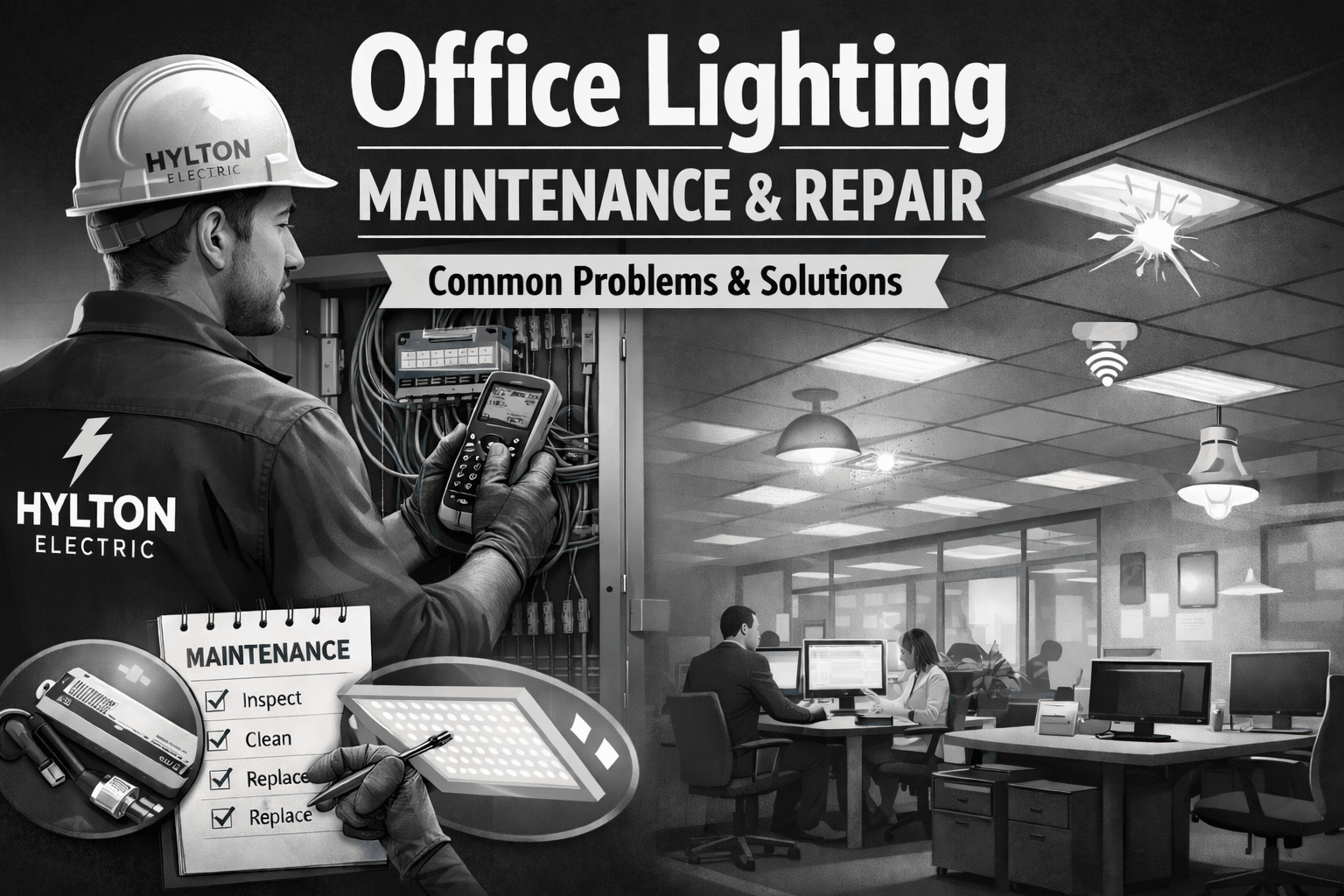
Office lighting affects how people work every day. When lighting works well, employees stay focused and comfortable. When it fails, the entire workspace feels different. Dim areas, flickering fixtures, or lights that stop working can quickly disrupt a normal workday.
Many lighting problems start small. A driver begins to weaken. Dust builds up inside a fixture. A sensor stops responding properly. At first, these issues may seem minor. Over time, however, they can turn into larger electrical or maintenance problems.
That is why office lighting maintenance matters. Regular inspections help identify problems before they spread across multiple fixtures. Simple tasks such as cleaning lenses, tightening wiring, or replacing worn parts can prevent expensive repairs later.
Maintenance also keeps lighting levels consistent across the building. Employees can work comfortably when brightness remains even in offices, hallways, and meeting rooms. At the same time, businesses can control energy use and avoid unnecessary electricity costs.
This guide explains common office lighting problems and practical ways to fix them. It also covers why lighting maintenance is important and what types of lighting systems are found in commercial offices.
Why Office Lighting Maintenance Is Important
Lighting maintenance is a key part of managing any office building. It helps keep the workspace safe, efficient, and comfortable. Without regular maintenance, lighting systems can slowly lose performance.
Fixtures may become dim. Sensors may stop responding. Electrical components may fail earlier than expected. When these problems appear, they often affect productivity and energy use.
Routine lighting maintenance helps prevent these issues. It keeps systems running smoothly and reduces the chance of unexpected repairs.
Improves Workplace Productivity
Lighting has a strong effect on employee performance. Poor lighting can cause eye strain, headaches, and fatigue. When people struggle to see clearly, their work becomes slower and more difficult.
Bright and balanced lighting helps employees stay focused. It also makes reading documents and computer screens easier. Meeting rooms, shared work areas, and offices all benefit from consistent lighting.
Regular maintenance helps maintain these conditions. Clean fixtures and properly working drivers keep light levels stable across the workspace.
Enhances Energy Efficiency
Lighting systems can lose efficiency if they are not maintained. Dust and dirt often collect on lenses and diffusers. When this happens, less light reaches the room.
As brightness drops, people may increase light levels or add more lamps. This leads to higher electricity use. Over time, energy costs can increase.
Routine maintenance helps avoid this problem. Cleaning fixtures and checking electrical components allows the system to operate at its intended efficiency.
Extends the Lifespan of Lighting Systems
Commercial lighting equipment is designed to last many years. However, small electrical issues can shorten the lifespan of these systems.
Loose wiring, worn drivers, or failing ballasts can slowly damage fixtures. If these problems are caught early, repairs are usually simple.
Regular inspections help identify weak components before they fail. This approach reduces replacement costs and keeps lighting systems working longer.
Supports Safety and Compliance
Good lighting also supports workplace safety. Employees need clear visibility in hallways, stairways, and exits. Poor lighting can increase the risk of accidents.
Many commercial buildings must also meet lighting safety requirements. Emergency lights and exit signs must work properly during power outages.
Routine inspections help confirm that these systems are ready when needed. Maintenance teams can test emergency lighting and replace faulty fixtures before problems occur.
Types of Office Lighting Systems That Require Maintenance
Most offices use several types of lighting systems. Each type works differently and requires specific maintenance tasks. Understanding these systems helps facility managers identify potential issues more quickly.
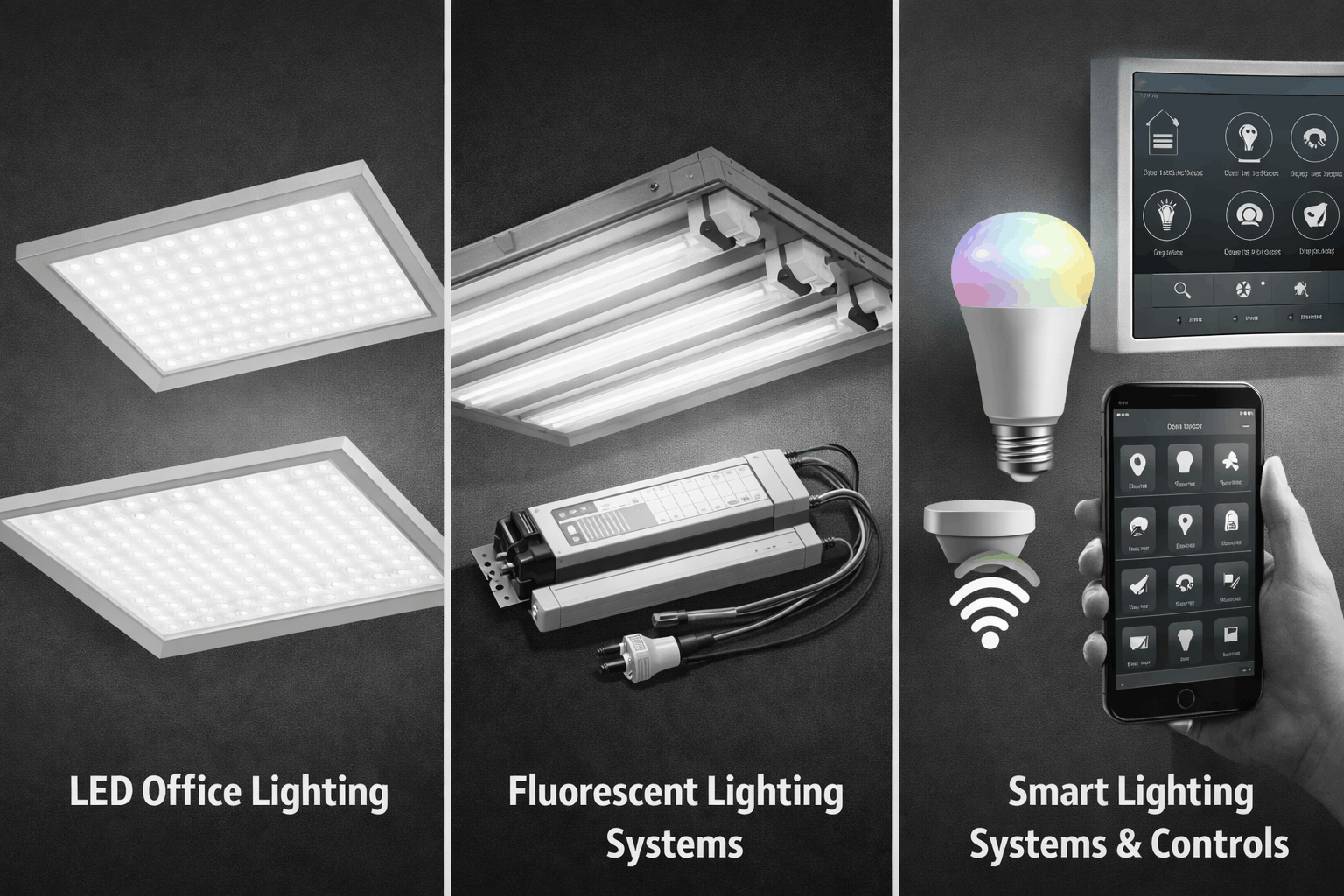
Although LED lighting is now the most common option, many buildings still use older lighting technologies.
LED Office Lighting
LED lighting has become the standard for modern office spaces. These fixtures use less energy and last longer than traditional bulbs. LED panels and troffers are commonly installed in ceilings throughout offices.
Even though LEDs last a long time, they still require maintenance. Drivers can fail, sensors may stop working, and electrical connections can loosen.
Dust buildup can also reduce brightness. When lenses become dirty, the fixture produces less usable light. Routine inspections help keep LED lighting systems performing efficiently.
Fluorescent Lighting Systems
Many older office buildings still use fluorescent lighting. These systems use long tubes that are powered by ballasts inside the fixture.
Fluorescent lights often develop problems as they age. Flickering is common when a ballast begins to fail. Some fixtures may also produce a buzzing sound.
Tubes eventually burn out and must be replaced. Because of these maintenance issues, many businesses upgrade fluorescent systems to LED lighting.
Smart Lighting Systems and Controls
Some offices use smart lighting controls to manage energy use. These systems include motion sensors, daylight sensors, timers, and automated dimmers. When someone enters a room, the lights turn on automatically. When the space becomes empty, the lights turn off.
Smart systems save energy, but they also require maintenance. Sensors may become misaligned or covered by dust. Timers may also need adjustments. Regular inspections help ensure these systems continue working correctly.
Common Office Lighting Problems
Office lighting problems usually appear slowly. At first, one fixture may flicker. Later, another area becomes dim. If these issues are ignored, the lighting system may start failing in several places.
Many problems come from normal wear and tear. Electrical parts age. Sensors lose accuracy. Dust collects inside fixtures. Because office lights run for many hours each day, these issues are common in commercial buildings.
The good news is that most lighting problems are easy to identify. Once the cause is known, the fix is often simple. Below are some of the lighting problems that maintenance teams see most often in office buildings.
-
Flickering lights
-
Lights that do not turn on
-
Dim or uneven lighting
-
Buzzing or humming fixtures
-
Lights staying on during the day
-
Frequent bulb or driver failures
-
Sensor or control system issues
Each of these problems has a clear cause. In many cases, routine maintenance can prevent them from happening in the first place.
Flickering Office Lights: Causes and Solutions
Flickering lights are one of the most common complaints in office spaces. Even a small flicker can distract employees and make a workspace uncomfortable.
Sometimes the flicker happens constantly. In other cases, it appears only when lights first turn on. The cause usually comes from electrical components inside the fixture.
Understanding the source of the flicker helps determine the correct repair.
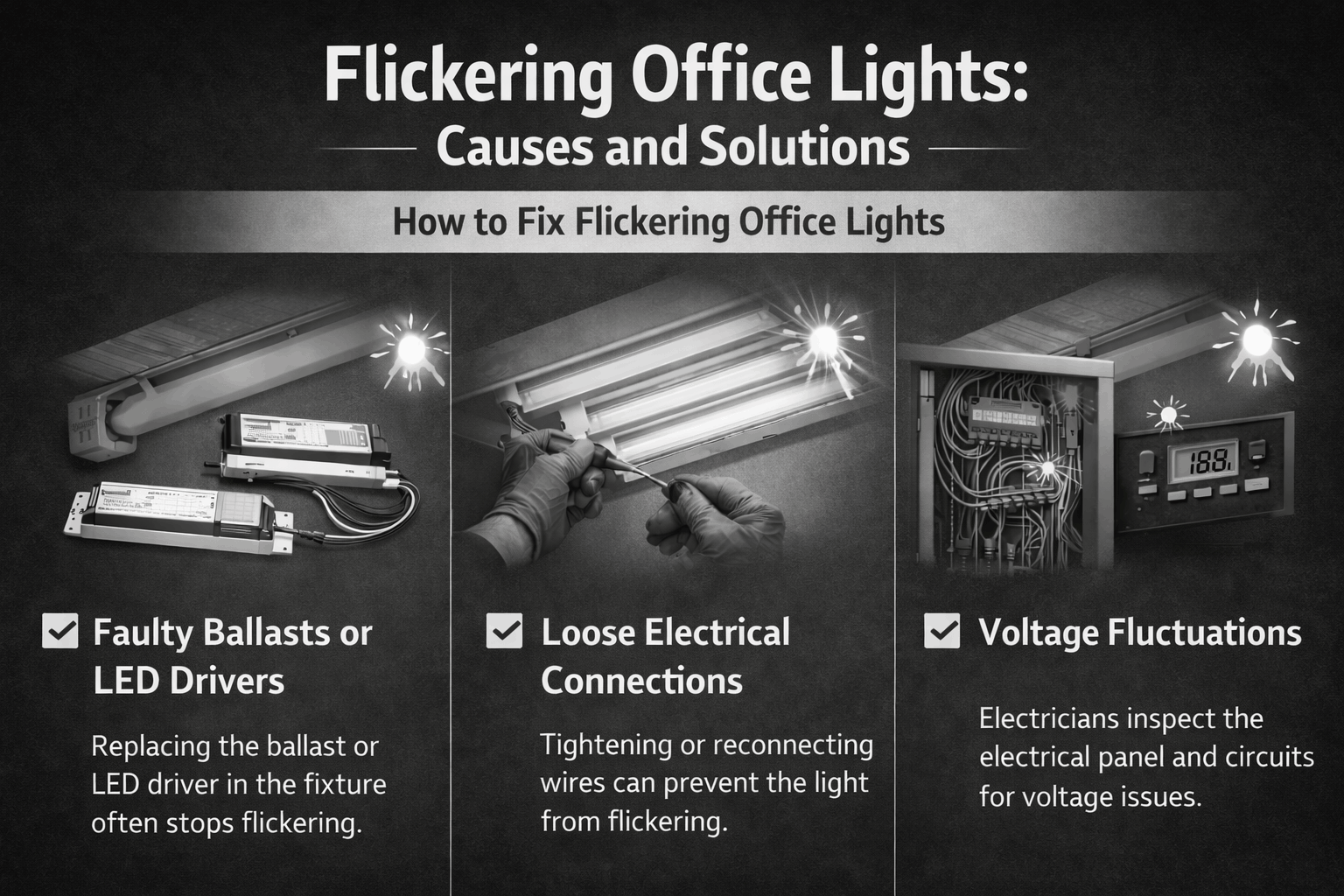
Faulty Ballasts or LED Drivers
Lighting fixtures rely on internal electrical components to control power. Fluorescent fixtures use ballasts, while LED fixtures use drivers.
When these parts begin to fail, the light may flicker or struggle to stay on. This problem often appears in older fixtures that have been running for many years.
Replacing the ballast or driver usually solves the issue quickly.
Loose Electrical Connections
Another common cause of flickering is loose wiring. Over time, vibration and normal use can loosen electrical connections inside the fixture.
When power flow becomes unstable, the light may flicker on and off. This problem can usually be fixed by tightening or reconnecting the wiring.
However, electrical work should always be handled by a qualified electrician to avoid safety risks.
Voltage Fluctuations
Sometimes the problem does not come from the fixture itself. Instead, the building’s electrical system may experience voltage fluctuations.
When voltage levels change quickly, lighting fixtures may flicker or dim. This issue may affect several lights in the same area.
In this situation, electricians often inspect the electrical panel and circuits to identify the source of the fluctuation.
Lights Not Turning On: Troubleshooting Guide
Another common lighting issue occurs when fixtures stop turning on completely. This can happen in a single room or across multiple areas of the office.
When lights fail to turn on, the cause is often simple. However, proper troubleshooting helps identify the real problem before replacing parts unnecessarily.
Maintenance teams usually begin with the most basic checks.
Tripped Circuit Breakers
The first step is often checking the circuit breaker panel. If too much power flows through a circuit, the breaker may trip to protect the electrical system.
When this happens, the lights connected to that circuit will stop working.
Resetting the breaker usually restores power. If the breaker trips again, an electrician may need to inspect the circuit for deeper issues.
Burned-Out Bulbs or LED Panels
Sometimes the problem is simply a burned-out light source. Even long-lasting LED panels eventually reach the end of their lifespan.
Replacing the bulb or panel often solves the problem immediately.
Faulty Switches or Sensors
Modern offices often rely on motion sensors or automated switches. If these devices fail, the lights may not respond when someone enters the room.
In some cases, the sensor may just need cleaning or adjustment. Other times, the control unit may need replacement.
Damaged Wiring
If none of the basic checks solve the problem, damaged wiring may be involved. Wiring problems can interrupt the flow of electricity to the fixture.
Careful troubleshooting helps identify the real cause of lighting failure. This approach saves time and reduces unnecessary replacement costs.
Dim or Uneven Lighting in Office Spaces
Dim lighting is another common issue in office buildings. Sometimes one area appears darker than the rest of the room. In other cases, the entire space may feel less bright than before.
Uneven lighting can affect comfort and productivity. Employees may struggle to read documents or work on screens. Over time, this can lead to eye strain and fatigue.
In many situations, the cause is simple. Lighting fixtures may be dirty, aging, or partially failing. Once the issue is identified, the fix is often straightforward.
Dirty Lenses and Fixtures
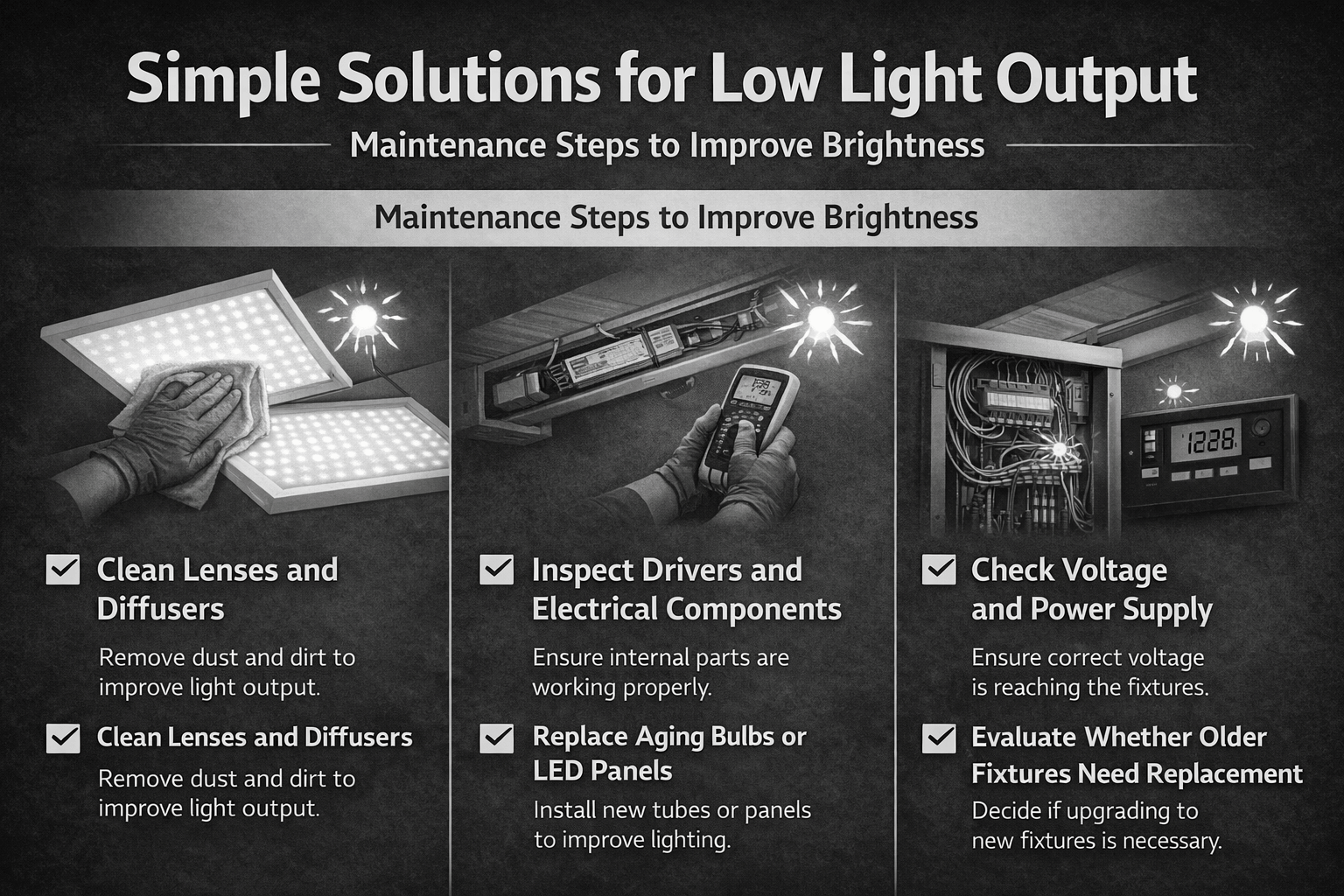
Dust and debris often collect on lighting fixtures. This buildup usually forms on diffusers, lenses, or reflectors inside the fixture.
Even a thin layer of dust can block a noticeable amount of light. When several fixtures are dirty, the entire office may feel dim.
Cleaning fixtures regularly can restore brightness quickly. In many cases, maintenance teams see an immediate improvement after cleaning lenses and reflectors.
Aging LED Drivers
LED fixtures rely on drivers to control electrical current. Over time, these drivers can weaken or fail.
When this happens, the fixture may still turn on but produce less light than normal. This often creates uneven lighting across the room.
Replacing the failing driver usually restores the fixture to full brightness.
Lumen Depreciation
Even efficient lighting systems lose brightness gradually. This process is called lumen depreciation.
LED lights do not burn out suddenly like traditional bulbs. Instead, they slowly produce less light as they age. After several years of use, fixtures may still work but provide reduced illumination.
When this happens across multiple fixtures, the office may feel darker overall. Upgrading older fixtures or replacing aging components can improve lighting levels.
Buzzing or Humming Light Fixtures
Noise coming from light fixtures can be frustrating in quiet office environments. Buzzing or humming sounds often appear in older lighting systems, especially fluorescent fixtures.
Although the lights may still work, the noise can become distracting for employees. Identifying the cause early helps prevent further electrical problems.
Faulty Ballasts
Fluorescent lighting systems rely on ballasts to regulate electricity. As these ballasts age, they may begin producing a buzzing sound.
The noise usually becomes louder over time. Eventually, the ballast may fail completely.
Replacing the ballast typically eliminates the noise and restores normal operation.
Loose Fixture Components
Sometimes the problem is mechanical rather than electrical. Loose screws or fixture panels can vibrate slightly when electricity flows through the light.
This vibration can produce a humming sound. Tightening the fixture components often solves the problem.
Incompatible Dimmer Switches
Another possible cause is an incompatible dimmer switch. Some lighting fixtures are not designed to work with certain dimmers.
When this happens, the electrical current may fluctuate slightly, creating a humming noise.
Installing a compatible dimmer usually resolves the issue.
How to Fix Noisy Light Fixtures
Maintenance teams often follow a simple process when dealing with buzzing fixtures.
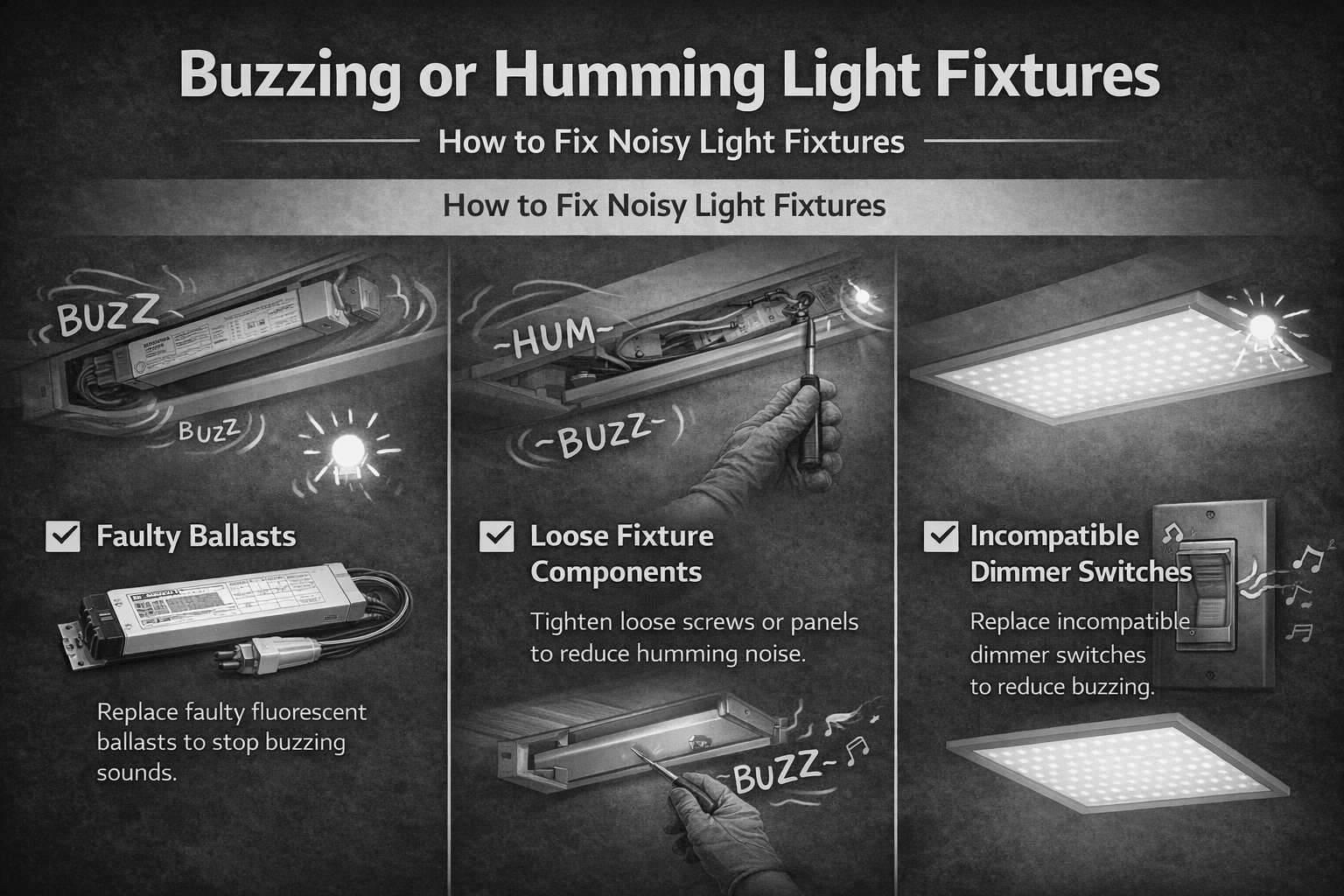
Addressing these issues quickly improves comfort in the workspace. It also prevents further wear on lighting components.
Lights Staying On During the Day
Another problem that appears in modern offices involves lights staying on when they are not needed. This often happens in buildings that use automated lighting systems.
Smart lighting controls are designed to reduce energy use. However, when sensors or timers malfunction, the system may keep lights on even during daylight hours.
This leads to unnecessary electricity costs and wasted energy.
Faulty Photocells
Photocells measure natural light levels in a room. When enough daylight is present, the lighting system should reduce brightness or turn off.
If the photocell fails, the system may believe the room is still dark. As a result, the lights remain on all day.
Replacing or recalibrating the photocell usually solves this problem.
Incorrect Timer Settings
Some lighting systems rely on timers rather than sensors. If the timer schedule is incorrect, lights may stay on longer than needed.
For example, a timer may be set to keep lights on during weekends or after office hours.
Adjusting the timer schedule can correct the issue.
Smart Lighting System Errors
Automated lighting systems sometimes experience software or control issues. Sensors may lose communication with the control panel, or settings may reset unexpectedly.
A system reset or control update often resolves these problems.
Fixing Lights That Stay On
Technicians usually inspect several areas when lights stay on unnecessarily.
-
Check photocell sensors
-
Adjust timer settings
-
Inspect control system connections
-
Reset or update lighting controls
These adjustments help restore proper automation and reduce energy waste.
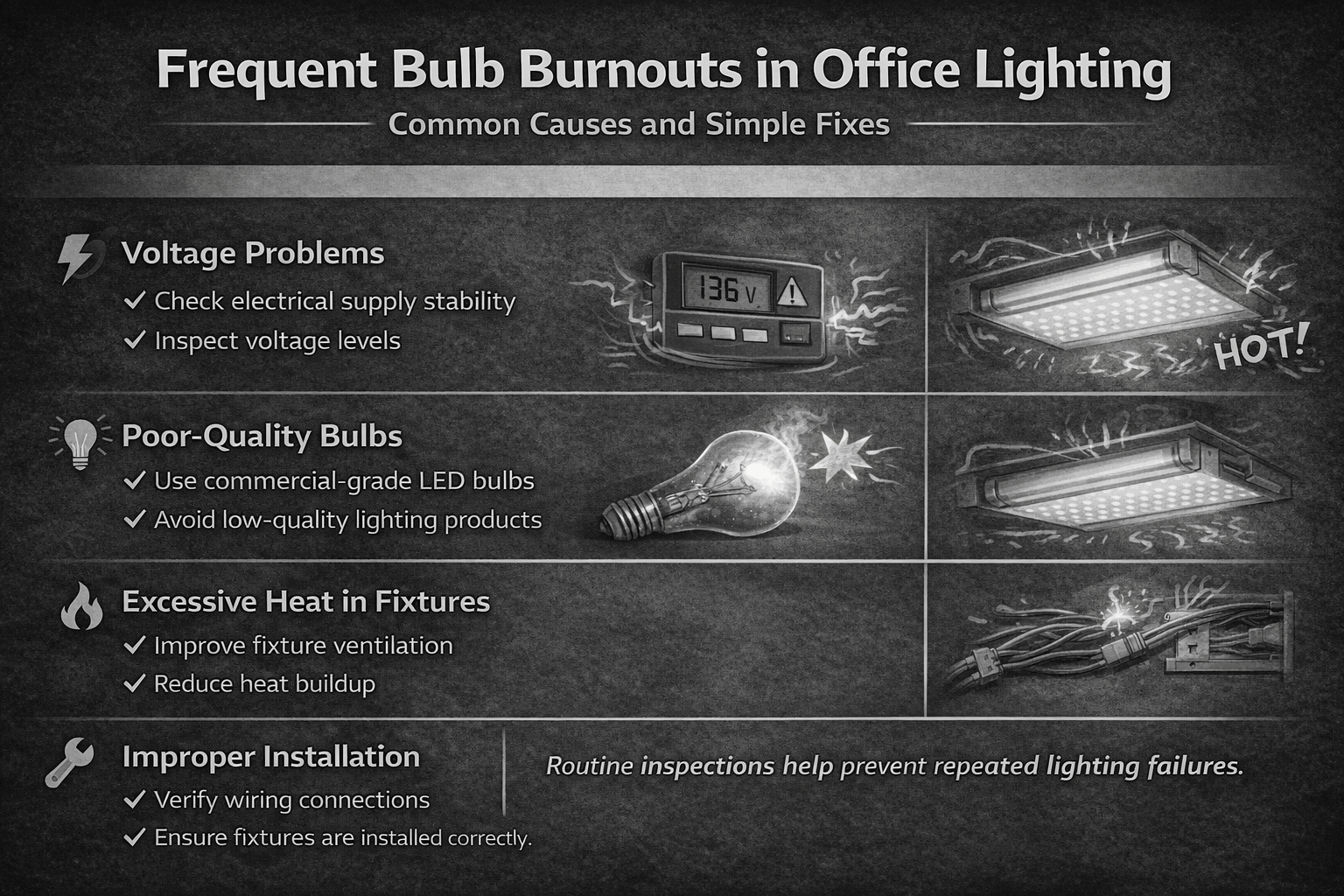
Frequent Bulb Burnouts in Office Lighting
Frequent bulb failures are frustrating for office managers and maintenance teams. Replacing bulbs too often wastes time and increases maintenance costs. In many cases, the bulb itself is not the real problem.
Lighting systems usually fail repeatedly because of deeper electrical or environmental issues. Once the root cause is identified, the problem can often be solved quickly.
Understanding why bulbs burn out early helps prevent repeated replacements.
Electrical Voltage Problems
Unstable voltage can shorten the life of lighting components. When voltage levels are too high, bulbs and LED drivers experience extra stress.
This stress causes the light source to fail sooner than expected. In some cases, several fixtures in the same area may burn out within a short period.
Electricians can test the electrical supply to confirm whether voltage levels are stable.
Poor-Quality Bulbs
Not all lighting products offer the same quality. Lower-quality bulbs may work at first but fail much sooner than expected.
Commercial offices usually benefit from higher-grade lighting products. Quality bulbs and LED panels last longer and maintain consistent brightness.
Although they may cost slightly more upfront, they often reduce replacement frequency.
Excessive Heat in Fixtures
Heat is another common cause of lighting failure. When fixtures cannot release heat properly, internal components wear out faster.
This issue may occur in enclosed fixtures or areas with limited airflow. High temperatures slowly damage drivers, ballasts, and bulbs.
Ensuring proper ventilation around fixtures can help extend the life of the lighting system.
Improper Installation
Sometimes lighting components fail because they were not installed correctly. Loose wiring, incorrect voltage connections, or incompatible parts can cause repeated failures.
Professional installation helps prevent these issues. Experienced electricians ensure that fixtures match the electrical system and operate safely.
Tips to Prevent Frequent Burnouts
Maintenance teams can reduce bulb failures by following a few basic steps.
-
Use high-quality commercial lighting products
-
Inspect fixtures for heat buildup
-
Check voltage levels during maintenance visits
-
Ensure fixtures are installed correctly
-
Replace aging electrical components when needed
Taking these steps helps lighting systems last longer and reduces maintenance work.
Preventive Office Lighting Maintenance Checklist
Preventive maintenance is the best way to avoid major lighting problems. Instead of waiting for fixtures to fail, maintenance teams inspect and service lighting systems regularly.
This approach helps detect small issues early. Fixing minor problems prevents them from becoming expensive repairs later.
Below is a simple checklist that many facility managers follow.
alt text
Following a routine schedule keeps lighting systems reliable. It also reduces unexpected outages in busy office environments.
Office Lighting Troubleshooting Guide
When lighting problems appear, a structured troubleshooting process helps identify the cause quickly. Instead of replacing parts randomly, maintenance teams examine the system step by step.
This method saves time and avoids unnecessary repairs.
Using a troubleshooting guide allows maintenance teams to solve lighting issues faster and more efficiently.
When to Repair vs Replace Office Lighting
At some point, businesses must decide whether to repair a lighting fixture or replace it entirely. This decision often depends on the age of the system and the cost of ongoing repairs.
In many situations, repairing a fixture is the most practical solution. However, older lighting systems may become inefficient and expensive to maintain.
Understanding the difference helps facility managers make better decisions.
When Repairs Make Sense
Repairs are usually appropriate when the lighting system is still relatively modern. Minor issues such as loose wiring or failing drivers can often be fixed quickly.
Common repair situations include:
-
Loose electrical connections
-
Single driver or ballast failure
-
Faulty sensors or switches
-
Minor wiring issues
These repairs restore normal operation without replacing the entire fixture.
When Replacement Is the Better Option
Replacement may be the better choice when lighting systems are outdated or frequently failing. Older fluorescent systems often require repeated maintenance.
Signs that replacement may be necessary include:
-
Frequent flickering across multiple fixtures
-
Rising maintenance costs
-
Poor energy efficiency
-
Inconsistent brightness throughout the office
Upgrading to modern LED systems often improves lighting quality and reduces long-term energy costs.
Best Practices for Office Lighting Maintenance
Office lighting systems last longer when they receive consistent care. Regular maintenance keeps fixtures bright, reduces energy waste, and prevents sudden failures. Instead of reacting to lighting problems, many businesses now follow a preventive approach.
Preventive maintenance means checking lighting systems on a routine schedule. Small issues are fixed early before they affect larger areas of the building. This approach saves both time and money in the long run.
Below are several maintenance practices that help office lighting systems stay reliable.
Schedule Regular Lighting Inspections
Routine inspections are one of the most effective ways to maintain commercial lighting. During these inspections, technicians check fixtures, wiring, drivers, and control systems.
They also look for dim areas, flickering lights, and damaged components. If problems are found early, repairs are usually simple and inexpensive.
Most office buildings benefit from lighting inspections at least once or twice per year.
Clean Fixtures and Light Panels
Dust buildup is one of the most overlooked lighting problems. Over time, dust collects on diffusers, lenses, and reflectors.
This layer blocks part of the light output, making spaces appear dim even when fixtures are working properly. Cleaning lighting fixtures restores brightness and improves the overall appearance of the office.
Maintenance teams often include fixture cleaning as part of routine building maintenance.
Keep Spare Parts Available
Lighting repairs can take longer when replacement parts are not available. Keeping spare bulbs, LED panels, drivers, and sensors on hand helps maintenance teams respond quickly.
This approach reduces downtime and prevents dark areas from affecting daily operations.
Many facility managers store common replacement parts in their maintenance inventory.
Upgrade Older Lighting Systems
Older lighting systems often require more maintenance. Fluorescent fixtures, for example, may need frequent ballast replacements and tube changes.
Upgrading to LED lighting reduces these issues. LED fixtures last longer, use less electricity, and require fewer replacements over time.
Many businesses upgrade lighting systems during renovations or energy efficiency projects.
How Commercial Electricians Handle Lighting Repairs
While some basic maintenance tasks can be handled by facility staff, more complex repairs usually require professional electricians. Commercial electricians have the tools and training needed to diagnose electrical problems safely.
Their work often begins with a detailed inspection of the lighting system. They examine fixtures, wiring, drivers, switches, and circuit panels to identify the source of the issue.
Electrical System Diagnostics
Professional electricians use specialized tools to test voltage, current flow, and electrical connections. These tests help determine whether the problem is located inside the fixture or within the building’s electrical system.
Accurate diagnostics help avoid unnecessary part replacements.
Safe Electrical Repairs
Safety is a major concern when working with commercial electrical systems. Electricians follow strict safety procedures when repairing wiring or replacing electrical components.
They ensure that circuits are properly shut down before work begins. This protects both the technician and the building occupants.
Large-Scale Lighting Repairs
Sometimes, lighting issues affect multiple areas of the building. In these cases, electricians may inspect the entire lighting circuit or electrical panel.
Large-scale repairs may involve replacing drivers, upgrading wiring, or installing new lighting fixtures.
Lighting System Upgrades
Electricians also assist businesses that want to modernize their lighting systems. Upgrading older fixtures to energy-efficient LED systems can improve lighting quality while reducing electricity costs.
During upgrades, electricians ensure that the new fixtures work properly with the existing electrical infrastructure.
Cost Factors in Office Lighting Maintenance and Repair
The cost of lighting maintenance can vary depending on several factors. Some buildings require only occasional repairs, while others may need larger system upgrades.
Understanding these cost factors helps businesses plan maintenance budgets more effectively.
Type of Lighting System
Different lighting systems have different maintenance needs. LED fixtures generally require less maintenance than fluorescent systems.
Buildings with older lighting technologies may experience higher maintenance costs due to frequent part replacements.
Size of the Office Building
Larger office buildings naturally require more lighting fixtures. As the number of fixtures increases, maintenance work also increases.
More fixtures mean more inspections, cleaning, and occasional repairs.
Labor and Service Costs
Labor is another factor that affects lighting maintenance costs. Simple tasks like bulb replacement may be handled by facility staff. However, electrical repairs often require licensed electricians.
Professional services may cost more, but they ensure that repairs are completed safely and correctly.
Replacement Components
Some repairs involve replacing components such as drivers, sensors, or ballasts. The cost of these parts depends on the fixture type and quality.
Higher-quality components may cost more upfront but often last longer.
Leave a Reply