
Owning a historic home in Lakeland’s Historic District is something special. These homes offer charm, strong design, and unique details you cannot find in modern houses. Many were built by hand and have features like plaster walls, hardwood floors, and custom woodwork.
But while the outside may look beautiful, the electrical system inside may be very old.
Most historic homes in Lakeland were built between the early 1900s and 1960s. At that time, homes used far less electricity than they do today. Electrical systems were only meant to power:
-
Basic lighting
-
A few small appliances
-
Maybe a radio or television
Today, homes need power for:
-
Air conditioning systems
-
Large kitchen appliances
-
Computers and home offices
-
Smart TVs and lighting
-
Security systems
-
Electric vehicle chargers
Old wiring systems were never built to handle these modern needs. Over time, they can become worn, unsafe, or overloaded.
This guide explains why rewiring may be needed for historic homes in Lakeland. It also covers common risks, upgrade options, and how to choose the right electrician for this type of project.
Why Electrical Rewiring Is Often Necessary in Historic Homes
Many historic homes in Lakeland were built at a time when people used very little electricity. Most homes only needed power for:
-
Basic lighting
-
A refrigerator
-
A radio or a small television
Because of this, the electrical systems in these homes were designed to support low power use. In many cases, they still rely on:
-
30 to 60 amp service panels
-
Two-prong outlets with no grounding
-
Very few branch circuits
-
Low-capacity wiring
Today’s homes are very different. Modern households often need 150 to 200 amp electrical service to safely power:
-
Air conditioning systems
-
Kitchen appliances
-
Home office equipment
-
Smart lighting
-
Security systems
-
EV chargers
Older wiring systems were never built for this level of demand. As a result, they can become overloaded, worn out, or unsafe over time.
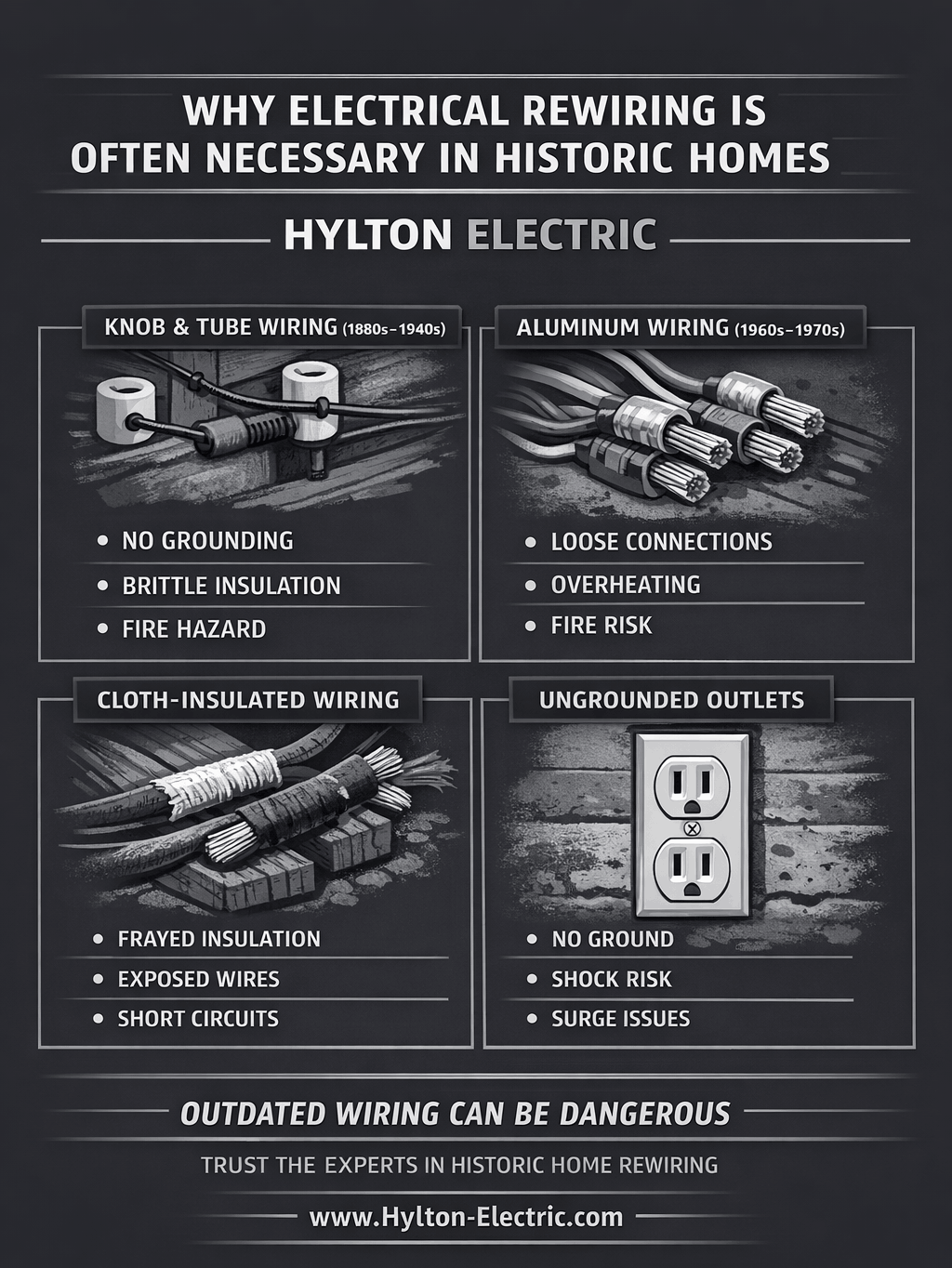
Common Wiring Systems Found in Lakeland’s Historic Homes
During professional inspections, Hylton Electric often finds outdated wiring systems that no longer meet modern safety standards.
Knob-and-Tube Wiring (1880s–1940s)
This early wiring method was common in older homes but now presents several safety concerns:
-
No grounding conductor
-
Insulation becomes brittle with age
-
Cannot support modern electrical loads
-
Higher fire risk when insulation breaks down
Aluminum Wiring (1960s–1970s)
Aluminum wiring was once used as a low-cost option, but is now known to cause problems such as:
-
Expansion and contraction with heat
-
Loose wire connections
-
Overheating at terminals
-
Increased risk of electrical fires
Cloth-Insulated Wiring
Cloth insulation tends to break down over time. This can lead to:
-
Exposed conductors
-
Short circuits
-
Electrical arcing
-
Fire hazards
Ungrounded Electrical Systems
Many historic homes do not have grounding conductors, which can increase:
-
Shock risk
-
Appliance damage
-
Vulnerability to power surges
-
Overall system instability
Upgrading these systems with the help of Hylton Electric can improve both safety and performance while keeping your home’s historic structure intact.
Hidden Risks of Outdated Electrical Systems
Outdated wiring systems often continue functioning — until they don’t. In many cases, homeowners may not realise their electrical system is unsafe until serious issues arise.
Potential risks include:
-
Electrical fires
-
Shock hazards
-
Overloaded circuits
-
Appliance damage
-
Failed building inspections
-
Insurance policy cancellation
Insurance companies increasingly require updated electrical systems for coverage eligibility. Homes with knob-and-tube wiring or fuse boxes may face:
-
Higher premiums
-
Limited policy options
-
Coverage denial
Upgrading your wiring improves both safety and insurability.
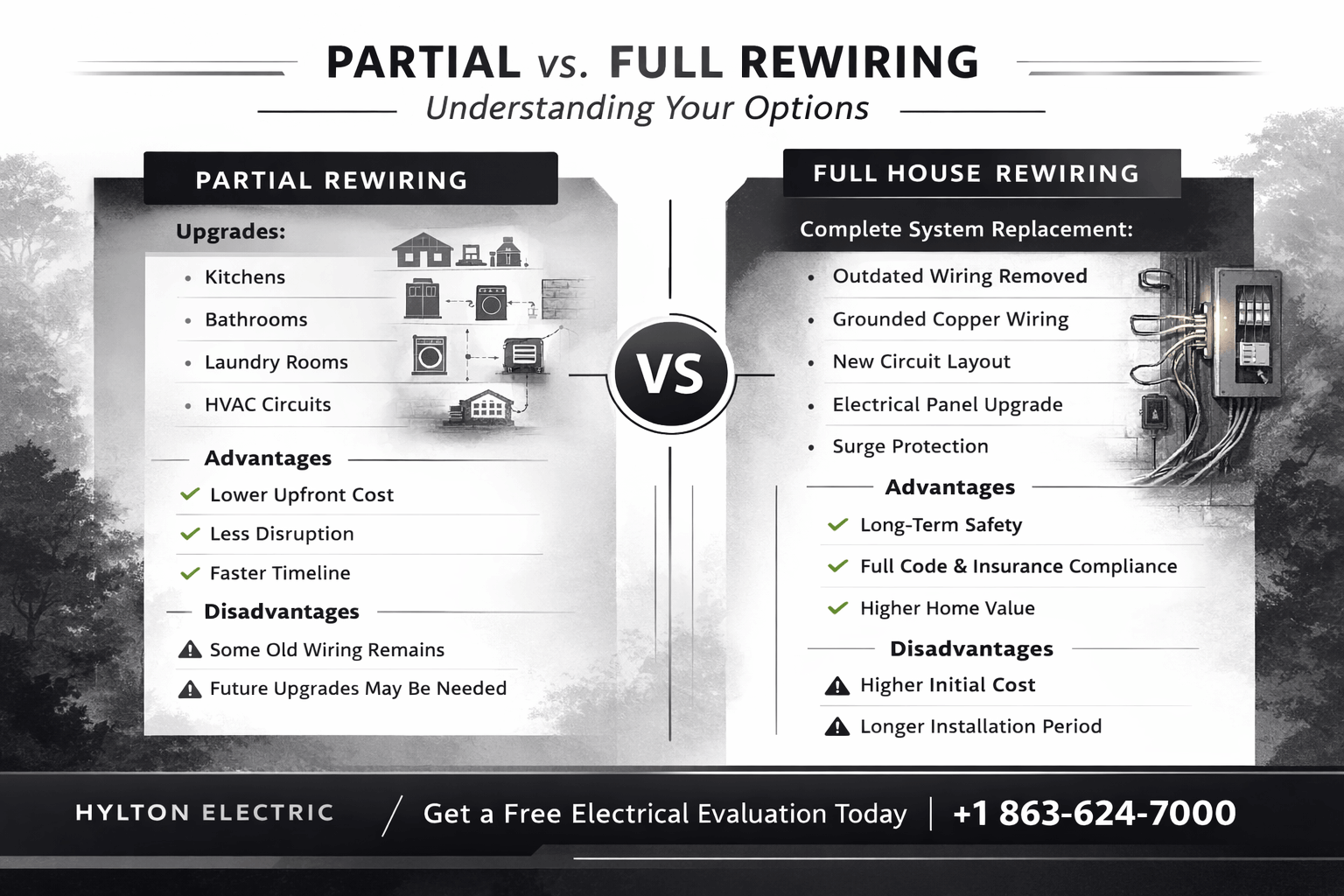
Partial vs. Full Rewiring: Understanding Your Options
Electrical upgrades for historic homes generally fall into two categories.
Partial Rewiring
This approach upgrades specific areas such as:
-
Kitchens
-
Bathrooms
-
Laundry rooms
-
HVAC circuits
Advantages:
-
Lower upfront cost
-
Less structural disruption
-
Shorter installation timeline
Disadvantages:
-
Some outdated wiring may remain
-
Future upgrades may still be necessary
Full House Rewiring
A complete system replacement includes:
-
Removal of outdated wiring
-
Installation of grounded copper wiring
-
Circuit redesign
-
Electrical panel upgrade
-
Surge protection
Advantages:
-
Long-term safety
-
Full insurance compliance
-
Improved resale value
Disadvantages:
-
Higher initial cost
-
Longer installation period
A licensed professional from Hylton Electric can evaluate your home’s electrical condition and recommend the most appropriate solution.
Comparing Electrical Service Providers in the Lakeland Historic District
Rewiring a historic home is very different from wiring a newly built house. Older homes often have plaster walls, tight crawlspaces, and fragile building materials that require careful handling. Not every electrical contractor has the experience needed to work safely in these types of homes.
Choosing the right electrical service provider can affect:
-
The total cost of the project
-
The quality of installation
-
The condition of your walls and ceilings
-
The long-term safety of your home
Understanding the difference between contractor types can help you make a better decision.
General Electricians
Many electricians are trained to work on modern homes and new construction projects. While they may offer standard electrical services, they often have limited experience with historic properties.
This can lead to challenges such as:
-
Cutting into plaster walls unnecessarily
-
Difficulty running wiring through crawlspaces
-
Lack of planning for architectural preservation
As a result, your home’s original finishes may be damaged during the rewiring process.
Budget Contractors
Some contractors focus on completing projects quickly at a lower upfront cost. While this may seem appealing, it can sometimes come at the expense of quality. Budget-focused services may overlook:
-
Long-term system reliability
-
Full code compliance
-
Structural protection during installation
In many cases, these shortcuts can lead to future repairs or safety concerns.
Historic Home Specialists — Hylton Electric
At Hylton Electric, we understand the unique needs of historic homes in Lakeland. Our team is trained to upgrade electrical systems while protecting your home’s original structure.
We provide:
-
Customised rewiring plans based on your home’s layout
-
Minimally invasive installation methods
-
NEC-compliant electrical upgrades
-
Careful preservation of historic finishes
Our goal is to improve safety and performance without compromising the character of your home.
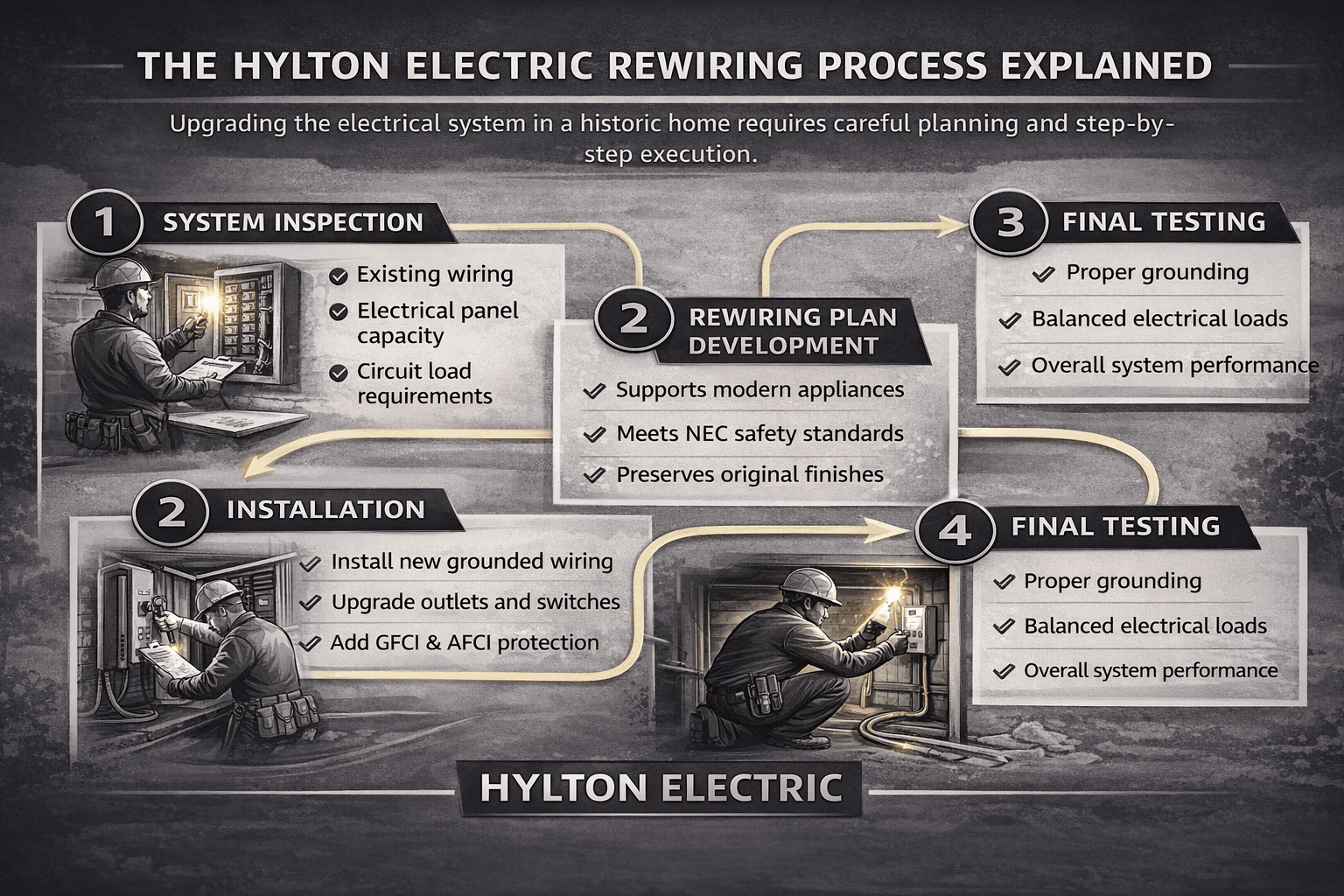
The Hylton Electric Rewiring Process Explained
Upgrading the electrical system in a historic home requires careful planning and step-by-step execution. At Hylton Electric, we follow a structured process to ensure safe and reliable results.
1. System Inspection
Our licensed electricians begin by performing a full inspection of your home’s electrical system. This helps us understand its current condition and identify any safety risks.
We evaluate:
-
Existing wiring
-
Electrical panel capacity
-
Circuit load requirements
-
Grounding system
2. Rewiring Plan Development
After the inspection, we create a rewiring plan designed specifically for your home.
This plan ensures the new system:
-
Supports modern appliances and equipment
-
Meets current NEC safety standards
-
Preserves original walls and finishes
3. Installation
Our team uses attic spaces and crawlspaces whenever possible to run new wiring. This helps reduce damage to plaster walls and ceilings.
During installation, we:
-
Install new grounded wiring
-
Upgrade outlets and switches
-
Add GFCI and AFCI protection where needed
4. Final Testing
Once installation is complete, we test the entire system to ensure it works safely and efficiently.
This includes checking:
-
Proper grounding
-
Balanced electrical loads
-
Overall system performance for long-term use
Cost Factors for Rewiring Historic Homes in Lakeland
The cost of rewiring a historic home can vary based on several important factors. Unlike modern homes, older properties often require extra planning and careful installation to avoid damage to original building materials.
Some of the main factors that affect project pricing include:
-
The overall size of your home
-
Accessibility of existing wiring
-
Need for electrical panel upgrades
-
Local permit and inspection requirements
-
The number and complexity of circuits
In many historic homes, electrical systems were installed decades ago using outdated methods. Upgrading these systems often takes more time and precision than standard rewiring projects.
Historic homes may also require additional labour due to:
-
Limited access points inside walls and ceilings
-
Fragile materials such as plaster or lath
-
Custom wiring pathways to avoid structural damage
Electricians may need to route wiring through attics, crawlspaces, or floor cavities to protect original finishes. This process helps reduce the need for cutting into walls, but can increase installation time.
Benefits of Rewiring with Hylton Electric
Rewiring a historic home is not just about replacing old wires. It’s about creating a safer and more reliable electrical system that meets modern power demands while protecting the unique character of your home.
Choosing Hylton Electric ensures that your project is handled by licensed professionals who understand the challenges of working with older properties.
Our services include:
-
Licensed and insured electrical work
-
Experience with historic home structures
-
Code-compliant system upgrades
-
Protection of original architectural features
-
Clear and transparent project timelines
We take a careful approach to installation to avoid unnecessary wall or ceiling damage. Our goal is to improve electrical performance without affecting your home’s historic appearance.
Schedule a Professional Electrical Inspection Today
If your historic home still has old or outdated wiring, now is the time to take action.
Electrical problems often start small but can lead to serious safety risks over time. Upgrading your wiring can help prevent fires, improve performance, and support modern appliances.
At Hylton Electric, we provide safe and careful rewiring for historic homes in Lakeland. Our team works to upgrade your electrical system while protecting the original structure of your home.
We offer:
-
Licensed and insured electricians
-
Code-compliant installations
-
Clear project timelines
-
Honest pricing
-
Respect for historic finishes
Schedule an electrical inspection with Hylton Electric today for trusted old house rewiring in the Lakeland Historic District, FL. Upgrade your home’s safety without losing its historic character.
Old House Rewiring Lakeland Historic District FAQs
1. Do historic homes in Lakeland usually need electrical rewiring?
Many historic homes in Lakeland’s Historic District were built between the early 1900s and 1960s, when electrical systems were designed to support minimal power usage. At that time, households typically only used electricity for lighting, a refrigerator, or a radio.
Today’s homes require significantly more power to operate:
-
HVAC systems
-
Kitchen appliances
-
Home offices
-
Smart lighting
-
Security systems
-
EV chargers
Older wiring systems often cannot safely support this level of demand. Over time, these systems may become overloaded, worn out, or unsafe. Rewiring with the help of Hylton Electric allows your home’s electrical system to support modern appliances while maintaining the structure and character of your historic property.
2. Is knob-and-tube wiring dangerous in older Lakeland homes?
Knob-and-tube wiring is commonly found in historic homes and is now considered outdated by modern safety standards.
This wiring system:
-
Does not include a grounding conductor
-
Uses insulation that becomes brittle over time
-
Cannot safely support modern electrical loads
-
May overheat under heavy usage
As insulation deteriorates, wiring may become exposed, increasing the risk of:
-
Electrical fires
-
Short circuits
-
Shock hazards
-
Appliance damage
Insurance providers may also require replacement of knob-and-tube wiring before approving or renewing coverage. Upgrading to modern grounded wiring through Hylton Electric improves safety and helps meet current electrical code requirements.
3. How do I know if my historic home has outdated wiring?
Outdated wiring is often hidden behind plaster walls, making it difficult to detect without professional inspection.
Some warning signs may include:
-
Flickering lights
-
Frequently tripped breakers
-
Two-prong outlets
-
Burning smells near switches
-
Warm or discoloured receptacles
-
Lack of GFCI outlets
You may also notice:
-
Limited outlet availability
-
Use of extension cords
-
Fuse boxes instead of breaker panels
A licensed electrician from Hylton Electric can perform a detailed inspection to evaluate your wiring condition, panel capacity, grounding system, and circuit load requirements.
4. Can I partially rewire my historic home instead of replacing all wiring?
Partial rewiring may be an option depending on the condition of your existing electrical system.
This approach typically upgrades high-demand areas such as:
-
Kitchens
-
Bathrooms
-
Laundry rooms
-
HVAC circuits
Benefits of partial rewiring include:
-
Lower upfront cost
-
Reduced structural disruption
-
Shorter installation timeline
However, some outdated wiring may remain in place, which could still pose safety or insurance compliance concerns. A professional inspection by Hylton Electric can help determine whether partial or full rewiring is the safest solution.
5. What are the risks of keeping old electrical wiring in place?
Older wiring systems may continue functioning for years before showing signs of failure. However, hidden risks can include:
-
Electrical fires
-
Shock hazards
-
Overloaded circuits
-
Electrical arcing
-
Appliance damage
In addition:
-
Homes may fail building inspections
-
Insurance coverage may be denied
-
Premiums may increase
Upgrading your wiring system with Hylton Electric improves electrical safety, long-term reliability, and insurance eligibility.
6. Will rewiring damage plaster walls in historic homes?
Historic homes often contain fragile materials such as plaster and lath, which require careful handling during electrical upgrades.
Experienced electricians can reduce wall disruption by:
-
Using attic or crawlspace access
-
Routing wiring through floor cavities
-
Installing custom circuit pathways
Minimally invasive installation methods help preserve original finishes and maintain the architectural integrity of your home. Hylton Electric uses installation practices designed specifically for older properties.
7. Will I need an electrical panel upgrade when rewiring?
In many cases, yes.
Historic homes often operate with:
-
30–60 amp service panels
Modern households typically require:
-
150–200 amp electrical service
Panel upgrades may be needed to safely support:
-
HVAC systems
-
Kitchen appliances
-
Smart home devices
-
EV chargers
-
Security systems
Hylton Electric can evaluate your home’s electrical demand and recommend the appropriate panel capacity during inspection.
8. Does rewiring improve home insurance eligibility?
Insurance companies increasingly require updated electrical systems before approving or renewing coverage.
Outdated wiring, such as:
-
Knob-and-tube
-
Aluminum wiring
-
Ungrounded circuits
May lead to:
-
Higher premiums
-
Policy limitations
-
Coverage denial
Rewiring your historic home helps improve electrical safety, code compliance, and insurance eligibility.
9. Is aluminium wiring common in Lakeland historic homes?
Some homes built or renovated during the 1960s and 1970s may contain aluminium wiring.
Potential issues include:
-
Expansion and contraction with heat
-
Loose wire connections
-
Overheating at terminals
-
Increased fire risk
Professional upgrades by Hylton Electric can replace aluminium wiring with safer copper conductors.
10. Do historic homes need grounded outlets?
Grounding helps reduce:
-
Shock risk
-
Appliance damage
-
Power surge vulnerability
Many historic homes still use two-prong outlets without grounding protection. Installing grounded outlets improves electrical safety and supports modern appliances.
11. What is included in full house rewiring?
A full system upgrade typically includes:
-
Removal of outdated wiring
-
Installation of grounded copper wiring
-
Circuit redesign
-
Electrical panel upgrade
-
Surge protection
-
GFCI and AFCI protection
This helps ensure your electrical system meets modern safety standards.
12. Why should I choose Hylton Electric for historic home rewiring?
Hylton Electric provides:
-
Licensed and insured electrical work
-
Experience with historic home structures
-
Code-compliant system upgrades
-
Minimally invasive installation
-
Preservation of original finishes
Our team upgrades electrical systems while protecting the character of historic homes in Lakeland’s Historic District.
Leave a Reply