
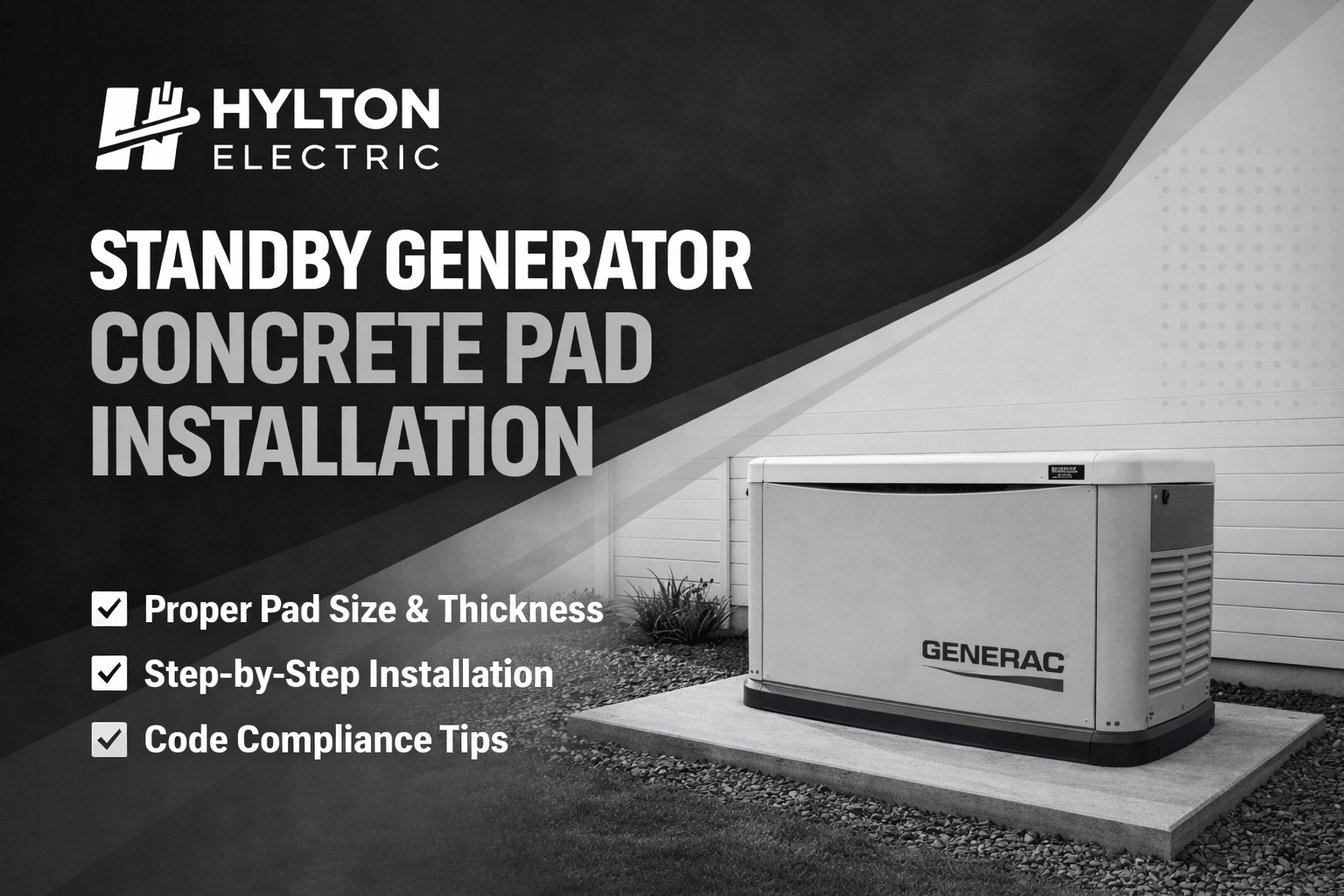
A standby generator protects your home or business during power outages. When the grid fails, the generator starts automatically and keeps essential systems running. But before the generator can work safely, it needs a strong and stable foundation.
This is where a concrete pad becomes important.
Standby generators are heavy pieces of equipment. Many residential units weigh several hundred pounds, while commercial generators can weigh several thousand. Placing a generator directly on soil or grass can cause uneven settling, vibration problems, and long-term damage.
A properly installed concrete pad solves these problems. It provides a level base that supports the generator’s weight and keeps the unit stable during operation. The pad also protects the equipment from ground moisture and helps prevent movement caused by vibration.
Most generator manufacturers recommend installing standby generators on a reinforced concrete base. Local building codes may also require a permanent pad for safety and inspection purposes.
In this guide, you will learn:
-
Why concrete pads are important for standby generators
-
How to plan the right size and thickness
-
Step-by-step installation basics
-
Common mistakes to avoid during construction
Whether you are planning a new generator installation or preparing a site for backup power equipment, understanding the foundation requirements will help ensure safe and reliable operation.
Table of Contents
ToggleWhy Standby Generators Require a Concrete Pad Foundation
A standby generator is designed to operate automatically during power outages. For the system to work correctly, the generator must sit on a stable and level surface.
Concrete pads provide the type of foundation needed for long-term performance. Without a solid base, generators can shift, vibrate excessively, or develop mechanical issues over time.
Below are the main reasons installers rely on concrete pads for standby generator systems.
Stability and Load Distribution
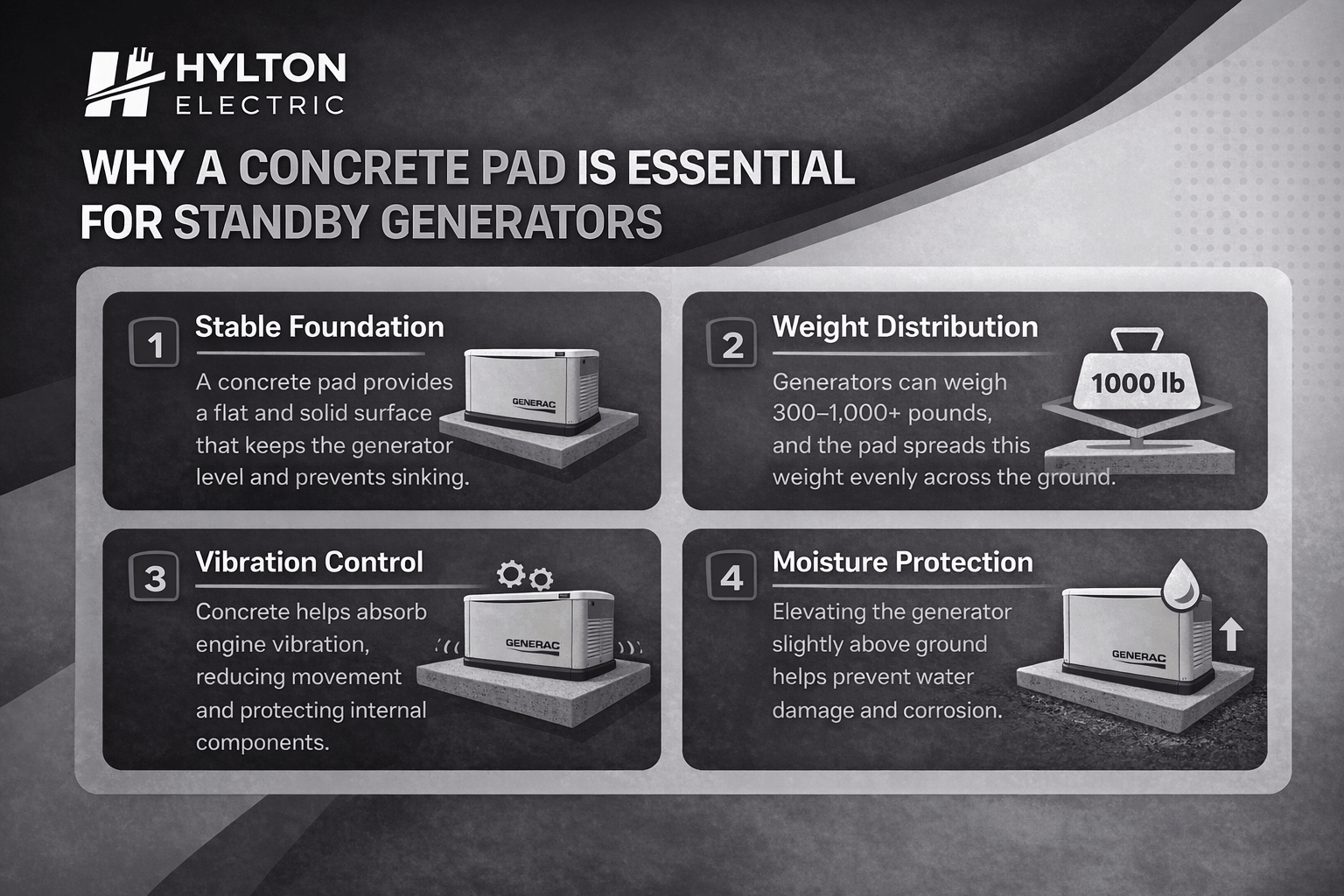
Generators are heavy machines. Even a small residential standby generator can weigh 300 to 600 pounds, while larger units can exceed 1,000 pounds.
If the generator sits directly on soil, the ground may compress unevenly. Over time, this can cause the unit to tilt or sink. A concrete pad spreads the generator’s weight across a solid surface. This prevents pressure from concentrating in one spot.
Key benefits include:
-
Even distribution of generator weight
-
Reduced risk of ground settling
-
A level surface for proper operation
-
Strong support for long-term use
When the generator remains level, its internal components experience less stress. This helps extend the life of the equipment.
Vibration Control and Equipment Protection
Generators produce constant vibration while running. This vibration comes from the engine and internal moving parts.
If the generator sits on unstable ground, the vibration can become worse. Over time, this movement may loosen connections or damage components.
A concrete pad absorbs and stabilizes these vibrations.
This leads to several advantages:
-
Reduced movement during operation
-
Lower mechanical stress on internal parts
-
Improved equipment lifespan
-
Quieter overall operation
By keeping the generator stable, the concrete pad helps the machine run more smoothly and reliably.
Protection Against Weather and Flooding
Outdoor generators face constant exposure to weather conditions. Rain, snow, and ground moisture can create problems if the unit sits directly on soil.
Concrete pads raise the generator slightly above ground level. This small elevation provides important protection.
Benefits include:
-
Reduced exposure to standing water
-
Protection from mud and soil moisture
-
Lower risk of corrosion on metal parts
-
Improved drainage around the generator
In areas that experience heavy rain or occasional flooding, a raised pad becomes even more important.
Compliance with Local Codes and Manufacturer Requirements
Many building codes require standby generators to sit on a permanent, stable base. Concrete pads often meet these requirements.
Generator manufacturers also provide installation guidelines. These guidelines usually recommend a level and durable surface that can support the generator’s weight.
Following these recommendations helps ensure:
-
Safe generator operation
-
Compliance with local regulations
-
Proper inspection approval
-
Warranty protection from the manufacturer
Failing to follow installation requirements may lead to safety risks or code violations.
Key Factors to Consider Before Installing a Generator Concrete Pad
Before building a concrete pad, it is important to plan the installation carefully. Proper planning helps avoid costly mistakes and ensures the generator operates safely. Several factors affect how the pad should be designed and installed.

Generator Weight and Size
The first step is understanding the size and weight of the generator. Different generators require different foundation dimensions. A small residential generator needs a smaller pad, while a commercial unit requires a much stronger base.
When planning the pad, installers consider:
-
Generator length and width
-
Total operating weight
-
Fuel tank size (if separate)
-
Additional equipment nearby
As a general rule, the concrete pad should extend several inches beyond the generator on all sides. This extra space improves stability and allows easier maintenance access.
Soil Conditions and Site Preparation
The strength of the soil beneath the pad is another important factor. Some soils remain firm under pressure, while others compress or shift over time. Soft or loose soil may cause the concrete pad to settle unevenly.
Proper site preparation usually includes:
-
Removing grass and organic material
-
Excavating loose soil
-
Adding a compacted gravel base
-
Leveling the ground before pouring concrete
A compacted gravel layer improves drainage and creates a stable base under the concrete slab.
Generator Location and Clearance Requirements
Standby generators must be placed in safe locations with adequate space around the unit. Manufacturers and local codes often specify minimum clearances.
Common placement considerations include:
-
Distance from the house or building
-
Adequate airflow around the generator
-
Safe distance from windows and vents
-
Enough space for maintenance access
Installers also consider noise levels and fuel line access when selecting a location.
Choosing the right spot before pouring the pad prevents relocation problems later.
Utility Connections
Generators require several connections to operate properly. These connections must be planned before the concrete is poured.
Typical connections include:
-
Electrical conduit leading to the transfer switch
-
Fuel lines for natural gas or propane systems
-
Grounding systems for electrical safety
In many installations, conduit pipes are placed through or beside the concrete pad. Planning these connections early helps avoid cutting or drilling the concrete after installation.
Standard Generator Concrete Pad Dimensions and Thickness
After choosing the generator location and preparing the site, the next step is determining the correct pad size and thickness. The concrete base must support the generator’s weight while keeping the unit stable during operation.
There is no single pad size that works for every generator. The correct dimensions depend on the generator model, weight, and installation environment. However, most standby generator installations follow common guidelines used by electricians and equipment installers.
A properly sized concrete pad should:
-
Support the full operating weight of the generator
-
Extend beyond the generator footprint for stability
-
Provide enough space for maintenance access
-
Prevent cracking under load and vibration
Careful planning at this stage helps avoid structural problems later.
Typical Residential Generator Pad Dimensions
Residential standby generators usually come in compact enclosures. Because of this, the concrete pad does not need to be extremely large. However, it should always extend several inches beyond the generator housing on every side.
Most installers recommend extending the pad 6 to 12 inches past the generator frame. This extra area provides stability and makes servicing the unit easier.
Common residential generator pad sizes include:
-
Small generators: around 3 ft × 4 ft pad
-
Medium generators: around 4 ft × 6 ft pad
-
Large residential generators: around 5 ft × 8 ft pad
The exact size depends on the generator model. Always check the manufacturer’s specifications before finalizing the pad dimensions.
It is also important to consider clearance space around the generator. Service technicians need enough room to access panels, wiring, and fuel connections during maintenance.
Recommended Concrete Pad Thickness
Pad thickness plays a major role in supporting generator weight and preventing cracks.
For most residential installations, the concrete slab is typically 4 to 6 inches thick. This thickness provides enough strength for generators that weigh several hundred pounds.
Typical thickness recommendations include:
-
Small standby generators: about 4 inches thick
-
Mid-size residential generators: 4–5 inches thick
-
Large residential generators: around 5–6 inches thick
Commercial or industrial generators often require thicker pads. Heavy equipment may need 6 to 12 inches of reinforced concrete, depending on the load and soil conditions.
The heavier the generator, the stronger the concrete base must be.
Concrete Strength Requirements
Concrete strength is measured using PSI (pounds per square inch). This rating indicates how much pressure the concrete can withstand before cracking.
Most residential generator pads use concrete with a strength of 2,500 to 3,000 PSI. This range provides enough durability for typical standby generator installations.
Higher PSI ratings may be recommended when:
-
The generator is unusually heavy
-
Soil conditions are unstable
-
The installation is located in harsh climates
-
The pad must support additional equipment
Using the correct concrete mix ensures the pad remains strong and durable for many years.
Reinforcement Methods
Concrete is strong under compression, but it can crack under tension. Reinforcement materials help prevent these cracks and improve long-term durability. Most generator pads include some form of reinforcement.
Common reinforcement options include:
-
Steel rebar grid placed inside the slab
-
Wire mesh reinforcement embedded in the concrete
-
Fibre-reinforced concrete mixes that reduce cracking
Rebar grids are often used for heavier generators because they provide strong structural support. Reinforcement also helps the pad handle vibration from generator operation, temperature changes, and soil movement beneath the slab.
Adding reinforcement slightly increases installation cost, but it greatly improves the lifespan of the concrete base.

Step-by-Step Standby Generator Concrete Pad Installation
Once the design and dimensions are finalised, the installation process can begin. Building a generator concrete pad follows a series of straightforward steps. While the process is simple in concept, each step must be completed carefully to ensure the pad remains stable for years. Below is a typical installation process used by contractors and electricians.
Step 1: Select and Mark the Installation Area
Start by choosing the exact location for the generator pad. The area should be flat, accessible, and meet all clearance requirements. Once the location is confirmed, mark the pad boundaries on the ground.
This step usually involves:
-
Measuring the generator footprint
-
Adding extra space around the generator
-
Marking the pad outline with stakes or spray paint
Accurate measurements ensure the concrete pad fits the generator correctly.
Step 2: Excavate the Ground
Next, the installation area must be excavated. Excavation removes unstable soil and creates room for the gravel base and concrete slab.
Typical excavation steps include:
-
Removing grass and surface material
-
Digging several inches below ground level
-
Levelling the bottom of the excavation
Most residential pads require 4 to 8 inches of excavation depth, depending on the gravel base thickness. The ground should be compacted to create a stable surface before adding the next layer.
Step 3: Add a Gravel Base Layer
A gravel base provides structural support and improves drainage beneath the concrete pad. Without this layer, water may collect under the slab, which can lead to shifting or cracking over time.
The gravel base is usually:
-
2 to 4 inches thick
-
Spread evenly across the excavated area
-
Compacted firmly using a plate compactor or tamper
Compacted gravel creates a strong foundation that supports the concrete slab. It also allows water to drain away from the pad instead of collecting underneath.
Step 4: Build Concrete Forms
Concrete forms hold the wet concrete in place while it sets. Forms are typically made from wooden boards secured with stakes around the perimeter.
The forms must be:
-
Straight and properly aligned
-
Firmly secured to prevent movement
-
Checked with a level to ensure accuracy
A level form ensures the finished concrete pad will be flat and stable.
Step 5: Install Reinforcement
Before pouring the concrete, reinforcement materials are placed inside the forms. The reinforcement should sit slightly above the gravel base so it remains embedded within the concrete slab.
Common reinforcement setups include:
-
Steel rebar arranged in a grid pattern
-
Wire mesh placed across the entire pad
-
Fiber additives mixed directly into the concrete
These materials strengthen the slab and help prevent cracking caused by weight or vibration.
Step 6: Pour the Concrete
Once the forms and reinforcement are ready, the concrete can be poured. The wet concrete is spread evenly across the forms until the entire area is filled.
During this stage, installers:
-
Distribute concrete evenly across the form
-
Use a screed board to level the surface
-
Ensure the slab reaches the planned thickness
Careful levelling is important. A generator must sit on a flat and stable surface to operate correctly.
Step 7: Finish and Level the Surface
After levelling the concrete, the surface is finished using specialised tools.
Installers typically use:
-
A float to smooth the surface
-
A trowel for final finishing
-
An edger tool to shape the corners
The finished pad should be smooth, level, and free from major imperfections. A slightly textured finish is often preferred because it reduces slipping during maintenance.
Step 8: Allow Proper Concrete Curing
Concrete needs time to gain strength after pouring. Although the surface may appear hard within a day, the slab continues curing for several days.
Typical curing timelines include:
-
Initial set: about 24 hours
-
Partial strength: 3 to 5 days
-
Full curing: about 7 days or longer
The generator should not be installed until the concrete has developed enough strength. Allowing proper curing helps prevent cracks and ensures the foundation can safely support the generator.

Installing the Standby Generator on the Concrete Pad
Once the concrete pad has cured properly, the generator can be installed on the foundation. This stage requires careful handling because standby generators are heavy and contain sensitive mechanical and electrical components.
Proper placement ensures the generator operates safely and remains stable during long periods of use. Installers typically follow a structured process to position the unit, secure it to the pad, and connect the necessary systems.
Positioning the Generator
The first step is placing the generator on the concrete pad. Because generators are heavy, installers often use lifting equipment or mechanical assistance. Small residential generators may be moved using a dolly, while larger units require cranes or forklifts.
During placement, installers focus on several important details:
-
Aligning the generator with the concrete pad edges
-
Positioning the unit near electrical and fuel connections
-
Ensuring the generator sits evenly on the pad
-
Maintaining required clearance around the unit
After positioning, the installer checks the generator with a level tool. Even small tilts can affect performance, so the generator must sit flat on the pad.
Anchoring the Generator to the Pad
Many installations secure the generator directly to the concrete pad using anchor bolts. Anchoring prevents movement caused by vibration, weather, or accidental contact.
There are several anchoring methods commonly used.
- Embedded anchor bolts
These bolts are placed in the concrete during the pouring process. When the generator is installed, the base frame is aligned with the bolts and tightened into place.
- Mechanical anchors
Mechanical anchors are installed by drilling holes into the cured concrete. The anchor expands inside the hole as the bolt is tightened, locking it in place.
- Epoxy anchors
Epoxy anchors use a strong bonding compound that secures the bolt inside drilled holes in the concrete. This method provides excellent holding strength.
Anchoring the generator provides several advantages:
-
Prevents shifting during operation
-
Improves stability in high winds
-
Reduces vibration movement
-
Protects electrical connections
Not every residential generator requires anchoring, but it is often recommended for safety and durability.
Connecting Electrical and Fuel Systems
After the generator is secured, the final step is connecting the electrical and fuel systems. These connections allow the generator to operate automatically when a power outage occurs.
Common connections include:
-
Electrical wiring to the automatic transfer switch (ATS)
-
Utility power connection from the main electrical panel
-
Fuel supply line for natural gas, propane, or diesel systems
-
Grounding system for electrical safety
Electrical wiring should always be completed by a licensed electrician. Proper installation ensures the generator transfers power safely and complies with local electrical codes. Once all connections are complete, the system is tested to confirm that the generator starts automatically and supplies power correctly.
Common Mistakes to Avoid When Installing Generator Concrete Pads
Even though concrete pad installation may seem straightforward, mistakes can cause long-term problems. Poor installation can lead to generator instability, cracking slabs, or equipment damage. Understanding these common mistakes helps prevent costly repairs later.
Undersized Concrete Pads
One of the most common mistakes is building a pad that is too small for the generator. A pad that barely fits the generator footprint may not distribute weight evenly. Over time, this can lead to cracking or shifting.
A properly sized pad should:
-
Extend 6–12 inches beyond the generator on each side
-
Provide extra space for servicing the equipment
-
Support the entire generator base frame
Planning the correct dimensions before pouring concrete helps avoid this issue.
Insufficient Reinforcement
Concrete without reinforcement can crack more easily, especially when supporting heavy equipment. Generators create vibration during operation, which adds stress to the concrete slab.
Without reinforcement, cracks may develop due to:
-
Weight concentration in certain areas
-
Temperature changes in the ground
-
Soil movement beneath the pad
Adding rebar or wire mesh greatly improves the strength and durability of the slab.
Poor Drainage Planning
Water accumulation around the generator pad can lead to several problems. Standing water may weaken the soil beneath the slab and increase corrosion risk. Poor drainage often occurs when the surrounding ground slopes toward the pad.
Proper drainage planning includes:
-
Sloping the ground slightly away from the pad
-
Using a gravel base layer beneath the slab
-
Avoiding low areas where water collects
Good drainage helps protect both the concrete foundation and the generator itself.
Installing the Generator Before Concrete Cures
Another common mistake is placing the generator on the concrete too soon. Concrete may appear hard after a day, but it continues gaining strength over several days. Installing heavy equipment before curing is complete can cause cracks or structural damage.
To avoid this problem:
-
Allow at least 3–5 days before placing heavy equipment
-
Wait about 7 days for stronger curing
-
Follow the concrete supplier’s curing recommendations
Giving the concrete enough time to cure ensures the foundation remains strong and stable.
Ignoring Manufacturer Specifications
Each generator manufacturer provides specific installation instructions. These guidelines often include recommendations for pad size, thickness, and clearance.
Ignoring these requirements can lead to problems such as:
-
Warranty issues
-
Equipment vibration problems
-
Reduced generator lifespan
-
Code compliance failures
Always review the generator manual before building the concrete pad. Following these instructions ensures the installation meets manufacturer standards.

Alternative Generator Pad Options
Concrete pads are the most common foundation for standby generators. However, some installations use alternative base options that can simplify the process. These alternatives may work well for certain residential installations.
Precast Generator Pads
Precast generator pads are factory-made concrete slabs designed specifically for generator installations. Instead of pouring concrete on site, the installer simply prepares the ground and places the precast pad in position.
Benefits of precast pads include:
-
Faster installation
-
Consistent manufacturing quality
-
Reduced labor and construction time
-
Minimal curing wait time
Precast pads are commonly used for residential standby generators where quick installation is preferred.
Composite Generator Pads
Composite pads are another alternative used in some installations. These pads are typically made from reinforced plastic or polymer materials. Although lighter than concrete, they are designed to support residential generators safely.
Advantages of composite pads include:
-
Lightweight construction
-
Easy transportation and placement
-
Resistance to corrosion and moisture
-
Faster installation compared to poured concrete
However, composite pads may not be suitable for large or heavy generators. Concrete foundations remain the best option for high-load installations.
Maintenance Tips for Generator Concrete Pads
A concrete pad is designed to last for many years. However, like any outdoor structure, it still needs occasional inspection and maintenance. Small issues can develop over time due to weather, soil movement, or generator vibration.
Regular maintenance helps keep the pad stable and prevents small problems from turning into expensive repairs. It also protects the generator itself. The good news is that most maintenance tasks are simple and require only basic checks a few times each year.
Inspecting the Pad for Cracks
Concrete can develop small cracks over time. Minor hairline cracks are normal, especially in areas with temperature changes. However, larger cracks may signal structural stress or soil movement.
Inspect the concrete pad at least once or twice a year. Look for:
-
Hairline surface cracks
-
Wider cracks that extend across the slab
-
Pieces of concrete breaking away from the edges
-
Uneven sections of the slab
Small cracks can often be sealed with concrete repair filler. Sealing helps prevent water from entering the crack and causing further damage. If large cracks appear or the slab becomes uneven, it may require professional repair.
Preventing Water Pooling
Water buildup around the generator pad can weaken the soil underneath the slab. Over time, this may cause the concrete to shift or sink.
To prevent this issue, check how water drains around the pad after heavy rain.
Helpful drainage practices include:
-
Keeping the surrounding ground slightly sloped away from the pad
-
Clearing debris that blocks water flow
-
Maintaining the gravel base area around the slab
-
Avoiding landscaping that traps water near the generator
Proper drainage keeps both the pad and the generator protected from moisture damage.
Checking Anchors and Mounting Bolts
If the generator is anchored to the concrete pad, the bolts should be inspected periodically.
Over time, vibration from generator operation can loosen fasteners. Loose anchors may allow the generator to shift slightly during operation.
During inspections, check:
-
Anchor bolts for looseness
-
Signs of corrosion around metal fasteners
-
Movement in the generator frame
Tightening bolts when needed helps maintain the generator’s stability.
Keeping the Pad Clear of Debris
Leaves, dirt, and debris can collect around the generator base. While this may seem harmless, it can create moisture buildup and reduce airflow around the unit.
Regular cleaning helps maintain proper airflow and prevents moisture problems.
Simple maintenance steps include:
-
Sweeping debris away from the concrete pad
-
Removing leaves or grass buildup
-
Keeping plants trimmed around the generator area
-
Ensuring ventilation openings remain clear
A clean area around the generator helps both the pad and the equipment stay in good condition.
Cost of Standby Generator Concrete Pad Installation
The cost of installing a generator concrete pad can vary depending on several factors. Size, materials, labour, and site preparation all influence the final price.
For most homeowners, the concrete pad represents a small portion of the total generator installation cost. However, it is still an important investment because the pad supports the entire system.
Material Costs
Concrete materials usually make up a large portion of the total cost.
Typical material expenses include:
-
Concrete mix
-
Gravel base material
-
Reinforcement materials such as rebar or wire mesh
-
Wood forms used during construction
For a small residential generator pad, the material cost may range between $150 and $400, depending on local prices.
Labor Costs
Labour costs vary based on the complexity of the installation and the contractor performing the work.
Professional installation may involve:
-
Excavating the site
-
Preparing the gravel base
-
Building concrete forms
-
Pouring and finishing the concrete
Labour for a simple residential pad typically ranges between $300 and $1,200. More complex installations, such as commercial generator pads, can cost significantly more due to engineering requirements.
Additional Cost Factors
Several other factors may affect the total project cost.
These include:
-
Site accessibility for equipment
-
Soil preparation requirements
-
Reinforcement materials used
-
Local permit or inspection fees
In some cases, electrical conduit or grounding components may also be installed during the pad construction.
Typical Total Cost Range
For most residential standby generator installations, the total cost of a concrete pad falls within this general range:
-
Small residential pad: $300 – $800
-
Medium reinforced pad: $800 – $1,500
-
Large or complex pads: $1,500 – $2,500 or more
Commercial generator installations may require engineered concrete foundations that cost significantly more. While it may be tempting to cut costs on the foundation, a properly built pad helps prevent future structural problems.
When to Hire a Professional Contractor
Some homeowners choose to build a generator pad themselves. For small residential installations, this can be manageable with basic construction experience.

However, many situations are better handled by professionals. Experienced contractors understand local codes, proper concrete preparation, and generator installation requirements.
Hiring a professional may be the best choice when:
-
The generator is large or very heavy
-
Soil conditions are unstable
-
Excavation equipment is required
-
Electrical or fuel connections are complex
-
Local permits or inspections are required
Professional installers also ensure the pad is level and reinforced properly. This helps protect the generator investment and ensures safe operation. In many cases, generator installation companies handle both the concrete pad and the electrical setup. This simplifies the process for homeowners.
Conclusion
A standby generator is one of the most reliable ways to protect a home or business from power outages. However, the generator can only perform well when it sits on a stable and properly built foundation.
A concrete pad provides the strength and stability needed to support the generator’s weight and vibration. It also protects the equipment from moisture, soil movement, and uneven settling.
When planning a generator concrete pad, several factors must be considered. These include the generator’s size, soil conditions, pad thickness, reinforcement, and proper drainage. Careful site preparation and correct installation methods help ensure the pad remains strong for many years.
Routine maintenance also plays a role in protecting the foundation. Periodic inspections, proper drainage, and secure anchoring help keep the generator stable and ready to operate when needed.
Need Help with Standby Generator Installation?
Installing a standby generator involves more than just placing the unit outside your home. The foundation, wiring, fuel connections, and system testing all need to be done correctly to keep your backup power system safe and reliable. That’s where experienced electricians make a big difference.
At Hylton Electric, we help homeowners and businesses install dependable backup power systems from start to finish. Whether you need help preparing the concrete pad, wiring the transfer switch, or installing the generator itself, our team can guide you through the process.
If you’re planning a new generator installation or upgrading an existing backup system, we’re happy to answer questions and help you find the right solution.
Get in touch with us:
- Phone: +1 863-624-7000
- Email: ray@hylton-electric.com
Our team can help you plan a safe and reliable setup, so your generator is ready when you need it most.
FAQs About Standby Generator Concrete Pad Installation
What is a standby generator concrete pad?
A standby generator concrete pad is a flat reinforced concrete base built to support a standby generator. It keeps the generator level stable and protected from ground moisture.
The pad serves several important purposes:
-
Supports the weight of the generator
-
Reduces vibration during operation
-
Prevents sinking or soil movement
-
Keeps the unit slightly elevated above ground
Most generator manufacturers recommend installing generators on concrete pads because they provide a durable and long-lasting foundation.
Why does a standby generator need a concrete pad?
Standby generators are heavy machines that produce vibration while running. Without a stable base, the generator can shift, tilt, or settle into the soil over time.
A concrete pad solves these problems by providing:
-
A strong and level surface
-
Even weight distribution
-
Protection from ground moisture
-
Better long-term equipment stability
This foundation helps the generator operate safely and reduces the risk of mechanical problems caused by uneven placement.
How thick should a generator concrete pad be?
Most residential generator pads are 4 to 6 inches thick, depending on the generator size and weight.
Typical thickness recommendations include:
-
Small residential generators: about 4 inches
-
Medium units: 4–5 inches
-
Larger residential generators: 5–6 inches
For commercial or industrial generators, the pad may need to be 6 to 12 inches thick with additional reinforcement to handle the heavier load.
What size concrete pad is needed for a standby generator?
The concrete pad should always be slightly larger than the generator itself.
Installers typically extend the pad 6 to 12 inches beyond the generator footprint on all sides. This provides stability and extra space for maintenance.
Example pad sizes include:
-
Small generators: around 3 × 4 feet
-
Medium generators: about 4 × 6 feet
-
Larger residential units: about 5 × 8 feet
Always check the generator manufacturer’s specifications before finalising the pad size.
Do generator concrete pads need reinforcement?
Yes, reinforcement is highly recommended for generator pads. Concrete is strong under compression but can crack when exposed to vibration or shifting soil.
Reinforcement materials help improve durability and prevent cracks.
Common reinforcement options include:
-
Steel rebar grid inside the slab
-
Welded wire mesh reinforcement
-
Fibre-reinforced concrete mixes
These materials strengthen the pad and allow it to handle long-term vibration from the generator engine.
How long should a generator’s concrete pad cure before installation?
Concrete needs time to gain strength after pouring. Even though the surface may appear hard within a day, full curing takes longer.
Typical curing time guidelines include:
-
Initial surface set: 24 hours
-
Partial strength: 3–5 days
-
Strong curing: about 7 days
Installing a heavy generator too early can damage the slab or cause cracking.
Can a standby generator sit directly on the ground?
No, placing a standby generator directly on soil or grass is not recommended. The ground can shift or compress over time, which may cause the generator to tilt.
Without a stable base, several problems can occur:
-
Uneven generator operation
-
Increased vibration
-
Water exposure and corrosion
-
Long-term equipment damage
A concrete pad provides the stability and protection required for safe generator operation.
What type of concrete is best for generator pads?
Most residential generator pads use concrete with a strength rating of 2,500 to 3,000 PSI.
This strength level provides durability and can support the weight of typical standby generators.
Key characteristics of suitable concrete include:
-
Good compressive strength
-
Resistance to cracking
-
Ability to withstand outdoor weather conditions
For larger generators or commercial installations, stronger concrete mixes may be required.
Do standby generators need to be anchored to the concrete pad?
In many installations, generators are anchored to the concrete pad using bolts. Anchoring helps keep the generator stable during operation.
Common anchoring methods include:
-
Embedded anchor bolt placed during the concrete pour
-
Mechanical anchors installed after the slab cures
-
Epoxy anchors for strong bonding
Anchoring prevents the generator from shifting due to vibration, storms, or accidental movement.
How much does a generator concrete pad cost?
The cost of a generator concrete pad varies depending on size, labour, and site preparation.
Typical price ranges include:
-
Small residential pad: $300 – $800
-
Medium reinforced pad: $800 – $1,500
-
Larger or complex pads: $1,500 – $2,500+
Additional factors such as excavation, reinforcement, and permits may affect the final cost.
What base should be placed under a generator concrete pad?
A compacted gravel base is usually installed beneath the concrete slab.
This base layer improves drainage and prevents the soil from shifting. It also supports the weight of the concrete pad.
Typical gravel base preparation includes:
-
2–4 inches of crushed gravel
-
Even distribution across the excavation area
-
Proper compaction before pouring concrete
The gravel layer helps maintain a stable foundation for the generator.
Where should a standby generator be placed around a home?
Standby generators must be placed in safe locations with proper clearance.
Most installations consider the following factors:
-
Distance from doors and windows
-
Adequate airflow around the generator
-
Access for maintenance and servicing
-
Safe connection to electrical and fuel lines
Local building codes may also specify minimum distance requirements from structures.
How level should a generator concrete pad be?
Generator pads must be very level to ensure proper operation. A pad that is slightly uneven can cause vibration problems or stress on internal components.
Installers typically aim for a level tolerance of about ½ inch or less across the pad. Using levelling tools during installation helps ensure the finished concrete surface is flat and stable.
Can you install a generator pad yourself?
Some homeowners choose to install generator pads themselves, especially for smaller residential generators.
However, DIY installation requires careful preparation and construction knowledge.
Important steps include:
-
Proper excavation and site preparation
-
Installing reinforcement materials
-
Pouring and levelling the concrete correctly
If the generator is large or local permits are required, hiring a professional installer is often the safer option.
Are precast generator pads a good alternative?
Precast generator pads are factory-made concrete slabs designed specifically for generator installations.
Instead of pouring concrete on site, installers place the precast slab on a prepared base.
Advantages include:
-
Faster installation
-
Consistent quality
-
No curing wait time
However, poured concrete pads may still be better for heavier generators or custom installation areas.
How far should the generator pad extend beyond the generator?
The pad should extend 6 to 12 inches beyond the generator frame on all sides.
This extra space provides several benefits:
-
Better weight distribution
-
Increased stability
-
Easier access for maintenance
-
Reduced edge cracking
A slightly larger pad also helps protect the surrounding ground from erosion and vibration damage.
What problems can occur if the generator pad is too small?
A concrete pad that is too small may not properly support the generator.
Several problems can develop over time, including:
-
Cracking at the slab edges
-
Uneven weight distribution
-
Reduced stability during operation
-
Difficulty accessing the generator for service
Proper pad sizing helps ensure the generator remains stable and easy to maintain.
How do you maintain a generator concrete pad?
Concrete pads require minimal maintenance but should still be inspected occasionally.
Basic maintenance tasks include:
-
Checking for cracks or surface damage
-
Ensuring proper drainage around the slab
-
Tightening anchor bolts if necessary
-
Removing debris around the generator
Regular inspections help identify small problems before they become serious structural issues.
Can generator vibration damage the concrete pad?
Generator vibration can affect concrete over time if the pad is not reinforced properly.
Without reinforcement, vibration may cause small cracks to develop in the slab.
To prevent this issue, installers often use:
-
Steel rebar grids
-
Wire mesh reinforcement
-
Fibre-reinforced concrete
These materials help absorb vibration stress and protect the integrity of the concrete foundation.
When should you hire a professional for generator pad installation?
Professional installation is recommended when the generator is large, the soil conditions are poor, or electrical work is involved.
Hiring experienced installers ensures:
-
Proper site preparation
-
Correct concrete reinforcement
-
Compliance with local building codes
-
Safe electrical and fuel connections
Professional installation can help avoid costly mistakes and ensure the generator system operates safely.
References
The following resources helped inform best practices for generator foundation planning, concrete pad sizing, and installation procedures:
-
Norwall PowerSystems – Generator Information Centre
https://blog.norwall.com/generator-information/concrete-pads-the-base-for-standby-generator-installations/ -
Woodstock Power – Generator Installation Basics
https://woodstockpower.com/blog/the-basics-generator-concrete-pads/ -
Kinsley Group – Generator Foundation Design Considerations
https://www.kinsley-group.com/what-are-the-top-considerations-when-designing-a-kohler-generator-pad/ -
Texas Concrete Ready Mix – Generator Pad Sizing Guide
https://texasconcretereadymix.com/blog/what-size-concrete-pad-for-your-new-home-generator-in-houston/ -
Generator Manufacturer Installation Manuals (General Guidelines)
-
Generac
-
Kohler
-
Cummins
-
These sources provide widely accepted installation recommendations used by electricians, contractors, and generator installers.
Leave a Reply