
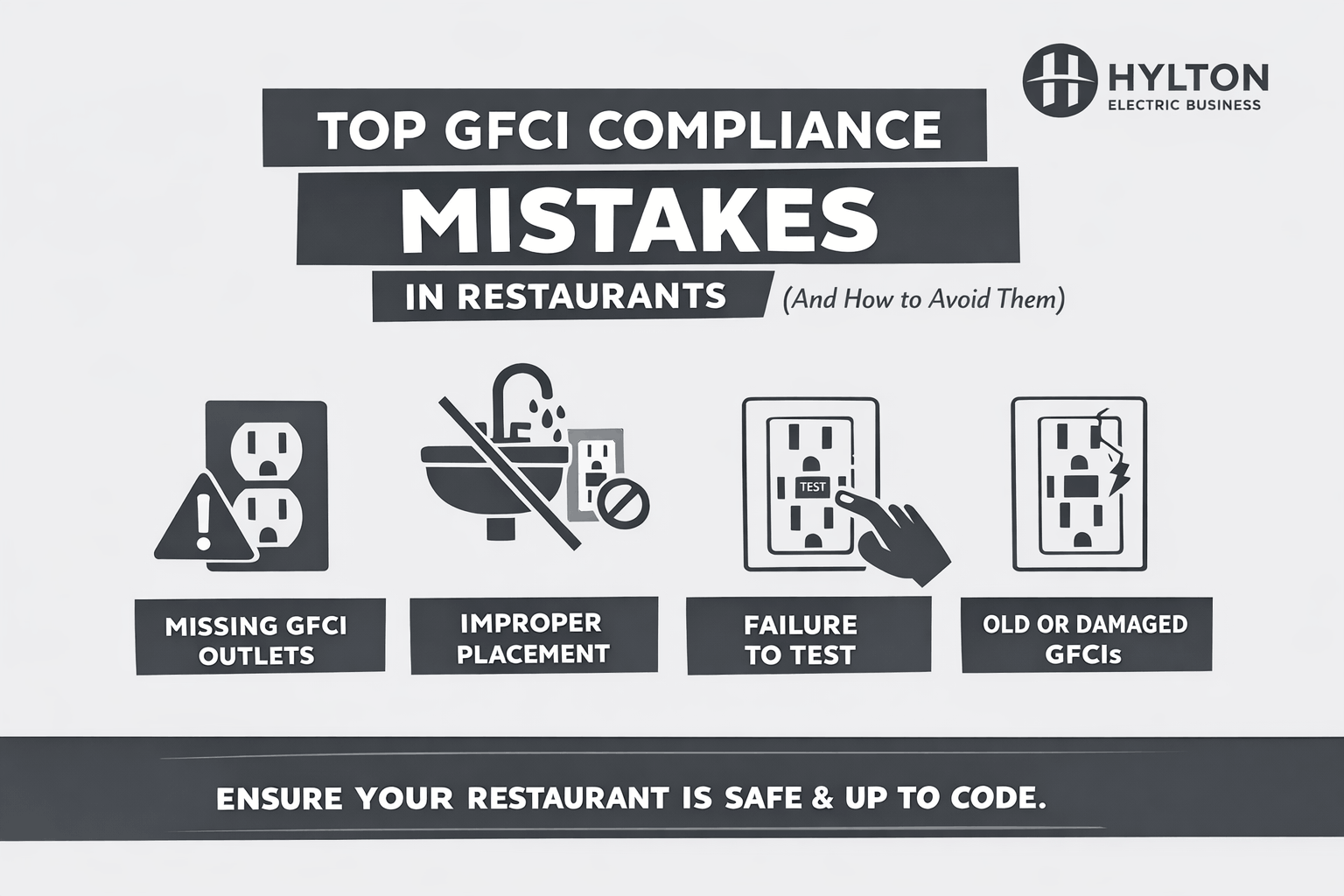
Running a restaurant means managing a lot at once. Food quality, staff, customers, and safety all demand attention. One area that often gets overlooked is electrical safety—especially GFCI compliance in restaurants.
GFCI stands for Ground Fault Circuit Interrupter. It is a safety device designed to protect people from electric shock. In a restaurant, where water and electricity are always close, this protection is critical.
Many restaurant owners assume their electrical setup is fine until an inspection proves otherwise. Others deal with nuisance tripping, equipment shutdowns, or even damaged appliances. These issues often trace back to simple mistakes with GFCI installation or use.
The good news is that most of these problems are preventable. With the right setup and a basic understanding of commercial kitchen electrical code, you can avoid costly repairs, failed inspections, and safety risks.
In this guide, we’ll break down the most common GFCI compliance mistakes in restaurants and show you how to avoid them.
What Is GFCI and Why Is It Critical for Restaurant Safety
How GFCI Outlets Work (Simple Explanation)
A GFCI outlet monitors the flow of electricity through a circuit. Under normal conditions, electricity flows evenly through the hot and neutral wires.
However, if the current becomes unbalanced—such as when electricity starts flowing through water or a person—the GFCI reacts instantly. It shuts off power in a fraction of a second.
This quick response helps prevent serious electric shock or injury. In busy restaurant kitchens, where spills and wet surfaces are common, this level of protection is essential.
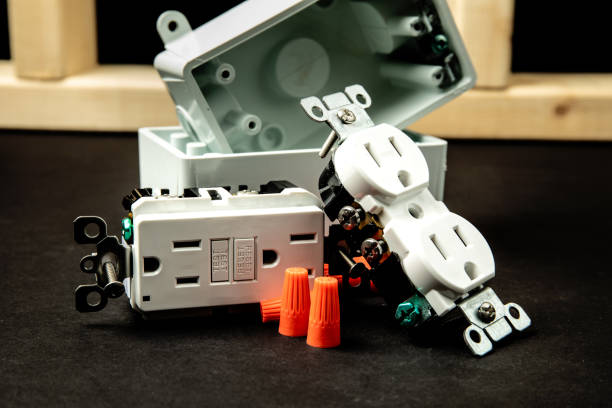
You’ll usually recognize a GFCI outlet by the “Test” and “Reset” buttons on the front. These allow you to check if the outlet is working properly and restore power if it trips.
Why Restaurants Are High-Risk Environments
Restaurants are one of the most demanding environments for electrical systems. There is constant exposure to water, heat, and heavy equipment.
Here’s why the risk is higher:
-
Water is everywhere – sinks, dishwashers, ice machines, and cleaning stations
-
Metal surfaces conduct electricity – counters, appliances, and prep tables
-
Frequent use of equipment – mixers, slicers, coffee machines, and more
-
Fast-paced workflow – staff may not notice hazards right away
Even a small electrical fault can become dangerous in these conditions. Without proper GFCI protection, the risk of shock increases significantly.
NEC Requirements for GFCI in Commercial Kitchens
The National Electrical Code (NEC) sets the standard for electrical safety in the United States. Restaurants must follow these rules to pass inspections and operate safely.
In general, GFCI protection is required in areas where electricity and water are likely to meet.
These include:
-
Outlets near sinks and food prep areas
-
Dishwashing stations
-
Floor outlets in wet zones
-
Outdoor receptacles
-
Restroom outlets
The NEC also requires GFCI protection for many types of cord-and-plug connected equipment used in commercial kitchens.
However, not every piece of equipment should be on a GFCI circuit. This is where many restaurants make mistakes, which we’ll cover later in this guide.
Local codes may add extra requirements depending on your area. That’s why it’s always a good idea to work with a licensed electrician who understands restaurant electrical compliance.
Where GFCI Protection Is Required in Restaurants
Understanding where GFCI protection is required is one of the most important parts of staying compliant. Many restaurant owners assume they are covered, but small gaps often lead to failed inspections.
The key idea is simple: if water and electricity are close, GFCI protection is usually required. Still, the details matter, especially in a commercial kitchen.
Let’s break it down by area so it’s easier to follow.
Food Prep and Counter Areas
Food prep zones are one of the most common places where GFCI protection is required.
These areas often include:
-
Countertop outlets
-
Prep stations near sinks
-
Equipment like blenders, mixers, and slicers
Since staff regularly handle food, water, and electrical equipment at the same time, the risk of shock increases. Even a small spill can create a hazard.
What to watch for:
-
Outlets installed too far from the work area
-
Missing GFCI protection near prep sinks
-
Overloaded outlets with multiple devices
Best practice: Install GFCI outlets within the required distance from sinks and ensure easy access for testing and resetting.
Dishwashing and Sink Areas
Dishwashing stations are high-moisture environments. Water is constantly in use, and floors are often wet. Because of this, GFCI protection is not optional here—it’s essential.
Common equipment in this area includes:
-
Commercial dishwashers
-
Garbage disposals
-
Booster heaters
Common issues:
-
Equipment connected without GFCI protection
-
Improper wiring behind machines
-
GFCI outlets placed where they can’t be accessed
Best practice: Ensure all outlets serving this area are GFCI-protected and accessible. Avoid placing them behind fixed equipment where resetting becomes difficult.
Restrooms and Utility Spaces
Restrooms are straightforward but still often missed during upgrades.
GFCI protection is required for:
-
All bathroom outlets
-
Janitor closets with sinks
-
Mop and cleaning stations
These areas may not seem critical to kitchen operations, but they are still part of inspection requirements.
Common mistake:
-
Assuming older outlets are still compliant
Best practice: Replace outdated outlets with modern GFCI units and test them regularly.
Outdoor and Service Areas
Outdoor spaces bring additional exposure to moisture and weather. This increases the need for proper protection.
These areas include:
-
Patio dining spaces
-
Outdoor bars
-
Food truck connections
-
Exterior wall outlets
Common issues:
-
Using standard outlets instead of weather-resistant GFCI outlets
-
Missing protective covers
-
Improper installation exposed to rain
Best practice: Use weather-resistant GFCI outlets with proper covers rated for outdoor use.
Quick Reference: GFCI Requirements by Area
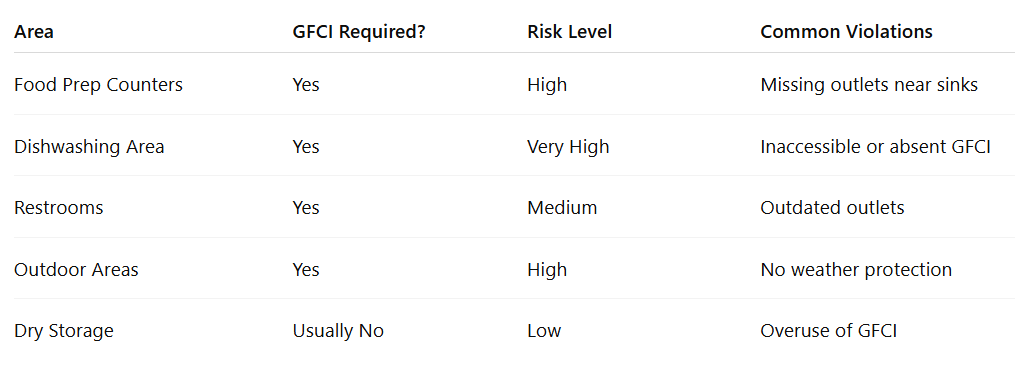
Getting this part right helps prevent most compliance issues before they start. Once you know where GFCI protection is required, the next step is understanding where restaurants often go wrong—and how to fix those mistakes.
Top GFCI Compliance Mistakes in Restaurants
Even when restaurant owners understand the basics, mistakes still happen. Most issues come from small decisions during installation or upgrades. Over time, these problems lead to failed inspections, equipment issues, or safety risks.
Let’s go through the most common GFCI compliance mistakes in restaurants and how to fix them.
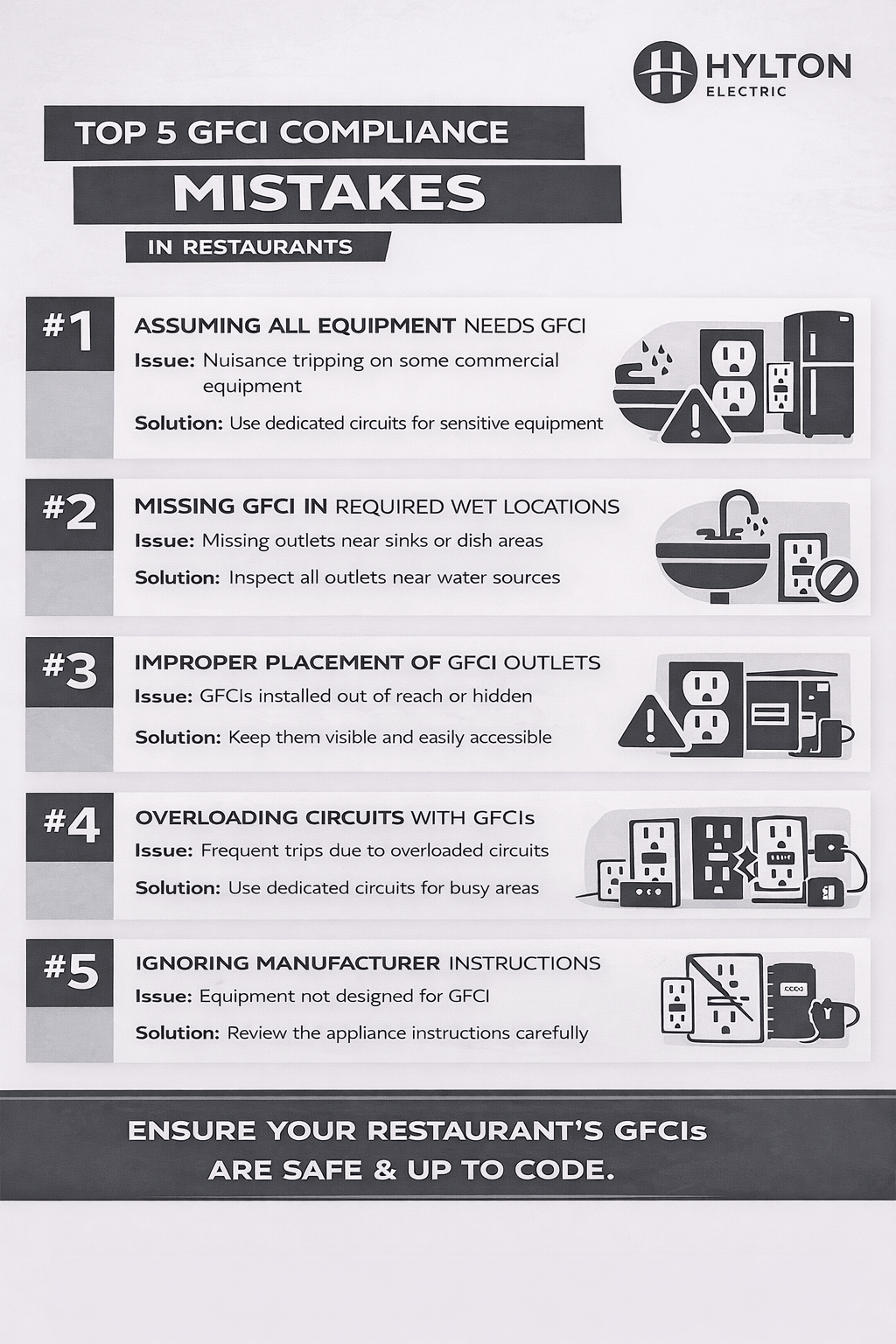
Mistake #1 – Assuming All Equipment Needs GFCI Protection
It may seem safer to put everything on GFCI. In reality, that can cause more problems than it solves. Some commercial equipment—like refrigerators or certain ovens—can trip GFCI outlets even when nothing is wrong. This is called nuisance tripping.
Why this is a problem:
-
Unexpected power loss
-
Food spoilage overnight
-
Interrupted kitchen operations
How to avoid it:
-
Check manufacturer guidelines before installation
-
Use dedicated circuits for sensitive equipment
-
Only install GFCI where required by code
Mistake #2 – Missing GFCI in Required Wet Locations
This is one of the most common inspection failures. Many restaurants simply miss outlets that should be protected.
It often happens during:
-
Renovations
-
Equipment upgrades
-
Older building retrofits
Why this is a problem:
-
Increased risk of electric shock
-
Immediate code violation
How to fix it:
-
Inspect all outlets near water sources
-
Focus on sinks, prep stations, and dish areas
-
Have a licensed electrician perform a full audit
Mistake #3 – Improper Placement of GFCI Outlets
Placement matters just as much as having the outlet itself.
Some GFCI outlets are installed:
-
Too far from the sink
-
Behind heavy equipment
-
In hard-to-reach areas
Why this is a problem:
-
Difficult to reset during a trip
-
May not meet code distance requirements
How to fix it:
-
Install outlets within proper reach of wet areas
-
Keep them visible and accessible
-
Avoid placing them behind fixed appliances
Mistake #4 – Overloading Circuits with GFCI Protection
Restaurants often connect multiple appliances to one circuit to save time or cost. This leads to overloaded circuits. When GFCI protection is added to an already stressed circuit, tripping becomes more frequent.
Why this is a problem:
-
Frequent power interruptions
-
Reduced equipment lifespan
-
Increased maintenance calls
How to fix it:
-
Use dedicated circuits for high-demand equipment
-
Spread the electrical load evenly
-
Upgrade the panel if needed
Mistake #5 – Ignoring Manufacturer Instructions
Every piece of commercial kitchen equipment comes with electrical requirements. These instructions are often ignored. Some appliances are not designed to run on GFCI circuits.
Why this is a problem:
-
Voided warranties
-
Equipment malfunction
-
Increased tripping issues
How to fix it:
-
Review installation manuals carefully
-
Match the electrical setup with the manufacturer specs
-
Consult an electrician when unsure
Mistake #6 – Not Testing GFCI Outlets Regularly
GFCI outlets do not last forever. Over time, they can fail without showing clear signs. If they are not tested, they may not trip when needed.
Why this is a problem:
-
False sense of safety
-
Increased risk of shock
How to fix it:
-
Test outlets monthly using the “Test” button
-
Replace any outlet that fails to trip
-
Keep a simple maintenance log
Mistake #7 – Confusing GFCI with Other Protection Devices
Not all electrical protection works the same way. This is a common point of confusion.
For example:
-
GFCI protects against electric shock
-
AFCI protects against electrical fires
Some restaurant owners assume one replaces the other.
Why this is a problem:
-
Incomplete protection
-
Code compliance issues
How to fix it:
-
Understand the role of each device
-
Install the correct protection where required
-
Get professional guidance for upgrades
Mistake #8 – Using Residential Logic in Commercial Kitchens
Many electrical setups are based on residential standards. This does not work in a commercial kitchen.
Restaurants have:
-
Higher power demand
-
More equipment
-
Stricter safety codes
Why this is a problem:
-
Systems become overloaded quickly
-
Code requirements are not met
How to fix it:
-
Design systems specifically for commercial use
-
Follow the commercial electrical code, not residential assumptions
Mistake #9 – DIY Installations Without Licensed Electricians
Trying to save money with DIY electrical work often leads to higher costs later. Commercial kitchens are complex. Small errors can create serious hazards.
Why this is a problem:
-
Failed inspections
-
Safety risks for staff
-
Costly rework
How to fix it:
-
Always hire a licensed electrician for installations
-
Ensure all work meets local and NEC standards
Mistake #10 – Not Updating Older Electrical Systems
Many restaurants operate in older buildings. Electrical systems may not meet current code. Outdated wiring and panels increase the risk of failure.
Why this is a problem:
-
Increased safety hazards
-
Higher chance of inspection failure
How to fix it:
-
Schedule periodic electrical inspections
-
Upgrade panels and outlets as needed
-
Bring systems up to current code
Avoiding these mistakes can save time, money, and stress. More importantly, it keeps your staff and customers safe.
Hidden Risks of Poor GFCI Compliance
GFCI issues are not always obvious. In many cases, everything seems to work fine—until something goes wrong. That’s what makes poor compliance so risky.
The impact goes beyond failed inspections. It can affect safety, daily operations, and long-term costs. Let’s break down the real risks.
Safety Hazards
The biggest concern is safety. Without proper GFCI protection, the risk of electric shock increases.
In a restaurant, this risk is higher because:
-
Floors are often wet
-
Staff handle equipment with wet hands
-
Metal surfaces are everywhere
Even a small electrical fault can send current through a person. GFCI devices are designed to stop that instantly. Without them, the consequences can be serious.
What can happen:
-
Electric shock or injury
-
Burns from faulty equipment
-
Increased liability for the business
Keeping proper protection in place is not just about code—it’s about protecting people.
Financial Consequences
Electrical issues can quickly turn into expensive problems. Many restaurant owners only realize this after something fails.
Common financial impacts include:
-
Failed inspections and reinspection fees
-
Fines for code violations
-
Emergency repair costs
-
Equipment damage
There is also the hidden cost of downtime. If your kitchen cannot operate, revenue stops immediately. A small compliance fix today is always cheaper than a major repair later.
Operational Downtime
Power interruptions can disrupt your entire operation. This often happens when GFCI systems are installed incorrectly or circuits are overloaded.
For example:
-
A tripped outlet shuts down key equipment
-
Refrigeration loses power overnight
-
Prep work is delayed during service hours
These problems may seem minor at first, but they add up fast.
Real-world impact:
-
Food spoilage
-
Delayed service
-
Customer dissatisfaction
Proper GFCI setup helps prevent these unexpected disruptions.
How to Ensure Your Restaurant Is GFCI Compliant
The best way to avoid problems is to take a proactive approach. GFCI compliance is not a one-time task—it requires regular checks and proper planning.

Here’s how to stay on track.
Step-by-Step Compliance Checklist
Use this simple checklist to review your restaurant:
-
Check all outlets near sinks and wet areas
-
Confirm GFCI protection is installed where required
-
Test each GFCI outlet using the “Test” button
-
Verify outlets are easy to access
-
Review equipment connections for compatibility
-
Look for signs of wear or outdated wiring
If anything seems unclear, it’s best to bring in a professional.
When to Call a Commercial Electrician
Some issues are easy to spot. Others require expert evaluation.
You should contact a licensed electrician when:
-
You’re preparing for an inspection
-
You’re adding new equipment
-
You notice frequent tripping
-
Your building is older and may not meet current code
An electrician can identify hidden problems and make sure your setup meets restaurant electrical compliance standards.
Importance of Electrical Load Assessment
Many GFCI issues are tied to overloaded circuits. This happens when too many appliances run on the same line.
A load assessment helps you understand:
-
How much power your system can handle
-
Where circuits are overloaded
-
Whether upgrades are needed
Benefits of a proper assessment:
-
Fewer power interruptions
-
Better equipment performance
-
Improved safety and compliance
Taking these steps helps you stay ahead of problems instead of reacting to them.
GFCI Installation Best Practices for Restaurants
Installing GFCI protection the right way makes a big difference. It’s not just about meeting code—it’s about keeping your kitchen running smoothly without constant interruptions. A well-planned setup reduces tripping, protects equipment, and keeps inspections simple. Here are the best practices every restaurant should follow.
Use GFCI Where Required—Not Everywhere
It’s easy to think that more protection is always better. In reality, overusing GFCI can create problems. Some equipment does not work well with GFCI protection. This can lead to unnecessary shutdowns.
What to do:
-
Install GFCI only in required wet or high-risk areas
-
Avoid placing sensitive equipment on GFCI unless specified
-
Follow NEC and local code guidelines
Why it matters:
-
Reduces nuisance tripping
-
Keeps essential equipment running consistently
Separate Equipment and Convenience Outlets
Not all outlets serve the same purpose. Some power heavy equipment, while others are used for small tools. Mixing them on the same circuit can cause overload and frequent trips.
Best approach:
-
Keep large appliances on dedicated circuits
-
Use separate GFCI outlets for countertop or portable devices
-
Avoid plugging multiple high-load devices into one outlet
Result:
-
Better power distribution
-
Fewer unexpected shutdowns
Install Dedicated Circuits for Critical Equipment
Certain equipment must run without interruption. This includes refrigeration, freezers, and cooking equipment. If these are placed on shared circuits, a single trip can shut everything down.
Key benefits of dedicated circuits:
-
Stable power supply
-
Reduced risk of outages
-
Longer equipment lifespan
Tip: Always match circuit capacity with the equipment’s electrical demand.
Ensure Accessibility for Reset and Testing
A GFCI outlet is only useful if it can be reached. In many restaurants, outlets are hidden behind equipment, making them hard to access. This creates delays when power trips.
Best practices:
-
Install outlets in visible, reachable locations
-
Avoid placing them behind fixed appliances
-
Label circuits clearly for quick identification
Why this matters:
-
Faster troubleshooting
-
Easier maintenance
-
Better compliance during inspections
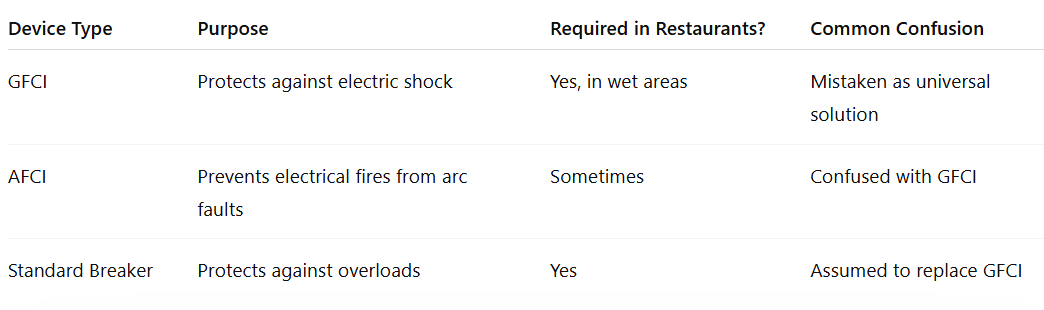
GFCI vs AFCI vs Standard Breakers (Simplified Comparison)
Many restaurant owners get confused by different types of electrical protection. Understanding the difference helps you make better decisions.
Quick Comparison Table
Why This Difference Matters
Each device serves a different purpose. Using the wrong one can leave gaps in protection.
For example:
-
A standard breaker will not protect against shock
-
An AFCI will not replace a GFCI in wet areas
Best approach:
-
Use GFCI where water is present
-
Use AFCI where fire risk is a concern
-
Use standard breakers as baseline protection
How GFCI Compliance Affects Restaurant Inspections
Electrical compliance plays a big role in inspections. Missing or incorrect GFCI protection is one of the most common reasons restaurants fail. Understanding how inspections work can help you prepare.

Electrical vs Health Inspections
Restaurants are reviewed by different inspectors, and each focuses on specific areas.
-
Electrical inspectors check wiring, outlets, and code compliance
-
Health inspectors focus on sanitation and safety
While their roles differ, both care about safety. Improper electrical setups can raise concerns during either inspection.
Common Reasons Restaurants Fail Inspections
GFCI issues often show up during routine checks.
Typical violations include:
-
Missing GFCI outlets near sinks
-
Non-functional outlets that fail testing
-
Improper placement or installation
-
Outdated electrical systems
How to Stay Inspection-Ready
Preparation makes inspections much easier.
Simple steps to follow:
-
Test all GFCI outlets regularly
-
Fix known issues before scheduling inspections
-
Keep records of maintenance and upgrades
-
Schedule periodic electrical checkups
Staying compliant is not complicated when the system is set up correctly. Small improvements can prevent major problems later.
Signs Your Restaurant May Have GFCI Issues
GFCI problems do not always show up during inspections. In many cases, there are early warning signs. If you notice them in time, you can fix issues before they become serious.
Here are the most common signs to watch for.
Frequent Tripping
If outlets trip often, something is not right. While occasional tripping is normal, repeated shutdowns point to a deeper issue.
Possible causes:
-
Overloaded circuits
-
Moisture getting into outlets
-
Equipment not compatible with GFCI
What to do:
-
Identify which outlet is tripping
-
Reduce the load on that circuit
-
Have an electrician inspect the setup
Non-Working Test or Reset Buttons
Every GFCI outlet has “Test” and “Reset” buttons. If these buttons stop working, the outlet may no longer provide protection.
Warning signs:
-
The test button does nothing
-
The reset button won’t stay engaged
-
Power does not shut off during testing
What to do:
-
Replace the outlet immediately
-
Do not rely on a faulty unit
Outlets Near Water Without Protection
This is a clear compliance issue. Any outlet near water without GFCI protection is a risk.
Where to check:
-
Near sinks
-
Behind prep stations
-
Around dishwashing areas
What to do:
-
Upgrade outlets to GFCI where required
-
Schedule a full compliance check
Equipment Randomly Losing Power
If the equipment shuts off without warning, the GFCI could be the cause. This often happens with improper installation or overloaded circuits.
Common situations:
-
Refrigerators turning off overnight
-
Prep equipment stops during service
-
Power returning after resetting an outlet
What to do:
-
Check if the equipment is on a GFCI circuit
-
Evaluate whether it should be on one
-
Consider dedicated circuits for critical equipment
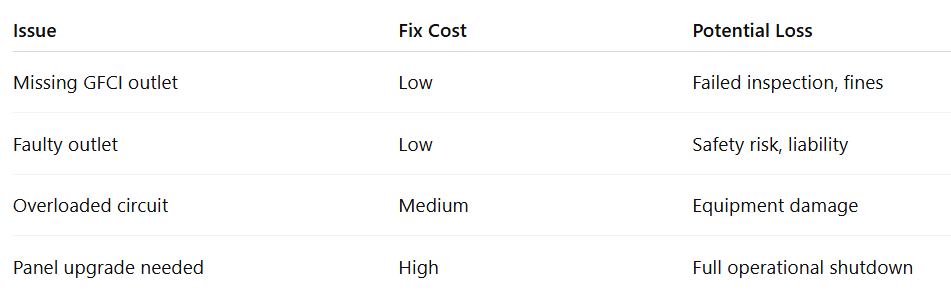
Cost of Fixing GFCI Violations in Restaurants
Many restaurant owners delay electrical fixes because of cost concerns. In reality, fixing GFCI issues is usually affordable compared to the risks of ignoring them.
Let’s break it down.
Typical Costs Breakdown
The cost depends on the size of your restaurant and the condition of your electrical system.
Common expenses include:
-
Replacing standard outlets with GFCI outlets
-
Installing new circuits for heavy equipment
-
Upgrading electrical panels
-
Labor for inspection and installation
Small fixes, like replacing outlets, are relatively low-cost. Larger upgrades, such as panel work, require more investment but offer long-term benefits.
Cost vs Risk Comparison
Why Delaying Repairs Costs More
Waiting to fix electrical issues often leads to bigger problems.
What can happen:
-
Emergency repair costs
-
Lost inventory from spoiled food
-
Temporary closure after failed inspections
A proactive approach always saves money in the long run.
Why Hiring a Licensed Electrician Matters
GFCI compliance is not just about installing outlets. It requires proper planning, load balancing, and code knowledge. That’s why working with a licensed electrician is important.
Code Knowledge and Compliance
Electrical codes change over time. A licensed electrician stays up to date with the latest requirements.
Benefits:
-
Correct installation from the start
-
Reduced risk of violations
-
Smooth inspection process
Proper Equipment Selection
Not all outlets or breakers are the same. Choosing the wrong type can lead to performance issues.
An experienced electrician will:
-
Match equipment with the correct protection
-
Avoid unnecessary GFCI installations
-
Ensure compatibility with appliances
Inspection Readiness
Preparing for an inspection can be stressful. A professional can help you get everything in order.
What they provide:
-
Full system check
-
Identification of weak points
-
Fixes before inspection day
Why Choose Hylton Electric for GFCI Compliance in Restaurants
When it comes to restaurant electrical work, experience matters. A commercial kitchen has different demands than a residential setup. Hylton Electric understands those demands and provides solutions built for real-world use.
Commercial Expertise in Restaurant Electrical Systems
Restaurants require reliable power and proper safety systems. Hylton Electric specializes in commercial environments.
They understand:
-
High-load equipment needs
-
Kitchen workflow challenges
-
Code requirements for restaurants
Code-Compliant Installations
Every installation is done with compliance in mind. This helps you avoid delays and failed inspections.
What you get:
-
Proper GFCI placement
-
Safe and reliable wiring
-
Systems built to current code standards
Fast Repairs and Inspection Support
Electrical problems can disrupt your business. Quick response times help minimize downtime.
Hylton Electric offers:
-
Timely repairs
-
Pre-inspection checks
-
Support during upgrades or renovations
Local Knowledge (Lakeland, Florida Focus)
Local experience makes a difference. Electrical requirements can vary by area.
Working with a team familiar with Lakeland ensures:
-
Compliance with local codes
-
Faster permitting and approvals
-
Solutions tailored to local conditions
Final Thoughts: Avoiding GFCI Mistakes Saves Money and Lives
GFCI compliance is not just another requirement. It plays a key role in keeping your restaurant safe and operational.
Most mistakes are easy to fix once you know what to look for. By understanding where GFCI protection is required and avoiding common errors, you can prevent bigger problems down the line.
A simple inspection today can save you from costly repairs, failed inspections, or safety risks tomorrow. If you’re unsure about your current setup, it’s always better to get a professional opinion and make the necessary updates early.
Need help with GFCI compliance? Hylton Electric is here to make it simple. Call +1 863-624-7000 or email ray@hylton-electric.com to schedule a quick inspection and keep your restaurant safe, compliant, and running smoothly.
FAQs About GFCI Compliance Mistakes in Restaurants
What is a GFCI outlet, and why is it important in restaurants?
A GFCI (Ground Fault Circuit Interrupter) outlet is designed to protect people from electric shock. It monitors the flow of electricity and shuts off power instantly if it detects an imbalance.
In restaurants, this is critical because water and electricity are often close together.
Why it matters:
-
Prevents electrical injuries
-
Reduces risk in wet environments
-
Required by electrical codes
Without GFCI protection, even a small fault can become dangerous. That’s why it’s a key part of restaurant electrical safety.
Where are GFCI outlets required in a restaurant?
GFCI outlets are required in areas where water and electricity are likely to meet. These include several high-risk zones in a restaurant.
Common required locations:
-
Near sinks and prep areas
-
Dishwashing stations
-
Restrooms
-
Outdoor outlets
Local codes may also add requirements depending on your setup. To stay compliant, it’s important to review all wet or damp areas and ensure proper protection is in place.
Do all restaurant appliances need GFCI protection?
No, not all equipment should be on GFCI circuits. While GFCI improves safety, it can cause issues with certain appliances.
Some equipment may trip unnecessarily, especially:
-
Refrigerators
-
Freezers
-
Certain cooking appliances
What to consider:
-
Manufacturer recommendations
-
Code requirements
-
Equipment sensitivity
Using GFCI where it’s not needed can lead to power interruptions. Always balance safety with proper system design.
Can refrigerators and freezers be connected to GFCI outlets?
Refrigerators and freezers can be connected to GFCI outlets in some cases, but it’s not always recommended. These appliances can cause nuisance tripping due to their internal components.
Risks include:
-
Unexpected shutdowns
-
Food spoilage
-
Business losses
Before connecting, check manufacturer guidelines and local code requirements. In many cases, using a dedicated non-GFCI circuit is the better option for reliability.
How often should GFCI outlets be tested in a restaurant?
GFCI outlets should be tested at least once a month. Regular testing ensures they are working properly. Testing is simple and only takes a few seconds.
Steps:
-
Press the “Test” button
-
Confirm the power shuts off
-
Press “Reset” to restore power
If the outlet does not respond correctly, it should be replaced immediately. Routine testing helps maintain safety and prevents hidden failures.
What causes a GFCI outlet to trip frequently?
Frequent tripping usually points to an underlying issue. It’s not something you should ignore.
Common causes:
-
Overloaded circuits
-
Moisture in outlets
-
Faulty wiring
-
Incompatible equipment
While occasional tripping is normal, repeated shutdowns need attention. An electrician can identify the cause and recommend the right fix.
What happens if a restaurant fails a GFCI inspection?
Failing a GFCI inspection can lead to delays, fines, or required repairs before reopening. Inspectors look for proper placement, functionality, and code compliance.
Possible outcomes:
-
Reinspection fees
-
Required upgrades
-
Temporary shutdown in serious cases
Fixing issues quickly helps avoid larger disruptions. Preparing in advance is the best way to pass inspections without stress.
Are GFCI breakers better than GFCI outlets for restaurants?
Both GFCI breakers and outlets provide protection, but they serve different purposes.
GFCI outlets:
-
Protect a single location
-
Easier to install and replace
GFCI breakers:
-
Protect an entire circuit
-
Installed in the electrical panel
The right choice depends on your setup. An electrician can help decide which option works best for your restaurant.
What is the difference between GFCI and AFCI protection?
GFCI and AFCI devices protect against different risks.
-
GFCI protects against electric shock
-
AFCI protects against electrical fires
Both are important, but they are not interchangeable.
Key point: Using one does not replace the need for the other. A proper electrical system may require both types depending on the area.
Why do GFCI outlets fail over time?
Like any electrical device, GFCI outlets wear out. Internal components can degrade with use and exposure.
Common reasons for failure:
-
Age
-
Moisture exposure
-
Frequent tripping
-
Power surges
A failed GFCI may still provide power, but not protection. That’s why regular testing and timely replacement are important.
Can I install GFCI outlets myself in a restaurant?
DIY installation is not recommended for commercial kitchens. Restaurant electrical systems are more complex than residential setups.
Risks of DIY work:
-
Code violations
-
Improper wiring
-
Safety hazards
Hiring a licensed electrician ensures everything is installed correctly and meets code requirements. It also helps avoid costly corrections later.
How much does it cost to install GFCI outlets in a restaurant?
Costs vary based on the number of outlets and the condition of your electrical system.
Typical factors:
-
Number of outlets
-
Labor costs
-
Panel upgrades if needed
Simple replacements are usually affordable. Larger upgrades may cost more but provide long-term value. Getting a professional estimate helps you plan accurately.
What are the signs of a faulty GFCI outlet?
A faulty GFCI outlet may still appear to work, but it won’t provide proper protection.
Warning signs:
-
The test button does not trip the power
-
The reset button won’t stay in place
-
The outlet feels warm or loose
If you notice any of these, replace the outlet immediately. Ignoring these signs increases safety risks.
Do outdoor restaurant outlets require GFCI protection?
Yes, outdoor outlets must have GFCI protection. Exposure to rain and moisture increases the risk of electrical hazards.
Requirements include:
-
Weather-resistant GFCI outlets
-
Protective covers
-
Proper installation
Outdoor areas are considered high-risk zones, so compliance is essential.
Why does my GFCI outlet keep resetting but not working?
If an outlet resets but does not restore power, there may be a deeper issue.
Possible causes:
-
Wiring problems
-
Faulty outlet
-
Tripped upstream device
This situation usually requires professional inspection. Avoid repeated resets without identifying the cause.
Can one GFCI outlet protect multiple outlets?
Yes, a single GFCI outlet can protect additional outlets downstream on the same circuit.
How it works:
-
The first outlet is wired to protect others
-
All connected outlets lose power if the circuit trips
This setup is common, but it must be wired correctly.
Improper wiring can leave outlets unprotected.
What is nuisance tripping, and how can it be prevented?
Nuisance tripping happens when a GFCI shuts off power without a real fault.
Common causes:
-
Sensitive equipment
-
Electrical noise
-
Shared circuits
How to prevent it:
-
Use dedicated circuits
-
Avoid overloading
-
Follow manufacturer guidelines
Proper system design reduces unnecessary interruptions.
Are older restaurants required to upgrade to GFCI outlets?
Older buildings may not meet current code, but upgrades are often required during renovations or inspections.
When upgrades are needed:
-
Electrical work is performed
-
Equipment is added
-
Code compliance is reviewed
Updating your system improves safety and reduces future issues.
How do I prepare my restaurant for an electrical inspection?
Preparation makes inspections smoother and faster.
Steps to take:
-
Test all GFCI outlets
-
Check required locations
-
Fix visible issues
-
Schedule a pre-inspection review
Working with a professional helps identify problems early. This reduces the chance of failure.
Why should I hire a commercial electrician for GFCI compliance?
Commercial electricians understand the demands of restaurant environments. They ensure systems are safe, reliable, and code-compliant.
Benefits include:
-
Accurate installation
-
Proper load balancing
-
Inspection readiness
They also help avoid costly mistakes. For restaurant owners, this means fewer disruptions and better long-term performance.
Leave a Reply