
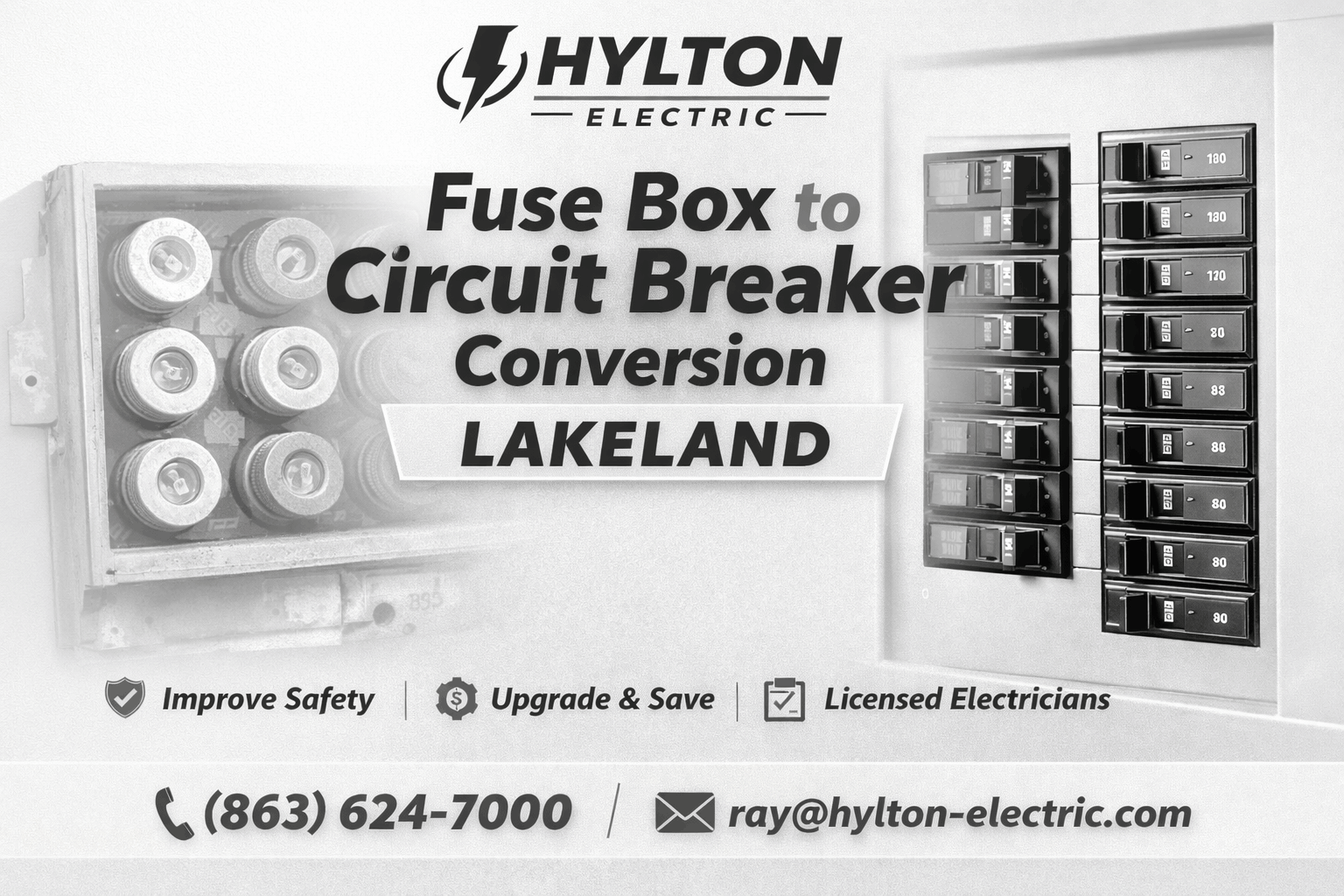
Many older homes in Lakeland were built with electrical fuse boxes instead of modern circuit breaker panels. At the time, fuse systems worked well because homes used far less electricity. Most houses had only basic lighting, a refrigerator, and a few small appliances.
Today, electrical demand is very different. Homes now run air conditioners, large kitchen appliances, computers, home entertainment systems, and electric vehicle chargers. Older fuse systems often struggle to handle these loads safely.
Because of this, many homeowners are choosing a fuse box to circuit breaker conversion in Lakeland. Upgrading to a breaker panel improves electrical safety, increases capacity, and makes it easier to manage electrical problems when they occur.
Another issue is convenience. When a fuse blows, it must be replaced before power can return. A circuit breaker works differently. Instead of replacing a component, you simply reset the breaker switch.
For homeowners with aging electrical systems, a panel upgrade can offer several advantages:
-
Better protection against overloaded circuits
-
Easier troubleshooting when the power goes out
-
Higher electrical capacity for modern appliances
-
Compliance with current electrical safety standards
In many cases, homeowners first consider this upgrade after experiencing frequent blown fuses or planning a home renovation. Electricians in Lakeland also recommend panel upgrades when installing new systems, such as HVAC units or EV chargers.
This guide explains how fuse boxes work, why breaker panels are now standard, and what homeowners should know before upgrading their electrical panel.
What Is a Fuse Box?
A fuse box is an older type of electrical panel that protects a home’s circuits from overload. Instead of using switches like modern breakers, fuse boxes use small devices called fuses.
Each fuse contains a thin metal strip designed to melt when electrical current exceeds a safe level. When the metal strip melts, it breaks the circuit and stops electricity from flowing.
This simple design protects wiring from overheating and helps prevent electrical fires. Fuse boxes typically contain several screw-in fuses, with each fuse controlling a specific circuit in the home. These circuits may include:
-
Lighting circuits
-
Kitchen outlets
-
Bedroom outlets
-
Appliance circuits
When too much electricity flows through a circuit, the fuse burns out. Once that happens, the fuse must be replaced before power returns to that circuit. Although fuse systems can still function, they are now considered outdated compared to modern breaker panels.
How Electrical Fuse Boxes Work
Electrical fuse boxes rely on a simple but effective safety principle. Each fuse contains a metal filament that reacts to excessive electrical current.
When too much current flows through the circuit, the metal inside the fuse heats up. If the current continues to rise, the metal melts and breaks the circuit. This stops electricity from flowing and prevents wires from overheating.
The process works as follows:
-
Electricity flows through the fuse to power the circuit.
-
If the current exceeds the fuse rating, heat builds up.
-
The fuse element melts.
-
The circuit disconnects, and the power shuts off.
Once the fuse blows, the homeowner must remove the damaged fuse and replace it with a new one. While this system protects wiring, it has several disadvantages. Many homeowners keep spare fuses on hand because blown fuses can happen unexpectedly.
Why Fuse Boxes Were Common in Older Homes
Fuse boxes were widely used in homes built before the 1960s and 1970s. At that time, residential electrical systems were much simpler. Homes used far fewer electrical devices than they do today. Typical electrical loads included:
-
Basic lighting fixtures
-
Small kitchen appliances
-
A refrigerator
-
Possibly a washing machine
Because electrical demand was lower, fuse panels with 60-amp service were often sufficient for an entire house.
As technology advanced, homes began using more electricity. Air conditioning systems, dishwashers, microwaves, and large entertainment systems increased the load on residential wiring.
These modern demands quickly pushed older fuse systems beyond their original capacity. This is one reason electricians often recommend upgrading from a fuse box to a circuit breaker panel.
Limitations of Old Fuse Box Systems
Although fuse boxes can still function, they come with several limitations that make them less practical for modern homes. One major limitation is electrical capacity. Many fuse boxes provide limited power compared to modern breaker panels.
Other common issues include:
-
Difficulty finding replacement fuses
-
Limited number of circuits
-
Lack of modern safety protection
-
Risk of using the wrong fuse rating
Using an incorrect fuse size is especially dangerous. Some homeowners mistakenly install higher-amp fuses to stop frequent blowouts. This practice can allow wiring to overheat and increase the risk of electrical fires.
Another problem is that fuse boxes do not support modern electrical protection devices such as AFCI and GFCI breakers. These technologies provide additional protection against electrical fires and shock hazards.
For these reasons, many Lakeland homeowners are choosing to upgrade to circuit breaker panels that offer better safety and greater electrical capacity.
What Is a Circuit Breaker Panel?
A circuit breaker panel is the modern replacement for a fuse box. Instead of using fuses that burn out, it uses circuit breakers that automatically shut off power when a circuit becomes overloaded.
When a breaker detects too much electrical current, it trips and stops electricity from flowing. Once the issue is resolved, the breaker can simply be reset.
This design makes breaker panels easier to maintain and much safer for modern homes. Most houses built or renovated in recent decades use breaker panels as the main electrical distribution system.
Breaker panels also allow electricians to organize circuits more efficiently. Each breaker protects a specific area or appliance in the home. Common circuits in a breaker panel may include:
-
Kitchen outlets
-
Bathroom outlets
-
Bedroom outlets
-
Lighting circuits
-
HVAC systems
-
Major appliances
Modern breaker panels can support significantly higher electrical loads than older fuse boxes. This is important for homes that use central air conditioning, electric water heaters, and high-powered appliances.
For homeowners planning a fuse box to circuit breaker conversion in Lakeland, understanding how breaker panels work helps explain why the upgrade is recommended.
How Circuit Breakers Protect Your Home
Circuit breakers are designed to protect electrical wiring from overheating and potential fire hazards. They monitor the electrical current flowing through a circuit at all times.
If the current exceeds the safe limit, the breaker automatically trips. This happens when situations such as these occur:
-
Too many devices are connected to one circuit
-
A short circuit occurs
-
An appliance draws excessive power
When the breaker trips, the internal mechanism disconnects the circuit from the electrical supply. This stops the flow of electricity immediately.
Unlike fuses, breakers do not need to be replaced. Once the cause of the problem is resolved, the breaker can be reset. The process is simple:
-
Locate the breaker that has moved to the middle position.
-
Push it fully to the OFF position.
-
Then switch it back to ON.
This reset feature makes troubleshooting much easier for homeowners.
Key Components of a Breaker Panel
A breaker panel contains several important components that distribute electricity safely throughout the home.
Understanding these parts helps homeowners see how the system functions.
1. Main breaker
The main breaker controls the entire electrical supply entering the home. If it trips, power shuts off to all circuits.
2. Individual circuit breakers
Each breaker protects a specific circuit. For example, one breaker may supply kitchen outlets while another controls bedroom lighting.
3. Bus bars
Bus bars are metal strips inside the panel that distribute electricity to individual breakers.
4. Neutral bar
The neutral bar connects the neutral wires from circuits and returns electricity safely to the electrical system.
5. Ground bar
The ground bar connects grounding wires that protect the system from electrical faults.
Together, these components allow the breaker panel to manage electrical power safely and efficiently.
Standard Electrical Panel Capacities
Modern breaker panels are designed to handle much larger electrical loads than fuse boxes.
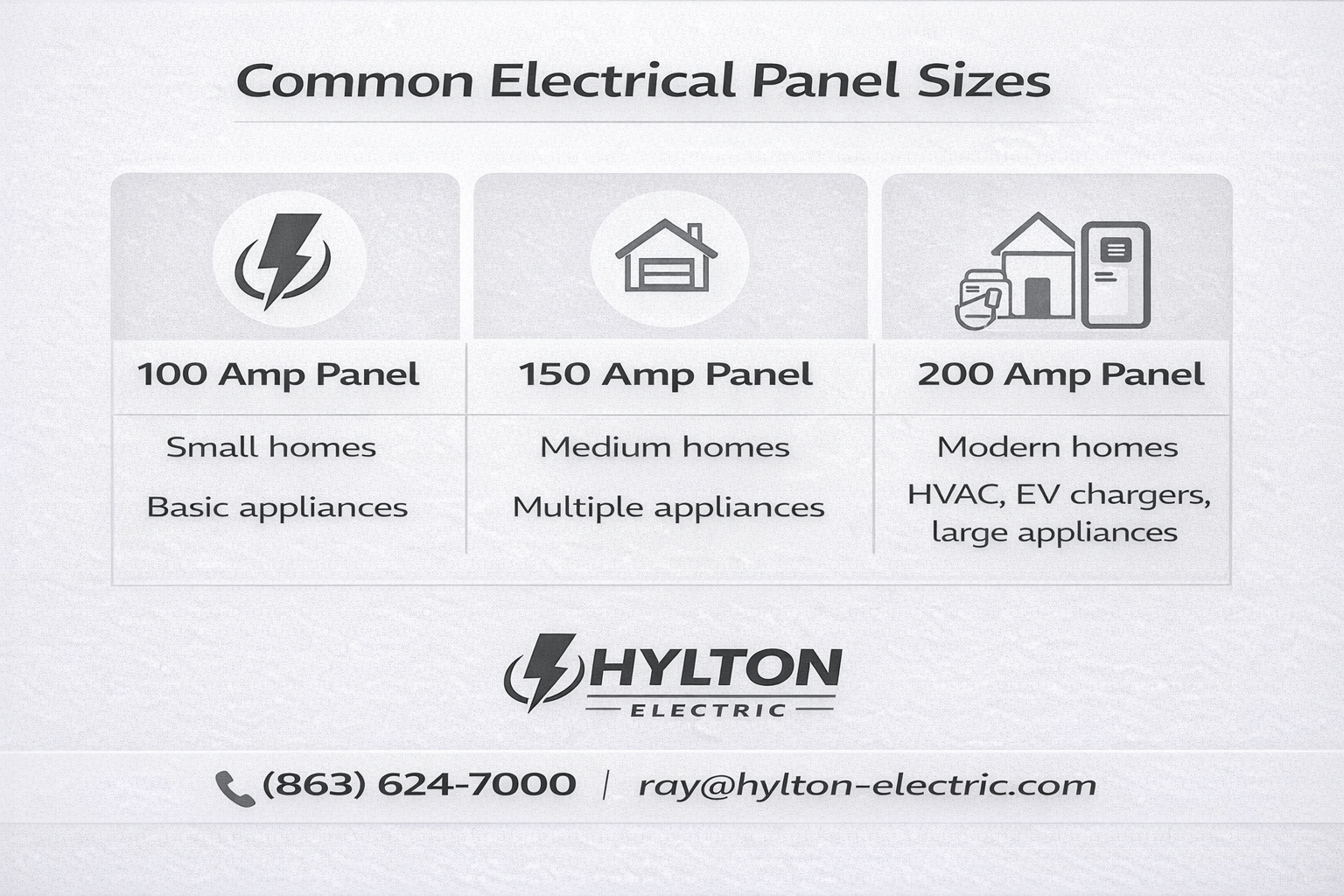
Common residential panel sizes include:
-
100-amp panels – suitable for smaller homes with moderate electrical use
-
150-amp panels – provide additional capacity for larger homes
-
200-amp panels – considered the modern standard for most homes
Many electricians recommend 200-amp panels for homes undergoing electrical upgrades. This capacity provides room for future electrical needs.
For example, newer homes often require additional power for:
-
Central air conditioning systems
-
Electric vehicle chargers
-
Electric ranges and ovens
-
Home office equipment
-
Smart home devices
Upgrading the electrical panel ensures the system can support these demands without overloading circuits.
Fuse Box vs Circuit Breaker: Key Differences
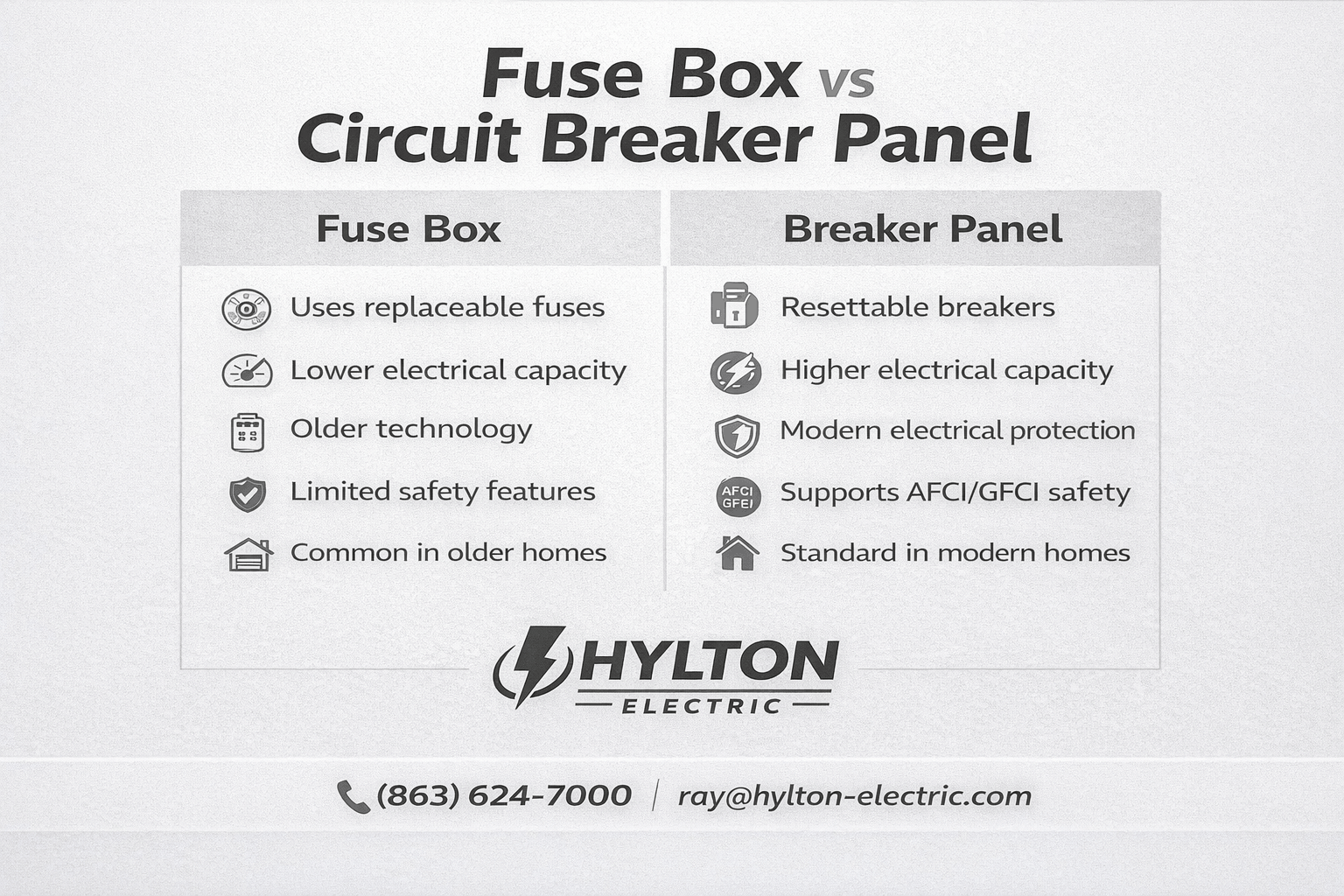
While both fuse boxes and breaker panels serve the same purpose—protecting electrical circuits—they operate in different ways. Understanding these differences helps homeowners see why breaker panels are now the preferred option.
One of the most noticeable differences is convenience. When a fuse blows, it must be replaced. When a breaker trips, it can simply be reset. Another difference is safety technology. Modern breaker panels can support advanced protection features that older fuse systems cannot. Because of these differences, many electricians recommend replacing fuse boxes with breaker panels during electrical upgrades.
Safety Differences Between Fuse Systems and Breaker Panels
Safety is one of the biggest reasons homeowners choose to upgrade their electrical panels. Fuse systems can still provide basic protection, but they lack modern safety technology. Breaker panels offer several safety improvements:
-
Faster response to overload conditions
-
Compatibility with arc-fault protection
-
Compatibility with ground-fault protection
-
Improved circuit management
Arc-fault breakers help prevent electrical fires caused by damaged wiring. Ground-fault breakers protect against electric shock in areas such as bathrooms and kitchens. These technologies are now required in many parts of the home under modern electrical codes.
Convenience and Maintenance
Another major difference between fuse boxes and breaker panels is maintenance. Fuse systems require homeowners to keep replacement fuses available. When a fuse blows, it must be removed and replaced with a new one.
Breaker panels are much easier to manage. When a breaker trips, the homeowner simply resets the switch. This takes only a few seconds and does not require replacement parts. Breaker panels also make troubleshooting easier because each circuit is clearly labeled inside the panel.
Capacity and Future Expansion
Modern homes often require more electrical circuits than older homes. Fuse boxes usually provide a limited number of circuits, which can lead to overloaded wiring when additional appliances are installed. Breaker panels allow electricians to add new circuits when needed.
This makes it easier to support upgrades such as:
-
Kitchen remodels
-
Home office installations
-
Electric vehicle charging stations
-
Additional lighting and outlets
For homeowners planning renovations or appliance upgrades, converting from a fuse box to a breaker panel provides much greater flexibility.
Signs You Need a Fuse Box to Circuit Breaker Conversion
Many homeowners only think about their electrical panel when something stops working. However, older fuse boxes often show warning signs before serious problems occur.
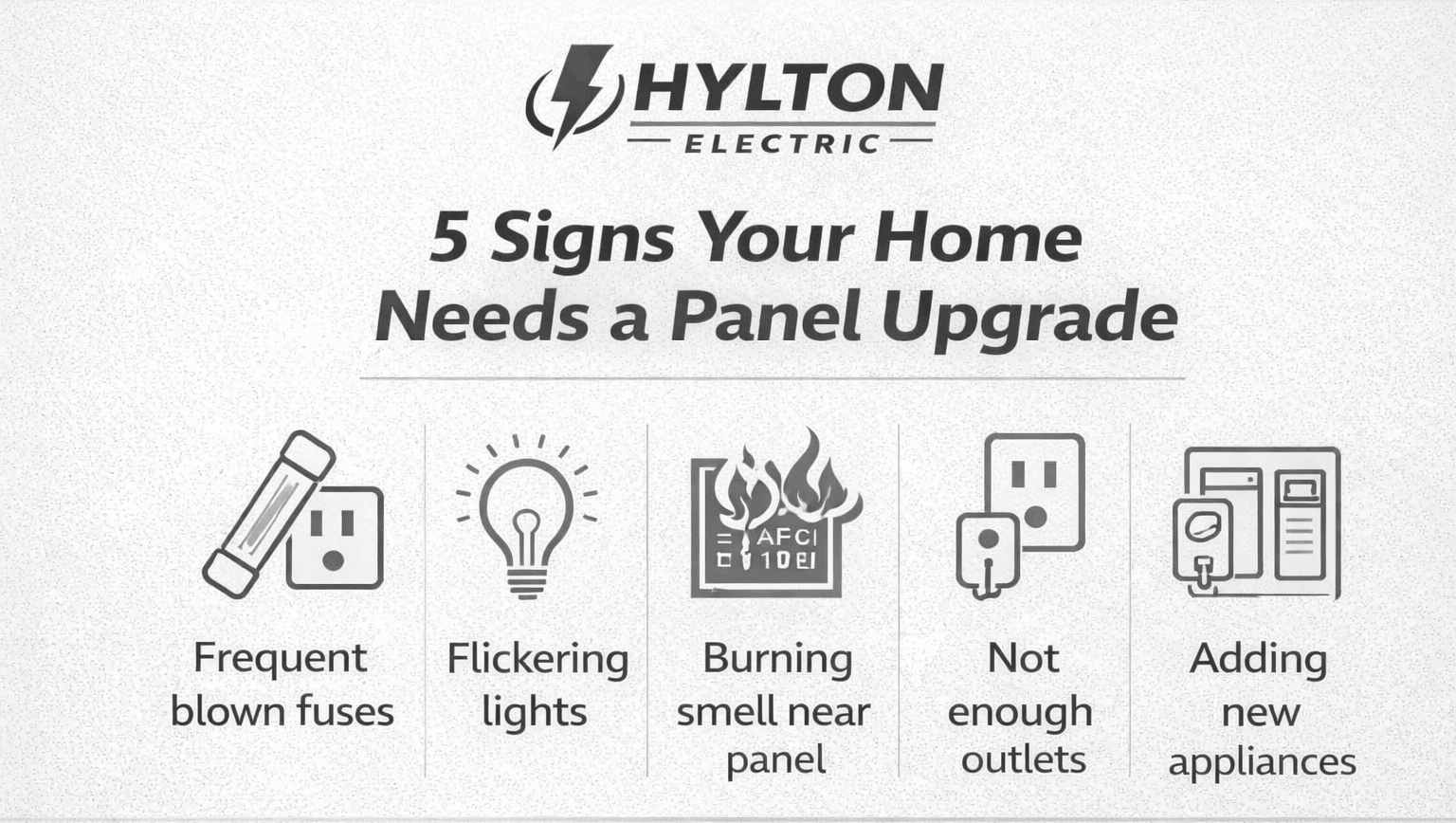
Recognizing these signs early can help prevent electrical hazards and ensure your home’s power system operates safely. Below are several common indicators that it may be time for a fuse box to circuit breaker conversion in Lakeland.
Your Home Still Uses a Fuse Box
The clearest sign is simply having a fuse box instead of a breaker panel. Fuse systems were commonly installed in homes built before the 1970s. If your house still relies on screw-in fuses, the electrical system may not meet modern safety standards. While fuse boxes can still function, they were designed for homes that used far less electricity than today’s households.
Modern homes now power:
-
Central air conditioning systems
-
Large kitchen appliances
-
Home entertainment systems
-
Computers and office equipment
-
Smart home devices
Upgrading to a breaker panel allows the electrical system to support these modern demands safely.
Fuses Blow Frequently
If you are replacing fuses often, it may indicate that the electrical system is overloaded. Frequent blown fuses can happen when:
-
Too many devices share one circuit
-
High-power appliances draw excess current
-
Wiring capacity is too limited for modern use
This problem becomes common in older homes where several rooms share the same circuit. Instead of constantly replacing fuses, many homeowners choose to upgrade to a breaker panel that provides more circuits and better load distribution.
Flickering Lights or Power Fluctuations
Lights that flicker or dim when appliances turn on can signal electrical capacity problems. For example, you might notice:
-
Lights dimming when the microwave runs
-
Power fluctuations when the air conditioner starts
-
Temporary voltage drops when multiple devices run together
These issues often occur when the panel cannot supply enough power to handle multiple appliances at once. Upgrading the panel increases electrical capacity and stabilizes the power supply.
Burn Marks or Heat Around the Fuse Box
Visible signs of overheating should never be ignored. Check the electrical panel for warning signs such as:
-
Burn marks near fuse holders
-
Discoloration on the panel cover
-
A burning smell near the panel
-
Warm metal surfaces
These symptoms may indicate overloaded circuits or deteriorating electrical components. If you notice these signs, it is important to contact a licensed electrician immediately.
Your Home Needs More Electrical Power
Another common reason for upgrading is increased electrical demand. Many homeowners in Lakeland consider panel upgrades when adding new equipment, such as:
-
Electric vehicle chargers
-
Tankless water heaters
-
New HVAC systems
-
Home additions or remodels
Older fuse boxes often lack the capacity to support these upgrades. A breaker panel conversion ensures the electrical system can handle current and future power needs.
Benefits of Converting a Fuse Box to a Circuit Breaker Panel
Upgrading from a fuse box to a circuit breaker panel offers several practical advantages. The upgrade not only improves safety but also makes managing your home’s electrical system easier. Many homeowners view this conversion as an important step toward modernizing their property.
Improved Electrical Safety
Safety is the primary reason electricians recommend replacing fuse boxes. Breaker panels provide better protection against electrical hazards because they respond quickly to overload conditions.
Modern breaker panels also support advanced safety devices, such as:
-
Arc-fault circuit interrupters (AFCI)
These devices help prevent electrical fires and protect against electric shock. Older fuse systems cannot support these protections.
Greater Electrical Capacity
Older fuse boxes typically provide limited electrical service, often around 60 amps. Modern homes require much more power. Breaker panels commonly provide:
-
100-amp service
-
150-amp service
-
200-amp service
Higher capacity allows the electrical system to support modern appliances and multiple circuits without overloading.
Easier Maintenance
Replacing blown fuses can be inconvenient, especially if spare fuses are not available. Breaker panels simplify this process. When a circuit trips, the homeowner only needs to reset the breaker. This convenience makes it much easier to troubleshoot electrical problems. Breaker panels also allow electricians to label circuits clearly, which helps identify the source of power interruptions.
Increased Home Value
Electrical upgrades can improve the overall value of a home. Many home inspectors and buyers view fuse boxes as outdated systems. In some cases, lenders or insurance companies may require panel upgrades before approving coverage. Upgrading to a breaker panel can make a property more attractive to potential buyers.
Insurance and Code Compliance
Some insurance providers consider fuse boxes a higher risk due to their age and limitations. Because of this, homeowners with fuse systems may experience:
-
Higher insurance premiums
-
Coverage limitations
-
Inspection requirements before policy approval
Upgrading to a modern breaker panel can help ensure the home meets current electrical codes and insurance standards.
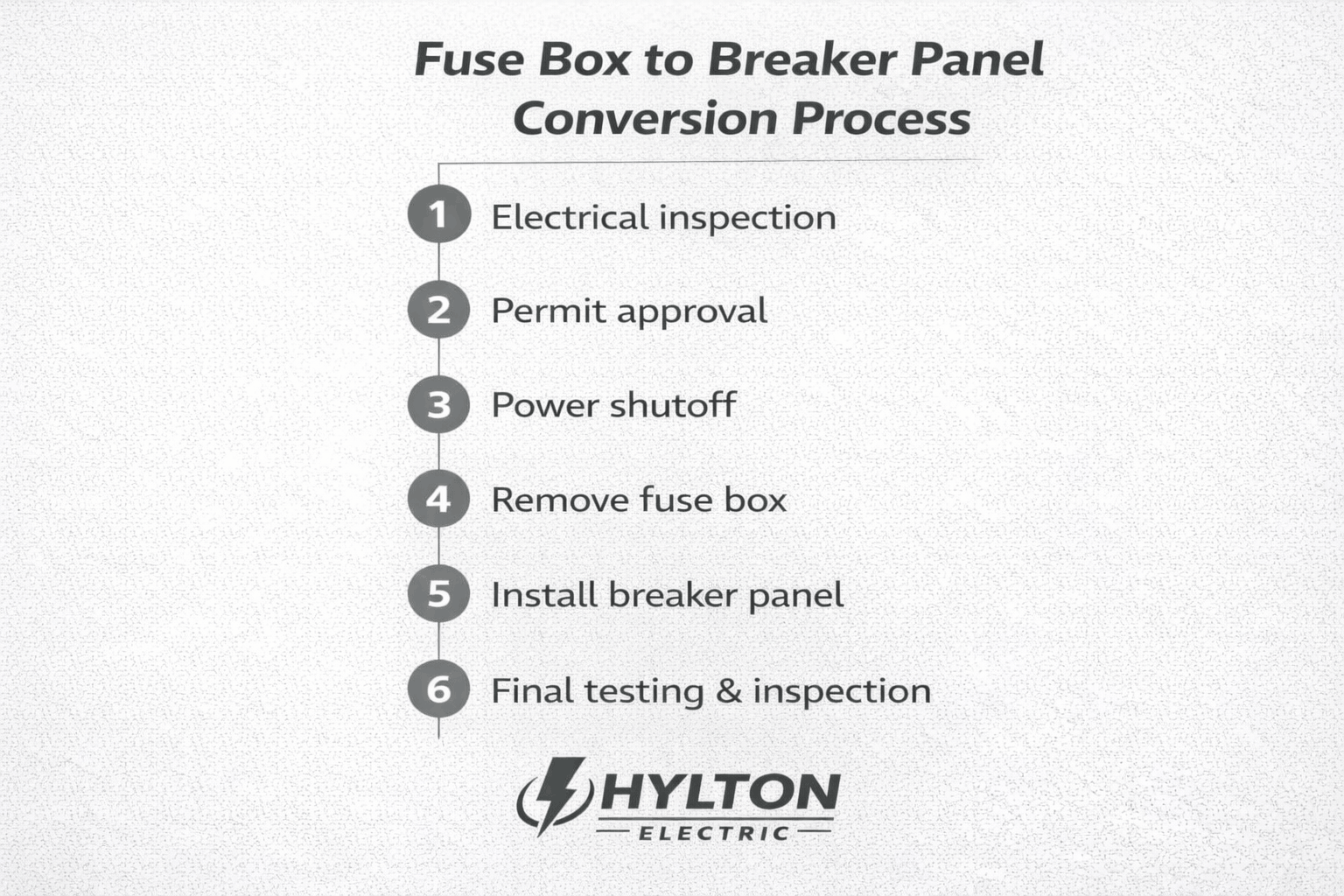
Fuse Box to Circuit Breaker Conversion Process
Converting a fuse box to a breaker panel is a complex electrical upgrade. The process involves replacing the entire panel and reconnecting the home’s circuits. Because this work involves high-voltage electrical components, it should always be performed by a licensed electrician.
Below is a general overview of how the conversion process works.
Electrical System Inspection
Before installing a new breaker panel, an electrician will inspect the home’s electrical system. This inspection helps determine:
-
The condition of existing wiring
-
The number of circuits required
-
The appropriate panel size
-
Grounding and bonding requirements
The electrician will also evaluate whether additional upgrades are needed.
Permits and Code Compliance
Electrical panel upgrades usually require permits from the local building department. Permits ensure the work follows national and local electrical safety codes.
During this stage, electricians will:
-
Submit permit applications
-
Schedule inspections if required
-
Ensure the installation meets NEC standards
Proper permitting helps ensure the electrical system is safe and legally compliant.
Removing the Old Fuse Box
Once power is disconnected, the electrician removes the existing fuse box.
This process involves:
-
Disconnecting circuits from the fuse panel
-
Removing old fuse holders and wiring connections
-
Preparing the installation area for the new panel
The electrician also checks for damaged wiring during this stage.
Installing the New Breaker Panel
Next, the electrician installs the new breaker panel and connects the home’s electrical circuits. This step includes:
-
Mounting the new panel
-
Installing circuit breakers
-
Connecting hot, neutral, and ground wires
-
Labeling circuits clearly
Proper circuit organization is important to ensure the system operates safely.
Testing and Final Inspection
After installation, the electrician tests the panel to verify that all circuits operate correctly. Testing includes:
-
Checking voltage levels
-
Verifying breaker operation
-
Confirming grounding and bonding connections
If permits were required, a local inspector may review the installation before final approval. This final step ensures the electrical system meets current safety standards and operates properly.
Cost of Fuse Box to Circuit Breaker Conversion in Lakeland
The cost of converting a fuse box to a circuit breaker panel can vary depending on several factors. Every home has a different electrical layout, wiring condition, and power demand.
However, most homeowners want to understand the typical price range before planning an upgrade.
In Lakeland, a fuse box conversion usually falls within a moderate to significant investment range because the entire panel must be replaced and inspected for safety.
The total cost often depends on the panel size, the condition of existing wiring, and whether additional upgrades are required.
Average Panel Upgrade Cost
For many homes, the cost of replacing a fuse box with a breaker panel includes labor, materials, and permit fees. Typical cost ranges may include:
These estimates can vary depending on the size of the home and the complexity of the electrical system. Homes with outdated wiring may require additional repairs before the new panel can be installed safely.
Factors That Affect the Cost
Several factors influence the total price of a fuse box conversion. Understanding these variables can help homeowners prepare for the project.
1. Panel capacity
Larger panels cost more because they support higher electrical loads. For example, a 200-amp panel is more expensive than a 100-amp panel.
2. Condition of existing wiring
Older wiring systems may need repairs or upgrades before connecting to the new panel.
3. Permit and inspection fees
Local regulations may require permits and inspections during electrical panel upgrades.
4. Panel location
If the new breaker panel must be relocated, additional labor and materials may increase the cost.
5. Number of circuits
Homes that require more circuits may need larger panels or additional breakers.
Additional Electrical Upgrades
Sometimes, electricians recommend additional improvements during a panel conversion. Completing these upgrades at the same time can improve safety and efficiency.
Common upgrades include:
-
Whole-home surge protection
-
New grounding systems
-
Dedicated appliance circuits
-
GFCI and AFCI breaker installation
-
Electrical meter upgrades
These improvements can help ensure the entire electrical system meets modern safety standards.
Electrical Code Requirements for Panel Upgrades
Electrical panel upgrades must follow strict safety standards. These standards ensure that electrical systems operate safely and reliably. In the United States, the National Electrical Code (NEC) establishes rules for electrical installations. Local building authorities may also enforce additional requirements.
Understanding these standards helps homeowners see why professional installation is essential.
National Electrical Code (NEC) Standards
The NEC provides guidelines for electrical system design and installation. When converting a fuse box to a breaker panel, electricians must follow several key rules. These include:
-
Proper grounding and bonding
-
Correct wire sizing for circuits
-
Adequate breaker spacing inside the panel
-
Proper labeling of circuits
-
Safe installation of the main disconnect
These requirements help reduce the risk of electrical fires and shock hazards. Licensed electricians are trained to ensure installations comply with these safety rules.
Florida Electrical Code Considerations
Homes in Florida may require additional electrical considerations due to local conditions. Electrical systems in the region must account for factors such as:
-
High humidity levels
-
Lightning storms
-
Hurricane exposure
Because of these conditions, electricians often recommend surge protection and strong grounding systems. Upgrading the electrical panel during a fuse box conversion allows these safety features to be installed.
Leave a Reply