
Arc-fault breakers are an important safety feature in modern electrical systems. They help protect homes from electrical fires by detecting dangerous arcing conditions inside wiring or devices. When an arc-fault breaker trips, it shuts off power to prevent overheating or fire hazards.
For many homeowners in Lakeland, the problem starts when the breaker keeps tripping without an obvious reason. You reset it, and it trips again. Sometimes it happens when you turn on an appliance. Other times, it happens even when nothing is plugged in.
This situation can be frustrating. However, repeated tripping is usually a sign that the electrical system needs attention.
Arc-fault breaker troubleshooting helps identify the cause of the problem. In many cases, the issue may be simple, such as a faulty appliance or overloaded circuit. In other cases, the breaker may be reacting to damaged wiring or loose electrical connections.
Understanding how arc-fault breakers work and what causes them to trip can help you respond quickly and safely.
In this guide, you will learn:
-
How arc-fault breakers work
-
Why do breakers trip repeatedly
-
Step-by-step troubleshooting methods
-
Common electrical problems in Lakeland homes
-
When to call a licensed electrician
By the end of this article, you will have a clear idea of how to handle an arc-fault breaker issue and how to prevent the problem from returning.
What Is an Arc-Fault Breaker?
An arc-fault breaker, also called an AFCI breaker, is designed to detect electrical arcing in a circuit. Electrical arcs occur when electricity jumps across damaged or loose wiring connections.
These arcs can create high heat levels that may start electrical fires inside walls, outlets, or appliances. Because of this risk, modern electrical codes require arc-fault protection in many living areas of a home.
Unlike standard circuit breakers, arc-fault breakers monitor the electrical current pattern in a circuit. When the breaker senses irregular wave patterns that indicate arcing, it shuts off power immediately.
This action helps prevent overheating and fire hazards.
Arc-fault breakers are commonly installed in circuits serving:
-
Bedrooms
-
Living rooms
-
Dining areas
-
Hallways
-
Home offices
Many homes in Lakeland built or renovated in the past two decades include AFCI protection as part of updated electrical code requirements.
How AFCI Breakers Work
Arc-fault breakers constantly monitor the electrical current moving through a circuit. They analyze the electrical waveform and detect patterns that suggest unsafe arcing.
When wiring is damaged or loose, electricity may jump between conductors. This jump produces a small arc that can generate intense heat. The breaker’s internal electronics detect these irregular signals and disconnect power before the arc can cause damage.
AFCI breakers help detect problems such as:
-
Loose wiring connections
-
Damaged insulation on electrical cables
-
Frayed appliance cords
-
Worn outlets or switches
-
Overheated wiring
This type of protection is important because traditional breakers do not detect these hazards.
Standard breakers mainly respond to overloads or short circuits, which means dangerous arcs could continue without triggering protection.
Arc-Fault Breaker vs Standard Circuit Breaker
Many homeowners assume all breakers work the same way. However, arc-fault breakers provide an additional level of protection.
The table below explains the key differences.
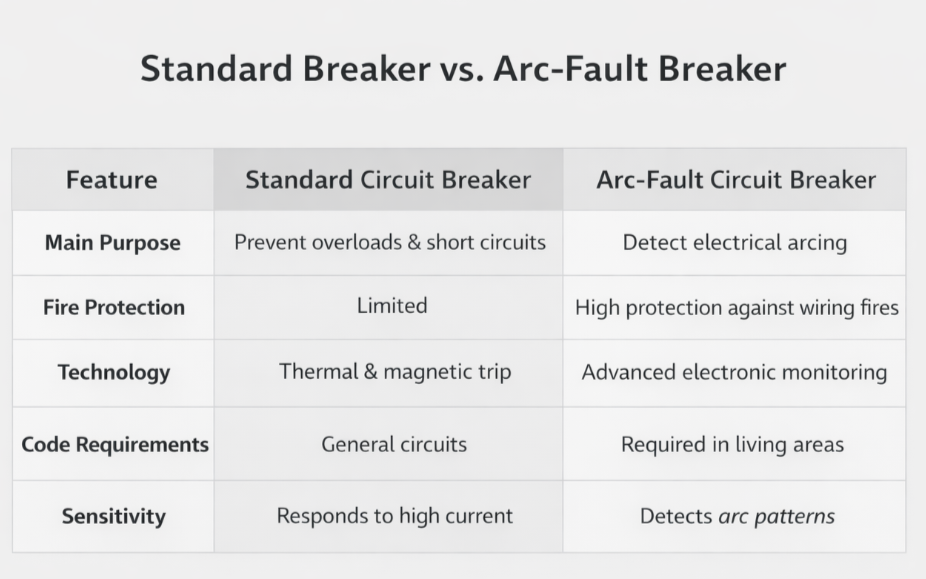
Because of their sensitivity, arc-fault breakers may trip more frequently than standard breakers. However, this sensitivity is intentional and designed to protect homes from hidden wiring hazards.
Why AFCI Breakers Are Required in Modern Homes
Electrical safety codes have evolved to address common causes of residential fires. Studies have shown that damaged or deteriorating wiring is responsible for many electrical fires in homes. To reduce this risk, electrical codes introduced arc-fault protection.
Today, most living areas in new homes must include AFCI protection. These breakers are designed to detect wiring problems before they lead to overheating or fire.
Modern code requirements typically include arc-fault protection for circuits serving:
-
Bedrooms
-
Living rooms
-
Dining rooms
-
Family rooms
-
Closets
-
Hallways
For homeowners in Lakeland, this means newer homes or remodeled electrical systems will likely include AFCI breakers in the electrical panel. While occasional trips are normal, frequent tripping often indicates a problem with the circuit, wiring, or connected devices.
Understanding these breakers is the first step toward proper arc-fault breaker troubleshooting in Lakeland homes.
Signs Your Arc-Fault Breaker Needs Troubleshooting
Arc-fault breakers are designed to trip when they detect unsafe electrical conditions. A single trip may happen occasionally and may not be a serious issue. However, repeated tripping usually indicates a problem that needs attention.
Recognizing the warning signs early can help prevent electrical damage or fire risks. Below are the most common situations that suggest your arc-fault breaker needs troubleshooting.
Breaker Trips Repeatedly
One of the most common signs is a breaker that keeps tripping after being reset.
You may notice a pattern such as:
-
The breaker trips several times a day
-
It resets but shuts off again after a short time
-
It trips during normal use of outlets or lights
This often indicates a wiring issue or a device on the circuit that is creating electrical arcing. Repeated tripping should not be ignored. The breaker is likely detecting a condition that could lead to overheating.
Breaker Trips When Certain Appliances Are Used
Sometimes the breaker trips only when a specific appliance turns on. Common appliances that may trigger arc-fault breakers include:
-
Vacuum cleaners
-
Treadmills
-
Hair dryers
-
Space heaters
-
Power tools
These devices contain motors that can produce electrical noise or small arcs. Older appliances or damaged cords can make the problem worse. If the breaker trips every time a particular device is used, that appliance may be the source of the issue.
Breaker Trips Immediately After Reset
Another warning sign is when the breaker trips as soon as you turn it back on. This situation usually indicates a more serious electrical issue, such as:
-
A short circuit in the wiring
-
Damaged insulation on cables
-
A faulty outlet or switch
-
A defective breaker
If the breaker trips instantly, avoid resetting it repeatedly. Continuous resetting can stress the electrical system and increase safety risks.
Breaker Trips Even When Nothing Is Plugged In
In some cases, the breaker may trip even when all devices are unplugged from the circuit. This usually suggests a problem within the electrical wiring itself. Possible causes include:
-
Loose electrical connections
-
Damaged wires behind walls
-
Worn outlets or switches
-
Moisture affecting electrical boxes
Because these issues are hidden, professional inspection may be required to locate the fault.
Lights Flicker Before the Breaker Trips
Flickering lights can also indicate electrical instability within the circuit. You may notice:
-
Lights dimming briefly
-
Flickering before the breaker shuts off
-
Intermittent power loss in outlets
These symptoms often point to loose wiring connections or overloaded circuits. Addressing these warning signs early can prevent more serious electrical problems later.
Common Causes of Arc-Fault Breaker Trips
Understanding the root cause of a breaker trip is the most important step in solving the problem. Arc-fault breakers respond to electrical patterns that suggest unsafe conditions, but those patterns can come from several sources. Some causes are simple, while others require professional repair.
Damaged or Aging Electrical Wiring
Wiring naturally wears down over time. Insulation may crack, and cables may become exposed. This damage can allow electricity to jump between conductors, creating an arc. Common causes of wiring damage include:
-
Aging insulation
-
Rodent damage
-
Nails or screws piercing wires
-
Poor installation during past renovations
Older homes in Lakeland may be more likely to experience these issues.
Loose Electrical Connections
Loose wiring connections are a frequent cause of arc faults. These problems often occur in:
-
Wall outlets
-
Light switches
-
Junction boxes
-
Electrical panels
When wires are not tightly secured, electricity may jump across small gaps. This creates heat and intermittent arcing. Signs of loose connections may include:
-
Warm outlets
-
Buzzing sounds
-
Flickering lights
Faulty Appliances or Electronics
Sometimes the breaker trips because of a defective device rather than a wiring problem. Appliances with worn cords or internal electrical faults can produce small arcs. Common culprits include:
-
Old lamps
-
Damaged extension cords
-
Worn power tools
-
Aging kitchen appliances
Replacing or repairing the appliance usually resolves the issue.
Overloaded Electrical Circuits
An overloaded circuit occurs when too many devices draw power from the same breaker. While arc-fault breakers are designed to detect arcs, they also respond to irregular electrical patterns caused by overloaded circuits. Signs of overload include:
-
Multiple power strips connected together
-
Extension cords powering several devices
-
Appliances and electronics sharing the same outlet
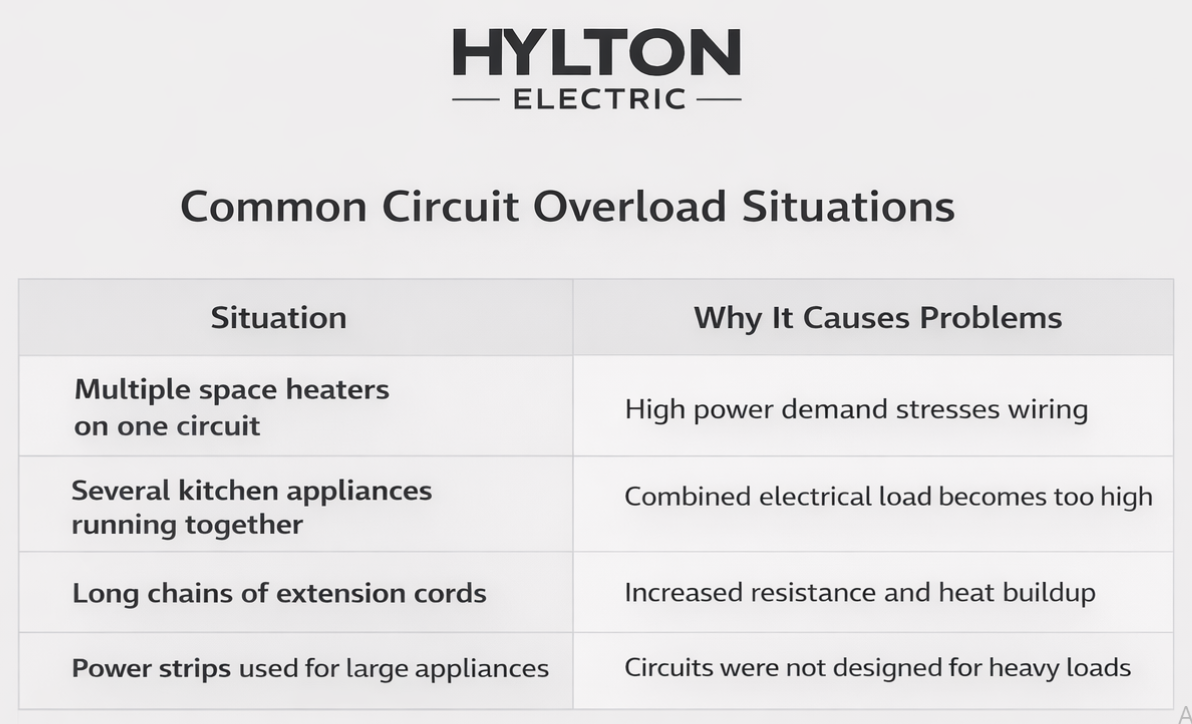
The following table shows common examples of circuit overload situations.
Shared Neutral Wiring Issues
Some electrical systems use multi-wire branch circuits, where two circuits share the same neutral wire. If these circuits are not properly balanced, the arc-fault breaker may detect irregular current patterns and trip. This issue often appears in older electrical systems or improper installations. An electrician can inspect the wiring and correct the imbalance if needed.
Moisture or Dust in Outlets
Environmental factors can also affect electrical circuits. Moisture, humidity, or dust buildup can create conductive paths that trigger arc-fault protection. This problem is more common in areas such as:
-
Kitchens
-
Bathrooms
-
Garages
-
Outdoor outlets
Cleaning or replacing affected outlets may resolve the issue.
Step-by-Step Arc-Fault Breaker Troubleshooting
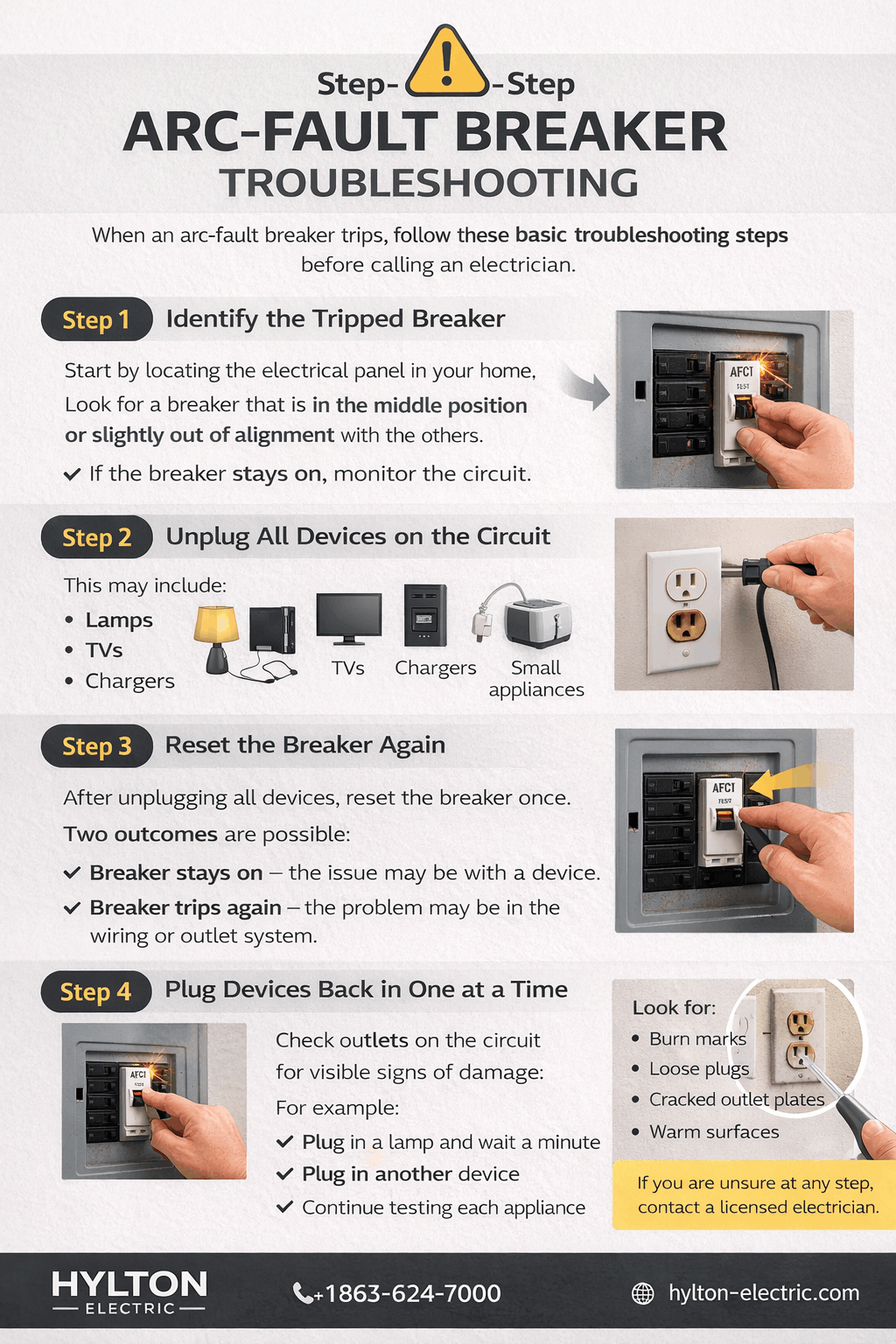
When an arc-fault breaker trips, homeowners can follow a few basic troubleshooting steps before calling an electrician. These steps help identify whether the issue is related to a device, an overloaded circuit, or the electrical wiring itself.
Always use caution when working near electrical panels. If you are unsure about any step, it is best to contact a licensed electrician.
Step 1: Identify the Tripped Breaker
Start by locating the electrical panel in your home. Look for a breaker that is in the middle position or slightly out of alignment with the others.
To reset it properly:
-
Push the breaker fully to the OFF position
-
Then switch it back to the ON position
If the breaker stays on, monitor the circuit to see if the issue returns.
Step 2: Unplug All Devices on the Circuit
Next, unplug everything connected to outlets on that circuit.
This may include:
-
Lamps
-
TVs
-
Chargers
-
Small appliances
Removing all devices helps isolate whether the problem is caused by a specific appliance.
Step 3: Reset the Breaker Again
After unplugging all devices, reset the breaker once more.
Two outcomes are possible:
-
Breaker stays on — the issue may be with a device.
-
Breaker trips again — the problem may be in the wiring or outlet system.
Step 4: Plug Devices Back in One at a Time
Reconnect each device slowly and observe the breaker.
For example:
-
Plug in a lamp and wait a minute
-
Plug in another device
-
Continue testing each appliance
If the breaker trips when a specific device is connected, that device is likely faulty.
Step 5: Inspect Outlets and Switches
Check outlets on the circuit for visible signs of damage.
Look for:
-
Burn marks
-
Loose plugs
-
Cracked outlet plates
-
Warm surfaces
If you notice any of these signs, avoid using the outlet until it has been inspected or replaced.
Step 6: Consider Professional Electrical Testing
If the breaker continues to trip after basic troubleshooting, a professional electrician may need to investigate further. Electricians often use specialized diagnostic tools to locate hidden wiring problems.
Why New Arc-Fault Breakers Trip More Often
Many homeowners in Lakeland notice that new arc-fault breakers trip more often than older breakers. This can feel frustrating at first. However, the increased sensitivity is part of their design.
Modern AFCI breakers use advanced electronic monitoring to detect small electrical irregularities. Even minor arcing patterns can cause the breaker to shut off power.
While this may seem inconvenient, it provides better protection against electrical fires. Several factors explain why newer arc-fault breakers may trip more frequently.
Increased Sensitivity to Electrical Patterns
Modern AFCI breakers monitor the electrical waveform in real time. They detect small arc signatures that older breakers would ignore. This sensitivity allows the breaker to respond to:
-
Loose wiring connections
-
Damaged insulation on cables
-
Frayed appliance cords
-
Early stages of electrical arcing
Because these breakers are designed to detect subtle changes in current flow, they may trip before a homeowner notices any other sign of a problem.
Older Wiring Systems in Homes
Some Lakeland homes were built before arc-fault breakers became common. Older wiring systems may not always work smoothly with modern AFCI technology. Common issues in older electrical systems include:
-
Worn insulation on wires
-
Loose outlet connections
-
Shared neutral wiring
-
Outdated electrical panels
When a new AFCI breaker is installed in an older home, it may detect wiring problems that previously went unnoticed. This does not mean the breaker is defective. In most cases, it reveals an existing electrical issue.
Appliance Compatibility Issues
Some appliances can create electrical signals that resemble arc patterns. Motors and older electronics are often responsible. Devices that sometimes trigger arc-fault breakers include:
-
Vacuum cleaners
-
Treadmills
-
Laser printers
-
Older refrigerators
-
Power tools
If a breaker trips when a specific appliance is used, the appliance may be producing electrical noise or internal arcing. Replacing worn appliances or damaged cords often solves the issue.
Troubleshooting Arc-Fault Breakers in Older Lakeland Homes
Older homes can present unique electrical challenges. Wiring systems installed decades ago may not meet modern safety standards. When arc-fault breakers are added to these homes, they sometimes reveal hidden problems. Common electrical issues found in older Lakeland homes include:
-
Outdated wiring systems
-
Overloaded circuits
-
Shared neutral wires
-
Loose connections in junction boxes
Many homes built before modern electrical codes were designed for fewer electrical devices. Today’s households use more electronics, which places greater demand on the system.
In some cases, troubleshooting may uncover wiring that needs repair or replacement. Signs that an older home may need electrical upgrades include:
-
Breakers tripping frequently
-
Lights flickering or dimming
-
Warm outlets or switches
-
Limited number of outlets per room
Addressing these problems may involve simple repairs or larger upgrades. Possible electrical improvements include:
-
Installing dedicated circuits for large appliances
-
Replacing outdated wiring
-
Upgrading the electrical panel
-
Replacing worn outlets and switches
These upgrades help modernize the electrical system and reduce arc-fault breaker trips.
When to Call an Electrician in Lakeland
Basic troubleshooting can solve some arc-fault breaker problems. However, certain situations require professional help. Electrical systems can be complex, and hidden wiring problems may pose safety risks. Contact a licensed electrician if you notice any of the following conditions.
Breaker Trips With Nothing Connected
If the breaker trips even when all devices are unplugged, the issue likely involves the wiring. Possible causes include:
-
Damaged wires inside the walls
-
Loose connections in junction boxes
-
Faulty outlets
An electrician can inspect the circuit and locate the fault safely.
Burning Smell or Warm Electrical Devices
A burning smell or warm outlet should always be taken seriously. These symptoms may indicate:
-
Overheating wiring
-
Electrical arcing
-
Loose electrical connections
Turn off the circuit immediately and contact a professional electrician.
Breaker Will Not Reset
Sometimes the breaker refuses to stay on even after resetting. This may happen if there is:
-
A short circuit
-
Severe wiring damage
-
A defective breaker
Repeatedly forcing the breaker on can damage the system or increase fire risk.
Multiple Circuits Begin Tripping
If several breakers begin tripping at the same time, the problem may be located in the electrical panel. Potential causes include:
-
Panel overload
-
Electrical surge damage
-
Faulty breakers
A licensed electrician can inspect the panel and determine whether repairs or upgrades are necessary.
How Electricians Diagnose Arc-Fault Breaker Problems
Professional electricians use specialized tools to locate electrical faults quickly. These tools help identify hidden wiring problems without damaging walls or ceilings. The diagnostic process usually begins with a detailed inspection of the electrical panel and the affected circuit.
Electricians may test:
-
Circuit connections
-
Outlet wiring
-
Electrical loads on the circuit
-
Insulation integrity of wires
Several tools help speed up this process.
Using these tools allows electricians to pinpoint the cause of the breaker trip and recommend the safest repair.
Preventing Future Arc-Fault Breaker Trips
Once the cause of the problem has been resolved, a few simple steps can help prevent future breaker trips. Maintaining your home’s electrical system reduces stress on circuits and lowers the risk of electrical hazards.
Avoid Overloading Circuits
Too many devices on one circuit can create unstable electrical conditions. Try to distribute appliances across multiple outlets or circuits. Avoid plugging several high-power devices into the same outlet or power strip.
Replace Damaged Cords and Devices
Damaged cords can create small electrical arcs that trigger AFCI breakers. Inspect cords regularly and replace them if you notice:
-
Cracks in insulation
-
Frayed wires
-
Loose plugs
Replacing worn cords is a simple way to improve electrical safety.
Upgrade Older Electrical Systems
Homes with outdated wiring systems may benefit from electrical upgrades.
Common improvements include:
-
Installing additional circuits
-
Upgrading electrical panels
-
Replacing outdated wiring
These upgrades help modern electrical systems handle today’s power demands.
Schedule Regular Electrical Inspections
Routine electrical inspections help identify problems early. Homeowners should consider professional inspections:
-
Every 5 to 10 years
-
Before purchasing a home
-
After major renovations
Regular inspections help ensure that wiring, outlets, and breakers continue to operate safely.
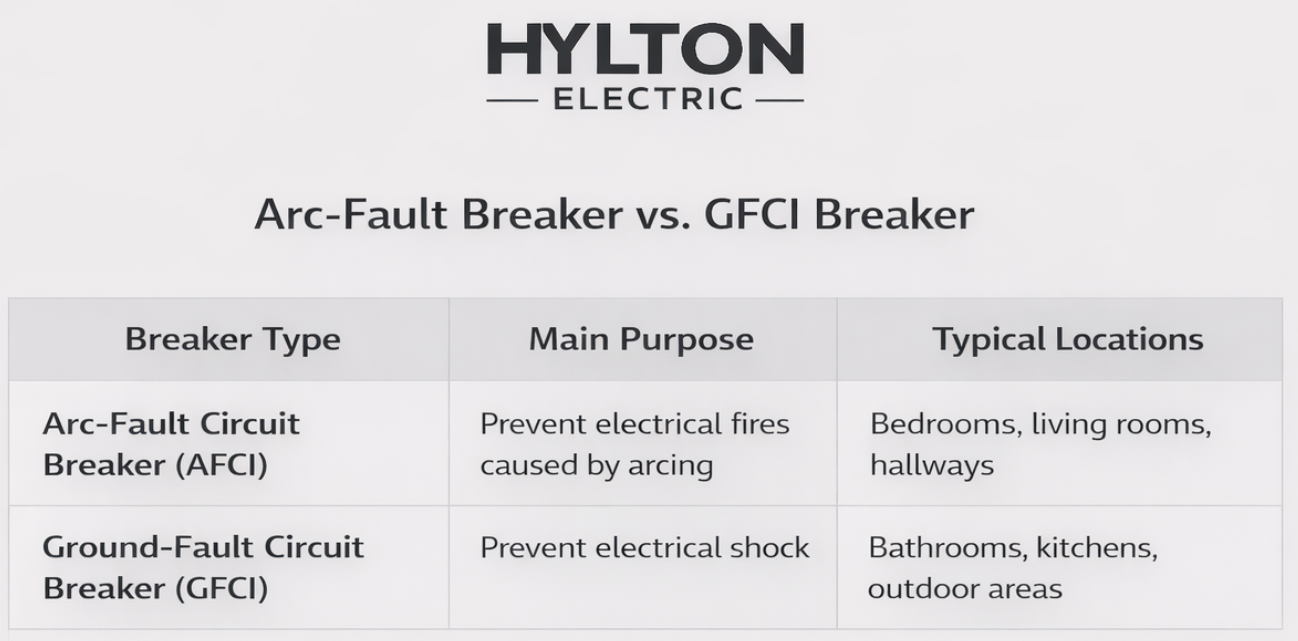
Arc-Fault Breaker vs GFCI Breaker
Arc-fault breakers and GFCI breakers both improve electrical safety, but they serve different purposes. Understanding the difference helps homeowners recognize why both types may exist in the electrical panel.
AFCI breakers protect wiring from fire hazards, while GFCI breakers protect people from electric shock. Both are important parts of modern electrical safety systems.
Cost to Fix Arc-Fault Breaker Issues in Lakeland
The cost of repairing an arc-fault breaker issue depends on the underlying problem. Simple fixes are often affordable, while larger electrical repairs may cost more.
Common repair costs may include:
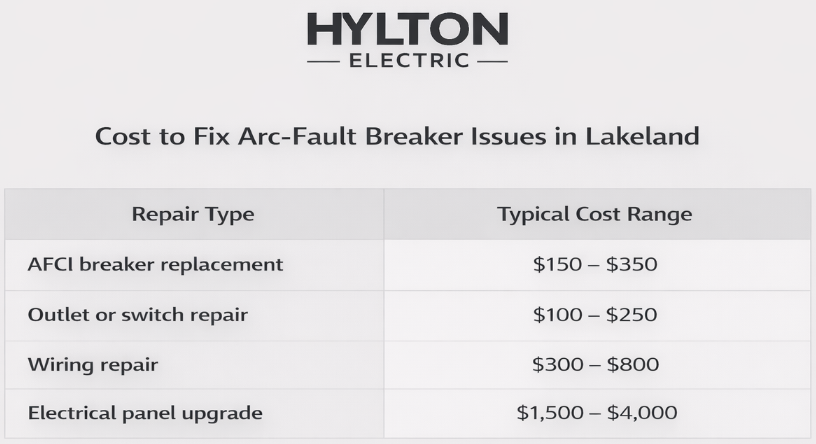
These estimates may vary depending on the home’s electrical system and the complexity of the repair. Hiring a licensed electrician ensures the work meets safety standards and local codes.
Final Thoughts on Arc-Fault Breaker Troubleshooting in Lakeland
Arc-fault breakers are designed to protect your home from hidden electrical dangers. While occasional trips can happen, repeated tripping is often a sign that something in the circuit needs attention. It could be a worn appliance, a loose connection, or aging wiring behind the walls.
Simple troubleshooting steps can sometimes identify the problem. However, electrical systems can be complex, and guessing the cause is never the safest option. When breakers continue to trip, it is best to have a licensed electrician inspect the circuit and resolve the issue properly.
If you’re dealing with frequent breaker trips or need help with arc-fault breaker troubleshooting in Lakeland, the team at Hylton Electric is ready to help. We work with homeowners and businesses across Lakeland to diagnose electrical problems, repair wiring issues, and ensure your home’s electrical system runs safely.
Give us a call or send a quick email, and we’ll help you get your power system back on track.
- Phone: +1 863-624-7000
- Email: ray@hylton-electric.com
FAQs About Arc-Fault Breaker Troubleshooting
What causes an arc-fault breaker to trip?
Arc-fault breakers trip when they detect unusual electrical patterns that suggest arcing in a circuit. Electrical arcs occur when electricity jumps across loose or damaged wiring connections. These arcs can create heat and increase fire risk.
Common causes include:
-
Loose wiring connections
-
Damaged appliance cords
-
Overloaded circuits
-
Worn outlets or switches
-
Aging electrical wiring
While occasional trips may happen, repeated tripping usually means the circuit needs inspection or repair.
Why does my arc-fault breaker keep tripping?
Frequent tripping usually indicates an issue somewhere in the electrical circuit. The breaker may be detecting unsafe electrical activity that could lead to overheating or fire.
Possible reasons include:
-
Faulty appliances plugged into the circuit
-
Loose wiring behind outlets or switches
-
Damaged cords or electronics
-
Shared neutral wiring problems
If the breaker trips repeatedly after resetting, it’s best to stop using the circuit and have an electrician inspect the system.
How do I reset an arc-fault breaker?
Resetting an arc-fault breaker is simple, but it must be done correctly.
Follow these steps:
-
Locate the electrical panel.
-
Find the breaker that has moved to the middle position.
-
Push the breaker fully to OFF first.
-
Then switch it back to ON.
If the breaker immediately trips again, unplug devices connected to the circuit before resetting it again.
Can a faulty appliance trip an arc-fault breaker?
Yes, faulty appliances are a common reason for arc-fault breaker trips. Appliances with damaged cords or internal electrical faults can create small arcs that the breaker detects.
Examples of appliances that sometimes cause this include:
-
Vacuum cleaners
-
Treadmills
-
Space heaters
-
Old lamps
-
Power tools
If the breaker trips every time a specific device is used, unplug the device and test the circuit again.
Are arc-fault breakers more sensitive than standard breakers?
Yes. Arc-fault breakers are designed to be more sensitive because they detect electrical arcing, not just high current levels.
Standard breakers respond mainly to:
-
Overloads
-
Short circuits
Arc-fault breakers monitor electrical wave patterns and detect early signs of wiring problems. This added sensitivity improves fire protection but may cause trips when irregular electrical signals are detected.
Is it normal for a new arc-fault breaker to trip?
New arc-fault breakers can sometimes trip more often than older breakers. This is usually because modern breakers are better at detecting small electrical irregularities.
In many cases, the breaker is identifying an existing problem, such as:
-
Loose wiring connections
-
Outdated electrical components
-
Faulty appliances
The breaker itself is usually functioning properly and protecting the circuit from potential hazards.
What should I do if my arc-fault breaker trips repeatedly?
If a breaker trips repeatedly, start by unplugging all devices connected to the circuit. Reset the breaker and then plug devices back in one at a time. This process helps identify whether the problem is caused by a specific appliance.
If the breaker still trips with no devices connected, the issue may involve wiring or outlets. In this case, a professional inspection is recommended.
Can arc-fault breakers wear out over time?
Like any electrical component, arc-fault breakers can eventually wear out. Over time, internal parts may degrade or become less reliable.
Signs that a breaker may be failing include:
-
Frequent tripping without a clear cause
-
Breaker not staying in the ON position
-
Breaker feeling loose in the panel
If a breaker appears faulty, a licensed electrician can test and replace it if necessary.
What appliances commonly trip AFCI breakers?
Some appliances produce electrical signals that resemble arc patterns. When this happens, the breaker may trip even though the device is functioning normally.
Appliances that sometimes trigger AFCI breakers include:
-
Vacuum cleaners
-
Treadmills
-
Laser printers
-
Hair dryers
-
Power tools
If the issue occurs regularly, the appliance may need repair or replacement.
Can I replace an arc-fault breaker with a standard breaker?
Replacing an arc-fault breaker with a standard breaker is generally not recommended. Arc-fault protection is required by modern electrical codes in many areas of the home.
Removing this protection may:
-
Reduce fire safety
-
Violate local electrical codes
-
Increase risk of wiring damage
If the breaker trips frequently, the correct solution is to diagnose the cause rather than replacing it with a different type.
Why does my breaker trip even when nothing is plugged in?
If the breaker trips with no devices connected, the issue likely involves the electrical wiring.
Possible causes include:
-
Loose wires behind outlets
-
Damaged cables inside the walls
-
Faulty switches or junction boxes
-
Moisture in electrical boxes
Because these problems are hidden, a professional electrician may need to inspect the circuit to locate the source.
What is the difference between AFCI and GFCI breakers?
Both AFCI and GFCI breakers improve electrical safety, but they protect against different risks.
AFCI breakers:
-
Detect electrical arcing
-
Prevent wiring fires
GFCI breakers:
-
Detect ground faults
-
Protect against electric shock
AFCI breakers are usually installed in living spaces, while GFCI breakers are common in bathrooms, kitchens, and outdoor outlets.
Do older homes have arc-fault breakers?
Many older homes were built before arc-fault protection became part of electrical codes. As a result, they may still use standard breakers.
When electrical panels are upgraded or homes are renovated, arc-fault breakers are often added to meet modern safety standards.
Installing AFCI protection can significantly reduce the risk of electrical fires in older wiring systems.
How do electricians troubleshoot arc-fault breaker problems?
Electricians use several diagnostic tools to identify the source of breaker trips.
These may include:
-
Circuit tracers to follow wiring paths
-
Thermal cameras to detect overheating wires
-
Insulation testers to check the wire condition
-
Load testers to measure circuit capacity
These tools help locate hidden faults quickly and safely without damaging walls or ceilings.
Can loose wiring cause arc-fault breaker trips?
Yes. Loose wiring connections are one of the most common causes of arc faults.
Loose wires create small gaps where electricity can jump between conductors. This produces heat and irregular electrical signals.
Common locations where loose wiring occurs include:
-
Wall outlets
-
Light switches
-
Junction boxes
-
Electrical panels
Tightening or repairing these connections usually resolves the problem.
Can moisture cause arc-fault breaker trips?
Moisture can affect electrical circuits and sometimes trigger arc-fault breakers. Water or humidity can create conductive paths between wires.
Areas where this problem may occur include:
-
Bathrooms
-
Kitchens
-
Garages
-
Outdoor outlets
If moisture enters electrical boxes, outlets may need cleaning or replacement to restore proper operation.
How much does it cost to fix an arc-fault breaker issue?
The cost depends on the cause of the problem.
Typical repair costs may include:
-
AFCI breaker replacement: $150–$350
-
Outlet or switch repair: $100–$250
-
Wiring repair: $300–$800
-
Electrical panel upgrade: $1,500–$4,000
An electrician can provide a more accurate estimate after inspecting the circuit.
Can overloaded circuits trip arc-fault breakers?
Yes. When too many devices draw power from the same circuit, it can create unstable electrical conditions.
Common signs of circuit overload include:
-
Frequent breaker trips
-
Warm outlets
-
Flickering lights
Reducing the number of devices on the circuit or installing additional circuits can help prevent overload issues.
When should I call an electrician for breaker problems?
Some breaker trips can be solved with simple troubleshooting. However, certain situations require professional help.
Call an electrician if:
-
The breaker trips immediately after resetting
-
There is a burning smell near outlets
-
Lights flicker frequently
-
Multiple breakers begin tripping
Professional inspection ensures the electrical system remains safe and code-compliant.
Who should I contact for arc-fault breaker troubleshooting in Lakeland?
If you are dealing with repeated breaker trips or electrical issues, it’s best to contact a licensed electrician with experience in residential electrical systems.
A professional electrician can:
-
Inspect wiring and outlets
-
Test the circuit for hidden faults
-
Replace damaged breakers or wiring
For reliable arc-fault breaker troubleshooting in Lakeland, homeowners can contact Hylton Electric to diagnose and repair the problem safely.
Leave a Reply