
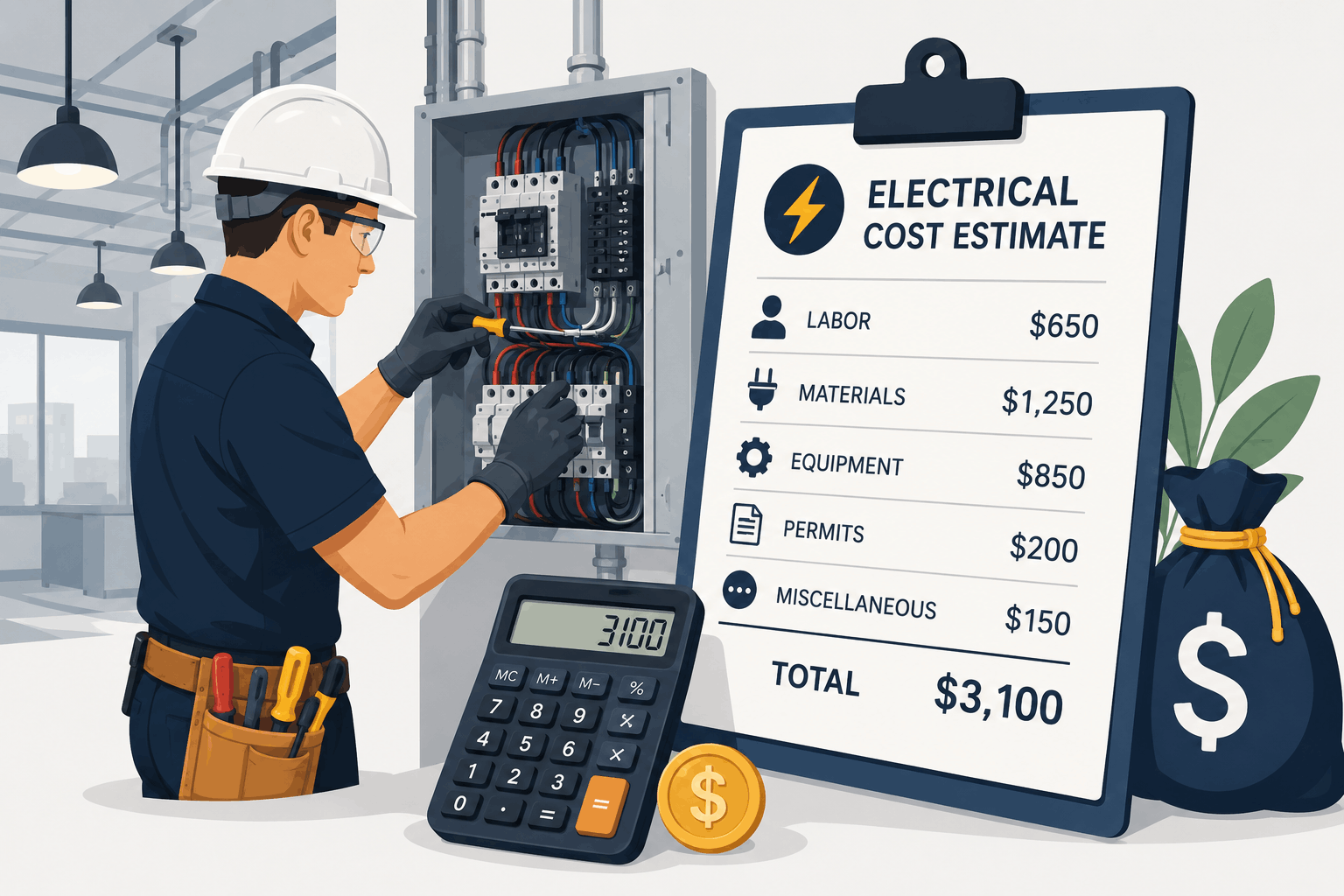
Commercial Electrician Lakeland FL: 2026 Contractor Fee Guide
If you own or manage a business, electrical work is something you cannot ignore. Whether you need a simple repair, a panel upgrade, new lighting, or a complete electrical installation, one of the first questions you will ask is:
For larger projects, the total cost can be much higher. Commercial electrical upgrades, generator installations, office renovations, warehouse wiring, and industrial electrical projects can cost several thousand dollars and sometimes exceed $10,000, depending on the scope of work. Costs can vary widely—especially for items like commercial generator installation cost or a commercial electrical panel upgrade cost—so clear estimates matter.
That may seem like a wide price range, but there is a good reason for it. Every commercial property is different. A small retail store has very different electrical needs than a restaurant, office building, medical facility, warehouse, or manufacturing plant. Because of these differences, most commercial electrical contractors provide custom estimates instead of fixed pricing.
At Hylton Electric LLC, we help businesses throughout Lakeland, Tampa, Polk County, and the Greater Tampa Area understand their options before work begins. We also perform electrical installation Lakeland businesses rely on, from new construction to tenant improvements. As a commercial electrical contractor Lakeland businesses trust, we provide free estimates and back our work with a lifetime workmanship warranty, giving business owners confidence that the job will be done correctly.
- Quick Answer: What Do Commercial Electric Contractors Charge in Lakeland?
- Why Commercial Electrical Costs Vary So Much
- Commercial Electrical Cost Calculator
- Is It Better to Choose the Cheapest Electrical Contractor?
- Commercial Electrical Problems You Should Never Ignore
- Understanding Florida Electrical Codes and Compliance
- Why Businesses Choose Hylton Electric LLC
- Trusted by Businesses & Homeowners Across Central Florida
- The Hylton Electric Process
- Service Areas We Proudly Serve
- Frequently Asked Questions
Quick Answer: What Do Commercial Electric Contractors Charge in Lakeland?
- Most businesses in Lakeland can expect commercial electrical labor rates to fall between $75 and $150+ per hour . Service calls commonly start between $150 and $500, while larger commercial projects can range from a few thousand dollars to $10,000 or more.
- The final price depends on several factors, including:
- Type of electrical work needed
- Size of the building
- Number of electricians required
- Equipment and materials
- Permit requirements
- Inspection costs
- Emergency service needs
- Complexity of the project
- The best way to get accurate pricing is through an on-site evaluation from a licensed commercial electrical contractor. Need a quote from a commercial electrician Lakeland FL businesses trust? Call Hylton Electric LLC at +1 863-624-7000 for a free estimate.
Why Commercial Electrical Costs Vary So Much
- Many business owners are surprised when they receive different estimates from different contractors. However, commercial electrical work is rarely a one-size-fits-all service.
- Think about it this way. Replacing a damaged breaker in a small office may only take a short visit. On the other hand, upgrading the electrical system in a warehouse or installing backup power for a healthcare facility requires much more planning, labor, and equipment. Several factors affect commercial electrical pricing.
Labor Costs
- Labor is usually one of the biggest parts of any commercial electrical project.
- Commercial electricians work on more complex systems than residential electricians. They often deal with larger electrical panels, three-phase power systems, commercial lighting controls, backup generators, and specialized equipment.
- Labor costs depend on:
- Project size
- System complexity
- Number of electricians needed
- Time required to complete the work
- Accessibility of electrical equipment
- After-hours or emergency scheduling
- A project that takes one electrician a few hours will naturally cost less than a project requiring a crew working over several days.
Material Costs
- The materials used in a commercial electrical project can have a major impact on the final cost.
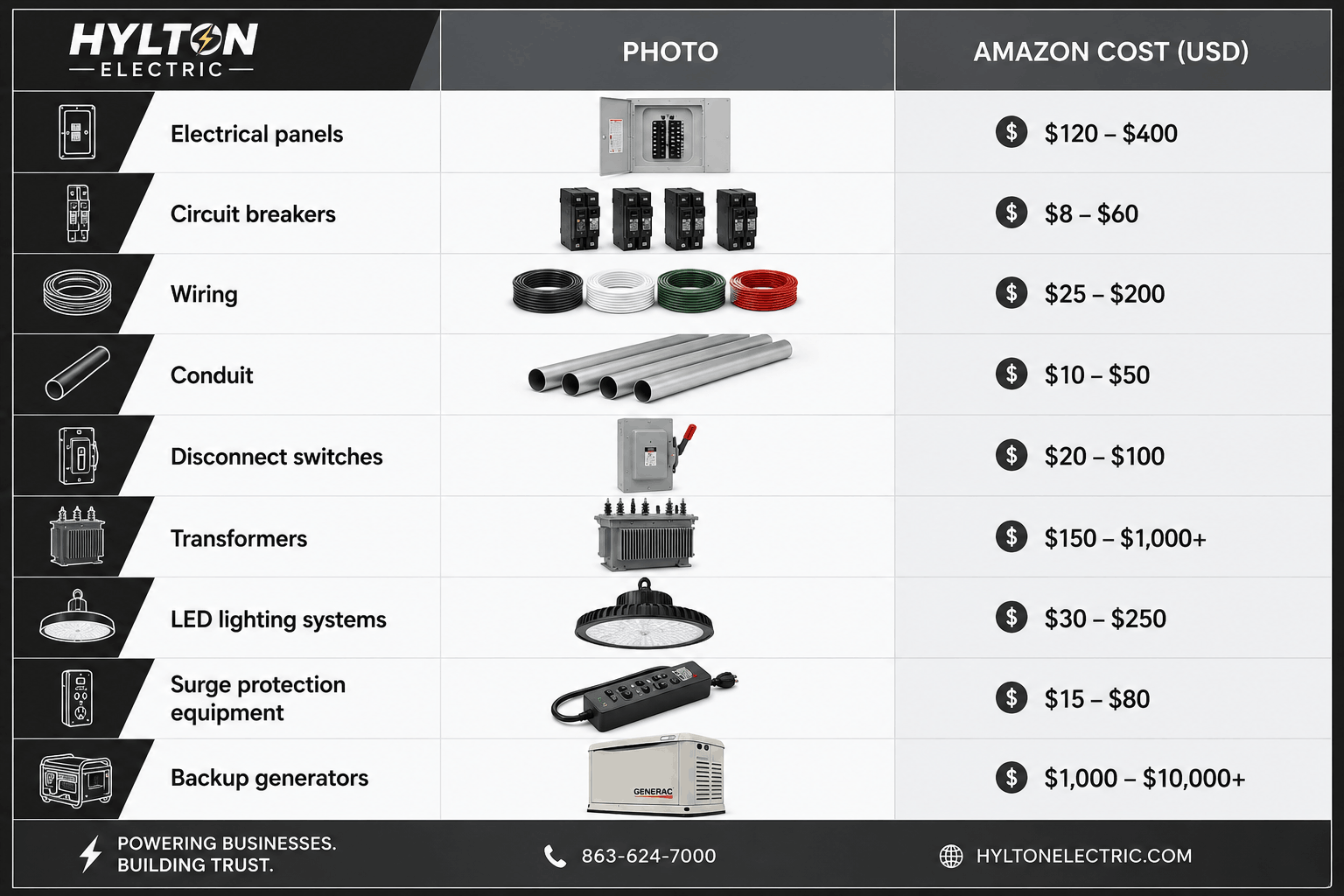
- Some common materials include:
- Electrical panels
- Circuit breakers
- Wiring
- Conduit
- Disconnect switches
- Transformers
- LED lighting systems
- Surge protection equipment
- Backup generators
- Material prices change over time based on market conditions and product availability. In many cases, businesses choose higher-quality equipment because it offers better performance and a longer lifespan.
- While premium equipment may cost more upfront, it can often save money in the long run through improved reliability and lower maintenance costs
Permit and Inspection Fees
- Many commercial electrical projects require permits and inspections. These requirements help ensure that electrical work meets safety standards and local building codes.
- Permit requirements often apply to:
- Electrical panel upgrades
- Service upgrades
- Generator installations
- Commercial renovations
- New construction projects
- Major electrical modifications
- Understanding commercial generator installation cost and the potential range for commercial electrical panel upgrade cost during planning can help set a realistic budget.
- Permit and inspection costs vary depending on the scope of work, but they are an important part of many commercial electrical projects.
Emergency Electrical Service
- Electrical emergencies can happen without warning. A power outage, overheated panel, equipment failure, or electrical fault can quickly disrupt business operations. In some cases, every hour of downtime can mean lost revenue.
- Emergency electrical services often cost more than scheduled appointments because they require immediate response and may involve after-hours work. However, addressing problems quickly can prevent larger repairs and reduce downtime costs.
Building Age and Existing Electrical Conditions
- Older commercial buildings often have hidden electrical challenges. Some properties may have outdated wiring, aging panels, insufficient electrical capacity, or systems that no longer meet current code requirements.
- During an inspection, electricians may discover issues that need to be corrected before additional work can be completed safely. This is one reason why professional site evaluations are so important. They help identify potential issues before they become costly surprises.
Is It Better to Choose the Cheapest Electrical Contractor?
- When comparing estimates, it can be tempting to choose the lowest price. However, the cheapest option is not always the best value.
- A low bid may not include:
- Quality materials
- Proper permits
- Thorough inspections
- Warranty coverage
- Future system planning
- Long-term reliability
- Electrical systems are critical to business operations. Poor workmanship can lead to equipment failures, safety hazards, code violations, and expensive repairs later.
- Instead of focusing only on price, business owners should also consider:
- Licensing and insurance
- Experience with commercial projects
- Reputation
- Response time
- Communication
- Warranty protection
- Quality of workmanship
- The goal is not simply to spend less today. The goal is to invest in reliable electrical work that supports your business for years to come.
Commercial Electrical Problems You Should Never Ignore
- Electrical systems rarely fail without warning. In many cases, businesses notice small signs of trouble long before a major problem occurs. The challenge is that these warning signs are often ignored because the building is still operating. Unfortunately, delaying repairs can lead to equipment damage, safety risks, lost productivity, and more expensive repairs later.
- Here are some of the most common electrical problems that should be checked by a commercial electrician as soon as possible.
Frequent Breaker Trips
- Circuit breakers are designed to protect your electrical system. If a breaker trips once, it may not be a major concern. However, if the same breaker trips repeatedly, there is usually an underlying issue.
- Possible causes include:
- Overloaded circuits
- Faulty equipment
- Damaged wiring
- Electrical panel problems
- Ground faults
- Repeated breaker trips should never be considered normal. They are often a sign that the electrical system needs professional attention.
Flickering or Dimming Lights
- Lights that flicker or dim regularly can indicate several electrical issues.
- Common causes include:
- Loose electrical connections
- Circuit overloads
- Voltage fluctuations
- Aging electrical components
- Insufficient electrical capacity
- If lights dim when machinery starts, or large equipment turns on, your building may be demanding more power than the system can comfortably handle.
Burning Smells Near Electrical Equipment
- A burning smell is one of the most serious warning signs. Electrical components should never produce a burning odor.
- Possible causes include:
- Overheated wiring
- Loose electrical connections
- Damaged insulation
- Overloaded circuits
- Failing breakers
- If you notice a burning smell coming from a panel, outlet, switch, or piece of equipment, contact a qualified electrician immediately.
Warm Outlets or Electrical Panels
- Electrical equipment should not become excessively hot during normal operation.
- Warm outlets, switches, or panels may indicate:
- Loose connections
- Excessive electrical load
- Internal equipment failure
- Wiring problems
- Ignoring these warning signs can increase the risk of equipment damage or electrical fires.
Unexpected Equipment Shutdowns
- Many businesses rely on electrical equipment every day.
- Unexpected shutdowns can affect:
- Computers
- Manufacturing equipment
- Refrigeration systems
- HVAC systems
- Security systems
- If equipment regularly loses power or shuts down unexpectedly, the electrical system should be evaluated. The problem may not be the equipment itself. In some cases, the building’s electrical system is the real cause.
Rising Energy Bills
- Many business owners focus on utility rates when energy bills increase. However, electrical inefficiencies can also contribute to higher operating costs.
- Potential causes include:
- Outdated lighting
- Aging electrical equipment
- Poor load distribution
- Inefficient electrical systems
- An electrical assessment can help identify opportunities to improve efficiency and reduce monthly energy expenses.
Understanding Florida Electrical Codes and Compliance
- Commercial electrical work is heavily regulated for a good reason. Electrical systems affect safety, building performance, and business operations. Florida has strict electrical standards that contractors must follow when performing commercial work.
Why Permits Matter
- Many commercial electrical projects require permits. These permits help ensure that electrical work is completed according to current safety standards and local regulations.
- Projects that commonly require permits include:
- Electrical panel upgrades
- Service upgrades
- Generator installations
- Major renovations
- New construction
- Large electrical modifications
- Working without the proper permits can create problems during inspections, insurance claims, and future property sales.
Why Inspections Are Important
- Electrical inspections help verify that work has been completed safely and correctly.
- Inspections can identify issues such as:
- Improper wiring
- Unsafe connections
- Overloaded circuits
- Code violations
- Equipment installation errors
- For business owners, inspections provide peace of mind that the electrical system is operating as intended.
Insurance and Liability Considerations
- Insurance companies often evaluate the condition of electrical systems when reviewing commercial properties. Outdated or unsafe electrical systems may increase risk and create complications if a claim is filed. Keeping electrical systems properly maintained can help reduce liability concerns and support safer operations.
Workplace Safety Matters
- Electrical hazards can create serious risks for employees, customers, and visitors.
- Potential hazards include:
- Electrical shocks
- Arc flashes
- Equipment failures
- Fire risks
- Routine inspections, maintenance, and repairs help create a safer work environment and reduce the likelihood of unexpected incidents.
Why Businesses Choose Hylton Electric LLC
- Choosing a commercial electrical contractor is an important decision. While price matters, experience, reliability, and quality workmanship are equally important.
- Businesses throughout Lakeland, Tampa, Polk County, and the Greater Tampa Area choose Hylton Electric LLC because we focus on delivering dependable electrical solutions that support long-term success.
Experience Across Multiple Industries
- Different businesses have different electrical needs. Our team works with a wide range of commercial and industrial facilities, including:
- Office buildings
- Retail stores
- Restaurants
- Warehouses
- Medical facilities
- Manufacturing operations
- Property management companies
- This experience allows us to recommend practical solutions that fit each customer’s goals and budget.
Free Estimates
- One of the biggest concerns for business owners is understanding project costs. That is why we provide free estimates. Before work begins, we evaluate the project, discuss your goals, and explain available options so you can make an informed decision.
Lifetime Workmanship Warranty
- A quality electrical installation should provide long-term reliability. We stand behind our work with a lifetime workmanship warranty because we believe customers deserve confidence in the services they receive.
Focus on Safety and Quality
- Electrical work is not an area where shortcuts make sense. Our goal is to complete every project safely, correctly, and according to applicable codes and industry standards. This approach helps reduce future issues and supports reliable system performance.
The Hylton Electric Process
- Many business owners want to know what happens after they contact an electrical contractor. At Hylton Electric LLC, we aim to make the process simple and straightforward.
Step 1: Initial Consultation
- Every project begins with a conversation.
- We discuss:
- The issue you are experiencing
- Project goals
- Timeline expectations
- Budget considerations
- Facility requirements
- This helps us understand the scope of the project before scheduling a site visit.
Step 2: Site Assessment
- Next, we inspect the property and evaluate the electrical system.
- During the assessment, we may review:
- Electrical panels
- Existing wiring
- Equipment connections
- Safety concerns
- Capacity requirements
- Code compliance issues
- A thorough assessment helps us provide accurate recommendations and pricing.
Step 3: Free Estimate
- After evaluating the project, we prepare a detailed estimate.
- This estimate outlines:
- Scope of work
- Material requirements
- Labor needs
- Estimated timeline
- Permit considerations
- Our goal is to provide clear information so there are no surprises later.
Step 4: Project Completion
- Once approved, our team completes the work according to industry standards and project requirements. Whether the job involves troubleshooting, upgrades, repairs, or new installations, we focus on quality workmanship from start to finish.
Step 5: Testing and Final Review
- Before completing the project, we test the system to ensure everything operates correctly and safely. This final step helps confirm that the work meets expectations and performs as intended.
Step 6: Ongoing Support
- Many of our customers continue working with us long after the original project is completed.
- We provide ongoing support for:
- Maintenance (including commercial electrical maintenance services)
- Repairs
- Future upgrades
- Troubleshooting
- Expansion projects
- Building long-term relationships is an important part of how we serve our customers.
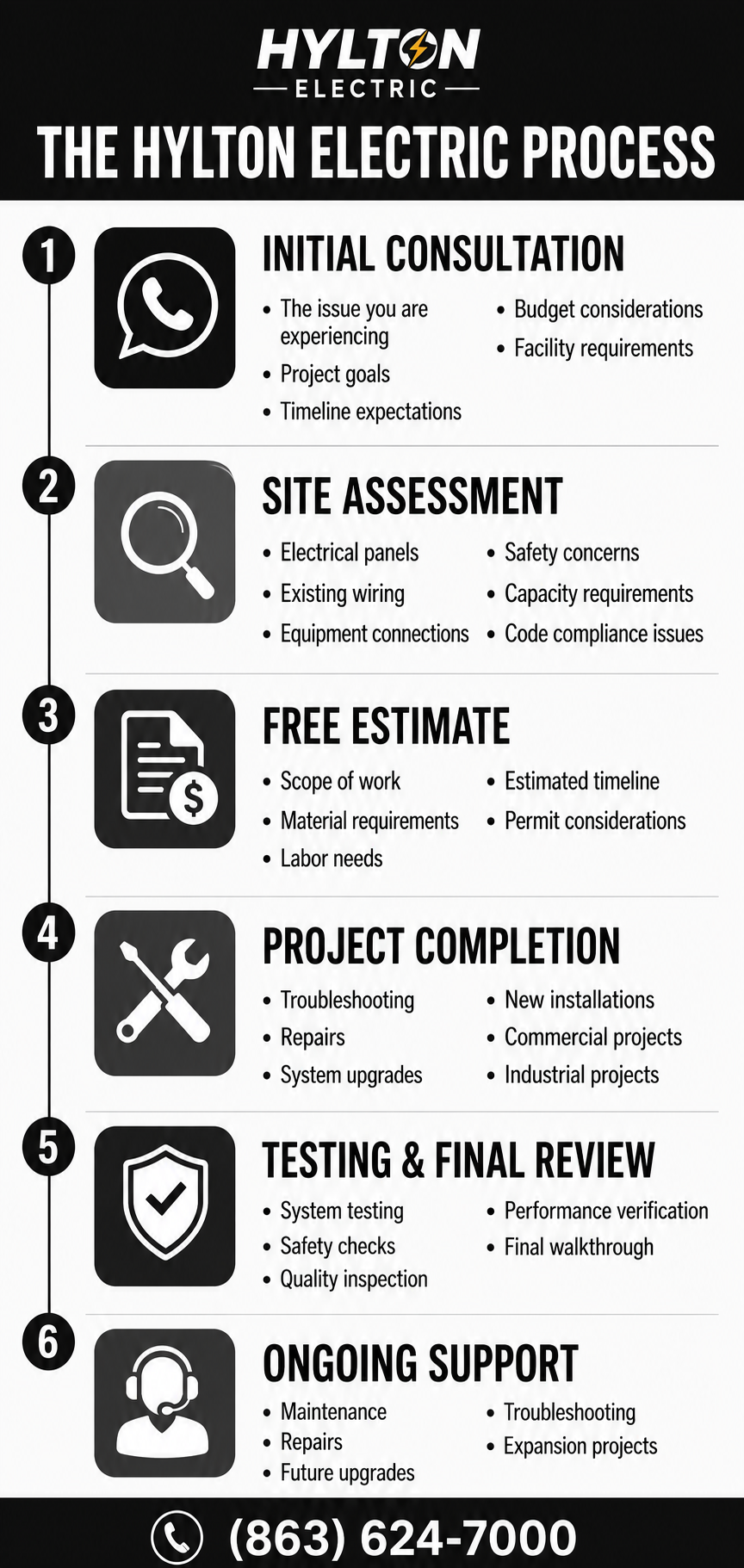 Hylton Electric’s six-step process helps businesses move from initial consultation to project completion with clear communication, accurate estimates, professional workmanship, safety testing, and long-term electrical support.
Service Areas We Proudly Serve
- Hylton Electric LLC provides commercial electrical services throughout Central Florida.
- Our service area includes:
- Lakeland
- Tampa
- Polk County
- Winter Haven
- Bartow
- Auburndale
- Plant City
- Brandon
- Greater Tampa Area
- Whether you need a small repair, a major electrical upgrade, or ongoing maintenance support, our team is ready to help. No matter the size of the project, our goal remains the same: to provide reliable electrical solutions that keep your business operating safely and efficiently.
Q&A
Question: What do commercial electricians charge in Lakeland, and what drives the price?
Short answer: Most businesses in Lakeland can expect labor rates of $75–$150+ per hour. Service calls typically start around $150–$500, while larger projects can run from a few thousand dollars to $10,000 or more. Final pricing depends on the type of work, building size, number of electricians, materials and equipment, permits and inspections, any emergency/after-hours needs, and overall project complexity. The most accurate way to price a job is an on-site evaluation by a licensed commercial contractor. Hylton Electric LLC offers free estimates at +1 863-624-7000.
Question: Why do estimates from different commercial electricians vary so much?
Short answer: Commercial electrical work isn’t one-size-fits-all. Quotes differ based on scope and system complexity (e.g., three-phase power, lighting controls, generators), material choices (standard vs. premium components), access and building conditions, crew size and scheduling (including after-hours), and permit/inspection requirements. Older buildings can also reveal hidden issues that must be corrected for safety and code compliance. Custom, site-based estimates reflect these variables.
Question: Is choosing the cheapest contractor the best value?
Short answer: Not necessarily. Low bids can exclude important items such as quality materials, proper permits, thorough inspections, warranty coverage, planning for future capacity, and steps needed for long-term reliability. Evaluate contractors by licensing and insurance, commercial experience, reputation, response time, communication, warranty protection, and demonstrated workmanship—not just price—so your system remains safe and reliable.
Question: What electrical problems should a business never ignore?
Short answer: Red flags include frequent breaker trips; flickering or dimming lights (especially when large equipment starts); burning smells near panels, outlets, switches, or equipment; warm outlets or electrical panels; unexpected shutdowns of computers, HVAC, refrigeration, manufacturing, or security systems; and rising energy bills from inefficiencies. These signs point to underlying issues that should be checked promptly by a commercial electrician.
Question: What can I expect when working with Hylton Electric LLC?
Short answer: Hylton Electric provides free estimates and backs work with a lifetime workmanship warranty. Their process includes: 1) initial consultation, 2) on-site assessment, 3) a detailed written estimate (scope, materials, labor, timeline, permits), 4) project completion to code, 5) testing and final review, and 6) ongoing support for maintenance, repairs, upgrades, troubleshooting, and expansions. They focus on safety, quality, and solutions tailored to your facility and budget, serving Lakeland, Tampa, Polk County, Winter Haven, Bartow, Auburndale, Plant City, Brandon, and the Greater Tampa Area.
Leave a Reply