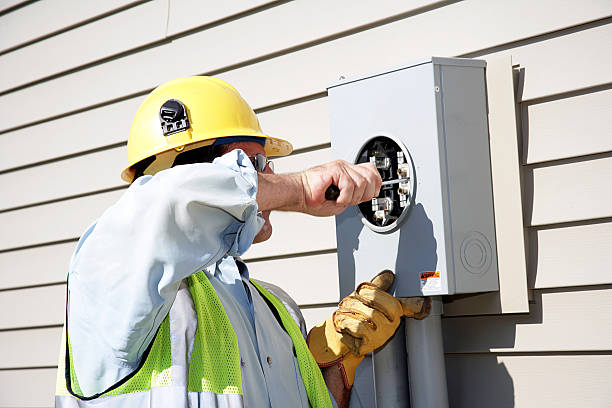
Electricity keeps everything running—your home, your business, and even large industrial operations. But like any system, it needs regular care. Without proper maintenance, small electrical issues can quickly turn into costly repairs or serious safety risks.
In a place like Tampa, electrical systems face extra stress. High humidity, frequent storms, and heavy usage all take a toll. Over time, wires wear out, panels age, and equipment becomes less efficient. That’s why routine electrical maintenance is not just helpful—it’s necessary.
This guide breaks everything down in a simple way. You’ll learn what electrical maintenance involves, why it matters in Tampa, and how it applies to residential, commercial, and industrial properties. Whether you’re a homeowner, business owner, or facility manager, understanding these basics can help you avoid downtime, reduce costs, and keep your property safe.
What Are Electrical Maintenance Services?
Electrical maintenance services focus on keeping your system safe, reliable, and efficient. Instead of waiting for something to fail, these services help identify and fix issues early.
Think of it like regular servicing for a car. You don’t wait for the engine to break down—you check it, maintain it, and keep it running smoothly. Electrical systems work the same way.
Simple Explanation of Electrical Maintenance
Electrical maintenance includes routine checks, testing, repairs, and upgrades. The goal is simple: make sure everything works as it should.
A typical maintenance visit may include:
-
Inspecting wiring and connections
-
Testing circuit breakers and panels
-
Checking outlets, switches, and lighting
-
Identifying worn or damaged components
These steps help catch problems before they become serious. As a result, you reduce the risk of electrical fires, power outages, and equipment failure.
Types of Electrical Maintenance
Not all maintenance is the same. Different approaches are used depending on the property and system.
- Preventive Maintenance
This is the most common type. It focuses on regular inspections and servicing to prevent problems before they occur.
- Predictive Maintenance
This method uses data and monitoring tools to detect issues early. It is often used in commercial and industrial settings where downtime can be costly.
- Corrective Maintenance
This happens after a problem is found. It involves repairing or replacing faulty components to restore normal operation.
Each type plays a role. However, preventive maintenance is usually the most cost-effective option for most properties.
Why Electrical Systems Require Ongoing Maintenance
Electrical systems are always in use. Because of that, wear and tear are unavoidable. Several factors make maintenance necessary:
-
Constant usage: Daily demand puts stress on circuits and components
-
Environmental conditions: Heat and moisture can damage wiring
-
System aging: Older panels and wiring become less reliable over time
-
Increased load: Modern devices require more power than older systems were designed for
Without regular maintenance, these issues can build up. Over time, they can lead to failures, safety hazards, and higher energy bills. Keeping your system maintained ensures it runs safely and efficiently—whether it’s in a home, office, or industrial facility.
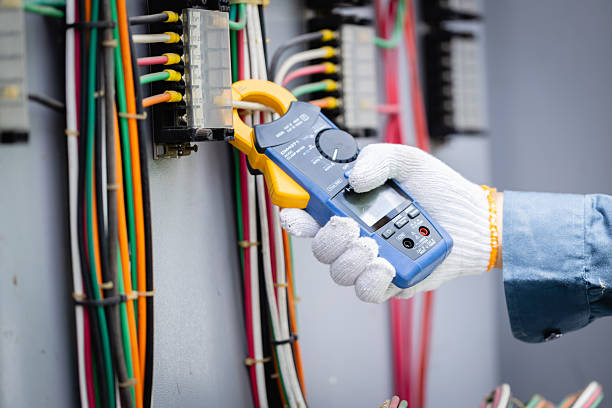
Why Electrical Maintenance Is Critical in Tampa, Florida
Electrical systems in Tampa deal with more than just daily usage. The local environment adds extra pressure. Because of this, regular maintenance becomes even more important.
Many property owners only think about electrical work when something stops working. However, in Tampa, waiting too long can lead to bigger problems. Preventive care helps you stay ahead of issues and avoid unexpected breakdowns.
Impact of Weather Conditions
Tampa’s weather plays a major role in electrical wear and tear. Heat, humidity, and storms all affect how systems perform.
-
High humidity: Moisture can seep into wiring and panels, leading to corrosion
-
Frequent storms: Lightning and power surges can damage sensitive components
-
Heat exposure: High temperatures can overheat electrical systems over time
Because of these conditions, components may fail faster than expected. Regular inspections help detect early signs of damage and keep everything working safely.
Aging Infrastructure Across Properties
Many homes and buildings in Tampa were built years ago. While they may still function, their electrical systems may not meet today’s demands.
Older systems often struggle with:
-
Increased power usage from modern appliances
-
Outdated wiring that cannot handle higher loads
-
Panels that lack capacity or safety features
This applies to all property types:
-
Residential: Older homes may still have outdated panels
-
Commercial: Buildings may rely on aging infrastructure
-
Industrial: Equipment may be running on worn systems
Routine maintenance helps identify these issues early. It also allows for timely upgrades before problems occur.
Safety Codes and Compliance Requirements
Electrical systems must meet safety standards. These codes are in place to protect people and property. In Tampa, properties are expected to follow national and local guidelines, including those from the National Electrical Code.
Regular maintenance helps ensure:
-
Systems stay up to code
-
Safety risks are minimized
-
Inspections are passed without issues
For businesses and industrial facilities, this is especially important. Non-compliance can lead to fines, downtime, or safety hazards.
Types of Electrical Maintenance Services in Tampa
Electrical maintenance is not one-size-fits-all. The needs of a home are very different from those of a retail store or a manufacturing plant. That’s why services are usually grouped into three main categories: residential, commercial, and industrial.
Each type focuses on specific systems, equipment, and safety requirements. Understanding the difference helps you choose the right service for your property.
Residential Electrical Maintenance Services
Residential maintenance focuses on keeping homes safe and comfortable. It also helps prevent small issues from turning into major repairs.
Typical services include:
-
Inspecting electrical panels for wear or overload
-
Checking wiring for damage or loose connections
-
Testing outlets, switches, and GFCI protection
-
Inspecting indoor and outdoor lighting systems
-
Installing or maintaining surge protection
In many homes, problems build slowly. For example, a loose wire or aging breaker may not fail right away. However, over time, it can lead to outages or even fire risks. Regular maintenance helps catch these issues early.
Commercial Electrical Maintenance Services
Commercial properties have higher energy demands and more complex systems. Offices, retail spaces, and restaurants rely on stable power to operate smoothly.
Common commercial services include:
-
Routine electrical inspections and system audits
-
Maintenance of lighting systems, including energy-efficient upgrades
-
Backup generator testing and servicing
-
Load balancing to prevent circuit overload
-
Panel and distribution system checks
Downtime in a commercial setting can affect revenue and customer experience. Because of this, maintenance is often scheduled regularly to avoid disruptions.
Industrial Electrical Maintenance Services
Industrial maintenance is more complex and requires specialized expertise. Factories and production facilities depend on heavy equipment and high-voltage systems.
These services often include:
-
Maintenance of motor control systems and machinery
-
Inspection of transformers and switchgear
-
Testing high-voltage equipment and connections
-
Monitoring system performance to prevent failures
-
Troubleshooting equipment faults and power issues
In industrial environments, even a short power failure can stop operations. That’s why maintenance here is often continuous or closely monitored.
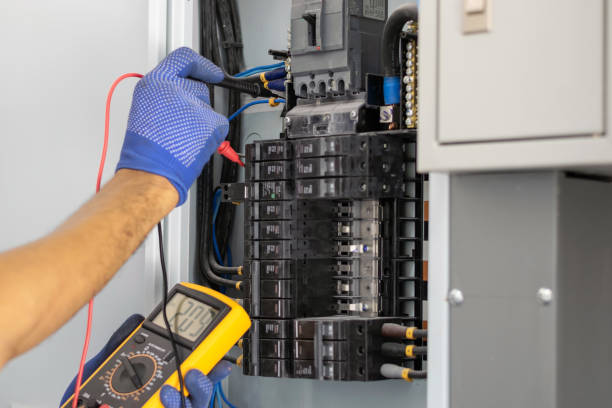
Key Components Checked During Electrical Maintenance
A proper electrical maintenance service goes beyond a quick inspection. It looks at every major component in the system to make sure everything is working safely and efficiently.
Each part plays a role. If one fails, it can affect the entire system. That’s why electricians follow a detailed checklist during maintenance visits.
Electrical Panels and Circuit Breakers
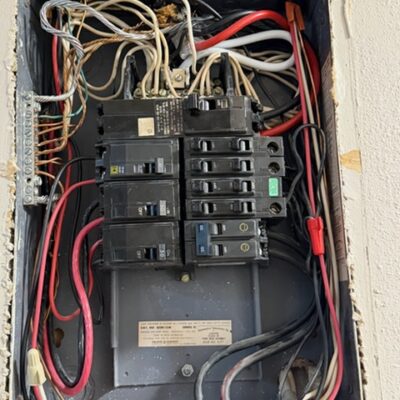
The electrical panel is the control center of your system. It distributes power throughout the property and protects circuits from overload.
During maintenance, electricians will:
-
Check for signs of overheating or burn marks
-
Test breakers to ensure they trip properly
-
Look for outdated or overloaded panels
Faulty breakers can fail to shut off power when needed. This increases the risk of electrical fires. Regular checks help keep your system protected.
Wiring Systems and Connections
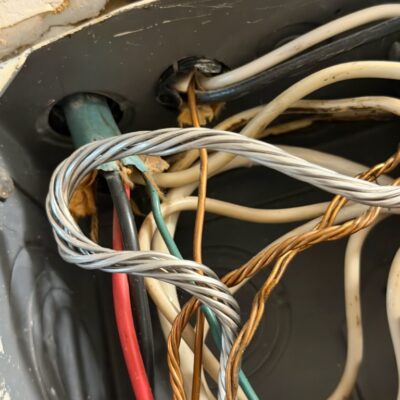
Wiring carries electricity to every part of the building. Over time, wires can loosen, wear out, or become damaged.
Maintenance includes:
-
Inspecting for frayed or exposed wires
-
Tightening loose connections
-
Checking for corrosion or moisture damage
Even a small wiring issue can lead to major problems. Fixing it early helps avoid outages and safety risks.
Lighting and Power Distribution
Lighting systems are often overlooked, but they are an important part of electrical maintenance.
Electricians will:
-
Inspect indoor and outdoor lighting
-
Replace faulty fixtures or bulbs
-
Check distribution systems for consistent power flow
In commercial and industrial settings, proper lighting also improves safety and productivity.
Grounding and Surge Protection
Grounding protects people and equipment from electrical faults. Surge protection helps prevent damage from sudden voltage spikes.
During maintenance, professionals will:
-
Test grounding systems for effectiveness
-
Inspect surge protectors for wear or failure
-
Ensure proper installation of safety components
This is especially important in storm-prone areas like Tampa, where power surges are common.
Industrial Equipment and Machinery Systems
In industrial settings, electrical maintenance includes large equipment and complex systems.
This may involve:
-
Checking motors and control systems
-
Inspecting switchgear and transformers
-
Monitoring equipment performance and load levels
These systems operate under heavy demand. Regular maintenance helps prevent costly downtime and equipment failure.
Residential vs Commercial vs Industrial Electrical Maintenance
Electrical maintenance looks different depending on the type of property. A small home system is not the same as a busy office or a large industrial facility. Each one has its own scale, risks, and requirements. Understanding these differences helps you plan the right maintenance approach and avoid unnecessary issues.
Key Differences Explained
While the goal is always safety and efficiency, the way maintenance is performed varies across sectors.
Here’s a simple comparison:
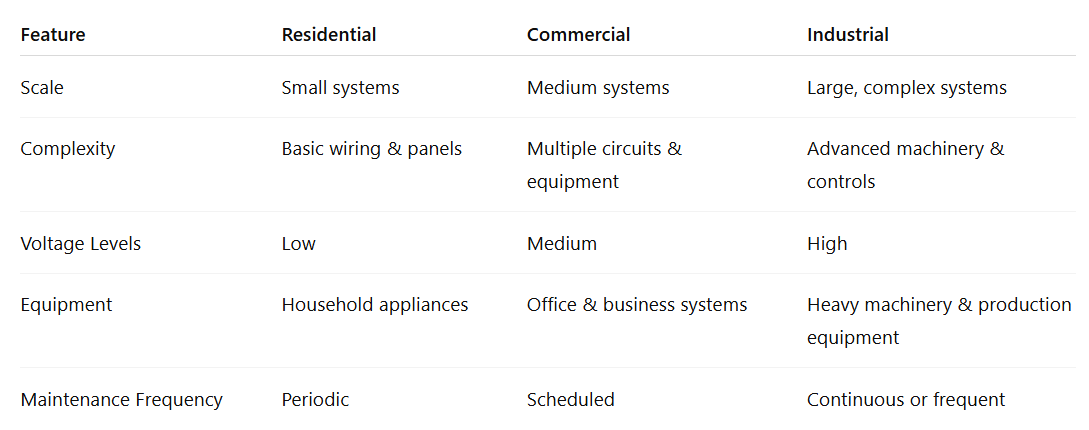
In homes, maintenance is usually straightforward. It focuses on safety and basic functionality. In commercial spaces, systems are more demanding. There are more circuits, higher loads, and a need for consistent performance.
Industrial environments are the most complex. They rely on high-powered systems that require close monitoring and specialized care.
Which Type of Service Do You Need?
Choosing the right type of electrical maintenance depends on how the property is used.
-
Residential maintenance is ideal for homeowners who want safe, reliable power and lower energy costs
-
Commercial maintenance suits businesses that depend on uninterrupted operations
-
Industrial maintenance is necessary for facilities running heavy equipment and continuous processes
In many cases, the difference is not just size—it’s also risk. For example, a power issue in a home may cause inconvenience. However, in a factory, it can stop production and lead to financial loss.
Signs You Need Electrical Maintenance Services
Electrical problems rarely appear all at once. In most cases, there are early warning signs. The key is to notice them before they turn into serious issues.
If you ignore these signs, small faults can grow into safety hazards or costly repairs. Regular maintenance helps catch them early, but knowing what to look for also makes a big difference.
Frequent Breaker Trips
Circuit breakers are designed to protect your system. When they trip often, it usually means something is wrong.
Common causes include:
-
Overloaded circuits
-
Short circuits
-
Faulty appliances
If your breaker trips occasionally, it may not be a concern. However, frequent tripping is a clear sign your system needs attention.
Flickering or Dimming Lights
Lights should stay steady. If they flicker or dim, it often points to an electrical issue.
This can happen due to:
-
Loose wiring
-
Voltage fluctuations
-
Overloaded circuits
In commercial and industrial spaces, this may also affect equipment performance. That’s why it should never be ignored.
Burning Smell or Sparks
A burning smell is one of the most serious warning signs. It may indicate overheating wires or damaged components.
You might notice:
-
A faint burning odor near outlets or panels
-
Sparks when plugging in devices
-
Discolored outlets or switches
If this happens, it’s important to act quickly. Turn off the power if possible and call a professional.
Equipment Malfunctions (Commercial & Industrial)
In business or industrial settings, electrical issues often show up through equipment problems.
Signs include:
-
Machines shutting down unexpectedly
-
Reduced performance or efficiency
-
Irregular power supply
These issues can disrupt operations and lead to downtime. Regular maintenance helps prevent these interruptions.
Rising Energy Costs
A sudden increase in electricity bills can point to inefficiency in your system.
Possible reasons include:
-
Faulty wiring
-
Outdated equipment
-
Power loss due to system inefficiencies
If your usage hasn’t changed but your bill has, it’s worth having your system inspected.
Quick Checklist to Watch For
Here are some common signs that should not be ignored:
-
Buzzing sounds from panels or outlets
-
Warm or hot electrical components
-
Frequent power fluctuations
-
Outdated or overloaded electrical panels
-
Extension cords used as a permanent solution
Recognizing these signs early helps you take action before problems get worse. It also keeps your property safe and your electrical system running smoothly.
Benefits of Regular Electrical Maintenance
Regular electrical maintenance is not just about fixing problems. It helps prevent them in the first place. When systems are checked and serviced on time, they perform better and last longer.
For homes, businesses, and industrial facilities, the benefits are both immediate and long-term.
Improved Safety Across All Property Types
Safety is the biggest reason to keep your electrical system maintained. Faulty wiring, overloaded circuits, and damaged components can all lead to serious hazards.
Regular maintenance helps:
-
Reduce the risk of electrical fires
-
Prevent electric shocks
-
Identify hidden faults before they become dangerous
This is especially important in areas like Tampa, where weather conditions can increase electrical risks.
Reduced Downtime for Businesses & Industries
For commercial and industrial properties, downtime can be costly. Even a short power issue can interrupt operations.
Maintenance helps by:
-
Detecting problems early
-
Keeping equipment running smoothly
-
Preventing unexpected breakdowns
As a result, businesses can operate without frequent interruptions.
Lower Energy Costs
An inefficient electrical system uses more power than necessary. Over time, this leads to higher electricity bills.
With regular maintenance:
-
Systems run more efficiently
-
Power loss is reduced
-
Faulty components are replaced
This helps lower overall energy consumption and saves money.
Extended Equipment Lifespan
Electrical components wear out over time. However, proper maintenance can slow down this process.
Benefits include:
-
Less strain on equipment
-
Fewer major repairs
-
Longer system life
This is especially valuable in industrial settings where equipment costs are high.
Compliance with Safety Standards
Electrical systems must meet safety regulations. Regular maintenance ensures your system stays compliant with standards like the National Electrical Code.
This helps:
-
Avoid penalties or failed inspections
-
Maintain safe working conditions
-
Meet insurance requirements
Regular maintenance is a smart investment. It improves safety, reduces costs, and keeps your electrical system running reliably—no matter the type of property.
Electrical Maintenance Process (Step-by-Step)
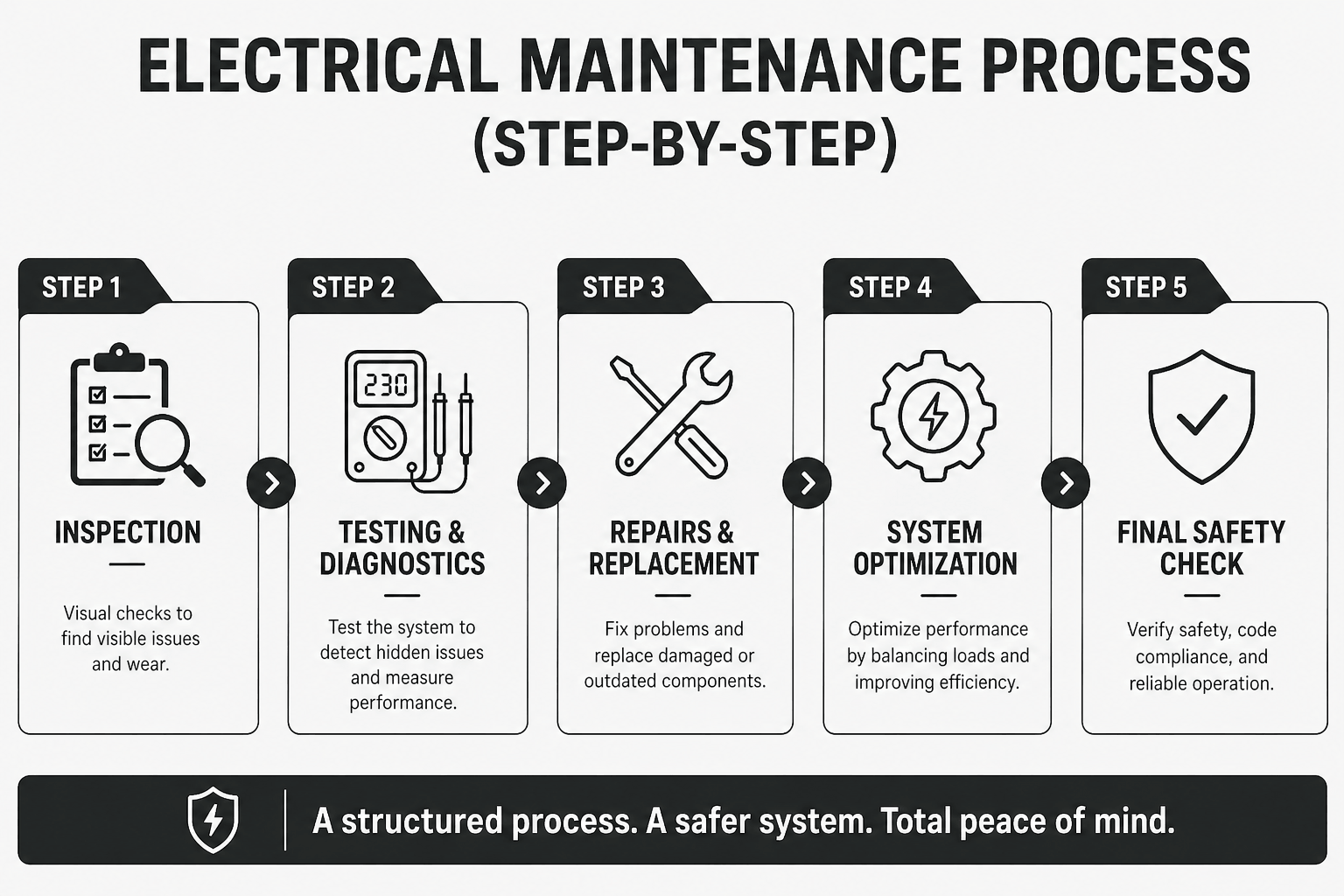
A structured maintenance process ensures nothing is missed. Each step builds on the previous one. This approach helps identify issues early and keeps the system running safely.
Whether it’s a home, office, or industrial facility, most professionals follow a similar process.
Step 1 – Inspection
The process starts with a detailed inspection. This includes both visual checks and basic testing.
Electricians will:
-
Examine panels, breakers, and wiring
-
Look for signs of wear, heat damage, or corrosion
-
Check outlets, switches, and visible connections
This step helps spot obvious problems before deeper testing begins.
Step 2 – Testing & Diagnostics
After inspection, the system is tested to measure performance and detect hidden issues.
This may include:
-
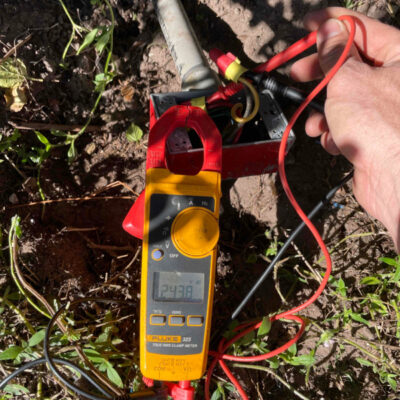
Voltage and load testing
-
Checking circuit performance
-
Identifying irregular power flow
Testing provides accurate data. It helps confirm whether the system is operating within safe limits.
Step 3 – Repairs & Replacement
Once issues are identified, necessary repairs are carried out.
Common tasks include:
-
Replacing damaged wires or components
-
Fixing loose connections
-
Upgrading outdated breakers or panels
Addressing these issues early prevents more serious failures later.
Step 4 – System Optimization
After repairs, the system is adjusted to improve performance.
This can involve:
-
Balancing electrical loads
-
Improving energy efficiency
-
Updating components for better reliability
Optimization ensures the system runs smoothly under normal conditions.
Step 5 – Final Safety Check
The final step is a complete safety review. This confirms that all work meets the required standards.
Electricians will:
-
Recheck all repaired components
-
Ensure the system complies with safety codes
-
Verify stable and safe operation
Following this step-by-step process helps maintain a reliable electrical system. It also reduces the chances of unexpected breakdowns and keeps your property safe.
Preventive vs Reactive vs Predictive Maintenance
Not all maintenance is planned the same way. Some property owners take a proactive approach, while others only act when something breaks. Understanding these methods helps you choose what works best for your situation.
Each type has its place. However, the right balance can save both time and money.
Preventive Maintenance
Preventive maintenance is done on a regular schedule. The goal is to stop problems before they happen.
This approach includes:
-
Routine inspections
-
Scheduled testing
-
Replacing worn parts before failure
It is widely used in homes and commercial properties because it reduces the chances of sudden issues. Over time, it also lowers repair costs.
Reactive Maintenance
Reactive maintenance happens after something goes wrong. It focuses on fixing issues as they appear.
Examples include:
-
Repairing a failed breaker
-
Fixing damaged wiring
-
Restoring power after an outage
While this approach may seem simple, it often leads to higher costs. Emergencies can also create safety risks and downtime.
Predictive Maintenance (Industrial Focus)
Predictive maintenance uses data and monitoring tools to detect early warning signs. It is commonly used in industrial environments where systems are complex.
This method may involve:
-
Monitoring equipment performance
-
Tracking load patterns
-
Identifying signs of wear before failure
It helps reduce unexpected downtime and improves overall efficiency. However, it may require advanced tools and expertise.
Comparison of Maintenance Types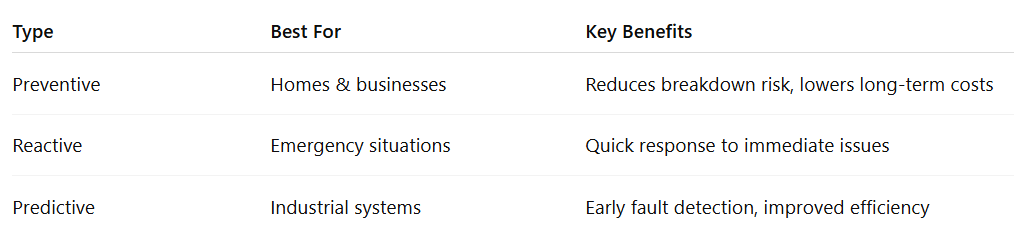
Choosing the right maintenance approach depends on your property and usage. In most cases, combining preventive and predictive methods provides the best results, while reactive maintenance should be kept as a last option.
Cost of Electrical Maintenance Services in Tampa
The cost of electrical maintenance can vary based on the type of property and the complexity of the system. A small home will cost much less to maintain than a large commercial building or an industrial facility.
In Tampa, pricing is also influenced by local conditions, demand, and the level of service required. Understanding these factors helps you plan your budget and avoid unexpected expenses.
Residential Maintenance Costs
Residential electrical maintenance is usually the most affordable. The systems are smaller and less complex.
Typical costs may include:
-
Basic inspection: lower cost range
-
Minor repairs (outlets, switches): moderate cost
-
Panel upgrades or replacements: higher cost
Homeowners often save money by scheduling regular inspections instead of waiting for major repairs.
Commercial Maintenance Costs
Commercial properties require more detailed maintenance. There are more circuits, higher loads, and additional safety requirements.
Costs may involve:
-
Routine inspections and system checks
-
Lighting system maintenance
-
Generator testing and servicing
-
Electrical system upgrades
Because businesses rely on consistent power, maintenance is often scheduled regularly, which can help control long-term costs.
Industrial Maintenance Costs
Industrial electrical maintenance is the most complex and typically the most expensive. It involves specialized equipment and high-voltage systems.
Costs may include:
-
Equipment testing and monitoring
-
Maintenance of transformers and switchgear
-
Repairs for heavy machinery systems
-
Ongoing monitoring and predictive maintenance
Although the upfront cost may be higher, regular maintenance helps prevent costly downtime and production losses.
Factors Affecting Pricing
Several factors influence the total cost of electrical maintenance:
-
Property size: Larger properties require more time and effort
-
System complexity: Advanced systems need specialized work
-
Type of equipment: Industrial machinery increases cost
-
Urgency: Emergency services usually cost more
-
Condition of the system: Older systems may need more repairs
Planning regular maintenance is often more cost-effective than handling emergencies. It allows you to manage expenses while keeping your electrical system safe and reliable.
Choosing the Right Electrical Maintenance Company in Tampa
Choosing the right electrical maintenance provider is just as important as the service itself. A qualified professional ensures your system stays safe, efficient, and compliant with local standards.
In a place like Tampa, where environmental factors can impact electrical systems, working with an experienced company makes a real difference.
Licensing and Certifications
Always start by checking credentials. A licensed electrician has the proper training and meets industry standards.
Make sure the company:
-
Holds valid licenses
-
Follows safety regulations
-
Stays updated with current electrical codes
Proper certification ensures the work is done safely and correctly.
Experience with All Property Types
Not all electricians handle every type of project. Some focus only on residential work, while others specialize in commercial or industrial systems.
Look for a company that has experience with:
-
Homes and residential systems
-
Commercial buildings and offices
-
Industrial equipment and high-voltage systems
This ensures they understand the specific needs of your property.
Availability of Emergency Services
Electrical issues don’t always happen during business hours. That’s why it’s important to choose a company that offers emergency support.
A reliable provider should:
-
Respond quickly to urgent issues
-
Offer 24/7 or extended service hours
-
Handle both minor and major emergencies
Fast response times can prevent damage and reduce downtime.
Customer Reviews and Reputation
Reputation gives you insight into service quality. Reviews from other customers can help you make a better decision.
Pay attention to:
-
Consistent positive feedback
-
Professional behavior
-
Reliability and punctuality
A company with a strong reputation is more likely to deliver dependable service.
Choosing the right electrical maintenance company helps you avoid future problems. It also ensures your system is handled by professionals who understand both safety and performance.
Common Electrical Issues in Residential, Commercial & Industrial Settings
Electrical problems can appear in any type of property. However, the cause and impact often vary between homes, businesses, and industrial facilities. Recognizing these common issues helps you act early and avoid serious damage.
Residential Problems
Homes usually face simpler electrical issues. Still, they can become dangerous if ignored.
Common residential problems include:
-
Faulty wiring: Old or damaged wires can lead to short circuits
-
Overloaded circuits: Too many devices on one circuit can cause breaker trips
-
Outdated panels: Older panels may not handle modern power demands
-
Frequent power fluctuations: Lights dimming or flickering
These issues often develop slowly. Regular maintenance helps catch them before they become major risks.
Commercial Problems
Commercial buildings have higher energy demands. As a result, electrical issues can affect daily operations.
Typical problems include:
-
Lighting failures: Poor lighting can impact productivity and safety
-
Power interruptions: Sudden outages can disrupt business activities
-
Circuit overloads: High usage can strain the system
-
Backup system failures: Generators or backup systems may not work when needed
For businesses, even a short disruption can lead to lost revenue. Maintenance reduces these risks.
Industrial Problems
Industrial facilities deal with complex systems and heavy equipment. Because of this, electrical issues can be more serious.
Common industrial problems include:
-
Equipment breakdowns: Electrical faults can stop machinery
-
Voltage instability: Inconsistent power can damage equipment
-
Overheating systems: High loads can stress electrical components
-
Control system failures: Issues with automation or control panels
These problems can lead to downtime and production delays. In some cases, they can also create safety hazards.
Electrical Safety Tips for Property Owners
Electrical safety is not only the electrician’s responsibility. Property owners also play an important role. Simple habits and regular checks can prevent many common issues.
Whether it’s a home, office, or industrial site, following basic safety practices helps protect both people and equipment.
Home Safety Tips
Homes may have simpler systems, but risks still exist. Small mistakes can lead to serious problems if ignored.
Follow these basic safety tips:
-
Avoid overloading outlets with too many devices
-
Replace damaged cords or plugs immediately
-
Keep electrical components away from water
-
Use surge protectors for sensitive electronics
-
Schedule regular inspections for older homes
Also, never ignore warning signs like flickering lights or warm outlets. These often indicate underlying issues.
Workplace Electrical Safety
In commercial spaces, safety becomes even more important. Employees, customers, and equipment all depend on a stable system.
Good practices include:
-
Keeping electrical panels accessible at all times
-
Avoiding temporary wiring as a long-term solution
-
Ensuring proper lighting in all work areas
-
Training staff to recognize basic electrical hazards
Regular maintenance also helps businesses stay compliant with safety standards and avoid unexpected disruptions.
Industrial Safety Protocols
Industrial environments carry higher risks due to heavy machinery and high-voltage systems. Strict safety measures are essential.
Important protocols include:
-
Using proper protective equipment when working near electrical systems
-
Following lockout/tagout procedures during maintenance
-
Monitoring equipment for overheating or irregular performance
-
Conducting routine system checks and testing
Because of the complexity involved, industrial systems should always be handled by trained professionals.
Electrical safety is about awareness and prevention. By following these tips and scheduling regular maintenance, you can reduce risks and keep your property running safely.
Latest Trends in Electrical Maintenance
Electrical maintenance is evolving with new technology. Systems are becoming smarter, more efficient, and easier to monitor. These changes help property owners reduce costs and improve reliability.
In places like Tampa, where electrical systems face heavy demand, adopting modern solutions can make a noticeable difference.
Smart Electrical Systems
Smart systems allow better control and monitoring of electrical usage. They are becoming common in homes, offices, and even industrial setups.
These systems can:
-
Monitor energy usage in real time
-
Detect faults early
-
Send alerts when issues arise
For homeowners, this means better control over energy use. For businesses, it helps maintain consistent performance.
Energy-Efficient Solutions
Energy efficiency is now a major focus. Modern upgrades help reduce power consumption without affecting performance.
Common solutions include:
-
LED lighting systems
-
Energy-efficient appliances and equipment
-
Upgraded panels that handle the load more effectively
These improvements not only lower electricity bills but also reduce strain on the system.
Automation in Industrial Maintenance
Industrial facilities are moving toward automation. Maintenance tasks are now supported by advanced systems that track performance continuously.
Benefits include:
-
Reduced manual inspections
-
Faster detection of faults
-
Improved operational efficiency
Automation helps industries avoid unexpected downtime and maintain steady production.
Remote Monitoring Systems
Remote monitoring allows electricians and facility managers to track system performance without being on-site.
This technology can:
-
Provide real-time data on system health
-
Identify irregular patterns
-
Support quick decision-making
For commercial and industrial properties, this adds an extra layer of reliability and control.
Modern electrical maintenance is no longer just about fixing problems. It focuses on prevention, efficiency, and smart management. Adopting these trends helps keep systems reliable while reducing long-term costs.
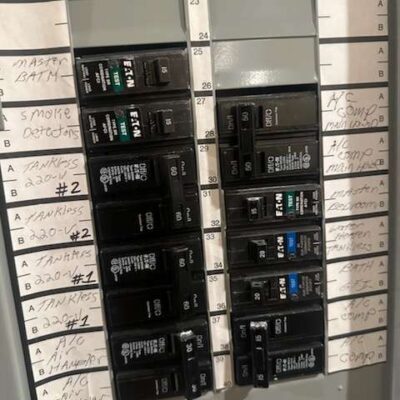
Electrical Maintenance Checklist
A clear checklist helps you stay consistent with maintenance. It also makes it easier to spot issues before they become serious.
Different systems require different attention levels. However, breaking tasks into monthly, quarterly, and yearly checks keeps everything organized and manageable.
Monthly Checklist
These are quick checks you can do regularly. They help identify visible issues early.
-
Look for flickering or dimming lights
-
Check outlets and switches for damage or heat
-
Listen for buzzing sounds from panels or fixtures
-
Make sure cords and plugs are in good condition
-
Observe any unusual power fluctuations
These simple checks take little time but can prevent bigger problems.
Quarterly Checklist
Quarterly checks go a bit deeper. They help ensure your system is performing properly over time.
-
Test circuit breakers for proper operation
-
Inspect electrical panels for signs of wear
-
Check outdoor lighting and exposed wiring
-
Review energy usage for unusual increases
-
Ensure surge protection devices are working
For commercial and industrial properties, this step is especially important to maintain performance.
Annual Professional Inspection
A full inspection by a professional should be done at least once a year. This ensures everything meets safety standards.
During an annual inspection:
-
The entire system is tested and evaluated
-
Hidden issues are identified and addressed
-
Components are repaired or replaced if needed
-
The system is checked for code compliance
In areas like Tampa, where environmental factors can impact electrical systems, yearly inspections are even more important.
Following a structured checklist keeps your electrical system in good condition. It also reduces the risk of unexpected failures and improves overall safety.
Why Professional Electrical Maintenance Is Better Than DIY
Handling small electrical tasks may seem simple. However, electrical systems are complex and can be dangerous if not handled correctly. While DIY solutions may work in some cases, they often carry risks.
For long-term safety and reliability, professional maintenance is the better choice.
Safety Risks
Electricity is not forgiving. Even a small mistake can lead to serious injury or damage.
DIY work can result in:
-
Electric shocks or burns
-
Fire hazards from improper connections
-
Damage to appliances or systems
Professionals are trained to handle these risks safely. They follow proper procedures and use the right tools for each job.
Compliance Issues
Electrical work must meet safety standards and regulations. If work is not done correctly, it may fail inspections or violate codes such as the National Electrical Code.
This can lead to:
-
Fines or penalties
-
Problems with insurance claims
-
Safety risks for occupants
Hiring a licensed professional ensures all work meets required standards.
Long-Term Cost Savings
DIY work may seem cost-effective at first. However, mistakes can lead to bigger expenses later.
Professional maintenance helps:
-
Prevent recurring issues
-
Reduce the need for major repairs
-
Extend the lifespan of your system
In many cases, fixing a problem properly the first time saves money over time.
Choosing professional electrical maintenance is an investment in safety and reliability. It ensures your system is handled correctly and reduces the chances of future problems.
How Maintenance Improves Energy Efficiency
Electrical maintenance is not only about safety. It also plays a key role in how efficiently your system uses power. When components are in good condition, energy flows properly with less waste.
Over time, even small issues can reduce efficiency. Fixing them helps lower energy usage and improve overall performance.
Reducing Energy Waste
Faulty or aging components often waste electricity. This can happen without obvious signs.
Common causes include:
-
Loose or damaged wiring
-
Overloaded circuits
-
Inefficient or outdated equipment
Regular maintenance helps identify and fix these problems. As a result, your system uses only the energy it actually needs.
Optimizing Equipment Performance
Well-maintained systems perform better. When electrical components are clean, properly connected, and correctly balanced, they operate more smoothly.
This leads to:
-
Stable power supply
-
Reduced strain on equipment
-
Better performance across all systems
In commercial and industrial settings, improved performance also supports productivity and reduces interruptions.
Lower Utility Bills
Energy waste directly affects your electricity bill. When your system runs efficiently, you use less power.
Maintenance helps by:
-
Eliminating hidden inefficiencies
-
Improving load distribution
-
Ensuring all components work as intended
In areas like Tampa, where energy usage can be high due to climate conditions, efficiency improvements can lead to noticeable savings.
Improving energy efficiency through maintenance is a practical step. It reduces costs, supports system performance, and keeps your electrical setup running smoothly.
Conclusion: Keep Your Electrical System Safe and Efficient
Electrical maintenance is not something to delay. It keeps your system safe, reliable, and efficient across residential, commercial, and industrial properties.
In a place like Tampa, where weather and demand can put extra stress on electrical systems, regular maintenance becomes even more important. It helps prevent unexpected failures, reduces safety risks, and keeps everything running smoothly.
By staying proactive, you can:
-
Avoid costly repairs
-
Improve energy efficiency
-
Extend the lifespan of your system
-
Ensure compliance with safety standards
Whether you manage a home, a business, or an industrial facility, consistent electrical maintenance is a smart investment.
FAQs About Electrical Maintenance Services Tampa
Understanding electrical maintenance can raise many questions. Below are clear answers to some of the most common concerns for property owners in Tampa.
How often should electrical maintenance be done?
The frequency depends on the type of property and usage.
For most cases:
-
Residential properties: Once a year is usually enough
-
Commercial properties: Every 6–12 months
-
Industrial facilities: Quarterly or continuous monitoring
Older systems or high-usage environments may need more frequent checks. Regular maintenance helps catch issues early and keeps everything running safely.
What’s the difference between industrial and commercial maintenance?
The main difference lies in complexity and scale.
-
Commercial maintenance focuses on offices, retail spaces, and service-based businesses. Systems are more complex than homes, but still manageable.
-
Industrial maintenance involves heavy machinery, high-voltage systems, and continuous operations. It requires specialized skills and equipment.
Because of this, industrial maintenance is usually more detailed and frequent.
How much does electrical maintenance cost?
Costs vary depending on several factors, including property size and system complexity.
In general:
-
Residential services are more affordable
-
Commercial services fall in the mid-range
-
Industrial maintenance is typically higher due to complexity
Regular maintenance often costs less than emergency repairs. Planning ahead helps control expenses.
Is electrical maintenance necessary for new properties?
Yes, even new systems need maintenance.
While newer installations are less likely to have immediate issues, they still benefit from:
-
Routine inspections
-
Performance checks
-
Early detection of installation defects
Maintenance ensures the system continues to perform as expected over time.
Can electrical maintenance reduce energy bills?
Yes, it can. A well-maintained system runs more efficiently.
Maintenance helps:
-
Eliminate energy waste
-
Improve equipment performance
-
Optimize power distribution
As a result, you may notice lower electricity bills and better system reliability.
When should I call a professional electrician?
You should contact a professional if you notice:
-
Frequent breaker trips
-
Burning smells or sparks
-
Flickering lights
-
Sudden increase in energy bills
Even if the issue seems minor, it’s better to have it checked early. This helps prevent bigger problems later.
Leave a Reply