
Electrical issues can show up when you least expect them. A flickering light, a dead outlet, or a tripping breaker may seem minor at first. However, these small signs often point to deeper problems that need attention.
In Tampa, Florida, homes face added pressure from heat, humidity, and frequent storms. These conditions can wear down electrical systems faster than usual. Over time, this increases the risk of faults, outages, and safety hazards.
This guide explains everything you need to know about home electrical repair services in Tampa. It covers common problems, repair options, costs, and when to call a professional. Whether you need a quick fix or a full system upgrade, understanding your options helps you make the right decision for your home.
Why Home Electrical Repair Services Matter in Tampa, Florida
Electricity keeps your home running, but it also carries real risks. When something goes wrong, even a small issue can turn serious fast. That’s why timely electrical repair is not just helpful—it’s essential.
In Tampa, this becomes even more important. The climate and local housing conditions create unique challenges for homeowners. Many homes deal with high humidity, heavy storms, and aging electrical systems. Over time, these factors wear down wiring, outlets, and panels.
Because of this, regular maintenance and quick repairs are not optional. They protect your home, your appliances, and most importantly, your safety.
How Tampa’s Climate Affects Your Electrical System
Tampa’s weather plays a major role in electrical problems. The mix of heat, moisture, and storms creates constant stress on home systems.
Here’s how it impacts your home:
-
High humidity can corrode wires and connections over time
-
Frequent storms often cause power surges and outages
-
Lightning strikes can damage circuits and appliances
-
Flooding risks may affect outdoor electrical components
Because of these conditions, electrical systems in Tampa homes tend to age faster. Even newer homes can develop issues if systems are not properly protected.
Safety Risks of Ignoring Electrical Issues
It’s easy to ignore a flickering light or a tripped breaker. However, these small signs often point to bigger problems.
If left unchecked, they can lead to:
-
Electrical fires
-
Damaged appliances
-
Power failures
-
Shock hazards
For example, a loose wire behind a wall may not seem urgent. Yet, over time, it can overheat and spark a fire. That’s why early repair always costs less—and prevents bigger damage later.
Why Hiring a Licensed Electrician Matters
Electrical work is not a DIY job. Even simple fixes can become dangerous without proper training.
A licensed electrician ensures:
-
Work meets Florida building codes
-
Proper diagnosis of the issue
-
Safe and long-lasting repairs
-
Protection for your home and insurance coverage
In Tampa, local codes and permit rules also play a role. A professional understands these requirements and handles them correctly.
Common Electrical Problems Tampa Homeowners Face
Every home faces electrical issues at some point. However, in Tampa, certain problems appear more often due to weather and system age. Understanding these common issues helps you act early and avoid costly repairs.
Frequent Circuit Breaker Trips
If your breaker trips often, it’s a warning sign. This usually means:
-
Circuits are overloaded
-
There is a short circuit
-
Appliances are drawing too much power
While resetting the breaker may fix it temporarily, the root cause still needs attention.
Flickering or Dimming Lights
Lights that flicker or dim can feel minor, but they often signal deeper issues.
Common causes include:
-
Loose wiring
-
Voltage fluctuations
-
Overloaded circuits
If the problem happens in multiple rooms, it may point to a panel issue.
Dead Outlets or Switch Failures
An outlet that suddenly stops working can be frustrating. In many cases, the cause is:
-
A tripped GFCI outlet
-
Worn-out wiring
-
Internal damage
Switches may also fail over time, especially in older homes.
Burning Smell or Discolored Outlets
This is one of the most serious warning signs. If you notice a burning smell or see dark marks on outlets:
-
Stop using the outlet immediately
-
Turn off the power to that area
-
Call a professional electrician
These signs often indicate overheating or wiring damage.
Power Surges During Storms
Tampa storms can cause sudden voltage spikes. These surges may:
-
Damage electronics
-
Shorten appliance lifespan
-
Affect your entire electrical system
Installing surge protection helps reduce this risk, but repairs may still be needed after major storms.
Outdated Electrical Panels
Older homes in Tampa often still use outdated panels. These systems may not handle modern electrical demand.
Signs you need an upgrade include:
-
Frequent breaker trips
-
Buzzing sounds from the panel
-
Limited capacity for new appliances
Upgrading your panel improves safety and supports today’s energy needs.
These issues may seem small at first. However, they often point to deeper problems within your system. Addressing them early keeps your home safe and avoids larger repair costs later.
Types of Home Electrical Repair Services in Tampa
Not all electrical problems are the same. Some need quick fixes, while others require full system upgrades. In Tampa, most homeowners rely on a wide range of repair services to keep their homes safe and functional.
Understanding these services helps you know what to expect when something goes wrong. It also makes it easier to explain the issue when you call a professional.
Emergency Electrical Repairs (24/7 Services)
Electrical issues do not wait for a convenient time. A sudden outage or burning smell can happen at night or during a storm. That’s why many electricians in Tampa offer 24/7 emergency services.
Common emergency situations include:
-
Sudden power loss in part or all of the home
-
Sparking outlets or exposed wires
-
Burning smells from panels or switches
-
Storm-related electrical damage
In these cases, quick action matters. Delaying repairs can increase safety risks and lead to higher repair costs.
Electrical Wiring Repairs and Rewiring
Wiring is the backbone of your electrical system. Over time, it can wear out, especially in older homes.
You may need wiring repair if you notice:
-
Flickering lights
-
Frequent breaker trips
-
Warm walls or outlets
In some homes, partial fixes are not enough. Full rewiring may be required, especially if the system uses outdated materials like aluminum wiring. Rewiring improves safety and supports modern appliances without overloading circuits.
Circuit Breaker and Panel Repairs
Your electrical panel controls how power flows through your home. If it fails, your entire system becomes unreliable.
Panel and breaker services often include:
-
Replacing faulty breakers
-
Upgrading outdated panels
-
Balancing electrical loads
A panel upgrade is common in Tampa homes that were built decades ago. Modern households use more power, so older panels struggle to keep up.
Outlet, Switch, and Fixture Repairs
Outlets and switches handle daily use, so they wear down over time. While some issues seem minor, they still need proper repair.
Typical services include:
-
Fixing non-working outlets
-
Replacing damaged switches
-
Repairing loose connections
-
Upgrading to safer GFCI outlets
If an outlet feels warm or stops working, it’s best to get it checked right away.
Ceiling Fan and Lighting Repairs
Lighting affects both comfort and safety. Faulty fixtures or fans can cause inconvenience and even hazards.
Common repair services include:
-
Fixing flickering or dim lights
-
Replacing broken fixtures
-
Repairing ceiling fan wiring
-
Upgrading to energy-efficient lighting
Many homeowners also switch to LED lighting to reduce energy costs.
Generator and Backup Power Solutions
Power outages are common during Tampa storms. Backup systems help keep your home running when the grid goes down.
Services in this area include:
-
Generator installation
-
Maintenance and repair
-
Backup power system upgrades
Having a reliable backup system adds peace of mind, especially during hurricane season.
Signs You Need Electrical Repair Immediately
Some electrical issues can wait for a scheduled visit. Others need immediate attention. Knowing the difference helps you act at the right time.
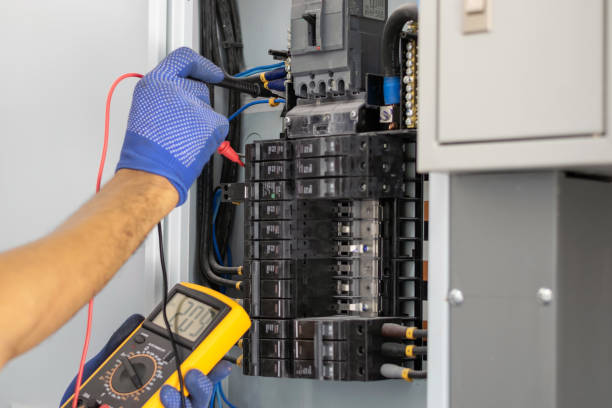
Warning Signs You Should Not Ignore
Certain signs clearly indicate a serious problem. If you notice any of these, it’s best to call a professional right away:
-
Burning smell near outlets or panels
-
Buzzing or humming sounds
-
Frequent power outages
-
Hot switches or breaker panels
-
Visible sparks or exposed wires
These issues often point to deeper system faults that can become dangerous if ignored.
Electrical Emergencies vs Minor Repairs
Not every issue is urgent. However, it’s important to know which problems need immediate action.
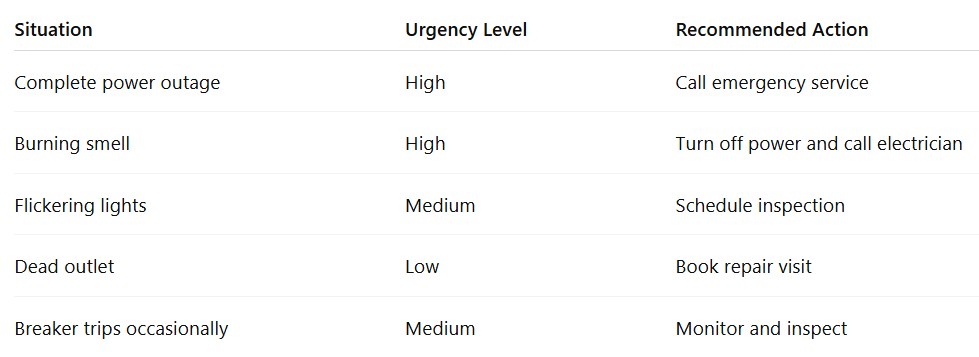
This simple breakdown helps you decide how quickly to respond.
Why Quick Repairs Save Money and Reduce Risk
Delaying electrical repairs often leads to bigger problems. A small issue today can turn into a costly repair tomorrow.
For example:
-
A loose wire can damage appliances
-
A faulty breaker can overload circuits
-
A minor surge issue can destroy electronics
Acting early keeps repair costs lower and protects your home from serious damage.
These services and warning signs give you a clear picture of what to expect. When you understand the problem, it becomes easier to choose the right solution.
Cost of Home Electrical Repair Services in Tampa, FL
Cost is often the first concern for homeowners. While prices vary, having a general idea helps you plan and avoid surprises.
In Tampa, electrical repair costs depend on the type of work, the condition of your system, and how urgent the issue is. Simple fixes cost less, while larger upgrades require more time and labor.
Average Pricing Breakdown
Here’s a simple overview of common electrical repair costs in Tampa:
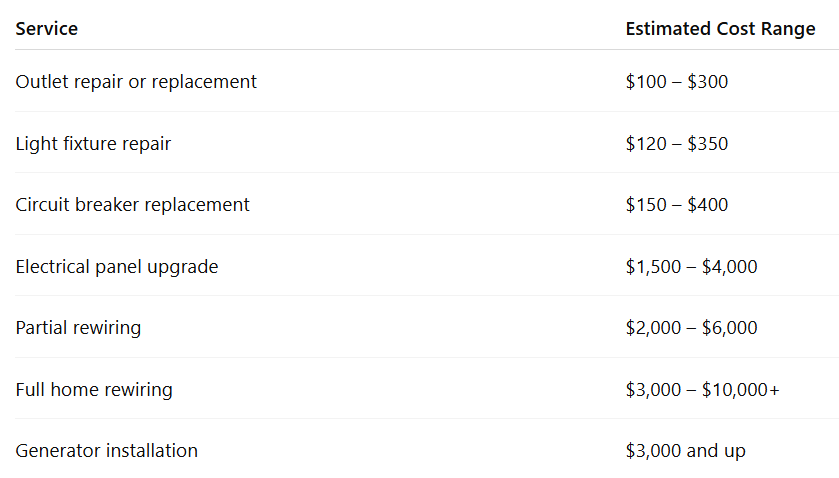
These numbers are estimates. Actual costs may vary based on your home and the scope of work.
Factors That Affect Electrical Repair Costs
Several factors influence the final price. Understanding them helps you see where your money goes.
-
Age of the home: Older homes often need more work due to outdated systems
-
Complexity of the issue: Hidden wiring problems take more time to diagnose and fix
-
Permit and code requirements: Some repairs require permits, which add to the cost
-
Accessibility: Hard-to-reach wiring or panels increase labor time
-
Emergency service fees: After-hours or urgent repairs usually cost more
Because of these variables, a proper inspection is the best way to get an accurate quote.
How to Save Money on Electrical Repairs
Electrical work is not the place to cut corners. However, there are smart ways to manage costs.
-
Fix small issues early before they grow
-
Schedule regular inspections
-
Upgrade outdated systems before failure
-
Choose energy-efficient solutions
Spending a little now can prevent major repairs later.
How to Choose the Best Electrical Repair Service in Tampa
Finding the right electrician matters just as much as fixing the problem. A skilled professional ensures the job is done safely and correctly. In Tampa, you’ll find many options. However, not all services offer the same level of quality.
Key Qualities to Look For
A reliable electrical repair service should meet a few important standards:
-
Licensed and insured: This protects both you and your property
-
Clear pricing: No hidden fees or vague estimates
-
Strong local experience: Familiarity with Tampa homes and weather conditions
-
Quick response time: Especially important for urgent repairs
-
Positive customer reviews: Consistent feedback shows reliability
Choosing a qualified professional reduces risk and gives you peace of mind.
Questions to Ask Before Hiring an Electrician
Before you commit, ask a few simple questions. This helps you avoid future problems.
-
Are you licensed to work in Florida?
-
Do you provide written estimates?
-
What type of warranty do you offer?
-
Do you handle permits if needed?
-
How quickly can you start the job?
Clear answers show professionalism and transparency.
Why Local Experience Makes a Difference
Tampa homes have specific electrical needs. Weather conditions, building styles, and local codes all play a role.
A local electrician understands:
-
Storm-related electrical damage
-
Common issues in older Tampa homes
-
Local permit and inspection requirements
This experience leads to faster diagnosis and better long-term results.
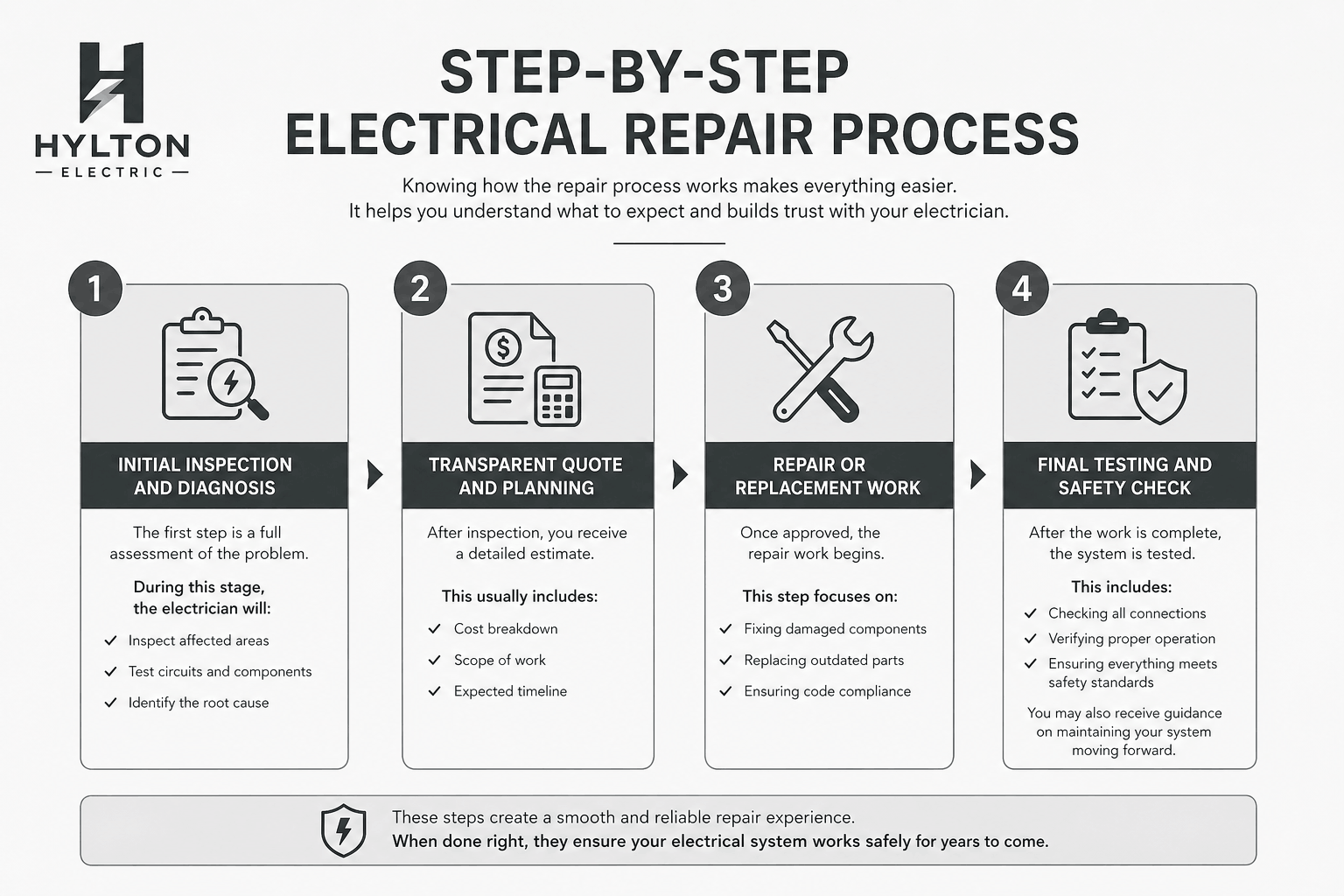
Step-by-Step Electrical Repair Process
Knowing how the repair process works makes everything easier. It helps you understand what to expect and builds trust with your electrician. Most professional services follow a clear, step-by-step approach.
1. Initial Inspection and Diagnosis
The first step is a full assessment of the problem.
During this stage, the electrician will:
-
Inspect affected areas
-
Test circuits and components
-
Identify the root cause
A proper diagnosis ensures the issue is fixed the first time correctly.
2. Transparent Quote and Planning
After inspection, you receive a detailed estimate.
This usually includes:
-
Cost breakdown
-
Scope of work
-
Expected timeline
Clear planning helps avoid confusion and keeps the project on track.
3. Repair or Replacement Work
Once approved, the repair work begins.
This step focuses on:
-
Fixing damaged components
-
Replacing outdated parts
-
Ensuring code compliance
Safety remains the top priority throughout the process.
4. Final Testing and Safety Check
After the work is complete, the system is tested.
This includes:
-
Checking all connections
-
Verifying proper operation
-
Ensuring everything meets safety standards
You may also receive guidance on maintaining your system moving forward.
These steps create a smooth and reliable repair experience. When done right, they ensure your electrical system works safely for years to come.
Preventive Maintenance Tips for Tampa Homes
Electrical problems often build up over time. With regular care, you can catch issues early and avoid costly repairs. In Tampa, preventive maintenance matters even more because of humidity and frequent storms.
A few simple habits can keep your system running smoothly year-round.
Routine Electrical Checks You Should Do
Regular checks help you spot warning signs before they turn serious.
-
Test GFCI outlets once a month
-
Check your breaker panel for heat or unusual sounds
-
Look for loose or damaged outlets
-
Watch for flickering lights in different rooms
If anything seems off, schedule a professional inspection. It’s better to act early than deal with a major repair later.
Storm Preparedness Tips for Tampa Homes
Storms are a normal part of life in Tampa. Preparing your electrical system helps reduce damage during outages or surges.
-
Install whole-house surge protection
-
Unplug sensitive electronics during storms
-
Inspect outdoor wiring and fixtures
-
Keep backup power options ready
These steps reduce the impact of sudden voltage changes and power loss.
When to Schedule Professional Maintenance
Even if everything looks fine, regular inspections are still important.
You should schedule a professional check:
-
Once every 1–2 years
-
Before buying or selling a home
-
After a major storm or power surge
Routine inspections help extend the life of your electrical system and improve safety.
DIY vs Professional Electrical Repairs
Many homeowners like to handle small repairs themselves. While that works for basic tasks, electrical systems require caution. Knowing the difference between safe DIY work and professional repairs protects you from serious risks.
What You Can Safely Do Yourself
Some simple tasks are generally safe if done carefully:
-
Replace light bulbs or fixtures
-
Reset a tripped breaker
-
Test outlets using basic tools
These tasks do not involve complex wiring or high risk.
What You Should Never Try on Your Own
Certain jobs require proper training and tools. Attempting them yourself can be dangerous.
-
Electrical panel repairs
-
Wiring or rewiring
-
Generator installation
-
Fixing frequent breaker issues
These tasks involve high voltage and strict code requirements. A mistake can lead to injury or fire.
Why Professional Repairs Are Worth It
Hiring a professional may cost more upfront, but it offers long-term benefits:
-
Safe and code-compliant work
-
Accurate diagnosis of issues
-
Reduced risk of future failures
-
Warranty-backed repairs
In most cases, professional service saves both time and money over the long run.
Benefits of Hiring a Professional Electrician
Choosing a qualified electrician gives you more than just a quick fix. It ensures your entire system works safely and efficiently.
- Safety Comes First
Electricians follow strict safety standards. They know how to handle complex systems without putting your home at risk.
- Compliance with Local Codes
Electrical work must meet Florida regulations. A licensed professional ensures all repairs follow local codes and pass inspections.
- Long-Term Cost Savings
Proper repairs prevent repeat issues. This reduces the need for frequent fixes and protects your appliances.
- Reliable and Guaranteed Work
Most professional services offer warranties. This gives you confidence that the work will last.
Residential vs Commercial Electrical Repairs
Electrical systems vary based on the type of property. Residential and commercial repairs require different approaches.
Key Differences in System Design
-
Residential systems handle lower power loads
-
Commercial systems support heavy equipment and larger setups
Complexity of Repairs
Commercial projects often involve:
-
Larger panels
-
More circuits
-
Advanced safety systems
Residential repairs are usually simpler but still require professional care.
Compliance and Regulations
Both types must meet safety standards, but commercial projects follow stricter rules due to higher risk levels.
Smart Home and Modern Electrical Upgrades
Modern homes rely more on technology than ever before. Upgrading your electrical system improves convenience and efficiency.
Popular Smart Electrical Upgrades
-
Smart switches and dimmers
-
Automated lighting systems
-
EV charger installations
-
Energy-efficient LED upgrades
These upgrades not only improve comfort but also help reduce energy costs.
Why Upgrades Matter in Tampa Homes
With growing energy demands, older systems struggle to keep up. Upgrading ensures your home can support modern devices safely.
Electrical Safety Tips Every Homeowner Should Know
Safety should always be a priority. Simple habits can prevent serious accidents.
Everyday Safety Practices
-
Avoid overloading outlets
-
Use surge protectors for electronics
-
Keep electrical devices away from water
-
Replace damaged cords immediately
Child and Family Safety Measures
-
Install tamper-resistant outlets
-
Keep cords out of reach
-
Teach basic electrical safety
Why Tampa Homeowners Need Storm-Ready Electrical Systems
Tampa’s weather makes storm preparation essential. Electrical systems must handle sudden changes in power conditions.
Common Storm-Related Risks
-
Power outages
-
Voltage surges
-
Damage to outdoor wiring
How to Prepare Your Home
-
Install backup generators
-
Use surge protection systems
-
Schedule inspections before storm season
Prepared homes recover faster and face fewer repair costs after storms.
How Often Should You Schedule Electrical Inspections?
Regular inspections keep your system in good condition. They also help identify hidden issues early.
Recommended Inspection Timeline
-
Every 1–2 years for standard homes
-
Before major renovations
-
After severe weather events
Signs You Should Schedule an Inspection Sooner
-
Frequent breaker trips
-
Flickering lights
-
Unusual smells or sounds
These signs indicate that your system needs immediate attention.
Choosing Local vs National Electrical Service Providers
Homeowners often choose between local electricians and large national companies. Each option has its advantages.
Benefits of Hiring a Local Electrician
-
Faster response times
-
Better understanding of Tampa conditions
-
Personalized customer service
When National Companies May Be an Option
-
Larger projects with extended resources
-
Standardized service processes
However, many homeowners prefer local experts for quicker and more reliable service.
Final Thoughts – Keeping Your Tampa Home Safe with Reliable Electrical Repairs
Electrical systems need regular care to stay safe and efficient. In Tampa, weather and aging infrastructure make this even more important.
By addressing problems early, scheduling routine inspections, and working with qualified professionals, you protect both your home and your family.
Reliable electrical repair is not just about fixing issues—it’s about preventing them and ensuring your home runs smoothly every day.
Need electrical help? Call Hytlon Electric at +1 863-624-7000 or email ray@hylton-electric.com. We offer free quotes for industrial and commercial clients and serve Lakeland, Polk County, and Tampa—handling residential, commercial, and industrial work with care and reliability.
FAQs About Home Electrical Repair Service Tampa, Florida
What are the most common home electrical problems in Tampa, Florida?
Homeowners in Tampa often deal with issues caused by heat, humidity, and storms. These conditions stress electrical systems over time. As a result, some problems appear more frequently than others.
Common issues include:
-
Frequent breaker trips due to overloaded circuits
-
Flickering or dimming lights from loose wiring
-
Dead outlets caused by worn connections
-
Power surges during storms
-
Outdated panels that cannot handle modern demand
In many cases, these problems start small but grow worse if ignored. For example, a flickering light may point to a wiring issue behind the wall. Regular inspections and timely repairs help prevent bigger risks such as fire hazards or system failure.
How do I know if I need electrical repair services?
Electrical systems often give warning signs before a failure. Recognizing these early helps you avoid costly damage and safety risks.
Watch for these signs:
-
Burning smells near outlets or switches
-
Buzzing sounds from panels or wiring
-
Frequent breaker trips
-
Warm or discolored outlets
-
Sudden power loss in parts of your home
If you notice any of these, it is best to act quickly. Even minor symptoms can signal deeper problems. A professional inspection helps identify the root cause and ensures the issue is fixed safely.
How much does home electrical repair cost in Tampa?
Costs vary depending on the type of repair and the condition of your system. Simple fixes are affordable, while larger upgrades require more investment.
Typical price ranges include:
-
Outlet or switch repair: $100–$300
-
Breaker replacement: $150–$400
-
Panel upgrades: $1,500–$4,000
-
Rewiring: $3,000–$10,000+
Factors like home age, accessibility, and permit requirements also affect pricing. Emergency services may cost more due to urgency. A detailed inspection provides the most accurate estimate and helps you plan your budget.
When should I call an emergency electrician?
Some electrical issues need immediate attention. Delaying repairs in these cases can increase danger and damage.
Call emergency services if you notice:
-
Burning smells or smoke
-
Sparks or exposed wires
-
Sudden total power loss
-
Water contact with electrical systems
-
Loud buzzing from the panel
These situations often indicate serious faults. Turning off the power and calling a professional right away reduces the risk of fire or injury. Emergency electricians are trained to handle these urgent conditions safely.
Is it safe to do electrical repairs myself?
Basic tasks may be safe, but most electrical work should be left to professionals. Electricity carries serious risks if handled incorrectly.
Safe DIY tasks include:
-
Replacing light bulbs
-
Resetting breakers
-
Testing outlets
Avoid doing:
-
Wiring or rewiring
-
Panel repairs
-
Generator installation
Even small mistakes can lead to shocks or fires. Hiring a licensed electrician ensures the work meets safety standards and local codes. It also prevents future issues that may cost more to fix.
What causes circuit breakers to trip frequently?
Frequent breaker trips usually point to an underlying issue. While occasional trips are normal, repeated ones should not be ignored.
Common causes include:
-
Overloaded circuits from too many devices
-
Faulty appliances drawing excess power
-
Short circuits or damaged wiring
-
Ground faults in wet areas
Breakers protect your system by shutting off power during overloads. However, repeated tripping means the system is under stress. A professional inspection helps identify the exact cause and prevents further damage.
How often should I schedule an electrical inspection?
Regular inspections keep your system safe and efficient. They also help catch hidden issues early.
Recommended timing:
-
Every 1–2 years for most homes
-
Before buying or selling property
-
After major storms or power surges
Older homes may need more frequent checks due to aging systems. Inspections include testing wiring, panels, and safety devices. This proactive approach reduces the risk of sudden failures and costly repairs.
What is a GFCI outlet, and why is it important?
A GFCI (Ground Fault Circuit Interrupter) outlet protects you from electrical shocks. It shuts off power when it detects imbalances in current.
These outlets are commonly installed in:
-
Kitchens
-
Bathrooms
-
Outdoor areas
-
Laundry rooms
They are especially important in areas exposed to moisture. If a fault occurs, the outlet cuts power instantly. This reduces the risk of injury. Regular testing ensures they work properly and continue to provide protection.
Do I need to upgrade my electrical panel?
Many older homes in Tampa still use outdated panels. These systems may not support modern electrical demands.
Signs you may need an upgrade:
-
Frequent breaker trips
-
Limited space for new circuits
-
Buzzing sounds from the panel
-
Use of outdated fuse boxes
Upgrading improves safety and allows your home to handle more appliances. It also reduces strain on your system and prevents overload issues.
What are the benefits of surge protection?
Surge protection helps protect your home from sudden voltage spikes. These spikes often occur during storms or power grid changes.
Benefits include:
-
Protection for electronics and appliances
-
Reduced risk of electrical damage
-
Longer lifespan for devices
Whole-house surge protectors offer better coverage than plug-in units. They guard your entire system against unexpected power surges.
How long does an electrical repair take?
The time required depends on the type of repair. Simple fixes are quick, while larger projects take longer.
Typical timelines:
-
Minor repairs: 1–2 hours
-
Outlet or switch replacement: same day
-
Panel upgrades: 1–2 days
-
Full rewiring: several days to weeks
A clear estimate from your electrician helps set expectations. Proper planning ensures the work is completed safely and efficiently.
What should I do during a power outage?
Power outages can happen suddenly, especially during storms. Taking the right steps keeps you safe.
-
Turn off major appliances
-
Use flashlights instead of candles
-
Check your breaker panel
-
Contact your utility provider if needed
If the outage affects only your home, it may be an internal issue. In that case, call an electrician for inspection and repair.
Are older homes more likely to need electrical repairs?
Yes, older homes often require more maintenance. Their systems were not designed for modern energy use.
Common issues include:
-
Outdated wiring materials
-
Limited circuit capacity
-
Aging panels
Upgrading these systems improves safety and efficiency. It also helps prevent frequent breakdowns and supports newer appliances.
What is the difference between rewiring and repair?
Electrical repair fixes specific issues, while rewiring replaces the entire system or large sections of it.
Repair is used for:
-
Faulty outlets
-
Broken switches
-
Minor wiring issues
Rewiring is needed when:
-
The system is outdated
-
Wiring is damaged or unsafe
-
The home needs more capacity
A professional assessment determines which option is best for your situation.
Can electrical problems increase my energy bill?
Yes, faulty electrical systems can waste energy. This leads to higher utility costs over time.
Common causes include:
-
Loose wiring
-
Inefficient lighting
-
Overloaded circuits
Fixing these issues improves efficiency and reduces energy waste. Upgrading to modern systems also helps lower long-term costs.
Why do my lights dim when I use appliances?
Dimming lights often indicate that your system is struggling to handle power demand.
Possible causes include:
-
Overloaded circuits
-
Weak or outdated panel
-
Voltage fluctuations
If this happens often, it’s best to get your system checked. Ignoring the issue can lead to more serious electrical problems.
What are the signs of faulty wiring?
Faulty wiring can be dangerous if left untreated. It often shows clear warning signs.
Look for:
-
Burning smells
-
Flickering lights
-
Warm outlets
-
Frequent breaker trips
These symptoms suggest underlying issues. A professional inspection ensures the wiring is repaired or replaced safely.
Do electrical repairs require permits in Tampa?
Not all repairs need permits. Small fixes usually do not require approval.
Permits are typically needed for:
-
Panel upgrades
-
Major rewiring
-
Generator installation
A licensed electrician will handle permit requirements and ensure all work meets local codes.
How can I prevent electrical problems in my home?
Preventive care reduces the risk of major issues. Simple steps make a big difference.
-
Schedule regular inspections
-
Avoid overloading outlets
-
Use surge protection
-
Replace damaged cords
Staying proactive keeps your system safe and reliable.
Why should I hire a licensed electrician instead of a handyman?
Electrical work requires specialized training. Hiring a licensed electrician ensures the job is done correctly.
Benefits include:
-
Compliance with safety codes
-
Accurate diagnosis
-
Reliable, long-term repairs
-
Insurance protection
While a handyman may handle small tasks, complex electrical work should always be done by a qualified professional.
Leave a Reply