
Power outages are unpredictable. One moment everything is running smoothly, and the next, your home or business is in the dark. That’s where a generator becomes essential. However, simply buying a generator is not enough. If it is not sized correctly, it may fail when you need it most.
Many people struggle with this step. Some choose a unit that is too small and cannot handle the load. Others go too large and end up paying more than necessary. The right approach sits in the middle. It starts with understanding your power needs and calculating them properly.
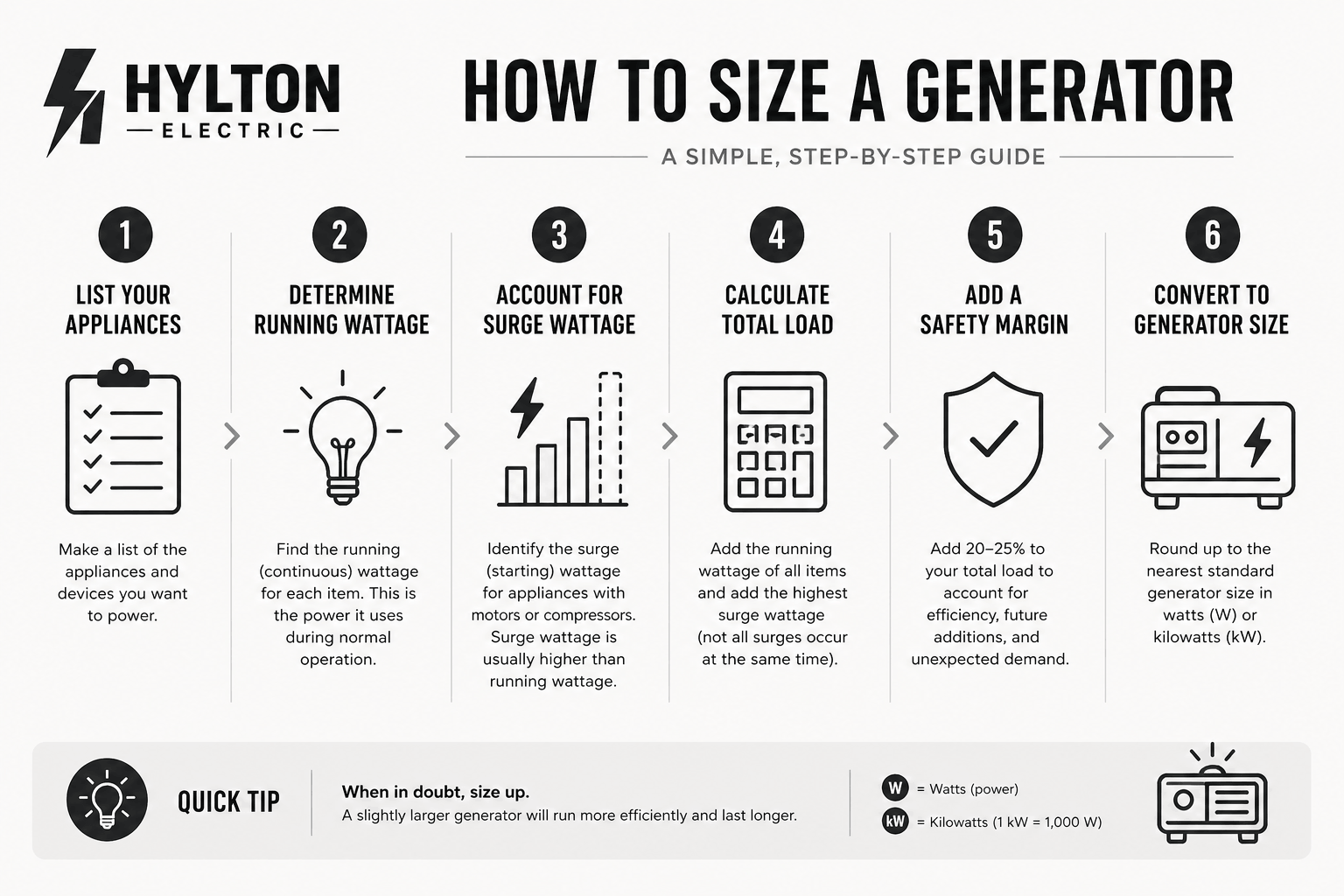
This guide breaks the process down into simple steps. You will learn how to calculate your load, understand key power terms, and choose a generator that fits your setup. Whether you are planning backup power for a home or a commercial space, this article will help you make a confident decision.
Why Generator Sizing Matters More Than You Think
Choosing the right generator size is not just a technical step. It directly affects how your home or business performs during a power outage. A properly sized generator keeps your essential systems running without interruption. On the other hand, a poorly sized unit can lead to costly problems.
Many people assume bigger is better. Others try to save money by going smaller. In reality, both approaches can cause issues. The goal is to find a balance based on your actual power needs.
Let’s break down why sizing matters so much.
What happens if your generator is too small
A generator that is too small will struggle from the start. It may turn on, but it cannot handle the total load.
Here’s what typically happens:
-
The generator overloads and shuts down
-
Appliances fail to start, especially motors and HVAC systems
-
Voltage drops damage sensitive equipment
-
Frequent tripping reduces system reliability
For example, air conditioners and refrigerators need extra power to start. If the generator cannot supply that surge, those systems simply will not run. Over time, repeated overloads can shorten the life of your generator. This leads to more repairs and higher costs.
Problems with oversizing a generator
Going too large may seem safer, but it comes with its own drawbacks.
An oversized generator often:
-
Costs more upfront than necessary
-
Uses more fuel than required
-
Runs inefficiently at low loads
-
Develops maintenance issues like wet stacking (in diesel units)
When a generator runs below its ideal load range, it does not perform efficiently. Fuel does not burn completely, which leads to buildup inside the engine. This can increase wear and reduce long-term reliability. In simple terms, bigger is not always better. It just means more expense without real benefit.
Real-world impact of proper generator sizing
When your generator is sized correctly, everything works as expected.
You get:
-
Reliable power during outages
-
Smooth startup for all essential equipment
-
Better fuel efficiency
-
Longer equipment lifespan
For homeowners, this means comfort and safety. Your lights stay on, your food stays cold, and your HVAC system continues to run. For businesses, the stakes are even higher. Proper sizing helps avoid downtime, protects equipment, and keeps operations moving.
That’s why generator sizing is not something to guess. It should be calculated carefully.
Understanding Generator Power Basics (kW, kVA, and Watts Explained)
Before you size a generator, you need to understand how power is measured. The terms may sound technical at first, but they are easy to grasp once broken down. These basics will help you make accurate decisions.
What is wattage, and why does it matter
Wattage is the amount of power an appliance needs to run. Every device in your home or business has a watt rating.
There are two key types of wattage:
-
Running watts – the power needed to keep equipment operating
-
Starting watts – the extra power needed to start motors
Starting watts are usually higher. For example, a refrigerator may need twice as much power to start as it does to run. If you ignore starting watts, your generator may fail under load. That’s why both values must be included in your calculation.
You can usually find wattage information:
-
On the appliance label
-
In the user manual
-
On manufacturer websites
Difference between kW and kVA
Generators are often rated in kilowatts (kW) or kilovolt-amperes (kVA). These terms are related but not the same.
-
kW (kilowatts) measures real power—the power that actually does work
-
kVA (kilovolt-amperes) measures apparent power—the total power supplied
The difference comes down to how efficiently power is used. Most electrical systems do not use all the supplied power effectively. Some energy is lost due to the nature of the load.
Power factor explained simply
Power factor shows how efficiently electricity is being used. It is a number between 0 and 1. For most generators, the standard power factor is 0.8.
This means:
-
Only 80% of the power is doing useful work
-
The rest is part of the electrical load, but is not used directly
This is why kVA is usually higher than kW.
Basic formulas used in generator sizing
To size a generator correctly, a few simple formulas are used.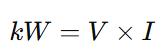
This formula shows how power relates to voltage and current.
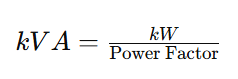
This helps convert real power into generator capacity.
You do not need to calculate everything manually. However, understanding these relationships helps you avoid mistakes and choose the right generator size.
Step-by-Step Guide to Sizing a Generator
Now that you understand the basics, let’s move into the actual process. This is where everything comes together.
Sizing a generator is not complicated when you follow a clear method. Each step builds on the previous one. By the end, you will have a reliable estimate of the generator size you need.
Step 1 – List all appliances and equipment
Start by identifying what you want to power during an outage.
For homes, this usually includes:
-
Refrigerator
-
Lights
-
HVAC system
-
Microwave
-
Sump pump
For businesses, the list may include:
-
Office equipment
-
Servers and networking devices
-
Machinery
-
Lighting systems
It helps to separate items into two groups:
-
Essential loads – must run at all times
-
Non-essential loads – can stay off during outages
This step keeps your generator size realistic and cost-effective.
Step 2 – Determine running wattage
Next, find the running wattage for each item. This is the power required to keep equipment operating.
You can find this information:
-
On the appliance label
-
In the manual
-
On the manufacturer’s website
If exact data is not available, you can use average values. However, accurate numbers always give better results. Write down the running watts for every item on your list.
Step 3 – Account for starting (surge) wattage
Some equipment needs extra power to start. This is called starting watts or surge watts.
This mainly applies to:
-
Air conditioners
-
Refrigerators
-
Pumps
-
Motors
Starting wattage can be 2–3 times higher than running wattage.
For example:
-
A refrigerator may run at 700 watts
-
But it requires 1,200–2,000 watts to start
When sizing a generator, you do not add all surge watts together. Instead, you account for the largest surge load. This is a key step that many people miss.
Step 4 – Calculate total load
Now, add up your power requirements.
Follow this simple approach:
-
Add all running watts
-
Identify the highest starting watt load
-
Add that surge value to the total
This gives you your base power requirement. This method works because not all appliances start at the same time. So, you only plan for the largest surge.
Step 5 – Add a safety margin (20–25%)
At this point, you have a working estimate. However, it is not complete without a safety margin. Add 20–25% extra capacity to your total load.
This helps cover:
-
Future appliances
-
Unexpected load changes
-
System efficiency losses
Without this buffer, your generator may run too close to its limit. Over time, that can reduce performance and lifespan.
Step 6 – Convert to generator size (kW/kVA)
Finally, convert your total load into the generator size you need.
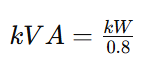
Most generators use a power factor of 0.8, so this formula gives a reliable estimate.
Once you calculate the value:
-
Round up to the nearest available generator size
-
Choose a unit that meets or slightly exceeds your requirement
This ensures stable performance under all conditions.
Generator Load Calculation Example (Simple Walkthrough)
Let’s put everything into practice with a simple example. This will make the process easier to understand.
Example for a typical home
Assume you want to power the following:
-
Refrigerator
-
Air conditioner
-
Lights
Step-by-step calculation table
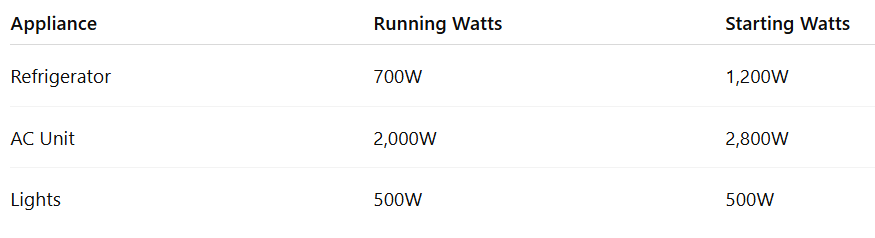
Final load calculation
Now, calculate step by step:
1. Add running watts
700 + 2000 + 500 = 3,200 watts
2. Add the highest starting wattage
Highest surge = 2,800 watts (AC unit)
Total load = 3,200 + 2,800 = 6,000 watts
3. Add safety margin (25%)
6,000 × 1.25 = 7,500 watts
Final result
You would need a generator rated at at least 7.5 kW. In real-world terms, you would likely choose an 8 kW generator to ensure proper performance. This example shows how a simple calculation can prevent costly mistakes.
Types of Loads That Affect Generator Size
Not all electrical loads behave the same way. Some are steady and predictable. Others draw a large amount of power for a short time. Understanding these differences is important. It helps you size your generator more accurately and avoid performance issues.
Let’s look at the three main types of loads.
Resistive loads
Resistive loads are the simplest type. They draw power at a constant rate and do not require extra energy to start.
Common examples include:
-
Incandescent and LED lighting
-
Electric heaters
-
Toasters and ovens
These loads are easy to calculate because:
-
Running watts = starting watts
-
Power demand stays stable
For generator sizing, resistive loads are straightforward. You simply add their wattage to your total load.
Inductive loads
Inductive loads are more complex. They use motors or coils, which means they need extra power to start.
Examples include:
-
Air conditioners
-
Refrigerators
-
Water pumps
-
Power tools
These loads can draw 2 to 3 times more power at startup than during normal operation. That’s why they have the biggest impact on generator sizing.
Key points to remember:
-
Always account for starting watts
-
Focus on the largest motor load
-
Avoid starting multiple heavy loads at the same time
If inductive loads are not handled properly, your generator may struggle or shut down.
Non-linear loads
Non-linear loads are common in modern homes and businesses. These devices use electronics rather than simple electrical resistance.
Examples include:
-
Computers and laptops
-
LED drivers
-
UPS systems
These loads do not draw power in a smooth way. Instead, they create small distortions in the electrical waveform.
This can lead to:
-
Reduced generator efficiency
-
Voltage instability
-
Heating in electrical components
While these loads usually do not have high starting wattage, they still affect generator performance.
For this reason, sensitive electronics often require:
-
Stable voltage output
-
High-quality generators or inverter systems
Why load types matter in real projects
In real-world installations, you will have a mix of all three load types.
For example:
-
A home may include lighting (resistive), HVAC (inductive), and electronics (non-linear)
-
A business may add motors, servers, and specialized equipment
This mix affects:
-
Generator size
-
Startup performance
-
Overall system reliability
That’s why professional electricians look beyond total wattage. They consider how each load behaves.
Residential Generator Sizing Guide
Sizing a generator for a home depends on how much of the house you want to power. Some homeowners only want essentials. Others want a full backup.
Let’s break it down.
Essential circuits vs whole-house backup
There are two common approaches to residential generator sizing.
1. Essential circuits (partial backup)
This setup powers only the most important items.
Typical essentials include:
-
Refrigerator
-
Lights
-
Internet and basic outlets
-
Heating or a small AC unit
Benefits:
-
Smaller generator size
-
Lower installation cost
-
Better fuel efficiency
2. Whole-house backup
This setup powers almost everything in your home.
That includes:
-
Central HVAC systems
-
Kitchen appliances
-
Laundry equipment
-
Multiple rooms and circuits
Benefits:
-
Full comfort during outages
-
No need to manage loads manually
However, it requires a larger generator and a higher upfront cost.
Typical generator sizes for homes
Here’s a general guideline based on home size and usage:
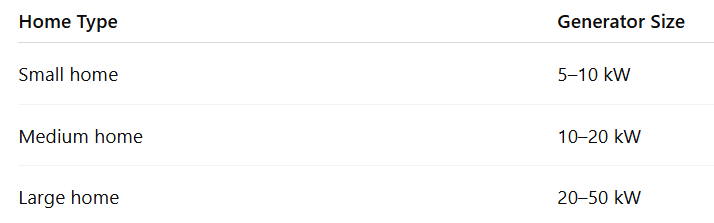
These are estimates. The actual size depends on your appliances and usage patterns.
Key appliances to prioritize
When sizing a home generator, focus on what truly matters.
Common priority loads include:
-
HVAC systems (largest power demand)
-
Refrigerators and freezers
-
Lighting
-
Medical equipment
-
Sump pumps
If you are unsure, start with the essentials. You can always expand later with a larger system.
Real-world tip for homeowners
Many homeowners try to include everything. This often leads to oversizing.
A better approach is to:
-
Identify critical loads
-
Calculate accurately
-
Add a safety margin
This keeps your system efficient and cost-effective.
Commercial Generator Sizing Considerations
Sizing a generator for a business is more involved than for a home. The loads are larger, the systems are more complex, and the consequences of failure are higher. In many cases, power loss can stop operations completely. That’s why commercial generator sizing must be precise and well planned.
Load diversity and demand factors
In commercial settings, not all equipment runs at the same time. This is known as load diversity.
For example:
-
Office lighting may run all day
-
HVAC cycles on and off
-
Machinery operates in shifts
Because of this, you do not always size a generator for the total connected load. Instead, you consider the actual demand at peak usage.
This helps:
-
Avoid oversizing
-
Reduce fuel consumption
-
Improve efficiency
However, demand must be calculated carefully. Underestimating it can lead to power shortages.
Motor starting requirements
Motors are a major factor in commercial generator sizing.
Large equipment such as:
-
Elevators
-
Industrial pumps
-
HVAC systems
-
Compressors
can draw a very high starting current. A common rule is to account for the largest motor first.
This means:
-
Identify the biggest motor load
-
Ensure the generator can handle its starting surge
-
Add other loads afterward
In some systems, motors are started in sequence. This reduces the load on the generator during startup.
Critical vs non-critical loads
Not every system needs backup power. That’s why commercial setups often divide loads into two categories:
Critical loads:
-
Emergency lighting
-
Fire protection systems
-
Security systems
-
IT infrastructure
Non-critical loads:
-
Breakroom equipment
-
Non-essential machinery
-
Decorative lighting
By separating these loads, you can:
-
Reduce generator size
-
Lower installation cost
-
Prioritize safety and operations
Industry-specific examples
Different industries have different power needs.
Office buildings:
-
Focus on lighting, HVAC, and IT systems
-
Moderate load with some variation
Retail stores:
-
Lighting and POS systems are critical
-
Refrigeration may be required
Industrial facilities:
-
Heavy machinery and motors dominate
-
High starting loads and continuous demand
Each type of facility requires a tailored approach. A one-size-fits-all method does not work.
Generator Sizing for Different Applications
Generators are used in many environments. Each application has unique requirements. Understanding these differences helps you choose the right size and type.
Home backup generators
These systems are designed for comfort and safety.
Key considerations:
-
Essential vs whole-house coverage
-
Quiet operation
-
Fuel efficiency
Most home systems range from 5 kW to 25 kW, depending on load.
Construction and job sites
Temporary power is common on construction sites.
Typical equipment includes:
-
Power tools
-
Lighting towers
-
Small machinery
These sites often use portable generators.
Key factors:
-
Mobility
-
Durability
-
Ability to handle changing loads
Industrial facilities
Industrial generators must handle heavy and continuous loads.
Requirements include:
-
High capacity
-
Reliable performance
-
Ability to support large motors
These systems are usually diesel-powered and sized in the hundreds of kW or more.
Events and temporary power
Generators are also used for events such as:
-
Outdoor festivals
-
Concerts
-
Weddings
Loads may include:
-
Sound systems
-
Lighting
-
Catering equipment
In these cases:
-
Load planning is critical
-
Backup capacity is often included
-
Quiet operation is important
Why application matters
The same generator size does not work for every situation.
Factors that change sizing include:
-
Load type
-
Duration of use
-
Environment
-
Reliability requirements
Choosing the right generator means matching it to the application, not just the wattage.
Common Generator Sizing Mistakes to Avoid
Even with the right steps, it’s easy to make mistakes when sizing a generator. These errors often lead to poor performance, higher costs, or system failure during an outage. Knowing what to avoid can save time and money.
Ignoring starting wattage
One of the most common mistakes is focusing only on running watts. As discussed earlier, many appliances need extra power to start. If you ignore this, your generator may:
-
Fail to start the key equipment
-
Trip under load
-
Shut down unexpectedly
This is especially true for:
-
Air conditioners
-
Refrigerators
-
Pumps
Always include the highest starting wattage in your calculation.
Not adding a safety margin
Some people calculate their load and stop there. This leaves no room for changes.
Without a safety margin:
-
The generator runs at full capacity
-
Performance drops over time
-
Small load increases cause overloads
Adding 20–25% extra capacity ensures stable operation and allows for future needs.
Misunderstanding kW vs kVA
Another common issue is confusion between kW and kVA.
If you size a generator using the wrong unit, you may end up with:
-
Less usable power than expected
-
Equipment that does not run properly
This simple relationship helps convert between the two. Always confirm which unit your generator uses.
Oversizing “just to be safe.”
It may seem smart to choose a much larger generator. However, this can create new problems.
Oversized generators often:
-
Costs more upfront
-
Consume more fuel
-
Run inefficiently at low loads
In diesel systems, this can lead to wet stacking, which increases maintenance needs. A properly sized generator is always the better choice.
Skipping professional load calculation
For small setups, a basic calculation may be enough. But for larger homes or commercial systems, guessing can lead to serious issues.
Without professional input, you may:
-
Miss hidden loads
-
Miscalculate demand
-
Overlook code requirements
A licensed electrician can perform a detailed load analysis and ensure everything is accurate.
Tools and Methods to Simplify Generator Sizing
Sizing a generator does not have to be difficult. Several tools and methods can make the process faster and more accurate.
Online generator sizing calculators
Online calculators are a quick way to estimate your needs.
They typically ask for:
-
Appliance types
-
Quantity of devices
-
Usage patterns
Benefits:
-
Fast results
-
Easy to use
-
Helpful for rough estimates
However, they are not always precise. Use them as a starting point, not a final answer.
Load calculation software
For commercial and complex projects, specialized software is often used.
These tools can:
-
Model real-time demand
-
Account for load diversity
-
Simulate different scenarios
They provide a higher level of accuracy compared to manual calculations.
Professional electrical assessment
The most reliable method is a professional assessment.
An experienced electrician will:
-
Inspect your system
-
Measure actual loads
-
Identify critical equipment
-
Ensure code compliance
This approach is especially important for:
-
Large homes
-
Businesses
-
Facilities with sensitive equipment
Choosing the right method
Each method has its place.
-
Use calculators for quick estimates
-
Use software for complex systems
-
Use professionals for final decisions
This layered approach gives you both speed and accuracy.
Advanced Generator Sizing Factors (For Accuracy & Performance)
Once you have a basic size in mind, there are a few advanced factors to consider. These details may not seem obvious at first, but they can affect how your generator performs in real conditions.
Ignoring them can lead to underperformance, even if your calculations are correct.
Altitude and temperature effects
Generators are rated under standard conditions. However, real environments are rarely ideal.
At higher altitudes:
-
Air becomes thinner
-
Engines receive less oxygen
-
Power output decreases
Similarly, high temperatures can:
-
Reduce engine efficiency
-
Lower overall generator capacity
As a result, generators may need to be derated. This means selecting a slightly larger unit to compensate for environmental conditions.
Voltage and phase (single vs three-phase)
Electrical systems operate on different voltage and phase configurations.
Single-phase systems:
-
Common in homes
-
Simpler and lower power demand
Three-phase systems:
-
Used in commercial and industrial setups
-
Support larger equipment and motors
Choosing the wrong type can lead to:
-
The equipment is not functioning properly
-
Imbalanced loads
-
Reduced efficiency
Always match the generator to your system’s voltage and phase.
Fuel type (diesel, gas, propane)
Fuel choice affects both sizing and performance.
Diesel generators:
-
High efficiency
-
Better for continuous loads
-
Common in commercial use
Natural gas generators:
-
Cleaner operation
-
Lower fuel storage needs
-
Ideal for homes and businesses with gas lines
Propane generators:
-
Long shelf life
-
Cleaner burning than diesel
-
Suitable for backup systems
Each fuel type has different performance characteristics. This can influence the final generator size you choose.
Runtime requirements
How long you need the generator to run also matters.
Short outages may only require a few hours of operation. However, longer outages require:
-
Larger fuel capacity
-
Efficient load management
If your generator runs continuously:
-
It should not operate at full capacity all the time
-
A slightly larger unit may improve durability
Planning for runtime helps ensure your system performs when you need it most.
Generator Sizing Chart (Quick Reference Guide)
If you need a quick estimate, charts can help. While they are not as accurate as calculations, they provide a useful starting point.
Appliance wattage chart
Here are common household appliances and their typical power needs:
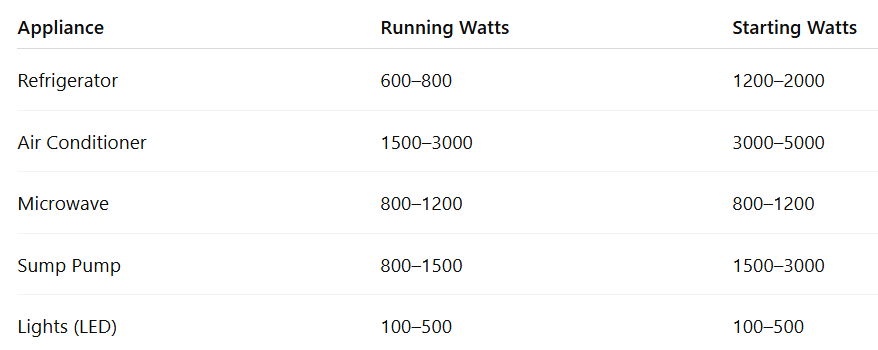
These values can vary, so always check your specific equipment when possible.
Generator size recommendations
Based on total load, here are general guidelines:
-
3–5 kW → Basic essentials (lights, small appliances)
-
5–10 kW → Small homes with key systems
-
10–20 kW → Medium homes with HVAC
-
20+ kW → Large homes or partial commercial use
For businesses, generator sizes can range from 20 kW to several hundred kW, depending on demand.
How to use this chart
Use this chart as a reference only.
For best results:
-
List your actual appliances
-
Calculate total load
-
Add a safety margin
Charts are helpful, but accurate sizing always comes from real data.
When to Call a Professional Electrician
At a certain point, generator sizing moves beyond simple calculations. If your system includes multiple circuits, large equipment, or critical loads, professional input becomes important.
A licensed electrician can assess your setup in detail. This helps avoid mistakes that are hard to fix later.
Signs you need expert help
Some situations clearly call for a professional.
You should consider expert support if:
-
Your load calculation includes multiple large appliances
-
You are planning a whole-house backup
-
Your system includes three-phase power
-
You run a business or commercial facility
-
You have sensitive equipment like servers or medical devices
In these cases, even a small error in sizing can lead to major problems during an outage.
Benefits of professional generator sizing
Working with an experienced electrician offers several advantages.
- Accurate load calculation: A professional measures actual usage instead of relying on estimates. This leads to better sizing and fewer surprises.
- Code compliance: Electrical systems must follow local codes and safety standards. Proper sizing ensures your installation meets these requirements.
- System integration: Generators must work with transfer switches, panels, and existing wiring. A professional ensures everything is compatible.
- Long-term reliability: Correct sizing reduces strain on the generator. This improves performance and extends equipment life.
Why this matters for your property
For homeowners, professional sizing means peace of mind. Your system will work when you need it most. For businesses, it protects operations. Downtime can be costly, so reliability is critical. In both cases, expert guidance helps you avoid costly mistakes.
Cost Considerations When Sizing a Generator
Generator sizing is not just about power. It also affects your budget, both upfront and over time. Understanding the cost factors helps you make a smart investment.
Equipment cost vs capacity
Larger generators cost more. This includes:
-
The unit itself
-
Higher installation requirements
-
Additional components
However, choosing the smallest option is not always better. If the generator is too small, it may fail under load or wear out quickly. The goal is to find the right balance between cost and performance.
Installation and permits
Installation costs can vary depending on:
-
Electrical upgrades
-
Transfer switch installation
-
Fuel system setup
-
Local permit requirements
More complex systems require more labor and planning. This increases the total project cost. Proper sizing helps avoid unnecessary upgrades.
Long-term operating costs
Beyond installation, generators have ongoing costs.
These include:
-
Fuel consumption
-
Routine maintenance
-
Repairs over time
An oversized generator may consume more fuel than needed. An undersized one may require frequent repairs. A correctly sized system keeps operating costs predictable and manageable.
Thinking long term
When evaluating cost, look beyond the initial price.
Consider:
-
Efficiency over time
-
Reliability during outages
-
Maintenance requirements
A well-sized generator often costs less in the long run, even if the upfront investment is slightly higher.
FAQs – How Do I Size a Generator?
How many watts do I need for my house?
The number of watts depends on what you want to power. A small home running only essentials may need 5,000 to 7,500 watts. Larger homes with HVAC systems often require 10,000 to 20,000 watts or more. The best approach is to list your appliances, calculate total running watts, add the highest starting wattage, and include a safety margin.
What size generator runs a whole house?
Most whole-house generators range between 10 kW and 25 kW. The exact size depends on your home’s square footage and the number of appliances. Homes with central air conditioning, electric heating, or multiple large systems may require a larger unit. A professional load calculation gives the most accurate result.
Can I oversize a generator safely?
Yes, but it is not always recommended. Oversizing can lead to higher fuel use, increased cost, and inefficient operation. In diesel generators, it may also cause maintenance issues. It is better to size the generator accurately with a small safety margin.
Do I need an electrician to size a generator?
For small setups, you may be able to estimate your needs. However, for whole-house systems or commercial applications, an electrician is highly recommended. They ensure accurate sizing, proper installation, and compliance with electrical codes.
Final Thoughts: Choosing the Right Generator Size
Sizing a generator is a step-by-step process. It starts with understanding your power needs and ends with selecting a unit that can handle them reliably.
The key points to remember are:
-
List all appliances and identify essential loads
-
Calculate running and starting wattage
-
Add a safety margin
-
Match the generator to your system type and usage
When done correctly, your generator will provide consistent power without unnecessary cost or stress on the system. Taking the time to size it properly makes all the difference.
Get Professional Generator Sizing Help
Choosing the right generator does not have to be complicated. With the right guidance, you can avoid guesswork and get a system that fits your needs perfectly.
At Hylton Electric, we help homeowners and businesses size and install generators with precision. Our team ensures your system is safe, efficient, and built to last.
If you are planning a generator installation or want to confirm your sizing:
-
Call us at +1 863-624–7000
-
Email ray@hylton-electric.com
Let’s make sure your power stays on when it matters most.
Leave a Reply