
Outdoor security lighting helps keep homes and businesses safe after dark. In Lakeland, properties have large yards, driveways, and outdoor areas that become dark at night. When these spaces are not lit, it becomes harder to see what is happening around the property. Poor lighting can also increase the risk of accidents and unwanted activity.
A good outdoor lighting system helps solve these problems. It brightens dark areas, improves visibility, and makes it easier to monitor the property. Proper lighting also helps with daily routines. For example, it makes it easier to park in the driveway, walk along pathways, or spend time outside in the evening.
Professional outdoor security lighting installation ensures the system works safely and reliably. Electricians install weather-resistant fixtures, secure wiring, and place lights in the best locations. When installed correctly, outdoor lighting improves both safety and the overall appearance.
For many homeowners in Lakeland, outdoor lighting is a practical upgrade. Modern systems use LED lights, motion sensors, and smart controls. They allow homeowners to manage lighting easily. These features provide reliable illumination while also helping improve security around the home.
Table of Contents
ToggleWhy Outdoor Security Lighting Is Important for Lakeland Homes
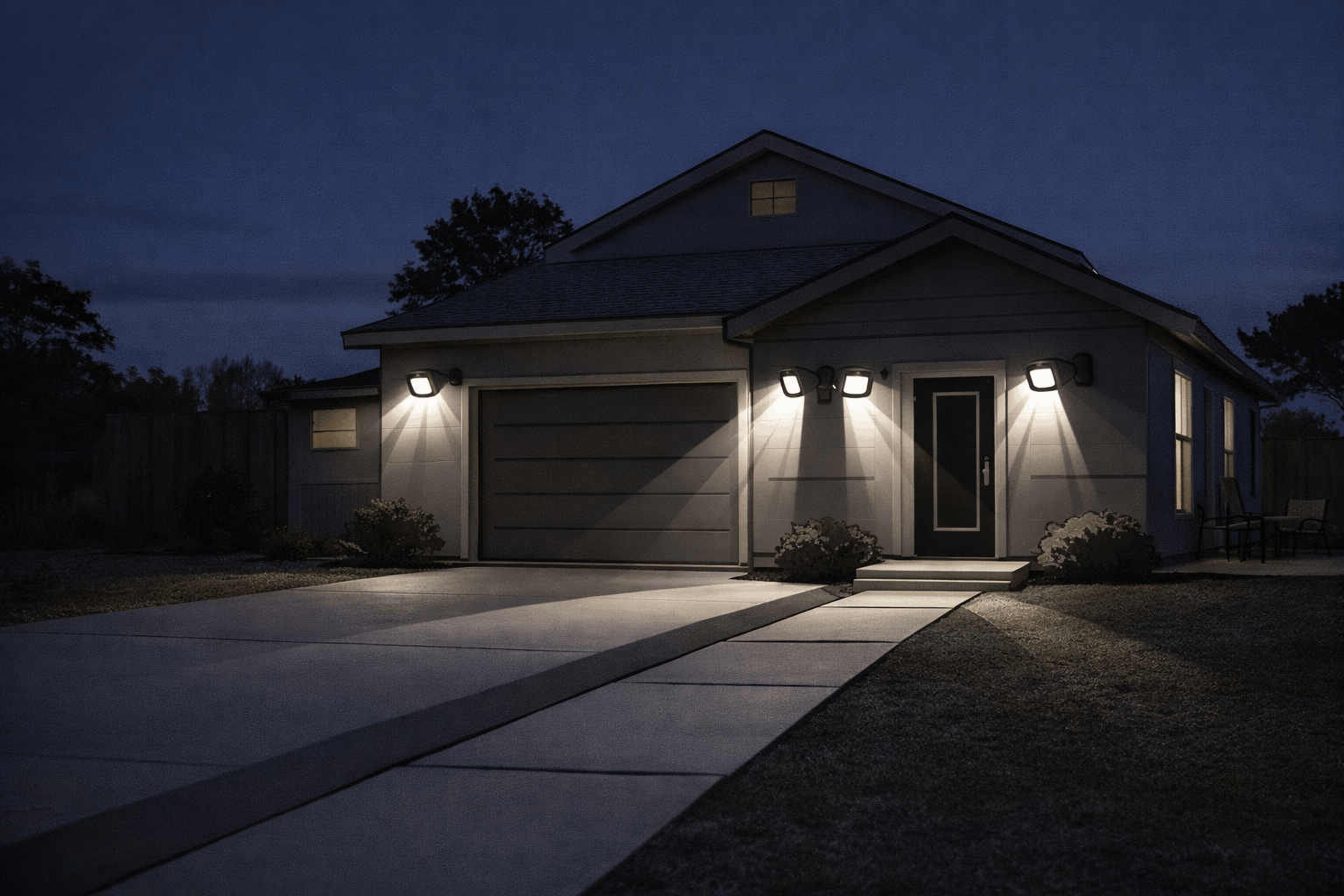
Outdoor security lighting does more than simply brighten a yard. When installed correctly, it becomes an important part of a home’s overall safety system. Proper lighting removes hiding spots and improves visibility. It helps families move safely around their property at night.
Homes in Lakeland often include driveways, patios, garages, and backyard spaces that need lighting after dark. Without it, these areas can quickly become difficult to see and unsafe to use. Security lighting solves that problem while also helping protect your property.
Well-placed lights can make a noticeable difference in how safe a home feels. They also provide peace of mind for homeowners who want better visibility around their property.
Helps Deter Intruders
Dark areas around a home create opportunities for unwanted activity. Intruders often look for properties where they can move around without being seen.
Security lighting helps prevent this by removing those dark hiding spots. When bright lights cover entrances, walkways, and yards, it becomes much harder for someone to approach unnoticed.
Lighting can also make the activity more visible to neighbors and security cameras. Motion lights are especially effective because they switch on suddenly when movement occurs.
Common areas where lighting helps deter intruders include:
-
Front entrances
-
Side doors
-
Backyards
-
Garages
-
Driveways
When these locations stay well-lit, it sends a clear message that the property is actively monitored.
Improves Safety Around Your Property
Outdoor lighting is also important for everyday safety. Many accidents around homes happen simply because areas are too dark to see clearly.
Walkways, steps, and uneven ground can become hazards at night. Security lighting improves visibility and helps prevent trips or falls.
Important areas that benefit from lighting include:
-
Walkways and sidewalks
-
Outdoor stairs
-
Driveways
-
Garden paths
Even simple lighting upgrades can make it much easier for family members and visitors to move around safely after sunset.
Enhances Curb Appeal and Property Value
Outdoor lighting serves not only a security purpose. It can also improve how a home looks at night. Well-placed lights highlight landscaping, architectural details, and outdoor living areas. This creates a welcoming appearance while still providing security benefits.
Many homeowners choose lighting that combines both function and style. Examples include:
-
Accent lighting for landscaping
-
Soft pathway lighting
-
Floodlights for wide coverage
-
Motion lights for added protection
A professionally installed lighting system can increase curb appeal. They make a property feel more polished after dark.
Provides Peace of Mind
Good lighting helps homeowners feel more comfortable at night. When yards and entrances remain visible, it becomes easier to monitor what is happening around the property.
Modern lighting systems can also include timers, motion sensors, and smart controls. These features allow homeowners to manage lighting automatically or adjust it through mobile.
As a result, homeowners gain better control over their outdoor lighting and security.
Types of Outdoor Security Lighting Systems
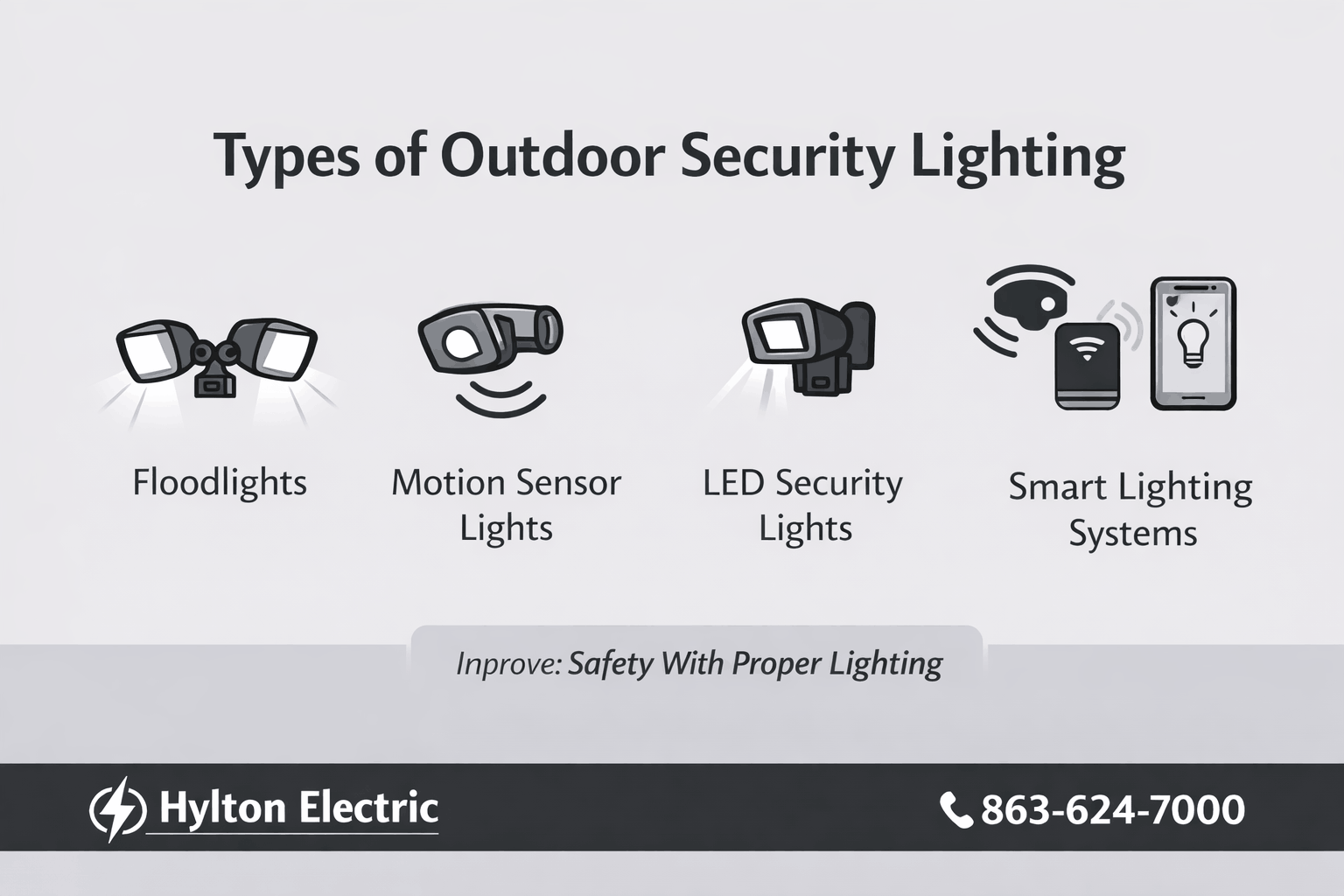
Outdoor security lighting systems come in several different styles. Each type serves a specific purpose depending on the size of the property and the areas that need illumination.
Most homes use a combination of lighting fixtures rather than relying on a single type. This approach creates better coverage and ensures that important areas remain visible at night.
Choosing the right fixtures helps create a balanced system. The result is better security, higher efficiency, and long-term reliability.
Floodlights
Floodlights are one of the most common types of outdoor security lights. These fixtures produce strong, wide beams that cover large areas.
Because they provide broad illumination, floodlights work well in locations such as:
-
Driveways
-
Backyards
-
Parking areas
-
Garages
-
Side yards
Floodlights are usually mounted high on exterior walls or poles. This placement allows them to spread light across a wide section of the property.
Modern LED floodlights are bright, energy-efficient, and designed to withstand outdoor conditions.
Motion Sensor Security Lights
Motion sensor lights activate automatically when movement is detected. These lights remain off most of the time and switch on only when activity occurs.
This feature offers several advantages. First, it saves energy because the lights operate only when needed. Second, the sudden light can surprise intruders and alert homeowners to movement.
Motion lights are often installed near:
-
Entry doors
-
Driveways
-
Garages
-
Backyards
-
Side yards
When combined with security cameras, motion lighting improves visibility. It makes recorded footage clearer.
LED Security Lights
LED lighting has become the preferred choice for most outdoor security systems. Compared with older lighting technologies, LEDs offer better efficiency and longer lifespans.
Key advantages of LED security lighting include:
-
Lower electricity usage
-
Longer operating life
-
Bright, consistent light output
-
Reduced maintenance needs
LED fixtures also perform well in outdoor environments. Many are designed to resist moisture, heat, and corrosion, which is important for Florida’s climate.
Smart Security Lighting Systems
Smart lighting systems add another level of convenience and control. These systems allow homeowners to manage lighting through mobile apps or automated schedules.
Smart lighting features may include:
-
Remote lighting control
-
Scheduled on and off times
-
Integration with home security systems
-
Motion alerts sent to smartphones
These systems are becoming popular because they combine security lighting with home automation. For homeowners who want greater control and efficiency, smart outdoor lighting can be a great upgrade.
Best Places to Install Outdoor Security Lighting
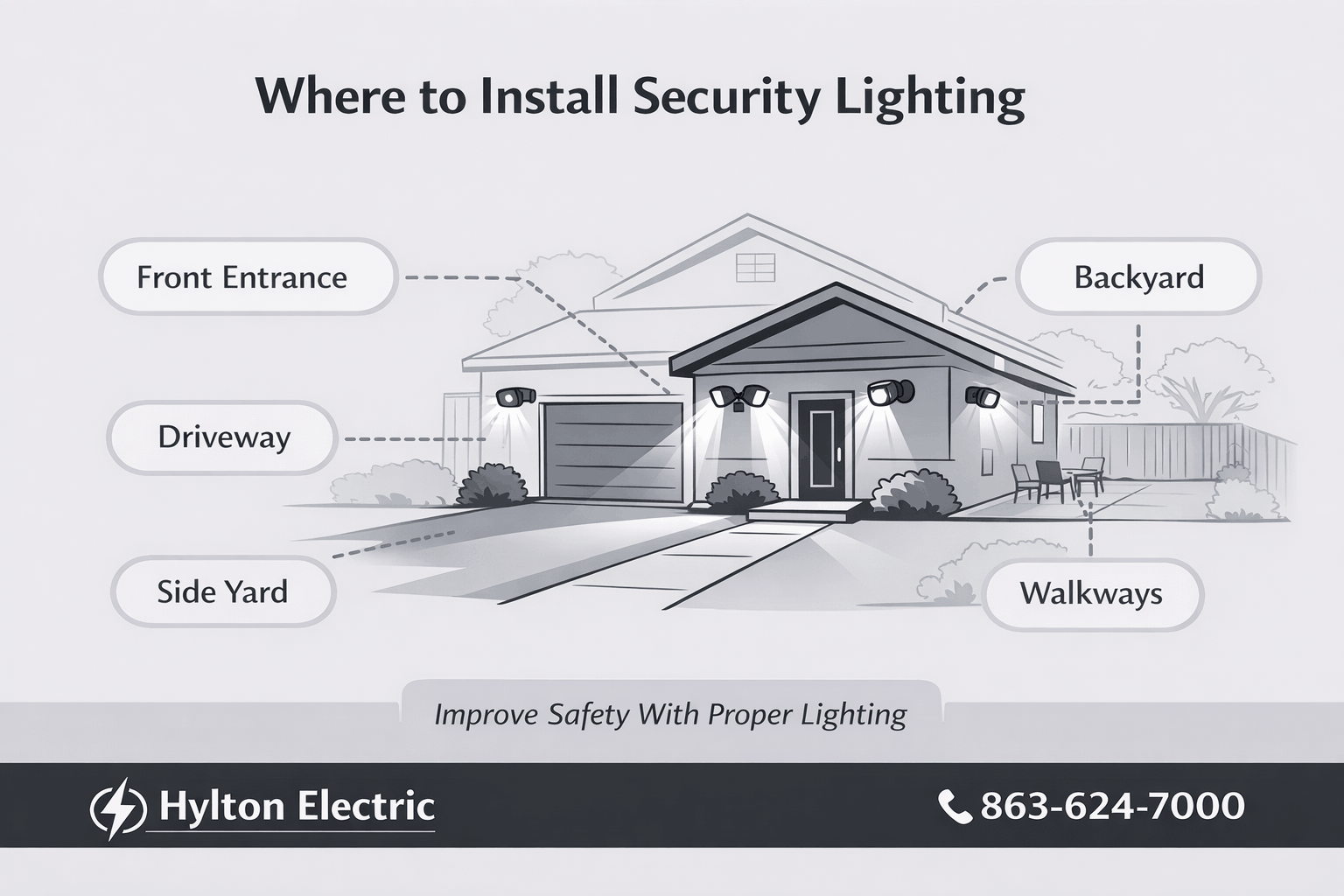
Choosing the right locations for outdoor security lighting is just as important as choosing the lights. Even bright fixtures cannot improve security if they are placed in the wrong areas. Proper placement helps keep the entire property visible after dark.
Most homes in Lakeland have several areas that benefit from lighting. These include entrances, driveways, walkways, and backyard spaces. Lighting these areas removes dark spots and improves visibility around the home.
Electricians often begin by evaluating the property. They review the home layout, landscaping, and electrical connections. This helps them place lights where they provide the best coverage without creating glare.
Entry Points
Every exterior door should have security lighting nearby. Entry points are used often by homeowners and visitors, but they can also attract unwanted activity when left in the dark.
Adding lights around these areas improves visibility and makes it easier to see who is approaching the home.
Common entry points that should be illuminated include:
-
Front doors
-
Back doors
-
Side entrances
-
Garage access doors
Motion sensor lights work especially well near entry points. They activate when someone approaches and provide instant visibility around the doorway.
Well-lit entrances also improve security camera footage. Cameras capture clearer images when the surrounding area has adequate lighting.
Driveways and Garages
Driveways often become very dark at night, especially in areas with little street lighting. Since many people enter and leave their homes through the garage, keeping this space well lit helps improve safety and visibility.
Security lighting near the garage helps homeowners safely park vehicles and move between the car and the house.
Lighting is commonly installed in locations such as:
-
Above garage doors
-
Along driveway edges
-
Near garage entry doors
Floodlights are often used in these spaces because they provide wide coverage. A single fixture mounted above a garage can illuminate a large portion of the driveway.
This lighting also makes it easier to notice unfamiliar vehicles or activity near the home.
Walkways and Pathways
Path lighting is one of the most practical types of outdoor lighting. It guides people safely through the property while also adding visual appeal to the landscape.
Walkways that lead to entrances should remain clearly visible at night. Without lighting, uneven ground or steps can become difficult to see.
Areas that commonly benefit from pathway lighting include:
-
Front yard walkways
-
Garden paths
-
Side yard access paths
-
Outdoor stairways
Low-level lights along these routes create gentle light that improves safety without glare.
Backyard and Patio Areas
Backyards are often the largest dark spaces around a home. When left unlit, these areas can become difficult to monitor from inside the house.
Security lighting helps homeowners maintain visibility across the yard while also making outdoor spaces more usable at night.
Common backyard lighting locations include:
-
Patio areas
-
Decks
-
Pool surroundings
-
Outdoor kitchens
-
Yard gathering spaces
Floodlights or wall-mounted fixtures work well in these areas because they provide wide lighting.
When installed properly, backyard lighting improves security. It allows homeowners to use outdoor spaces comfortably in the evening.
Property Perimeter and Dark Corners
Some areas of a property naturally remain darker than others. Side yards, fences, storage areas, and tree lines often create shadows where activity can go unnoticed.
Security lighting placed along the perimeter of the property helps eliminate these blind spots.
Important locations for perimeter lighting include:
-
Side yards between houses
-
Fence lines
-
Storage sheds
-
Detached garages
-
Areas behind landscaping or trees
Lighting these locations creates a complete security system around the home. Instead of focusing on just one area, the entire property becomes visible after dark.
When the perimeter stays well-lit, it becomes much harder for anyone to approach the home without being seen.
Outdoor Lighting Challenges in Florida
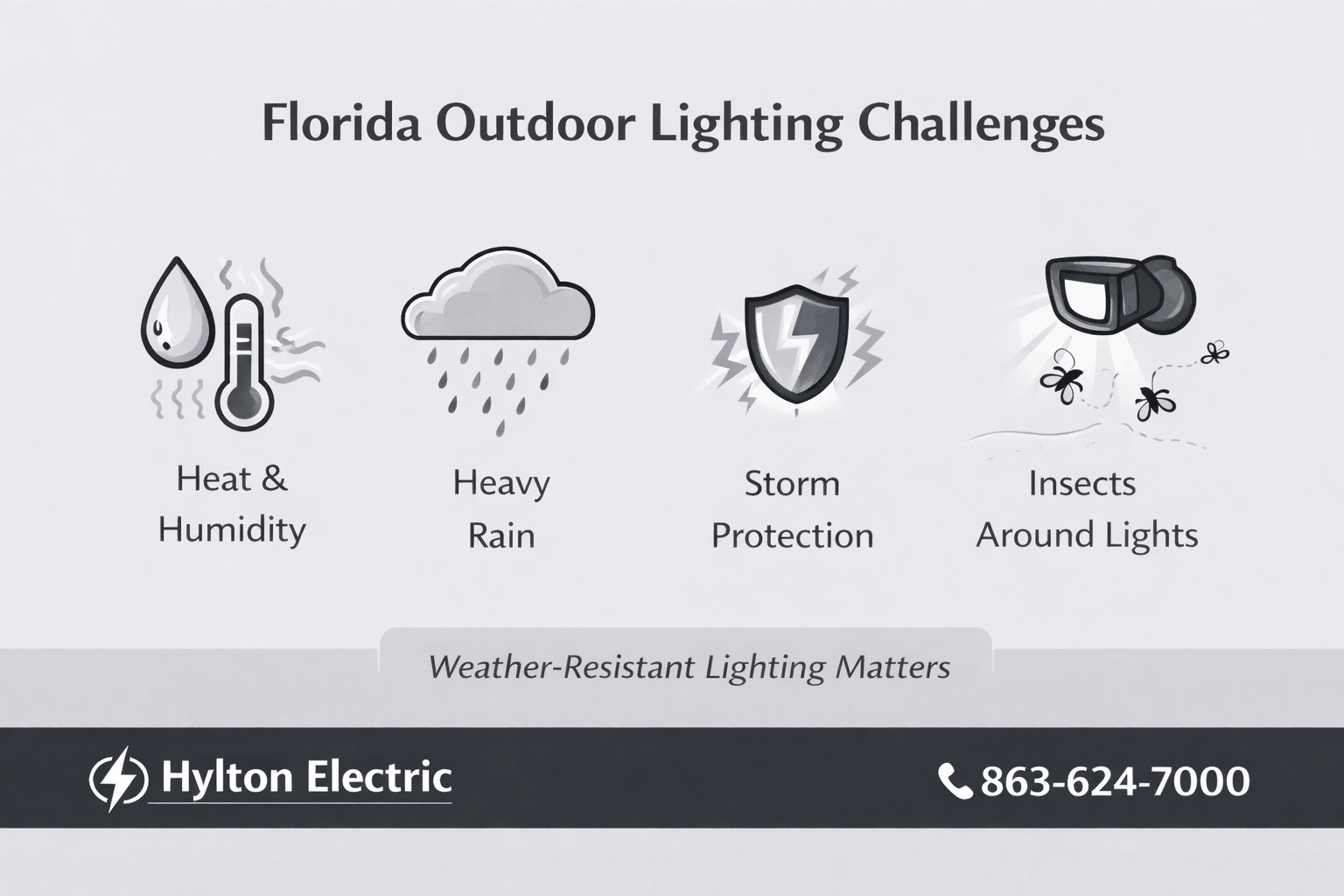
Florida’s climate can be tough on outdoor electrical systems. Heat, humidity, and heavy rain can slowly damage lighting equipment if it is not designed for outdoor use.
Lakeland often experiences storms and high moisture levels. Because of this, outdoor lighting must be durable and weather resistant. Using outdoor-rated fixtures and proper installation helps prevent many common electrical problems.
Expert electricians choose materials/ installation methods that work well in Florida’s climate.
Heat and Humidity
Florida’s warm climate exposes outdoor lighting to heat and humidity for much of the year. Moisture in the air can slowly affect metal parts and electrical connections. If fixtures are not sealed properly, moisture can cause corrosion or internal damage.
High-quality outdoor fixtures are built to handle these conditions. Electricians often recommend lighting that includes:
-
Sealed housings
-
Rust-resistant materials
-
Weather-rated electrical components
These features help outdoor lighting systems last longer in humid environments.
Heavy Rain and Storms
Lakeland regularly experiences heavy rain and strong storms. Outdoor lighting must be able to handle these conditions without allowing water to reach electrical parts.
Proper installation is very important. Electricians make sure wiring and connections stay protected from moisture.
Common protective features include:
-
Weatherproof electrical boxes
-
Waterproof wiring connections
-
Properly sealed fixtures
-
Ground fault protection
These measures help prevent electrical damage and keep outdoor lighting working safely.
Insects Around Outdoor Lights
Insects are another common issue with outdoor lighting in Florida. Many lights attract bugs, which can gather around fixtures and entrances.
While insects cannot be completely avoided, some lighting choices can reduce the problem.
Homeowners often choose:
-
Warm LED lights
-
Downward-facing fixtures
-
Lower brightness near entry doors
These options tend to attract fewer insects while still providing good lighting.
Low Voltage vs Line Voltage Security Lighting
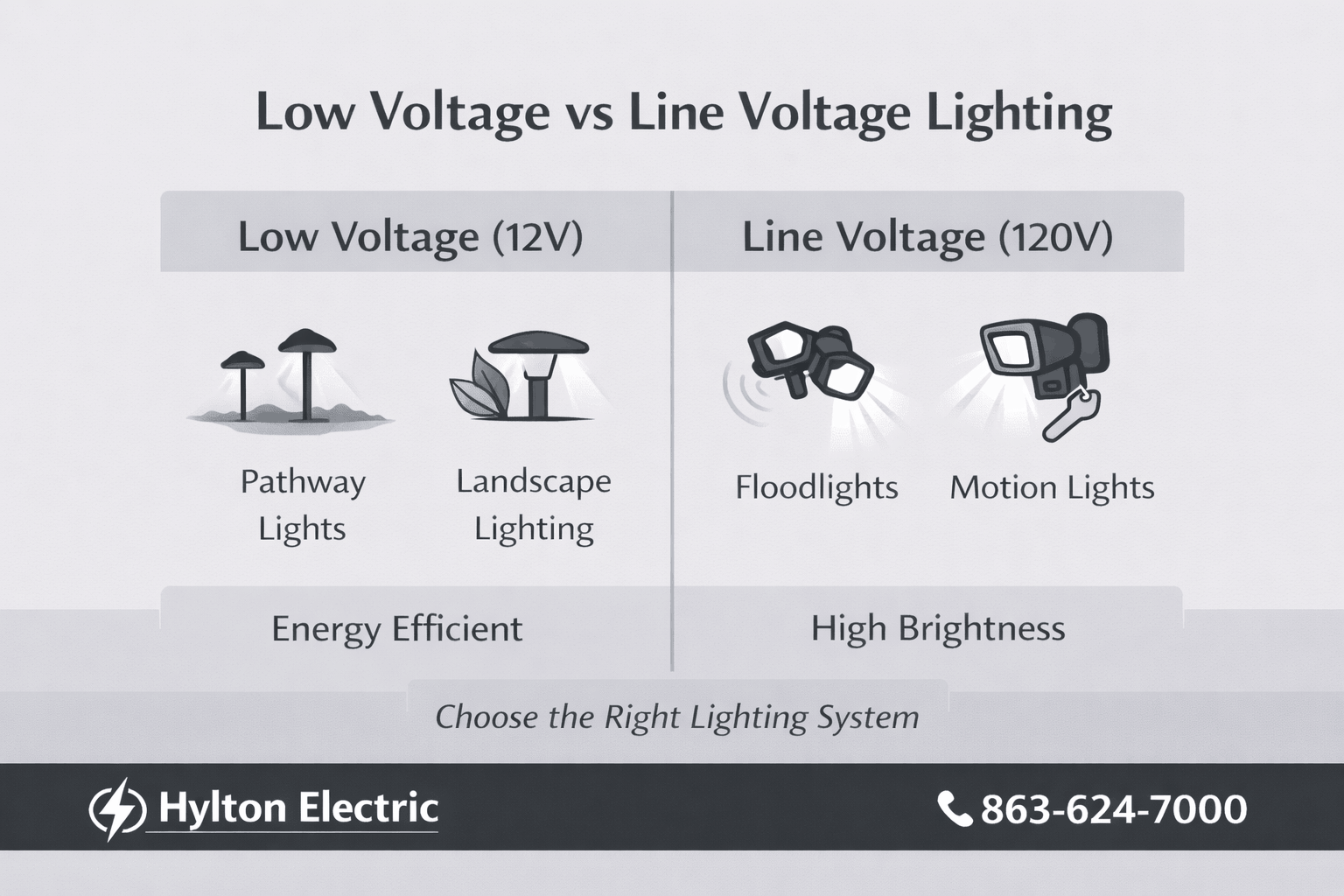
Outdoor lighting systems fall into two main types: low-voltage lighting and line voltage lighting. Both options serve different purposes around a property. The right choice depends on how bright the light needs to be, where it will be installed, and the overall lighting design.
Many electricians use a mix of both systems to create balanced outdoor lighting.
Low Voltage Lighting (12V)
Low-voltage lighting uses a transformer to reduce household electricity to a lower voltage. These systems are often used for landscape lighting and decorative outdoor lighting.
Because the voltage is lower, these systems are generally safer and easier to manage outdoors.
Low-voltage lighting is commonly used for:
-
Pathway lights
-
Garden lighting
-
Landscape accent lighting
-
Deck lighting
These fixtures provide softer light. They work well for guiding pathways or highlighting landscaping.
Low-voltage systems are also energy efficient. It makes them a popular option for homeowners who want lighting throughout their yard.
Line Voltage Lighting (120V)
Line voltage lighting uses the same electrical power that runs through a home’s standard circuits. These lights produce stronger brightness than low-voltage systems.
Because of their higher output, they are often used for security lighting.
Common uses include:
-
Floodlights
-
Motion sensor security lights
-
Garage lighting
-
Large yard lighting
Since line voltage systems use higher power, professional installation is recommended. Electricians ensure the wiring, grounding, and protection devices meet electrical safety codes. These lights work best when bright, wide coverage is needed.
Step-by-Step Outdoor Security Lighting Installation Process
Installing outdoor security lighting requires careful planning and proper electrical work. While the fixtures may seem simple, correct wiring, placement, and safety measures are essential.
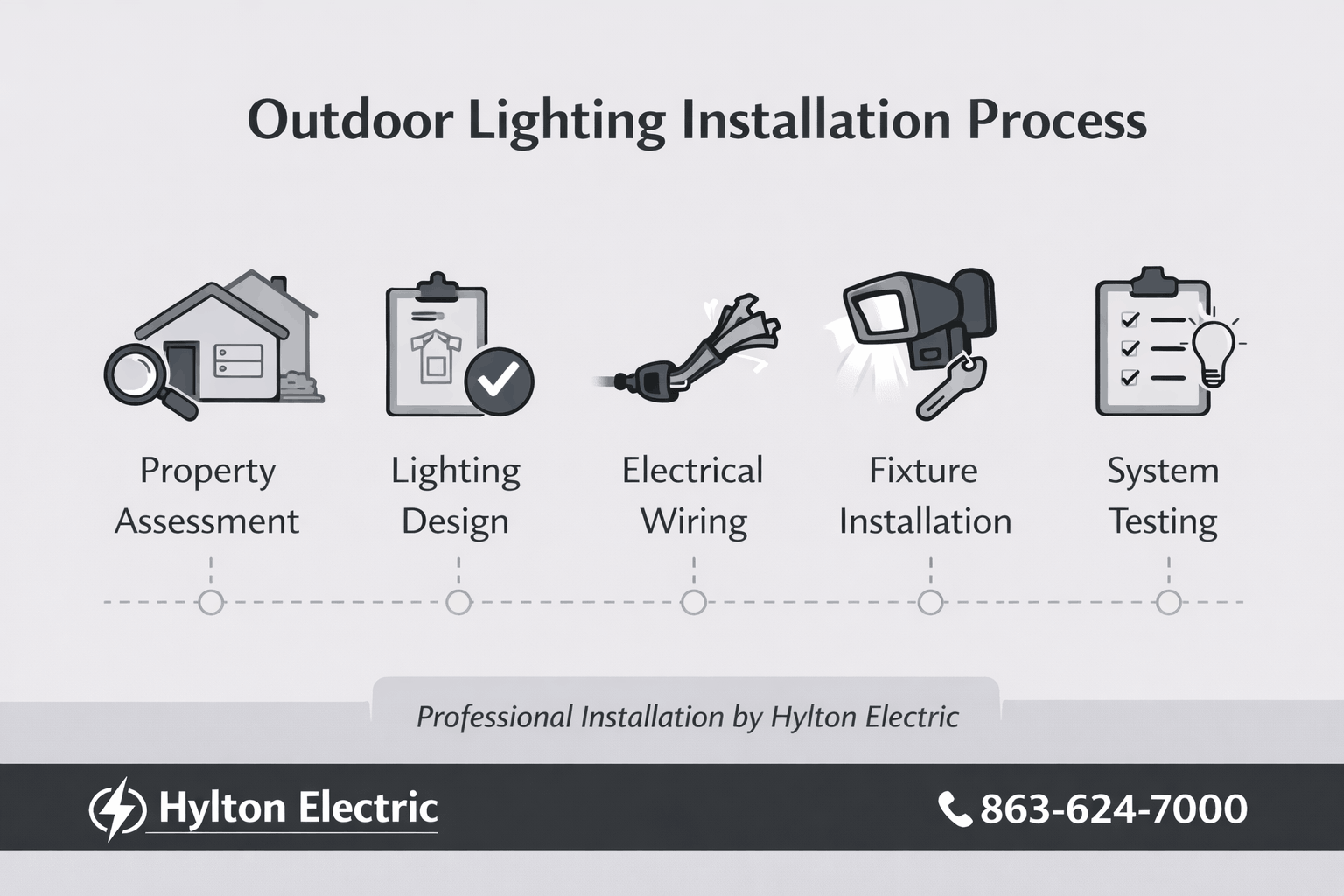
Professional electricians follow a clear installation process. This helps ensure the lighting system provides good coverage and meets safety standards.
Professional installation also helps the system handle Florida’s heat, humidity, and storms.
Property Assessment
The first step is evaluating the property. Every home has a different layout, so lighting needs can vary.
During this stage, the electrician reviews:
-
Property size and layout
-
Dark areas that need lighting
-
Entry points and walkways
-
Existing electrical connections
-
Landscaping or obstacles
This step helps identify the areas that need better visibility. Proper planning ensures the lighting system covers the property effectively.
Lighting Design Plan
After the assessment, the electrician creates a lighting plan. This plan determines where fixtures will be installed and how many lights are needed.
A good lighting layout provides balanced coverage. Too few lights leave dark spots, while too many can create glare.
A typical lighting plan includes:
-
Recommended fixture types
-
Exact installation locations
-
Wiring routes
-
Power source connections
-
Motion sensor coverage areas
Planning the layout in advance helps create a system that works efficiently and looks clean.
Wiring and Electrical Connections
Once the design is ready, electricians begin the electrical work. Outdoor lighting requires wiring that can handle outdoor conditions.
Electricians typically install:
-
Outdoor-rated electrical wiring
-
Weatherproof junction boxes
-
Ground fault protection
-
Transformers for low-voltage systems
These components help protect the system from moisture, electrical faults, and power surges.
Fixture Installation
After wiring is prepared, the lighting fixtures are installed in their planned locations. The installation method depends on the type of fixture.
Common mounting options include:
-
Wall-mounted security lights
-
Pole-mounted floodlights
-
Ground stake pathway lights
-
Deck or stair lighting fixtures
Electricians position each light carefully to provide good visibility without causing glare. Proper installation also protects fixtures from weather damage.
Testing and Adjustment
The final step is testing the lighting system. Each fixture must operate correctly before the project is finished.
Electricians check several things during testing:
-
Light brightness and coverage
-
Motion sensor sensitivity
-
Timer or automation settings
-
Electrical safety connections
They may also adjust the angle of the lights to reduce shadows and improve coverage.
Once testing is complete, homeowners receive a lighting system. It provides reliable illumination and improved outdoor security.
How Much Does Outdoor Security Lighting Installation Cost in Lakeland?
The cost of outdoor security lighting installation can vary depending on several factors. Every property has different lighting needs, which means installation costs are not always the same.
Some homeowners only need a few lights near entrances, while others want a complete lighting system covering the entire property.
Understanding the factors that influence cost can help homeowners plan their lighting project more effectively.
Factors That Affect Installation Cost
Several variables influence the price of outdoor lighting installation. The overall cost often depends on the size of the project and the equipment used.
Common factors that affect pricing include:
-
Number of lighting fixtures
-
Type and quality of fixtures
-
Distance between lights and power sources
-
Wiring complexity
-
Smart lighting features
Larger properties may require more wiring and additional fixtures, which can increase installation time and material costs.
Homes that include landscape lighting, pathway lights, and floodlights will also have higher installation costs than smaller projects.
Average Price Ranges
Although every project is different, outdoor lighting installations typically fall within a general price range. Basic lighting projects may include only a few fixtures, while larger systems provide full coverage around the property.
Typical installation ranges include:
-
Small projects: $300 – $800
-
Medium lighting systems: $1,000 – $3,000
-
Large property lighting systems: $3,000 or more
These estimates vary depending on the equipment used and the amount of electrical work required. A professional electrician can provide a more accurate estimate after evaluating the property.
Long-Term Cost Savings
Modern lighting systems are designed to be energy efficient. Many homeowners choose LED lighting because it provides strong brightness while using less electricity.
LED lighting offers several long-term benefits:
-
Lower energy consumption
-
Longer bulb lifespan
-
Reduced maintenance needs
-
Fewer replacements over time
Although LED fixtures may cost more initially, they often save money over the life of the system.
Energy-efficient lighting also reduces strain on the home’s electrical system while providing reliable outdoor illumination.
DIY vs Professional Outdoor Lighting Installation
Some homeowners consider installing outdoor lighting themselves. While simple lighting kits are available, electrical work outdoors requires careful planning and safety knowledge.
Improper installation can create safety risks and cause long-term electrical problems. For this reason, many homeowners choose professional installation to ensure the system works correctly.
DIY Installation Risks
Outdoor electrical work involves more than simply mounting a light fixture. Wiring must be protected from moisture, and electrical connections must meet safety standards.
Common issues that occur during DIY installation include:
-
Improper wiring connections
-
Water entering electrical components
-
Overloaded circuits
-
Incorrect fixture placement
These problems can lead to flickering lights, electrical faults, or even fire hazards. Outdoor electrical systems must also follow local electrical codes, which many homeowners are not familiar with.
Benefits of Hiring a Licensed Electrician
Professional electricians have the training and experience needed to install outdoor lighting systems safely. A licensed electrician can ensure that every part of the system operates properly and meets electrical code requirements.
Professional installation provides several advantages:
-
Safe electrical wiring and connections
-
Correct placement for maximum lighting coverage
-
Weather-resistant installation methods
-
Compliance with electrical safety codes
Electricians also help homeowners choose the best lighting fixtures for their property. With professional installation, homeowners can feel confident that their outdoor lighting system will remain reliable for years to come.

Outdoor Security Lighting Maintenance Tips
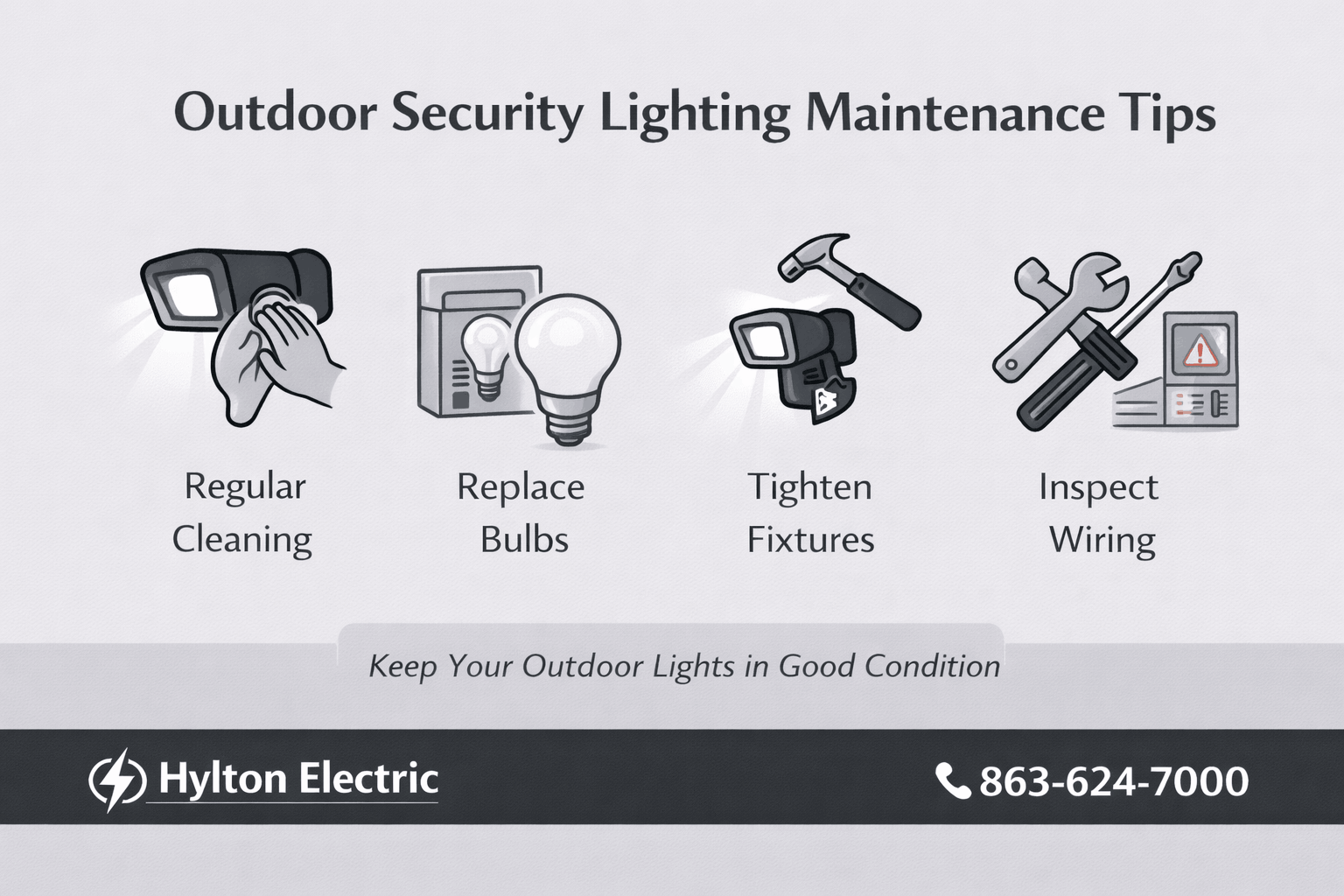
Outdoor security lighting works best when it receives regular maintenance. Over time, weather, dust, and normal wear can affect how well the system performs. Small issues can reduce brightness or create dark areas around the property.
Routine maintenance helps keep the lighting system reliable and efficient. It also allows homeowners to identify small problems before they become larger electrical repairs.
Most outdoor lighting systems require only simple maintenance steps a few times each year.
Clean Fixtures Regularly
Outdoor lights are constantly exposed to dirt, pollen, insects, and debris. When these materials build up on fixtures, they can block light and reduce brightness.
Cleaning the fixtures helps restore proper illumination.
Basic cleaning steps include:
-
Wiping lenses with a soft cloth
-
Removing dust and debris from fixtures
-
Clearing insect buildup from covers
-
Checking that light lenses remain clear
Clean fixtures allow light to spread evenly across the property.
Inspect Wiring and Connections
Outdoor electrical wiring should be inspected periodically. Weather exposure can loosen connections or cause minor wear over time.
Homeowners should look for warning signs such as:
-
Loose wires
-
Damaged insulation
-
Moisture near fixtures
-
Corrosion on metal components
If any of these problems appear, a licensed electrician should inspect the system. Early repairs help prevent electrical issues and maintain safe operation.
Replace Failing Bulbs Early
Even long-lasting LED lights eventually wear out. When a bulb begins to dim or flicker, it may be nearing the end of its lifespan. Replacing bulbs early prevents dark areas from developing around the property.
Most LED fixtures last many years, but checking them periodically ensures the system continues to perform as expected.
Test Motion Sensors
Motion sensor lights depend on proper sensor settings to operate correctly. If the sensitivity is too high, lights may activate too frequently. If the sensitivity is too low, movement may not trigger the light.
Testing motion sensors occasionally helps maintain proper performance.
Homeowners should check that:
-
Lights activate when movement occurs
-
Sensors cover the correct areas
-
Sensitivity settings are appropriate
Adjustments can usually be made directly on the fixture.
Signs You Need to Upgrade Your Outdoor Security Lighting
Outdoor lighting systems can last for many years, but older systems may not provide the same performance as modern lighting technology.
If your lighting system no longer provides reliable coverage, it may be time to consider an upgrade.
Several warning signs indicate that a lighting system may need improvement.
Frequent Bulb Failures
If outdoor bulbs burn out often, the fixtures may be outdated or inefficient. Older lighting systems sometimes require frequent replacements, which increases maintenance costs.
Upgrading to LED fixtures can reduce this problem because LED lights typically last much longer than traditional bulbs.
Flickering or Dim Lights
Lights that flicker or appear dim may signal electrical issues or worn components.
Common causes include:
-
Aging fixtures
-
Loose wiring connections
-
Failing bulbs
-
Electrical circuit problems
An electrician can determine whether repairs or fixture replacements are needed.
Dark Areas Around the Property
As landscaping grows and property layouts change, some areas may become poorly lit. Trees, fences, or new structures can create shadows that were not present when the system was originally installed.
Adding additional lighting fixtures can restore full coverage and eliminate these dark spots.
Outdated Lighting Technology
Many older homes still use halogen or incandescent outdoor lighting. These systems consume more electricity and often produce uneven lighting.
Upgrading to modern LED lighting systems offers several benefits:
-
Improved brightness
-
Lower energy consumption
-
Longer fixture lifespan
-
Reduced maintenance requirements
New lighting technology also allows homeowners to add motion sensors or smart controls.
Why Hire a Local Electrician for Outdoor Lighting in Lakeland
Outdoor security lighting requires knowledge of both electrical systems and local conditions. Hiring a local electrician ensures the installation meets safety standards while also accounting for Florida’s weather and building requirements.
Local electricians understand the challenges that outdoor electrical systems face in Lakeland. These professionals can design lighting systems that perform well in the local environment.
Knowledge of Local Electrical Codes
Electrical work must follow local and state safety codes. Licensed electricians stay updated on these requirements and ensure that installations meet current regulations.
This protects homeowners from safety risks and prevents issues during property inspections or future renovations.
Experience With Florida Weather Conditions
Outdoor lighting in Florida must handle heat, humidity, and heavy rain. Electricians choose weather-rated fixtures and protective wiring methods designed for these conditions. Proper installation helps prevent corrosion, water damage, and electrical failures.
Customized Lighting Design
Every property has a unique layout. A professional electrician can design a lighting system that fits the specific needs of the home.
Customized lighting plans often include:
-
Entrance lighting
-
Driveway floodlights
-
Pathway lighting
-
Backyard illumination
This approach ensures that the entire property remains visible without creating excessive brightness.
Reliable Installation and Support
Professional installation reduces the chances of electrical problems in the future. If maintenance or repairs are needed later, a local electrician can provide fast service and reliable support.
Working with a local professional also helps homeowners receive personalized recommendations for improving their outdoor lighting systems.
Schedule Outdoor Security Lighting Installation in Lakeland, Florida
Outdoor security lighting is a practical way to improve safety around your home or business. Good lighting removes dark areas, improves visibility, and helps discourage unwanted activity around the property.
It also makes outdoor spaces easier to use at night. Driveways, walkways, patios, and yards become safer and more comfortable when they are properly illuminated.
Professional installation helps ensure the lighting system works safely and reliably. Electricians install durable fixtures, secure electrical connections, and position lights where they provide the best coverage.
If you are planning outdoor security lighting installation in Lakeland, working with a licensed electrician can help you choose the right lighting for your property. With the right system in place, you can improve both security and everyday convenience around your home.
Schedule Outdoor Security Lighting Installation in Lakeland, Florida
Outdoor lighting is one of the easiest ways to improve safety around your property. A well-placed lighting system removes dark areas and helps deter unwanted activity.
If you are planning outdoor security lighting installation in Lakeland, Florida, the team at Hylton Electric can help. We install reliable lighting systems that improve both security and everyday convenience.
Have questions or ready to get started? Reach out to us anytime for a free quote.
- Phone: +1 863-624-7000
- Email: ray@hylton-electric.com
FAQs About Outdoor Security Lighting Installation in Lakeland
What is outdoor security lighting?
Outdoor security lighting refers to lighting fixtures installed to improve visibility and security. These lights illuminate dark areas after sunset and help monitor activity around the homes.
Common examples include:
-
Motion sensor lights
-
Floodlights
-
Pathway lighting
-
Garage and driveway lights
A well-designed lighting system improves nighttime safety. It makes it easier to see who is approaching the property.
Why is outdoor security lighting important for homes?
Outdoor security lighting improves both safety and property protection. Dark areas around a home can create hiding spots and make it difficult to see movement.
Security lighting helps by:
-
Increasing visibility around entrances
-
Supporting security camera systems
-
Reducing the chance of accidents at night
-
Discouraging suspicious activity
When important areas of a property remain well-lit, homeowners feel more confident about the safety of their surroundings.
Where should outdoor security lights be installed?
Security lights should be installed in areas where visibility is important. Proper placement removes dark spots and improves coverage around the home.
Common locations include:
-
Front and back doors
-
Driveways and garages
-
Walkways and pathways
-
Side yards and fence lines
-
Backyard areas
Placing lights in these locations helps create a complete lighting system that improves both safety.
What type of outdoor lighting is best for security?
The best outdoor security lighting systems usually combine multiple types of fixtures. Each type works best for a specific purpose.
Popular options include:
-
Floodlights for large areas
-
Motion sensor lights for entrances
-
LED security lights for efficiency
-
Smart lighting systems for remote control
Using several types of lights together creates balanced illumination across the property.
Are LED lights good for outdoor security lighting?
LED lights are one of the best choices for outdoor security lighting. They produce strong brightness while using less electricity than traditional bulbs.
Benefits of LED lighting include:
-
Long lifespan
-
Energy efficiency
-
Consistent brightness
-
Reduced maintenance
LED fixtures are also designed to handle outdoor conditions such as rain, heat, and humidity.
What are motion sensor security lights?
Motion sensor lights automatically turn on when movement is detected near the fixture. They remain off most of the time and activate only when activity occurs.
Advantages include:
-
Energy savings
-
Instant illumination during movement
-
Increased awareness of activity around the property
These lights are commonly installed near driveways, entry doors, and garages to improve security.
How bright should outdoor security lighting be?
Outdoor security lighting should provide enough brightness to illuminate key areas without causing glare. The ideal brightness depends on the location of the light.
Typical brightness ranges include:
-
700–1300 lumens: Entryways and pathways
-
1300–2500 lumens: Driveways and patios
-
2500+ lumens: Large yards or floodlight coverage
Selecting the correct brightness level helps ensure clear visibility across the property.
How much does outdoor security lighting installation cost?
The cost of installing outdoor security lighting varies depending on the size of the project and the number of fixtures needed.
Typical price ranges include:
-
Small installations: $300 – $800
-
Medium projects: $1,000 – $3,000
-
Large lighting systems: $3,000 or more
The final cost depends on fixture quality, wiring complexity, and additional features such as motion sensors.
Can I install outdoor security lighting myself?
Some homeowners attempt DIY installations. How outdoor electrical work requires proper knowledge and safety precautions.
Common DIY risks include:
-
Improper wiring connections
-
Water damage to electrical components
-
Electrical shock hazards
-
Code violations
Hiring a licensed electrician helps ensure the lighting system is installed safely.
How long do outdoor LED security lights last?
LED security lights typically last much longer than traditional lighting options. Many high-quality LED fixtures operate for 25,000 to 50,000 hours.
This long lifespan offers several advantages:
-
Fewer bulb replacements
-
Lower maintenance costs
-
Consistent lighting performance
With normal use, LED outdoor lights can function reliably for many years.
Do outdoor security lights increase home safety?
Yes, outdoor security lights can improve home safety by increasing visibility around the property. Well-lit homes are less attractive to intruders because activity is easier to detect.
Security lighting helps by:
-
Eliminating dark hiding spots
-
Improving camera visibility
-
Alerting homeowners to movement
-
Helping neighbors notice unusual activity
Lighting is an important part of a complete home safety strategy.
What is the difference between floodlights and spotlights?
Floodlights and spotlights produce different lighting patterns.
Floodlights:
-
Spread light across a wide area
-
Ideal for yards and driveways
Spotlights:
-
Focus the light in a narrow beam
-
Used to highlight specific areas or features
Most outdoor security systems rely on floodlights for broader coverage.
Do outdoor security lights use a lot of electricity?
Modern outdoor lighting systems are designed to use minimal electricity.
Energy-efficient lighting provides several benefits:
-
Lower electricity bills
-
Reduced environmental impact
-
Longer fixture lifespan
Using motion sensors or timers can further reduce energy usage by ensuring lights operate only when necessary.
What are smart outdoor security lights?
Smart outdoor security lights connect to home automation systems. They allow homeowners to control lighting remotely.
Features often include:
-
Smartphone app controls
-
Automated lighting schedules
-
Motion detection alerts
-
Integration with security cameras
These systems provide convenience while also improving property security.
How many outdoor security lights does a home need?
The number of lights required depends on the size of the property and the layout of outdoor areas.
Most homes benefit from lighting in locations such as:
-
Entry doors
-
Driveways
-
Walkways
-
Backyards
-
Side yards
An expert electrician can assess the property and recommend the correct number of fixtures.
What maintenance do outdoor security lights require?
Outdoor lighting systems need occasional maintenance to keep them functioning properly.
Routine care usually includes:
-
Cleaning fixtures and lenses
-
Checking electrical connections
-
Replacing worn bulbs
-
Testing motion sensors
Performing these steps periodically helps maintain brightness.
Are low-voltage lights good for outdoor lighting?
Low-voltage lighting is commonly used for landscape and pathway illumination. These systems operate at lower electrical power levels and are considered safer.
Advantages include:
-
Energy efficiency
-
Safer electrical operation
-
Ideal for decorative lighting
However, low-voltage lights often produce softer illumination. They may be combined with stronger security lighting fixtures.
How do motion sensors work on security lights?
Motion sensors detect movement within a specific range near the light fixture. When motion is detected, the light automatically turns on.
Most sensors operate using:
-
Infrared technology that detects body heat
-
Adjustable sensitivity settings
-
Timers that control how long lights remain on
This automatic system helps improve security while reducing unnecessary energy use.
Do outdoor security lights attract insects?
Outdoor lights can attract insects, but certain lighting types reduce this effect.
Homeowners often choose:
-
Warm LED lighting
-
Shielded or downward-facing fixtures
-
Moderate brightness levels
These options reduce insect attraction while providing effective lighting.
When should outdoor security lighting be upgraded?
Outdoor lighting systems should be upgraded when they no longer provide reliable illumination.
Signs that an upgrade may be needed include:
-
Flickering or dim lights
-
Frequent bulb replacements
-
Dark areas around the property
-
Older halogen lighting systems
Modern LED lighting upgrades provide brighter illumination. Ultimately, improves energy efficiency for outdoor security systems.
Leave a Reply