
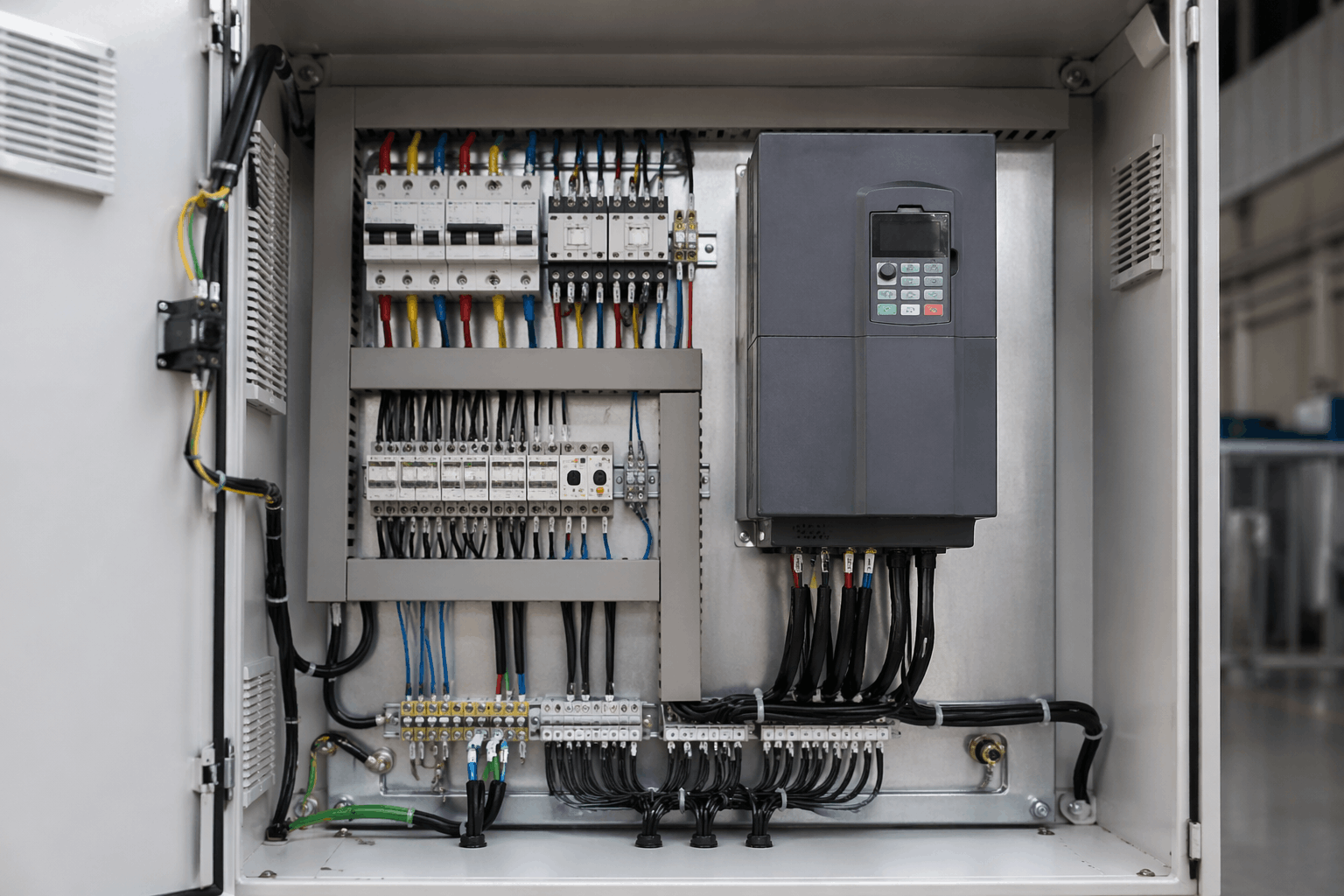
Variable Frequency Drives (VFDs) are now a core part of modern electrical systems in Tampa. From commercial HVAC units to industrial pumps, they help control motor speed, reduce energy use, and improve system performance.
If you’re planning a VFD installation in Tampa, this guide will walk you through the basics in a clear, practical way. You’ll learn what a VFD does, why it matters in Florida’s climate, and how proper wiring plays a role in long-term reliability.
What is a VFD and Why It’s Essential in Tampa Electrical Systems
A VFD is not just another electrical component. It directly controls how motors run, which makes it one of the most important upgrades for energy efficiency and system control.
In a city like Tampa, where cooling systems run most of the year, VFDs are especially useful. They help reduce energy waste and extend equipment life, which is why many businesses are now adding them to their systems.
Simple Explanation of Variable Frequency Drives (VFDs)
A Variable Frequency Drive controls the speed of an electric motor by adjusting the frequency and voltage of the power supply. In simple terms, instead of a motor running at full speed all the time, a VFD allows it to slow down or speed up based on demand.
Here’s a quick way to think about it:
-
Without a VFD → Motor runs at 100% all the time
-
With a VFD → Motor adjusts speed as needed
This small change has a big impact. It reduces energy use and prevents unnecessary wear on the motor.
VFDs are commonly used in:
-
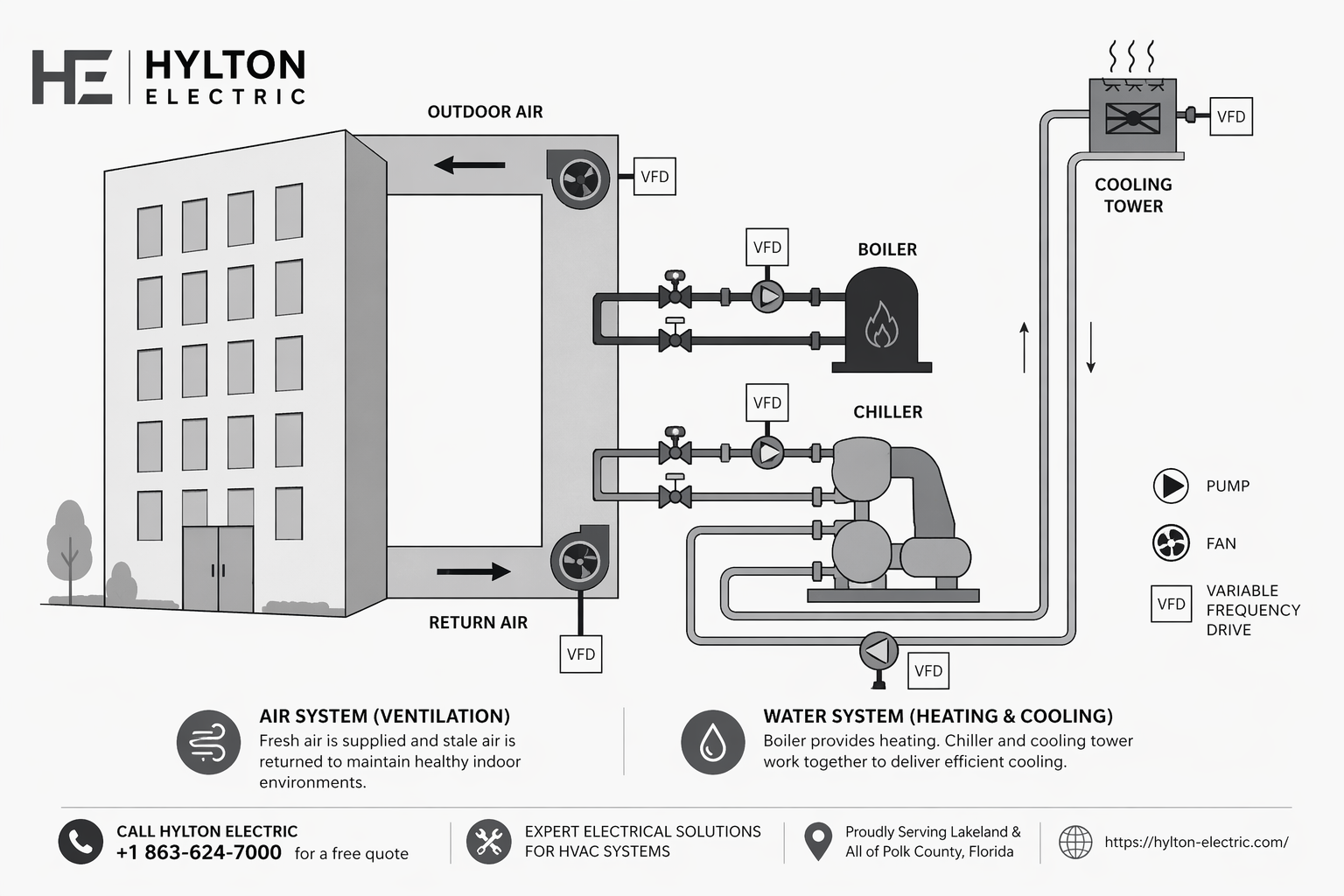
HVAC systems (air handlers, chillers)
-
Water pumps and irrigation systems
-
Industrial machinery
-
Elevators and conveyor systems
Because motors don’t always need full power, controlling speed leads to better efficiency and smoother operation.
Why VFDs Are Popular in Tampa, Florida
Tampa’s climate plays a major role in the growing use of VFDs. High temperatures and humidity mean HVAC systems work almost year-round.
Here’s why VFDs make sense in this region:
1. Heavy HVAC Usage: Cooling systems run for long hours. VFDs allow fans and compressors to adjust output instead of running constantly at full speed.
2. High Energy Costs: Electricity costs can add up quickly for commercial buildings. VFDs reduce power consumption, which lowers monthly bills.
3. Growing Commercial Development: Tampa continues to expand with new offices, retail spaces, and industrial sites. Many of these projects include VFDs from the start.
4. Utility Incentives: Local programs, such as those from Tampa Electric Company, often provide rebates for installing energy-efficient equipment like VFDs.
Because of these factors, VFDs are now considered a standard upgrade rather than an optional feature.
Energy Savings and Efficiency Benefits
One of the main reasons businesses install VFDs is energy savings. Motors consume a large portion of electricity in commercial and industrial systems. With a VFD, energy use drops significantly because the motor only uses the power it needs.
Key benefits include:
-
Lower energy consumption – Reducing motor speed even slightly can cut energy use by a large margin.
-
Reduced mechanical stress – Smooth startup and shutdown reduces wear on components.
-
Longer equipment lifespan – Motors, belts, and bearings last longer with controlled operation.
-
Lower maintenance costs – Fewer breakdowns mean less downtime and repair work.
In many cases, businesses recover the cost of a VFD installation within a few years through energy savings alone.
How VFD Wiring Works (Beginner-Friendly Breakdown)
Understanding how VFD wiring works is important before starting any installation. Even though licensed electricians handle the work, knowing the basics helps you make better decisions.
At its core, VFD wiring connects three main parts:
-
Power supply
-
VFD unit
-
Motor
Each connection must be done correctly to ensure safe operation and proper performance.
Basic VFD Wiring Diagram Explained
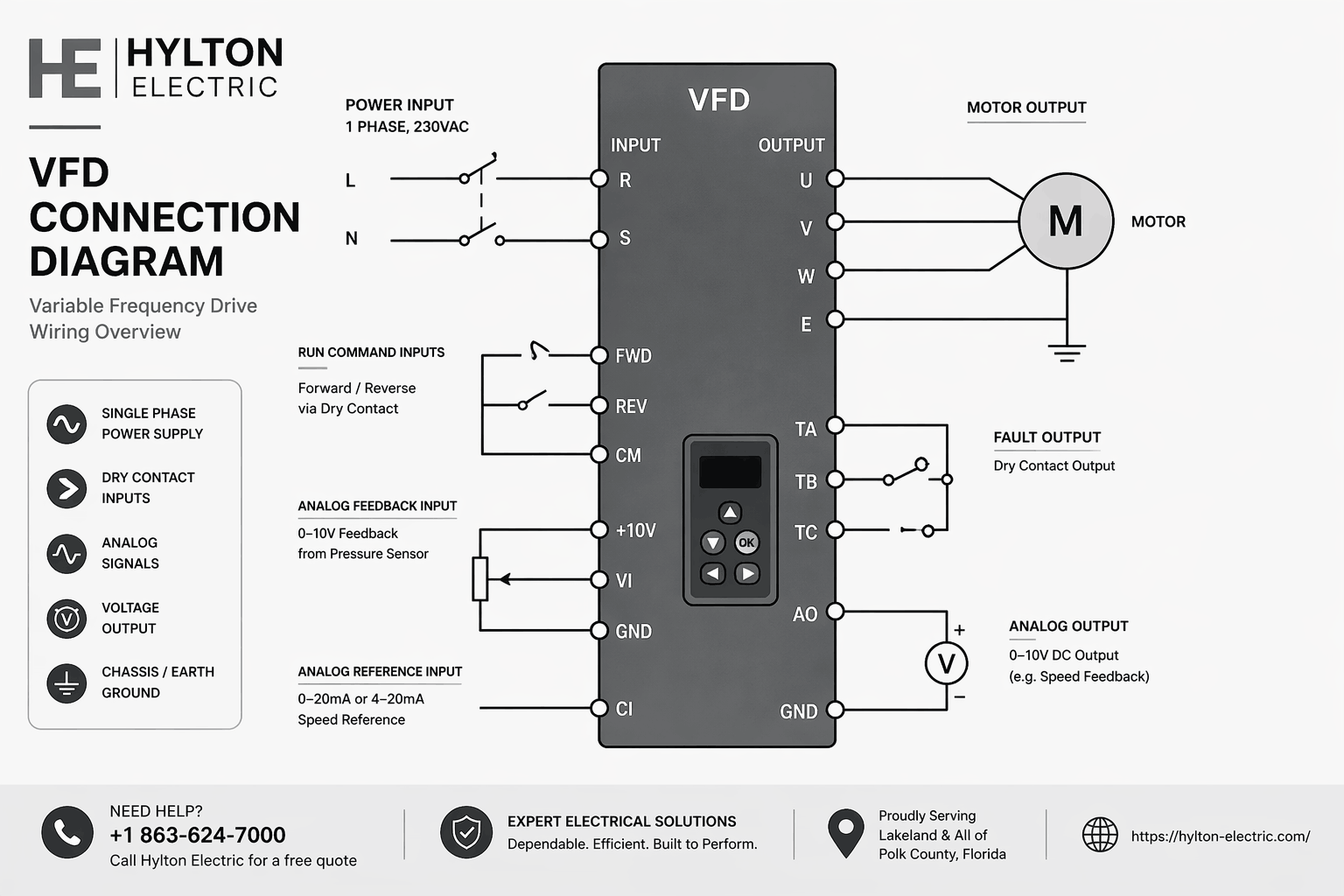
A standard VFD has two main sides: the input side and the output side.
Input Side (Power Supply):
-
L1, L2, L3 (or R, S, T)
-
This is where the incoming power connects to the drive
Output Side (Motor Connection):
-
U, V, W
-
These terminals send controlled power to the motor
Control Terminals:
-
Used for start/stop signals
-
Speed control inputs
-
Communication with control systems
In simple terms:
-
Power comes in → gets adjusted by the VFD → goes out to the motor at the required speed
This setup allows precise control over how the motor runs.
Step-by-Step VFD Wiring Process
While installation should always be handled by a licensed electrician, the general process follows a clear sequence:
1. Connect the Power Supply – The main power lines are connected to the input terminals of the VFD.
2. Connect the Motor – Motor leads are wired to the output terminals (U, V, W).
3. Wire the Control System – Control wiring allows operators or automation systems to manage speed and operation.
4. Ground the System Properly – Grounding is critical for safety and to prevent electrical noise or interference.
Each step must follow electrical codes and manufacturer guidelines. Even small mistakes can lead to system failure or safety risks.
Key Components Required for Installation
A proper VFD installation involves more than just the drive itself. Several components work together to ensure safe and efficient operation.
Essential components include:
-
Variable Frequency Drive unit
-
Electric motor (usually 3-phase)
-
Circuit breakers or disconnect switches
-
VFD-rated cables (shielded cables)
-
Control panel or automation system
-
Grounding system
In some cases, additional equipment may be required:
-
Line reactors
-
Harmonic filters
-
Cooling systems or enclosures
Using the right components is important. It ensures the system runs smoothly and meets local electrical standards in Tampa.
VFD Installation Process (From Planning to Commissioning)
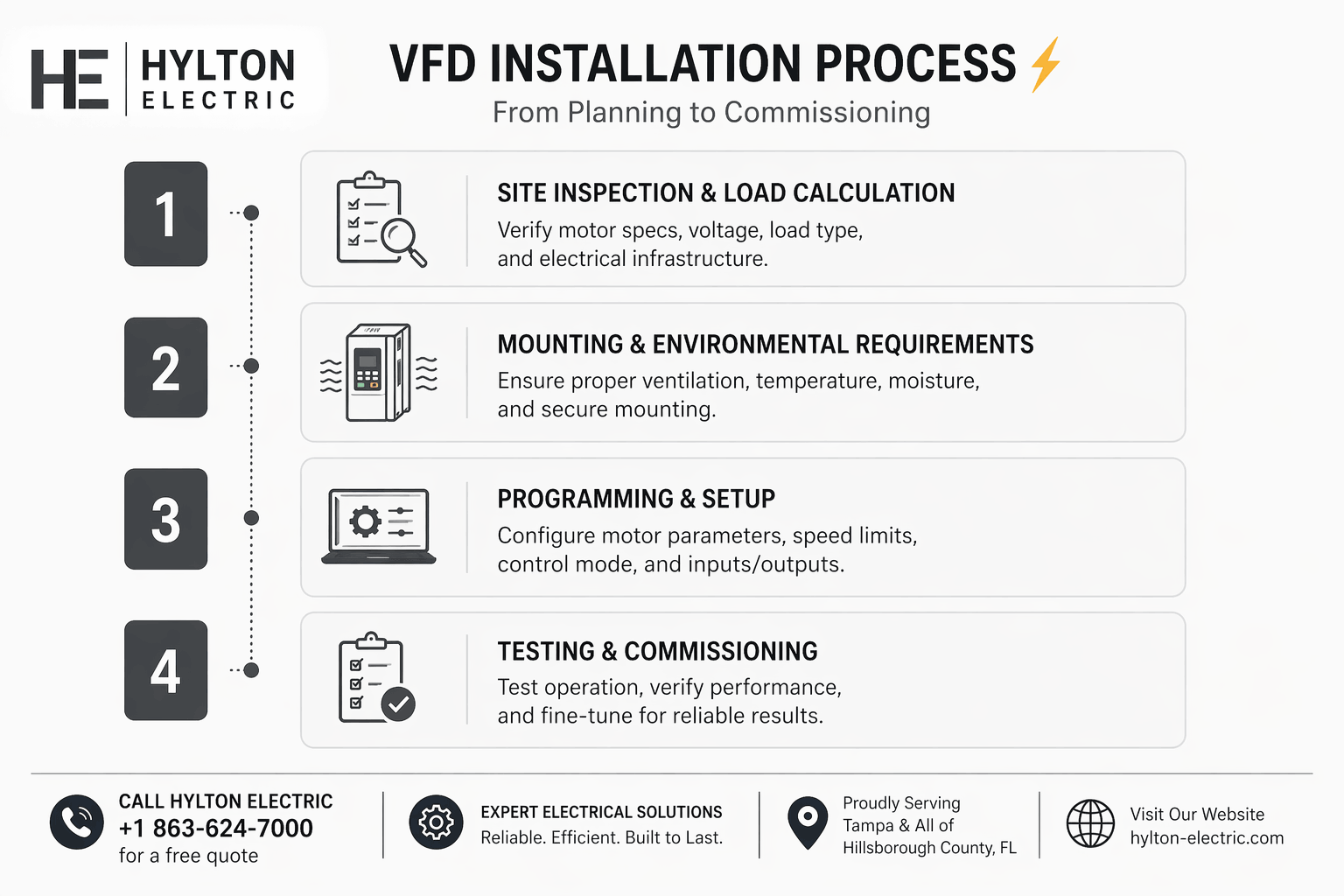
Installing a VFD is more than just wiring a device. It involves planning, proper setup, and careful testing. Each step affects how well the system performs over time.
In Tampa, where systems run under heavy load due to heat and humidity, proper installation is even more important. A well-installed VFD runs efficiently, lasts longer, and avoids costly downtime.
Site Inspection and Load Calculation
Before installation begins, the system must be evaluated. This step ensures the VFD is sized correctly and matches the application.
Key checks include:
-
Motor horsepower (HP) – The VFD must match or exceed the motor’s rating.
-
Voltage requirements – Common systems use 208V, 230V, or 480V. The drive must be compatible.
-
Load type – Different loads behave differently. For example:
-
Pumps and fans → variable torque
-
Conveyors → constant torque
-
-
Existing electrical infrastructure – Panel capacity, wiring condition, and available space are reviewed.
Skipping this step often leads to undersized or oversized drives. Both can reduce efficiency and cause long-term issues.
Mounting and Environmental Requirements
Where and how the VFD is installed matters. Drives generate heat and need proper airflow to operate safely.
Important considerations:
-
Ventilation: VFDs require space around them for cooling. Poor airflow can cause overheating.
-
Ambient temperature: Tampa’s high temperatures mean indoor placement is often preferred.
-
Moisture and humidity protection: Outdoor installations require sealed enclosures (NEMA-rated).
-
Dust and contaminants: Industrial environments may require filtered or enclosed panels.
-
Wall or panel mounting: Drives should be securely mounted and easily accessible for maintenance.
A poor installation environment can shorten the life of the VFD, even if the wiring is done correctly.
Programming and Setup
Once the VFD is installed and wired, it needs to be programmed. This step allows the drive to control the motor properly.
Common settings include:
-
Motor parameters: Voltage, current, frequency, and RPM
-
Acceleration and deceleration times: Controls how quickly the motor starts and stops
-
Minimum and maximum speed limits: Prevent the motor from running outside safe ranges
-
Control mode selection
-
V/Hz control (basic applications)
-
Vector control (more precise performance)
-
-
Input and output configuration: Defines how the system responds to control signals
Proper programming improves efficiency and prevents system stress. Incorrect settings can lead to overheating or unstable operation.
Testing and Commissioning
After installation and programming, the system must be tested. This step ensures everything works as expected before full operation.
Typical commissioning steps:
-
Initial power-up check: Verify correct voltage and no fault codes
-
Motor rotation test: Confirm the motor spins in the correct direction
-
Load testing: Run the system under real conditions
-
Performance monitoring: Check current draw, speed control, and temperature
-
Final adjustments: Fine-tune settings for optimal performance
This phase is critical. It confirms the system is safe, efficient, and ready for daily use.
VFD Installation Cost in Tampa, Florida (2026 Breakdown)
Understanding the cost of VFD installation helps you plan your budget and avoid surprises. Prices vary based on system size, complexity, and site conditions.
In Tampa, both labor and material costs influence the final price. Commercial and industrial projects often require more customization, which increases cost.
Average Cost of VFD Installation
In most cases, VFD installation costs are calculated based on motor size (horsepower).
Typical price range:
-
$200 to $500 per horsepower installed
Here’s what that looks like in real terms:
-
5 HP system → $1,000 to $2,500
-
10 HP system → $2,000 to $5,000
-
50 HP system → $10,000 to $25,000
Larger systems may cost more due to added components like filters, reactors, and custom panels.
Labor Costs for Electricians in Tampa
Labor is a major part of the total cost. Rates vary depending on experience and project complexity.
Typical electrician rates in Tampa:
-
$50 to $100 per hour
Factors that increase labor cost:
-
Complex wiring layouts
-
Retrofitting older systems
-
Tight installation spaces
-
Additional safety requirements
Projects that require programming and testing will also add to labor time.
Cost Table (Tampa VFD Installation Estimates)
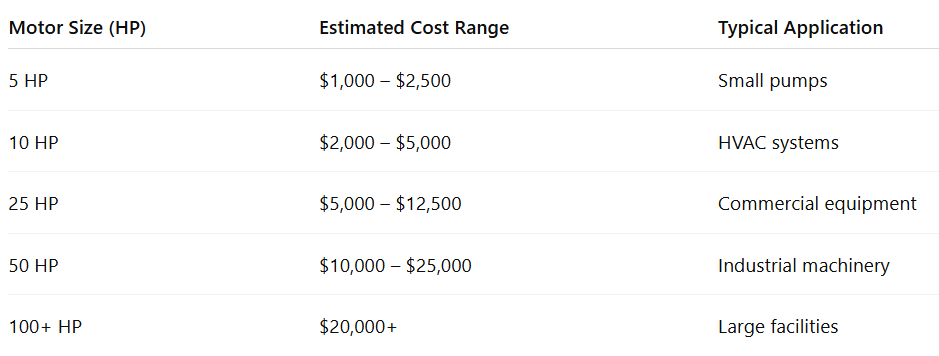
These estimates provide a general idea, but actual costs depend on site conditions and system requirements. A detailed quote from a licensed Tampa electrician will give the most accurate pricing.
Factors That Affect VFD Installation Cost
VFD installation costs are not fixed. Two systems with the same horsepower can still have very different prices. The difference usually comes down to site conditions, system design, and additional equipment.
Understanding these factors helps you plan better and avoid unexpected expenses.
Motor Size and Power Requirements
Motor size is one of the biggest cost drivers.
Larger motors require:
-
Higher-capacity VFDs
-
Heavier wiring
-
More protective equipment
For example, a 5 HP system is simple and quick to install. A 50 HP system, however, needs more planning, larger panels, and advanced components.
As horsepower increases, both material and labor costs rise.
New Installation vs Retrofit
The type of project also affects pricing.
New Installation:
-
Easier to design and install
-
Clean layout and wiring
-
Lower labor time
Retrofit Installation:
-
Requires modifying existing systems
-
May involve removing old equipment
-
Often includes panel upgrades
Retrofitting is usually more expensive because it takes more time and effort to adapt existing infrastructure.
Wiring and Cable Requirements
Not all wiring is the same when it comes to VFD systems.
VFDs require:
-
Shielded cables to reduce electrical noise
-
Proper insulation for high-frequency signals
-
Correct cable sizing for load capacity
Long cable runs also increase cost. The farther the motor is from the VFD, the more material and labor are needed. Poor cable selection can cause interference and damage equipment, so this is not an area to cut corners.
Additional Components and Upgrades
Many installations require extra components to ensure safe and stable operation.
Common add-ons include:
-
Line reactors
-
Harmonic filters
-
Surge protection devices
-
Custom control panels
-
Cooling or ventilation systems
Each of these adds to the total cost, but they also improve performance and extend system life.
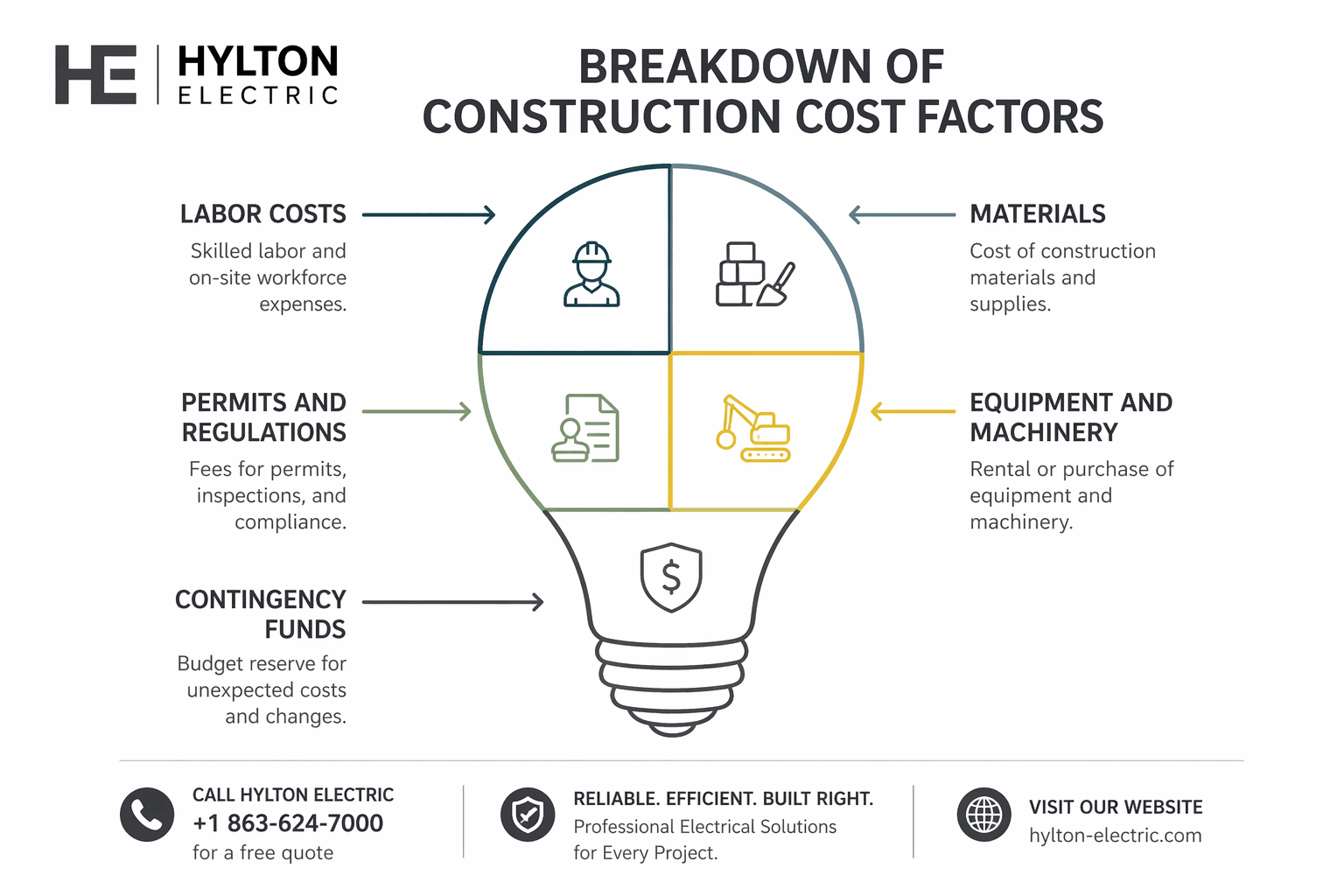
Permits and Local Tampa Regulations
Electrical work in Tampa must follow strict codes.
Requirements may include:
-
Permits for installation
-
Inspections after completion
-
Compliance with the National Electrical Code (NEC)
Working with a licensed contractor ensures all regulations are met. While permits add to upfront costs, they prevent legal and safety issues later.
Tampa Rebates and Incentives for VFD Installation
One advantage of installing a VFD in Tampa is access to energy efficiency incentives. These programs help offset installation costs and improve return on investment.
Tampa Electric (TECO) Rebates
Local utility providers like Tampa Electric Company offer rebates for installing energy-efficient equipment.
For VFD systems, incentives are often based on motor size.
Typical rebate:
-
Around $75 per horsepower
This can significantly reduce upfront costs, especially for larger systems.
How to Qualify for Rebates
To receive rebates, certain conditions must be met:
-
Installation must use approved equipment
-
Work must be completed by a licensed electrician
-
Proper documentation must be submitted
-
The system must meet energy efficiency standards
It’s important to check program details before starting the project. Requirements may change over time.
Real Savings Example
Here’s a simple example to show how rebates can help:
-
50 HP motor system
-
Estimated rebate: $75 × 50 HP = $3,750 savings
This reduces the overall project cost and shortens the payback period. For businesses installing multiple VFDs, total savings can be substantial.
Common VFD Wiring Mistakes to Avoid
Even small wiring mistakes can cause major problems in VFD systems. These issues often lead to downtime, equipment damage, or safety risks. Avoiding these common errors is key to a successful installation.
Incorrect Voltage Matching
Using the wrong voltage is one of the most serious mistakes. If the VFD voltage does not match the power supply or motor:
-
The drive can fail immediately
-
The motor may overheat
-
System performance will suffer
Always verify voltage ratings before installation.
Poor Grounding
Grounding is critical in VFD systems.
Without proper grounding:
-
Electrical noise increases
-
Sensitive equipment may malfunction
-
Safety risks become higher
A solid grounding system protects both equipment and people.
Improper Cable Selection
Standard cables are not suitable for VFD applications.
Using the wrong cables can cause:
-
Signal interference
-
Overheating
-
Reduced system efficiency
VFD-rated, shielded cables should always be used for motor connections.
Skipping Filters or Reactors
In some installations, filters and reactors are necessary.
Skipping them can lead to:
-
Harmonic distortion
-
Voltage spikes
-
Reduced equipment lifespan
While they add to the initial cost, they help prevent expensive failures later.
Safety Guidelines for VFD Installation
Safety is a key part of any VFD installation. These systems handle high voltage and sensitive electronics, so even small mistakes can lead to serious issues.
In Tampa, where systems often run under heavy load, safe installation becomes even more important. Following proper practices protects both equipment and personnel.
Electrical Safety Best Practices
Basic safety steps should never be skipped during installation or maintenance.
Important practices include:
-
Turn off the power before working – Always isolate the circuit and confirm there is no live voltage.
-
Use proper protective equipment – Gloves, insulated tools, and safety gear reduce risk.
-
Follow lockout/tagout procedures – Prevents accidental power restoration during work.
-
Check connections carefully – Loose or incorrect wiring can cause faults or overheating.
These simple steps reduce the risk of electrical shock and system damage.
NEC and Florida Code Compliance
All VFD installations must follow electrical codes.
In Tampa, this includes:
-
National Electrical Code (NEC) standards
-
Local Florida regulations
-
Permit and inspection requirements
Working with a licensed electrician ensures:
-
Proper wiring methods
-
Safe installation practices
-
Successful inspections
Code compliance is not just a legal requirement. It also ensures long-term system reliability.
Environmental Safety Considerations
The environment where a VFD operates affects its performance and safety.
Key factors to manage:
-
Heat: Excess heat can damage internal components. Proper ventilation is required.
-
Moisture: High humidity levels in Tampa can cause corrosion. Use sealed enclosures when needed.
-
Dust and debris: Contaminants can block cooling systems and reduce efficiency.
-
Vibration: Drives should be mounted securely to prevent damage.
Choosing the right installation environment helps avoid failures and extends equipment life.
Residential vs Commercial VFD Installation in Tampa
VFDs are used across many types of properties. However, the installation approach varies depending on the application. Understanding these differences helps in selecting the right system and setup.
Residential Applications
In homes, VFDs are typically used for smaller systems.
Common examples include:
-
HVAC units
-
Pool pumps
-
Water pressure systems
Benefits for homeowners:
-
Lower electricity bills
-
Quieter system operation
-
Better control over performance
Residential installations are usually simpler and require smaller drives.
Commercial Applications
Commercial buildings in Tampa rely heavily on VFDs.
Typical uses include:
-
Air handling units
-
Cooling towers
-
Elevator systems
-
Large water pumps
These systems operate for long hours, so energy savings become significant.
Commercial installations often involve:
-
Larger drives
-
Advanced control systems
-
Integration with building automation
Industrial Applications
Industrial environments use VFDs for heavy-duty operations.
Common applications:
-
Manufacturing equipment
-
Conveyor systems
-
Processing machinery
These setups require:
-
High-capacity drives
-
Specialized wiring
-
Additional protection equipment
Industrial installations are more complex and demand precise configuration.
VFD Maintenance and Long-Term Costs
Installing a VFD is only part of the process. Regular maintenance keeps the system running efficiently and prevents costly failures. Over time, proper care reduces both repair costs and downtime.
Routine Maintenance Checklist
Routine checks help identify issues early.
Basic maintenance tasks include:
-
Inspect wiring connections
-
Clean cooling fans and vents
-
Check for dust buildup
-
Monitor temperature levels
-
Review system performance data
Regular inspections keep the system stable and efficient.
Common Repair Costs
Repair costs vary based on the issue.
Typical scenarios:
-
Minor repairs – Loose connections or small component replacements → Lower cost
-
Major repairs – Drive failure or internal damage → Higher cost
Preventive maintenance reduces the chances of major failures.
Lifespan of a VFD System
Most VFD systems last between 7 to 15 years, depending on usage and environment.
Factors that affect lifespan:
-
Operating conditions
-
Maintenance quality
-
Load demands
Well-maintained systems often exceed expected life, while neglected ones fail early.
Benefits of Hiring a Professional Electrician in Tampa
While it may seem tempting to reduce costs, VFD installation is not a DIY project. The risks are too high, and mistakes can be expensive. Hiring a professional ensures the job is done correctly from the start.
Why DIY Installation is Risky
VFD systems involve:
-
High voltage connections
-
Complex wiring
-
Programming and setup
Without proper knowledge, mistakes can lead to:
-
Equipment damage
-
Safety hazards
-
Code violations
In many cases, improper installation voids warranties.
What to Look for in a Tampa Electrical Contractor
Choosing the right contractor makes a big difference.
Key factors to consider:
-
Valid licensing and insurance
-
Experience with VFD systems
-
Knowledge of commercial and industrial setups
-
Familiarity with Tampa regulations
An experienced contractor ensures smooth installation and long-term reliability.
Questions to Ask Before Hiring
Before starting a project, ask clear questions:
-
What is included in the total cost?
-
How long will the installation take?
-
Do you provide warranty or support?
-
Have you handled similar projects before?
These questions help you choose a contractor with confidence.
Why Choose Hylton Electric for VFD Installation in Tampa
When it comes to VFD wiring and installation in Tampa, experience and precision matter. A trusted contractor ensures your system runs efficiently from day one.
Hylton Electric provides reliable electrical solutions tailored to commercial and industrial needs.

Local Expertise in Tampa, Florida
Working in Tampa requires understanding local conditions, from climate to code requirements.
Hylton Electric brings hands-on experience with:
-
HVAC-heavy systems
-
Commercial electrical infrastructure
-
Energy-efficient upgrades
Licensed and Insured Professionals
Every installation is handled by trained and licensed electricians. This ensures:
-
Safe wiring practices
-
Code compliance
-
Proper system setup
Customized VFD Solutions for Businesses
No two systems are the same. Each project is designed based on:
-
Motor size and load requirements
-
Building infrastructure
-
Operational needs
This approach improves performance and reduces long-term costs.
Transparent Pricing and Fast Service
Clear pricing and efficient service help businesses plan better.
Clients benefit from:
-
Detailed cost breakdowns
-
Timely project completion
-
Reliable ongoing support
VFD Installation ROI: Is It Worth It in 2026?
For most Tampa businesses, installing a VFD is a practical investment. The savings over time often outweigh the initial cost.
Energy Savings Calculation Example
Energy savings depend on usage, but many systems see significant reductions.
For example:
-
A motor running at reduced speed consumes much less power
-
Even a small speed reduction can lead to noticeable savings
In high-use systems like HVAC, these savings add up quickly.
Payback Period
Most VFD installations have a payback period of:
-
2 to 3 years
This depends on:
-
Energy costs
-
System usage
-
Available rebates
After this period, the savings continue while operating costs remain low.
Long-Term Financial Benefits
Beyond energy savings, VFDs offer:
-
Reduced maintenance costs
-
Fewer equipment failures
-
Longer system lifespan
These benefits make VFDs a strong long-term investment for commercial and industrial facilities.
Final Thoughts: VFD Wiring and Cost in Tampa (2026 Summary)
VFD systems play a key role in modern electrical setups across Tampa. They improve efficiency, reduce costs, and extend equipment life.
However, proper wiring and installation are essential. A well-designed system delivers consistent performance, while poor installation leads to ongoing issues.
If you’re planning a VFD installation, working with an experienced contractor ensures the best results. From initial planning to final testing, every step matters.
Investing in the right setup today can lead to years of reliable and efficient operation.
Have a VFD project in mind or need expert wiring in Tampa? Call +1 863-624-7000 or email ray@hylton-electric.com. The Hylton Electric team will walk you through options and pricing with clear, honest guidance.
FAQs About VFD Wiring Installation and Cost
What is a VFD and how does it work?
A Variable Frequency Drive (VFD) controls how fast an electric motor runs by adjusting the frequency and voltage of incoming power. Instead of operating at full speed all the time, the motor responds to actual demand.
-
Converts fixed electrical input into adjustable output
-
Allows smooth speed control instead of abrupt starts
-
Reduces energy waste in variable-load systems
In practical use, this means a fan, pump, or compressor only runs as much as needed. For example, in HVAC systems, airflow can be adjusted based on temperature instead of running constantly. This improves efficiency, reduces wear on components, and helps lower operating costs over time.
How much does VFD installation cost in Tampa, Florida?
VFD installation costs in Tampa generally range from $200 to $500 per horsepower, depending on system size and complexity.
-
Small systems (5–10 HP): $1,000–$5,000
-
Medium systems (25–50 HP): $5,000–$25,000
-
Large systems (100+ HP): $20,000+
Costs vary due to labor, wiring distance, and added components like filters or panels. Retrofit installations often cost more because existing systems need modification. A site-specific estimate is always the most accurate way to determine total cost.
What factors influence VFD installation pricing the most?
Several technical and site-related factors directly affect the final cost of a VFD system.
-
Motor size and electrical requirements
-
Distance between VFD and motor (cable length)
-
Installation type (new vs retrofit)
-
Additional protection equipment (filters, reactors)
-
Labor complexity and working conditions
For example, a simple installation near the electrical panel will cost less than a retrofit requiring long cable runs and custom enclosures. Tampa’s climate may also require moisture protection, which adds to the overall cost.
Can a VFD significantly reduce energy consumption?
Yes, VFDs can reduce energy consumption by a large margin, especially in systems where motor speed varies.
-
Up to 30–60% energy savings in many applications
-
Higher efficiency in HVAC and pumping systems
-
Reduced peak energy demand
Energy savings come from the fact that power usage drops quickly when motor speed decreases. For example, reducing motor speed by 20% can lower energy use by much more than 20%. This makes VFDs one of the most effective upgrades for energy efficiency.
Is it safe to install a VFD without a professional electrician?
Installing a VFD without a licensed electrician is not considered safe or advisable.
-
High-voltage connections pose a serious risk
-
Incorrect wiring can damage equipment
-
Code violations may lead to penalties
VFD systems require proper grounding, programming, and compliance with electrical codes. Even small mistakes can lead to system failure or safety hazards. Hiring a qualified electrician ensures the installation is both safe and reliable.
How long does a typical VFD installation take?
The time required for installation depends on the size and complexity of the system.
-
Small systems: a few hours to one day
-
Medium systems: one to two days
-
Large or complex systems: several days
Additional time may be needed for programming and testing. Projects involving retrofits or panel upgrades usually take longer. Proper commissioning ensures the system runs correctly from the start.
How do you choose the correct VFD size for a motor?
Selecting the right VFD size involves matching it to the motor’s electrical and operational requirements.
-
Motor horsepower (HP)
-
Voltage rating
-
Full load current (FLC)
-
Type of load (variable or constant torque)
The VFD should meet or slightly exceed the motor’s rating. Undersized drives can overheat, while oversized ones may reduce efficiency. A proper load analysis ensures optimal performance and safety.
Are there financial incentives for VFD installation in Tampa?
Yes, local utilities like Tampa Electric Company offer incentives for energy-efficient upgrades.
-
Rebates often based on horsepower
-
Can significantly reduce upfront costs
-
Encourages energy-efficient systems
For example, a rebate of around $75 per horsepower can result in thousands of dollars in savings for larger systems. Eligibility depends on meeting program requirements and using approved equipment.
What are the main benefits of installing a VFD system?
VFD systems provide both operational and financial advantages.
-
Lower energy consumption
-
Improved motor control
-
Reduced mechanical stress
-
Longer equipment lifespan
By adjusting motor speed based on demand, VFDs eliminate unnecessary energy use. They also allow smoother operation, which reduces wear on components and lowers maintenance costs over time.
What type of cable is required for VFD wiring?
VFD systems require specialized cables to handle high-frequency signals.
-
Shielded cables reduce electrical interference
-
Proper insulation prevents overheating
-
Correct sizing ensures safe current flow
Using standard cables can lead to noise issues and equipment damage. VFD-rated cables are designed to maintain performance and protect connected systems.
What are the most common mistakes during VFD installation?
Installation errors can affect both safety and performance.
-
Incorrect voltage connections
-
Poor grounding practices
-
Using improper cables
-
Ignoring the need for filters
These mistakes often result in overheating, interference, or system failure. Proper planning and professional installation help avoid these issues.
Can VFDs be used with existing motors?
In most cases, VFDs can be used with existing motors, especially modern 3-phase motors.
-
Most AC induction motors are compatible
-
Older motors may require inspection
-
Some upgrades may be needed
Before installation, the motor should be evaluated to ensure it can handle variable frequency operation. This prevents potential damage and ensures efficiency.
How much maintenance does a VFD require over time?
VFD systems require regular but simple maintenance to stay reliable.
-
Cleaning cooling fans and vents
-
Checking electrical connections
-
Monitoring operating temperature
-
Inspecting for dust buildup
Routine maintenance helps prevent failures and extends the life of the system. Neglecting maintenance can lead to overheating and costly repairs.
What is the expected lifespan of a VFD system?
Most VFD systems last between 7 and 15 years, depending on usage and environment.
-
Proper installation extends lifespan
-
Good maintenance reduces failure risk
-
Stable operating conditions improve reliability
Systems operating in clean, controlled environments tend to last longer than those exposed to heat, dust, or moisture.
What is the difference between a VFD and a soft starter?
A VFD and a soft starter serve different purposes.
-
VFD: Controls motor speed continuously
-
Soft starter: Only reduces startup current
A VFD offers full control over speed and performance, while a soft starter only smooths motor startup. For applications requiring speed adjustment, a VFD is the better option.
Are VFDs suitable for HVAC systems in Tampa?
Yes, VFDs are widely used in HVAC systems, especially in warm climates like Tampa.
-
Adjust airflow based on demand
-
Reduce energy consumption
-
Improve system efficiency
Because HVAC systems run frequently, using a VFD helps reduce operating costs and maintain consistent performance.
Do VFD systems require permits in Tampa?
Yes, most VFD installations require permits and inspections.
-
Electrical permits are typically needed
-
Systems must comply with NEC standards
-
Inspections ensure safe installation
Working with a licensed contractor helps ensure all requirements are met and avoids delays or penalties.
How do VFDs help reduce electricity bills?
VFDs reduce electricity bills by lowering energy consumption.
-
Motors use less power at reduced speeds
-
Less energy waste during operation
-
Improved system efficiency
Even small reductions in motor speed can lead to significant savings over time, especially in high-use systems.
Which industries benefit the most from VFD technology?
VFDs are used across many industries where motor speed varies.
-
Commercial HVAC systems
-
Manufacturing facilities
-
Water treatment plants
-
Agricultural systems
Any application with variable load demand can benefit from improved efficiency and control.
Is investing in a VFD system worth it in 2026?
For most applications, VFD installation is a practical and cost-effective investment.
-
Energy savings offset initial cost
-
Payback period often within 2–3 years
-
Long-term reduction in maintenance costs
As energy efficiency becomes more important, VFD systems continue to provide strong value for both commercial and industrial users.
Leave a Reply