
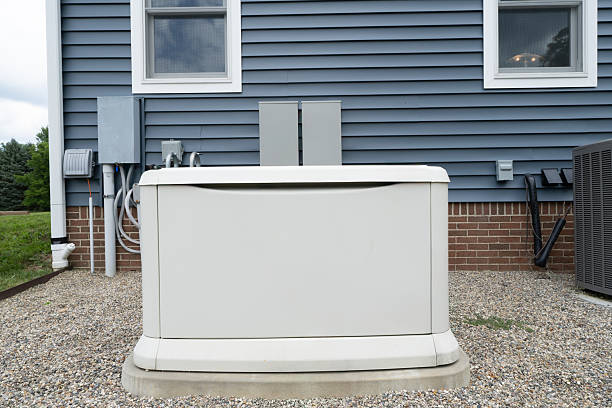
Power outages are becoming a bigger concern for homeowners across Florida. Hurricanes, severe storms, equipment failures, and grid issues can leave homes without electricity for hours or even days. During these situations, a standby generator can keep essential systems running and help maintain comfort and safety.
However, choosing a standby generator is not as simple as picking the largest unit available. The most important factor is proper standby generator sizing. A generator that is too small may struggle to power critical appliances. A generator that is too large may cost more to purchase, install, and operate than necessary.
The right generator size depends on several factors. These include the size of the home, the electrical loads you want to power, the type of heating and cooling equipment installed, and your long-term energy needs. Every home has different requirements, which is why proper load calculations are so important.
For many Florida homeowners, air conditioning is often the greatest electrical demand during an outage. Refrigerators, freezers, water heaters, internet equipment, lighting, and security systems can also add significant load requirements. When these systems start at the same time, power demand can increase quickly.
A properly sized standby generator offers several benefits:
-
Reliable backup power during outages
-
Better fuel efficiency
-
Longer equipment life
-
Reduced risk of overloads
-
Improved protection for sensitive electronics
-
Greater comfort during extended outages
Whether you want to power your entire home or only essential circuits, understanding standby generator sizing helps you make an informed decision. In this guide, we will explain how generator sizing works, how to calculate your home’s power requirements, and how to choose the right standby generator for your needs.
Key Electrical Statistics
Power reliability and emergency preparedness remain major concerns for homeowners throughout Florida and the United States. The following statistics help explain why backup power planning has become increasingly important.
-
FEMA recommends preparing for power outages that may last several days following major storms and hurricanes.
-
According to the U.S. Energy Information Administration (EIA), heating and cooling account for the largest share of residential energy consumption.
-
The Department of Energy identifies HVAC systems as one of the biggest electrical loads in most homes.
-
Ready.gov advises homeowners to plan for outages that may affect refrigeration, medical devices, communications, and water systems.
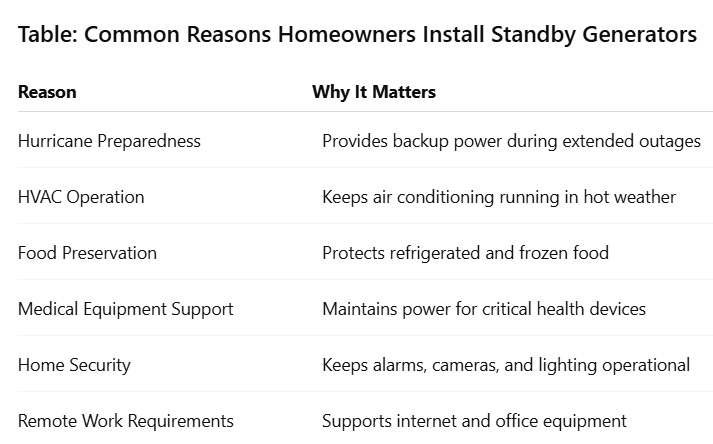
These factors explain why more homeowners are evaluating standby generator systems before the next major storm season arrives.
What Is Standby Generator Sizing?
Standby generator sizing is the process of determining how much electrical power a generator must produce to support a home’s electrical demand during an outage.
The goal is simple. The generator must provide enough power to operate the equipment you want to use without becoming overloaded. At the same time, it should not be excessively large for the actual demand.
Many homeowners assume that house size alone determines generator size. While square footage can provide a general starting point, it does not tell the whole story. Two homes of similar size may have completely different electrical loads depending on their equipment and lifestyle.
For example, one home may have:
-
A single air conditioning system
-
Standard kitchen appliances
-
Gas water heating
Another home of the same size may have:
-
Multiple HVAC systems
-
Electric water heating
-
A pool pump
-
A home office
-
Electric vehicle charging equipment
The second home will likely require a much larger generator.
Understanding Running Watts and Starting Watts
One of the most important concepts in standby generator sizing is understanding the difference between running watts and starting watts.
- Running watts refer to the amount of electricity an appliance needs during normal operation.
- Starting watts refer to the temporary surge of electricity required when certain equipment starts.
Equipment with electric motors often requires significantly more power during startup. Examples include:
-
Air conditioners
-
Refrigerators
-
Freezers
-
Well pumps
-
Sump pumps
A generator must be able to handle both running loads and startup surges.
For example, an air conditioning system may require:
-
4,000 running watts
-
7,000 to 9,000 starting watts
If startup demand is ignored during sizing calculations, the generator may struggle when multiple appliances start simultaneously.
Why Proper Generator Sizing Matters
A correctly sized standby generator delivers reliable performance during outages while helping reduce operating costs.
Benefits include:
-
Stable electrical output
-
Better fuel usage
-
Lower stress on equipment
-
Improved appliance protection
-
Greater long-term reliability
Proper sizing also allows homeowners to plan for future electrical needs. If a home addition, pool equipment, workshop, or EV charger may be added later, these future loads should be considered during the sizing process.
What Happens When a Generator Is Too Small?
An undersized generator often creates operational problems during emergencies.
Common issues include:
-
Frequent overload shutdowns
-
Tripped breakers
-
Voltage drops
-
Equipment startup failures
-
Reduced generator lifespan
In severe cases, homeowners may have to manually shut off appliances just to keep the generator operating.
What Happens When a Generator Is Too Large?
Oversizing can also create problems.
While a larger generator may seem like a safer choice, it often results in:
-
Higher purchase costs
-
Increased installation expenses
-
Greater fuel consumption
-
Reduced efficiency during light loads
-
More expensive maintenance requirements
For most homeowners, the best solution is not the largest generator available. The best solution is the generator that matches actual electrical demand as closely as possible.
How Whole Home Standby Generators Work
A whole-home standby generator is a permanently installed backup power system that automatically supplies electricity when utility power fails.
Unlike portable generators, standby systems do not require extension cords, manual startup procedures, or frequent setup during emergencies. They remain connected to the home’s electrical system and continuously monitor incoming utility power.
When an outage occurs, the system responds automatically.
Main Components of a Standby Generator System
Every standby generator installation includes several major components.
Generator Unit
The generator produces electrical power using an engine powered by natural gas, propane, or diesel fuel. The generator remains on standby until it detects a utility power interruption.
Automatic Transfer Switch
The transfer switch is often considered the most important safety component in the system.
Its responsibilities include:
-
Detecting utility power loss
-
Disconnecting the home from utility power
-
Connecting the home to generator power
-
Returning the home to utility service when power is restored
This process helps prevent dangerous backfeeding conditions.
Fuel Supply System
Most residential standby generators operate using:
-
Natural gas
-
Propane
Fuel availability plays a major role in system design and generator sizing decisions.
Electrical Distribution Panel
The electrical panel distributes power throughout the home.
Some generator systems power the entire panel. Others only support selected circuits considered essential during outages.
What Happens During a Power Outage?
The sequence is usually fast and automatic.
-
Utility power fails.
-
The transfer switch detects the outage.
-
The generator starts automatically.
-
The generator reaches operating speed.
-
The transfer switch moves electrical loads to generator power.
-
The home receives backup electricity.
When utility service returns:
-
The transfer switch detects stable utility power.
-
Electrical loads return to the utility.
-
The generator enters a cool-down cycle.
-
The generator shuts down and returns to standby mode.
Most homeowners experience only a brief interruption before backup power is restored.
Whole Home Backup vs Essential Circuit Backup
Not every homeowner needs complete home coverage. Some prefer powering only critical systems. Others want normal operation during extended outages.
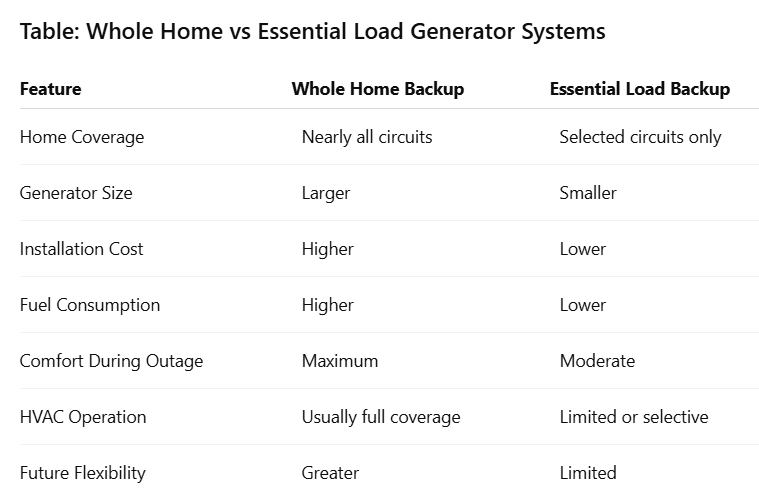
Whole home systems provide the highest level of convenience. However, essential-load systems often reduce installation costs while still protecting critical equipment.
The best option depends on household needs, budget, and outage expectations.
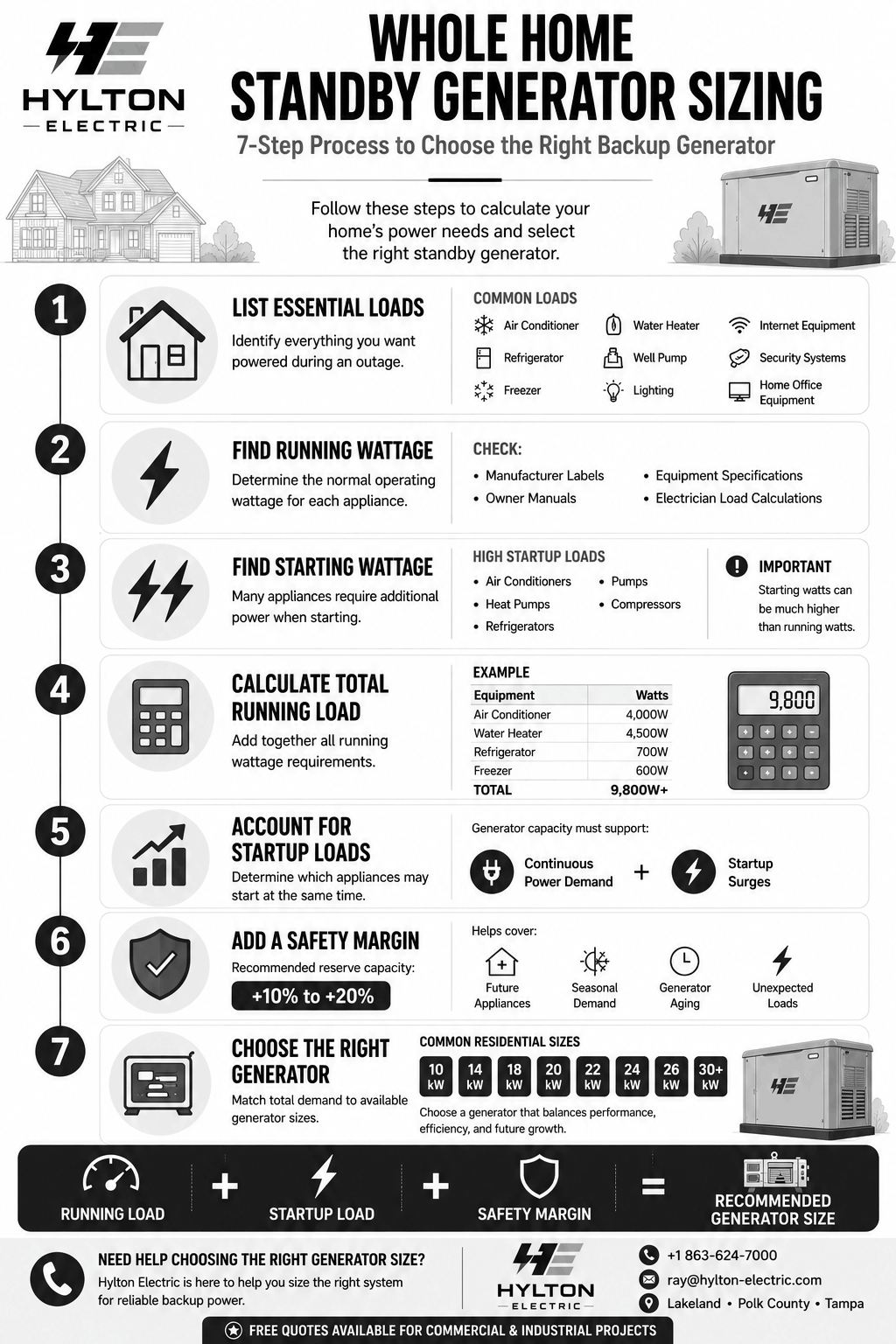
Step-by-Step Standby Generator Sizing Process
Proper standby generator sizing follows a structured process. Skipping steps often leads to inaccurate calculations and equipment selection problems. The goal is to identify how much power the home needs during an outage and then select a generator that can safely handle that demand.
Step 1: Create a List of Essential Electrical Loads
Start by identifying every appliance and system you want to operate during an outage.
Typical loads include:
-
Central air conditioning
-
Refrigerator
-
Freezer
-
Water heater
-
Well pump
-
Lighting
-
Internet equipment
-
Security systems
-
Garage door opener
-
Microwave
-
Medical equipment
-
Home office equipment
Some homeowners only include essential circuits. Others include the entire home. This decision significantly affects generator size requirements.
Step 2: Determine Running Wattage
Next, identify the normal operating wattage for each appliance.
You can find this information through:
-
Manufacturer labels
-
Owner manuals
-
Equipment specification sheets
-
Licensed electrician load calculations
Record the running wattage for every item.
Step 3: Determine Starting Wattage
Many appliances require additional power during startup. Motor-driven equipment often creates the highest startup demands.
Examples include:
-
Air conditioners
-
Heat pumps
-
Refrigerators
-
Freezers
-
Pumps
-
Compressors
The starting wattage may be substantially higher than the running wattage. This step is frequently overlooked, yet it is one of the most important parts of standby generator sizing.
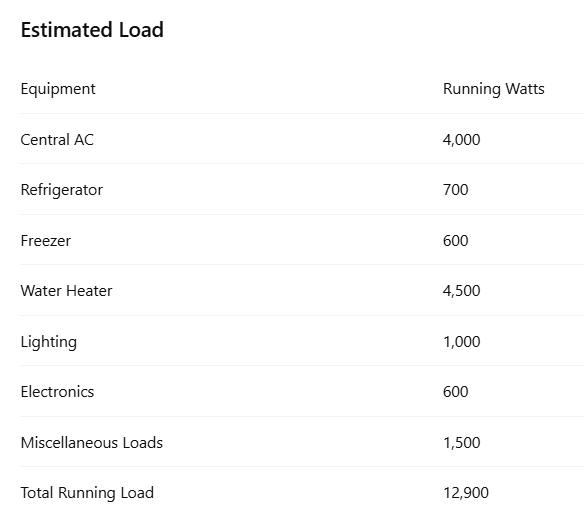
Step 4: Calculate Total Running Load
Add together all running wattage requirements.
For example:
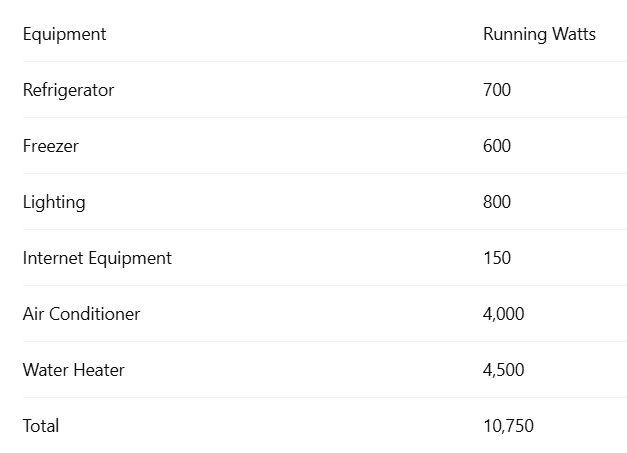
This provides a starting point for generator capacity planning.
Step 5: Account for Startup Loads
Next, determine which equipment may start at the same time.
The generator must support both:
-
Continuous operating demand
-
Temporary startup demand
This is why a home with a 10,750-watt running load may require a generator significantly larger than 11 kW.
Step 6: Add a Safety Margin
Most professionals recommend adding reserve capacity.
A safety margin helps account for:
-
Future appliance additions
-
Unexpected load increases
-
Generator aging
-
Seasonal electrical demands
Many sizing calculations include approximately 10% to 20% additional capacity.
Step 7: Select the Appropriate Generator Size
Once all loads are calculated, compare requirements to available generator ratings.
Common residential standby generator sizes include:
-
10 kW
-
14 kW
-
18 kW
-
20 kW
-
22 kW
-
24 kW
-
26 kW
-
30 kW+
The final selection should balance performance, budget, fuel consumption, and future growth.
Need Help Choosing the Right Generator Size?
Hylton Electric helps homeowners and businesses throughout Lakeland, Polk County, and Tampa determine proper generator capacity. Call +1 863-624-7000 or email ray@hylton-electric.com. Free quotes available for commercial and industrial projects.
Appliance Wattage Guide for Generator Sizing
One of the most common questions homeowners ask is, “How much power do my appliances actually use?” While exact requirements vary by manufacturer and model, understanding typical electrical demand helps create a realistic sizing estimate. The following values are general planning figures. Actual calculations should always use manufacturer specifications whenever possible.
Kitchen Appliances
Kitchen equipment often remains a priority during outages.
Typical examples include:
-
Refrigerator
-
Freezer
-
Microwave
-
Dishwasher
-
Electric range
-
Garbage disposal
Refrigeration systems are usually considered essential loads because they protect food during prolonged outages.
HVAC Equipment
In Florida, air conditioning often represents the largest electrical demand in the home.
Common HVAC loads include:
-
Central air conditioners
-
Heat pumps
-
Air handlers
-
Ventilation systems
Because HVAC equipment contains motors and compressors, startup demand can be significantly higher than running demand.
Water Systems
Homes with private wells often require additional generator capacity.
Important water-related loads include:
-
Well pumps
-
Pressure pumps
-
Sump pumps
-
Water heaters
Without adequate sizing, water systems may struggle to operate correctly during outages.
Lighting and Electronics
Although individual devices consume relatively little power, their combined load can become significant.
Examples include:
-
Interior lighting
-
Exterior lighting
-
Routers
-
Modems
-
Televisions
-
Computers
-
Security systems
Garage and Workshop Equipment
Some homeowners also choose to support:
-
Garage door openers
-
Air compressors
-
Workshop tools
-
Small machinery
These loads should be included in sizing calculations if they are expected to operate during outages.
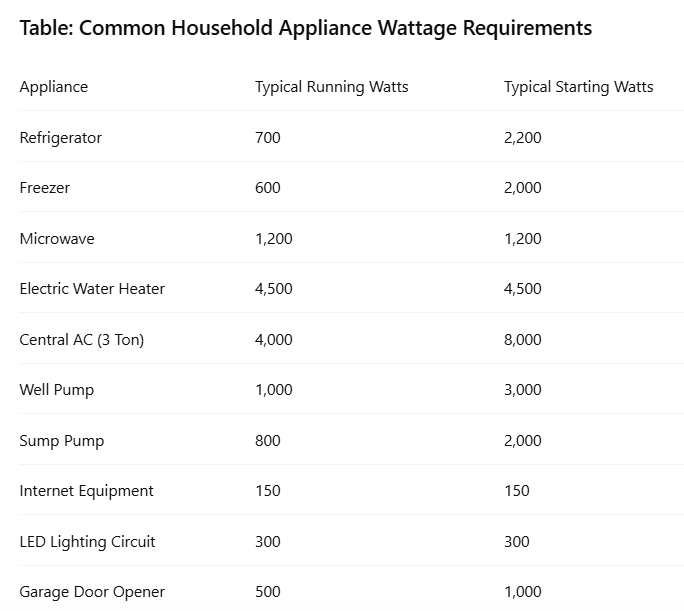
These values help establish a preliminary sizing estimate. However, a professional load calculation remains the most accurate method for selecting a standby generator.
Standby Generator Sizing by Home Size
Many homeowners start their generator search by looking at square footage. While generator sizing should always be based on electrical load calculations, home size can provide a useful starting point.
A larger home often contains more electrical equipment, more lighting circuits, and larger HVAC systems. As a result, power requirements usually increase as home size grows.
Still, two homes with the same square footage may have very different generator needs. Features such as pools, workshops, home offices, electric water heaters, and EV chargers can significantly affect sizing requirements.
Small Homes (Under 1,500 Square Feet)
Smaller homes generally have lower electrical demands.
Typical characteristics include:
-
One HVAC system
-
Standard kitchen appliances
-
Limited specialty equipment
-
Fewer electrical circuits
Many homeowners in this category choose to power essential systems only.
Typical generator range:
-
10 kW to 16 kW
Medium Homes (1,500–2,500 Square Feet)
Medium-sized homes often require more capacity due to increased appliance use and larger cooling systems.
Common loads include:
-
Central air conditioning
-
Electric water heater
-
Multiple refrigerators
-
Home office equipment
Typical generator range:
-
16 kW to 24 kW
Large Homes (2,500–4,000 Square Feet)
Larger homes often include additional comfort and convenience features.
Examples include:
-
Multiple HVAC systems
-
Pool equipment
-
Larger kitchens
-
Additional freezers
-
Entertainment systems
Typical generator range:
-
22 kW to 30 kW
Luxury Homes (4,000+ Square Feet)
Luxury properties often require customized load calculations.
Additional electrical demands may include:
-
Multiple air conditioning zones
-
Smart home systems
-
Home theaters
-
Detached structures
-
EV charging stations
-
Outdoor kitchens
Typical generator range:
-
30 kW and above
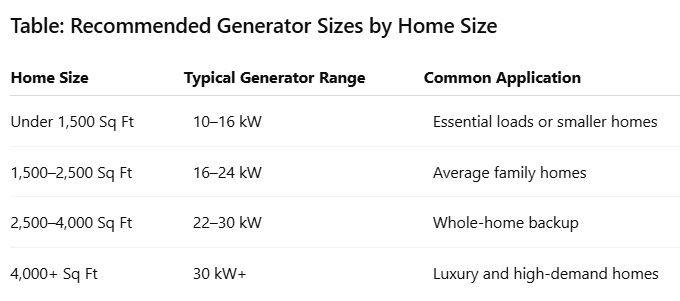
These ranges should be viewed as starting points. Actual electrical loads should always determine final generator selection.
Generator Sizing for Florida Homes
Florida homeowners face unique backup power challenges. The state’s climate, weather patterns, and energy demands make generator planning especially important. A generator that works well in another part of the country may not adequately support a Florida home during hurricane season.
Air Conditioning Load Considerations
For most Florida homes, air conditioning is the largest electrical load. When temperatures remain high during extended outages, many homeowners consider air conditioning a necessity rather than a luxury.
Several factors influence cooling demand:
-
Home size
-
Insulation quality
-
Number of HVAC systems
-
Thermostat settings
-
Outdoor temperatures
Because HVAC systems require significant startup power, they often drive overall generator sizing decisions. In many cases, one air conditioning system can account for a substantial percentage of the generator’s required capacity.
Hurricane Preparedness Requirements
Hurricanes remain one of the most common reasons homeowners install standby generators.
Major storms can cause:
-
Widespread utility outages
-
Downed power lines
-
Flooding impacts
-
Extended restoration times
As a result, many Florida homeowners choose larger generators than those in similar homes in other states.
The goal is often to maintain:
-
Air conditioning
-
Refrigeration
-
Water systems
-
Lighting
-
Communications
-
Security systems
for several days if necessary.
Extended Outage Planning
Generator sizing should consider how long outages typically last. For short outages, powering essential loads may be sufficient. For longer outages, homeowners often prefer whole-home operation.
Questions to consider include:
-
Will occupants remain home during outages?
-
Is remote work required?
-
Are medical devices present?
-
Is refrigerated medication stored on-site?
The answers can significantly affect generator capacity requirements.
Coastal Environment Considerations
Many Florida properties face exposure to:
-
Salt air
-
High humidity
-
Severe weather conditions
While these factors do not directly change generator size, they can influence equipment selection and installation requirements. Proper placement and corrosion-resistant equipment become important considerations.
Florida Fuel Supply Considerations
Generator sizing and fuel choice often go hand in hand.
Natural gas systems offer:
-
Continuous fuel supply
-
Minimal refueling concerns
-
Lower maintenance requirements
Propane systems offer:
-
Independence from utility gas infrastructure
-
Long fuel storage life
-
Reliable emergency operation
Fuel availability should always be considered when evaluating generator capacity.
Understanding Generator Capacity Ratings
Many homeowners see generator ratings such as 18 kW, 22 kW, or 26 kW without fully understanding what those numbers mean. Understanding generator capacity ratings helps ensure accurate sizing decisions.
Kilowatts vs Watts
Generator output is typically measured in watts or kilowatts.
The conversion is simple:
-
1 kilowatt (kW) = 1,000 watts
Examples:
-
10 kW generator = 10,000 watts
-
22 kW generator = 22,000 watts
-
30 kW generator = 30,000 watts
The larger the number, the more electrical load the generator can support.
Continuous Power Output
Standby generators are rated based on continuous operation. This means the generator can produce its rated output for extended periods under normal operating conditions.
For example:
-
A 22 kW generator can continuously support approximately 22,000 watts of demand.
However, consistently operating near maximum capacity is not always ideal. Most professionals prefer some reserve capacity for reliability and future expansion.
Peak Demand vs Running Demand
Generator sizing must account for two different electrical demands.
Running Demand
Running demand refers to the electricity required during normal operation.
Examples include:
-
Lighting
-
Refrigerators
-
Air conditioning
-
Electronics
Peak Demand
Peak demand occurs when the equipment starts.
Startup surges are common with:
-
Compressors
-
Pumps
-
Motors
-
HVAC systems
A properly sized generator must support both conditions.
Single-Phase Residential Power
Most residential properties operate on single-phase electrical service. Residential standby generators are designed to match these electrical requirements.
The generator must integrate safely with:
-
Main electrical panel
-
Transfer switch
-
Utility service
This is one reason professional installation is strongly recommended.
Load Management Systems
Modern generators often include load management technology. These systems help balance power demand by automatically controlling large electrical loads.
Benefits include:
-
Reduced generator size requirements
-
Lower installation costs
-
Improved efficiency
-
Better fuel consumption
For example, a load management system may temporarily delay:
-
Pool pumps
-
Water heaters
-
Secondary air conditioning units
until sufficient generator capacity becomes available.
Automatic Load Shedding Technology
Advanced standby generators can automatically prioritize important circuits. Critical systems receive power first, while less important equipment is temporarily disconnected. This approach allows homeowners to maximize available generator capacity without purchasing a substantially larger unit.
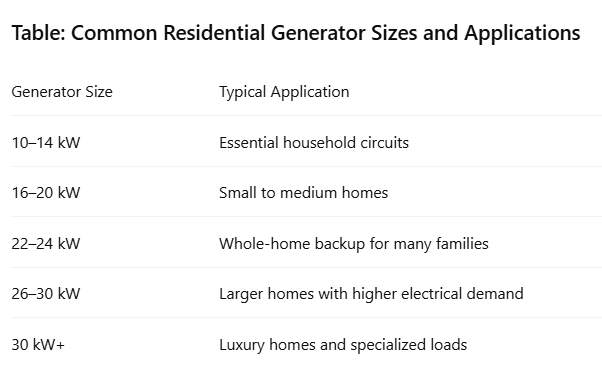
Understanding these ratings helps homeowners compare options more effectively and choose a generator that matches actual household demand rather than relying on estimates alone.
Standby Generator Size Examples
Understanding real-world examples can make standby generator sizing much easier. While every home is different, these examples show how electrical loads affect generator selection.
Remember that these are simplified examples. A licensed electrician should always perform detailed load calculations before equipment is purchased.
Example 1: Essential Loads Only
A homeowner wants to power only critical equipment during outages.
Essential loads include:
-
Refrigerator
-
Freezer
-
Internet equipment
-
Lighting circuits
-
Security system
-
Garage door opener
After accounting for startup surges and reserve capacity, a generator in the 10 kW to 14 kW range may be suitable.
Example 2: Average Family Home
This homeowner wants most household systems operational during outages.
Included loads:
-
Central air conditioning
-
Refrigerator
-
Freezer
-
Water heater
-
Lighting
-
Electronics
-
Kitchen appliances
After startup loads and safety margin are included, many homes in this category require a generator between 20 kW and 24 kW.
Example 3: Large Florida Home
This home includes:
-
Two HVAC systems
-
Pool equipment
-
Electric water heater
-
Multiple refrigerators
-
Home office
Estimated Load
The running demand may exceed 18,000 watts before startup requirements are considered.
Many homes in this category require:
-
24 kW
-
26 kW
-
30 kW
or larger standby generators.
Example 4: Home Office and Remote Work Setup
Many homeowners now work remotely and need reliable backup power.
Additional loads may include:
-
Computers
-
Monitors
-
Network equipment
-
Printers
-
Security systems
Even though these devices do not consume large amounts of power individually, maintaining business operations during outages can influence generator selection.
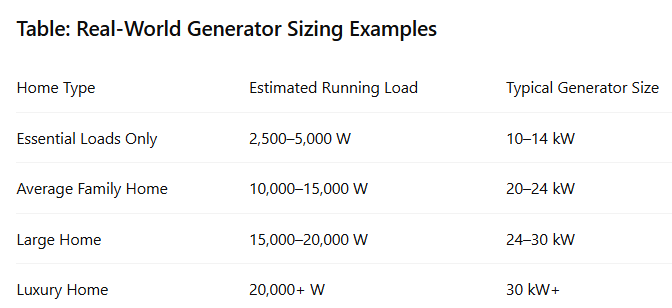
These examples show why generator sizing should be based on electrical demand rather than home size alone.
Fuel Type and Generator Sizing Considerations
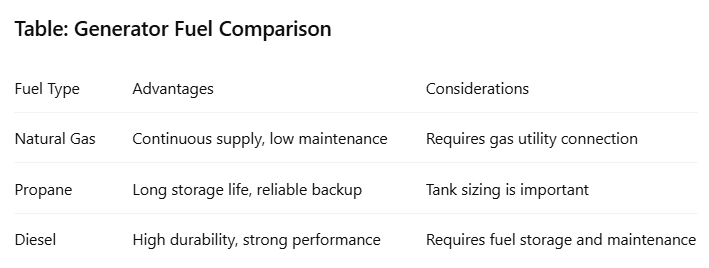
Generator size is only one part of the decision-making process. The fuel source also affects performance, operating costs, maintenance requirements, and long-term reliability. Most residential standby generators use natural gas or propane. Some larger residential and commercial systems use diesel fuel.
Natural Gas Generators
Natural gas remains one of the most popular options for Florida homeowners.
Advantages include:
-
Continuous fuel supply
-
No on-site refueling
-
Lower maintenance requirements
-
Convenient operation
Natural gas generators are particularly attractive in areas with reliable utility gas service. However, homeowners should verify that the available gas supply can support the selected generator size. Larger generators require greater fuel flow.
Propane Generators
Propane provides an excellent alternative where natural gas service is unavailable.
Benefits include:
-
Long fuel storage life
-
Reliable emergency fuel source
-
Clean-burning operation
-
Flexible installation options
Because fuel is stored on-site, tank sizing becomes an important consideration. Longer outage expectations may require larger propane storage tanks.
Diesel Generators
Diesel generators are commonly used in industrial and commercial applications. Some larger residential properties also utilize diesel systems.
Advantages include:
-
High durability
-
Strong performance under heavy loads
-
Excellent reliability
Potential drawbacks include:
-
Fuel storage requirements
-
Higher maintenance needs
-
Additional emissions considerations
Fuel Consumption and Generator Size
As generator size increases, fuel consumption typically increases as well.
For example:
-
A 14 kW generator generally uses less fuel than a 24 kW generator.
-
A 24 kW generator generally uses less fuel than a 38 kW generator.
This is one reason accurate standby generator sizing matters. Oversizing may increase operating costs for years to come.
Fuel Planning for Extended Outages
When selecting a generator, homeowners should also consider outage duration.
Questions to ask include:
-
How long do outages typically last?
-
Is fuel delivery available during emergencies?
-
Is on-site fuel storage practical?
-
Will the generator support the entire home or only essential loads?
The answers help determine both generator size and fuel strategy.
Signs Your Current Generator May Be Undersized
Many homeowners do not realize their generator is undersized until an outage occurs. Fortunately, there are several warning signs that may indicate insufficient capacity.
Frequent Overload Shutdowns
One of the most obvious indicators is repeated overload conditions.
Symptoms may include:
-
Generator shutdowns
-
Overload warnings
-
Circuit breaker trips
These issues often occur when multiple appliances operate at the same time.
Air Conditioning Struggles During Startup
HVAC systems place significant demands on generators.
Warning signs include:
-
Air conditioner fails to start
-
The lights dim when the AC starts
-
Generator engine strains during startup
These symptoms often indicate inadequate startup capacity.
Voltage Fluctuations
An undersized generator may struggle to maintain a stable voltage.
Possible signs include:
-
Flickering lights
-
Electronics resetting
-
Appliance performance issues
Stable voltage is essential for protecting modern electronics and appliances.
Inability to Add New Electrical Loads
Many homes evolve over time.
New additions may include:
-
Pool equipment
-
Workshops
-
Home offices
-
EV chargers
-
Additional HVAC systems
A generator that was appropriately sized years ago may no longer meet current demands.
Excessive Engine Strain
Listen for signs that the generator is working too hard.
Possible indicators include:
-
Frequent RPM changes
-
Unusual engine noise
-
Excessive vibration
-
Higher operating temperatures
Consistent strain can shorten generator life and increase maintenance costs.
Increased Fuel Consumption
An overloaded generator often becomes less efficient.
Homeowners may notice:
-
More fuel usage than expected
-
Longer recovery times after startup loads
-
Reduced overall performance
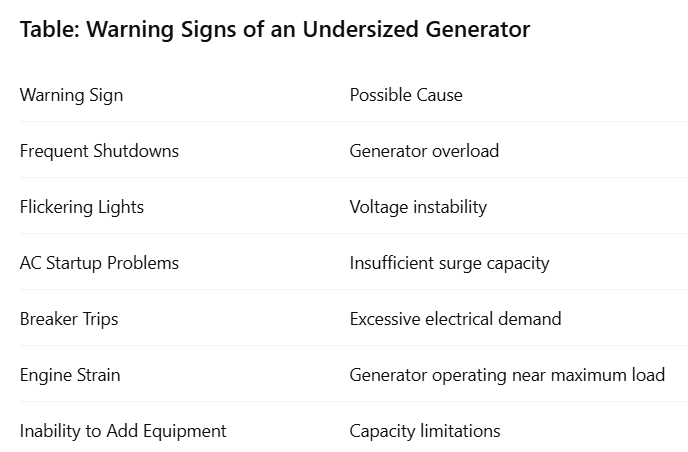
If any of these issues occur regularly, it may be time to review your generator sizing calculations and determine whether an upgrade is necessary.
Common Standby Generator Sizing Mistakes
Choosing a standby generator is a significant investment. Unfortunately, many homeowners make sizing decisions based on assumptions rather than actual electrical requirements.
Even a small sizing mistake can affect performance, fuel efficiency, and long-term reliability. Understanding the most common errors can help homeowners avoid costly problems later.
Ignoring Startup Loads
This is one of the most common sizing mistakes. Many homeowners calculate only the running wattage of their appliances. However, several household systems require a large surge of electricity when they start.
Examples include:
-
Air conditioners
-
Heat pumps
-
Refrigerators
-
Freezers
-
Well pumps
A generator may appear large enough on paper, but still struggle when multiple appliances start simultaneously. Startup demand should always be included in load calculations.
Relying Only on Square Footage
Home size can provide a rough estimate, but it should never be the sole factor in generator selection. Two homes with identical square footage may have very different electrical demands.
Factors that affect actual load include:
-
HVAC equipment
-
Water heating systems
-
Pool equipment
-
Home offices
-
EV chargers
-
Workshop machinery
A detailed load calculation provides a much more accurate result.
Not Planning for Future Electrical Needs
Many homeowners size a generator based only on current usage. However, electrical demand often grows over time.
Future additions may include:
-
Home additions
-
Pool systems
-
Electric vehicle chargers
-
Additional air conditioning units
-
Workshop equipment
Adding some reserve capacity today may help avoid costly upgrades later.
Choosing the Largest Generator Available
Some homeowners believe bigger is always better.
In reality, oversized generators can create several drawbacks:
-
Higher purchase costs
-
Increased installation expenses
-
Greater fuel consumption
-
Higher maintenance costs
The goal should be proper sizing, not maximum size.
Forgetting Fuel Supply Limitations
Fuel availability directly affects generator performance.
For example:
-
Natural gas lines must support the required fuel flow.
-
Propane tanks must be properly sized.
-
Diesel storage must support the expected runtime.
A generator cannot perform properly if fuel delivery is inadequate.
Overlooking Load Management Technology
Modern standby generators often include load management systems.
These systems can:
-
Prioritize critical circuits
-
Delay non-essential loads
-
Reduce peak demand
As a result, homeowners may not need as large a generator as they initially assume.
Skipping Professional Load Calculations
Online generator calculators can provide rough estimates. However, they cannot replace a detailed electrical evaluation.
A professional load calculation considers:
-
Actual appliance specifications
-
Startup demands
-
Electrical service capacity
-
Future expansion plans
This produces a much more reliable sizing recommendation.
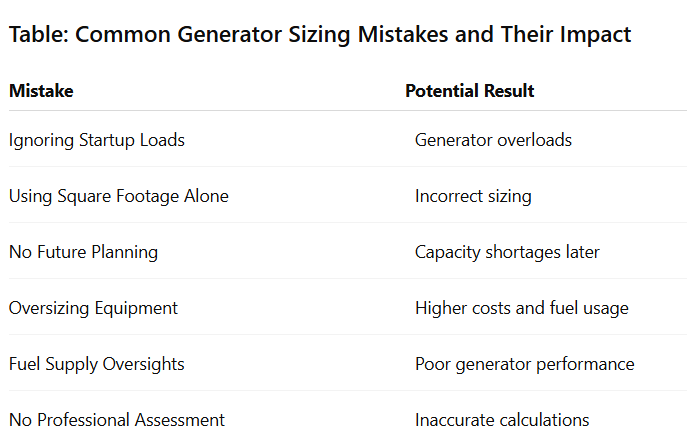
Avoiding these mistakes helps ensure the generator performs reliably when backup power is needed most.
Cost Breakdown of Standby Generator Systems in Florida
One of the first questions homeowners ask is, “How much does a whole home standby generator cost?” The answer depends on several factors, including generator size, fuel source, site conditions, and installation complexity. Larger generators typically require more equipment, larger fuel supplies, and additional labor.
Generator Equipment Costs
The generator itself represents a significant portion of the project budget.
Typical factors affecting equipment costs include:
-
Generator capacity
-
Brand and model
-
Fuel type
-
Noise reduction features
-
Smart monitoring technology
As generator size increases, equipment costs generally increase as well.
Transfer Switch Costs
Every standby generator installation requires a transfer switch.
Transfer switch pricing depends on:
-
Service size
-
Whole-home vs essential-load coverage
-
Load management features
Advanced transfer switches often improve overall system efficiency and flexibility.
Installation Labor Costs
Installation costs vary based on site conditions.
Factors affecting labor include:
-
Generator location
-
Electrical panel access
-
Fuel system modifications
-
Concrete pad requirements
-
Permit requirements
Complex installations usually require additional labor hours.
Fuel System Costs
Fuel infrastructure can significantly affect project pricing.
Possible expenses include:
-
Natural gas line upgrades
-
Propane tank installation
-
Fuel regulators
-
Underground piping
These costs vary widely depending on the property.
Permit and Inspection Costs
Most generator installations require permits and inspections.
These requirements help ensure compliance with:
-
Local building codes
-
Electrical codes
-
Utility regulations
Permit costs vary by municipality.
Long-Term Maintenance Costs
Generator ownership includes ongoing maintenance expenses.
Typical maintenance items include:
-
Oil changes
-
Filter replacements
-
Battery replacement
-
Annual inspections
-
Load testing
Routine maintenance helps maximize equipment life and reliability.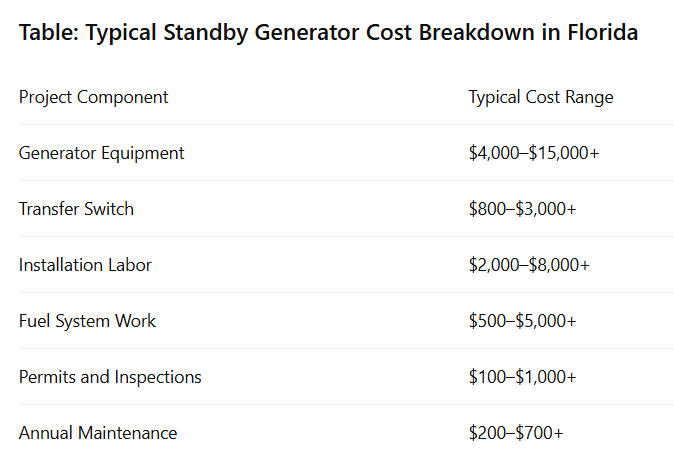
Actual pricing depends on the generator size, site conditions, and project requirements.
Factors That Increase Installation Costs
Certain conditions can increase project costs.
Examples include:
-
Long fuel line runs
-
Electrical service upgrades
-
Difficult equipment access
-
Large generator capacities
-
Additional concrete work
A site assessment helps identify these factors before installation begins.
Is a Larger Generator Worth the Cost?
Not always.
A larger generator may provide additional capacity, but it also increases:
-
Equipment costs
-
Fuel consumption
-
Maintenance expenses
The best value typically comes from selecting a generator that closely matches the home’s actual electrical demand.
When to Hire a Licensed Electrician for Generator Sizing
While homeowners can estimate electrical loads, professional evaluations provide a much higher level of accuracy. Generator sizing involves more than adding appliance wattages together. A licensed electrician can identify factors that are often overlooked during DIY calculations.
Electrical Load Calculations
Professional load calculations consider:
-
Existing electrical demand
-
Startup requirements
-
Future expansion plans
-
Service capacity limitations
This creates a more accurate sizing recommendation.
Service Panel Evaluation
The electrical panel plays a critical role in generator integration.
An electrician can determine:
-
Panel condition
-
Available capacity
-
Upgrade requirements
-
Transfer switch compatibility
Older panels may require upgrades before generator installation.
Fuel System Assessment
Generator performance depends heavily on fuel supply.
A professional can verify:
-
Natural gas capacity
-
Propane system sizing
-
Fuel line requirements
-
Pressure specifications
Proper fuel planning helps prevent performance issues during outages.
Transfer Switch Selection
Choosing the correct transfer switch is essential.
Factors include:
-
Whole-home coverage
-
Essential-load coverage
-
Load management features
-
Service amperage
An electrician can recommend the best option for the property’s needs.
Permit and Code Compliance
Generator installations must comply with applicable codes and regulations.
Professional installers help ensure compliance with:
-
National Electrical Code requirements
-
Local permitting requirements
-
Utility regulations
-
Manufacturer specifications
Code compliance helps protect both safety and investment value.
Final Testing and System Verification
Before a generator is placed into service, thorough testing should be performed.
This includes:
-
Load testing
-
Transfer switch testing
-
Voltage verification
-
Startup testing
-
Safety inspections
Testing confirms that the system will perform correctly during an actual outage.
Benefits of Professional Generator Sizing
Working with a qualified electrical contractor offers several advantages:
-
Accurate sizing calculations
-
Improved reliability
-
Better fuel efficiency
-
Reduced risk of overloads
-
Code-compliant installation
-
Long-term peace of mind
For most homeowners, professional sizing is one of the best ways to ensure a standby generator delivers dependable backup power for years to come.
Need Help Choosing the Right Generator Size?
Whether you’re planning backup power for a home, business, or industrial facility, Hylton Electric serves Lakeland, Polk County, and Tampa with professional generator evaluations and installations. Call +1 863-624-7000 or email ray@hylton-electric.com. Free quotes are available for commercial and industrial projects.
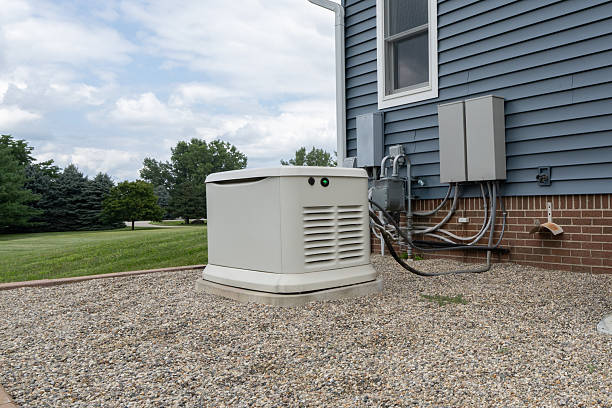
Expert Recommendations for Choosing the Right Generator
Selecting the right standby generator involves balancing performance, budget, fuel consumption, and future electrical needs. While every property is different, several best practices can help homeowners make a smarter decision.
Best Generator Size for Most Florida Homes
Many Florida homes fall into the medium-sized category and typically require a generator in the 20 kW to 24 kW range.
This range often provides enough capacity for:
-
Central air conditioning
-
Refrigeration
-
Lighting
-
Water heating
-
Internet equipment
-
Essential household appliances
However, actual load calculations should always determine the final size.
Plan for Future Electrical Growth
Electrical demand rarely stays the same over the life of a home.
Future upgrades may include:
-
EV charging stations
-
Home additions
-
Pool equipment
-
Outdoor kitchens
-
Workshops
-
Additional HVAC systems
A modest amount of reserve capacity can help accommodate future growth without requiring generator replacement.
Focus on Essential Loads First
Not every homeowner needs a complete whole-home backup.
Prioritizing essential loads can:
-
Reduce installation costs
-
Lower fuel consumption
-
Improve efficiency
-
Simplify maintenance
Many homeowners find that powering critical systems provides the best balance between comfort and budget.
Consider Fuel Availability
Fuel supply is just as important as generator capacity.
Questions to consider include:
-
Is natural gas available?
-
How large should a propane tank be?
-
How long do outages typically last?
-
Will fuel deliveries be available during emergencies?
Choosing the right fuel strategy helps ensure reliable operation when backup power is needed most.
Think Beyond Initial Purchase Price
The least expensive generator is not always the best value.
Long-term ownership costs include:
-
Fuel consumption
-
Maintenance
-
Repairs
-
Inspections
-
Replacement parts
A properly sized, professionally installed generator often delivers better value over its lifespan.
Work With a Qualified Electrical Contractor
Professional sizing and installation provide several benefits.
A licensed electrician can:
-
Perform accurate load calculations
-
Verify fuel requirements
-
Evaluate service panels
-
Ensure code compliance
-
Recommend appropriate equipment
This helps reduce the risk of costly sizing mistakes.
Future Trends in Home Backup Power
Backup power technology continues to evolve. Modern systems offer more efficiency, flexibility, and convenience than ever before. Homeowners considering a new generator should be aware of several emerging trends.
Smart Load Management
Load management systems are becoming increasingly common.
These technologies help generators operate more efficiently by:
-
Prioritizing critical equipment
-
Delaying non-essential loads
-
Reducing peak demand
This can allow homeowners to support more equipment without dramatically increasing generator size.
Remote Monitoring Systems
Many new standby generators include remote monitoring capabilities.
These systems allow homeowners to:
-
View system status
-
Receive maintenance alerts
-
Monitor operating conditions
-
Track outage events
Remote monitoring can improve reliability and simplify maintenance planning.
Hybrid Generator and Battery Systems
Battery storage continues to gain popularity in residential applications.
Some homeowners are combining:
-
Standby generators
-
Battery backup systems
-
Solar energy systems
These hybrid solutions can reduce fuel consumption while improving resilience during outages.
Improved Fuel Efficiency
Manufacturers continue to improve generator efficiency.
New systems often offer:
-
Better fuel management
-
Reduced emissions
-
Quieter operation
-
Improved reliability
These improvements can lower long-term operating costs.
Increased EV Integration
As electric vehicle ownership grows, generator sizing considerations are changing. Homeowners are increasingly evaluating whether backup systems should support:
-
Home EV charging
-
Vehicle-to-home technology
-
Future transportation needs
This trend is expected to influence generator sizing decisions for years to come.
Conclusion
Proper standby generator sizing is one of the most important factors in creating a reliable backup power system.
A generator that is too small may struggle during critical situations. A generator that is too large may increase costs without providing meaningful benefits. The best solution is a generator sized to match the property’s actual electrical demand.
The sizing process begins with understanding the home’s electrical loads. Running wattage, startup wattage, HVAC requirements, fuel availability, and future expansion plans should all be considered before equipment is selected.
For Florida homeowners, generator planning is especially important. Hurricanes, severe storms, and extended outages can create significant disruptions. A properly sized standby generator helps maintain comfort, safety, and business continuity when utility power is unavailable.
Whether you need backup power for essential circuits or complete whole-home coverage, accurate load calculations provide the foundation for a dependable system.
Taking the time to evaluate electrical demand today can help prevent costly mistakes and improve long-term generator performance.
Need a Professional Generator Assessment?
Hylton Electric helps residential, commercial, and industrial customers throughout Lakeland, Polk County, and Tampa evaluate backup power needs and select the right generator size. Call +1 863-624-7000 or email ray@hylton-electric.com. Free quotes are available for commercial and industrial projects.
FAQs About Standby Generator Sizing
What size standby generator do I need for a whole house?
The correct generator size depends on your home’s actual electrical demand rather than square footage alone. Most whole-home standby generators range from 20 kW to 30 kW, but some homes require smaller or larger systems.
Factors that affect sizing include:
-
HVAC equipment
-
Electric water heaters
-
Pool systems
-
Well pumps
-
EV chargers
-
Home office equipment
A professional load calculation is the most accurate way to determine the correct generator size.
Is a 20kW generator enough for most homes?
A 20 kW generator is sufficient for many average-sized homes. It can often power:
-
Central air conditioning
-
Refrigeration
-
Lighting
-
Internet equipment
-
Basic household appliances
However, homes with multiple HVAC systems, pools, workshops, or high electrical demand may require larger generators. Load calculations should always verify capacity requirements.
How do I calculate generator sizing requirements?
Generator sizing involves calculating both running and startup wattage.
The process typically includes:
-
Listing appliances and systems.
-
Determining running wattage.
-
Determining startup wattage.
-
Adding total electrical demand.
-
Including reserve capacity.
Professional calculations provide the most accurate results because they account for electrical factors that homeowners may overlook.
What appliances should be included in generator calculations?
Any appliance you expect to operate during an outage should be included.
Common examples include:
-
Air conditioners
-
Refrigerators
-
Freezers
-
Water heaters
-
Lighting
-
Security systems
-
Internet equipment
-
Medical devices
-
Well pumps
The more equipment included, the larger the generator typically needs to be.
Can I run central air conditioning with a standby generator?
Yes. Many standby generators are specifically sized to support central air conditioning. However, air conditioners often have large startup demands. The generator must be capable of handling both running and startup loads. In Florida, HVAC systems frequently represent the largest factor in standby generator sizing calculations.
Should generator sizing include future electrical upgrades?
Yes. Future expansion should be considered whenever possible.
Potential upgrades may include:
-
Home additions
-
EV charging stations
-
Pool equipment
-
Workshops
-
Additional HVAC systems
Planning ahead can reduce the likelihood of needing a generator upgrade later.
What happens if a generator is too small?
An undersized generator may experience:
-
Overload shutdowns
-
Voltage fluctuations
-
Breaker trips
-
Equipment startup failures
-
Increased wear and tear
These issues can affect both generator performance and appliance reliability during outages.
What happens if a generator is oversized?
Oversized generators generally cost more to purchase, install, and operate.
Potential drawbacks include:
-
Higher fuel consumption
-
Increased maintenance costs
-
Reduced efficiency
-
Higher upfront investment
Proper sizing usually provides the best balance between performance and cost.
How much reserve capacity should a generator have?
Many professionals recommend maintaining approximately 10% to 20% reserve capacity.
Reserve capacity helps account for:
-
Future electrical growth
-
Unexpected loads
-
Equipment aging
-
Seasonal demand increases
The exact amount varies depending on the property’s needs.
Is square footage enough to determine generator size?
No. Square footage provides only a rough estimate.
Actual sizing should be based on:
-
Appliance demand
-
HVAC equipment
-
Electrical usage patterns
-
Future expansion plans
Two homes with identical square footage may require very different generator sizes.
Do Florida homes need larger generators?
In many cases, yes. Florida homes often have higher cooling demands because of the climate. Air conditioning systems can significantly increase generator capacity requirements. Homeowners also frequently plan for extended outages caused by hurricanes and severe storms.
How often should generator sizing be reviewed?
Generator sizing should be reviewed whenever major electrical changes occur.
Examples include:
-
Home additions
-
New HVAC systems
-
Pool installations
-
EV charger installation
-
Significant appliance upgrades
Periodic reviews help ensure adequate backup power capacity.
Does fuel type affect generator sizing?
Fuel type does not directly determine generator size, but it affects system design.
Important considerations include:
-
Natural gas availability
-
Propane storage capacity
-
Fuel delivery requirements
-
Expected runtime
Fuel planning should be completed alongside sizing calculations.
Should I power the whole house or only essential circuits?
The answer depends on budget, comfort expectations, and outage planning goals.
Essential-load systems generally:
-
Cost less
-
Use less fuel
-
Require smaller generators
Whole-home systems provide greater convenience but often require larger equipment and higher installation costs.
Can an electrician perform generator load calculations?
Yes. Licensed electricians routinely perform generator load calculations.
Professional assessments help determine:
-
Actual electrical demand
-
Startup requirements
-
Fuel needs
-
Transfer switch requirements
-
Future expansion capacity
This is typically the most accurate way to select a standby generator.
Still Have Questions About Standby Generator Sizing?
Whether you’re a homeowner, property manager, or facility operator in Lakeland, Polk County, or Tampa, Hylton Electric can help you evaluate backup power needs. Call +1 863-624-7000 or email ray@hylton-electric.com. Free quotes are available for commercial and industrial projects.
References
-
Ready.gov Power Outages
-
U.S. Department of Energy Heating and Cooling Guide
-
U.S. Energy Information Administration Residential Energy Use
Leave a Reply