

Many property owners assume an electrical panel upgrade is as simple as replacing the old panel with a bigger one. In reality, the process starts with a much more important question: How much power does the building actually need?
That is where an electrical load calculation comes in.
An electrical load calculation measures the total amount of electricity a home, business, or industrial facility uses. It looks at everything connected to the system, including lighting, appliances, HVAC equipment, machinery, EV chargers, generators, and other electrical devices. The results help electricians determine whether the existing electrical service can safely handle the demand today and in the years ahead.
For homeowners, load calculations are often needed before installing an EV charger, adding a standby generator, building an addition, or upgrading to a larger HVAC system. For commercial and industrial properties, they are even more important because electrical demands can grow quickly as new equipment and technology are added.
Skipping this step can lead to expensive mistakes. If a panel is too small, circuits can become overloaded, breakers may trip repeatedly, and the system can overheat. If the panel is too large, you could end up paying for capacity you may never use.
Across Florida, electrical demand is rising faster than ever. More homes and businesses are relying on EV charging stations, backup power systems, advanced HVAC equipment, and other energy-intensive technologies. As a result, a professional electrical load calculation has become the foundation of any successful panel upgrade project.
Whether you own a home, manage a commercial property, or run an industrial facility, understanding your building’s electrical needs is the first step toward a safer, more reliable, and cost-effective electrical system. After all, the best panel upgrade is not the biggest one—it’s the one that’s sized correctly for your property.
What Is an Electrical Load Calculation?
An electrical load calculation is a process used to determine how much electrical power a building requires under normal operations.
Licensed electricians use established National Electrical Code (NEC) formulas. The aim is to estimate the total demand placed on an electrical system. The goal is to verify that the electrical service, wiring, breakers, and panel capacity are sufficient for the property’s needs.
Simply put, a load calculation answers one important question:
Can the electrical system safely support all connected equipment without becoming overloaded?
Simple Definition of Electrical Load Calculation
Every electrical device draws power. Lights, air conditioners, water heaters, appliances, computers, machinery, and EV chargers all contribute to the total electrical demand of a building.
A load calculation adds these demands together while applying code-approved demand factors. This creates a realistic estimate of how much electricity the property is likely to use at peak times.
The results help electricians determine:
-
Required panel size
-
Required service size
-
Proper breaker ratings
-
Wire sizing requirements
-
Future expansion capacity
Without this information, electrical upgrades become guesswork.
How Electrical Load Is Measured
Electrical demand is typically measured using several related values.
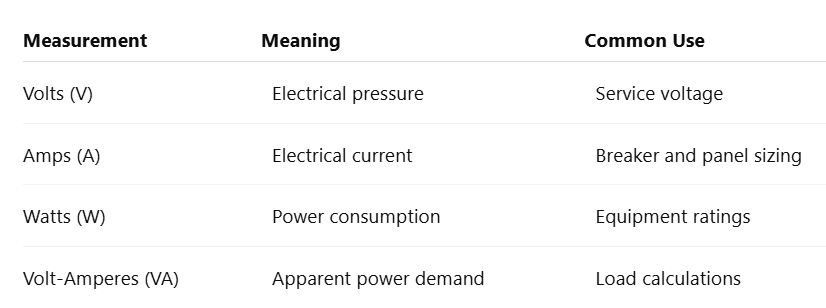
Table: Common Electrical Measurements Used During Load Calculations
Most panel upgrades focus heavily on amperage because panel ratings are measured in amps. For example, a residential property may have a 100-amp service, while larger homes often require 200 amps or more.
Commercial and industrial facilities may require significantly larger services depending on equipment demand.
NEC Requirements for Electrical Load Calculations
Electrical load calculations are not simply a best practice. In many situations, they are required by code.
The National Electrical Code provides formulas and procedures. The electricians must follow when sizing electrical services and panels. These rules help create a consistent and safe method for determining electrical demand.
Load calculations are commonly required when:
-
Upgrading electrical service
-
Replacing an electrical panel
-
Constructing a new building
-
Adding large equipment
-
Installing EV charging systems
-
Expanding commercial facilities
-
Renovating industrial operations
Building departments and inspectors often need documentation showing that the electrical system has been properly sized. This helps ensure that installations meet safety standards and reduce the risk of overloaded systems.
Residential vs. Commercial vs. Industrial Load Calculations
While the overall goal remains the same, load calculations vary depending on the property type.
Residential Load Calculations
Residential calculations focus on:
-
General lighting
-
Kitchen appliances
-
HVAC equipment
-
Water heaters
-
Laundry equipment
-
EV chargers
-
Backup generators
Electricians use square footage and appliance ratings to estimate demand.
Commercial Load Calculations
Commercial buildings often include:
-
Office equipment
-
Commercial lighting
-
HVAC systems
-
Restaurant equipment
-
Retail systems
-
Specialty equipment
Occupancy type and business operations play a major role in determining electrical demand.
Industrial Load Calculations
Industrial facilities require a more detailed analysis.
Common factors include:
-
Manufacturing equipment
-
Large motors
-
Production lines
-
Pumps
-
Compressors
-
Process equipment
-
High-voltage distribution systems
Industrial calculations often account for future growth because production needs can change over time.
Not sure if your electrical panel can handle more power? Hylton Electric can help.
We provide electrical load calculations, panel upgrades, EV charger installations, generator connections, and electrical system inspections across Lakeland, Polk County, and the Greater Tampa area.
Our team will assess your system and recommend the right solution for your property. Call +1 863-624-7000 or email ray@hylton-electric.com to discuss your project. Free quotes are available for commercial and industrial properties.
Why Electrical Load Calculation Is Required Before Panel Upgrades
Many people assume that upgrading to a larger electrical panel automatically solves electrical capacity problems. However, a panel upgrade should never begin until a proper electrical load calculation is completed.
The calculation serves as the foundation of the entire project. It helps determine whether an upgrade is needed, how large the new panel should be, and whether the existing electrical service can safely support future demand.
Without accurate calculations, property owners risk spending money on the wrong solution while creating safety and compliance concerns.
Prevents Overloaded Electrical Panels
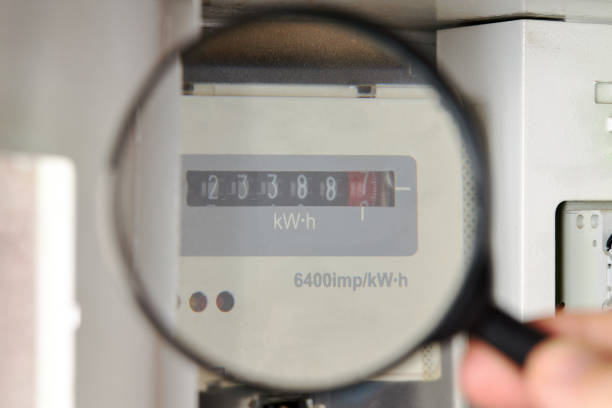
One of the primary reasons for performing an electrical load calculation is to prevent panel overload.
Every electrical panel has a maximum capacity. When power demand exceeds that capacity, problems begin to appear.
Common warning signs include:
-
Frequent breaker trips
-
Flickering lights
-
Warm breakers
-
Buzzing sounds from the panel
-
Equipment performance issues
Overloaded panels generate excess heat. Over time, that heat can damage wiring, breakers, and connected equipment.
Ensures Proper Breaker and Wire Sizing
A panel upgrade involves more than replacing the panel itself. The wiring and breakers connected to the system must also be properly sized.
If conductors are too small for the electrical load, they can overheat. If breakers are oversized, they may fail to trip when dangerous conditions occur.
An electrical load calculation helps determine:
-
Correct panel size
-
Proper breaker ratings
-
Required conductor sizes
-
Circuit capacity requirements
This creates a balanced electrical system where every component works together safely.
Confirms Whether a Panel Upgrade Is Actually Necessary
Not every electrical problem requires a larger panel.
In some cases, property owners request a panel upgrade because breakers are tripping or new equipment is being installed. However, a detailed load calculation may reveal that the existing service still has available capacity.
For example, a homeowner may believe they need a 200-amp service upgrade for a new EV charger. After reviewing the property’s actual demand, an electrician may determine that the existing system can safely support the charger with minor modifications.
This prevents unnecessary expenses while still meeting safety requirements.
Helps Meet Electrical Code Requirements
Electrical work must comply with local building codes and National Electrical Code standards.
Many jurisdictions require documented load calculations before approving:
-
Panel upgrades
-
Service upgrades
-
Commercial renovations
-
Tenant build-outs
-
EV charger installations
-
Generator installations
Inspectors often review these calculations during the permitting process.
Without proper documentation, projects may face:
-
Permit delays
-
Failed inspections
-
Additional correction costs
-
Project schedule disruptions
Performing the calculation early helps keep projects moving smoothly.
Protects Valuable Equipment
Modern buildings depend on expensive electrical equipment.
Residential properties often contain:
-
HVAC systems
-
Smart appliances
-
Home offices
-
Electric vehicle chargers
Commercial facilities may rely on:
-
Computer networks
-
Refrigeration equipment
-
Security systems
-
Specialized machinery
Industrial operations often include:
-
Motors
-
Pumps
-
Compressors
-
Production equipment
An undersized electrical system can cause voltage drops and inconsistent power delivery. Over time, these issues may reduce equipment lifespan and increase maintenance costs. A properly sized system helps ensure reliable performance and protects investments.
Supports Future Growth
Electrical needs rarely stay the same.
Homeowners may add:
-
Pools
-
Home additions
-
Backup generators
Commercial properties may expand operations, add employees, or install new equipment. Industrial facilities often increase production capacity over time.
A professional electrical load calculation considers both current demand and future plans. This allows electricians to recommend a panel size that accommodates growth while avoiding repeated upgrades later.
Improves Energy Planning
Load calculations provide a detailed understanding of how electricity is used throughout a building.
This information can help identify opportunities to:
-
Improve efficiency
-
Reduce demand peaks
-
Plan future upgrades
-
Prioritize equipment replacements
For commercial and industrial facilities, understanding electrical demand can support budgeting and long-term facility planning.
Reduces Long-Term Costs
Many property owners focus only on the cost of a panel upgrade. However, choosing the wrong panel size can create future expenses. An undersized panel may require another upgrade within a few years. An oversized system may result in unnecessary installation costs. The table below shows how proper planning can affect project costs.
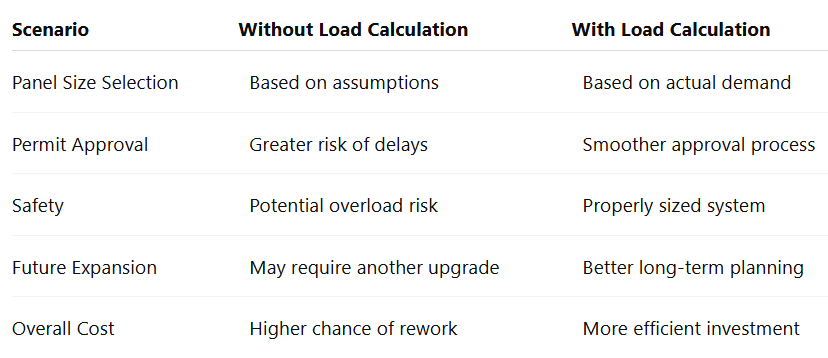
Table: Impact of Electrical Load Calculations on Upgrade Decisions
A load calculation may seem like a small step, but it often prevents costly mistakes that could affect the electrical system for years.
Why Electricians Always Start With a Load Calculation
Experienced electricians rarely recommend a panel upgrade without first analyzing the building’s electrical demand. The calculation provides critical information that guides every decision during the project.
It answers important questions such as:
-
Does the existing service have enough capacity?
-
What panel size is required?
-
Can future equipment be supported?
-
Will the installation meet code requirements?
-
Are there any safety concerns that need attention?
Without these answers, a panel upgrade becomes little more than an educated guess.
For that reason, electrical load calculations remain one of the most important steps in any residential, commercial, or industrial panel upgrade project.
How Electricians Perform an Electrical Load Calculation
Many property owners hear the term “electrical load calculation” but are unsure what the process actually involves.
In reality, load calculations follow a structured approach based on National Electrical Code (NEC) guidelines. Electricians gather information about the building, analyze electrical demand, and calculate the amount of power required to operate safely.
The goal is simple: determine whether the existing electrical service can handle current and future loads without creating safety risks.
Step 1: Gather Basic Property Information
The first step is collecting details about the building. The electrician needs accurate information because every property has different electrical requirements.
Typical information includes:
-
Building square footage
-
Property type
-
Existing panel size
-
Service amperage
-
Number of circuits
-
Occupancy type
-
Future expansion plans
For example, a residential home and an industrial warehouse of the same size may have completely different electrical demands. Commercial and industrial projects often require additional documentation, including equipment schedules and electrical drawings.
Property Information Checklist
Before a load calculation begins, electricians typically review:
-
Total building size
-
Existing service rating
-
Panel age and condition
-
Number of occupants
-
Planned renovations
-
New equipment installations
-
Utility service information
The more accurate the information, the more accurate the calculation.
Step 2: Identify All Electrical Loads
Once the building information is collected, the electrician identifies every significant electrical load. A load refers to any device or equipment that consumes electricity. Some loads run continuously, while others operate only occasionally.
Common residential loads include:
-
Lighting
-
Air conditioning systems
-
Electric water heaters
-
Kitchen appliances
-
Laundry equipment
-
Pool equipment
-
EV chargers
Commercial loads may include:
-
Office equipment
-
Retail displays
-
Commercial kitchens
-
Refrigeration systems
-
Security systems
-
Data equipment
Industrial facilities often contain:
-
Motors
-
Compressors
-
Pumps
-
Production machinery
-
Welding equipment
-
Conveyor systems
Every major electrical load must be included in the calculation.
Step 3: Determine Connected Load
The connected load is the total electrical demand if every device operates at the same time. This number provides a starting point for the calculation. However, most buildings never use every piece of equipment simultaneously.
For example, not every light, appliance, and HVAC component operates at maximum capacity throughout the day. Because of this, electricians move to the next step and apply demand factors.
Step 4: Apply NEC Demand Factors
Demand factors are one of the most important parts of an electrical load calculation. These factors account for real-world usage patterns. Instead of assuming every device operates at full capacity all the time, the NEC allows certain reductions based on expected usage.
For example:
-
Lighting loads may qualify for demand adjustments.
-
Appliance loads may be calculated differently.
-
HVAC systems follow specific rules.
-
Commercial occupancies often have unique demand factors.
Applying these factors creates a more realistic estimate of actual electrical demand. Without demand factors, electrical systems would often be oversized unnecessarily.
Step 5: Calculate Total Demand Load
After demand factors are applied, the electrician calculates the building’s total demand load. This figure represents the expected electrical demand during normal peak operating conditions.
The result is typically expressed in:
-
Volt-amperes (VA)
-
Kilovolt-amperes (kVA)
-
Amperes (A)
This final number becomes the basis for determining service size and panel capacity.
Example Residential Load Calculation
The table below shows a simplified example of how electrical demand may be evaluated in a typical home.
Table: Sample Residential Electrical Load Calculation
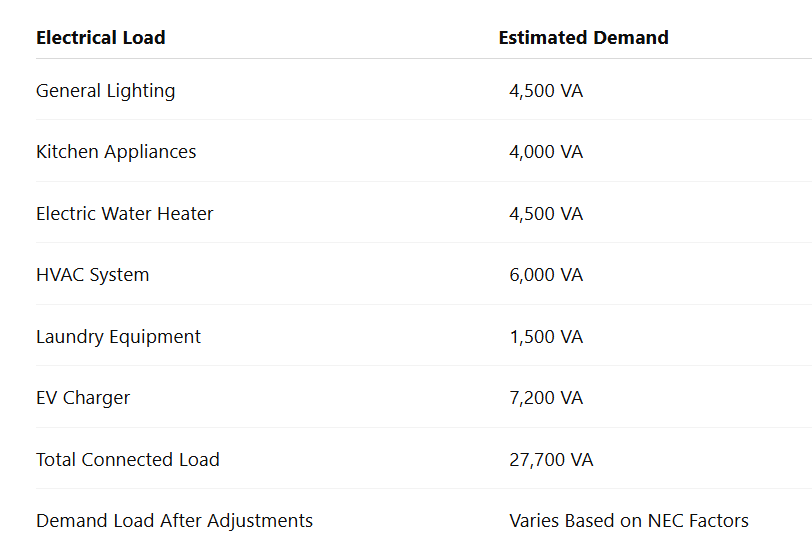
Actual calculations vary depending on the property and equipment involved.
Step 6: Compare Demand to Existing Service Capacity
Once the total demand is known, the electrician compares it to the property’s existing electrical service.
This step determines whether:
-
The current panel is sufficient.
-
Additional circuits are needed.
-
A service upgrade is required.
-
Future equipment can be supported.
For example, a building with a calculated demand approaching the limits of a 100-amp panel may require a 200-amp upgrade to safely accommodate future growth. This comparison eliminates guesswork and provides a clear path forward.
Step 7: Evaluate Future Electrical Needs
A professional load calculation should not focus only on today’s requirements. Future plans are equally important. Many property owners upgrade electrical systems because they expect increased demand in the coming years.
Examples include:
-
Electric vehicle adoption
-
Home additions
-
Commercial expansion
-
New manufacturing equipment
-
Generator installations
-
Additional HVAC systems
Planning for future demand can help avoid another costly upgrade a few years later.
Step 8: Prepare Documentation for Permits and Inspections
The final step involves documenting the calculation results.
This documentation is often required for:
-
Permit applications
-
Utility approvals
-
Inspection reviews
-
Engineering records
-
Facility planning
Having proper documentation helps streamline the approval process and demonstrates that the electrical system has been designed according to code requirements.
Common Mistakes During Electrical Load Calculations
Even small mistakes can lead to significant problems later.
Some of the most common errors include:
-
Ignoring future electrical needs
-
Overlooking major equipment loads
-
Using outdated equipment ratings
-
Applying incorrect demand factors
-
Assuming existing panels have spare capacity
-
Failing to account for EV chargers or generators
These mistakes can result in undersized systems, failed inspections, and expensive rework.
Why Professional Calculations Matter
Electrical systems are becoming more complex every year.
Homes now include EV chargers, smart devices, backup generators, and larger HVAC systems. Commercial and industrial facilities continue adding equipment that increases electrical demand.
A professional electrical load calculation provides the information needed to make safe, informed decisions before investing in a panel upgrade.
Rather than relying on assumptions, property owners receive a clear understanding of their electrical capacity, future needs, and upgrade requirements.
Planning a panel upgrade, EV charger installation, generator hookup, or facility expansion?
Hylton Electric provides professional electrical load calculations across Lakeland, Polk County, and the Tampa area. Call +1 863-624-7000 or email ray@hylton-electric.com to discuss your project. Free quotes are available for commercial and industrial customers.
What Happens If You Skip an Electrical Load Calculation?
Skipping an electrical load calculation may seem like a way to save time or money. However, it often creates larger problems later.
A panel upgrade is a major investment. If the electrical system is not properly evaluated beforehand, the new panel may not match the building’s actual needs.
In some cases, the system ends up undersized. In others, property owners pay for capacity they never use. Either way, the lack of accurate calculations can lead to safety concerns, code violations, and unnecessary costs.
Below are some of the most common issues that occur when load calculations are ignored.

Frequent Breaker Trips
One of the earliest warning signs of an overloaded electrical system is frequent breaker tripping. Circuit breakers are designed to shut off power when demand exceeds safe limits. This protects wiring and equipment from overheating.
When a building’s electrical demand exceeds panel capacity, breakers may trip repeatedly.
Common situations include:
-
Running multiple appliances at once
-
Starting large HVAC equipment
-
Charging an electric vehicle
-
Operating heavy machinery
-
Using temporary power equipment
Many property owners assume the breaker itself is faulty. In reality, the electrical system may simply be overloaded. A proper load calculation helps identify this issue before it becomes a daily frustration.
Overheated Panels and Wiring
Electrical systems generate heat during normal operation. However, excessive demand can create dangerous temperatures inside panels, breakers, and conductors.
Overloaded electrical systems may experience:
-
Warm breaker panels
-
Hot electrical wires
-
Burnt insulation
-
Discolored breakers
-
Burning odors
Over time, heat can damage critical components and reduce the lifespan of the electrical system. The table below highlights the differences between properly sized and overloaded systems.
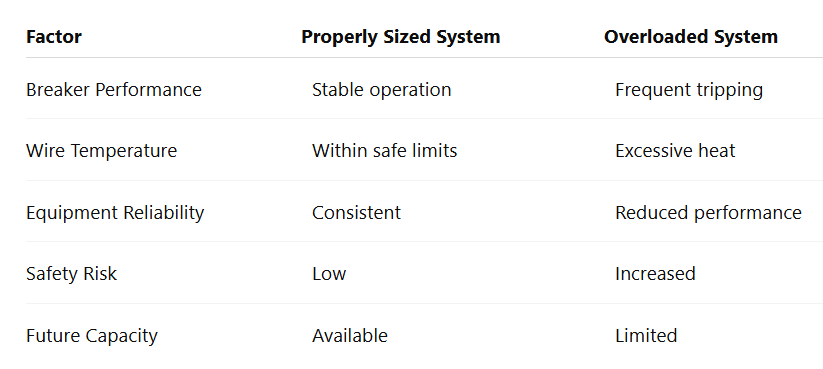
Table: Properly Sized Electrical System vs Overloaded System
A load calculation helps prevent these conditions by ensuring the system is designed for the actual electrical demand.
Failed Inspections and Permit Delays
Most panel upgrades require permits and inspections. Inspectors want proof that the electrical system has been properly sized according to code requirements.
Without a load calculation, several issues may arise:
-
Permit application delays
-
Inspection failures
-
Required corrections
-
Additional engineering reviews
-
Project schedule disruptions
For commercial and industrial projects, these delays can affect operations and increase overall project costs. Performing the calculation before construction begins helps avoid many of these problems.
Equipment Damage and Reduced Lifespan
Modern buildings contain thousands of dollars’ worth of electrical equipment.
Residential properties may include:
-
HVAC systems
-
Refrigerators
-
Home office equipment
-
Smart home devices
Commercial facilities often depend on:
-
Servers
-
Security systems
-
Refrigeration equipment
-
Point-of-sale systems
Industrial operations may rely on:
-
Motors
-
Pumps
-
Compressors
-
Production machinery
When electrical systems are overloaded, voltage fluctuations can occur.
These fluctuations may cause:
-
Premature equipment wear
-
Reduced efficiency
-
Unexpected shutdowns
-
Increased maintenance costs
Protecting equipment starts with ensuring the electrical system can support the required load.
Increased Fire Risk
Electrical overloads are a serious safety concern.
When conductors carry more current than they are designed to handle, temperatures rise. Excessive heat can damage insulation and create conditions that increase fire risk.
Potential warning signs include:
-
Burning smells
-
Warm outlets
-
Scorched wiring
-
Flickering lights
-
Repeated breaker trips
Although circuit breakers provide protection, they cannot solve every underlying capacity issue. A load calculation helps identify whether the electrical infrastructure itself is sufficient for the building’s needs.
Expensive Rework After Installation
Few things are more frustrating than completing a panel upgrade only to discover the new system is still inadequate. Without a load calculation, electricians may install equipment based on assumptions rather than actual demand.
This can lead to:
-
Additional panel replacements
-
Service upgrades
-
Utility modifications
-
New permit applications
-
Extra labor costs
In some cases, property owners end up paying for the same work twice. A professional load calculation significantly reduces the risk of costly rework.
Difficulty Supporting New Equipment
Electrical demand continues to grow.
Many buildings that once operated comfortably now require additional capacity for:
-
EV charging stations
-
Backup generators
-
Electric water heaters
-
New HVAC equipment
-
Production machinery
-
Commercial refrigeration
Without understanding available electrical capacity, it becomes difficult to determine whether the existing system can support these additions. Load calculations provide a clear picture of available capacity and future limitations.
Utility Service Problems
Sometimes the panel itself is not the problem. The electrical service feeding the building may also be undersized.
A load calculation evaluates the entire electrical system, including:
-
Service conductors
-
Meter equipment
-
Main disconnects
-
Distribution panels
This comprehensive review helps identify whether utility-side upgrades may be necessary. Addressing these issues early prevents delays later in the project.
Financial Consequences of Skipping a Load Calculation
Many property owners skip load calculations because they view them as an extra expense. In reality, the calculation often saves money.
Potential costs associated with skipping this step include:
-
Failed inspections
-
Additional permits
-
Equipment damage
-
Emergency repairs
-
Production downtime
-
Panel replacement costs
-
Utility upgrade expenses
Compared to these potential costs, a professional load calculation is a relatively small investment.
The Bottom Line
An electrical load calculation is not just another item on a project checklist. It is the foundation of a safe and reliable panel upgrade. Without it, property owners risk installing the wrong equipment, failing inspections, damaging valuable assets, and creating safety hazards.
Whether the project involves a home panel replacement, a commercial renovation, or an industrial expansion, understanding the building’s electrical demand is essential before any upgrade begins.
Signs Your Property Needs an Electrical Load Calculation
Not every property requires an immediate panel upgrade. However, many buildings show warning signs that indicate an electrical load calculation should be performed.
As electrical demand increases, older systems often struggle to keep up. New equipment, building additions, and changing usage patterns can all place extra stress on the electrical infrastructure.
Recognizing these signs early can help prevent safety issues, equipment failures, and unexpected upgrade costs.
You Are Planning a Panel Upgrade
A planned panel upgrade is one of the most common reasons to perform an electrical load calculation.
Before replacing a panel, electricians need to determine:
-
Whether an upgrade is necessary
-
What size panel is required
-
Whether the existing service is adequate
-
How much future capacity is needed
Many property owners assume they need the largest panel possible. In reality, the correct panel size depends on the building’s actual electrical demand.
A load calculation removes guesswork and helps ensure the investment makes sense.
You Are Installing an EV Charger
Electric vehicle ownership continues to grow across Florida. While EV chargers provide convenience, they also add significant electrical demand. Level 2 chargers commonly used in homes and businesses can require substantial power, especially when charging for extended periods.
Before installing an EV charger, electricians should evaluate:
-
Existing panel capacity
-
Available circuit space
-
Service size
-
Future charging needs
A load calculation determines whether the current system can support the charger safely.
You Are Adding a Backup Generator
Generators have become increasingly popular for homes, commercial properties, and industrial facilities. Whether the goal is storm preparedness or business continuity, generator installations often require modifications to the electrical system.
A load calculation helps determine:
-
Generator sizing requirements
-
Essential load requirements
-
Transfer switch capacity
-
Panel compatibility
Without proper calculations, the generator may be too small or unnecessarily oversized.
Your Building Is Undergoing a Major Renovation
Renovations frequently increase electrical demand.
Examples include:
-
Kitchen remodels
-
Office expansions
-
Warehouse conversions
-
Manufacturing upgrades
-
Building additions
New lighting, outlets, HVAC equipment, and appliances all affect the electrical load. Before construction begins, a load calculation helps identify whether the existing electrical service can support the planned improvements.
Your Business Is Expanding Operations
Commercial growth often creates new electrical demands.
A growing business may add:
-
Workstations
-
Computers
-
Equipment
-
Refrigeration systems
-
Production machinery
-
Security systems
Many commercial buildings operate close to their original electrical capacity. A load calculation helps determine whether the system can support expansion without creating reliability issues.
You Are Installing New Industrial Equipment
Industrial equipment often requires significantly more power than standard commercial loads.
Examples include:
-
Motors
-
Air compressors
-
Welders
-
Conveyor systems
-
Pumps
-
Production machinery
Even one new piece of equipment can dramatically affect electrical demand. Before installation, facility managers should understand how the new equipment will impact the overall electrical system. Load calculations help prevent unexpected capacity problems.
Circuit Breakers Trip Frequently
Breaker trips are often the first visible sign of an overloaded electrical system. Occasional trips can occur for various reasons. However, repeated tripping usually indicates an underlying issue.
Common causes include:
-
Increased electrical demand
-
Undersized circuits
-
Aging electrical infrastructure
-
Overloaded panels
A professional load calculation helps determine whether capacity limitations are contributing to the problem.
Lights Flicker or Dim
Lights should operate consistently under normal conditions. If lights dim or flicker when equipment starts, the electrical system may be experiencing demand-related issues.
This problem is often noticed when:
-
HVAC systems start
-
Large appliances operate
-
Motors cycle on
-
Equipment draws heavy current
While several factors can cause flickering lights, insufficient electrical capacity is one possibility that should be evaluated.
Your Electrical Panel Is Older
Older panels were designed for different electrical demands. Decades ago, homes and businesses used significantly less electricity than they do today.
Modern properties often include:
-
Multiple televisions
-
Home offices
-
Smart devices
-
EV chargers
-
Advanced HVAC systems
-
Security systems
An older panel may still function properly, but that does not necessarily mean it has sufficient capacity for today’s needs. A load calculation provides a clear picture of available electrical capacity.
You Are Running Out of Circuit Space
Many property owners discover capacity concerns when trying to add a new circuit.
Common examples include:
-
EV charger circuits
-
New HVAC equipment
-
Generator connections
-
Workshop equipment
-
Commercial appliances
If the panel has limited space or no room for additional breakers, it may be time for a professional evaluation. However, lack of breaker space alone does not automatically mean a full service upgrade is required. A load calculation helps determine the best solution.
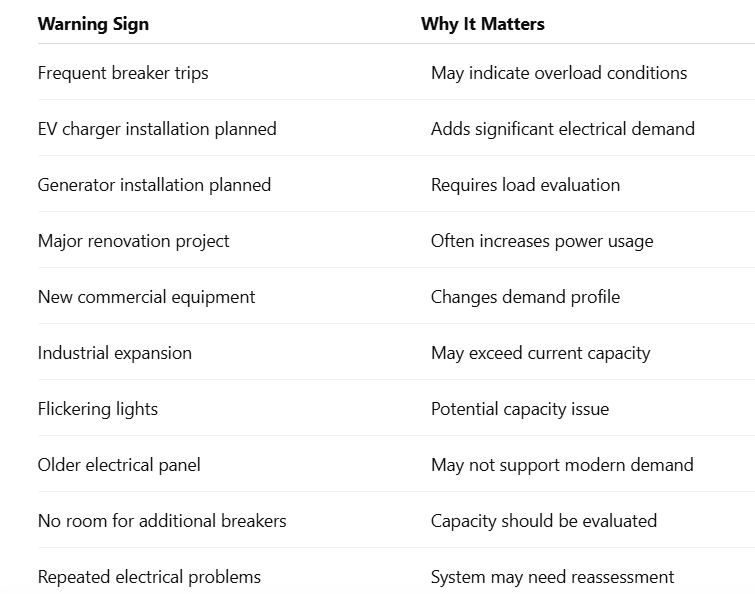
Warning Signs Checklist
The following checklist can help identify whether a load calculation should be considered.
Table: Common Signs You May Need an Electrical Load Calculation
When It Makes Sense to Schedule an Evaluation
Property owners do not need to wait until problems appear. In fact, the best time to perform a load calculation is before adding major electrical equipment or beginning a renovation project.
Early planning provides several advantages:
-
Better budgeting
-
Fewer project delays
-
Improved safety
-
Accurate equipment sizing
-
Smoother permit approvals
For many homes, businesses, and industrial facilities, a load calculation is one of the simplest ways to understand whether the electrical system is prepared for future growth.
Identifying capacity concerns before they become problems can save significant time, money, and frustration later.
Common Projects That Require an Electrical Load Calculation
Electrical load calculations are not only performed during panel upgrades. In fact, many residential, commercial, and industrial projects require a detailed evaluation of electrical demand before work begins.
Whenever new equipment is added or electrical usage changes significantly, it is important to understand whether the existing system can support the increased load.
Below are some of the most common situations where an electrical load calculation is recommended or required.
Electrical Panel Replacement
Replacing an electrical panel may seem straightforward, but the project should always begin with a load calculation. Many property owners assume they should simply replace the old panel with the same size. However, electrical needs often change over time.
For example:
-
New appliances may have been added.
-
HVAC equipment may have been upgraded.
-
Business operations may have expanded.
-
Future electrical projects may already be planned.
A load calculation helps determine whether the replacement panel should remain the same size or be upgraded.
Service Upgrades From 100 Amps to 200 Amps
One of the most common residential electrical projects involves upgrading from a 100-amp service to a 200-amp service.
This upgrade is often considered when homeowners add:
-
EV chargers
-
Electric water heaters
-
Home additions
-
Backup generators
-
Larger HVAC systems
However, not every property automatically requires a 200-amp service. A load calculation determines whether the additional capacity is truly necessary. This prevents homeowners from paying for upgrades they may not need.
EV Charging Station Installation
Electric vehicle chargers are one of the fastest-growing reasons for electrical load calculations. A Level 2 EV charger can place a significant continuous load on an electrical system.
Before installation, electricians evaluate:
-
Existing panel capacity
-
Service size
-
Available breaker space
-
Future charging needs
The table below shows how EV charging can affect electrical demand.
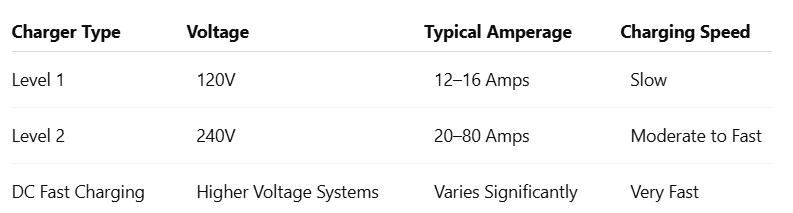
Table: Typical EV Charging Levels and Electrical Demand
For homes, businesses, and industrial facilities planning EV infrastructure, a load calculation helps ensure the electrical system can safely support charging operations.
Generator Installation and Backup Power Systems
Backup generators have become increasingly popular throughout Florida due to storms, hurricanes, and power outage concerns. Generator projects often require load calculations because the generator must be properly matched to the building’s electrical needs.
The calculation helps determine:
-
Essential circuits
-
Generator capacity
-
Transfer switch requirements
-
Load management strategies
An undersized generator may struggle during an outage, while an oversized unit can increase installation and operating costs.
Commercial Tenant Build-Outs
Commercial spaces frequently undergo renovations when new tenants move in. A retail store, restaurant, office, or medical facility may have very different electrical requirements than the previous occupant.
Examples include:
-
New lighting systems
-
Kitchen equipment
-
Computer networks
-
Medical equipment
-
Refrigeration systems
Load calculations help ensure the electrical infrastructure matches the tenant’s operational requirements. This is especially important when applying for permits and inspections.
Office Expansions and Facility Growth
As businesses grow, electrical demand often increases as well.
Additional employees typically mean:
-
More computers
-
More lighting
-
More HVAC demand
-
Additional equipment
What worked for a small office may not be sufficient for a larger operation. Performing a load calculation before expansion helps avoid electrical bottlenecks and future capacity issues.
Industrial Equipment Installations
Industrial facilities often experience the largest increases in electrical demand.
Equipment commonly requiring load evaluations includes:
-
Motors
-
Compressors
-
Pumps
-
Conveyor systems
-
Production lines
-
Welding equipment
Industrial equipment can significantly increase power consumption, especially during startup. A load calculation helps facility managers understand whether existing electrical infrastructure can support the new equipment safely.
Manufacturing Facility Upgrades
Manufacturing facilities regularly modernize operations to improve productivity.
Examples include:
-
Automated equipment
-
Robotics
-
New machinery
-
Production line expansions
These improvements often require substantial electrical capacity. Without a proper load calculation, electrical limitations may delay production goals or require unexpected infrastructure upgrades.
HVAC System Replacements
Modern HVAC systems often differ from older units in terms of electrical demand. Large commercial and industrial HVAC systems can represent a substantial portion of a building’s total electrical load.
Before replacing HVAC equipment, electricians often evaluate:
-
Existing service capacity
-
Starting current requirements
-
Panel capacity
-
Future cooling and heating needs
This helps prevent capacity issues after installation.
Building Additions and Renovations
Any increase in building size usually increases electrical demand.
Examples include:
-
Home additions
-
Warehouse expansions
-
Office additions
-
Retail expansions
-
Industrial facility expansions
New square footage often requires:
-
Additional lighting
-
Additional receptacles
-
HVAC expansion
-
New equipment
Load calculations help determine whether the existing service can support the larger building.
Solar and Energy Storage Projects
As energy technology continues to evolve, many property owners are installing:
-
Solar energy systems
-
Battery storage systems
-
Energy management equipment
While these systems can reduce utility dependence, they still affect overall electrical system design. Load calculations help ensure all components work together safely and efficiently.
Why These Projects Benefit From Load Calculations
Although each project is different, they all share one common goal: ensuring the electrical system can safely support the required demand.
A professional load calculation helps property owners:
-
Avoid undersized systems
-
Improve safety
-
Meet code requirements
-
Support future growth
-
Reduce project delays
-
Make informed investment decisions
Whether the project involves a residential EV charger, a commercial build-out, or an industrial facility upgrade, understanding electrical demand is one of the most important steps before work begins.
Planning a panel upgrade, EV charger installation, generator project, or facility expansion?
Hylton Electric provides electrical load calculations and electrical design support throughout Lakeland, Polk County, and Tampa. Call +1 863-624-7000 or email ray@hylton-electric.com for project guidance and a free commercial or industrial quote.
Electrical Load Calculation Costs in Florida
One of the most common questions property owners ask is, “How much does an electrical load calculation cost?” The answer depends on the type of property and the complexity of the electrical system.
A small home is usually faster to evaluate than a large commercial building or industrial facility. The more equipment, panels, and circuits involved, the more time the calculation requires.
However, the cost of a load calculation is often small compared to the cost of a panel upgrade, generator installation, or commercial renovation. In many cases, it helps property owners avoid spending money on unnecessary upgrades.
What Affects the Cost of an Electrical Load Calculation?
Several factors influence pricing.
Property Size
Larger buildings typically require more time to evaluate. For example, a 1,500-square-foot home is much simpler than a 50,000-square-foot warehouse or manufacturing facility.
Number of Electrical Loads
Every major electrical load must be reviewed.
This may include:
-
HVAC systems
-
Water heaters
-
EV chargers
-
Production equipment
-
Refrigeration systems
-
Commercial kitchen equipment
The more equipment a building has, the longer the evaluation usually takes.
Building Type
Residential, commercial, and industrial properties each require different approaches. Industrial facilities often need the most detailed calculations because they contain large motors, machinery, and specialized equipment.
Future Expansion Plans
Many property owners want calculations that account for future growth.
For example:
-
Adding EV chargers next year
-
Expanding office space
-
Installing new production equipment
-
Building an addition
Planning for future demand may require additional analysis.
Typical Electrical Load Calculation Costs
The table below shows general cost ranges for Florida properties.
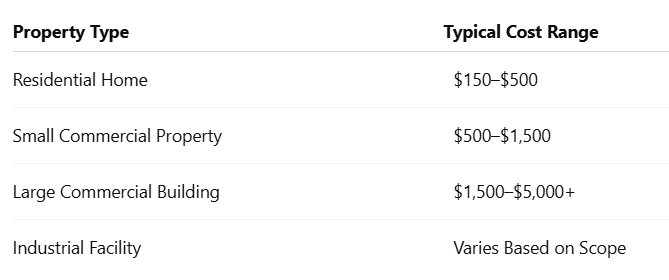
Table: Typical Electrical Load Calculation Costs in Florida
These numbers are estimates only. Actual costs depend on the property’s electrical system and project requirements.
Is an Electrical Load Calculation Worth the Cost?
In most cases, yes.
A professional load calculation can help prevent several expensive problems, including:
-
Unnecessary panel upgrades
-
Failed inspections
-
Permit delays
-
Equipment damage
-
Future electrical limitations
-
Costly rework
For example, a property owner may assume a 400-amp service upgrade is necessary. After performing a load calculation, the electrician may discover that the existing service has enough capacity for the planned project.
That information alone can save thousands of dollars.
Load Calculation vs. Upgrade Cost
Many people focus on the cost of the calculation itself. However, it helps to compare that cost with the price of an electrical upgrade.
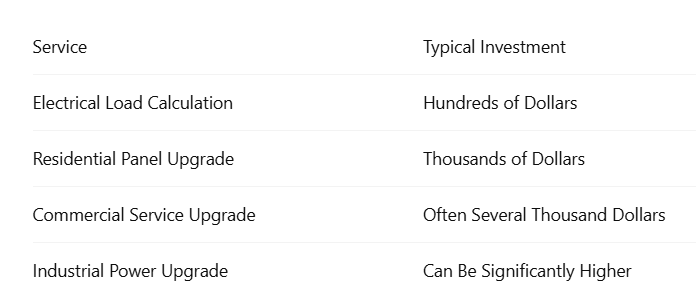
Table: Load Calculation Cost Compared to Upgrade Costs
Because electrical upgrades are major investments, spending a small amount upfront on proper planning often makes financial sense.
The Bottom Line
An electrical load calculation is not simply another project expense. It is a planning tool that helps ensure electrical upgrades are based on facts rather than assumptions.
For homeowners, businesses, and industrial facilities, the cost of a professional evaluation is often far less than the cost of correcting mistakes later.
Knowing exactly how much electrical capacity a property needs can lead to safer, smarter, and more cost-effective decisions.
Leave a Reply