
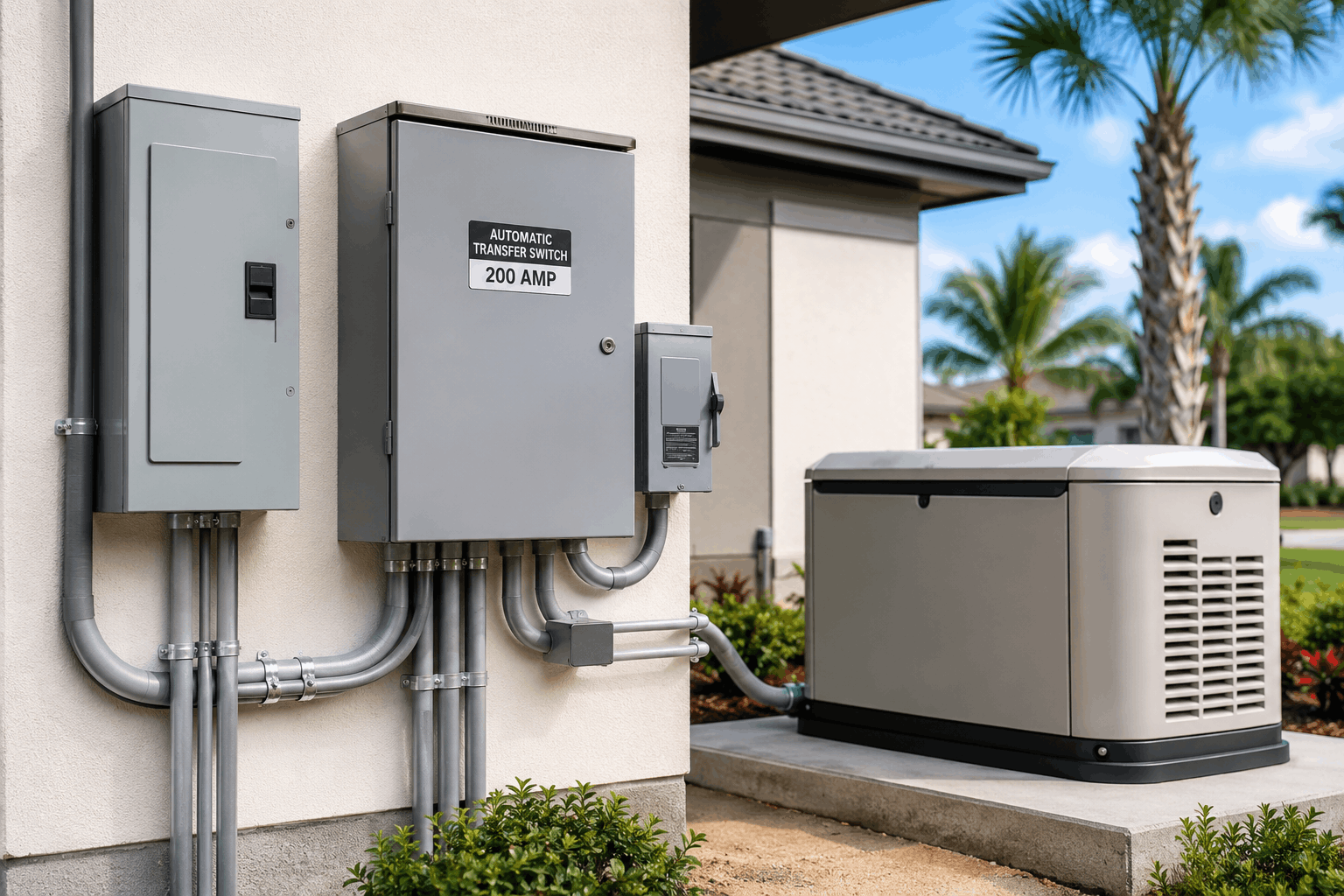
A standby generator can keep your home or business running during a power outage. However, the generator is only one part of the system. The transfer switch is what safely moves your electrical load from utility power to generator power when the grid goes down.
For whole-home backup systems and many commercial applications, a 200-amp transfer switch is the most common choice. It can handle the full capacity of a standard 200-amp electrical service, making it ideal for larger homes, offices, retail buildings, and industrial facilities.
Choosing the right transfer switch is important. The wrong model can create compatibility issues, limit available power, or increase installation costs. On the other hand, the right switch can provide reliable backup power for many years while helping protect people, equipment, and electrical systems.
Today, there are many options available from manufacturers such as Generac, Kohler, Cummins, Briggs & Stratton, and ASCO. Some models offer automatic operation, while others require manual switching. Features, durability, and pricing can vary significantly.
In this guide, we will compare the best 200-amp transfer switch options for standby generators. We will also explain how they work, what features matter most, installation requirements, costs, and how to choose the right model for your property.
Key Electrical Statistics
Power outages and electrical failures can have serious effects on homes and businesses. The following statistics show why backup power systems remain an important investment.
-
The U.S. Energy Information Administration reports that power interruptions affect millions of customers every year.
-
The U.S. Department of Energy states that severe weather is one of the leading causes of major power outages across the country.
-
FEMA recommends backup power planning as part of emergency preparedness for homes and businesses.
-
NFPA data shows that electrical failures and malfunctions remain a significant cause of building fires.
These facts highlight the value of having a properly installed standby generator and transfer switch system, especially in areas prone to storms and utility disruptions.
What Is a 200 Amp Transfer Switch?
A 200-amp transfer switch is a device that safely transfers electrical power between the utility grid and a standby generator. It serves as the control point that determines which power source supplies electricity to the building.
Without a transfer switch, connecting a generator directly to a home’s electrical system would be unsafe and could create dangerous backfeeding conditions. Backfeeding can put utility workers, building occupants, and electrical equipment at risk.
A transfer switch eliminates this risk by isolating one power source before connecting the other.
How a Transfer Switch Works
Under normal conditions, electricity flows from the utility company to the building’s electrical panel. The transfer switch remains connected to utility power and continuously monitors the incoming service.
When a power outage occurs, the process typically follows these steps:
-
Utility power fails.
-
The standby generator receives a start signal.
-
The generator reaches operating speed.
-
The transfer switch disconnects utility power.
-
The switch connects the generator power.
-
The building receives electricity from the generator.
Once utility service returns, the transfer switch reverses the process and reconnects the building to the power grid. This switching process helps ensure a safe and uninterrupted transition between power sources.
Why 200 Amp Capacity Matters
Many modern homes and commercial buildings have a 200-amp electrical service. Because of this, a 200-amp transfer switch is often selected to match the service capacity of the property.
This size allows the switch to support larger electrical loads, including:
-
Air conditioning systems
-
Electric water heaters
-
Kitchen appliances
-
Lighting systems
-
Office equipment
-
Industrial machinery
-
EV charging equipment
For whole-home standby generator installations, a 200-amp transfer switch is frequently the preferred option because it can manage the entire electrical service rather than only selected circuits.
Where 200 Amp Transfer Switches Are Commonly Used
A 200-amp transfer switch can be installed in many different environments.
Residential applications include:
-
Single-family homes
-
Large custom homes
-
Properties with whole-house generators
Commercial applications include:
-
Retail stores
-
Office buildings
-
Medical offices
-
Restaurants
-
Small warehouses
Industrial applications include:
-
Manufacturing facilities
-
Equipment rooms
-
Distribution centers
-
Production areas
In each case, the goal is the same. The transfer switch allows backup power to take over safely when utility power is unavailable, helping reduce downtime and maintain critical operations.
Automatic vs Manual 200 Amp Transfer Switches
One of the first decisions you will make is whether to choose an automatic transfer switch or a manual transfer switch. Both options perform the same basic function. They transfer power between the utility grid and a generator. However, the way they operate is very different.
For most standby generator installations, automatic transfer switches are the preferred choice because they provide faster response times and require little user involvement.
Automatic Transfer Switch (ATS)
An automatic transfer switch continuously monitors utility power. When it detects a power outage, it signals the standby generator to start. Once the generator reaches the proper voltage and frequency, the switch automatically transfers the electrical load from utility power to generator power.
When utility service returns, the switch transfers the load back and shuts down the generator after a short cooling period.
Benefits of an automatic transfer switch include:
-
Fast response during outages
-
No manual intervention required
-
Ideal for unattended buildings
-
Improved convenience
-
Better protection for critical systems
-
Seamless operation for homeowners and businesses
Automatic transfer switches are commonly used for:
-
Whole-home standby generators
-
Commercial backup power systems
-
Medical offices
-
Data rooms
-
Industrial facilities
For properties where power interruptions can affect safety, operations, or productivity, an automatic transfer switch is usually the best option.
Manual Transfer Switch
A manual transfer switch requires someone to physically move the switch from utility power to generator power during an outage. The generator must also be started manually unless it has its own automatic starting controls. Although manual switches cost less initially, they require active participation during every outage.
Advantages include:
-
Lower purchase price
-
Simpler installation
-
Fewer electronic components
-
Suitable for occasional generator use
Manual transfer switches are often used for:
-
Portable generators
-
Small residential backup systems
-
Limited emergency power applications
However, they are generally less practical for whole-house standby generators because power restoration is not automatic.
Side-by-Side Comparison
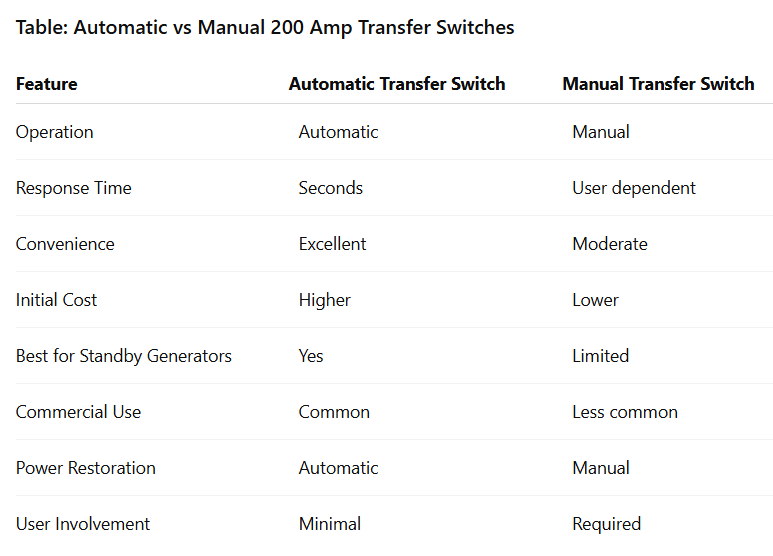
For most homeowners and businesses investing in a standby generator, an automatic transfer switch provides the best long-term value.
Best 200 Amp Transfer Switches for Standby Generators
Several manufacturers produce reliable 200-amp transfer switches. The best choice depends on generator compatibility, desired features, installation requirements, and budget. The following models are among the most commonly recommended options.
Generac RXSW200A3
The Generac RXSW200A3 is a popular automatic transfer switch designed for residential standby generator systems.
Key features include:
-
200 amp capacity
-
NEMA 3R outdoor enclosure
-
Service entrance rated options
-
Smart load management compatibility
-
Designed for Generac generators
This model is often selected for whole-home backup power installations where reliability and ease of operation are priorities.
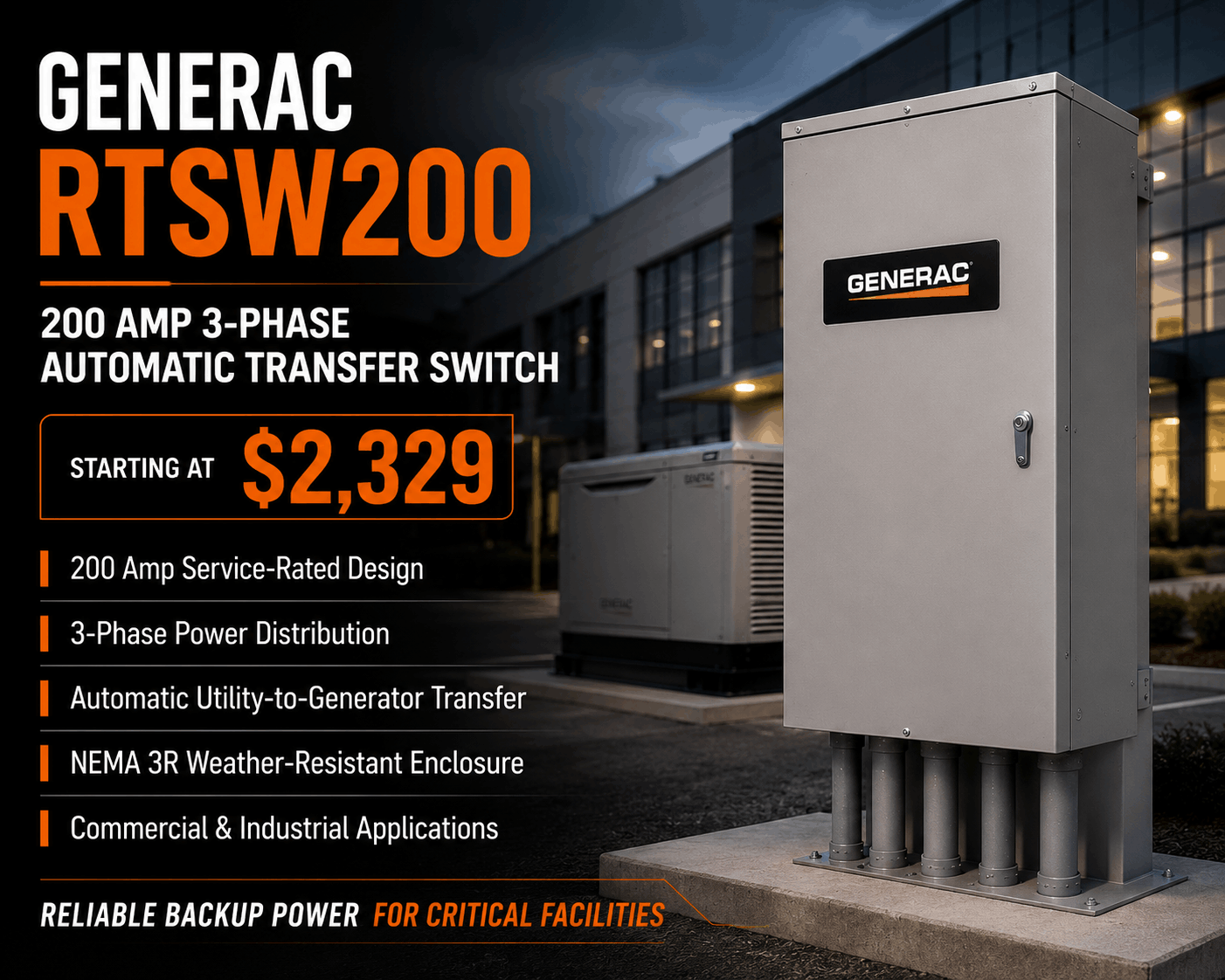
Generac RTSW200A3
The RTSW200A3 is another well-known Generac transfer switch.
Benefits include:
-
Automatic operation
-
Durable outdoor construction
-
Generator monitoring capabilities
-
Flexible installation options
-
Strong compatibility with larger Generac systems
It is frequently used in homes requiring complete backup coverage.
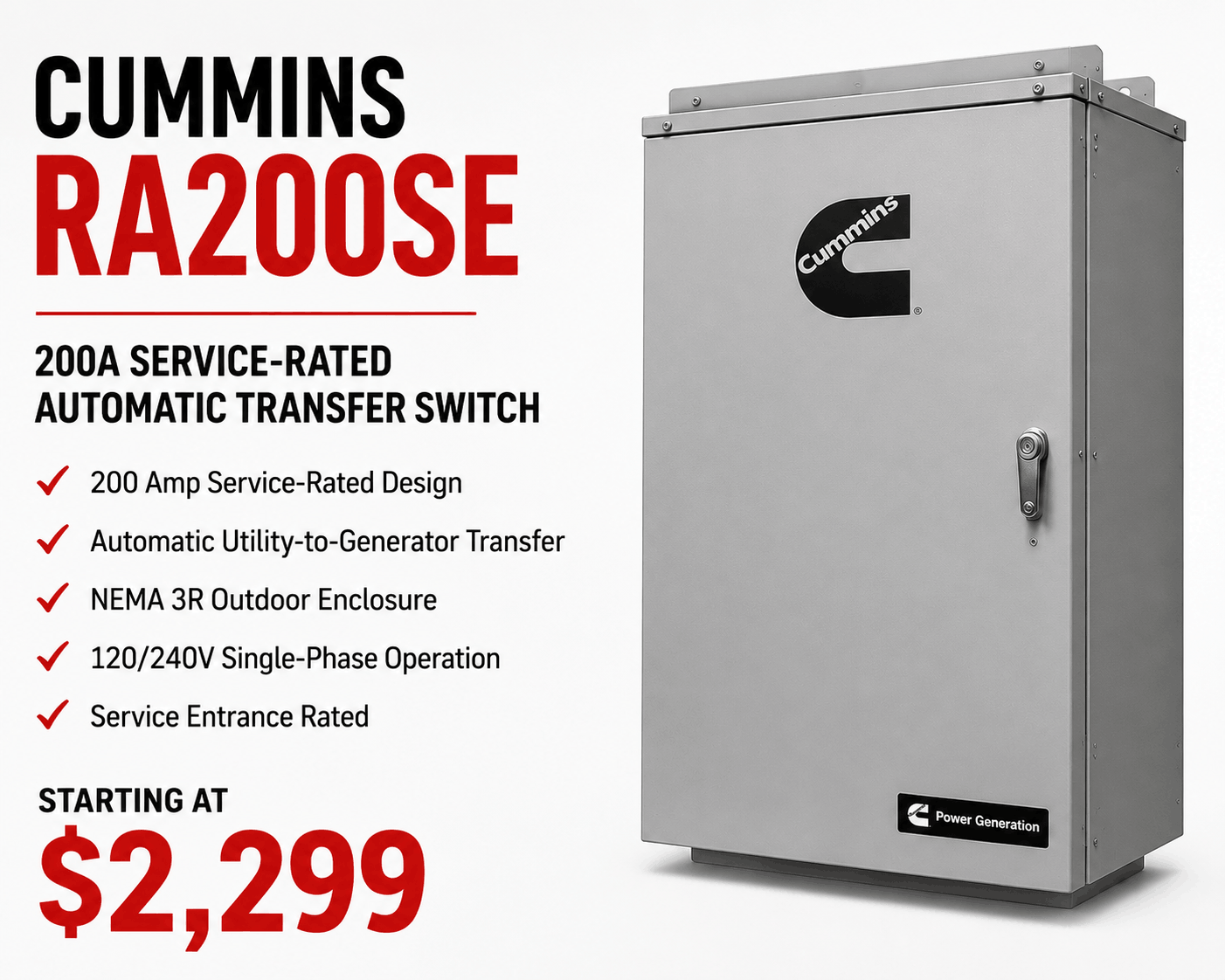
Cummins RA200SE
Cummins has built a strong reputation in backup power equipment.
The RA200SE offers:
-
200 amp service rating
-
Automatic transfer capability
-
Heavy-duty construction
-
Reliable switching performance
-
Compatibility with various Cummins standby generators
This model is commonly found in both residential and light commercial applications.
Kohler RXT Series 200 Amp
Kohler transfer switches are known for durability and advanced controls.
Notable features include:
-
Fast transfer times
-
Load management capabilities
-
Corrosion-resistant enclosure
-
Flexible programming options
-
Strong integration with Kohler generators
Many property owners choose Kohler systems for long-term reliability.
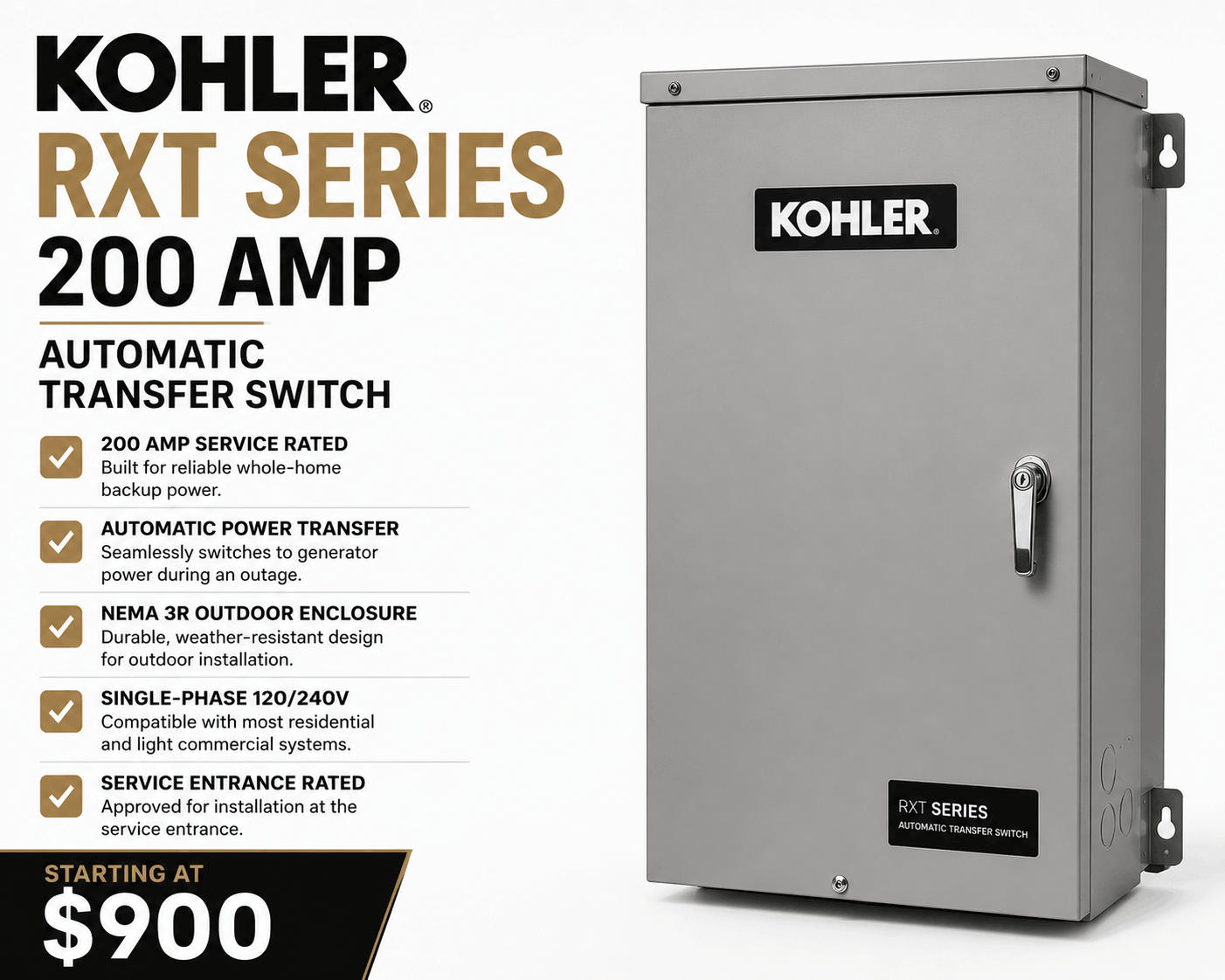
ASCO Series 300 200 Amp
ASCO is often considered one of the premium names in transfer switching technology.
Advantages include:
-
Commercial-grade construction
-
High durability
-
Advanced control systems
-
Extensive testing standards
-
Long service life
ASCO switches are widely used in commercial and industrial environments where uptime is critical.
Briggs & Stratton Symphony II 200 Amp
The Symphony II system is designed primarily for residential standby generator applications.
Key benefits include:
-
Whole-house backup support
-
Automatic operation
-
Managed load prioritization
-
User-friendly controls
-
Compatibility with Briggs & Stratton generators
It is a practical option for homeowners seeking dependable backup power.
Comparison of Top Models
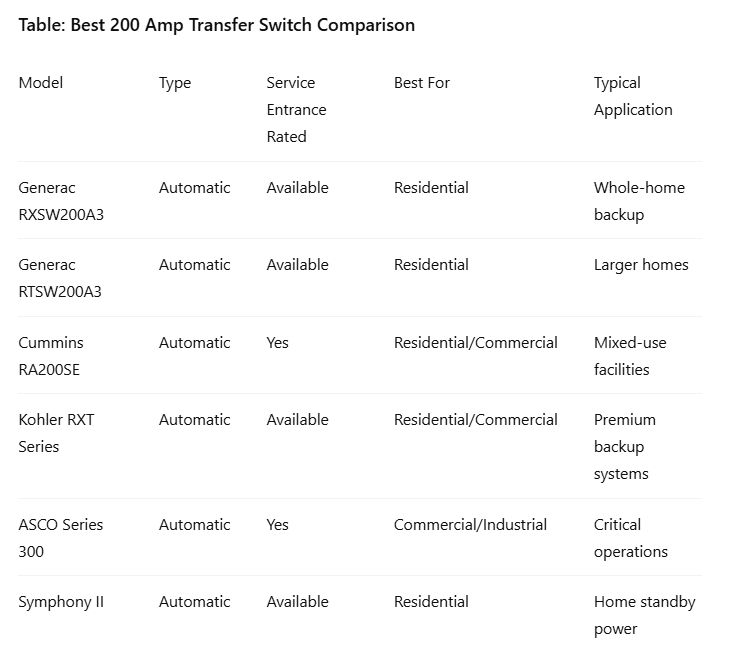
While all of these products are capable solutions, compatibility with the generator should always be verified before making a final decision.
Need Help With Generator Backup Power?
Choosing the right transfer switch can be confusing, especially when matching it with a standby generator and existing electrical service. Hylton Electric helps residential, commercial, and industrial clients throughout Lakeland, Polk County, and Tampa. Call +1 863-624-7000 or email ray@hylton-electric.com. Free quotes are available for commercial and industrial projects.
How to Choose the Best 200 Amp Transfer Switch
The best 200-amp transfer switch is not always the most expensive model. Instead, it is the one that fits your generator, electrical system, and future power needs. Several factors should be evaluated before making a purchase.
Generator Compatibility
Compatibility should be the first consideration. Many transfer switches are designed to work most efficiently with generators from the same manufacturer.
Before buying, verify:
-
Generator brand compatibility
-
Voltage requirements
-
Control system compatibility
-
Communication protocols
-
Warranty requirements
Using compatible equipment often simplifies installation and improves long-term reliability.
Service Entrance Rating
A service entrance-rated transfer switch can function as the primary disconnect for the building. This design may reduce installation complexity and help meet local electrical requirements.
Benefits include:
-
Simplified wiring
-
Fewer components
-
Cleaner installation
-
Improved compliance options
However, not every installation requires a service entrance rated model. A licensed electrician can determine what is appropriate for the property.
Indoor vs Outdoor Installation
Transfer switches are available in both indoor and outdoor configurations.
Factors to consider include:
-
Available installation space
-
Environmental exposure
-
Moisture protection
-
Corrosion resistance
-
Local code requirements
In Florida, outdoor-rated enclosures are commonly used because generators are often installed outside.
Load Management Features
Modern transfer switches can include smart load management systems. These systems help prevent generator overload by controlling how electrical loads are distributed.
Managed loads may include:
-
Air conditioning systems
-
Water heaters
-
Pool equipment
-
EV chargers
-
Large appliances
Load management can allow a smaller generator to support more circuits efficiently.
Future Expansion Considerations
Electrical demand often increases over time. Before selecting a transfer switch, consider future upgrades such as:
-
Home EV charger installation
-
Additional HVAC equipment
-
Electrical panel upgrades
-
Building expansions
-
New production equipment
-
Commercial growth plans
Planning ahead can help avoid costly modifications later. A properly selected 200-amp transfer switch should provide enough capacity for current needs while allowing room for future electrical growth.
Installation Requirements for a 200 Amp Transfer Switch
Installing a 200 amp transfer switch involves much more than connecting a few wires. The system must comply with electrical codes, utility requirements, and manufacturer specifications. Because a transfer switch controls power from both the utility company and the generator, proper installation is critical for safety and long-term reliability.
For most residential, commercial, and industrial projects, installation should be completed by a licensed electrician familiar with standby generator systems.
Electrical Code Requirements
Transfer switch installations must comply with the National Electrical Code (NEC) and local electrical regulations.
Several factors are evaluated during installation, including:
-
Proper conductor sizing
-
Grounding and bonding requirements
-
Overcurrent protection
-
Disconnect requirements
-
Equipment ratings
-
Generator compatibility
Code compliance helps ensure the system operates safely during normal operation and power outages. Failure to meet code requirements can result in failed inspections, safety hazards, and costly corrections.
Permit Requirements in Florida
Most transfer switch installations in Florida require permits and inspections.
Permit requirements often depend on:
-
Project size
-
Generator capacity
-
Electrical service modifications
-
Local jurisdiction requirements
The permitting process typically includes:
-
Permit application
-
Plan review if required
-
Installation
-
Electrical inspection
-
Final approval
Obtaining proper permits helps protect property owners and ensures work meets current electrical standards.
Utility Coordination
In some situations, coordination with the local utility company may be necessary.
This is especially common when:
-
The main service equipment is modified
-
Service entrance equipment is replaced
-
Meter-related work is required
-
Utility disconnects are needed
Proper coordination helps prevent service interruptions and ensures a smooth installation process.
Professional Installation Process
Although every project is different, most installations follow a similar process.
- Step 1: Site Evaluation
The electrician evaluates:
-
Existing electrical service
-
Generator location
-
Load requirements
-
Panel condition
-
Wiring routes
This assessment helps determine the best installation approach.
- Step 2: Electrical Load Analysis
Load calculations help verify:
-
Generator sizing
-
Transfer switch sizing
-
Critical equipment requirements
-
Future expansion capacity
Accurate calculations help prevent overload issues during outages.
- Step 3: Permit Acquisition
Required permits are secured before installation begins. This step helps ensure compliance with local regulations and inspection requirements.
- Step 4: Transfer Switch Installation
The transfer switch is mounted and connected to:
-
Utility service
-
Main electrical panel
-
Generator system
Proper wiring and labeling are essential at this stage.
- Step 5: Generator Integration
Communication wiring and control connections are completed between the generator and transfer switch. System settings are then configured according to the manufacturer’s requirements.
- Step 6: Testing and Commissioning
The final step involves comprehensive testing.
The electrician verifies:
-
Automatic startup
-
Transfer operation
-
Return to utility power
-
Load performance
-
Safety functions
Testing confirms that the system will operate properly when an actual outage occurs.
Need Help With Generator Backup Power?
Whether you need a new standby generator system or a transfer switch upgrade, Hylton Electric serves residential, commercial, and industrial clients throughout Lakeland, Polk County, and Tampa. Call +1 863-624-7000 or email ray@hylton-electric.com. Free quotes are available for commercial and industrial projects.
Typical Costs of a 200 Amp Transfer Switch System
The total cost of a 200-amp transfer switch system depends on several factors, including equipment selection, installation complexity, permit requirements, and generator integration.
While equipment pricing varies by manufacturer, installation costs often have an even greater impact on the final project budget.
Transfer Switch Equipment Costs
The transfer switch itself is one of the largest expenses.
Pricing can vary based on:
-
Brand
-
Automatic or manual operation
-
Service entrance rating
-
Smart load management features
-
Enclosure type
Premium commercial-grade switches typically cost more than standard residential models because they are designed for higher-duty applications.
Installation Labor Costs
Labor costs depend on the complexity of the project.
Factors that affect labor include:
-
Existing electrical system condition
-
Wiring distance
-
Service upgrades
-
Generator location
-
Accessibility
Simple installations generally require less labor than projects involving panel modifications or service equipment upgrades.
Permit and Inspection Costs
Permit costs vary by jurisdiction.
These expenses may include:
-
Electrical permits
-
Inspection fees
-
Utility coordination fees
-
Administrative costs
Although permits add to the project cost, they help ensure code compliance and safety.
Generator Integration Costs
Transfer switches are only one part of a complete backup power system.
Additional costs may include:
-
Generator installation
-
Fuel system connections
-
Concrete pads
-
Control wiring
-
Load management modules
These components should be considered when budgeting for a complete standby power solution.
Typical Cost Breakdown
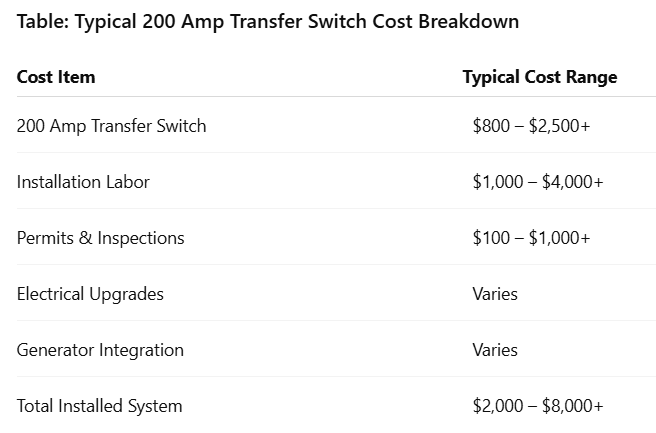
Actual costs can vary significantly depending on site conditions and project requirements. For commercial and industrial facilities, pricing may exceed these ranges due to larger electrical systems and more complex installations.
Signs You Need a 200 Amp Transfer Switch Upgrade
A transfer switch can provide reliable service for many years. However, changing electrical demands, aging equipment, and system upgrades may eventually require replacement. Recognizing the warning signs early can help prevent problems during future power outages.
Existing Transfer Switch Is Undersized
An undersized transfer switch may struggle to support current electrical demands.
Common warning signs include:
-
Capacity limitations
-
Frequent overload concerns
-
Inability to support additional circuits
-
Generator performance issues
As electrical usage increases, upgrading to a properly sized 200-amp transfer switch often becomes necessary.
Whole-Home Backup Power Goals
Many homeowners start with partial backup power systems. Over time, they may want protection for the entire property.
Common reasons include:
-
Increased comfort during outages
-
Additional appliances
-
Home office requirements
-
Medical equipment needs
A 200-amp transfer switch can often support full-service backup power when paired with a properly sized generator.
Electrical Panel Upgrades
Transfer switch upgrades are frequently completed alongside panel upgrades. If the electrical panel is being replaced or expanded, it may be an ideal time to evaluate the transfer switch as well.
Benefits include:
-
Improved compatibility
-
Better capacity
-
Simplified installation
-
Enhanced reliability
Frequent Utility Outages
Properties located in areas with recurring outages often place greater demands on backup power equipment.
Signs that an upgrade may be beneficial include:
-
Repeated transfer operations
-
Aging equipment
-
Increased maintenance needs
-
Reliability concerns
A newer transfer switch may provide better performance and additional features.
Expanding Commercial Operations
Business growth often increases electrical demand.
Examples include:
-
Additional equipment
-
Facility expansion
-
New production lines
-
Larger HVAC systems
-
EV charging infrastructure
When electrical loads increase, the backup power system should be evaluated to ensure it can continue supporting operations during outages. A properly sized 200 amp transfer switch helps create a dependable foundation for future growth while maintaining safe and reliable power transfer when utility service is interrupted.
Common Transfer Switch Buying Mistakes
A 200-amp transfer switch is a long-term investment. Choosing the wrong model can lead to unnecessary costs, installation challenges, and performance issues during a power outage. Fortunately, most problems can be avoided by understanding a few common mistakes.
Choosing Based Only on Price
Many buyers focus on the lowest upfront cost. While budget matters, the cheapest option is not always the best value.
A lower-priced transfer switch may lack important features such as:
-
Automatic operation
-
Load management
-
Service entrance rating
-
Weather-resistant construction
Instead of focusing only on price, consider reliability, compatibility, and long-term performance.
Ignoring Generator Compatibility
Not every transfer switch works equally well with every generator.
Before purchasing, verify:
-
Manufacturer recommendations
-
Voltage compatibility
-
Communication requirements
-
Control system compatibility
Matching equipment correctly can reduce installation issues and improve system reliability.
Skipping Load Analysis
A proper load analysis helps determine how much power the building requires during an outage.
Without this evaluation, property owners may:
-
Oversized equipment unnecessarily
-
Undersize critical components
-
Experience generator overload conditions
A professional assessment helps ensure the system performs as expected when utility power is unavailable.
Using Unlicensed Installers
Transfer switches connect directly to the building’s electrical service.
Improper installation can create:
-
Safety hazards
-
Code violations
-
Equipment damage
-
Failed inspections
Working with a licensed electrician helps ensure the installation meets electrical standards and manufacturer requirements.
Overlooking Future Electrical Demand
Electrical needs often grow over time.
Future additions may include:
-
EV chargers
-
Additional HVAC systems
-
New equipment
-
Building expansions
-
Increased production capacity
Planning for future growth today can help avoid expensive modifications later.
200 Amp Transfer Switches for Florida Homes and Businesses
Florida property owners face unique challenges when it comes to power reliability. Storms, hurricanes, and severe weather can create outages that last for hours or even days.
As a result, many homeowners and businesses invest in standby generator systems paired with 200 amp transfer switches.
Hurricane Season Preparedness
Backup power plays an important role during hurricane season.
A properly installed transfer switch allows the generator to safely power critical systems such as:
-
Refrigeration
-
Air conditioning
-
Medical equipment
-
Lighting
-
Communications equipment
Automatic transfer switches are particularly valuable because they restore power without requiring manual intervention.
Commercial Facility Backup Power
For commercial properties, power interruptions can affect revenue, productivity, and customer service.
Businesses often rely on backup power for:
-
Point-of-sale systems
-
Security systems
-
Computer networks
-
Refrigeration equipment
-
Critical operations
A properly selected transfer switch helps minimize downtime and operational disruptions.
Industrial Equipment Protection
Industrial facilities often have equipment that cannot tolerate unexpected shutdowns.
Backup power systems may help protect:
-
Manufacturing equipment
-
Automation systems
-
Process controls
-
Distribution operations
For many facilities, maintaining power continuity is essential for productivity and equipment protection.
Residential Whole-Home Backup Systems
Many Florida homeowners choose whole-home backup systems to improve comfort and peace of mind. A 200 amp transfer switch can support the home’s entire electrical service when paired with a properly sized standby generator. This approach allows homeowners to continue using many of the same systems and appliances they rely on every day.
Smart Transfer Switch Technology Trends
Transfer switch technology continues to improve as manufacturers add new features and monitoring capabilities. These advancements can provide greater convenience, efficiency, and system visibility.
Remote Monitoring
Many modern systems allow owners to monitor generator and transfer switch performance remotely.
Benefits include:
-
System status updates
-
Maintenance reminders
-
Performance monitoring
-
Faster troubleshooting
Remote access can be especially valuable for commercial and industrial facilities.
Load Prioritization
Advanced transfer switches can automatically prioritize electrical loads. This helps ensure critical equipment receives power first when generator capacity is limited.
Common priority loads include:
-
HVAC systems
-
Refrigeration
-
Medical equipment
-
Production equipment
Mobile App Integration
Some manufacturers now offer mobile applications that provide:
-
System notifications
-
Maintenance alerts
-
Operating history
-
Remote status checks
These tools help owners stay informed about system performance.
Smart Home Integration
As connected homes become more common, transfer switches are increasingly being integrated with broader home automation systems. This can provide greater visibility into energy use and backup power operation.
Predictive Maintenance Features
New monitoring technologies can identify potential issues before they become major problems.
These systems may track:
-
Operating cycles
-
Performance trends
-
Voltage conditions
-
Maintenance intervals
Early detection can help reduce downtime and repair costs.
When to Hire a Licensed Electrician
While transfer switches may appear straightforward, they are connected directly to critical electrical infrastructure. Professional installation offers important benefits that extend beyond code compliance.
Safety Considerations
Transfer switches manage power from two separate sources.
Improper installation can create risks such as:
-
Electrical shock
-
Equipment damage
-
Backfeeding hazards
-
Fire risks
Licensed electricians understand how to install these systems safely.
Code Compliance
Electrical codes exist to protect people and property.
A licensed electrician can help ensure:
-
Proper permitting
-
Correct wiring methods
-
Inspection compliance
-
Safe operation
Generator System Design
A successful backup power system requires more than selecting a transfer switch.
Professional design considers:
-
Load calculations
-
Generator sizing
-
Equipment compatibility
-
Future expansion plans
This helps create a balanced and reliable system.
Long-Term Reliability
Quality installation can improve:
-
Equipment lifespan
-
System performance
-
Outage response
-
Maintenance efficiency
The goal is dependable operation when backup power is needed most.
Warranty Protection
Many manufacturers require professional installation to maintain warranty coverage. Working with qualified electrical contractors helps protect that investment.
Conclusion
A 200-amp transfer switch is one of the most important components in any standby generator system. It allows power to transfer safely between the utility grid and the generator while protecting people, equipment, and electrical infrastructure.
The best transfer switch depends on your generator, electrical service, budget, and backup power goals. For many homeowners, an automatic transfer switch provides the greatest convenience and reliability. For commercial and industrial facilities, advanced features such as load management and remote monitoring may offer additional value.
Whether you choose a Generac, Kohler, Cummins, ASCO, or Briggs & Stratton model, proper sizing and professional installation are essential. A well-designed system can provide dependable backup power for years while helping reduce disruptions caused by storms, outages, and utility failures.
Planning a Generator or Transfer Switch Installation?
If you are considering a standby generator or need help selecting the right 200-amp transfer switch, Hylton Electric serves residential, commercial, and industrial clients throughout Lakeland, Polk County, and the Greater Tampa area. Call +1 863-624-7000 or email ray@hylton-electric.com. Free quotes are available for commercial and industrial projects.
FAQs About 200 Amp Transfer Switch
What is a 200 amp transfer switch used for?
A 200 amp transfer switch safely switches a property’s electrical supply between utility power and a backup generator. It is designed for homes and buildings with a 200 amp electrical service, which is common in modern residential and commercial properties.
When utility power fails, the transfer switch disconnects the property from the electrical grid and connects it to generator power. This prevents dangerous backfeeding and helps protect utility workers, occupants, and electrical equipment.
Common applications include:
-
Whole-home standby generator systems
-
Commercial backup power systems
-
Small industrial facilities
-
Properties requiring uninterrupted power
A transfer switch is one of the most important components of any standby generator installation.
What is the best 200 amp transfer switch for a standby generator?
The best 200 amp transfer switch depends on your generator brand, electrical needs, and desired features. Several models consistently perform well in residential and commercial applications.
Popular options include:
-
Generac RXSW200A3
-
Generac RTSW200A3
-
Kohler RXT Series
-
Cummins RA200SE
-
ASCO Series 300
-
Briggs & Stratton Symphony II
When comparing models, look for:
-
Generator compatibility
-
Automatic operation
-
Service entrance rating
-
Load management capabilities
-
Outdoor-rated construction
For the best results, many electricians recommend using a transfer switch from the same manufacturer as the standby generator.
How much does a 200 amp transfer switch cost?
The cost of a 200 amp transfer switch depends on the brand, features, and installation requirements. The switch itself typically costs between $800 and $2,500 or more.
Total installed costs may range from $2,000 to $8,000 or higher depending on:
-
Transfer switch model
-
Labor requirements
-
Permit fees
-
Electrical upgrades
-
Generator integration
-
Site conditions
Commercial and industrial projects often cost more because they involve larger electrical systems and additional code requirements. A site evaluation from a licensed electrician is the best way to obtain accurate pricing.
Can I install a 200 amp transfer switch myself?
Most homeowners should not attempt to install a 200 amp transfer switch themselves. The equipment connects directly to the building’s main electrical service and backup power system.
Improper installation can lead to:
-
Electrical shock hazards
-
Equipment damage
-
Fire risks
-
Code violations
-
Failed inspections
Many local jurisdictions also require permits and inspections for transfer switch installations. A licensed electrician can ensure the system is installed correctly and safely while meeting all applicable electrical codes and manufacturer requirements.
Is an automatic transfer switch better than a manual transfer switch?
For most standby generator systems, an automatic transfer switch is the preferred option. It monitors utility power continuously and automatically starts the generator when an outage occurs.
Advantages of automatic transfer switches include:
-
Faster response times
-
No user intervention required
-
Greater convenience
-
Improved reliability
-
Better support for critical systems
Manual transfer switches can cost less initially, but they require someone to manually switch power sources during every outage. For whole-home and commercial backup power systems, automatic operation is usually worth the additional investment.
What size generator works with a 200 amp transfer switch?
A 200 amp transfer switch does not necessarily require a generator capable of supplying 200 amps continuously. Generator sizing should be based on the actual electrical load that needs backup power.
Common generator sizes used with 200 amp transfer switches include:
-
20 kW generators
-
24 kW generators
-
26 kW generators
-
30 kW generators
-
Larger commercial generators
The transfer switch is rated to handle the building’s electrical service, while the generator is selected according to power demand. A professional load calculation helps determine the correct generator size for your property.
Does a transfer switch increase property value?
A transfer switch can add value indirectly by supporting a professionally installed standby generator system. Many buyers view backup power systems as desirable features, especially in regions prone to severe weather and power outages.
Benefits that may improve property appeal include:
-
Reliable backup power
-
Greater convenience
-
Improved emergency preparedness
-
Protection for critical appliances and equipment
Commercial property owners may also benefit from improved business continuity and reduced downtime during utility outages. While a transfer switch alone is unlikely to significantly increase resale value, it enhances the usefulness of the entire backup power system.
How long does a 200 amp transfer switch last?
A high-quality 200 amp transfer switch can often last 20 years or more when properly installed and maintained. Lifespan depends on several factors, including equipment quality, operating conditions, and maintenance practices.
Factors that affect longevity include:
-
Number of transfer cycles
-
Environmental conditions
-
Electrical load demands
-
Equipment quality
-
Routine maintenance
Regular inspections and testing help ensure the switch remains reliable and ready for future outages. Many manufacturers recommend including transfer switch inspections during generator maintenance visits.
Can a transfer switch be installed outdoors?
Yes, many 200 amp transfer switches are designed specifically for outdoor installation. Outdoor-rated models use weather-resistant enclosures to protect internal components from environmental exposure.
These enclosures help guard against:
-
Rain
-
Humidity
-
Dust
-
Corrosion
-
Wind-driven debris
Outdoor installation is common because standby generators are typically located outside the building. When selecting an outdoor transfer switch, verify that it has the proper enclosure rating and meets local electrical code requirements.
Do transfer switches require maintenance?
Although transfer switches require less maintenance than generators, they should still be inspected and tested periodically.
Recommended maintenance may include:
-
Visual inspections
-
Electrical connection checks
-
Operational testing
-
Cleaning around the enclosure
-
Verification of automatic functions
Regular maintenance helps identify potential problems before they affect system performance. Testing the switch periodically also helps ensure it will operate properly during an actual power outage.
What is a service entrance-rated transfer switch?
A service entrance-rated transfer switch includes an integrated main disconnect and can serve as the building’s primary disconnecting means. This design can simplify installation and reduce the number of components required.
Benefits may include:
-
Cleaner system design
-
Reduced equipment count
-
Simplified wiring
-
Improved space efficiency
Whether a service entrance-rated switch is required depends on the property’s electrical configuration, local code requirements, and utility company standards. A licensed electrician can determine which type is appropriate for a specific installation.
Can one transfer switch power an entire commercial building?
Yes, a properly sized transfer switch can often support an entire commercial building when paired with an appropriately sized generator. However, the system must be designed according to the facility’s electrical demand.
Factors that influence the design include:
-
Building load requirements
-
Generator capacity
-
Critical equipment needs
-
Future expansion plans
Some businesses choose full-building backup power, while others focus only on essential systems. A professional electrical assessment can help determine the most practical solution.
How long does transfer switch installation take?
Installation time varies based on project complexity, equipment location, and electrical system requirements. Many residential installations can be completed within a day, while larger commercial projects may require several days.
Factors affecting installation time include:
-
Existing electrical service condition
-
Permit requirements
-
Generator integration
-
Utility coordination
-
Site accessibility
Additional time may be needed for inspections and final approvals. Planning ahead helps keep the project on schedule and minimizes disruptions.
Are 200-amp transfer switches worth the investment?
For many property owners, a 200-amp transfer switch is a worthwhile investment because it provides safe and reliable backup power operation. It allows a standby generator to function properly while protecting people and equipment.
Key benefits include:
-
Improved safety
-
Automatic power restoration
-
Reduced downtime
-
Greater convenience
-
Better protection of electrical systems
For homes, businesses, and industrial facilities that depend on reliable electricity, a properly installed transfer switch is often an essential part of a complete standby generator system.
Questions About Backup Power Systems?
Hylton Electric helps residential, commercial, and industrial clients throughout Lakeland, Polk County, and the Greater Tampa area choose reliable backup power solutions. Call +1 863-624-7000 or email ray@hylton-electric.com. Free quotes are available for commercial and industrial projects.
Leave a Reply