
Electricity powers everything in a modern building—from lighting and HVAC systems to equipment and safety systems. However, in a city like Lakeland, Florida, electrical work is not just about installation. It is closely regulated by electricity laws in Lakeland.
Local authorities, along with state and national codes, set clear rules on how electrical systems must be designed, installed, and inspected. These rules are not optional. They exist to prevent fires, reduce safety risks, and ensure that buildings operate efficiently.
If you own a home, manage a retail space, or run a commercial property in Lakeland, understanding these laws is important. It helps you avoid delays, fines, and costly rework. More importantly, it keeps your property and occupants safe.
In this guide, we will break down how electrical energy works, how power reaches your building, and the key laws that apply in Lakeland. Everything is explained in simple terms so you can make informed decisions.
What Is Electrical Energy and How It Powers Modern Buildings
Electricity may seem complex, but the basics are straightforward. Once you understand how it works, it becomes easier to see why strict rules are in place.
Understanding Electrical Energy in Simple Terms
Electrical energy is the movement of tiny particles called electrons through a conductor, usually a wire. This movement creates power that runs devices and systems in your building.
There are three key terms you should know:
-
Voltage – the pressure that pushes electricity through wires
-
Current – the flow of electricity
-
Power – the total energy being used
These elements work together. If one part is not controlled properly, it can lead to overheating, system failure, or even fire hazards.
In Florida, where air conditioning systems run heavily for most of the year, electrical demand is often high. That makes proper system design even more important.
How Electricity Is Delivered in Lakeland
Electricity does not start in your building. It comes from a larger system managed by the local utility provider. In Lakeland, power is generated, then transmitted over long distances, and finally distributed to homes and businesses through local lines.
The process typically works like this:
-
Power is generated at a plant
-
It is transmitted through high-voltage lines
-
It is stepped down at substations
-
It is delivered to your property through service lines
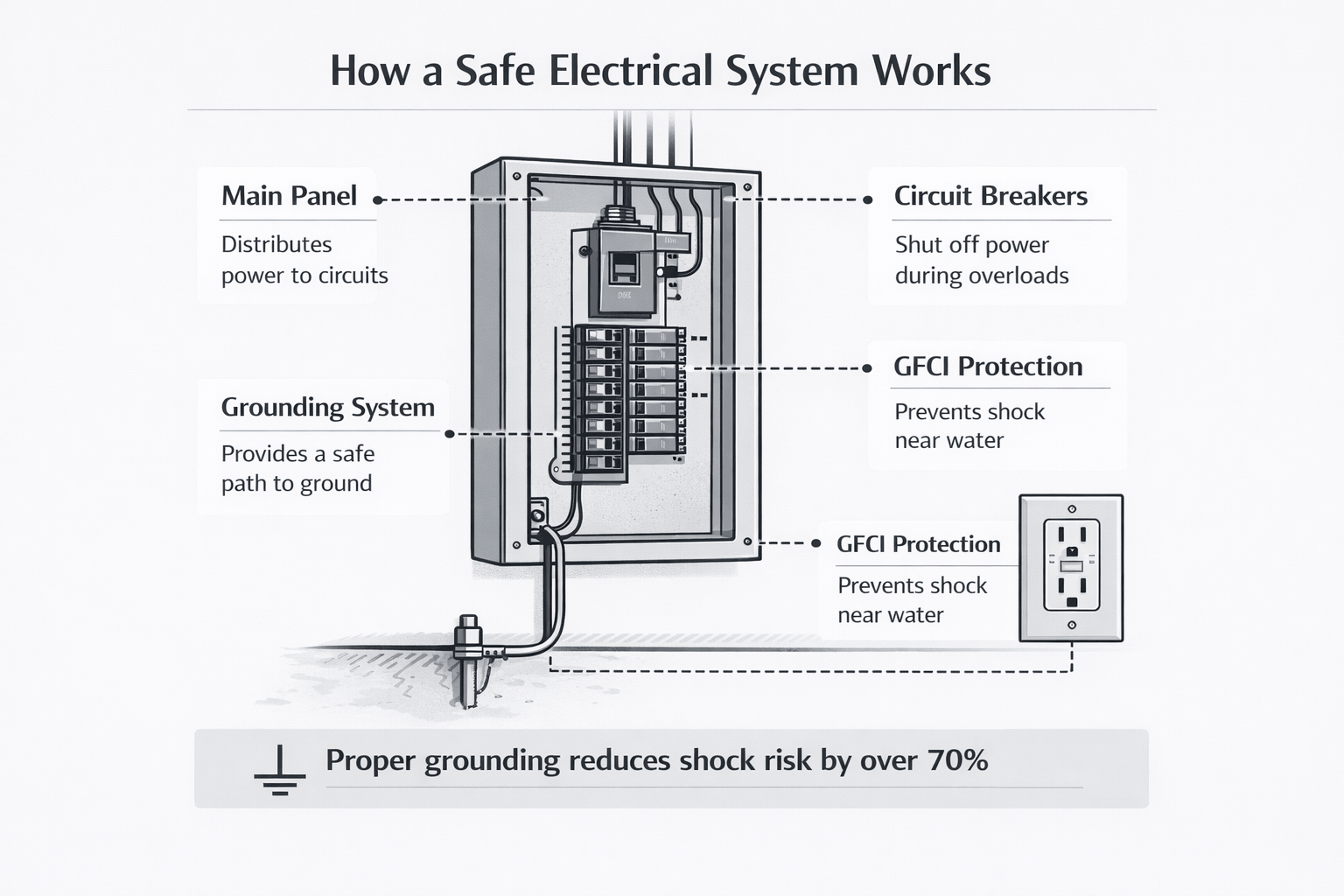
Once electricity reaches your building, it passes through your electrical panel and is distributed across circuits. This system must stay balanced. If demand exceeds capacity, it can cause outages or equipment damage. That is why both utility providers and local codes enforce strict requirements.
Why Electrical Systems Matter for Safety and Efficiency
A properly installed electrical system does more than keep the lights on. It directly affects safety, performance, and operating costs.
Poor electrical work can lead to serious issues, such as:
-
Overloaded circuits
-
Frequent breaker trips
-
Electrical fires
-
Equipment failure
On the other hand, a well-designed system provides:
-
Stable power supply
-
Lower energy costs
-
Longer equipment lifespan
-
Safer working and living conditions
Because of these risks, electrical systems are regulated at multiple levels. Codes and laws ensure that every installation meets minimum safety standards.
Overview of Electricity Laws in Lakeland, Florida
Electrical work in Lakeland is governed by a combination of state laws, national standards, and local enforcement. These layers work together to ensure consistency and safety across all types of buildings.
The Role of the Florida Building Code (FBC)
The Florida Building Code is the main legal framework for construction and electrical systems in the state. It sets the minimum standards that all projects must follow.
One of the most important rules is that a permit is required before most electrical work begins. This includes installations, repairs, and upgrades.
This requirement comes from FBC Section 105.1, which states that permits are mandatory for regulated work. In simple terms, you cannot legally modify an electrical system without approval.
The code is updated regularly to reflect new safety standards and technologies. As a result, older systems often need upgrades to stay compliant.
The National Electrical Code (NEC) and Its Importance
The National Electrical Code, also known as NEC or NFPA 70, is the technical standard used across the United States for safe electrical design and installation.
Florida adopts the NEC as part of its building code. That means its rules are enforceable by law in Lakeland.
The NEC covers key areas such as:
-
Wiring methods
-
Grounding and bonding
-
Circuit protection
-
Load calculations
These rules are detailed, but their purpose is simple—to reduce risk. For example, proper grounding helps prevent electric shock, while circuit protection devices reduce the chance of overheating.
Local Authority: City of Lakeland Regulations
While state and national codes set the standards, the City of Lakeland is responsible for enforcing them. The city’s Building Inspection Division reviews permits, inspects work, and ensures compliance with all applicable codes.
This local oversight includes:
-
Reviewing electrical plans
-
Issuing permits
-
Conducting inspections
-
Approving final installations
Without city approval, electrical systems cannot be legally connected or used. This layer of enforcement ensures that all work meets both legal and safety requirements before a building becomes operational.
Electrical Permits in Lakeland – What You Must Know
Electrical permits are a core part of the legal process in Lakeland. They are not just paperwork. They confirm that your project meets safety standards before any work begins. If you skip this step, the city can stop your project, issue fines, or require you to redo the work.
When Is an Electrical Permit Required?
In Lakeland, most electrical work requires a permit under the Florida Building Code (Section 105.1). This applies to both residential and commercial properties.
You need a permit if you are:
-
Installing new electrical systems
-
Replacing or upgrading panels
-
Adding circuits or outlets
-
Installing lighting systems
-
Repairing damaged wiring
-
Setting up generators or solar systems
Even small changes can fall under this rule if they affect the system’s structure or load. The reason is simple. Electrical systems must be reviewed before work starts to ensure they meet safety standards.
When a Permit May Not Be Required
Some very minor tasks may not require a permit. These usually involve simple replacements that do not change the system.
Examples include:
-
Replacing light bulbs
-
Swapping out fixtures without altering wiring
-
Minor maintenance work
However, this is where many property owners make mistakes. What seems minor can still require approval if it affects wiring or load. When in doubt, it is always safer to confirm with the local building department.
Separate Electrical Permits vs Building Permits
Electrical work often requires its own permit, even if you already have a general building permit.
For example:
-
A renovation project may have a building permit
-
But the electrical portion still needs a separate electrical permit
This ensures that specialists review each system properly. It also allows electrical inspectors to focus only on code compliance for wiring, panels, and safety devices.
Step-by-Step Electrical Permitting Process in Lakeland
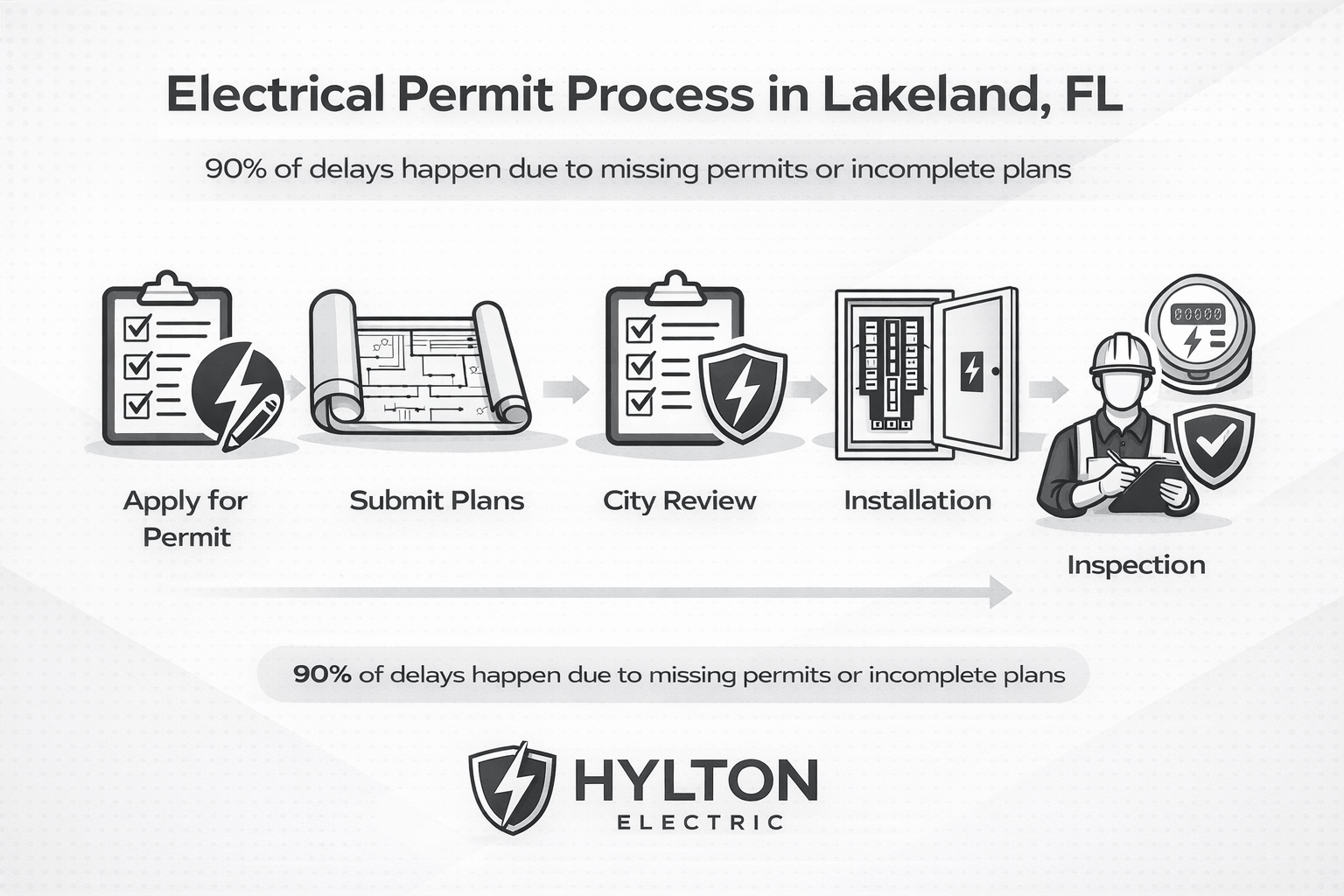
The permitting process in Lakeland follows a clear structure. While it may seem detailed, each step exists to prevent safety issues later.
Step 1: Submit Application Through the City System
All permit applications must be submitted through the City of Lakeland’s official system.
You will need to provide:
-
Project details
-
Property information
-
Scope of electrical work
For contractors, this process is routine. For property owners, it may require guidance from a licensed electrician.
Step 2: Provide Plans and Scope of Work
For larger or more complex projects, you must submit detailed plans.
These may include:
-
Electrical layouts
-
Load calculations
-
Panel schedules
-
Equipment specifications
In many cases, plans must be signed and sealed by a licensed engineer. This step ensures the system is designed correctly before installation begins.
Step 3: Plan Review and Approval
Once submitted, the city reviews your application.
They check for:
-
Compliance with the Florida Building Code
-
Alignment with NEC standards
-
Proper system design
If something is missing or incorrect, revisions will be required. Only after approval can work legally begin.
Step 4: Installation by a Licensed Electrician
In Florida, most electrical work must be performed by a licensed contractor under Chapter 489 of the Florida Statutes.
This requirement ensures that:
-
Work is done correctly
-
Safety standards are followed
-
Liability risks are reduced
Unlicensed work is a common violation and can lead to serious penalties.
Step 5: Inspection and Final Approval
After installation, the work must be inspected.
Typical inspections include:
-
Rough inspection (before walls are closed)
-
Final inspection (after completion)
Inspectors check:
-
Wiring quality
-
Grounding systems
-
Panel connections
-
Code compliance
If the work passes, it is approved. If not, corrections must be made before moving forward.
Electrical Inspections and Compliance Requirements
Inspections are one of the most important parts of the process. They ensure that everything installed is safe, legal, and ready for use.
Why Inspections Are Mandatory
Electrical inspections are required by law. They confirm that the work meets all applicable codes before the system is used.
Without inspection approval:
-
Power may not be connected
-
Occupancy may be delayed
-
The system may be considered unsafe
This step protects both property owners and occupants.
Types of Electrical Inspections
Different stages of a project require different inspections.
The most common include:
-
Rough inspection
-
Conducted before the walls are finished
-
Focuses on wiring and layout
-
-
Final inspection
-
Conducted after all work is complete
-
Verifies full system operation
-
For larger commercial projects, additional inspections may be required at key stages.
What Inspectors Look For
Inspectors follow strict guidelines based on the NEC and Florida Building Code.
They typically check for:
-
Proper wire sizing and installation
-
Correct grounding and bonding
-
Safe panel configuration
-
Circuit protection devices
-
Overall system compliance
Even small mistakes can lead to failed inspections. That is why proper planning and professional installation are critical.
Lakeland Electric Service Requirements
Getting power to your building is not automatic. Even after installation, your system must meet specific utility requirements before service is activated.
In Lakeland, this process is handled by the local utility provider. They work alongside the city to ensure everything is safe and compliant before electricity flows.
Setting Up Electrical Service in Lakeland
Before power can be connected, several conditions must be met.
You must:
-
Obtain an approved electrical permit
-
Complete the installation
-
Pass all required inspections
-
Submit a service request to the utility
The utility will not activate service without confirmation from the city that the system meets code requirements. This step ensures that unsafe or incomplete systems are never energized.
Requirements for New Construction
New construction projects follow a stricter process because the entire electrical system is being built from scratch.
Typical requirements include:
-
Approved permit number
-
Installed meter base and service equipment
-
Proper grounding system
-
Compliance with utility specifications
In many cases, the utility will also review the service layout to confirm it aligns with their standards. This coordination helps prevent delays later in the project.
Final Steps Before Power Connection
Before electricity is turned on, the following must be completed:
-
Final inspection approval from the city
-
All corrections (if any) resolved
-
Utility application processed
Only after these steps will the utility authorize service connection. If anything is missing, the process stops until the issue is fixed.
Electrical Safety Laws and Requirements in Florida
Electrical safety is not just a recommendation. It is built into law through a combination of codes and regulations. These laws are designed to reduce risk in both residential and commercial settings.
Licensing Requirements for Electricians
Under Florida Statutes Chapter 489, most electrical work must be performed by a licensed electrician.
This law ensures that:
-
Contractors meet professional standards
-
Work is completed safely
-
Systems comply with code requirements
There are limited exceptions for property owners, but these come with strict conditions. In most cases, hiring a licensed professional is the safest and most practical option.
Safety Codes for Wet and Outdoor Areas
Certain areas carry a higher risk and require extra protection.
These include:
-
Kitchens
-
Bathrooms
-
Outdoor spaces
-
Garages
In these locations, electrical systems must include protective devices such as:
-
Weather-resistant components
These requirements come from the NEC standards adopted by Florida. They are especially important in Florida due to humidity, rain, and storm conditions.
Fire Prevention Regulations
One of the main goals of electrical laws is to prevent fires.
To achieve this, systems must include:
-
Proper circuit breakers
-
Load-balanced panels
-
Safe wiring methods
-
Protection against short circuits
When these rules are ignored, the risk increases significantly. That is why inspections and permits are enforced at every stage.
Common Electrical Violations in Lakeland (And How to Avoid Them)
Even with clear laws in place, violations still happen. Most issues come from a lack of awareness or attempts to cut corners. Understanding common mistakes can help you avoid costly problems.
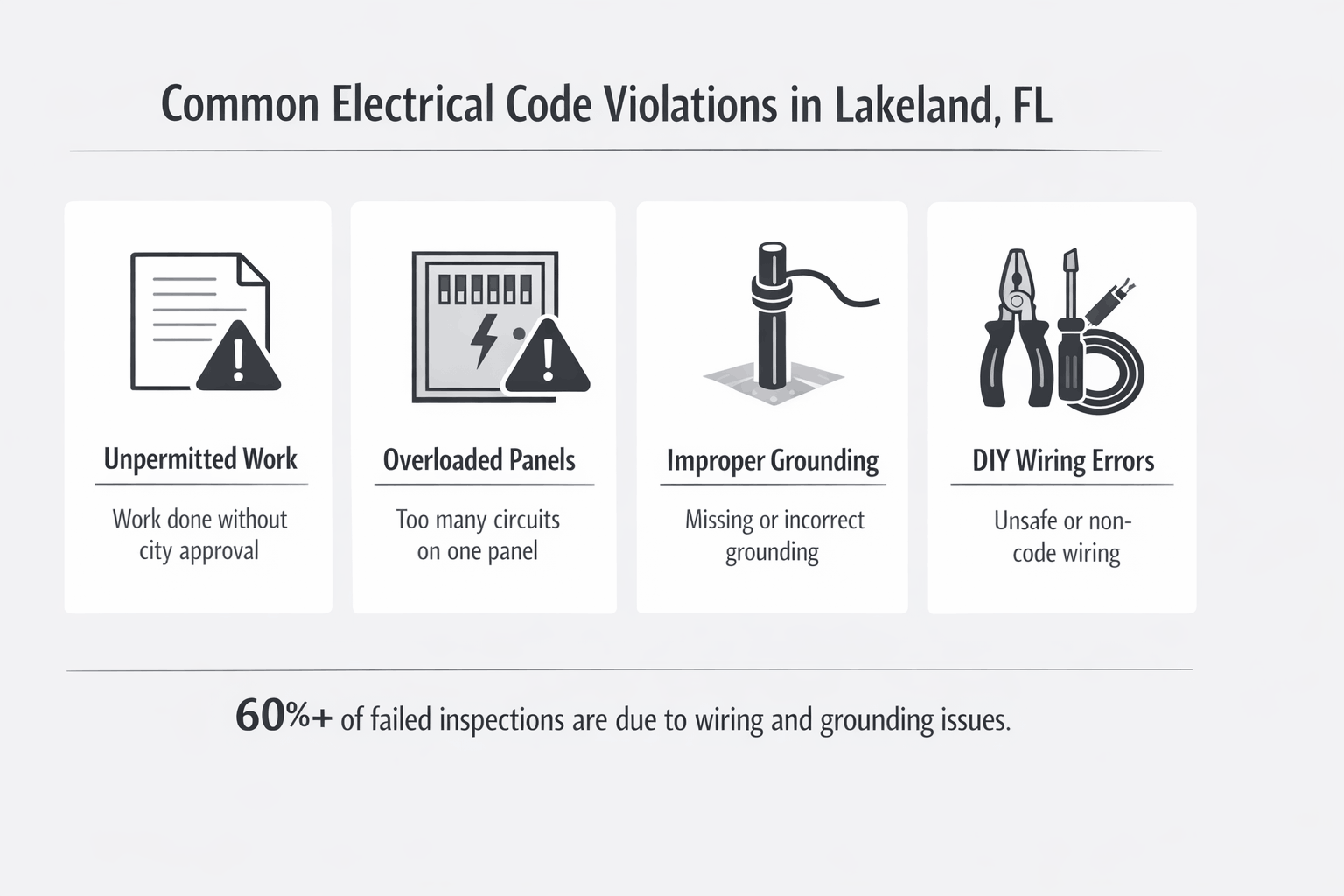
Unpermitted Electrical Work
This is one of the most frequent violations.
Skipping permits may seem faster, but it creates serious risks:
-
Fines from the city
-
Failed inspections
-
Required removal of completed work
In many cases, unpermitted work must be redone entirely.
Overloaded Panels and Circuits
Older buildings often have electrical systems that were not designed for modern demand.
Signs of overload include:
-
Frequent breaker trips
-
Flickering lights
-
Warm panels or outlets
This issue is both a safety concern and a code violation. Upgrading the panel is usually required to fix it properly.
Improper Grounding
Grounding protects people and equipment from electrical faults.
Common grounding issues include:
-
Missing grounding connections
-
Incorrect bonding
-
Outdated systems
These problems are often found during inspections and must be corrected before approval.
DIY Electrical Work Risks
Many property owners attempt small electrical projects themselves. While some minor tasks are allowed, most work requires a licensed professional.
DIY work often leads to:
-
Code violations
-
Failed inspections
-
Safety hazards
In the long run, it usually costs more to fix than to do it correctly the first time.
Cost of Electrical Permits and Compliance in Lakeland
Understanding costs helps you plan your project better. While prices can vary, it is important to see permits and compliance as part of the overall investment, not an extra expense.
Typical Permit Costs
Electrical permit costs in Lakeland depend on the size and type of work.
Factors that affect pricing include:
- Scope of the project
- Type of building (residential or commercial)
- Complexity of the electrical system
For example:
- Small residential jobs usually have lower permit fees
- Large commercial projects require higher fees due to plan reviews and inspections
These costs cover the review process and inspections that ensure your system is safe and code-compliant.
Cost of Non-Compliance
Skipping permits or ignoring code requirements may seem like a way to save money, but it often leads to higher costs later.
Common consequences include:
- Fines and penalties
- Failed inspections
- Project delays
- Required rework or removal
In some cases, you may also face issues with insurance claims if the work was not approved.
Long-Term Cost Savings of Compliance
Following electrical laws from the start can actually save money over time.
Benefits include:
- Lower risk of repairs
- Improved energy efficiency
- Longer lifespan of equipment
- Reduced downtime for businesses
A properly installed system performs better and avoids unexpected expenses.
Electrical Upgrades and Modern Energy Solutions
As buildings evolve, electrical systems must keep up. Modern upgrades not only improve performance but also ensure compliance with current codes.
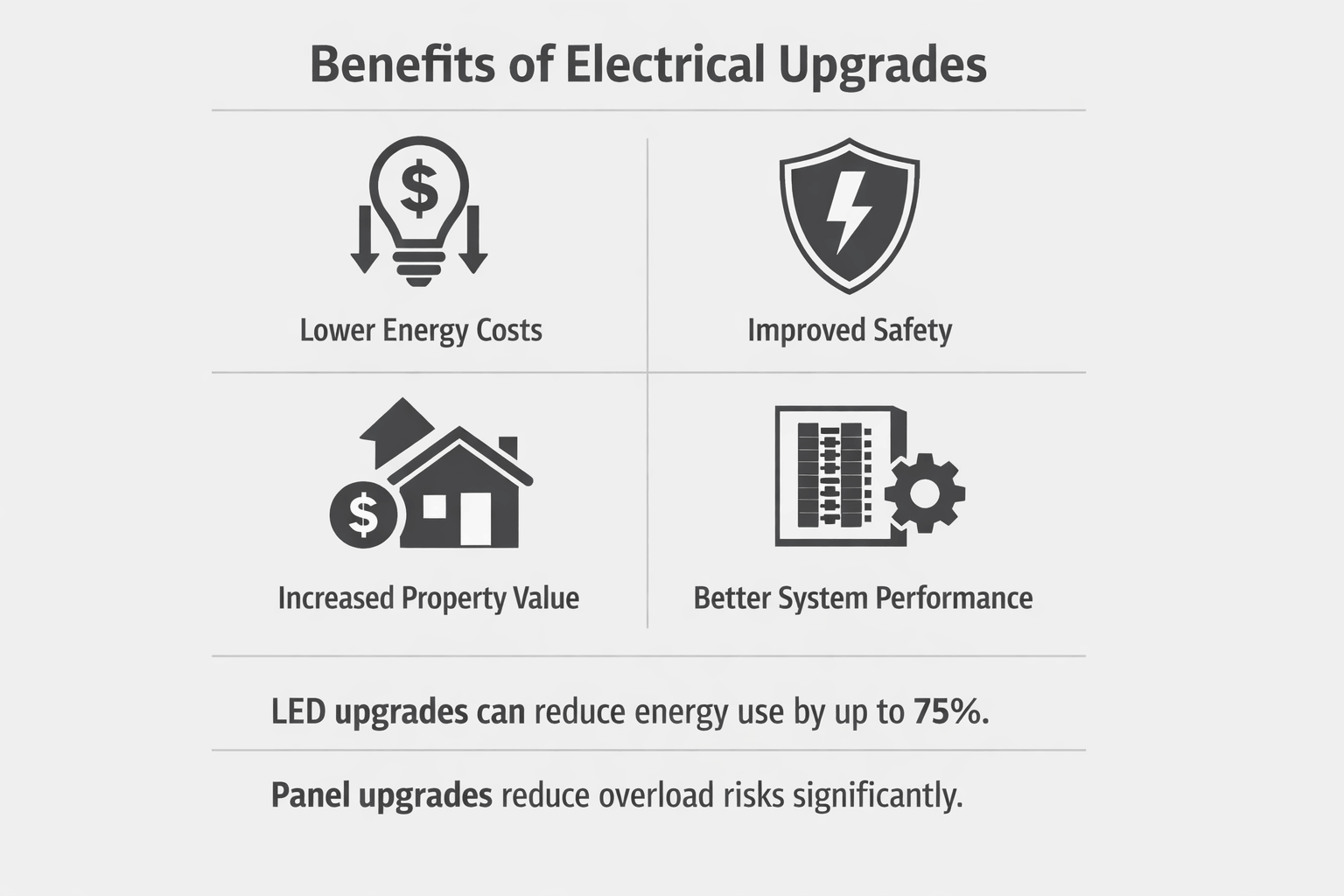
Panel Upgrades and Capacity Expansion
Many older properties in Lakeland were built before today’s energy demands.
Upgrading your panel allows you to:
- Support modern appliances
- Prevent overload issues
- Improve system reliability
Panel upgrades almost always require permits and inspections to meet current code standards.
Energy-Efficient Lighting (LED Retrofits)
Lighting upgrades are one of the simplest ways to improve efficiency.
LED systems offer:
- Lower energy consumption
- Longer lifespan
- Reduced maintenance
For commercial properties, lighting upgrades can also improve workplace visibility and safety.
Solar Power and Renewable Energy Regulations
Solar systems are becoming more common in Florida due to high sunlight exposure.
However, they must follow strict rules:
- Permits are required
- Systems must meet Florida Building Code standards
- Utility approval is needed before connection
This ensures that solar installations operate safely alongside the existing electrical grid.
How to Choose a Licensed Electrician in Lakeland
Choosing the right electrician is just as important as understanding the laws. A qualified professional helps you stay compliant and avoid costly mistakes.
What Credentials to Look For
Before hiring, check that the electrician has:
- A valid Florida license
- Proper insurance coverage
- Experience with similar projects
Licensed contractors understand local codes and permitting processes, which makes the project smoother.
Questions to Ask Before Hiring
It helps to ask a few key questions upfront:
- Will you handle the permit process?
- Have you worked on similar projects?
- How do you ensure code compliance?
Clear answers show that the contractor is organized and experienced.
Red Flags to Avoid
Be cautious if you notice:
- No mention of permits
- Prices that seem unusually low
- Lack of proper licensing
These signs often lead to problems later, especially during inspections.
Electrical Planning for New Construction and Renovations
Good planning reduces delays and ensures your system meets both current and future needs.
Designing a Code-Compliant Electrical System
A proper design includes:
- Load calculations
- Circuit layout planning
- Panel sizing
These elements ensure the system can handle demand safely.
Coordination with Contractors and Engineers
Electrical work does not happen in isolation. It must align with:
- Structural plans
- HVAC systems
- Plumbing layouts
Coordination between teams helps avoid conflicts and rework.
Timeline for Electrical Work and Approvals
A typical process follows this order:
- Permit application
- Plan approval
- Installation
- Inspection
- Final approval
Staying organized at each step keeps the project on schedule.
Future Trends in Electrical Energy and Regulations
Electrical systems are changing as new technologies become more common. Laws and codes are also evolving to keep up.
Smart Electrical Systems
Modern buildings are starting to use smart systems that allow better control over energy use.
These systems can:
- Monitor power usage
- Automate lighting and equipment
- Improve efficiency
As adoption grows, codes may expand to address these technologies.
EV Charging Infrastructure Laws
Electric vehicle (EV) charging is becoming more common in both residential and commercial settings.
Installing EV chargers often requires:
- Dedicated circuits
- Permit approval
- Compliance with updated codes
This is an area where regulations are actively developing.
Energy Efficiency Regulations
Energy efficiency is a growing focus in Florida.
Future code updates may include:
- Stricter efficiency standards
- Requirements for upgraded systems
- Incentives for energy-saving solutions
Staying updated helps property owners plan ahead.
Conclusion: Staying Safe and Compliant with Electrical Laws in Lakeland
Electrical laws in Lakeland are designed to protect people, property, and businesses. While the process may seem detailed, each step plays a role in ensuring safety and reliability.
By following the proper procedures—getting permits, hiring licensed professionals, and completing inspections—you reduce risks and avoid costly issues.
In the long run, compliance is not just about meeting legal requirements. It is about building systems that perform well, last longer, and keep everyone safe.
Need Help with Electrical Work in Lakeland?
Not sure about permits or electrical upgrades? We’ve got you covered. Hylton Electric handles everything—from planning to final inspection—so you don’t have to worry.
- Phone: +1 863-624-7000
- Email: ray@hylton-electric.com
Let’s get it done safely and the right way.
FAQs About Electrical Energy and Laws in Lakeland
What electrical work requires a permit in Lakeland, Florida?
Most electrical work requires a permit under the Florida Building Code. This includes installations, upgrades, and repairs that affect the system.
Common examples include:
-
Panel replacements
-
New wiring or circuits
-
Lighting installations
-
Generator or solar setup
Minor tasks like changing bulbs may not require permits. However, if wiring or load is affected, approval is usually needed. Always confirm with the local building department to avoid violations.
Do I need a permit to replace an electrical panel in Lakeland?
Yes, panel replacement always requires a permit. This is because the panel controls the entire electrical system and must meet current code standards.
The process typically includes:
-
Permit application
-
Inspection approval
-
Utility coordination
Upgrading a panel without a permit can lead to failed inspections, fines, or safety risks. It is one of the most regulated electrical upgrades.
Can a homeowner perform electrical work in Florida legally?
Florida law allows limited owner-builder work, but strict conditions apply.
Key points include:
-
The property must be your primary residence
-
You must follow all codes and inspections
-
You cannot hire unlicensed workers
While this option exists, electrical work is complex. Most homeowners choose licensed electricians to avoid risks and ensure compliance.
How long does it take to get an electrical permit in Lakeland?
The timeline depends on the project size and complexity.
In general:
-
Small projects may be approved within a few days
-
Larger projects requiring plan review may take longer
Delays often occur if documents are incomplete. Submitting clear plans and working with experienced contractors helps speed up the process.
What happens if I do electrical work without a permit?
Unpermitted work can create serious legal and financial problems.
Possible consequences include:
-
Fines and penalties
-
Stop-work orders
-
Failed inspections
-
Required removal or rework
It can also affect property value and insurance claims. In many cases, correcting unpermitted work costs more than doing it properly from the start.
Who enforces electrical codes in Lakeland, Florida?
Electrical codes are enforced by the City of Lakeland Building Inspection Division.
Their responsibilities include:
-
Reviewing permit applications
-
Conducting inspections
-
Approving or rejecting work
They ensure all electrical systems meet the Florida Building Code and NEC standards before they are used.
What is the National Electrical Code (NEC) and why does it matter?
The NEC is the national standard for safe electrical design and installation. Florida adopts it as part of its building code.
It covers:
-
Wiring methods
-
Grounding systems
-
Circuit protection
Following NEC rules reduces the risk of fires, shocks, and system failures. In Lakeland, compliance is mandatory for all electrical work.
Do electrical repairs require permits in Lakeland?
Yes, most electrical repairs require permits, especially if they involve wiring or system changes.
Examples include:
-
Repairing damaged wiring
-
Replacing circuits
-
Fixing electrical panels
Simple maintenance may not require approval, but anything affecting safety or performance usually does. Always verify before starting work.
What inspections are required for electrical work?
Electrical work must pass inspections before it can be approved.
Common inspection stages include:
-
Rough inspection (before walls are closed)
-
Final inspection (after completion)
Inspectors check for code compliance, safe installation, and proper system function. If issues are found, corrections must be made before approval.
How much do electrical permits cost in Lakeland?
Permit costs vary based on the project.
Factors include:
-
Size of the job
-
Type of property
-
Complexity of work
Small residential permits are usually lower in cost, while commercial projects may be higher due to plan reviews and inspections. Fees are an investment in safety and compliance.
Do I need a licensed electrician for all electrical work?
In most cases, yes. Florida law requires licensed contractors for regulated electrical work.
Licensed electricians:
-
Understand code requirements
-
Handle permits and inspections
-
Ensure safe installation
Hiring unlicensed workers can lead to violations, failed inspections, and safety risks.
What are GFCI and AFCI requirements in Florida?
GFCI and AFCI devices are required in specific areas to improve safety.
GFCI is required in:
-
Kitchens
-
Bathrooms
-
Outdoor areas
AFCI is used to prevent electrical fires in living spaces. These protections are part of NEC requirements and are enforced in Lakeland.
Can I sell a house with unpermitted electrical work?
Yes, but it can create complications.
Potential issues include:
-
Failed inspections during sale
-
Lower property value
-
Buyer concerns or delays
In many cases, unpermitted work must be corrected before closing. Addressing these issues early helps avoid problems later.
What is required before Lakeland Electric connects power?
Before service is activated, several steps must be completed.
These include:
-
Approved permit
-
Completed installation
-
Passed final inspection
The utility will not connect power without confirmation that the system meets all requirements. This ensures safety and compliance.
Are electrical codes different for commercial buildings?
Yes, commercial buildings follow stricter requirements.
They must account for:
-
Higher electrical loads
-
Emergency systems
-
Additional safety measures
These systems are more complex and require detailed planning, inspections, and compliance with advanced code standards.
What are the most common electrical code violations?
Common violations often result from shortcuts or a lack of knowledge.
These include:
-
Unpermitted work
-
Improper grounding
-
Overloaded circuits
-
Incorrect wiring methods
Avoiding these issues requires proper planning, permits, and professional installation.
Do I need a permit to install a generator in Lakeland?
Yes, generator installation requires a permit.
This is because generators:
-
Connect to the main electrical system
-
Affect load and safety
-
Must meet code and utility standards
Permits ensure the system is installed correctly and safely.
What is grounding, and why is it important?
Grounding is a safety feature that directs excess electricity safely into the ground.
It helps:
-
Prevent electric shock
-
Protect equipment
-
Reduce fire risk
Improper grounding is a common inspection issue and must be corrected to meet code requirements.
Are solar panels regulated by electrical laws in Lakeland?
Yes, solar installations are regulated and require permits.
Requirements include:
-
Compliance with Florida Building Code
-
Electrical inspections
-
Utility approval
These rules ensure solar systems operate safely with the existing electrical grid.
How can I ensure my electrical project passes inspection?
Preparation is key to passing inspections.
Best practices include:
-
Hiring a licensed electrician
-
Following NEC and FBC standards
-
Submitting accurate plans
-
Scheduling inspections at the right stages
Proper planning reduces delays and ensures a smooth approval process.
Leave a Reply