

Electric vehicles are growing fast across residential, commercial, and industrial sectors. As adoption increases, charging infrastructure becomes a critical decision. Understanding EV charger types helps you choose the right system based on speed, cost, and electrical capacity.
This guide breaks down each charger type in simple terms. It also explains real-world use cases, installation needs, and costs. Whether you manage a facility or own a home, this will help you make a clear, informed choice.
Key Electrical Statistics
-
NFPA: Electrical failures cause over 46,700 home fires annually
-
OSHA: Improper electrical setups remain a leading workplace hazard
-
U.S. DOE: EVs may reach 50% of new vehicle sales by 2030
-
EIA: Electricity demand rising steadily due to EV charging growth
What Are EV Charger Types?
EV chargers are systems that deliver electricity to electric vehicles safely and efficiently. They are not just outlets. Each charger includes controls, protection systems, and connectors designed for EV batteries.
The main difference between charger types is power output. Higher power means faster charging. However, higher power also requires a stronger electrical infrastructure.
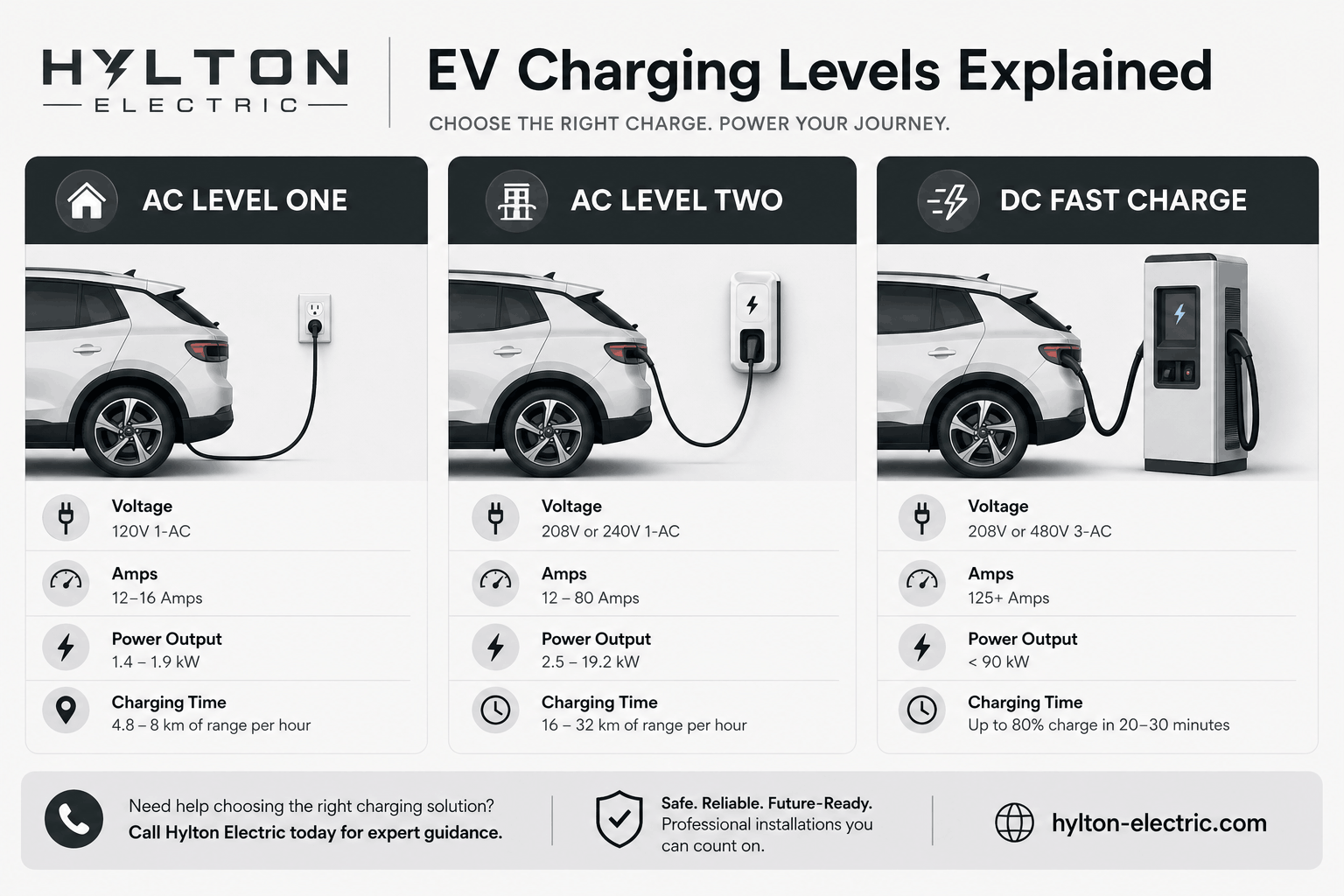
There are three primary charger levels used today. Each serves a different purpose based on usage patterns.
-
Level 1: Basic, slow charging
-
Level 2: Standard, faster charging
-
DC Fast Charging: High-speed commercial charging
What is Level 1 vs Level 2 Charging: Understand the Difference
Charging systems also differ in connector types. These connectors must match the vehicle’s charging port.
Key components of EV chargers include:
-
Power supply connection
-
Charging cable and connector
-
Safety systems (grounding, breakers)
-
Smart controls (in advanced systems)
Choosing the right type depends on how often the vehicle is used and how quickly it needs to recharge.
EV Charger Types Explained (Core Levels)
Level 1 EV Charger (120V)
Level 1 charging uses a standard household outlet. It requires no special installation. This makes it the simplest entry point for EV charging.
However, the charging speed is very slow. Most vehicles gain only 3 to 5 miles of range per hour. For drivers with short daily commutes, this may be enough.
This type works best when the vehicle stays parked for long periods. Overnight charging is the most common use.
Best use cases:
-
Homeowners with low daily mileage
-
Backup charging option
-
Temporary charging setup
Advantages:
-
No installation cost
-
Easy to use anywhere
-
No electrical upgrades needed
Limitations:
-
Extremely slow charging
-
Not suitable for commercial or fleet use
-
Limited practicality for frequent drivers
In real-world use, Level 1 is often a starting point. Most users eventually upgrade to Level 2 for better performance.
Level 2 EV Charger (240V)
Level 2 chargers use a 240-volt circuit. This is the same type used for large appliances like dryers. Because of this, installation requires a licensed electrician. Charging speed improves significantly. Most vehicles gain 12 to 60 miles of range per hour. This makes it ideal for daily use. Level 2 is the most common option for both homes and businesses. It balances speed, cost, and efficiency.
Best use cases:
-
Residential garages
-
Office buildings
-
Apartment complexes
-
Retail parking lots
Advantages:
-
Much faster than Level 1
-
Supports multiple EV models
-
Scalable for commercial use
Limitations:
-
Requires electrical upgrades in some cases
-
Installation cost varies based on panel capacity
For most property owners, Level 2 is the practical choice. It supports daily charging without excessive infrastructure costs.
DC Fast Charger (Level 3)
DC fast chargers deliver high-power direct current to EV batteries. These systems bypass onboard chargers and supply energy directly.
Charging is extremely fast. Many vehicles reach 80% charge in 20 to 40 minutes. This makes them ideal for public charging stations and fleet operations.
However, these systems require significant electrical infrastructure. Installation is complex and costly.
Best use cases:
-
Highway charging stations
-
Commercial fleets
-
High-traffic retail locations
Advantages:
-
Ultra-fast charging
-
Reduces downtime
-
Supports high vehicle turnover
Limitations:
-
Very high installation cost
-
Requires major power upgrades
-
Not suitable for residential use
DC fast charging is designed for demand-heavy environments. It is not a typical solution for homes or small businesses.
EV Charger Connector Types
Charging connectors determine compatibility between the charger and the vehicle. While charger levels define speed, connectors define usability. Most modern EVs support standard connector types. However, some variation still exists.
The most common connectors include:
-
J1772: Standard for Level 1 and Level 2 charging
-
CCS (Combined Charging System): Used for fast charging
-
CHAdeMO: Older fast-charging standard
-
Tesla/NACS: Used by Tesla and expanding to other brands
EV Connector Comparison
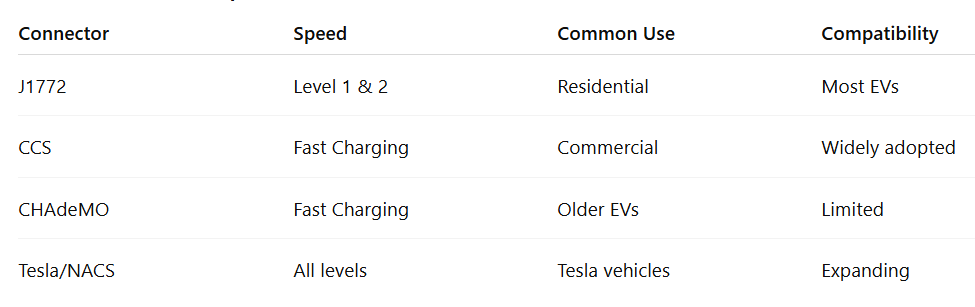
Caption: Comparison of EV charging connector standards
Connector compatibility matters when installing shared or public chargers. Businesses often choose systems that support multiple connector types. Adapters are available in some cases. However, relying on adapters is not always ideal for long-term use.
How to Choose the Right EV Charger Type
Choosing the right charger depends on usage, property type, and electrical capacity. There is no one-size-fits-all solution. For residential users, daily driving habits matter most. If the vehicle is used heavily, faster charging becomes necessary.
For businesses, the focus shifts to customer behavior and return on investment. Charging availability can attract customers and increase property value. And for industrial operations, fleet size and uptime are critical. Charging must be fast, reliable, and scalable.
Key factors to consider:
-
Daily driving distance
-
Available electrical capacity
-
Installation budget
-
Future expansion needs
-
Charging time requirements
Residential considerations:
-
Garage vs outdoor installation
-
Panel capacity (100A vs 200A+)
-
Overnight charging needs
Commercial considerations:
-
Customer dwell time
-
Parking turnover
-
Revenue opportunities
Industrial considerations:
-
Fleet schedules
-
High-power infrastructure
-
Load management systems
Selecting the correct charger type ensures efficiency, safety, and long-term cost control.
EV Charger Installation Process (Step-by-Step)
Installing an EV charger is not just about mounting equipment. It involves planning, electrical evaluation, and strict code compliance. A proper installation ensures safety, efficiency, and long-term reliability.
The process starts with a site assessment. This helps determine the best location, wiring path, and mounting options. It also identifies any limitations in the current electrical system.
Next comes the electrical capacity evaluation. Many properties, especially older ones, may not have enough panel capacity. In such cases, upgrades are required before installation.
Here is a typical step-by-step process:
-
Site Assessment
-
Evaluate parking layout and charger placement
-
Identify the distance from the electrical panel
-
Check for indoor or outdoor installation needs
-
-
Electrical Load Calculation
-
Assess current panel load
-
Determine available capacity
-
Plan for future expansion
-
-
Permits and Code Compliance
-
Apply for local permits
-
Ensure NEC compliance
-
Follow grounding and safety standards
-
-
Equipment Selection
-
Choose charger type (Level 2 or DC Fast)
-
Select compatible connectors
-
Consider smart charging features
-
-
Installation and Wiring
-
Install a dedicated circuit
-
Run conduit and wiring
-
Mount the charging unit securely
-
-
Testing and Commissioning
-
Verify voltage and connections
-
Test charging performance
-
Ensure safety systems function properly
-
A licensed electrician ensures all steps meet local codes. This avoids safety risks and future issues.
Need help choosing the right EV charger? Call +1 863-624-7000 or email ray@hylton-electric.com. We offer free quotes for commercial and industrial projects across Lakeland, Polk County, and Tampa.
Cost Breakdown of EV Charger Installation (Florida)
The cost of EV charger installation varies based on charger type, electrical capacity, and site conditions. Understanding these costs helps you plan accurately.
For residential setups, Level 2 chargers are the most common. Costs remain manageable unless panel upgrades are needed. For commercial and industrial projects, costs increase significantly. This is due to higher power demands and infrastructure upgrades.
EV Charger Cost Estimate
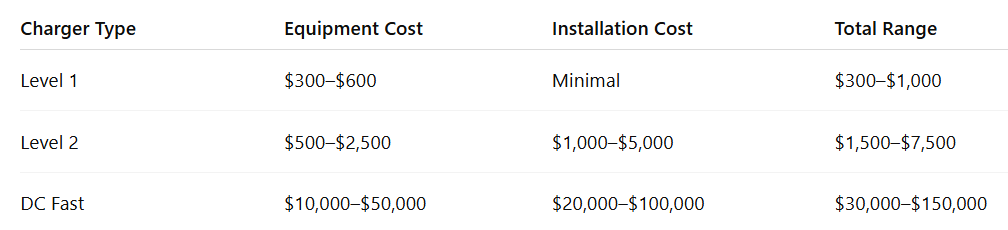
Caption: Estimated EV charger installation costs in Florida
Several factors influence the final cost:
-
Distance between panel and charger
-
Electrical panel upgrades
-
Trenching or conduit work
-
Number of charging units
-
Smart charging system integration
In Florida, permitting and inspection costs may also apply. Commercial projects often include additional design and engineering costs. Planning for future expansion can reduce long-term expenses. Installing conduit or upgrading panels early avoids costly rework later.
Signs You Need an EV Charger Upgrade
As EV usage increases, existing charging systems may no longer meet demand. Recognizing early signs helps avoid downtime and electrical issues. Slow charging is one of the most common indicators. If charging times increase noticeably, the system may be underpowered. Frequent circuit trips also signal a problem. This often means the electrical system is overloaded.
Here are key signs to watch:
-
Charging takes significantly longer than expected
-
Breakers trip during charging
-
Multiple EVs competing for one charger
-
Business demand exceeds current capacity
-
Older equipment lacks smart features
For businesses, customer complaints about charging availability are a major red flag. This often indicates the need for additional units or faster chargers.
Upgrading may involve:
-
Installing Level 2 or DC fast chargers
-
Expanding electrical capacity
-
Adding load management systems
Addressing these issues early ensures consistent performance and a better user experience.
Common EV Charging Mistakes to Avoid
EV charger installation can go wrong when decisions are rushed or poorly planned. Avoiding common mistakes saves time, money, and safety risks. One major mistake is underestimating electrical capacity. Many installations fail because the panel cannot handle the added load. Another issue is choosing the wrong charger type. Installing a slow charger in a high-demand environment creates frustration and inefficiency.
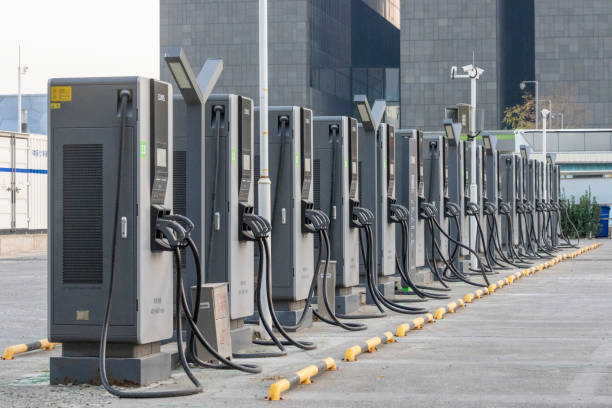
Common mistakes include:
-
Installing without a panel upgrade when needed
-
Choosing Level 1 for daily or commercial use
-
Ignoring future expansion needs
-
Skipping permits and inspections
-
Attempting DIY installation
Poor placement is another overlooked issue. Chargers installed too far from parking areas reduce usability. Weather exposure must also be considered. Outdoor chargers need proper enclosures and protection. Working with a licensed electrician prevents these problems. It ensures the system is safe, compliant, and built for long-term use.
Safety & Code Compliance for EV Chargers
Safety is critical in any electrical installation. EV chargers operate at high loads, making proper installation essential. The National Electrical Code (NEC) provides guidelines for EV charging systems. These rules ensure safe operation and reduce fire risks. Proper grounding is one of the most important requirements. It protects both the user and the equipment.
Key safety considerations include:
-
Dedicated circuit for each charger
-
Correct breaker sizing
-
Proper grounding and bonding
-
Weatherproof enclosures for outdoor units
-
Surge protection
Load calculations must be accurate. Overloading circuits can lead to overheating and equipment failure. Regular inspections also play a role in safety. They help identify wear, damage, or outdated components. For commercial and industrial systems, safety becomes even more critical. Higher power levels require strict adherence to codes and standards.
When to Hire a Licensed Electrician
EV charger installation is not a typical DIY project. It involves high voltage, code compliance, and long-term reliability considerations. Hiring a licensed electrician ensures the system is installed correctly from the start. This reduces risks and avoids costly corrections later.
You should always hire a professional when:
-
A new circuit is required
-
Panel upgrades are needed
-
Installing Level 2 or DC fast chargers
-
Permits and inspections are required
-
Commercial or industrial systems are involved
Licensed electricians handle load calculations, wiring, and safety compliance. They also ensure the installation meets local regulations. For businesses, professional installation is essential. It protects customers, employees, and property.
Future Trends in EV Charging
EV charging technology continues to evolve rapidly. New innovations are improving speed, efficiency, and convenience. One major trend is smart charging. These systems allow remote monitoring and load management. They help reduce energy costs and improve efficiency. Bidirectional charging is another development. It allows EVs to supply power back to buildings or the grid. This creates new opportunities for energy management.
Other emerging trends include:
-
Ultra-fast charging networks
-
Integration with renewable energy systems
-
Wireless charging technology
-
Expansion of Tesla’s NACS standard
As EV adoption grows, infrastructure will continue to expand. Businesses that invest early can gain a competitive advantage.
Conclusion
Understanding different EV charging options helps you make better decisions for your property. Each system offers unique benefits based on speed, cost, and usage.
From basic Level 1 setups to advanced DC fast systems, the right solution depends on your needs. Choosing correctly improves efficiency and avoids unnecessary costs.
If you are planning an installation, take time to evaluate your requirements. The right approach ensures safe, reliable performance for years to come. Knowing EV charger types is the first step toward building a future-ready charging system.
Planning an EV charger installation? Reach out at +1 863-624-7000 or ray@hylton-electric.com. Serving Lakeland, Polk County, and Tampa with practical, safe electrical solutions.
FAQs About EV Charger Types
What are the main types of EV chargers?
EV chargers are divided into three main types based on power output and charging speed. These include Level 1, Level 2, and DC fast chargers.
Level 1 chargers use standard household outlets. They are slow and best for light daily use. Level 2 chargers use 240 volts and provide much faster charging. They are the most common choice for homes and businesses.
DC fast chargers deliver high-power charging directly to the battery. They are used in commercial settings where speed is critical. Each type serves a different purpose. Choosing the right one depends on how often and how quickly you need to charge your vehicle.
Which EV charger is best for home use?
For most homeowners, a Level 2 charger is the best option. It provides a strong balance between speed and cost. Level 1 chargers are simple but slow. They may work for short commutes, but they are not ideal for regular use. Level 2 chargers allow you to fully charge a vehicle overnight. This makes them practical for daily driving. Before installing, you should check your electrical panel capacity. Some homes may need upgrades to support a Level 2 charger safely.
How fast does each EV charger type work?
Charging speed varies significantly between charger types. Level 1 chargers add about 3 to 5 miles of range per hour. Level 2 chargers increase this to around 12 to 60 miles per hour. This makes them suitable for daily use. DC fast chargers are much faster. They can provide up to 80% charge in 20 to 40 minutes. Actual speed depends on the vehicle and battery size. However, higher power chargers always reduce charging time.
Can I install an EV charger myself?
Installing an EV charger yourself is not recommended in most cases. While Level 1 chargers plug into standard outlets, Level 2 systems require electrical work.
This includes running new circuits, installing breakers, and ensuring code compliance. Mistakes can lead to safety hazards or system failure. A licensed electrician ensures proper installation. They also handle permits and inspections where required. Professional installation protects your investment and ensures long-term reliability.
Do I need a panel upgrade for EV charging?
In many cases, yes. It depends on your current electrical load and panel capacity. Most older homes have 100-amp panels, which may not support a Level 2 charger safely. Newer homes with 200-amp service usually have more flexibility.
A load calculation determines whether your panel can handle the added demand. This calculation considers existing appliances, HVAC systems, and overall usage. If capacity is limited, a panel upgrade becomes necessary.
Upgrading the panel allows safe operation and prevents overloads. It also prepares your system for future expansion, such as adding another EV charger or upgrading to faster charging equipment.
For commercial and industrial properties, panel upgrades are even more common. These environments often require multiple chargers and higher power output, making proper electrical infrastructure essential.
What is the cost of EV charger installation?
The cost varies based on charger type, installation complexity, and electrical upgrades. For residential setups, Level 2 installations typically range between $1,500 and $7,500.
Several factors influence pricing:
-
Distance from panel to charger
-
Need for trenching or conduit work
-
Panel upgrades or service changes
-
Permit and inspection fees
For commercial and industrial installations, costs increase significantly. DC fast chargers can range from $30,000 to $150,000 due to equipment and infrastructure needs.
Planning ahead helps control costs. Installing extra capacity during the initial setup can reduce future expenses.
Are EV chargers safe in the rain or outdoors?
Yes, EV chargers are designed for outdoor use when installed correctly. Most units are built with weatherproof enclosures and rated for exposure to rain, dust, and temperature changes.
However, proper installation is critical. Outdoor chargers must be:
-
Installed with waterproof connections
-
Mounted securely on approved surfaces
-
Protected with appropriate enclosures
Ground fault protection is also essential. It ensures safety in wet conditions and prevents electrical hazards.
A licensed electrician ensures all safety measures are in place. This guarantees reliable operation regardless of weather conditions.
What is the difference between CCS and CHAdeMO?
CCS (Combined Charging System) and CHAdeMO are both fast-charging connector types. The main difference lies in compatibility and industry adoption. CCS is widely used across North America and Europe. It supports both AC and DC charging in one connector, making it more versatile.
CHAdeMO is an older standard. It is mainly used by certain older EV models and is becoming less common. Most new EVs now support CCS. This makes it the preferred option for new installations, especially in commercial settings.
How many EV chargers does a business need?
The number of chargers depends on customer demand and parking patterns. Businesses must consider how long vehicles stay parked and how often chargers are used.
For example:
-
Retail locations benefit from multiple Level 2 chargers
-
Offices may need fewer chargers due to longer parking times
-
Fleet operations require dedicated charging infrastructure
A good starting point is to evaluate peak demand. Installing scalable systems allows you to expand as usage grows. Load management systems can also help. They distribute power efficiently across multiple chargers, reducing the need for major upgrades.
Do EV chargers increase property value?
Yes, EV chargers can increase property value and attract tenants or customers. As EV adoption grows, charging access becomes a desirable feature. For residential properties, a Level 2 charger can make a home more appealing to buyers. It also adds convenience for daily use.
For commercial properties, chargers can:
-
Increase foot traffic
-
Extend customer dwell time
-
Improve tenant satisfaction
Installing EV chargers positions your property as future-ready. This can provide a competitive advantage in both residential and commercial markets.
What permits are required for EV charger installation?
Permit requirements vary by location, but most EV charger installations require approval from local authorities. This ensures the system meets safety and building codes.
Typical requirements include:
-
Electrical permit application
-
Inspection after installation
-
Compliance with NEC standards
Commercial and industrial projects may require additional approvals. These can include site plans, engineering drawings, and utility coordination. Working with a licensed electrician simplifies the process. They handle permits, inspections, and compliance, ensuring everything is done correctly.
How long does installation take?
Installation time depends on the complexity of the project. Simple residential Level 2 installations can often be completed within one day.
However, more complex projects take longer:
-
Panel upgrades may add 1–2 days
-
Trenching or long wiring runs increase time
-
Commercial installations may take several weeks
Planning and permitting also affect timelines. Delays can occur if approvals are required before work begins. Proper planning helps avoid unnecessary delays and ensures smooth installation.
Can EV chargers be upgraded later?
Yes, most EV charging systems can be upgraded. However, planning ahead makes upgrades easier and more cost-effective. For example, installing extra conduit or increasing panel capacity during the initial installation allows future expansion.
Upgrades may include:
-
Switching from Level 1 to Level 2
-
Adding additional charging units
-
Upgrading to smart charging systems
Businesses often start with a few chargers and expand as demand grows. This phased approach helps manage costs while maintaining flexibility.
What maintenance do EV chargers require?
EV chargers require minimal maintenance, but regular checks are important. Keeping the system in good condition ensures safety and performance.
Basic maintenance includes:
-
Inspecting cables for wear or damage
-
Checking connections and mounting
-
Cleaning the unit to prevent debris buildup
For commercial systems, periodic professional inspections are recommended. These checks ensure compliance with safety standards and identify potential issues early. Smart chargers may also require software updates. These updates improve performance and add new features.
Leave a Reply