
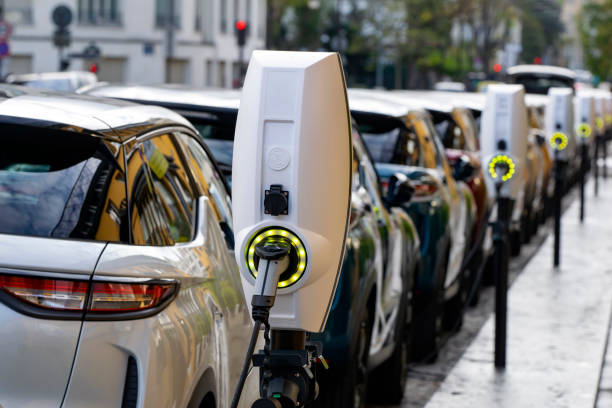
Electric fleets are no longer a future idea. They are already on the roads across Tampa. Delivery vans, service vehicles, and company cars are switching to electric at a fast pace. The reason is simple. Businesses want to cut fuel costs, reduce emissions, and gain more control over daily operations.
But once a company decides to switch, one big question comes up: How do you set up EV fleet charging, and what does it really cost in Tampa?
The answer depends on several factors. These include your fleet size, driving patterns, building infrastructure, and long-term plans. Some setups are simple. Others require detailed planning, utility coordination, and electrical upgrades.
This guide breaks everything down in a clear way. You will learn how fleet charging works, what it costs in 2026, and what Tampa businesses should expect before getting started.
Why EV Fleet Charging Matters for Tampa Businesses in 2026
EV fleet charging is not just about plugging in vehicles. It is about building a reliable system that supports daily operations without delays. In a growing market like Tampa, this has become a key business decision.
Rising EV adoption in Florida and Tampa Bay
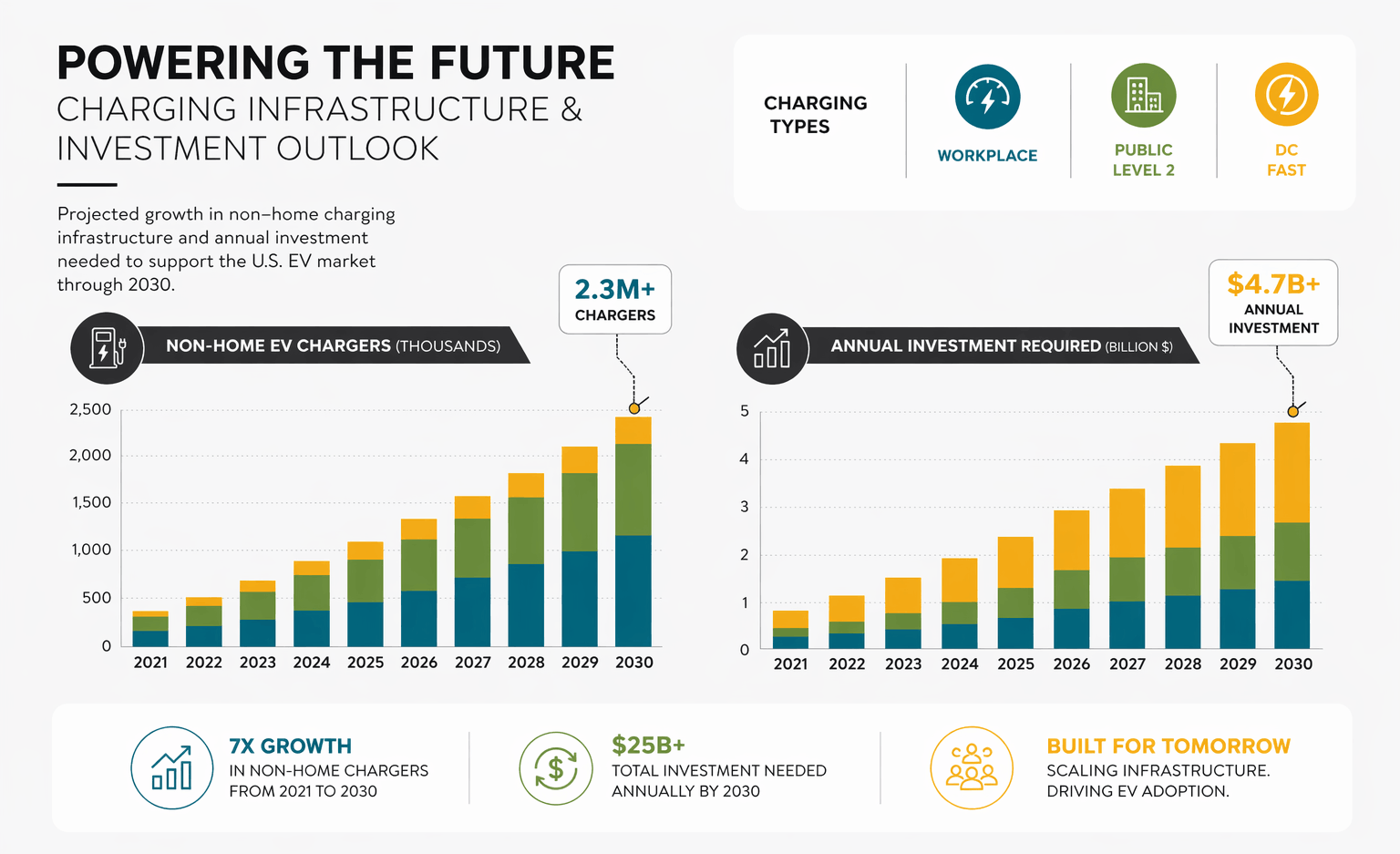
Florida continues to see steady growth in electric vehicle adoption. Tampa is part of that trend. More companies are replacing gas-powered fleets with electric models. This includes delivery services, contractors, and corporate fleets.
Several factors are driving this shift. Fuel prices remain unpredictable. At the same time, electric vehicles offer lower operating costs over time. Local and federal policies also support cleaner transportation.
As a result, businesses are planning ahead. Instead of relying on public charging, they are investing in private fleet charging systems. This gives them better control over charging schedules and costs.
Benefits of installing fleet charging infrastructure
Installing your own EV charging setup brings clear advantages. First, it reduces fuel expenses. Electricity is more stable in price compared to gasoline or diesel.
Second, it improves efficiency. Vehicles can charge overnight and start the day ready to go. There is no need to stop at public stations during work hours.
Third, it adds reliability. A private charging system means fewer delays and more predictable operations.
Other benefits include:
-
Lower maintenance costs compared to fuel vehicles
-
Better tracking of energy usage and fleet performance
-
Stronger brand image with a focus on sustainability
-
Long-term cost savings as fuel prices rise
Industries in Tampa adopting EV fleets
Several industries in Tampa are already moving toward electric fleets. Each has different needs, but the goal is the same: reduce costs and improve efficiency.
Common industries include:
-
Delivery and logistics companies – These fleets benefit from overnight charging and predictable routes
-
Electrical and HVAC contractors – Service vehicles return to base daily, making them ideal for charging setups
-
Hotels and hospitality businesses – Many are adding EV fleets along with guest charging stations
-
Corporate offices and campuses – Companies are electrifying employee and service vehicles
As more industries adopt EV fleets, the demand for reliable charging systems continues to grow. Businesses that plan early often save more and avoid costly upgrades later.
Types of EV Fleet Charging Solutions Explained
Not all EV chargers are the same. The right setup depends on how your fleet operates each day. Some vehicles drive short routes and sit overnight. Others stay on the road longer and need quick turnaround times.
In most cases, Tampa businesses use a mix of charging types. This helps balance cost, speed, and flexibility.
Level 1 charging (basic fleet use cases)
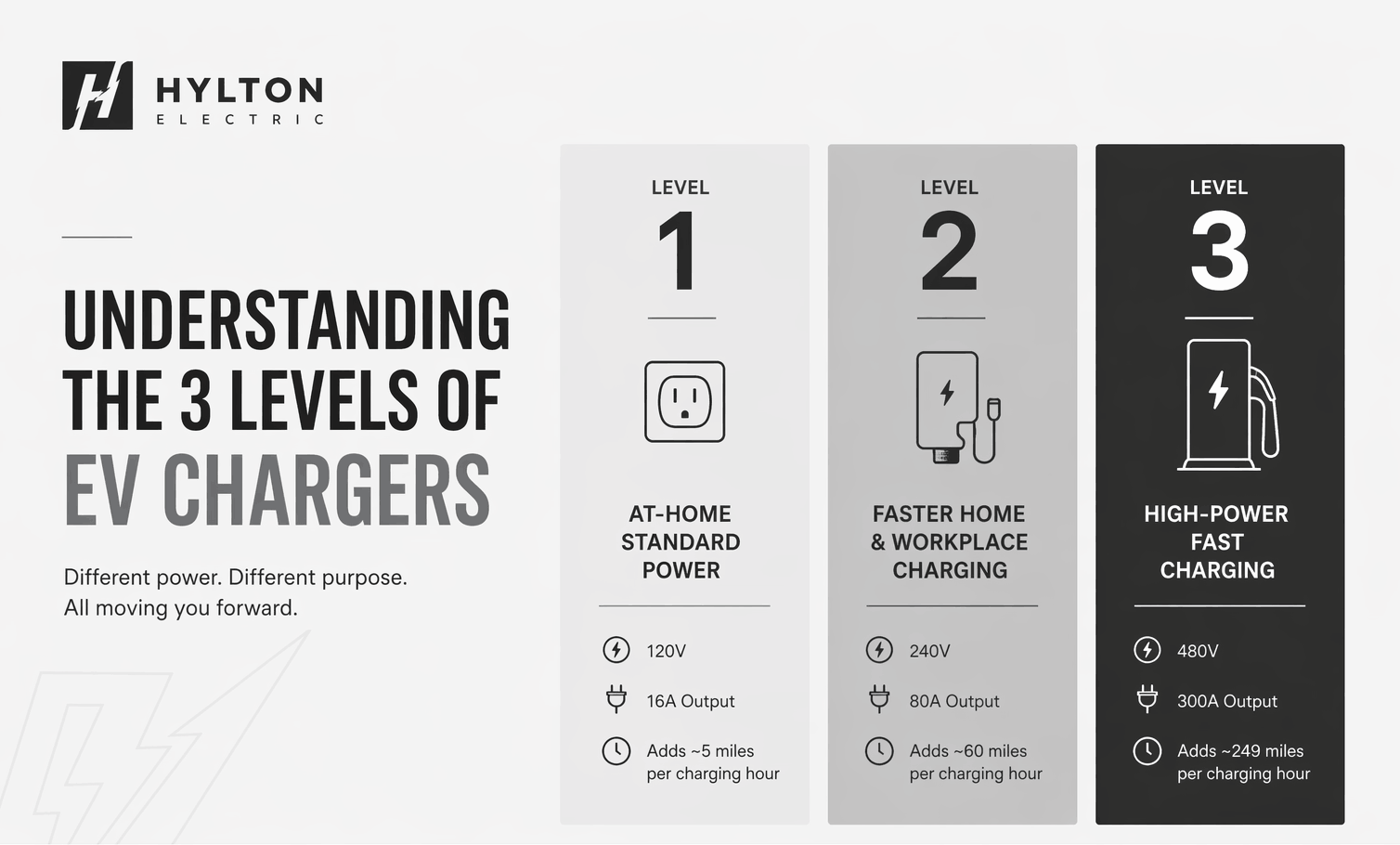
Level 1 charging uses a standard 120-volt outlet. It is the simplest option, but also the slowest.
For fleet use, this type only works in limited situations. Vehicles must have very low daily mileage and long idle time. For example, a company car that drives short distances and sits overnight could use Level 1 charging.
However, most commercial fleets outgrow this option quickly.
Key points to consider:
-
Adds about 3–5 miles of range per hour
-
No special installation in some cases
-
Not suitable for large or active fleets
-
Best for backup or occasional use
Because of its slow speed, Level 1 is rarely the main solution for businesses.
Level 2 charging (most common fleet solution)
Level 2 charging is the most widely used option for commercial fleets. It runs on 240 volts and offers a good balance between cost and performance.
For most Tampa businesses, this is the core of their charging setup. Vehicles can charge overnight and be ready by morning.
Here’s why Level 2 works well:
-
Adds about 10–25 miles of range per hour
-
Ideal for overnight charging
-
Lower installation cost compared to fast chargers
-
Works for small to medium fleets
Level 2 chargers are also flexible. You can install multiple units and scale up as your fleet grows. Many systems include smart features like load management and usage tracking. For companies with predictable routes, this setup often covers daily needs without any issues.
DC Fast Charging (high-demand fleets)
DC fast charging is designed for speed. It delivers high power directly to the battery, which cuts charging time significantly. This option is best for fleets that operate throughout the day and cannot wait hours to recharge.
Typical use cases include:
-
Delivery fleets with multiple shifts
-
High-mileage service vehicles
-
Operations that require quick turnaround times
Benefits of DC fast charging:
-
Can charge up to 80% in 20–60 minutes
-
Reduces downtime between trips
-
Supports high utilization fleets
However, this speed comes at a cost. Installation is much more expensive. It often requires major electrical upgrades and coordination with the utility company. Because of this, many businesses use DC fast chargers in combination with Level 2 units rather than relying on them solely.
Smart and networked charging systems
Modern fleet charging is not just about hardware. Software plays a big role in managing energy use and costs. Smart charging systems allow businesses to control how and when vehicles charge. This is especially important for avoiding peak electricity rates.
Common features include:
-
Remote monitoring of all chargers
-
Scheduling to charge during off-peak hours
-
Load balancing across multiple units
-
Usage reports for cost tracking
-
Access control for fleet-only charging
These systems help reduce operating costs and improve efficiency. They also make it easier to scale your setup as your fleet grows.
For Tampa businesses, smart charging is becoming a standard part of new installations. It adds control without adding much complexity.
EV Fleet Charging Setup Process (Step-by-Step)
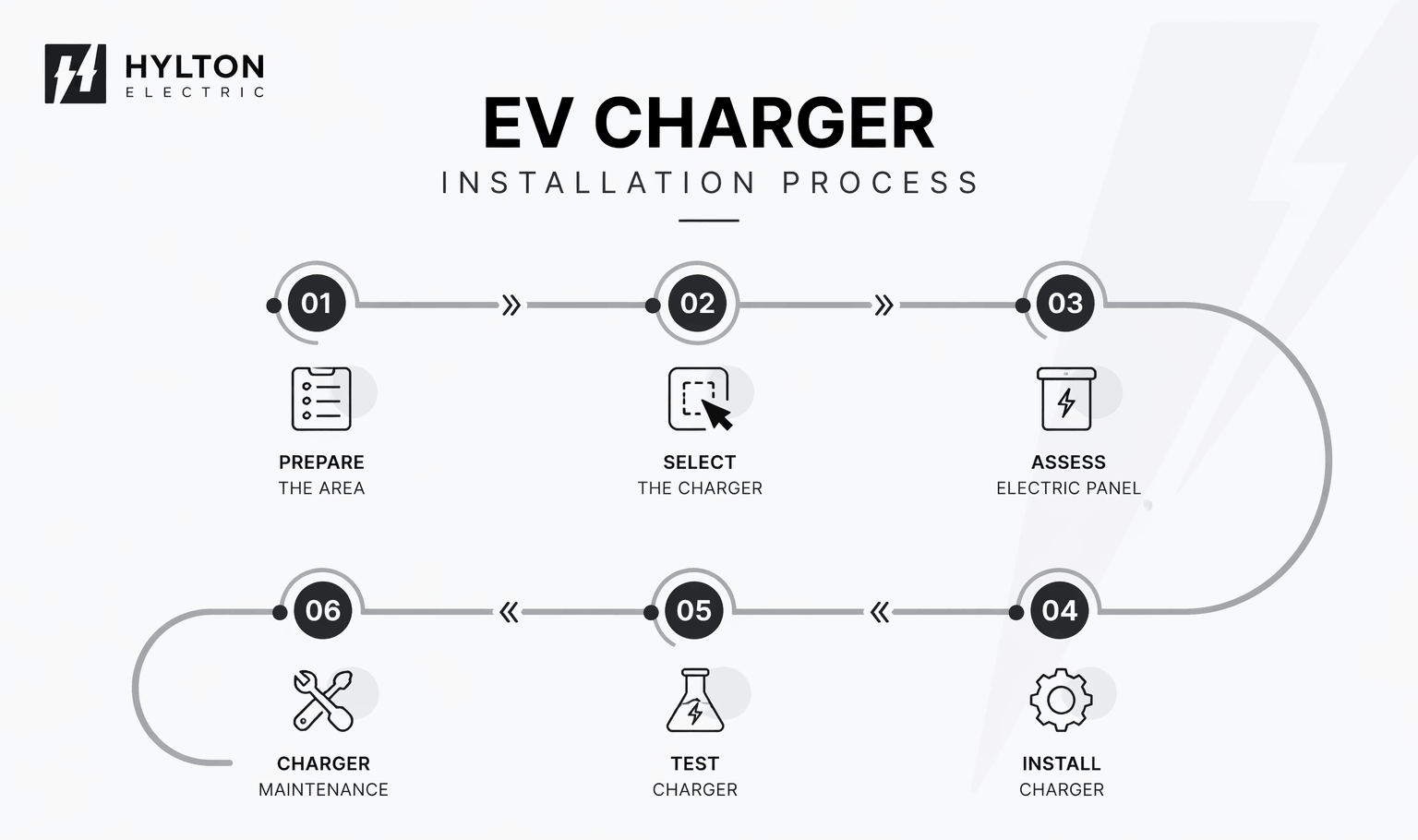
Setting up EV fleet charging is not just about installing chargers. It involves planning, electrical evaluation, and coordination with local authorities. A well-planned setup prevents delays, reduces costs, and supports future expansion.
For Tampa businesses, following a clear step-by-step process makes the project smoother and more predictable.
Site assessment and energy demand analysis
The first step is understanding your fleet’s daily needs. This includes how many vehicles you have, how far they travel, and how often they return to base.
A proper site assessment looks at:
-
Number of vehicles now and in the future
-
Daily mileage per vehicle
-
Charging time available (overnight or during shifts)
-
Parking layout and spacing
From this, an energy demand estimate is created. This tells you how much power your system will need. Without this step, businesses often install too few chargers or overload their system later.
Electrical infrastructure evaluation
Once demand is clear, the next step is checking your existing electrical system.
This includes:
-
Main panel capacity
-
Available amperage
-
Transformer limits
-
Distance from power source to charging area
In many Tampa properties, especially older buildings, upgrades may be required. These can include panel upgrades, new circuits, or even utility-side improvements.
This step is critical because electrical upgrades often make up the largest part of the total cost.
Choosing the right charger mix
After evaluating power capacity, the next decision is selecting the right types of chargers.
Most fleets use a combination based on usage:
-
Level 2 chargers for overnight charging
-
DC fast chargers for quick turnaround needs
Key considerations:
-
Fleet size and growth plans
-
Budget constraints
-
Available electrical capacity
-
Daily operational schedule
Planning for future expansion is important here. Installing extra conduit or capacity now can save high costs later.
Installation and permitting in Tampa
Before installation begins, permits must be approved. Tampa has specific requirements for commercial electrical work.
This process typically includes:
-
Electrical permits
-
Site plan approval
-
Compliance with Florida building codes
-
Inspection scheduling
Working with a licensed electrical contractor helps speed up this process. They understand local codes and can handle documentation correctly. Once approved, installation involves trenching (if needed), wiring, mounting chargers, and connecting the system.
Software and payment system integration
After hardware installation, the system needs to be configured and tested.
This includes setting up:
-
Charging schedules
-
User access controls
-
Energy monitoring dashboards
-
Billing or internal cost tracking
For fleet operations, software is essential. It ensures vehicles charge at the right time and helps avoid high electricity costs during peak hours.
Some businesses also integrate charging data with fleet management systems. This gives better visibility into performance and energy use.
EV Fleet Charging Cost in Tampa (2026 Breakdown)
Cost is one of the first questions businesses ask—and for good reason. EV fleet charging is an investment, not just an expense. The total cost depends on your setup, site conditions, and long-term goals.
In Tampa, prices can vary widely. A small setup may cost a few thousand dollars per charger. Larger, high-powered systems can reach six figures.
Let’s break it down in a clear way.
Average installation cost per charger
The cost of EV charging includes two main parts: hardware and installation. Installation often costs as much as, or more than, the charger itself.
Here is a simple breakdown based on current 2026 estimates:

Level 2 chargers are more affordable and work well for most fleets. DC fast chargers cost much more but offer faster charging for high-demand operations.
For example, a fleet with 10 Level 2 chargers may cost between $60,000 and $150,000 total, depending on site conditions.
Key factors affecting total project cost
No two installations cost the same. Several factors can increase or reduce your total investment.
The most important cost drivers include:
-
Electrical upgrades – Panel or transformer upgrades can significantly raise costs
-
Distance to power source – Longer distances mean more trenching and wiring
-
Number of chargers installed – Larger systems require more infrastructure
-
Site layout and construction needs – Parking lot cutting, trenching, and restoration add costs
-
Permits and inspections – Required for all commercial installations in Tampa
-
Charger type and power output – Higher power systems cost more to install and operate
In many cases, electrical work—not the charger itself—is the biggest expense.
Tampa-specific cost considerations
Tampa has a few local factors that can influence your EV charging costs.
- First, many commercial properties were not designed for high electrical loads. This means upgrades are often needed before installation.
- Second, the weather plays a role. Florida’s heat, humidity, and storms require durable, weather-resistant equipment. Surge protection is also important to protect your system.
- Third, utility coordination can affect timelines and costs. Large projects may require working closely with the local utility to increase capacity.
Because of these factors, planning early helps control costs and avoid delays.
Hidden Costs Businesses Often Miss
At first glance, EV charging costs seem straightforward. You pay for equipment and installation, and you’re done. In reality, there are ongoing and indirect costs that many businesses overlook. These hidden costs can affect your total budget if they are not planned early.
Utility demand charges
Demand charges are one of the biggest surprises for businesses. These are fees based on how much power you use at peak times, not just how much energy you consume.
For fleets, this matters because charging multiple vehicles at once can spike demand.
Key points:
-
Charges are based on peak usage during billing cycles
-
Fast chargers increase demand significantly
-
Costs can become a large part of monthly bills
Smart charging systems can help reduce these charges by spreading energy use across different times.
Software and subscription fees
Most commercial charging systems include software platforms. These tools help monitor usage, control access, and manage charging schedules.
However, they often come with recurring fees.
Typical costs include:
-
Monthly network subscription per charger
-
Fleet management software integration
-
Data tracking and reporting tools
These costs are usually manageable, but they should be included in your long-term budget.
Maintenance and service costs
Like any electrical system, EV chargers require maintenance. While they have fewer moving parts than fuel systems, they still need regular checks.
Common maintenance needs:
-
Software updates
-
Cable and connector inspections
-
General system testing
Annual maintenance costs are usually low per charger, but they add up across large fleets.
Grid upgrades and interconnection delays
In some cases, your current electrical supply may not support your charging needs. This can require upgrades on the utility side.
These upgrades may include:
-
Transformer upgrades
-
New service lines
-
Increased power capacity
These projects can take time. Delays can range from several months to over a year for large installations. Planning early and coordinating with the utility company helps avoid long wait times.
EV Fleet Charging Operating Costs in Tampa
After installation, the next focus is on ongoing cost. This is where EV fleets often show real savings compared to fuel vehicles. Still, operating costs depend on how and when you charge.
For Tampa businesses, electricity rates, charging habits, and system setup all play a role.
Electricity cost per kWh in Tampa
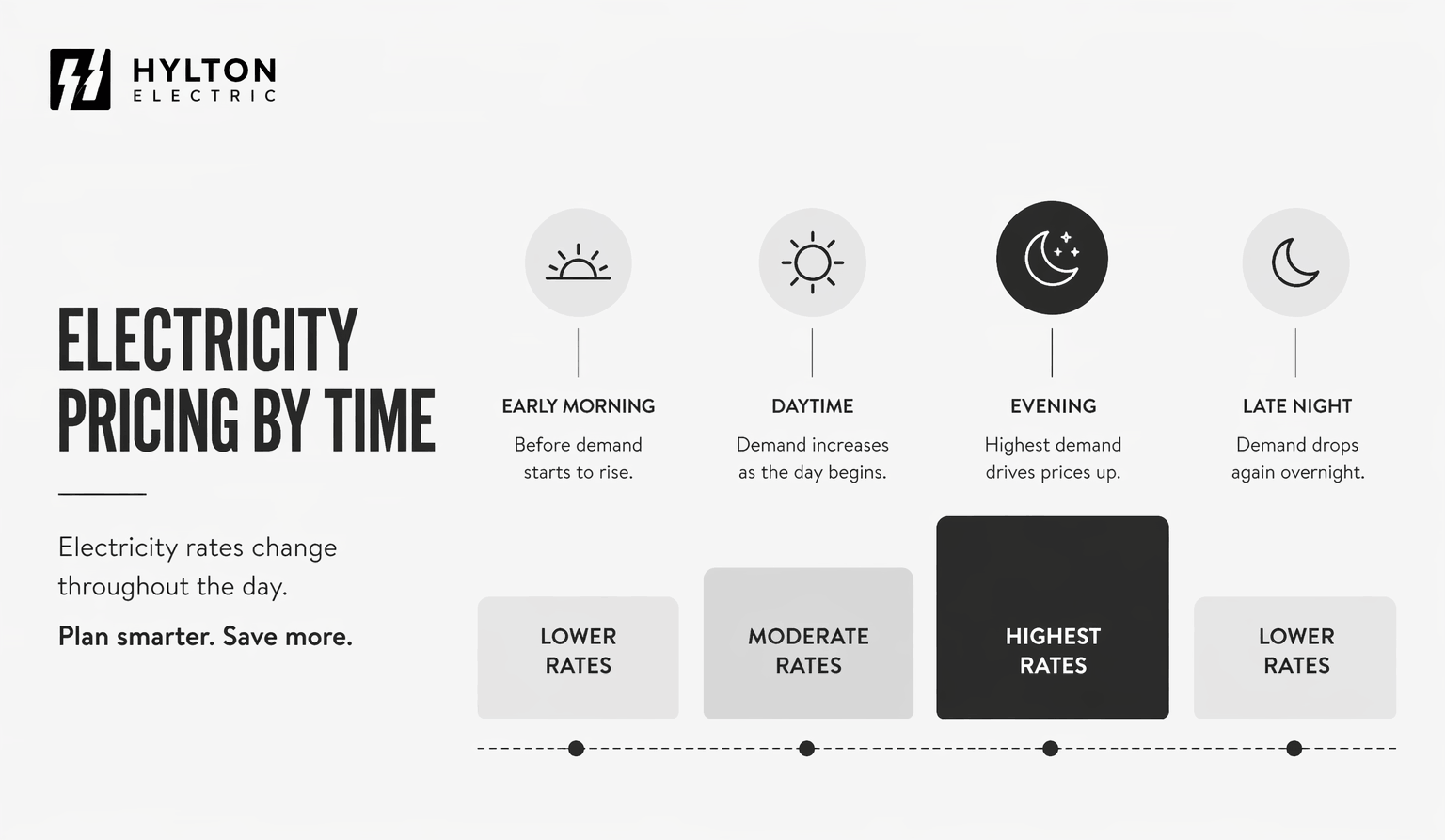
Electricity is the main operating cost for EV fleets. In Tampa, commercial electricity rates are generally stable compared to fuel prices.
On average:
-
Around $0.12 to $0.18 per kWh, depending on the plan
-
Time-of-use rates may be higher during peak hours
-
Lower rates are often available at night
This is why many fleets charge overnight. It reduces cost and avoids demand spikes.
Cost per mile for EV fleets
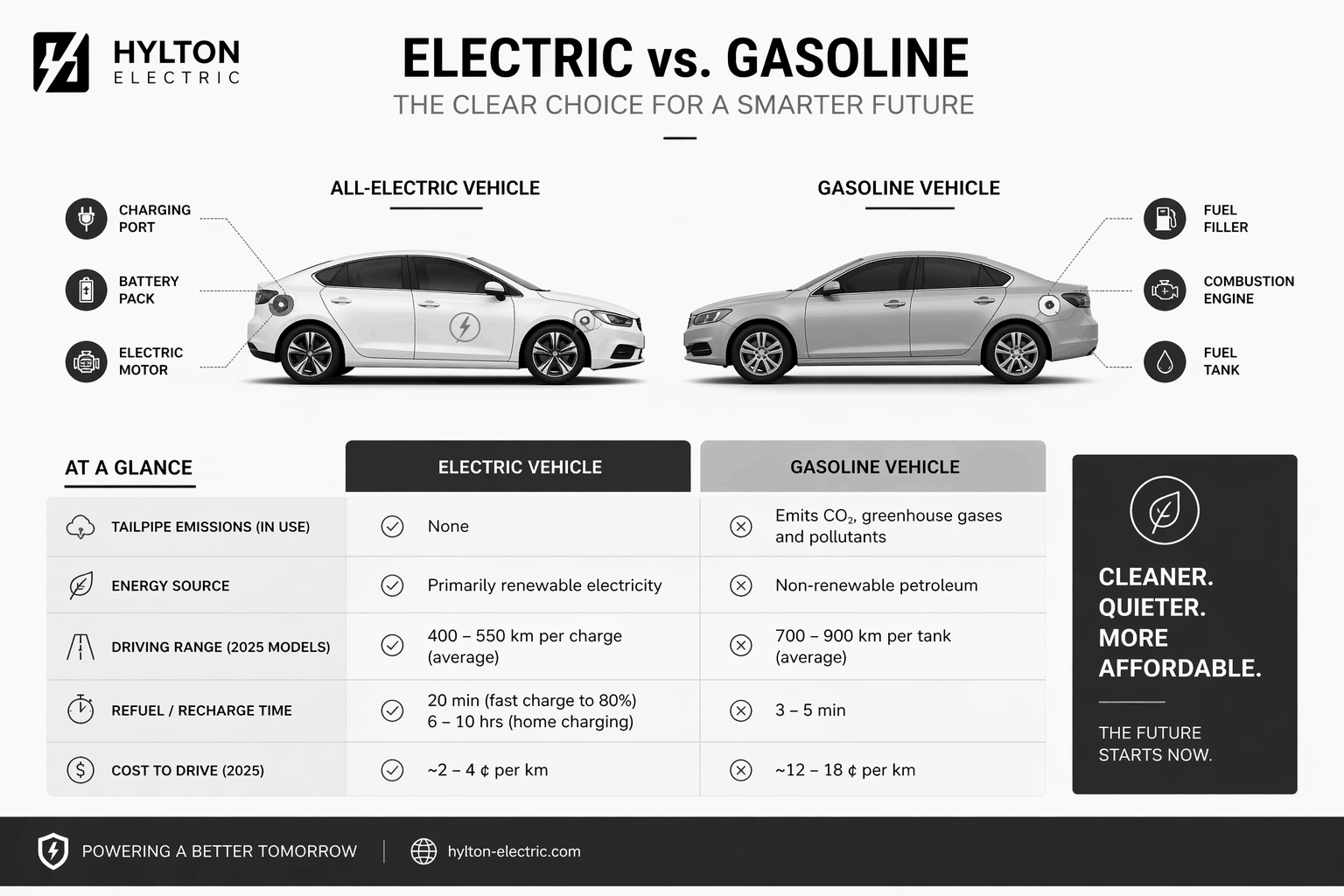
When you convert electricity into cost per mile, EVs become much more affordable than gas vehicles.
Typical estimates:
-
3 to 5 cents per mile for electric vehicles
-
10 to 15 cents per mile for gasoline vehicles (or more, depending on fuel prices)
This difference adds up quickly, especially for fleets that drive daily. For example, a vehicle driving 20,000 miles per year could save thousands in fuel costs alone.
Public vs private charging cost comparison
Many businesses start with public charging before installing their own system. However, public charging is usually more expensive.
Here’s a simple comparison:
- Public charging:
Higher per kWh cost
Possible waiting times
Less control over availability - Private fleet charging:
Lower cost per kWh
Full control over scheduling
More predictable daily operations
Over time, private charging almost always becomes the more cost-effective option for fleets.
Incentives, Tax Credits, and Rebates in Florida (2026)
One of the biggest advantages of installing EV fleet charging in 2026 is access to financial incentives. These programs can reduce your upfront cost and improve your return on investment.
For Tampa businesses, combining federal and utility incentives can make a noticeable difference in total project cost.
Federal tax credits for EV charging
The federal government continues to support EV infrastructure through tax credits. Businesses may qualify for incentives that cover a portion of installation costs.
Key highlights:
-
Up to 30% of the total project cost may be eligible
-
Applies to equipment and installation
-
Subject to eligibility requirements and location criteria
In some cases, there are caps per charger or per project. Requirements may also include wage and labor conditions. Because rules can change, it is important to confirm current eligibility before starting your project.
Utility incentives in Tampa
Local utility programs can also help reduce costs. In the Tampa area, businesses may receive support for installing EV charging infrastructure.
These incentives may include:
-
Rebates for charger installation
-
Support for electrical upgrades
-
Guidance on system design and energy planning
Utility companies often encourage off-peak charging and energy-efficient setups. Some programs may also prioritize commercial fleet projects. Checking with your utility provider early in the planning stage can help you take full advantage of available options.
How to maximize incentives
Getting the most out of incentives requires planning. Many businesses miss savings simply because they apply too late or overlook certain programs.
Here are a few practical steps:
-
Start planning early – Some incentives require pre-approval before installation
-
Work with an experienced contractor – They can guide you through available programs and paperwork
-
Combine multiple incentives – Federal, state, and utility programs can often be stacked
-
Keep proper documentation – Save invoices, permits, and installation records
When used correctly, incentives can significantly lower your initial investment. This makes EV fleet charging more accessible and financially practical for Tampa businesses.
Designing a Scalable EV Fleet Charging System
A common mistake businesses make is planning only for today. EV fleets tend to grow over time. If your system is not designed to scale, you may face higher upgrade costs later.
In Tampa, where EV adoption is increasing, it makes sense to build a system that can expand without major rework.
Planning for future fleet expansion
Even if your fleet is small today, it may double in a few years. Your charging setup should be ready for that growth.
Key planning steps include:
-
Installing extra conduit for future chargers
-
Leaving space in electrical panels
-
Planning parking layout for additional units
-
Estimating future power demand
These steps do not add much cost upfront, but they can save a lot later. Retrofitting an existing system is usually more expensive than planning ahead.
Load management and smart charging
As your fleet grows, energy demand increases. Without proper control, this can lead to high electricity bills and system overload. Load management helps distribute power efficiently across chargers.
Benefits include:
-
Prevents overloading your electrical system
-
Reduces peak demand charges
-
Allows more vehicles to charge with limited power
-
Improves overall energy efficiency
Smart charging systems can automatically adjust charging speed based on demand. This ensures all vehicles get charged without exceeding capacity.
EV-ready infrastructure vs retrofitting
There are two ways to approach EV charging:
-
Build a system now and upgrade later (retrofitting)
-
Prepare your site for future chargers from the start (EV-ready)
EV-ready infrastructure usually includes:
-
Pre-installed conduit and wiring pathways
-
Reserved electrical capacity
-
Space allocated for additional chargers
This approach is often more cost-effective. Retrofitting later may involve digging, rewiring, and downtime.
For Tampa businesses, where construction and labor costs can vary, planning early often leads to smoother expansion and fewer disruptions.
ROI and Business Benefits of Fleet Charging
Installing EV fleet charging is not just a technical upgrade. It is a financial decision. Businesses want to know how long it takes to recover costs and what benefits they gain over time.
In most cases, the return comes from lower operating costs, better efficiency, and long-term savings.
Cost savings vs fuel vehicles
The biggest advantage of EV fleets is lower fuel cost. Electricity is cheaper and more stable compared to gasoline or diesel.
Here’s how the savings build:
-
Lower cost per mile (often less than half that of fuel vehicles)
-
Reduced maintenance (fewer moving parts, no oil changes)
-
Less downtime due to fewer mechanical issues
Over time, these savings add up. For fleets with high daily usage, the difference becomes even more noticeable.
Payback period
The payback period depends on your setup cost, fleet size, and usage.
Typical estimates:
-
Level 2 charging setups: around 3 to 6 years
-
DC fast charging setups: around 5 to 8 years
Fleets that operate daily and log higher mileage usually recover costs faster. On the other hand, low-usage fleets may take longer.
Incentives and tax credits can also shorten the payback period.
Revenue opportunities
Some businesses go beyond cost savings and use charging as a revenue stream.
Possible options include:
-
Offering paid charging for visitors or the public
-
Partnering with charging networks
-
Providing charging services for other fleets
This is more common in commercial locations like hotels, retail centers, and office complexes. Even if revenue is not the main goal, having a charging infrastructure can attract customers and improve property value.
Common Mistakes to Avoid When Installing Fleet Charging
EV fleet charging can deliver strong results—but only when it’s planned correctly. Many businesses rush the process or make decisions based only on short-term needs. That often leads to higher costs and operational issues later.
Here are the most common mistakes Tampa businesses should avoid.
Underestimating electrical capacity
One of the biggest issues is not checking the available power early. Many properties do not have enough capacity to support multiple chargers.
This can lead to:
-
System overloads
-
Expensive upgrades later
-
Delays during installation
A proper electrical assessment at the start helps avoid these problems. It also gives a clear picture of what upgrades may be needed.
Choosing the wrong charger type
Not every fleet needs fast charging. At the same time, some fleets cannot rely only on slower options.
Choosing the wrong mix can cause:
-
Vehicles not being ready on time
-
Higher-than-needed installation costs
-
Inefficient daily operations
The right approach is to match charger type with your fleet’s actual usage, not assumptions.
Ignoring demand charges
Many businesses focus only on installation cost and forget about the electricity billing structure.
Without proper planning:
-
Charging during peak hours can increase bills
-
Multiple vehicles charging at once can spike demand
Using smart charging and scheduling helps control these costs.
Not planning for future expansion
Installing only what you need today may seem cost-effective, but it often leads to higher costs later.
Common issues include:
-
Limited space for additional chargers
-
Insufficient electrical capacity
-
Need for new trenching and wiring
Planning for growth early keeps expansion simple and affordable.
Skipping professional assessment
Some businesses try to reduce costs by skipping expert planning. This often leads to mistakes in design and installation.
Working with a licensed electrical contractor ensures:
-
Code compliance
-
Safe installation
-
Accurate cost estimates
-
Faster approvals and inspections
Why Work with a Licensed EV Charging Contractor in Tampa
Installing EV fleet charging is not a basic electrical job. It involves load calculations, code compliance, permitting, and coordination with the utility. A licensed contractor helps manage all of this while keeping your project on track.
For Tampa businesses, working with the right electrical professional often makes the difference between a smooth installation and costly delays.

Importance of code compliance
Commercial EV charging must meet strict electrical and safety codes. These rules are in place to protect your property, your equipment, and your team.
A licensed contractor ensures:
-
Proper wiring and load distribution
-
Compliance with Florida electrical codes
-
Safe installation that passes inspection
Failing to meet code can result in failed inspections, fines, or rework. This adds time and cost to your project.
Safety and long-term reliability
Fleet charging systems handle high electrical loads. Poor installation can lead to overheating, equipment failure, or safety risks.
Professional installation helps ensure:
-
Stable and reliable power delivery
-
Proper grounding and protection systems
-
Long-lasting equipment performance
This reduces downtime and prevents unexpected repair costs.
Faster permitting and approvals
Permitting is a key part of EV charging installation in Tampa. The process can slow down if documents are incomplete or incorrect.
Experienced contractors:
-
Understand local permitting requirements
-
Prepare accurate documentation
-
Coordinate inspections efficiently
This helps move your project forward without unnecessary delays.
Working with a licensed contractor is not just about installation. It is about getting the job done right the first time, with fewer risks and better long-term results.
EV Fleet Charging Trends in Tampa (2026 and Beyond)
EV fleet charging continues to evolve. New technologies, policies, and business needs are shaping how systems are designed and used. For Tampa businesses, staying aware of these trends helps with better planning and long-term decisions.
Growth of commercial EV infrastructure
More commercial properties are adding EV charging. This includes warehouses, office buildings, and service facilities.
As demand increases:
-
Charging infrastructure is becoming a standard feature
-
Businesses are investing earlier in EV readiness
-
Larger multi-charger systems are becoming common
This shift is making EV charging part of everyday operations, not just an add-on.
Fleet electrification policies
Government policies are encouraging businesses to move toward electric fleets. While requirements vary, the general direction is clear.
This includes:
-
Support for cleaner transportation
-
Incentives for EV adoption
-
Long-term goals to reduce emissions
Businesses that adapt early often gain a competitive advantage.
Integration with solar and battery storage
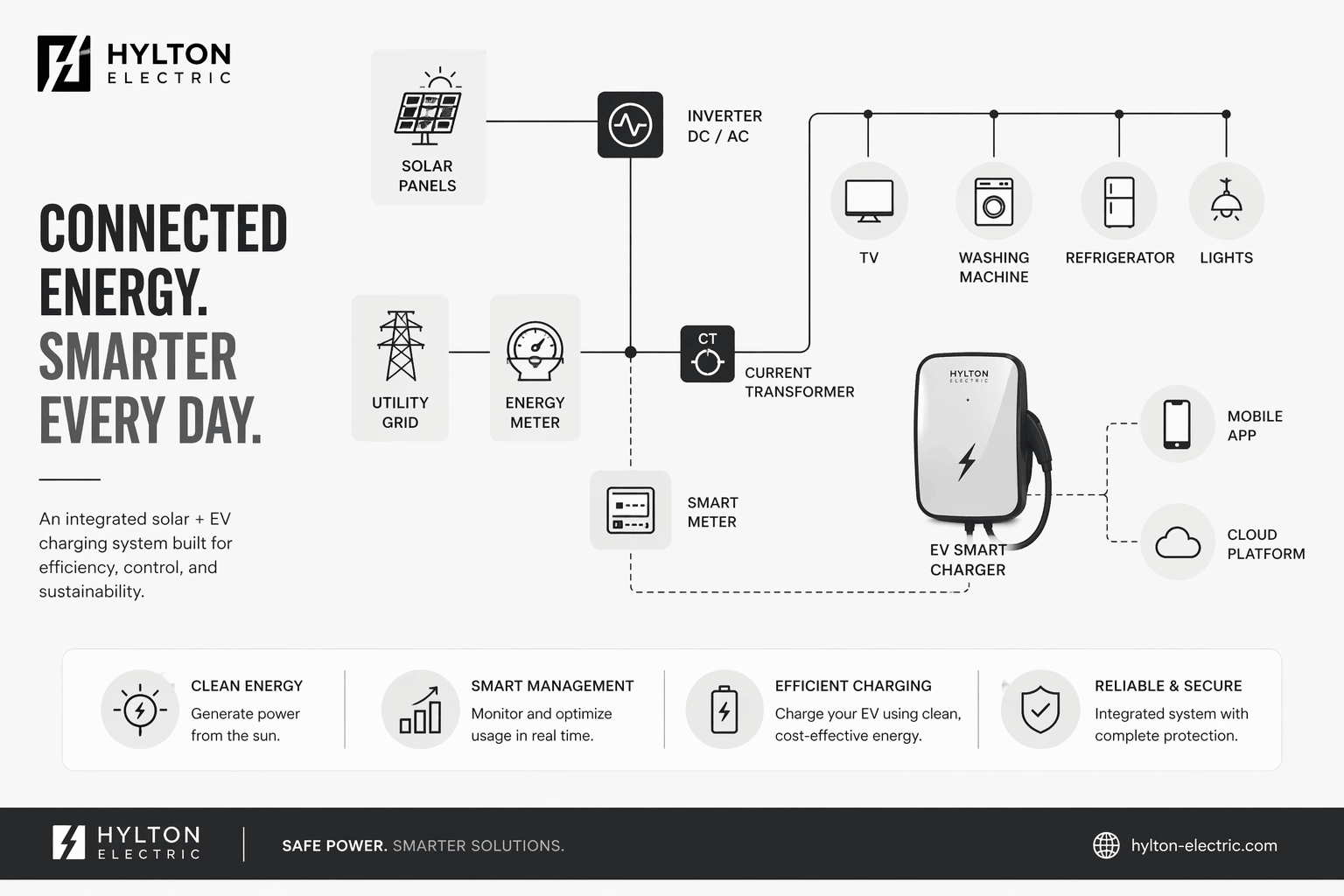
Some businesses are combining EV charging with renewable energy systems. This helps reduce reliance on the grid and control energy costs.
Common integrations include:
-
Solar panels to generate electricity
-
Battery storage to manage peak demand
-
Smart systems to balance energy use
While not required, these options are becoming more popular for companies looking to improve efficiency and sustainability.
Step-by-Step Checklist for Tampa Businesses
Planning an EV fleet charging system can feel complex. But when you break it down into clear steps, the process becomes much easier to manage. Use this checklist to stay organized and avoid missing key steps.
Define your fleet needs
Start with the basics:
-
Number of vehicles today
-
Expected fleet growth
-
Daily driving distance per vehicle
-
Available charging time (overnight or during shifts)
This step sets the foundation for your entire project.
Conduct a site and electrical assessment
Next, evaluate your property:
-
Check panel capacity and available power
-
Review parking layout and charger placement
-
Identify the distance from the power source to the charging area
This helps determine whether upgrades are needed before installation.
Choose the right charging setup
Based on your needs, select the best mix:
-
Level 2 chargers for daily charging
-
DC fast chargers if a quick turnaround is required
Also, consider adding smart charging features for better energy control.
Plan for future expansion
Think beyond your current fleet:
-
Install extra conduit for future chargers
-
Leave room in your electrical panel
-
Design layout for additional parking spots
Planning ahead reduces future costs and disruption.
Apply for permits and approvals
Before installation:
-
Submit required electrical permits
-
Ensure compliance with local Tampa codes
-
Schedule inspections
Working with a licensed contractor can make this step faster and smoother.
Install and test the system
During installation:
-
Complete wiring and mounting
-
Connect chargers to the power supply
-
Test all units for proper operation
Make sure everything is working before full use.
Set up software and monitoring
After installation:
-
Configure charging schedules
-
Set user access controls
-
Monitor energy usage and costs
This helps you manage operations efficiently from day one.
Train your team
Ensure your staff understands how to use the system:
-
Basic charging procedures
-
Safety guidelines
-
Reporting any issues
A trained team helps avoid mistakes and downtime.
Monitor and optimize performance
Once your system is running:
-
Track energy usage and costs
-
Adjust charging schedules if needed
-
Plan upgrades as your fleet grows
Regular monitoring keeps your system efficient over time.
Following this checklist helps keep your project on track. It also reduces the risk of delays, unexpected costs, or operational issues.
Final Thoughts: Is EV Fleet Charging Worth It in Tampa?
For many businesses, the answer is yes—but only when it is planned correctly.
EV fleet charging requires upfront investment. However, the long-term benefits often outweigh the initial cost. Lower fuel expenses, reduced maintenance, and better operational control all contribute to strong returns over time.
In Tampa, the shift toward electric fleets is already happening. Businesses that act early can take advantage of incentives, lower operating costs, and a more efficient system.
At the same time, success depends on proper planning. Choosing the right charger type, preparing your electrical system, and working with experienced professionals all play a role.
In simple terms, EV fleet charging is not just about installing equipment. It is about building a system that supports your business now and in the future.
When done right, it becomes a reliable, cost-effective part of your daily operations.
FAQs: EV Fleet Charging Setup and Cost in Tampa, Florida
What is EV fleet charging, and how does it work?
EV fleet charging is a dedicated system that allows businesses to charge multiple electric vehicles at their own facility instead of relying on public stations. It is designed for efficiency, control, and predictable daily operations.
In practice, vehicles are plugged into installed chargers—usually Level 2 or DC fast—during idle periods such as overnight or between shifts. A central system manages how electricity is distributed.
Key elements include:
-
Chargers installed at a depot, office, or warehouse
-
Power supplied through your building’s electrical system
-
Smart software to control timing and energy use
This setup ensures vehicles are always ready, reduces reliance on public infrastructure, and gives businesses full control over cost and scheduling.
How much does EV fleet charging installation cost in Tampa?
The cost of installing EV fleet charging in Tampa varies widely based on charger type, electrical capacity, and site conditions. However, most projects fall within predictable ranges.
Typical costs include:
-
Level 2 chargers: $6,000 to $15,000 per unit
-
DC fast chargers: $75,000 to $150,000 per unit
Several factors influence total cost:
-
Electrical upgrades (often the largest expense)
-
Distance between the power source and the chargers
-
Number of charging ports installed
-
Site work, such as trenching or paving
While upfront costs can be significant, incentives and long-term fuel savings often balance the investment. Planning properly from the start helps avoid unexpected expenses later.
What type of charger is best for EV fleets?
The best charger type depends on how your fleet operates each day. Most businesses do not rely on a single type but instead use a mix for efficiency.
Common approach:
-
Level 2 chargers for overnight or long-duration charging
-
DC fast chargers for quick turnaround during the day
Level 2 is ideal for fleets with predictable routes and downtime. DC fast charging is better for high-mileage or multi-shift operations.
Choosing the right setup helps:
-
Ensure vehicles are always ready
-
Avoid unnecessary installation costs
-
Improve overall energy efficiency
A tailored combination usually delivers the best results for both performance and cost control.
How long does it take to install EV fleet charging?
The timeline for installation depends on project size, permitting, and whether electrical upgrades are needed.
Typical timeframes:
-
Small projects: 2 to 6 weeks
-
Medium to large projects: 2 to 6 months
Key factors that affect timing:
-
Permit approval process
-
Availability of electrical capacity
-
Utility coordination for power upgrades
-
Site construction requirements
Delays are most common when additional power is required from the utility. Starting early and working with an experienced contractor can help keep the project on schedule.
Are there incentives for EV charging in Florida?
Yes, businesses installing EV charging in Florida can access several financial incentives that reduce upfront costs.
These may include:
-
Federal tax credits covering up to 30% of project cost
-
Utility rebates or support programs
-
Local incentives depending on the provider
To qualify, businesses often need to:
-
Meet location and usage requirements
-
Apply before installation begins
-
Provide proper documentation
Combining multiple incentives can significantly lower total investment. Because programs change over time, it is important to verify current eligibility before starting your project.
What are the operating costs of EV fleet charging?
Operating costs mainly depend on electricity usage, which is generally lower and more stable than fuel costs.
Typical costs in Tampa:
-
Electricity: $0.12 to $0.18 per kWh
-
EV cost per mile: 3 to 5 cents
Additional ongoing expenses may include:
-
Software subscription fees
-
Basic maintenance
-
Demand charges based on peak usage
Even with these added costs, EV fleets are usually cheaper to operate than gasoline vehicles. The more frequently vehicles are used, the greater the cost advantage becomes over time.
Can EV fleet charging reduce business expenses?
Yes, EV fleet charging can significantly reduce long-term business expenses, especially for companies with high daily vehicle usage.
Savings come from:
-
Lower fuel costs compared to gasoline or diesel
-
Reduced maintenance (fewer moving parts)
-
Less downtime due to simpler systems
For example, electric vehicles do not require oil changes or complex engine repairs. Electricity prices are also more stable than fuel prices.
While initial setup costs can be high, many businesses recover their investment within a few years. Over time, these savings contribute to improved profitability and more predictable operating costs.
What is the difference between Level 2 and DC fast charging?
The main difference between Level 2 and DC fast charging is speed, cost, and use case.
Level 2 charging:
-
Adds 10–25 miles of range per hour
-
Lower installation cost
-
Best for overnight charging
DC fast charging:
-
Charges up to 80% in 20–60 minutes
-
Higher installation and equipment cost
-
Ideal for high-demand fleets
Most businesses rely on Level 2 for daily needs and use DC fast charging only when a quick turnaround is required. This combination helps balance cost and efficiency.
Do I need electrical upgrades for EV fleet charging?
In many cases, electrical upgrades are required, especially for older buildings or large fleets.
Common upgrades include:
-
Increasing panel capacity
-
Installing new circuits
-
Upgrading transformers
These upgrades ensure:
-
Safe operation of chargers
-
Enough power for multiple vehicles
-
Compliance with electrical codes
Electrical work often represents a large portion of the total project cost. A detailed site assessment helps identify these needs early and prevents delays during installation.
How many chargers does my fleet need?
The number of chargers depends on your fleet size, usage patterns, and available charging time.
Key factors include:
-
Number of vehicles
-
Daily mileage
-
Time available for charging
For example:
-
Fleets with overnight charging may need fewer chargers
-
High-use fleets may require more chargers or faster units
A professional load calculation helps determine the optimal setup. It is also important to plan for future expansion so you do not outgrow your system too quickly.
Can I charge multiple vehicles at the same time?
Yes, multiple vehicles can be charged at once, but it depends on your electrical capacity and system design.
Charging many vehicles simultaneously can:
-
Increase peak demand
-
Raise electricity costs
-
Strain your electrical system
Smart charging systems help manage this by:
-
Distributing power across chargers
-
Scheduling charging times
-
Preventing overload
With proper planning, businesses can charge multiple vehicles efficiently without exceeding system limits or increasing costs unnecessarily.
What are demand charges in EV charging?
Demand charges are additional electricity costs based on your highest power usage during a billing period, not just total energy consumed.
They occur when:
-
Many chargers operate at once
-
High-powered chargers draw large amounts of electricity
These charges can significantly increase operating costs if not managed properly.
To reduce demand charges:
-
Use smart charging systems
-
Schedule charging during off-peak hours
-
Limit simultaneous charging sessions
Understanding demand charges is essential for controlling long-term energy costs in fleet charging systems.
Is EV fleet charging better than public charging?
For most businesses, private fleet charging is more efficient and cost-effective than relying on public stations.
Private charging offers:
-
Lower electricity cost per kWh
-
Full control over charging schedules
-
No waiting or availability issues
Public charging:
-
Typically costs more
-
May involve downtime
-
Is less predictable
For fleets that operate daily, private charging provides better reliability and long-term savings, making it the preferred option.
How long does it take to charge an EV fleet vehicle?
Charging time depends on the charger type and battery size.
Typical estimates:
-
Level 2 charging: 6 to 10 hours for a full charge
-
DC fast charging: 20 to 60 minutes to reach 80%
Most fleets charge vehicles overnight using Level 2 chargers. Faster charging is used when vehicles need to return to service quickly.
Choosing the right charger type ensures vehicles are ready without unnecessary delays or added costs.
What maintenance do EV chargers require?
EV chargers require relatively low maintenance compared to traditional fuel systems.
Routine maintenance includes:
-
Inspecting cables and connectors
-
Updating software
-
Checking system performance
Most issues are minor and can be resolved quickly. Regular maintenance helps:
-
Extend equipment lifespan
-
Ensure safe operation
-
Prevent unexpected downtime
Overall, maintenance costs are low and predictable, making EV charging systems easier to manage over time.
Can EV charging systems be expanded later?
Yes, EV charging systems can be expanded, but planning ahead makes the process much easier and more cost-effective.
Expansion may involve:
-
Adding new chargers
-
Increasing electrical capacity
-
Updating software systems
Installing extra conduit and reserving panel space early can:
-
Reduce future construction costs
-
Avoid operational disruptions
A scalable design ensures your system can grow with your fleet without major upgrades later.
What industries benefit most from EV fleet charging?
Several industries benefit from EV fleet charging, especially those with predictable routes and centralized operations.
Common examples include:
-
Delivery and logistics companies
-
Service contractors (HVAC, electrical, plumbing)
-
Corporate fleets
-
Hospitality businesses
These industries often return vehicles to a central location, making charging convenient and efficient.
EV charging helps reduce operating costs and improves reliability, making it a practical solution for many business types.
Is EV fleet charging reliable for daily operations?
Yes, EV fleet charging is reliable when properly designed and installed.
Reliability depends on:
-
Adequate electrical capacity
-
Proper charger selection
-
Regular maintenance
Private charging systems reduce dependence on public stations, which can be inconsistent.
With the right setup, businesses can ensure vehicles are charged and ready each day, supporting smooth and predictable operations.
What permits are required for EV charging in Tampa?
Commercial EV charging installations in Tampa require permits and inspections to ensure safety and code compliance.
Typical requirements include:
-
Electrical permits
-
Site plan approval
-
Final inspection after installation
Permitting ensures:
-
Safe installation
-
Compliance with local regulations
-
Approval from authorities
Working with a licensed contractor helps streamline this process and reduces the risk of delays or rejected applications.
How can I get started with EV fleet charging?
Getting started begins with understanding your fleet’s needs and evaluating your site.
Basic steps include:
-
Assessing fleet size and usage
-
Checking electrical capacity
-
Planning charger placement
After that:
-
Apply for permits
-
Install and test the system
-
Set up monitoring and controls
Working with an experienced contractor helps simplify the process and ensures your system is designed correctly from the beginning.
Leave a Reply