
Key Electrical Statistics
Average U.S. electrician hourly rate: $50–$100 (BLS wage data)
70% of homes older than 25 years need electrical upgrades (ESFI)
Tampa permits required for most electrical upgrades (City of Tampa)
Energy-efficient upgrades can reduce electricity costs by 10–30% (DOE)
Average Electrical Work Cost in Tampa
Electrical work in Tampa typically costs more than in smaller cities. This is due to higher demand, stricter codes, and skilled labor availability. On average, most projects fall within a broad range depending on complexity.
Small residential jobs may cost between $150 and $500. Mid-size projects like panel upgrades range from $1,500 to $4,000. Larger commercial or industrial projects often exceed $10,000. These numbers reflect both labor and material costs.
Several factors influence pricing. Property type plays a major role. Residential jobs are usually simpler, while commercial and industrial systems require more planning and compliance. Accessibility also matters. Tight spaces or older wiring systems increase labor time. Emergency calls cost more because they require immediate service and after-hours work.
Tampa’s climate also affects costs. High humidity and storms can damage electrical systems over time. This often leads to repairs or upgrades that would not be needed in milder climates.
Typical Hourly Rates
Electricians in Tampa generally charge between $75 and $150 per hour. Rates vary based on experience and certification level.
Apprentice electricians: $50–$75 per hour
Licensed electricians: $75–$120 per hour
Master electricians: $100–$150+ per hour
Most companies also charge a service call fee. This usually ranges from $75 to $150. It covers travel, inspection, and basic diagnostics. Even small jobs often have a minimum charge to account for labor time.
Cost Per Project Type
Many electrical contractors prefer flat-rate pricing instead of hourly billing. This approach gives customers a clear upfront cost. It also reduces surprises once the job begins.
Flat rates are common for:
Panel upgrades
EV charger installations
Lighting installations
Generator setups
Smaller jobs, like troubleshooting or minor repairs, may still use hourly billing. Larger projects usually include a full estimate covering labor, materials, and permits.
Electrical Cost Breakdown by Service Type (Tampa)
Understanding costs by service type helps you plan better. Each category has its own pricing structure based on complexity and materials.

Residential Electrical Costs
Residential electrical work is usually the most affordable. However, costs can still vary depending on the age of the home and system condition.
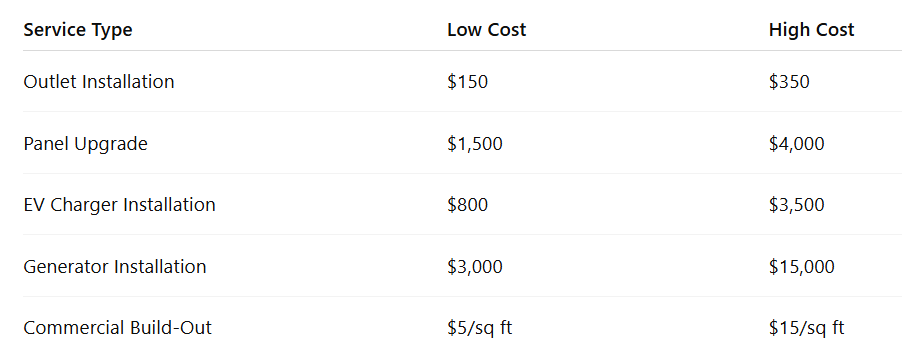
Outlet installation: $150–$350
Ceiling fan installation: $200–$600
Panel upgrades: $1,500–$4,000
Full home rewiring: $6,000–$15,000+
Lighting installation: $200–$800
Older homes in Tampa often require additional work. This includes replacing outdated wiring or upgrading panels to meet modern power demands. These factors can increase costs significantly.
Commercial Electrical Costs
Commercial projects are more complex. They require higher power capacity, code compliance, and detailed planning.
Tenant build-outs: $5–$15 per square foot
Lighting retrofits: $3,000–$20,000
Electrical system upgrades: $10,000+
Panel and distribution systems: $5,000–$30,000
Commercial properties also need inspections and permits. These add to the total cost but ensure safety and compliance.
Industrial Electrical Costs
Industrial work involves heavy-duty systems and specialized equipment. Costs are higher due to scale and complexity.
Equipment wiring: $5,000–$50,000+
Generator systems: $10,000–$100,000+
Facility upgrades: project-based pricing
Power distribution systems: $20,000+
Industrial projects often require custom solutions. This makes accurate estimates essential before starting work.
Average Cost Ranges by Electrical Service Type in Tampa
Cost of Popular Electrical Upgrades in Tampa
Electrical upgrades are one of the most common reasons people hire electricians. These upgrades improve safety, increase efficiency, and support modern power needs.
EV Charger Installation Costs
Electric vehicle adoption is growing rapidly in Tampa. Many homeowners and businesses are installing EV chargers to keep up.
Level 1 chargers are the simplest option. They use standard outlets and cost less to install. Level 2 chargers are more common. They require dedicated circuits and often a panel upgrade.
Typical costs include:
Level 1 installation: $300–$800
Level 2 installation: $800–$3,500
Panel upgrade (if needed): $1,500–$4,000
Permit fees may also apply. Installation costs depend on wiring distance, panel capacity, and charger type.
What is Level 1 vs Level 2 Charging: Understand the Difference
Generator Installation Costs
Generators provide backup power during outages. In Tampa, storms and hurricanes make it a popular investment. Portable generators are cheaper but less powerful. Whole-home generators offer full coverage but cost more.
Portable generator setup: $500–$2,000
Whole-home generator installation: $3,000–$15,000+
Commercial generator systems: $10,000–$100,000+
Fuel type also affects pricing. Natural gas systems are common in urban areas, while diesel systems are used in industrial settings.
Panel Replacement Costs
Electrical panels are the heart of any system. Upgrading them ensures safe and reliable power distribution. Costs vary based on amperage and complexity:
100-amp panel: $1,200–$2,500
200-amp panel: $2,000–$4,000
400-amp panel: $4,000–$8,000+
Older panels may not meet current code requirements. Replacing them reduces the risk of overloads and electrical fires.
What Affects Electrical Costs in Tampa
Electrical pricing is never fixed. Several factors influence the final cost of any project. Understanding these factors helps you plan better and avoid unexpected expenses.
Permits and Inspections
Most electrical work in Tampa requires permits. These ensure the work meets safety standards and local codes. Permit costs typically range from $100 to $500 or more.
Inspections are also required after completion. While they add time and cost, they protect property owners from future issues. Skipping permits may seem cheaper, but it often leads to fines or rework.
Labor Demand and Market Rates
Tampa’s growth has increased demand for skilled electricians. This has pushed labor rates slightly higher than national averages. Experienced electricians charge more, but they also deliver higher-quality work.
Choosing a licensed professional ensures compliance and reduces long-term risks. It also helps avoid costly mistakes that come from inexperienced work.
Property Age and Condition
Older buildings often have outdated wiring systems. These may not support modern electrical loads. Upgrading them requires more labor and materials, which increases costs.
Common issues in older properties include:
Aluminum wiring
Undersized panels
Lack of grounding systems
Fixing these problems is essential for safety and reliability.
Emergency vs Scheduled Work
Emergency electrical work costs more than scheduled jobs. This is because it requires immediate response and often happens outside normal hours.
Emergency rates are usually 1.5 to 2 times higher than standard rates. Planning upgrades in advance helps avoid these extra costs.
Signs You Need Electrical Work or Upgrades
Electrical systems rarely fail without warning. Most issues develop slowly and show clear signs before becoming serious problems. Recognizing these early can save money and prevent safety risks.
Frequent breaker trips are one of the most common indicators. This often means your system is overloaded or outdated. Flickering lights are another warning sign. They usually point to loose wiring or voltage fluctuations. If you notice burning smells or buzzing sounds, the issue may already be severe. These symptoms should never be ignored.
Older homes and buildings in Tampa often struggle to meet modern power demands. Appliances, EV chargers, and HVAC systems require more capacity than older wiring can handle. If your property still uses a fuse box or an outdated panel, an upgrade is likely necessary.
Watch for these common warning signs:
Breakers trip frequently without heavy usage
The lights dim when appliances turn on
Outlets feel warm or emit a burning odor
Extension cords are used as a permanent solution
Electrical system struggles with new equipment
Addressing these issues early prevents costly repairs later. It also ensures your system remains safe and compliant with local codes.
Need a clear estimate for your project? Call +1 863-624-7000 or email ray@hylton-electric.com. We offer free quotes for commercial and industrial projects across Lakeland, Polk County, and Tampa.
Step-by-Step: How Electrical Work Pricing Is Calculated
Understanding how electricians calculate pricing helps you evaluate quotes more confidently. While each contractor may use a slightly different method, most follow a similar process.
First, the electrician performs an inspection. This step identifies existing issues, system capacity, and potential risks. It also helps determine whether upgrades are required before new installations.
Next comes load calculation. This step ensures the system can safely handle current and future electrical demand. It is especially important for panel upgrades, EV chargers, and commercial projects.
After that, materials are estimated. This includes wiring, panels, breakers, fixtures, and any specialized components. Prices vary depending on quality and availability.
Labor is then calculated based on the time required to complete the job. Complex projects, tight spaces, and older systems increase labor hours.
The final steps include permits and overhead costs. Permits ensure compliance, while overhead covers insurance, equipment, and administrative work.
Typical pricing process:
Site inspection and system evaluation
Load and capacity calculations
Material selection and cost estimation
Labor time assessment
Permit and inspection inclusion
Final detailed quote
This structured approach ensures transparency and accurate pricing. It also helps avoid unexpected costs once the project begins.
Common Mistakes That Increase Electrical Costs
Many property owners unknowingly increase their electrical costs through avoidable mistakes. These errors often lead to rework, safety issues, or higher long-term expenses.
Hiring unlicensed electricians is one of the biggest risks. While the initial price may seem lower, poor workmanship can result in costly repairs later. It can also void insurance coverage if something goes wrong.
Ignoring small issues is another common mistake. Minor problems like flickering lights or loose outlets can escalate into major repairs if left unchecked. Addressing them early is always more cost-effective.
DIY electrical work is also risky. Electrical systems are complex and require proper training. Incorrect installations can cause fires, equipment damage, or code violations.
Other costly mistakes include:
Skipping permits to save money
Choosing the cheapest quote without proper inspection
Delaying necessary upgrades
Using low-quality materials
Avoiding these mistakes ensures your electrical system remains safe, efficient, and cost-effective over time.
Tampa Case Example (Realistic Scenario)
To understand real-world pricing, consider a small commercial project in Tampa. A retail business needed a lighting upgrade and panel improvement to support new equipment.
The project included replacing outdated fluorescent fixtures with energy-efficient LED lighting. It also required upgrading the electrical panel to handle increased load.
Here’s the cost breakdown:
Materials (LED fixtures, wiring, panel): $4,000
Labor (installation and wiring): $3,500
Permits and inspections: $300
Total project cost: approximately $7,800
The upgrade improved lighting quality and reduced energy consumption. The business also experienced fewer maintenance issues after the upgrade. Over time, the energy savings helped offset the initial investment.
This example shows how electrical work is not just an expense. It can also provide long-term value through efficiency and reliability.
When to Hire a Licensed Electrician in Tampa
Electrical work is not something to take lightly. Hiring a licensed electrician ensures the job is done safely and correctly. It also guarantees compliance with Tampa’s building codes.
Certain projects always require professional expertise. These include panel upgrades, new wiring installations, and commercial electrical work. Attempting these tasks without proper training can lead to serious risks.
Licensed electricians bring several advantages. They understand local regulations and inspection requirements. They also have the tools and experience to handle complex systems efficiently.
Key benefits of hiring a licensed electrician:
Work meets local and national electrical codes
Reduced risk of electrical fires or system failure
Insurance coverage for completed work
Access to proper permits and inspections
Reliable and long-lasting results
In Tampa’s climate, where storms and humidity can affect electrical systems, professional installation becomes even more important. A properly installed system is more durable and better equipped to handle environmental stress.
Future Trends Impacting Electrical Costs
Electrical systems are evolving quickly. New technologies and changing energy demands are shaping how electrical work is planned and priced in Tampa.
One major trend is the rise of electric vehicles. As more people switch to EVs, demand for home and commercial charging stations continues to grow. This increases the need for panel upgrades and dedicated circuits.
Smart home technology is another growing factor. Systems like automated lighting, smart panels, and energy monitoring tools require more advanced wiring and integration. These upgrades add to initial costs but improve efficiency and control.
Energy efficiency is also becoming a priority. Many property owners are switching to LED lighting and energy-saving systems. While these upgrades require upfront investment, they reduce long-term operating costs.
Key trends influencing pricing:
Increased demand for EV charging infrastructure
Integration of smart electrical systems
Rising material costs due to supply chain changes
Focus on energy-efficient upgrades
As these trends continue, electrical work will become more specialized. This may increase costs slightly but also improve performance and sustainability.
Conclusion
Electrical work costs in Tampa vary based on project type, property condition, and urgency. Small repairs may cost a few hundred dollars, while larger upgrades can reach several thousand. Understanding how much electrical work costs helps you plan better and avoid unexpected expenses.
Investing in professional electrical services ensures safety, reliability, and long-term value. Whether you’re upgrading a panel, installing a generator, or improving lighting, proper planning makes a significant difference.
Have questions about your electrical project? Reach out at +1 863-624-7000 or ray@hylton-electric.com. We’re here to help across Tampa, Lakeland, and Polk County with honest guidance.
FAQs About How Much Does Electrical Work Cost in Tampa, FL
How much does it cost to hire an electrician in Tampa?
Hiring an electrician in Tampa typically costs between $75 and $150 per hour. The exact rate depends on experience, licensing level, and job complexity. Many electricians also charge a service call fee, usually between $75 and $150.
For small jobs, hourly pricing is common. Larger projects often use flat-rate pricing, which includes labor, materials, and permits. Emergency services usually cost more, often 1.5 to 2 times standard rates.
Factors that affect pricing include:
Type of work (repair vs installation)
Property size and condition
Accessibility of wiring
Urgency of the job
Understanding these factors helps you evaluate quotes more accurately.
Why is electrical work expensive?
Electrical work may seem costly, but it reflects the skill, safety, and responsibility involved. Electricians undergo extensive training to handle complex systems safely. They must also follow strict building codes and regulations.
The cost includes more than just labor. It covers materials, tools, insurance, permits, and inspections. High-quality components are essential for long-term reliability and safety.
Electrical systems also carry risks. Poor installation can lead to fires, equipment damage, or serious injuries. Paying for professional work reduces these risks and ensures compliance.
In many cases, higher upfront costs lead to lower long-term expenses. Reliable installations require fewer repairs and perform more efficiently.
Do I need a permit for electrical work in Tampa?
Yes, most electrical work in Tampa requires a permit. This includes panel upgrades, new wiring, and major installations. Permits ensure that work meets local safety codes and standards.
The process usually involves submitting an application, paying a fee, and scheduling inspections. Permit costs typically range from $100 to $500, depending on the project.
Skipping permits can lead to serious consequences. You may face fines, failed inspections, or issues when selling the property. Insurance claims may also be denied if unpermitted work causes damage.
Working with a licensed electrician simplifies the process. They handle permits and ensure all work complies with regulations.
How much does it cost to upgrade an electrical panel?
Upgrading an electrical panel in Tampa typically costs between $1,500 and $4,000. The final price depends on the panel size, wiring condition, and labor complexity. A standard 100-amp upgrade is usually on the lower end, while a 200-amp upgrade costs more due to higher capacity and additional materials.
Several factors influence the cost:
Panel amperage (100A, 200A, or higher)
Distance from the utility connection
Condition of existing wiring
Permit and inspection requirements
Older homes often need extra work during panel upgrades. This may include grounding improvements or replacing outdated wiring. While the upfront cost may seem high, a modern panel improves safety and supports today’s electrical demands.
What is the cost of rewiring a house?
Rewiring a house in Tampa can cost anywhere from $6,000 to $15,000 or more. The price depends on the size of the home, accessibility, and existing wiring condition. Larger homes or those with complex layouts will cost more.
Older properties often require full rewiring due to outdated systems. These may include aluminum wiring or ungrounded circuits, which are no longer considered safe.
Key factors that affect rewiring costs:
Square footage of the home
Number of rooms and circuits
Accessibility behind walls and ceilings
Need for panel upgrades
Rewiring is a major project, but it significantly improves safety and reliability. It also increases property value and ensures compliance with current codes.
How much does EV charger installation cost?
EV charger installation in Tampa typically ranges from $800 to $3,500 for Level 2 chargers. Level 1 chargers cost less but are slower and less common for daily use.
The total cost depends on several factors:
Distance between panel and charger location
Panel capacity and upgrade requirements
Type of charger installed
Permit and inspection fees
In some cases, a panel upgrade is necessary to support the charger. This can add $1,500 to $4,000 to the total cost. Despite the upfront investment, EV chargers offer convenience and long-term savings.
Are electrical estimates free?
Many electrical contractors offer free estimates, especially for larger projects. Commercial and industrial clients often receive detailed quotes at no cost. For smaller residential jobs, some electricians may charge a service fee for inspections.
Free estimates usually include:
Initial site evaluation
Basic cost breakdown
Recommended solutions
However, more complex projects may require a detailed assessment. This can involve load calculations or design planning, which may carry a fee. It’s always best to confirm upfront whether the estimate is free. This avoids confusion and ensures transparency.
How can I reduce electrical project costs?
Reducing electrical costs is possible with proper planning and smart decisions. The key is to avoid emergency work and address issues early.
Here are practical ways to save:
Schedule work during regular hours
Bundle multiple upgrades into one project
Choose energy-efficient solutions
Maintain your electrical system regularly
Avoid cutting corners by hiring unlicensed electricians. While it may seem cheaper initially, it often leads to higher long-term costs.
Planning ahead also allows you to compare quotes and choose the best option. This ensures quality work at a fair price.
How long does electrical work take?
The time required for electrical work depends on the project size and complexity. Small jobs like outlet replacements may take one to two hours. Larger projects, such as panel upgrades, typically take one to two days.
More complex work, like full rewiring or commercial installations, can take several days or even weeks.
Factors that affect timelines include:
Scope of the project
Accessibility of wiring
Permit and inspection schedules
Availability of materials
Proper planning helps avoid delays. Working with an experienced electrician ensures the job is completed efficiently and safely.
Is DIY electrical work safe?
DIY electrical work is generally not recommended. Electrical systems are complex and can be dangerous without proper training. Even small mistakes can lead to serious consequences.
Risks of DIY electrical work include:
Electrical shocks or injuries
Fire hazards due to faulty wiring
Code violations and failed inspections
Insurance issues if damage occurs
Licensed electricians follow strict safety standards and local codes. They also have the tools and experience needed for safe installations.
Hiring a professional ensures the work is done correctly and reduces long-term risks.
What affects commercial electrical costs?
Commercial electrical costs are influenced by several factors. These projects are more complex than residential work and require detailed planning.
Key factors include:
Building size and layout
Power requirements and load capacity
Type of business operations
Lighting and equipment needs
Compliance with local codes also plays a major role. Commercial properties must meet strict safety standards, which can increase costs.
Despite higher upfront expenses, proper electrical systems improve efficiency and reduce maintenance costs over time.
How often should electrical systems be inspected?
Electrical systems should be inspected regularly to ensure safety and performance. For residential properties, inspections every 3 to 5 years are recommended. Older homes may require more frequent checks.
Commercial and industrial properties often need annual inspections due to higher usage and regulatory requirements.
Regular inspections help identify:
Worn or damaged wiring
Overloaded circuits
Outdated components
Potential safety hazards
Early detection prevents costly repairs and reduces the risk of system failure. It also ensures compliance with local regulations.
Planning electrical work? Call +1 863-624-7000 or email ray@hylton-electric.com for guidance or a free commercial/industrial quote. Serving Tampa, Lakeland, and Polk County.
References
U.S. Bureau of Labor Statistics (BLS): Electrician Wages
Electrical Safety Foundation International (ESFI): Home Electrical Safety
U.S. Department of Energy (DOE): Energy Saver Guide
City of Tampa: Construction Services and Permits
Leave a Reply