

Electricity powers almost everything in a modern home or business. From air conditioners and lighting to EV chargers and industrial equipment, every device adds demand to your electrical system.
The problem is that many people do not know how much power their property actually uses. As a result, they may overload circuits, install equipment that exceeds panel capacity, or plan upgrades without understanding their electrical needs.
This is where an electrical load calculator becomes useful.
An electrical load calculator helps estimate how much electricity a building needs. It adds the power requirements of appliances, lighting, HVAC systems, and other equipment. The results can help determine whether your existing electrical service is adequate or if upgrades may be needed.
For homeowners, load calculations are often important before adding an EV charger, installing a standby generator, remodeling a home, or upgrading an electrical panel.
For businesses and industrial facilities, electrical load calculations help with expansion projects, equipment additions, lighting upgrades, and power distribution planning.
While online calculators can provide a helpful starting point, accurate load calculations often require professional evaluation, especially for commercial and industrial projects.
In this guide, you will learn how an electrical load calculator works, what information you need before using one, and how to calculate electrical demand step by step.
What Is an Electrical Load Calculator?
An electrical load calculator is a tool used to estimate the total electrical demand of a home, commercial building, or industrial facility.
It works by adding the electrical requirements of various devices and systems throughout a property. The final result helps determine how much power the building needs and whether the existing electrical service can handle that demand.
Think of it as a planning tool.
Instead of guessing whether your electrical panel is large enough, a load calculator provides a data-based estimate of your electrical requirements.
What an Electrical Load Calculator Measures
An electrical load calculator measures the expected demand placed on an electrical system.
This may include:
-
Lighting systems
-
Air conditioning equipment
-
Heating systems
-
Water heaters
-
Kitchen appliances
-
Laundry equipment
-
Office equipment
-
Manufacturing equipment
-
EV charging stations
-
Future electrical additions
The goal is to determine the total amount of electricity the property may require during normal operation.
How Electrical Load Calculators Work
Most calculators follow a simple process. First, they collect information about the property and its electrical equipment. Next, they estimate the power requirements of each load. Finally, they apply calculation methods to determine total demand.
Most calculations involve:
-
Wattage
-
Voltage
-
Amperage
-
Demand factors
-
Continuous loads
The result is usually displayed as total electrical demand or required service size.
Residential vs Commercial Electrical Load Calculators
The basic concept is the same for every property type. However, the complexity can vary significantly.
Residential Calculators
Residential calculations usually focus on:
-
Square footage
-
HVAC systems
-
Appliances
-
Lighting
-
EV chargers
-
Water heaters
These calculations are generally straightforward and often used when planning home upgrades.
Commercial Calculators
Commercial buildings often require more detailed calculations because they include:
-
Office equipment
-
Commercial lighting
-
Multiple HVAC systems
-
Specialized equipment
-
Tenant spaces
-
Future expansion plans
Demand factors become more important as building size increases.
Industrial Calculators
Industrial facilities typically require the most detailed analysis.
These projects may include:
-
Heavy machinery
-
Production equipment
-
Large motors
-
Welding systems
-
Power distribution equipment
-
Backup power systems
Because of the complexity involved, industrial load calculations are usually performed by experienced electrical professionals.
Common Situations Where Load Calculations Are Needed
Many people do not think about electrical load calculations until they begin a project.
Some of the most common situations include:
-
Installing a Level 2 EV charger
-
Adding a standby generator
-
Upgrading an electrical panel
-
Expanding a commercial facility
-
Renovating a building
-
Adding large equipment
-
Building a new home
-
Constructing a new commercial property
In each case, understanding electrical demand helps prevent costly mistakes.
Electrical Load Calculator vs Professional Evaluation
An online electrical load calculator can provide a useful estimate. However, it does not always account for every condition on a property.
For example, it may not identify:
-
Existing wiring limitations
-
Code compliance concerns
-
Aging electrical equipment
-
Future expansion requirements
-
Specialized commercial loads
That is why many property owners use an online calculator as a starting point and then consult a licensed electrician for a detailed assessment.
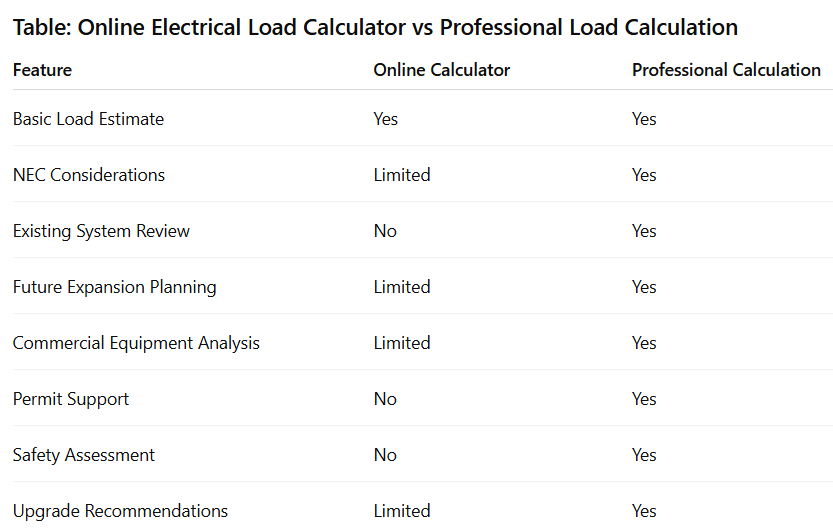
For homeowners, a calculator can help with preliminary planning. For commercial and industrial projects, a professional load calculation often provides a more accurate picture of current and future electrical needs.
Why Electrical Load Calculations Are Important
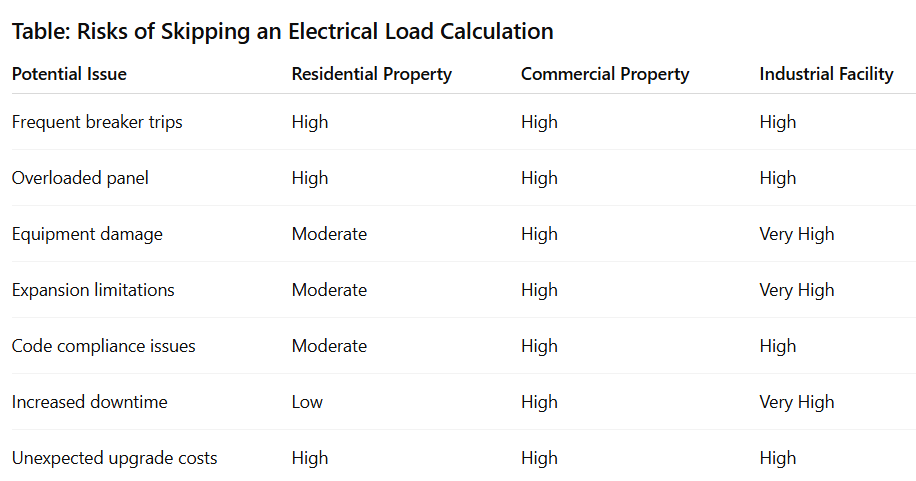
Many electrical problems start with one simple issue: the system is being asked to handle more power than it was designed for.
That is why electrical load calculations are so important.
A proper calculation helps determine whether your electrical system can safely support your current and future power needs. It also helps identify potential issues before they become expensive repairs or safety hazards.
Whether you own a home, manage a commercial property, or operate an industrial facility, understanding electrical demand is one of the first steps in making informed electrical decisions.
Prevent Overloaded Electrical Panels
Every electrical panel has a limit. When the total electrical demand approaches or exceeds that limit, problems can start to appear. Breakers may trip more often, equipment may not perform properly, and the risk of overheating can increase.
A load calculation helps determine whether your panel has enough available capacity before you add:
-
New HVAC equipment
-
Additional lighting
-
Commercial machinery
-
Backup generators
-
Office expansions
Instead of guessing, you can make decisions based on actual electrical demand.
Improve Electrical Safety
Safety is one of the biggest reasons to perform a load calculation. An overloaded electrical system can create excessive heat inside wiring, breakers, and electrical panels. Over time, this extra stress can damage equipment and increase fire risks.
Load calculations help electricians identify:
-
Potential overload conditions
-
Undersized electrical services
-
Capacity limitations
-
Future safety concerns
This allows corrective action before problems develop.
Support Code Compliance
Most electrical projects must meet National Electrical Code (NEC) requirements. Load calculations are often part of that process.
For example, electrical load calculations may be required when:
-
Installing new electrical services
-
Upgrading electrical panels
-
Building new homes
-
Constructing commercial buildings
-
Expanding industrial facilities
Proper calculations help ensure that electrical systems are designed to safely support expected demand.
Plan for Future Growth
One common mistake property owners make is focusing only on current electrical needs. However, electrical demand often increases over time.
A homeowner may add:
-
An EV charger
-
A swimming pool
-
A home office
-
A generator
A business may add:
-
More employees
-
Additional computers
-
Expanded production equipment
-
New lighting systems
Planning for future demand today can help avoid expensive upgrades later.
Protect Expensive Equipment
Modern electrical equipment can be costly to replace. Voltage fluctuations, overloaded circuits, and electrical stress can shorten equipment life.
This is especially important for:
-
HVAC systems
-
Industrial machinery
-
Commercial refrigeration
-
Data and server equipment
-
Medical equipment
-
Manufacturing systems
Load calculations help ensure that the electrical infrastructure is capable of supporting these investments.
Reduce Unexpected Downtime
For commercial and industrial facilities, downtime can be expensive.
A facility that loses power due to overloaded systems may experience:
-
Lost productivity
-
Delayed operations
-
Equipment damage
-
Customer service interruptions
Understanding electrical demand allows businesses to identify limitations before they affect operations.
Support Energy Management Goals
Load calculations are not only about safety. They can also improve efficiency.
By understanding where electricity is being used, property owners can make smarter decisions about:
-
LED lighting upgrades
-
Equipment replacements
-
Load balancing
-
Generator sizing
-
Power distribution improvements
These improvements can support long-term energy management goals.
Need Help Determining Your Electrical Capacity?
Planning an electrical panel upgrade, EV charger installation, generator connection, or facility expansion? Hylton Electric helps homeowners, businesses, contractors, and facility managers throughout Lakeland, Polk County, and Tampa determine the right solution through professional electrical load calculations. Call +1 863-624-7000 or email ray@hylton-electric.com for advice and a free commercial or industrial quote.
Information Needed Before Using an Electrical Load Calculator
An electrical load calculator is only as accurate as the information entered into it. Before you begin, gather details about your property and major electrical equipment. This makes the calculation more reliable and helps prevent incorrect results. Fortunately, most of the information is easy to find.
Square Footage of the Property
Most load calculations begin with the size of the building. The total square footage helps estimate general lighting and receptacle loads.
For homes, this includes:
-
Living areas
-
Bedrooms
-
Kitchens
-
Hallways
-
Finished basements
For commercial and industrial properties, include:
-
Office space
-
Warehouse areas
-
Production floors
-
Storage areas
Accurate measurements improve calculation accuracy.
Major Appliances and Equipment
Next, create a list of major electrical loads.
For residential properties, this may include:
-
Refrigerators
-
Electric ranges
-
Ovens
-
Dishwashers
-
Clothes dryers
-
Washing machines
-
Microwaves
Commercial and industrial facilities should include:
-
Production equipment
-
Commercial kitchen equipment
-
Compressors
-
Refrigeration systems
-
Data equipment
-
Manufacturing machinery
Every major load contributes to the overall electrical demand.
HVAC System Information
Heating and cooling equipment often represents one of the largest electrical loads in a building.
Gather information about:
-
Air conditioners
-
Heat pumps
-
Electric furnaces
-
Electric heaters
-
Ventilation systems
You can usually find electrical ratings on the equipment nameplate.
Water Heater Details
Water heaters can significantly affect electrical demand.
Record information such as:
-
Type of water heater
-
Wattage rating
-
Voltage rating
Electric tank water heaters often consume substantial power and should always be included.
Lighting Loads
Lighting may seem minor, but it adds up quickly.
Consider:
-
Interior lighting
-
Exterior lighting
-
Parking lot lighting
-
Security lighting
-
Warehouse lighting
Commercial facilities with large lighting systems should pay close attention to this category.
Electric Vehicle Chargers
EV chargers are becoming one of the most common reasons for electrical upgrades.
If an EV charger is planned, include:
-
Charger type
-
Charging level
-
Power rating
-
Future charging needs
Many homeowners discover that EV charging pushes their electrical demand close to panel capacity.
Backup Generators
Generator installations often require accurate load calculations.
Determine:
-
Essential loads
-
Whole-building loads
-
Generator goals
The calculation helps identify the proper generator size.
Existing Electrical Panel Size
Knowing your current panel size is critical.
Most residential panels are:
-
100 amps
-
150 amps
-
200 amps
-
400 amps
Commercial and industrial services can be much larger. The panel rating serves as the benchmark for comparing calculated demand.
Future Electrical Additions
Do not focus only on current needs.
Think about future plans such as:
-
EV chargers
-
Home additions
-
New HVAC systems
-
Pool equipment
-
Commercial expansions
-
Additional machinery
Including future demand can help avoid repeat upgrades.
Checklist: Information to Gather Before Calculating Electrical Load
Before using an electrical load calculator, collect the following information:
-
Property square footage
-
Electrical panel size
-
HVAC specifications
-
Water heater ratings
-
Major appliance wattages
-
Lighting loads
-
EV charger requirements
-
Generator plans
-
Commercial equipment ratings
-
Future expansion needs
The more complete your information is, the more accurate your electrical load calculation will be.
How to Use an Electrical Load Calculator Step by Step
Now that you know why load calculations matter and what information you need, it is time to perform the calculation. The exact process may vary slightly depending on the calculator you use. However, most tools follow the same basic steps.
By following these steps, you can get a good estimate of your property’s electrical demand.
Step 1: Make a List of All Electrical Loads
Start by listing every major electrical device in the building. Do not worry about exact numbers yet. The goal is simply to identify everything that uses electricity.
For a home, the list may include:
-
Air conditioner
-
Water heater
-
Electric range
-
Refrigerator
-
Dishwasher
-
Clothes dryer
-
Washing machine
-
Lighting
-
Microwave
-
EV charger
For commercial properties, add:
-
Office equipment
-
Commercial lighting
-
Security systems
-
Refrigeration equipment
-
HVAC systems
Industrial facilities should also include:
-
Motors
-
Compressors
-
Production machinery
-
Welding equipment
-
Conveyor systems
A complete equipment list helps prevent missing important loads later.
Step 2: Find the Wattage of Each Device
Next, determine how much electricity each item uses.
You can usually find this information on:
-
Equipment labels
-
Manufacturer specification sheets
-
Owner’s manuals
-
Product websites
Look for ratings shown in:
-
Watts (W)
-
Kilowatts (kW)
-
Amps (A)
If only amperage is listed, an electrician can convert the value into watts using the appropriate formula. Try to use actual equipment ratings whenever possible instead of guessing.
Step 3: Determine the Property’s Square Footage
Most electrical load calculators require the size of the building. This information helps estimate general lighting and receptacle loads.
Examples:
-
Small home: 1,500 square feet
-
Medium home: 2,500 square feet
-
Large home: 4,000 square feet
-
Small office: 5,000 square feet
-
Warehouse: 25,000 square feet
Use accurate measurements whenever possible.
Step 4: Enter General Lighting Loads
Most calculators automatically estimate lighting demand based on square footage. However, some calculators may ask for lighting details separately.
Common lighting loads include:
-
Interior lighting
-
Exterior lighting
-
Security lighting
-
Parking lot lighting
-
Warehouse lighting
Commercial and industrial properties often have much larger lighting demands than homes.
Step 5: Add Fixed Appliances
Fixed appliances are permanently connected equipment that regularly consumes electricity.
Common examples include:
-
Electric water heaters
-
Electric ranges
-
Ovens
-
Dryers
-
Dishwashers
-
Garbage disposals
Enter the wattage or amperage values for each appliance. These loads often account for a significant portion of residential electrical demand.
Step 6: Include Heating and Cooling Equipment
HVAC systems are frequently the largest electrical load in a building.
Add:
-
Air conditioners
-
Heat pumps
-
Electric furnaces
-
Supplemental heating systems
-
Ventilation equipment
Do not underestimate HVAC demand. In many homes, heating and cooling equipment represents the single largest contributor to electrical usage.
Step 7: Add Continuous Loads
A continuous load operates for three hours or more at a time.
Examples include:
-
EV chargers
-
Commercial lighting systems
-
Data centers
-
Manufacturing equipment
-
Process equipment
Continuous loads require special consideration because they place sustained demand on the electrical system. This is one reason EV charger installations often trigger panel upgrade discussions.
Step 8: Apply Demand Factors
Not every electrical device operates at full power at the same time. Demand factors help account for this reality.
For example:
-
The oven may not run continuously.
-
The dryer may cycle on and off.
-
Some equipment may operate only during business hours.
Electrical codes allow certain demand adjustments depending on the application. Most online calculators automatically account for these factors.
Step 9: Calculate Total Electrical Demand
Once all loads have been entered, the calculator will estimate total demand.
The result is usually displayed in:
-
Watts
-
Kilowatts
-
Amps
This number represents the expected electrical load for the property. At this stage, many users are surprised to learn how much electricity their building actually requires.
Step 10: Compare the Results With Your Panel Capacity
The final step is comparing the calculated demand with the existing electrical service.
For example:
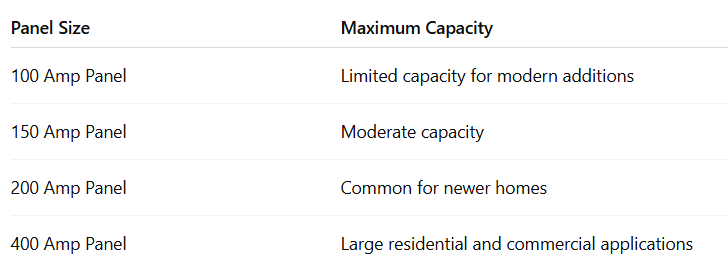
If the calculated load approaches panel capacity, additional evaluation may be needed. This does not automatically mean a panel upgrade is required. However, it does indicate that further analysis may be beneficial.
Understanding the Basic Formula
Many load calculators perform the math automatically. Still, it helps to understand the relationship between watts, volts, and amps.
The formula used is:
Amps = Watts ÷ Volts
For example:
-
4,800 watts ÷ 240 volts = 20 amps
This calculation helps electricians determine how much current a device will draw from the electrical system.
Example: Residential Electrical Load Calculation
Consider a 2,500-square-foot home with the following equipment:
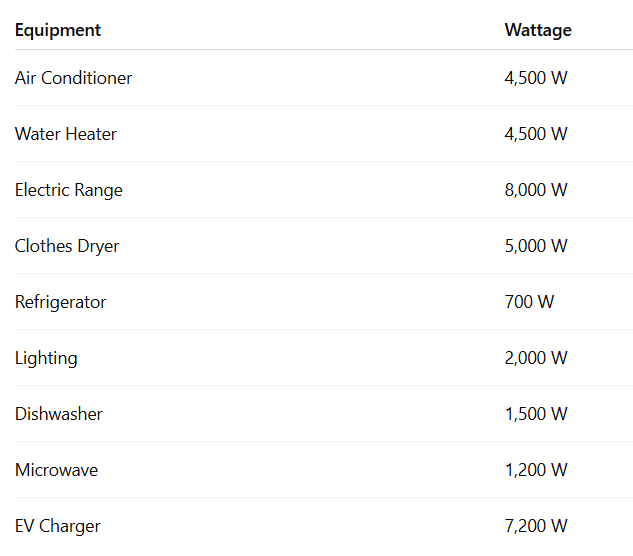
Total Connected Load: 34,600 watts
After applying demand factors, the actual calculated demand may be significantly lower. This example shows why professional calculations are valuable. Simply adding equipment wattages does not always provide the final answer.
Example: Commercial Electrical Load Calculation
A small office building may include:
-
LED lighting systems
-
Multiple HVAC units
-
Computer workstations
-
Breakroom equipment
-
Security systems
-
Exterior lighting
The calculator evaluates these loads and determines whether the existing service can support current operations and future growth. For businesses planning expansions, this information can prevent expensive surprises later.
Common Problems When Using an Electrical Load Calculator
Even good calculators can produce inaccurate results if the wrong information is entered.
Watch out for these common mistakes:
-
Forgetting future equipment additions
-
Using estimated wattages instead of actual ratings
-
Ignoring HVAC loads
-
Leaving out EV chargers
-
Overlooking commercial equipment
-
Assuming panel size equals available capacity
The more accurate the input data, the more useful the results will be.
What to Do After Getting Your Results
Once you have calculated the electrical load:
-
Compare the demand to your panel rating.
-
Review future expansion plans.
-
Evaluate major equipment additions.
-
Consider safety margins.
-
Consult a licensed electrician if the numbers are close.
For commercial and industrial projects, professional review is strongly recommended because equipment demand, code requirements, and power distribution systems can be much more complex than residential installations.
The electrical load calculator provides the starting point. The next step is understanding what those results actually mean and how to determine whether your electrical system has enough capacity for current and future needs.
Electrical Load Calculator Example for a Typical Home
Understanding the steps is helpful. However, seeing a real example makes the process much easier. The example below shows how a homeowner might use an electrical load calculator before installing an EV charger or planning a panel upgrade.
Keep in mind that every property is different. Actual calculations may vary depending on equipment, usage patterns, and local code requirements.
Example Home Profile
Let’s assume the property has:
-
2,500 square feet
-
200-amp electrical service
-
Central air conditioning
-
Electric water heater
-
Electric range
-
Electric dryer
-
Level 2 EV charger
-
Standard household lighting
At first glance, a 200-amp panel may seem more than adequate. However, modern homes can consume a surprising amount of electricity.
Step 1: List Major Electrical Loads
The homeowner creates a list of major electrical equipment.
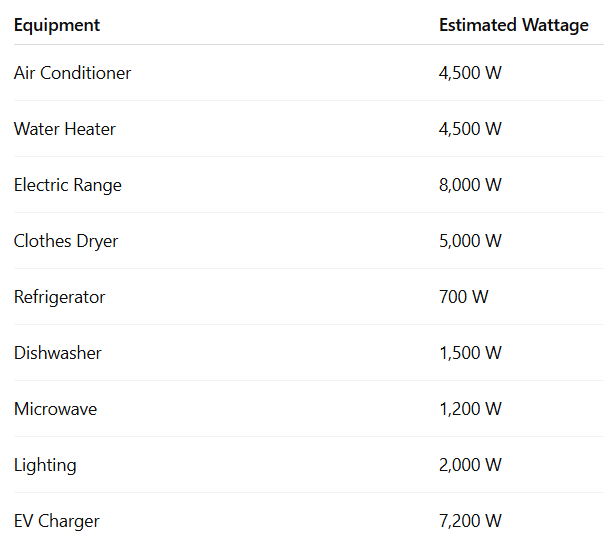
Table Caption: Example Residential Electrical Loads
Step 2: Calculate Total Connected Load
Adding the equipment together gives: 4,500 + 4,500 + 8,000 + 5,000 + 700 + 1,500 + 1,200 + 2,000 + 7,200
Total Connected Load = 34,600 Watts
This number represents the maximum possible electrical demand if everything operates simultaneously. In reality, that rarely happens. This is why demand factors are applied during professional calculations.
Step 3: Apply Demand Factors
Electrical codes recognize that most equipment does not operate at full capacity at the same time.
For example:
-
The dryer cycles on and off.
-
The oven is not always heating.
-
The air conditioner may not run continuously.
-
Some appliances operate only occasionally.
Demand factors reduce the calculated load to a more realistic value. This is one reason professional calculations often produce different results than simple online calculators.
Step 4: Compare Demand to Panel Capacity
Now compare the estimated demand with the panel size.
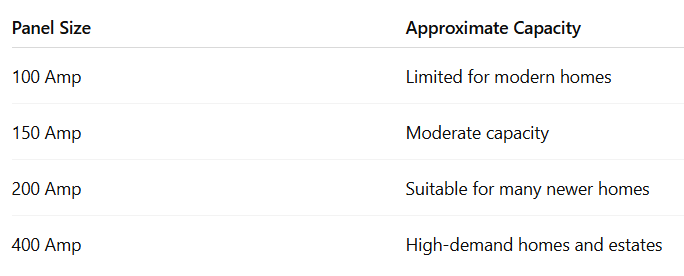
Table Caption: Typical Residential Panel Capacities
If the home’s calculated demand approaches the panel’s practical capacity, an electrician may recommend:
-
A load management system
-
A panel upgrade
-
Equipment scheduling adjustments
-
Future planning considerations
What This Example Shows
Many homeowners assume that adding a single appliance will not affect their electrical system. However, large electrical loads can add up quickly.
A few common examples include:
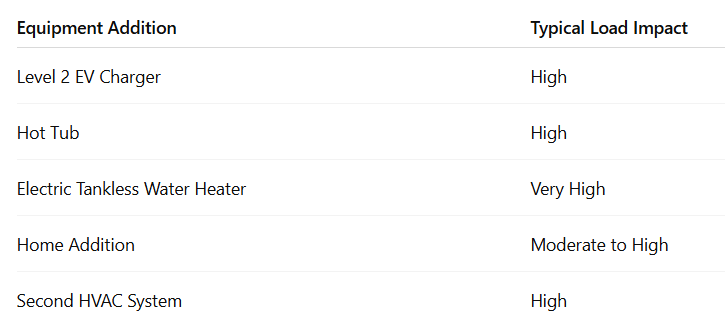
Even homes with relatively new electrical panels may require further evaluation before major equipment is installed.
Electrical Load Calculator Example for a Commercial Building
Commercial electrical systems are often more complicated than residential systems. They support larger spaces, more equipment, and higher operating demands. As a result, load calculations become even more important.
Example Office Building
Consider a small office building with:
-
8,000 square feet
-
LED lighting
-
Two HVAC systems
-
Computer workstations
-
Conference rooms
-
Breakroom equipment
-
Exterior lighting
The building owner plans to expand operations and add new employees. Before purchasing equipment or remodeling space, a load calculation should be performed.
Common Commercial Electrical Loads
Commercial buildings typically include:
-
Interior lighting
-
Exterior lighting
-
HVAC systems
-
Computers
-
Printers
-
Kitchen appliances
-
Security systems
-
Data equipment
Each category contributes to total electrical demand.
Sample Commercial Load Breakdown
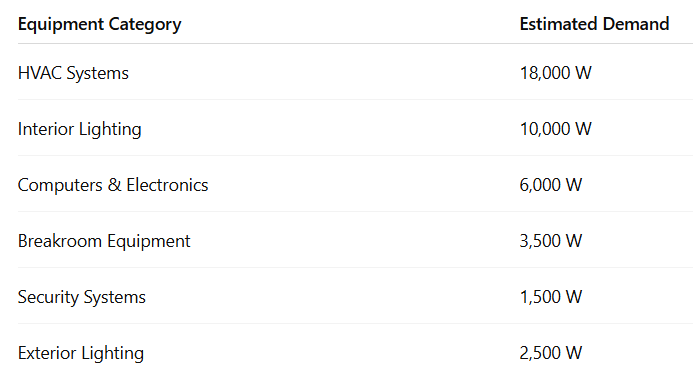
Table Caption: Example Commercial Building Load Distribution
Why Commercial Calculations Matter
Commercial property owners often face challenges such as:
-
Tenant improvements
-
Facility expansion
-
Additional office equipment
-
New machinery
-
EV charging infrastructure
Without understanding existing electrical demand, these projects can create unexpected capacity issues.
A load calculation helps identify whether:
-
Existing service is adequate
-
Additional electrical capacity is needed
-
Panel upgrades should be planned
-
Distribution equipment requires modification
Commercial Growth Planning
One of the biggest benefits of load calculations is planning for growth. For example, a building may currently operate comfortably. However, future expansion plans could significantly increase demand.
Businesses commonly add:
-
More employees
-
Additional workstations
-
Data equipment
-
Security systems
-
Electric vehicle charging stations
-
HVAC upgrades
Planning for these additions early often saves money later.
Understanding Electrical Load Calculator Results
After completing a load calculation, many people are unsure how to interpret the results. The calculator provides numbers, but what do those numbers actually mean? Understanding the results is critical because they help determine whether your electrical system can safely support current and future demand.
What Total Wattage Means
The total wattage represents the estimated electrical demand of the building. In simple terms, it shows how much power the property may require.
Higher wattage generally means:
-
More equipment
-
Larger electrical systems
-
Greater power demand
This number forms the foundation of the entire calculation.
What Amperage Means
Amperage tells you how much electrical current flows through the system. Most electrical panels are rated in amps.
Common residential sizes include:
-
100 amps
-
150 amps
-
200 amps
-
400 amps
Commercial and industrial services can be much larger. Because electrical panels are rated by amperage, this value is often the most important result.
Connected Load vs Demand Load
Many people confuse these two terms.
Connected Load
The total power rating of all electrical equipment combined.
Demand Load
The estimated load after applying demand factors.
Demand load is generally lower because not every device runs at maximum capacity simultaneously. This distinction is important when determining service size.
When the Results Indicate a Problem
Certain results may suggest that additional review is needed.
Potential warning signs include:
-
Load approaching panel capacity
-
No room for future expansion
-
Frequent breaker trips
-
Existing overload conditions
-
Planned equipment additions
These situations do not automatically require upgrades. However, they should be evaluated carefully.
Safety Margins Matter
Electrical systems should not be designed to operate at their limits all the time.
Experienced electricians typically consider:
-
Future growth
-
Continuous loads
-
Seasonal demand
-
Equipment upgrades
This extra capacity helps maintain reliability and safety.
Questions to Ask After Completing a Load Calculation
Once the results are available, consider the following:
-
Can the panel support future additions?
-
Is an EV charger planned?
-
Will new HVAC equipment be installed?
-
Is a generator being considered?
-
Are expansion projects expected?
The answers often influence whether electrical upgrades are necessary.
Common Electrical Load Calculator Mistakes
An electrical load calculator is only as accurate as the information entered into it.
Even small mistakes can lead to inaccurate results. In some cases, these errors may result in undersized electrical systems, overloaded panels, or unnecessary upgrades.
Fortunately, most mistakes are easy to avoid once you know what to look for.
Forgetting Future Electrical Additions
One of the most common mistakes is focusing only on current electrical demand. Many property owners perform a load calculation based on today’s equipment and ignore future plans.
For example, a homeowner may later add:
-
An EV charger
-
A hot tub
-
A swimming pool
-
A home addition
-
A second HVAC system
Businesses often expand even faster.
Common commercial additions include:
-
New workstations
-
Production equipment
-
Refrigeration systems
-
Warehouse lighting
-
Additional office space
A load calculation should account for both current and expected future demand whenever possible.
Using Estimated Wattages
Many people guess equipment wattages instead of using actual ratings. This can create significant errors. For example, two air conditioners may look similar but have very different electrical requirements.
Whenever possible, use:
-
Equipment nameplates
-
Manufacturer specifications
-
Product manuals
-
Electrical labels
Accurate data produces more reliable calculations.
Ignoring HVAC Loads
Heating and cooling systems are often the largest electrical loads in a building. Yet many people underestimate their impact.
Common HVAC equipment includes:
-
Central air conditioners
-
Heat pumps
-
Electric furnaces
-
Supplemental heating systems
-
Commercial rooftop units
Leaving these systems out can significantly reduce calculation accuracy.
Overlooking EV Chargers
Electric vehicle adoption continues to grow across Florida and throughout the country. Unfortunately, EV chargers are frequently overlooked during load calculations. A Level 2 charger can add a substantial continuous load to a home’s electrical system.
Before installing an EV charger, it is important to verify that:
-
The panel has sufficient capacity
-
Existing loads are considered
-
Future charging needs are included
This is one of the most common reasons homeowners request electrical load evaluations today.
Not Applying Demand Factors Correctly
Many online calculations simply add every appliance together. However, electrical systems are rarely used at full capacity all at once. Demand factors account for realistic usage patterns.
Without them, calculations may:
-
Overestimate electrical demand
-
Suggest unnecessary upgrades
-
Produce unrealistic results
This is one reason professional load calculations are often more accurate than basic online tools.
Assuming Panel Size Equals Available Capacity
A 200-amp panel does not automatically mean 200 amps are available. The existing electrical load must also be considered.
For example:
-
A 200-amp panel serving a lightly loaded home may have significant spare capacity.
-
A 200-amp panel serving a large home with an EV charger may be close to its limits.
The only way to know is through proper evaluation.
Forgetting Continuous Loads
Continuous loads require special attention because they operate for extended periods.
Examples include:
-
EV chargers
-
Commercial lighting
-
Data equipment
-
Industrial machinery
These loads place sustained demand on the electrical system and should always be included.
Relying Only on Online Calculators
Online calculators are useful planning tools.
However, they cannot inspect:
-
Existing wiring
-
Panel conditions
-
Code compliance issues
-
Equipment age
-
Distribution systems
For major projects, professional evaluation remains important.
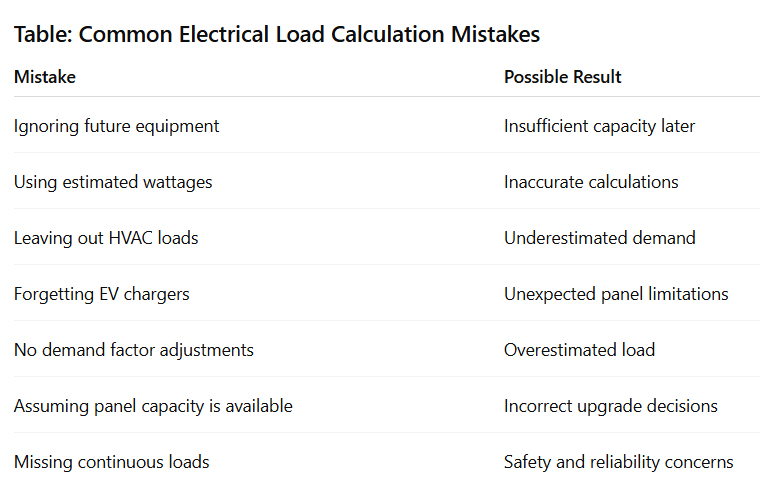
Avoiding these mistakes helps ensure more accurate calculations and better planning decisions.
Electrical Load Calculations for EV Chargers
Electric vehicles are changing how many homes and businesses use electricity. A property that once had plenty of electrical capacity may suddenly face limitations after an EV charger is installed.
That is why load calculations are often required before EV charger installations.
Why EV Chargers Increase Electrical Demand
Unlike many household appliances, EV chargers can draw significant power for several hours at a time. This makes them a continuous load.
Depending on the charger type, the additional demand can be substantial. As more families own multiple electric vehicles, electrical demand can increase even further.
Level 1 vs Level 2 Charging Requirements
Not all EV chargers consume the same amount of power.
Table Caption: Typical EV Charging Demand Comparison
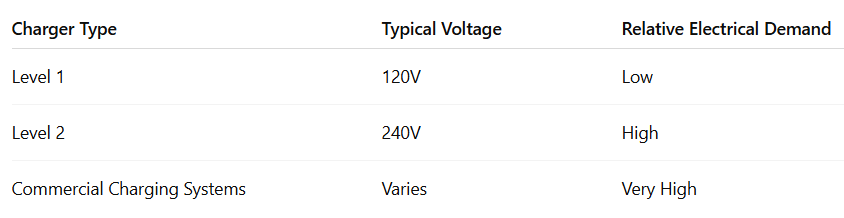
Most homeowners who want faster charging choose Level 2 systems. However, these chargers often require careful evaluation of panel capacity.
When a Panel Upgrade May Be Needed
An EV charger does not automatically require a panel upgrade.
However, upgrades become more likely when:
-
The panel is already heavily loaded
-
The home has electric heating
-
Multiple large appliances operate regularly
-
Future electrical additions are planned
-
Existing service capacity is limited
A load calculation helps determine whether the current panel can safely support the charger.
Commercial EV Charging Considerations
Commercial EV charging projects can be much more complex.
Businesses may install:
-
Employee charging stations
-
Customer charging stations
-
Fleet charging systems
-
Multi-port charging equipment
These systems can place a significant demand on electrical infrastructure.
Before installation, property owners should evaluate:
-
Existing service capacity
-
Future charging needs
-
Peak demand requirements
-
Expansion plans
Benefits of Performing a Load Calculation Before EV Installation
A load calculation helps:
-
Prevent overloaded circuits
-
Identify capacity limitations
-
Support code compliance
-
Reduce unexpected costs
-
Improve long-term planning
For many properties, this step determines whether the project requires only a charger installation or a larger electrical upgrade.
Electrical Load Calculations for Generator Installation
Generators are another common reason property owners perform load calculations. Choosing the wrong generator size can lead to poor performance, unnecessary costs, or insufficient backup power during an outage. A load calculation helps match the generator to the actual electrical demand.
Why Generator Sizing Matters
Many people assume bigger is always better. However, oversized generators can be more expensive to purchase, install, and maintain. Undersized generators create different problems. They may struggle to power essential equipment during outages. The goal is to find the right balance.
Essential Loads vs Whole-Building Loads
Before sizing a generator, decide what needs backup power. There are two common approaches.
Essential Loads
Only critical equipment receives backup power.
Examples include:
-
Refrigerators
-
Medical equipment
-
Lighting
-
Internet equipment
-
Security systems
Whole-Building Backup
The generator powers nearly everything in the building. This option typically requires a larger system and a more detailed load calculation.
Common Generator Sizing Mistakes
Property owners often make mistakes, such as:
-
Guessing power requirements
-
Ignoring startup loads
-
Forgetting the HVAC demand
-
Overlooking future needs
-
Choosing equipment based only on price
Load calculations help avoid these issues.
Generator Planning Checklist
Before selecting a generator, consider:
-
Critical equipment requirements
-
HVAC demand
-
Future expansion plans
-
Fuel type preferences
-
Runtime expectations
-
Transfer switch requirements
Proper planning helps ensure reliable backup power when it is needed most.
Signs Your Property May Need a Panel Upgrade
An electrical load calculation does more than estimate power demand. It can also reveal whether your existing electrical panel has enough capacity for current and future needs.
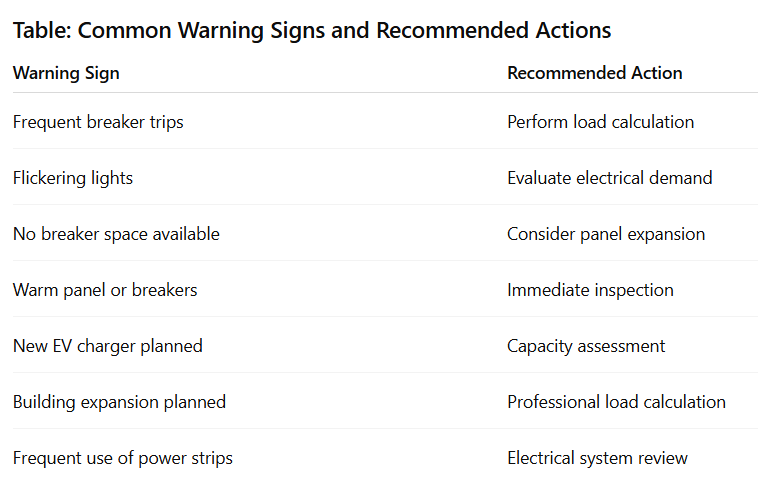
Many property owners do not realize there is a problem until warning signs begin to appear. If you notice any of the following issues, it may be time to have your electrical system evaluated.
Frequent Breaker Trips
Circuit breakers are designed to protect your electrical system. An occasional breaker trip is normal. However, repeated trips often indicate that circuits are carrying more load than they should.
Common causes include:
-
Overloaded circuits
-
Additional appliances
-
Aging electrical systems
-
Increased electrical demand
If breakers trip regularly, a load calculation can help identify the root cause.
Flickering or Dimming Lights
Lights that flicker or dim when large appliances start can signal electrical capacity issues.
Examples include:
-
Air conditioners turning on
-
Electric dryers operating
-
EV chargers charging
-
Large machinery starting
While flickering lights do not always mean a panel upgrade is necessary, they should not be ignored.
Lack of Available Breaker Space
Sometimes the issue is not panel capacity but physical space. Many older panels have no room for additional circuits.
This becomes a problem when installing:
-
EV chargers
-
Generators
-
New HVAC systems
-
Home additions
-
Commercial equipment
Even if the panel has sufficient capacity, limited breaker space may require an upgrade.
Warm Electrical Panels
Electrical panels should never feel excessively hot.
Signs that require immediate attention include:
-
Warm panel surfaces
-
Burning odors
-
Discolored breakers
-
Buzzing sounds
These conditions should be evaluated by a licensed electrician as soon as possible.
Reliance on Extension Cords
Extension cords should be a temporary solution. If your property depends on extension cords or power strips because there are not enough circuits, the electrical system may need modernization. This is especially common in older homes and commercial buildings.
Recent Equipment Additions
Many electrical systems were designed decades ago. Since then, electrical demand has increased significantly.
Recent additions that often trigger panel upgrades include:
-
EV chargers
-
Hot tubs
-
Home offices
-
Pool equipment
-
Commercial refrigeration
-
Manufacturing equipment
A load calculation helps determine whether the panel can safely support these additions.
Older Electrical Panels
Age alone does not always mean replacement is necessary. However, older panels were often designed for much lower electrical demand.
Many older homes still operate with:
-
60-amp service
-
100-amp service
-
Limited circuit capacity
Modern electrical usage may exceed what these systems were designed to support.
Benefits of Upgrading Before Problems Occur
Waiting until electrical problems develop often leads to:
-
Emergency repairs
-
Project delays
-
Higher costs
-
Equipment limitations
By evaluating capacity early, property owners can plan upgrades on their own schedule. This approach is often less disruptive and more cost-effective.
Electrical Load Calculator vs Professional Load Calculation
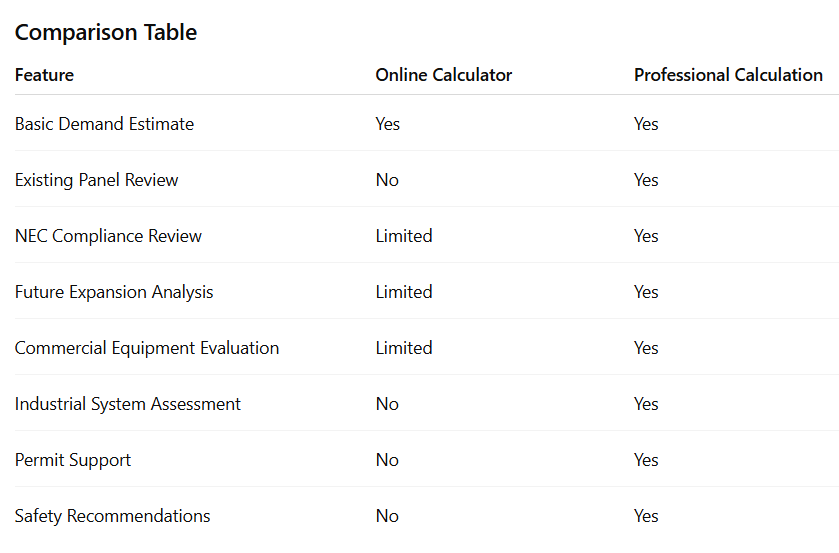
Online electrical load calculators can be very useful. They provide quick estimates and help property owners understand their electrical demand. However, there are important differences between an online estimate and a professional load calculation.
Understanding these differences can help you decide when expert assistance is necessary.
What Online Calculators Do Well
Most online calculators are excellent for:
-
Preliminary planning
-
Basic load estimates
-
EV charger research
-
Generator planning
-
Home improvement projects
They help property owners gain a general understanding of electrical demand before making decisions.
Benefits of Online Calculators
Online tools are popular because they are:
-
Easy to access
-
Fast to use
-
Convenient
-
Helpful for budgeting
-
Useful for initial planning
For simple projects, they often provide a reasonable starting point.
Limitations of Online Calculators
Online calculators also have limitations.
Most cannot evaluate:
-
Existing panel conditions
-
Wiring capacity
-
Code compliance issues
-
Equipment age
-
Power quality concerns
-
Distribution system design
They rely entirely on the information entered by the user. If the input is inaccurate, the results may be inaccurate as well.
What a Professional Load Calculation Includes
A professional load calculation goes beyond basic formulas.
An electrician may evaluate:
-
Existing electrical service
-
Panel condition
-
Circuit loading
-
Future expansion plans
-
NEC requirements
-
Continuous loads
-
Demand factors
-
Equipment startup requirements
This creates a more complete picture of the electrical system.
Commercial and Industrial Projects Require More Detail
Commercial and industrial facilities often involve loads that online calculators cannot properly assess.
Examples include:
-
Manufacturing equipment
-
Motors
-
Compressors
-
Process machinery
-
Large HVAC systems
-
Power distribution equipment
These projects frequently require detailed engineering and electrical analysis.
Comparison Table
When an Online Calculator Is Usually Enough
An online calculator may be suitable when:
-
Gathering preliminary information
-
Researching future projects
-
Estimating residential demand
-
Comparing equipment options
It provides a useful starting point for many property owners.
When Professional Help Is Recommended
Professional evaluation is often recommended when:
-
Installing EV chargers
-
Adding generators
-
Upgrading electrical panels
-
Expanding facilities
-
Constructing new buildings
-
Adding industrial equipment
In these situations, accuracy becomes increasingly important.
When to Hire a Licensed Electrician
Some electrical projects are simple. Others involve significant safety, code compliance, and capacity considerations. Knowing when to bring in a licensed electrician can save time, money, and frustration.
Before Installing an EV Charger
EV chargers are one of the most common reasons homeowners request load calculations.
A licensed electrician can determine:
-
Available panel capacity
-
Circuit requirements
-
Upgrade needs
-
Permit requirements
This helps avoid unexpected installation issues.
Before Installing a Generator
Generator systems must be properly sized.
An electrician can evaluate:
-
Essential loads
-
Whole-building loads
-
Transfer switch requirements
-
Future backup power needs
This helps ensure reliable operation during outages.
Before Upgrading an Electrical Panel
Panel upgrades should never be based on guesswork.
A licensed electrician can determine:
-
Existing electrical demand
-
Future capacity needs
-
Service limitations
-
Code requirements
The result is a safer and more effective upgrade.
During Home Renovations
Renovation projects often increase electrical demand.
Examples include:
-
Kitchen remodels
-
Home additions
-
Garage conversions
-
Pool installations
Evaluating electrical capacity before construction begins helps prevent delays later.
During Commercial Expansions
Businesses frequently increase power demand through:
-
Additional equipment
-
Expanded workspaces
-
New tenants
-
Facility upgrades
Load calculations help ensure the electrical infrastructure can support growth.
For Industrial Equipment Installations
Industrial equipment often has specialized electrical requirements.
These projects may involve:
-
Three-phase power
-
Large motors
-
High startup loads
-
Distribution upgrades
Professional evaluation is usually essential.
The Value of Professional Expertise
A licensed electrician does more than perform calculations.
They can also:
-
Identify safety concerns
-
Recommend practical solutions
-
Plan future expansion
-
Support permitting requirements
-
Verify code compliance
This helps ensure the electrical system remains safe, reliable, and capable of supporting future needs.
Conclusion
An electrical load calculator is a practical tool for understanding how much power a home, business, or industrial facility needs.
It helps you estimate electrical demand before making important decisions about panel upgrades, EV charger installations, generators, renovations, or building expansions. Instead of guessing, you can use real numbers to determine whether your electrical system has enough capacity.
The process is fairly simple. You gather information about your property, add the major electrical loads, and compare the results to your available service capacity.
That said, accuracy matters. Missing equipment, incorrect wattages, or overlooked future plans can affect the results. For larger projects, a professional load calculation provides a clearer picture of your electrical system and helps ensure safe, reliable performance.
Whether you’re upgrading a home, expanding a commercial property, or adding industrial equipment, understanding your electrical demand is an important first step. It helps you plan ahead, avoid costly surprises, and make smarter decisions about your electrical system.
Need Help With Electrical Load Calculations?
Planning an electrical panel upgrade, EV charger installation, generator connection, or facility expansion? Hylton Electric works with homeowners, business owners, contractors, and facility managers throughout Lakeland, Polk County, and Tampa.
Call +1 863-624-7000 or email ray@hylton-electric.com to discuss your project. Free quotes are available for commercial and industrial electrical work.
Leave a Reply