
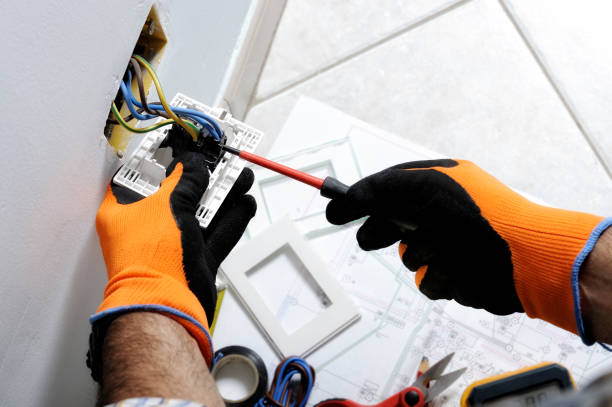
Electrical layouts change over time. A room that worked years ago may no longer fit your needs today. Many homeowners and businesses move outlets and switches during remodeling projects. Others do it to improve safety, convenience, or accessibility.
A moving electrical outlet project may seem simple. However, there is more involved than cutting drywall and moving wires. Electrical circuits must stay safe and meet Florida code requirements. Poor wiring can lead to overloaded circuits, sparks, or fire risks.
In Lakeland, outlet relocation is common during kitchen remodels, office upgrades, garage conversions, and home renovations. Older homes often need electrical updates before outlets can move safely. Commercial buildings may also require permit approvals and circuit upgrades.
Professional electricians inspect the wiring first. Then they check breaker capacity, grounding, and outlet placement. Some outlets can move easily. Others require new wiring or additional protection devices.
This guide explains how outlet and switch relocation works. It also covers costs, permits, safety concerns, and when to call a licensed electrician.
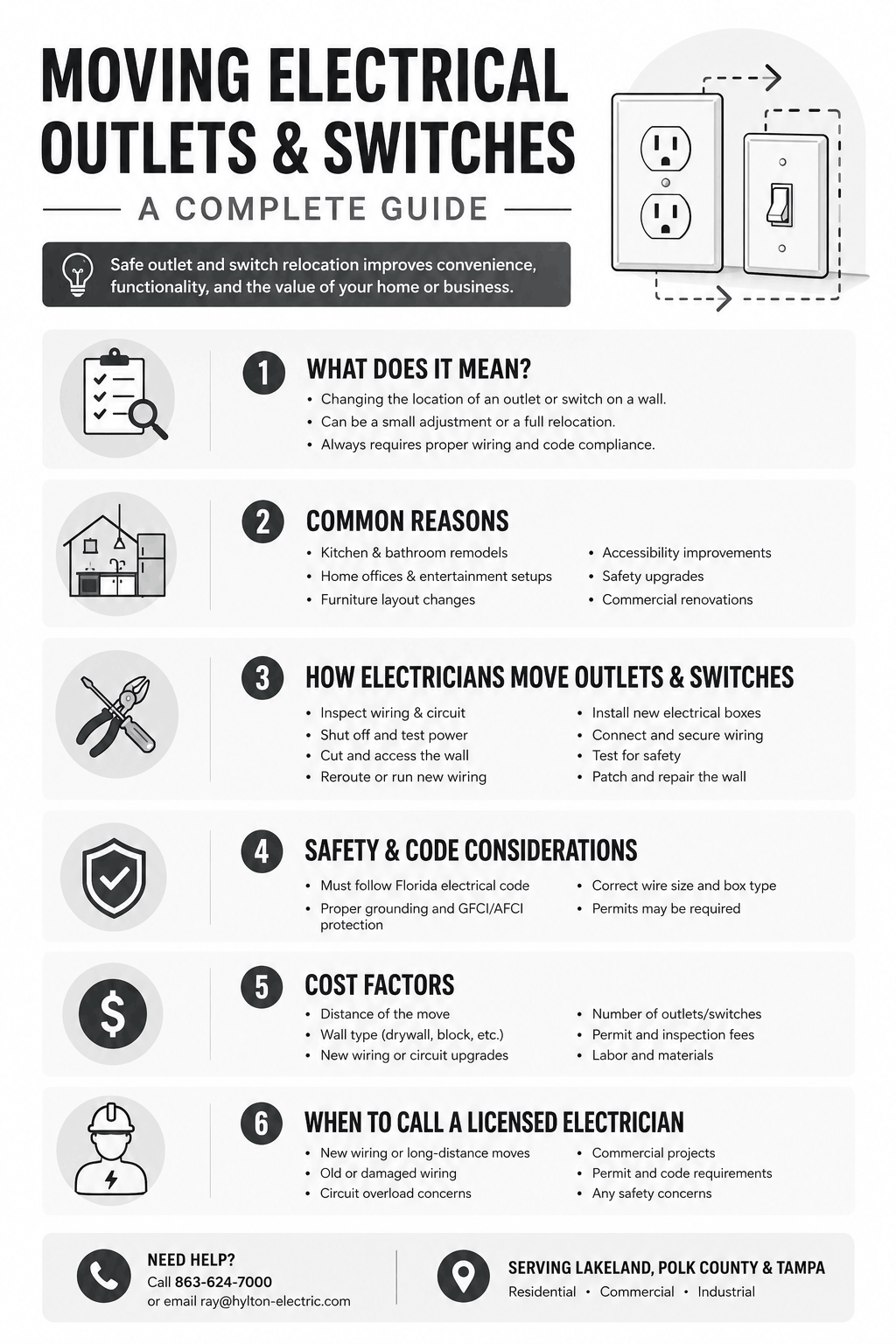
What Does Moving an Electrical Outlet Mean?
Moving an electrical outlet means changing the outlet location on a wall or surface. The new location may only be a few inches away. In other cases, the outlet may move across the room.
Electricians usually move outlets during remodeling work. Kitchens, living rooms, offices, and garages are common areas for outlet relocation. Some projects also involve moving switches for better access.
Small outlet moves are often easier. For example, a kitchen backsplash project may require outlets to move slightly higher. Larger moves can be more complex. Longer distances may require new wiring, additional boxes, or circuit upgrades.
The process starts with an electrical inspection. Electricians check the circuit load, wire size, and grounding condition. Older homes in Florida may have outdated wiring systems. Some homes also lack proper GFCI protection.
Wall construction also matters. Drywall walls are easier to modify. Concrete block walls, which are common in Florida, may require conduit or special cutting tools.
Many people also relocate outlets for modern technology. TVs, gaming systems, office desks, and smart devices need better outlet placement. Poor outlet locations often lead to unsafe extension cord use.
Moving switches follows a similar process. Electricians disconnect the old switch, reroute wiring, and install the switch in a better location. This improves both convenience and room layout.
Common Reasons for Moving Electrical Outlets and Switches
People move outlets and switches for many reasons. Some want a cleaner room layout. Others need better access to power. Renovation projects are the most common reason.
Kitchen Remodeling Projects
Kitchen upgrades often require outlet relocation. New cabinets and backsplashes may block old outlets. Appliance locations may also change during remodeling.
Common kitchen outlet projects include:
-
Raising outlets above backsplashes
-
Adding outlets to kitchen islands
-
Moving outlets away from sinks
-
Installing GFCI outlets
-
Adding dedicated appliance circuits
Modern kitchens use more power than older kitchens. Electricians often check circuit capacity during remodeling projects.
Home Office and Entertainment Setups
Home offices need reliable power access. Computers, monitors, printers, and charging stations all require outlets nearby. Poor outlet placement creates cord clutter and safety risks.
Entertainment systems also affect outlet placement. Wall-mounted TVs often need hidden outlets behind the screen. Many homeowners move outlets to create a cleaner look.
Furniture Layout Changes
Large furniture pieces can block existing outlets. Beds, couches, and shelving units often create access problems. Moving the outlet solves the issue and improves the room layout.
This is common during:
-
Bedroom remodels
-
Living room redesigns
-
Built-in cabinet projects
-
Home staging updates
Accessibility Improvements
Some outlet and switch projects focus on accessibility. Lowering switches or raising outlets can make daily use easier. This is important for people with mobility challenges.
Accessibility upgrades may include:
-
Easier-to-reach switches
-
Higher outlet placement
-
Smart switches
-
Better lighting control access
Commercial Renovations in Lakeland
Businesses often move outlets during office or retail renovations. Workstations, displays, and equipment locations change over time.
Commercial projects may include:
-
Office desk reconfiguration
-
Retail counter relocation
-
Restaurant equipment upgrades
-
Conference room improvements
-
Industrial workstation changes
Commercial electrical work usually requires detailed planning. Electricians must avoid downtime and follow strict code requirements.
How Electricians Move Electrical Outlets and Switches
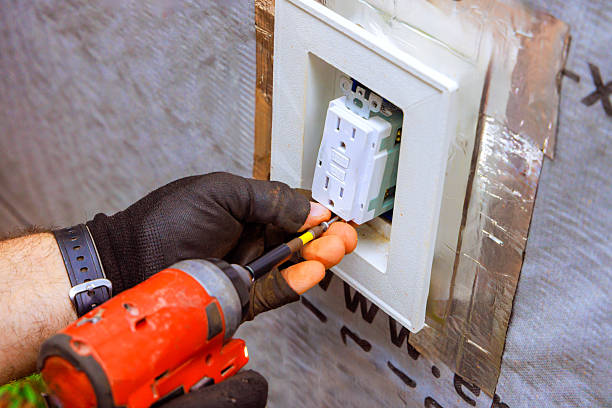
Electricians follow a step-by-step process when relocating outlets and switches. Careful planning helps prevent wiring problems and safety risks.
Initial Electrical Inspection
The first step is checking the existing wiring. Electricians inspect the breaker, wire size, grounding, and circuit load. Older homes sometimes have damaged or outdated wiring.
During the inspection, electricians look for:
-
Aluminum wiring
-
Overloaded circuits
-
Missing grounding
-
Old electrical panels
-
Damaged wires
This inspection helps determine whether the outlet can move safely.
Shutting Off and Testing Power
Electricians turn off the breaker before starting work. Then they test the circuit to confirm that the power is off. This step is important because electrical panels are not always labeled correctly.
Cutting and Accessing the Wall
Next, the electricians open the wall carefully. Small drywall cuts help reduce repair work later. Stud placement and plumbing lines also affect the wiring path. Concrete block walls may require conduit systems instead of hidden wiring methods.
Extending or Replacing Wiring
Some outlet moves only need short wire extensions. Others require new wiring. Electricians must follow National Electrical Code rules during this step.
Important wiring factors include:
-
Correct wire size
-
Safe grounding
-
Junction box access
-
Circuit protection
-
Moisture resistance
Hidden wire splices inside walls are unsafe and not allowed by code.
Installing the New Outlet or Switch Box
The new electrical box must fit securely inside the wall. Electricians also make sure the box depth meets code requirements.
Many property owners upgrade devices during relocation projects. Popular upgrades include:
-
USB outlets
-
Smart switches
-
GFCI outlets
-
Tamper-resistant outlets
-
AFCI protection
Testing the Finished Installation
After installation, electricians test the outlet carefully. They check voltage, polarity, grounding, and breaker performance. GFCI outlets also receive safety testing to confirm proper operation.
Need help with moving electrical outlets and switches in Lakeland or Polk County? Hylton Electric handles residential, commercial, and industrial electrical work with practical solutions and clear communication. Call +1 863-624-7000 or email ray@hylton-electric.com for a free commercial or industrial quote.
Moving Electrical Outlet in Different Areas of a Property
Different rooms require different outlet layouts. The safest outlet location in a kitchen may not work in a garage or office. Electricians plan each relocation based on the room, power demand, and code requirements.
Outlet placement also affects safety and daily convenience. Poor placement often leads to extension cords, overloaded power strips, and blocked receptacles. A good electrical layout makes a room easier and safer to use.
Kitchens
Kitchens are one of the most common areas for outlet relocation. Remodeling projects often change cabinet layouts, appliance positions, and countertop space.
Florida kitchens must follow strict code requirements. Countertop outlets need proper spacing. GFCI protection is also required near water sources.
Many homeowners move outlets during:
-
Backsplash installations
-
Cabinet replacements
-
Island additions
-
Appliance upgrades
Modern kitchens also need more power than older kitchens. Microwaves, coffee stations, air fryers, and charging devices all add electrical demand. Electricians often recommend dedicated circuits for large appliances during renovation work.
Bathrooms
Bathrooms require extra electrical protection because of moisture exposure. Outlets near sinks must have GFCI protection. Proper spacing also matters for safety and convenience.
Common bathroom outlet upgrades include:
-
Adding outlets near vanities
-
Moving switches away from wet areas
-
Installing better lighting controls
-
Upgrading old two-prong outlets
Many older homes in Lakeland still have outdated bathroom wiring. Renovation projects often uncover missing grounding or overloaded circuits.
Garages
Garages now serve many purposes besides parking vehicles. Many homeowners use garages as workshops, gyms, or storage areas. Others install EV chargers for electric vehicles.
Garage outlet relocation often includes:
-
Workbench outlets
-
Ceiling-mounted outlets
-
EV charging circuits
-
Outdoor power access
Electricians also check breaker capacity during garage upgrades. EV chargers and power tools may require dedicated circuits or panel upgrades.
Living Rooms
Living room layouts have changed a lot over the years. Wall-mounted TVs and entertainment systems need better outlet placement than older room designs.
Common living room projects include:
-
Hidden TV outlets
-
Floor outlets
-
Smart lighting controls
-
Extra charging outlets
Many homeowners also move switches for easier access near entry points or furniture layouts.
Commercial Buildings
Commercial properties often require more detailed electrical planning. Office layouts, workstations, and equipment locations change over time. Businesses may also need additional outlets for computers, displays, or specialized equipment.
Commercial relocation projects usually involve:
-
Dedicated equipment circuits
-
Data cabling coordination
-
Breaker load calculations
-
After-hours electrical work
Electricians must also follow stricter commercial code requirements during renovations.
Moving Light Switches Safely
Switch relocation may look simple, but it can become complex quickly. Some switches control a single light. Others work with multiple switches or smart systems. Electricians first identify the switch type before starting work. This helps prevent wiring mistakes and troubleshooting problems later.
Standard Single-Pole Switch Relocation
Single-pole switches are the simplest type. They control one light from one location. These switches are common in bedrooms, bathrooms, and small offices.
Moving a standard switch usually involves:
-
Turning off the breaker
-
Removing the existing switch
-
Extending or rerouting wiring
-
Installing a new switch box
-
Testing the circuit
Short-distance moves are often easier and less expensive.
Three-Way and Four-Way Switch Challenges
Three-way switches control one light from two locations. Four-way systems add even more control points. These systems are common in hallways, staircases, and large rooms.
Relocating these switches is more complex because the wiring configuration matters. Incorrect wiring can stop the system from working properly. Electricians carefully label wires before disconnecting anything. This helps avoid confusion during installation.
Smart Switch Upgrades During Relocation
Many homeowners upgrade to smart switches during remodeling projects. Smart controls improve convenience and energy management.
Popular smart switch features include:
-
Voice control
-
Smartphone access
-
Scheduling
-
Motion sensing
-
Dimming functions
Some smart switches require neutral wires. Older homes may not have the correct wiring available.
Switch Height Requirements in Florida
Switch placement must follow accessibility and building code standards. Standard switch heights work for most residential projects. Commercial buildings may have additional requirements.
Electricians also consider:
-
Furniture placement
-
Door swing direction
-
Accessibility needs
-
Future room layouts
Good switch placement improves both safety and convenience.

Electrical Codes and Permit Requirements in Lakeland, Florida
Electrical work in Florida must follow current safety codes. Outlet and switch relocation projects may also require permits and inspections. These rules protect homeowners, businesses, and future property buyers.
Many people assume small electrical projects do not need permits. However, some outlet relocation work involves wiring changes that fall under local code requirements. Licensed electricians understand these rules and help ensure installations pass inspection.
When a Permit Is Usually Required
Permit requirements depend on the project scope. Minor device replacements may not require approval. Larger wiring modifications often do.
Permits are commonly required for:
-
New circuits
-
Panel upgrades
-
Major rewiring
-
Commercial electrical work
-
Large renovation projects
Permit rules may vary depending on the city or county.
When Minor Work May Not Need a Permit
Simple replacements sometimes qualify as minor repairs. For example, replacing a damaged outlet with the same type may not require a permit. However, relocating the outlet often changes the situation because wiring modifications are involved. Property owners should always verify local requirements before starting work.
Why Code Compliance Matters for Insurance Claims
Code compliance affects more than inspections. Insurance companies may investigate electrical work after a fire or damage claim. Unapproved or unsafe wiring can create serious problems during claims investigations. Failed inspections may also delay home sales or commercial property transactions. Professional electricians help reduce these risks by following proper installation standards.
Signs Your Electrical System Needs Upgrades Before Relocation
Outlet relocation sometimes reveals hidden electrical problems. Older systems may not safely support new outlet locations or increased electrical demand. Ignoring these warning signs can create safety risks later.
- Two-Prong Outlets
Two-prong outlets usually indicate outdated wiring. These outlets lack proper grounding protection. Many older Florida homes still contain two-prong receptacles in bedrooms and living rooms.
- Aluminum Wiring
Some older homes use aluminum wiring instead of copper. Aluminum wiring can loosen over time and create overheating risks. Electricians inspect these systems carefully before modifying circuits.
- Frequently Tripped Breakers
Breakers that trip often may signal overloaded circuits. Adding new outlets without fixing the load issue can make the problem worse.
- Warm Switch Plates or Outlets
Outlets and switches should never feel hot. Heat may indicate loose connections, overloaded wiring, or damaged components.
- Lack of GFCI Protection
Bathrooms, kitchens, garages, and outdoor outlets require GFCI protection. Many older homes still lack these safety devices.
- Overloaded Power Strips Everywhere
Too many extension cords or power strips usually mean the home lacks enough outlets. Relocation projects often improve both safety and convenience.
Planning outlet or switch upgrades in Lakeland, Tampa, or Polk County? Hylton Electric helps residential, commercial, and industrial properties improve safety and functionality with practical electrical solutions. Call +1 863-624-7000 or email ray@hylton-electric.com for free commercial or industrial quotes.
Cost to Move Electrical Outlet and Switches in Lakeland, Florida
The cost to move an outlet or switch depends on several factors. Some projects take less than an hour. Others require new wiring, drywall repairs, or panel upgrades.
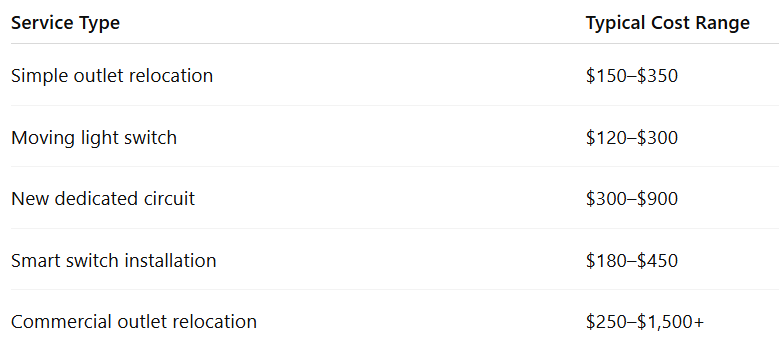
In Lakeland, most simple outlet relocation projects cost between $150 and $350. Larger projects can cost much more if the wiring path is difficult or the electrical system needs upgrades.
Older Florida homes may also increase labor costs. Electricians often find outdated wiring, missing grounding, or overloaded circuits during remodeling work. Commercial projects usually cost more because they involve higher electrical loads and stricter code requirements.
Average Residential Outlet Relocation Costs
Simple outlet moves are usually the least expensive. These projects often involve moving the outlet a short distance within the same wall cavity.
Typical residential pricing includes:
-
Simple outlet relocation: $150–$350
-
Light switch relocation: $120–$300
-
New dedicated circuit: $300–$900
-
Smart switch installation: $180–$450
-
GFCI outlet upgrade: $150–$350
Projects become more expensive when electricians must open multiple walls or install new wiring paths.
Factors Affecting Pricing
Several things affect the final cost of electrical relocation work.
- Wall Type
Drywall is easier to work with than concrete block. Florida block homes often require conduit systems or masonry cutting, which increases labor time.
- Distance Moved
Moving an outlet a few inches is easier than relocating it across the room. Longer distances often require additional wiring and wall access.
- Circuit Capacity
Older circuits may not support modern electrical loads. Electricians sometimes recommend breaker upgrades or new circuits during relocation projects.
- Permit Requirements
Some projects require permits and inspections. Permit costs vary depending on the project scope and local requirements.
- Drywall Repairs
Wall openings may need patching and repainting after electrical work finishes. Larger wiring projects usually involve more repair work.
Commercial Electrical Relocation Costs
Commercial electrical projects are more complex than residential work. Businesses often require dedicated circuits, equipment wiring, and after-hours scheduling.
Common commercial costs include:
-
Office outlet relocation: $250–$700
-
Retail electrical modifications: $400–$1,500
-
Industrial outlet relocation: $500–$2,500+
-
Equipment circuit installation: $800–$3,000+
Commercial pricing depends heavily on power requirements and building layout.
Emergency Electrical Relocation Costs
Emergency electrical work costs more because electricians respond outside normal hours. Safety hazards often require immediate repairs.
Emergency projects may involve:
-
Burned outlets
-
Sparking switches
-
Damaged wiring
-
Failed breakers
-
Water-damaged electrical systems
Fast repairs help prevent larger electrical problems and reduce downtime.
Average Cost Table
DIY vs Hiring a Licensed Electrician
Many homeowners think outlet relocation is an easy DIY project. While replacing a cover plate may be simple, moving electrical wiring involves real safety risks.
Electrical mistakes can lead to shocks, fire hazards, damaged appliances, or failed inspections. That is why larger electrical projects are usually safer with licensed professionals.
Risks of DIY Outlet Relocation
DIY electrical work often creates hidden problems behind walls. These issues may not appear immediately, but they can become dangerous later.
Common DIY mistakes include:
-
Loose wire connections
-
Improper grounding
-
Overloaded circuits
-
Hidden junction boxes
-
Incorrect wire sizes
Even small wiring mistakes can create overheating problems over time. Florida permit rules also affect DIY projects. Some electrical modifications require inspections before the wall closes.
Benefits of Hiring Licensed Electricians
Licensed electricians understand current code requirements and safety standards. They also know how to identify hidden electrical problems during renovations.
Professional electrical work provides several benefits:
-
Safer installations
-
Proper permits
-
Faster troubleshooting
-
Reliable testing
-
Better long-term performance
Experienced electricians also reduce the chance of future electrical failures.
Projects Homeowners Should Never DIY
Some electrical projects are too dangerous for untrained work. These jobs require professional experience and specialized tools.
Homeowners should avoid:
-
Electrical panel work
-
Aluminum wiring repairs
-
Commercial electrical projects
-
Major rewiring
-
Generator connections
These systems involve higher electrical loads and greater shock risks.
Common Mistakes When Moving Electrical Outlets and Switches
Outlet relocation projects can go wrong quickly without proper planning. Some mistakes create immediate safety hazards. Others cause problems months or years later. Professional electricians avoid these issues by following proper installation methods.
Overloading Existing Circuits
Adding outlets to an already overloaded circuit is a common problem. Modern appliances and electronics use more power than older systems were designed to handle.
Signs of overloaded circuits include:
-
Frequent breaker trips
-
Flickering lights
-
Warm outlets
-
Buzzing sounds
Electricians calculate electrical loads before modifying circuits.
Using Incorrect Wire Gauge
Wire size matters for electrical safety. Smaller wires can overheat when connected to larger breakers. Electricians match wire gauge to circuit amperage during all relocation projects.
Burying Junction Boxes
The electrical code requires junction boxes to remain accessible. Hidden splices inside walls create major safety risks. Every connection point must stay reachable for future inspection and repairs.
Improper Grounding
Grounding protects people and equipment during electrical faults. Missing or incorrect grounding increases shock risks. Older homes sometimes lack proper grounding systems.
Ignoring GFCI and AFCI Requirements
Modern electrical codes require extra protection in certain areas. Bathrooms, kitchens, garages, and outdoor outlets usually need GFCI protection. Many newer circuits also require AFCI protection to reduce fire risks.
Poor Placement Planning
Bad outlet placement creates long-term frustration. Outlets hidden behind furniture or placed too far from appliances reduce convenience. Electricians often help homeowners plan better layouts before starting work.
Best Outlet Placement Practices During Renovations
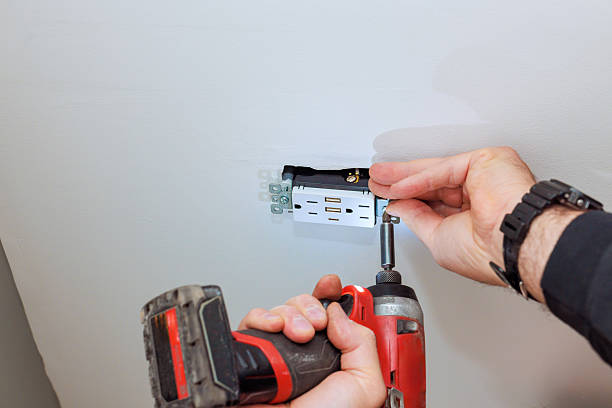
Good outlet placement improves both safety and daily use. Renovation projects create the perfect time to improve the electrical layout. Modern homes and businesses need more accessible power than older properties.
Kitchen Counter Layout Tips
Kitchen outlets should support both safety and convenience. Appliance placement matters during remodeling projects.
Good kitchen planning includes:
-
Even countertop outlet spacing
-
Easy appliance access
-
GFCI protection
-
Dedicated appliance circuits
Island outlets are also popular in modern kitchens.
Home Office Outlet Planning
Home offices need enough outlets for computers, monitors, and charging devices.
Helpful office upgrades include:
-
Desk-height outlets
-
USB charging outlets
-
Surge protection
-
Hidden cable management
Good outlet placement also reduces extension cord clutter.
TV Wall Outlet Positioning
Wall-mounted TVs often require hidden outlets behind the screen. Electricians may also install low-voltage cable access for cleaner wiring. This setup creates a more organized entertainment area.
Future-Proofing for Smart Homes
Smart homes use more connected devices than traditional homes. Planning ahead helps avoid future electrical upgrades.
Popular smart upgrades include:
-
Smart switches
-
USB-C outlets
-
Automated lighting
-
Smart dimmers
Planning for EV Chargers and Generators
Electric vehicle chargers and backup generators require careful electrical planning. Many homes need panel upgrades before installation. Planning these systems during renovations can reduce future costs.
Need practical electrical upgrades in Lakeland, Tampa, or Polk County? Hylton Electric works with residential, commercial, and industrial properties on safe outlet relocation, rewiring, and modernization projects. Call +1 863-624-7000 or email ray@hylton-electric.com for free commercial or industrial estimates.
Commercial and Industrial Outlet Relocation Considerations
Commercial and industrial electrical work requires more planning than residential projects. Businesses depend on reliable power every day. Even small electrical mistakes can interrupt operations, damage equipment, or create safety issues.
That is why outlet relocation in commercial spaces usually involves load calculations, permit approvals, and detailed scheduling. Electricians must also follow stricter code requirements for commercial and industrial buildings.
In Lakeland, many businesses relocate outlets during office remodels, equipment upgrades, and workspace redesigns.
Office Build-Outs
Office layouts change often. Companies add new workstations, conference rooms, and collaborative spaces as teams grow. Older office layouts may not support modern electrical needs. Computers, monitors, printers, and charging stations all require accessible power.
Common office electrical upgrades include:
-
Desk outlet relocation
-
Floor outlet installation
-
Conference room power upgrades
-
Data and power coordination
-
Smart lighting controls
Electricians also help reduce visible cable clutter during office renovations.
Warehouse Equipment Relocation
Warehouses and industrial spaces often move equipment during operational upgrades. These changes may require new outlet locations or dedicated power circuits.
Industrial electrical relocation projects often involve:
-
Forklift charging stations
-
Conveyor equipment
-
Workbench power systems
-
Industrial machinery circuits
-
High-voltage connections
These systems usually require careful load balancing and safety testing.
Retail Store Renovations
Retail stores frequently update displays, checkout areas, and lighting layouts. Outlet relocation helps improve both customer experience and employee workflow.
Retail electrical projects may include:
-
Cash register outlet relocation
-
Display lighting circuits
-
Signage power access
-
Security system wiring
-
Seasonal display power setups
Electricians often complete this work after business hours to reduce disruptions.
High-Power Equipment Wiring
Some commercial equipment uses much more electricity than standard outlets can handle. Restaurants, workshops, and industrial facilities often require dedicated circuits.
Examples include:
-
Commercial refrigeration
-
Industrial air compressors
-
Welding equipment
-
Commercial ovens
-
Manufacturing machinery
Electricians calculate electrical loads carefully before relocating these systems.
Safety Compliance in Industrial Facilities
Industrial buildings must meet strict electrical safety standards. Electrical systems often operate under heavy demand for long periods.
Safety upgrades may include:
-
Arc fault protection
-
Equipment grounding
-
Emergency shutoff systems
-
Weather-resistant devices
-
Lockout safety procedures
Routine inspections also help reduce equipment failure risks.
Future Electrical Trends Affecting Outlet and Switch Placement
Electrical layouts continue to evolve. Modern homes and businesses use more devices than ever before. As technology changes, outlet placement also changes. Many property owners now plan electrical systems with future upgrades in mind.
USB-C Outlets
USB-C charging outlets are becoming more popular in homes and offices. These outlets reduce the need for charging adapters and improve convenience.
They work well in:
-
Kitchens
-
Bedrooms
-
Offices
-
Conference rooms
Smart Switches
Smart switches help control lighting remotely through phones or voice assistants. Many people install these systems during renovation projects.
Popular smart features include:
-
Scheduling
-
Motion activation
-
Remote control
-
Energy tracking
-
Dimming functions
Hidden Outlet Systems
Modern designs often hide outlets for a cleaner appearance. Pop-up countertop outlets and recessed wall outlets are becoming more common.
These systems work well in:
-
Kitchen islands
-
Entertainment walls
-
Conference tables
-
Home offices
Floor-Mounted Charging Systems
Floor outlets provide easier access in open spaces. Large rooms sometimes lack nearby wall access for furniture layouts.
Floor systems are common in:
-
Offices
-
Living rooms
-
Conference spaces
-
Waiting areas
Energy-Efficient Lighting Controls
Many property owners now install lighting controls that reduce energy use. Motion sensors and dimmers help improve efficiency. These systems are especially common in commercial buildings.
EV Charging Integration
Electric vehicle charging systems continue to grow across Florida. Many homes and businesses now prepare electrical systems for future EV charger installation.
Planning ahead may include:
-
Larger electrical panels
-
Dedicated charging circuits
-
Garage outlet upgrades
-
Outdoor electrical access
When to Call an Electrician Immediately
Some electrical problems should never wait. Damaged outlets or switches can create fire and shock risks very quickly. If you notice any of the following warning signs, contact a licensed electrician immediately.
- Burning Smell Near Outlets
A burning smell often signals overheating wires or damaged connections. This problem can become dangerous fast. Turn off the circuit if it is safe to do so.
- Sparks From Switches
Small sparks may happen occasionally in older switches. However, large sparks or repeated sparking usually indicate electrical problems.
This may involve:
-
Loose wiring
-
Damaged switches
-
Circuit overloads
-
Short circuits
- Flickering Lights After Relocation
Lights should not flicker after the outlet or switch works. Flickering may indicate loose connections or overloaded wiring. Professional testing helps identify the issue quickly.
- Breakers Tripping Repeatedly
Frequent breaker trips usually mean the circuit is overloaded or damaged. Ignoring the issue can increase fire risks over time.
- Hot Outlet Covers
Outlets and switches should remain cool during normal use. Warm or hot covers often indicate unsafe electrical conditions.
- Buzzing Sounds From Walls
Buzzing or humming sounds may point to loose wiring or failing electrical components. These sounds should never be ignored.
Why Homeowners and Businesses in Lakeland Hire Licensed Electricians
Electrical work affects both safety and long-term reliability. Poor installations may not fail immediately, but hidden problems can become dangerous later. Licensed electricians help property owners avoid these risks.
Professional electrical contractors understand current Florida codes and modern electrical demands. They also know how to identify hidden issues during remodeling projects.
Many homeowners and businesses hire licensed electricians because they provide:
-
Safer installations
-
Code-compliant wiring
-
Proper permits
-
Reliable troubleshooting
-
Better long-term performance
Commercial properties also benefit from professional project coordination. Businesses often need electrical work completed on strict schedules to avoid operational delays.
Experienced electricians also help property owners plan for future upgrades. Smart systems, EV chargers, generators, and modern appliances all place higher demands on electrical systems than older homes were designed for. For many projects, professional installation saves time and prevents expensive repairs later.
Conclusion
Moving outlets and switches can improve both safety and convenience. Better outlet placement helps reduce extension cord use, supports modern devices, and improves room layouts.
However, electrical relocation involves more than moving wires behind a wall. Circuits must stay safe, properly grounded, and code-compliant. Older homes and commercial buildings may also require upgrades before relocation work can happen safely.
A professional moving electrical outlet project also helps prevent overloaded circuits, wiring damage, and future electrical problems. Proper planning matters, especially during renovations or equipment upgrades.
Homeowners and businesses in Lakeland often benefit from licensed electrical work because it improves reliability and reduces safety risks over time.
Planning a remodel or workspace upgrade in Lakeland, Tampa, or Polk County? Hylton Electric helps residential, commercial, and industrial clients relocate outlets and switches safely and efficiently. Call +1 863-624-7000 or email ray@hylton-electric.com for practical guidance and free commercial or industrial quotes.
FAQs About Moving Electrical Outlet
Can you move an electrical outlet without rewiring?
Sometimes you can move an outlet without major rewiring. Small moves within the same wall cavity are often simpler. Electricians may use existing wire slack if enough cable is available.
However, larger moves usually require wire extensions or new cable runs. Electrical code rules also affect how wiring changes happen. Hidden wire splices inside walls are not allowed unless they remain accessible inside junction boxes.
Older homes may also need additional upgrades before outlet relocation becomes safe. Electricians often inspect grounding, breaker size, and wire condition before starting work.
Small outlet moves are usually faster and less expensive. Larger projects often involve drywall access and circuit modifications.
How much does it cost to move an outlet in Lakeland, Florida?
Most outlet relocation projects in Lakeland cost between $150 and $350 for simple work. More complex projects can cost much more depending on wiring access and electrical upgrades.
Several factors affect pricing:
-
Distance moved
-
Wall type
-
Permit requirements
-
Circuit capacity
-
Drywall repairs
Concrete block walls, common in Florida, may increase labor costs because they require more specialized work. Commercial projects also cost more because they often involve dedicated circuits, higher electrical loads, and stricter code requirements. Electricians usually inspect the wiring first before providing a final estimate.
Do I need a permit to move a switch or outlet in Florida?
Some outlet and switch relocation projects require permits in Florida. The rules depend on the project size and the amount of electrical modification involved.
Minor repairs may not require permits. However, relocating outlets often changes wiring inside the wall, which can trigger permit requirements. Larger remodeling projects usually require inspections as well.
Permits help ensure electrical work follows current safety codes. Inspections also protect homeowners and future buyers from unsafe wiring conditions. Licensed electricians usually handle the permit process for larger projects. They also schedule inspections when required.
Can you move outlets higher or lower on a wall?
Yes, electricians can move outlets and switches higher or lower on a wall. This is common during remodeling projects, kitchen upgrades, and accessibility improvements.
Many homeowners raise outlets during backsplash installations. Others lower switches to improve access. Garage workshops and home offices also benefit from better outlet placement.
Small vertical moves are usually easier because the wiring stays inside the same wall cavity. However, some projects become more difficult in:
-
Concrete block walls
-
Insulated walls
-
Older homes
-
Walls with plumbing or ductwork
Florida electrical codes still apply after relocation. Kitchens, bathrooms, garages, and outdoor spaces often require GFCI protection and proper outlet spacing. Good planning helps ensure the new location stays safe, practical, and easy to access.
Is moving a light switch difficult?
Moving a light switch is usually a manageable project for a licensed electrician. The difficulty depends on the switch type and the wiring setup behind the wall. Standard single-pole switches are the simplest. These switches control one light from one location. They are common in bedrooms and bathrooms.
More advanced systems take extra work. Three-way and four-way switches use special wiring so multiple switches can control the same light.
Electricians may also deal with:
-
Smart switches
-
Dimmer systems
-
Older wiring
-
Shared neutral wires
The wall type also affects the project. Drywall is easier to work with than concrete block walls common in Florida homes.
Even a simple switch move requires proper grounding and secure connections. Poor wiring can lead to flickering lights, tripped breakers, or switch failure.
Can old wiring affect outlet relocation projects?
Yes, older wiring can make outlet relocation more complicated. Many older homes in Lakeland were not designed for today’s electrical demand.
During renovation projects, electricians often find:
-
Aluminum wiring
-
Two-prong outlets
-
Missing grounding
-
Undersized circuits
-
Damaged insulation
These systems may not safely support modern appliances and electronics.
Aluminum wiring is a common concern because loose connections can overheat over time. Older breaker panels may also struggle with additional electrical loads.
Before moving an outlet, electricians inspect the circuit carefully. This helps identify hidden problems before new wiring is added. In many cases, upgrading old wiring during remodeling improves both safety and long-term reliability.
Should I upgrade outlets during relocation?
Yes, outlet relocation is a good time to upgrade electrical devices. Since the wiring is already exposed, many homeowners choose to improve safety and convenience at the same time.
Popular outlet upgrades include:
-
GFCI outlets
-
USB charging outlets
-
Tamper-resistant outlets
-
AFCI protection
-
Smart outlets
GFCI outlets are especially important in kitchens, bathrooms, garages, and outdoor areas. These devices help reduce shock risks near water. USB outlets also make charging easier and reduce adapter clutter.
Older homes may benefit from upgraded grounded outlets if the electrical system supports safe installation. Electricians usually recommend upgrades based on the room layout, circuit condition, and future power needs.
Can you move outlets in concrete or block walls?
Yes, outlets can be moved in concrete or block walls. However, the work is more difficult than standard drywall projects.
Concrete block construction is common in Florida homes and commercial buildings. These walls usually require conduit systems instead of hidden cable runs.
Electricians may use:
-
Surface-mounted conduit
-
Interior wall channels
-
Wire molding systems
-
Masonry cutting tools
The installation method depends on the building layout and outlet location. Concrete wall projects usually cost more because they require extra labor and specialized tools. Wall repairs may also take longer after installation. Even with these challenges, electricians can still create clean and code-compliant outlet layouts in block walls.
What happens if an outlet relocation fails inspection?
If an outlet relocation fails inspection, the electrical work must be corrected before approval. Inspectors check for code violations, unsafe wiring, and poor installation methods.
Common reasons for failed inspections include:
-
Incorrect wire size
-
Missing GFCI protection
-
Hidden junction boxes
-
Improper grounding
-
Overfilled electrical boxes
Inspectors may also flag overloaded circuits or loose connections. After the issue is fixed, the electrician schedules another inspection. Failed inspections can delay remodeling projects and increase costs. That is why proper planning and licensed electrical work matter from the start.
Are smart outlets worth installing during renovations?
Smart outlets can be a useful upgrade during remodeling projects. They improve convenience and help support modern home technology.
Many smart outlets allow users to:
-
Control devices remotely
-
Create schedules
-
Monitor energy use
-
Use voice assistants
-
Automate lighting and electronics
These systems work well in home offices, entertainment rooms, and bedrooms. Businesses also use smart controls for lighting, signage, and energy management.
However, some smart systems require updated wiring or reliable Wi-Fi coverage. Electricians can help determine whether the current electrical system supports these upgrades safely. Smart outlets are not necessary for every property, but they can improve convenience and future flexibility.
Can businesses relocate outlets during operating hours?
Yes, some businesses can relocate outlets during normal business hours. The answer depends on the project size and the type of electrical work involved. Small office projects may cause very little disruption. Larger projects often require evening or weekend scheduling.
Electricians may schedule work during:
-
Evenings
-
Weekends
-
Holiday closures
-
Slow business hours
Safety remains the top priority during commercial electrical work. Some equipment may need temporary shutdowns during installation. Commercial electricians also work closely with managers to reduce downtime whenever possible. Good planning helps businesses complete upgrades safely while keeping operations running smoothly.
What are the safest locations for new outlets?
Safe outlet placement depends on the room layout, appliance use, and local electrical codes. Electricians place outlets where they improve both safety and convenience.
Safe outlet placement usually includes:
-
Easy access to appliances
-
Proper spacing
-
Distance from water sources
-
Protection from damage
-
GFCI protection where required
Kitchens, bathrooms, garages, and outdoor areas require extra protection because of moisture exposure. Outlets should also stay accessible after furniture is installed. Blocked outlets often lead to unsafe extension cord use. Careful planning helps improve safety and reduce future electrical problems.
How do electricians test relocated outlets?
Electricians test relocated outlets before completing the project. Testing confirms the wiring is safe and working correctly.
Common electrical tests include:
-
Voltage testing
-
Ground testing
-
Polarity checks
-
Breaker testing
-
GFCI testing
Electricians also inspect for loose connections and overheating risks. If the outlet powers sensitive equipment, additional testing may be necessary. Professional testing helps prevent hidden electrical problems and ensures the installation meets current safety standards.
Leave a Reply