
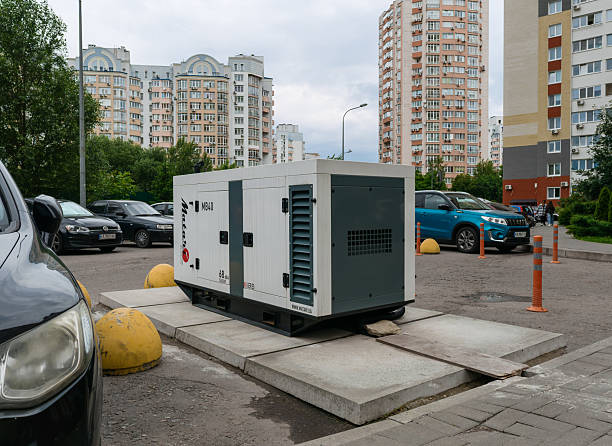
Power outages are a fact of life in Florida. Between hurricanes, tropical storms, heavy rain, and aging utility infrastructure, many homeowners and business owners experience unexpected power loss every year.
For some properties, an outage is simply an inconvenience. For others, it can cause major problems. Refrigerated food can spoil. Security systems may stop working. Businesses can lose revenue. Critical equipment may shut down when power is unavailable.
That is why more Florida property owners are investing in standby generator installation. Unlike portable generators, standby generators operate automatically. When utility power fails, the system detects the outage and switches power to the generator within seconds. Once utility power returns, the generator safely transfers power back and shuts down.
One of the first questions most property owners ask is simple: How much does standby generator installation cost in Florida?
The answer depends on several factors. Generator size, fuel type, site conditions, permit requirements, electrical upgrades, and labor costs all affect the final price. A small residential system may cost significantly less than a large commercial backup power system designed to support an entire facility.
In this guide, we’ll break down typical 2026 installation costs, explain what affects pricing, and help you understand what is included in a professional standby generator installation.
Whether you own a home in Lakeland, manage a commercial property in Tampa, or operate an industrial facility in Polk County, understanding these costs can help you plan your project with confidence.
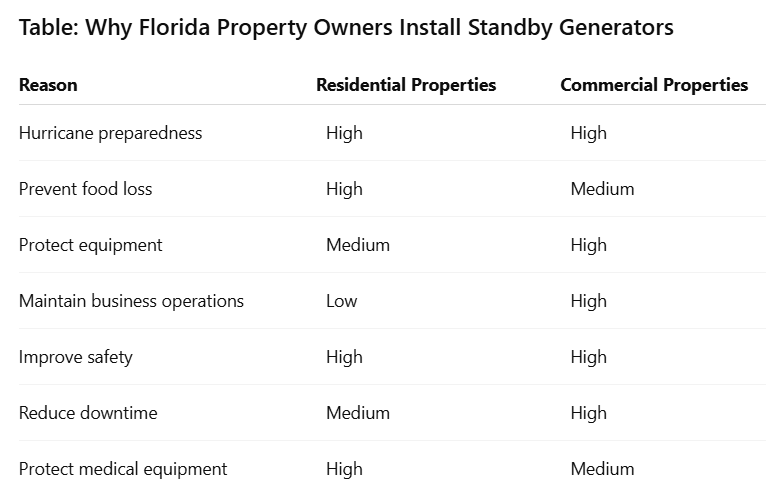
As power demands continue to increase, many Florida property owners view standby generators as a long-term investment rather than an optional upgrade.
What Does Standby Generator Installation Include?
Many people assume generator installation simply involves placing a generator outside and connecting a few wires. In reality, a professional standby generator installation includes several components working together to provide safe and reliable backup power.
Understanding what is included can help explain why installation costs vary from one property to another.
Generator Unit
The generator itself is usually the largest equipment expense.
Most residential properties use air-cooled standby generators ranging from 10 kW to 26 kW. Larger homes, commercial buildings, and industrial facilities often require liquid-cooled systems that can support higher electrical loads.
The generator’s size directly affects equipment costs, installation complexity, and long-term operating expenses.
Common generator applications include:
-
Essential home circuits
-
Whole-home backup power
-
Small commercial buildings
-
Retail facilities
-
Warehouses
-
Industrial operations
Choosing the correct size is important. An undersized generator may struggle during peak demand, while an oversized unit can increase project costs unnecessarily.
Automatic Transfer Switch (ATS)
The automatic transfer switch, often called an ATS, is one of the most important parts of the entire system.
When utility power fails, the ATS detects the outage and signals the generator to start. Once the generator is producing stable power, the switch transfers electrical loads from the utility to the generator.
When utility power returns, the ATS safely transfers power back and shuts down the generator. Without an automatic transfer switch, the generator cannot provide seamless backup power.
Electrical Connections
Professional standby generator installation also includes electrical integration with the building’s power system.
This process may involve:
-
Connecting the generator to the main electrical panel
-
Installing dedicated circuits
-
Upgrading wiring where necessary
-
Integrating surge protection
-
Verifying electrical code compliance
Older properties sometimes require additional electrical improvements before a new generator can be installed safely.
Fuel System Installation
Most Florida standby generators operate on natural gas or propane.
The fuel system portion of the project may include:
-
Gas piping installation
-
Propane tank connections
-
Pressure testing
-
Fuel regulator installation
-
Utility coordination
Fuel availability often affects both installation costs and long-term operating expenses. Natural gas is commonly preferred when utility service is already available. Propane is often selected for rural properties without natural gas access.
Site Preparation
The generator must be installed on a stable foundation.
Site preparation typically includes:
-
Concrete pad installation
-
Ground leveling
-
Equipment placement
-
Clearance verification
-
Drainage considerations
Florida weather conditions make proper site preparation especially important for long-term equipment reliability.
Testing and Commissioning
Once installation is complete, the system must be tested before being placed into service.
A professional commissioning process typically includes:
-
Startup testing
-
Load testing
-
Transfer switch verification
-
Safety inspections
-
Operational checks
This final step helps ensure the generator performs properly when an actual power outage occurs.
Understanding these installation components provides a clearer picture of where project costs come from and why professional standby generator installation is much more involved than simply purchasing a generator.
Average Standby Generator Installation Cost in Florida
One of the biggest factors influencing a generator project is cost. In Florida, standby generator installation prices vary widely because no two properties have the same power requirements.
A small home that only needs essential circuits will cost far less than a large home, commercial building, or industrial facility that requires full backup power.
In 2026, most professionally installed standby generator systems in Florida fall between $6,500 and $18,000+, although larger commercial and industrial projects can exceed those ranges depending on generator size, fuel requirements, and electrical infrastructure.
The final price includes much more than the generator itself. Installation labor, permits, fuel connections, transfer switches, site preparation, and electrical work all contribute to the total project cost.
Typical Residential Generator Installation Costs
Most Florida homeowners install generators ranging from 18 kW to 26 kW. These systems are typically designed to support:
-
Air conditioning systems
-
Refrigerators and freezers
-
Lighting circuits
-
Internet and communication equipment
-
Water heaters
-
Essential household appliances
For an average Florida home, professionally installed standby generator systems often range from $8,000 to $16,000 depending on generator capacity and installation complexity.
Typical Commercial Generator Installation Costs
Commercial facilities generally require larger systems because they must support:
-
Offices
-
Retail stores
-
Medical facilities
-
Restaurants
-
Multi-tenant properties
-
Warehouses
Commercial generator projects often begin around $15,000 and can exceed $100,000 for larger facilities with significant power demands.
Unlike residential installations, commercial projects may require:
-
Larger transfer switches
-
Three-phase power integration
-
Extended fuel systems
-
Additional permitting
-
Load management systems
Typical Industrial Generator Installation Costs
Industrial facilities often require custom-engineered backup power systems.
Examples include:
-
Manufacturing plants
-
Distribution centers
-
Processing facilities
-
Production equipment
-
Critical infrastructure
Industrial standby generator installations are usually priced on a project-specific basis because every facility has unique electrical requirements.
Table: Average Florida Standby Generator Installation Costs (2026)
Property TypeTypical Installed Cost RangeSmall Home (10–14 kW)$6,500–$10,000Average Home (18–22 kW)$8,000–$14,000Large Home (24–26 kW)$12,000–$20,000+Small Commercial Property$15,000–$40,000+Medium Commercial Facility$40,000–$100,000+Industrial FacilityCustom Pricing
Actual pricing varies based on equipment selection, site conditions, permitting requirements, and fuel system installation.
Equipment Costs
The generator unit itself typically represents the largest portion of the project budget.
General equipment ranges include:
-
10–14 kW generators
-
18–22 kW generators
-
24–26 kW generators
-
Commercial standby generators
-
Industrial standby generators
Larger generators cost more because they require bigger engines, larger alternators, and higher-capacity transfer equipment.
Labor Costs
Professional installation labor usually includes:
-
Site preparation
-
Generator placement
-
Electrical wiring
-
Transfer switch installation
-
Fuel system connections
-
Startup testing
Labor costs can range from a few thousand dollars for straightforward residential projects to significantly more for complex commercial installations.
Permit and Inspection Costs
Most Florida jurisdictions require permits for standby generator installation.
Permit expenses can include:
-
Electrical permits
-
Mechanical permits
-
Fuel gas permits
-
Final inspections
Permit costs are generally a small percentage of the total project budget, but they should always be included in planning.
Fuel System Costs
Fuel system work can affect pricing more than many property owners expect.
Additional costs may include:
-
Natural gas piping
-
Propane tank installation
-
Trenching
-
Pressure testing
-
Utility coordination
Properties located farther from gas connections typically require additional labor and materials.
Transfer Switch Costs
Every standby generator requires a properly sized transfer switch.
The transfer switch:
-
Detects power outages
-
Starts the generator automatically
-
Transfers electrical loads safely
-
Restores utility power when available
Higher-capacity commercial systems generally require more expensive transfer switch equipment, increasing overall project costs.
By understanding these cost categories, property owners can build a more realistic budget and avoid unexpected expenses during a standby generator installation project.
Florida Standby Generator Cost Breakdown
After reviewing average project costs, the next step is understanding where the money actually goes.
Many property owners focus only on generator pricing. However, the generator itself is only one part of the overall project. Installation, permits, fuel connections, site preparation, and electrical work can represent a significant portion of the final cost.
The good news is that understanding these expenses makes budgeting easier and helps prevent surprises during the installation process.
Generator Equipment Cost
The generator unit is typically the largest single expense.
Equipment pricing depends on:
-
Generator capacity (kW)
-
Air-cooled or liquid-cooled design
-
Manufacturer
-
Warranty coverage
-
Fuel type
Smaller generators designed for essential circuits generally cost less than whole-home or commercial backup systems. Larger generators require more powerful engines and additional components, which increases equipment costs.
Installation Labor Cost
Labor is often the second-largest expense in a standby generator installation project.
Professional installation includes:
-
Site evaluation
-
Generator placement
-
Electrical connections
-
Transfer switch installation
-
Fuel system integration
-
Testing and commissioning
Labor costs vary based on:
-
Property layout
-
Electrical complexity
-
Accessibility
-
Generator size
-
Local labor rates
Commercial and industrial installations generally require additional electricians and longer installation timelines.
Concrete Pad Cost
Every standby generator requires a stable surface. Most installations use a concrete pad or approved mounting system to support the equipment.
The pad must:
-
Support generator weight
-
Remain level
-
Meet manufacturer requirements
-
Provide proper drainage
Florida’s heavy rain and storm conditions make proper foundation preparation especially important.
Fuel Line Installation Cost
Fuel system installation can have a major impact on overall project costs.
Natural gas installations may require:
-
New gas piping
-
Meter upgrades
-
Utility coordination
-
Pressure testing
Propane installations may require:
-
Tank placement
-
Fuel line installation
-
Regulator installation
-
Safety inspections
The farther the generator is located from the fuel source, the more labor and materials are typically required.
Trenching Cost
Some properties require trenching to install electrical conduits or fuel lines.
Factors affecting trenching costs include:
-
Distance
-
Soil conditions
-
Existing landscaping
-
Concrete removal requirements
-
Underground utility conflicts
Simple installations may require very little trenching, while larger projects can involve extensive underground work.
Electrical Panel Upgrade Cost
Not every electrical panel is ready for a standby generator. Older homes and buildings sometimes require upgrades before generator installation can begin.
Common upgrades include:
-
Main panel replacement
-
Service upgrades
-
Circuit reconfiguration
-
Grounding improvements
-
Surge protection additions
While these upgrades add to project costs, they often improve safety and system reliability.
Permit and Inspection Cost
Most Florida municipalities require permits before installation begins.
Depending on the project, permits may include:
-
Electrical permits
-
Mechanical permits
-
Fuel gas permits
-
Building permits
Inspections help verify:
-
Code compliance
-
Safe installation practices
-
Proper system operation
Permit costs are relatively small compared to total project costs, but they remain an important budget consideration.
Maintenance Cost After Installation
A standby generator is a long-term investment. Like any mechanical equipment, it requires regular maintenance to perform reliably.
Typical maintenance services include:
-
Oil changes
-
Filter replacement
-
Battery testing
-
Fuel system inspections
-
Load testing
-
Annual system inspections
Routine maintenance helps reduce unexpected failures and extends equipment life.
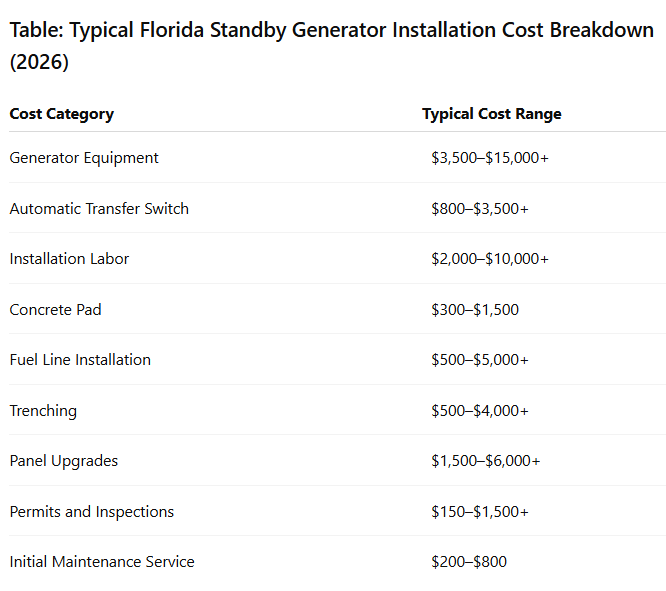
Actual project costs vary based on property requirements, generator size, fuel type, and local permit requirements.
When all of these components are combined, it becomes clear why two generator installations can have very different price tags, even when the generators themselves are similar.
For that reason, experienced electricians typically perform a site assessment before providing a final quote. This allows them to identify fuel requirements, electrical upgrades, permitting needs, and installation challenges before work begins.
Thinking about a standby generator installation for your home, business, or facility? Hylton Electric provides practical guidance and free quotes for commercial and industrial projects throughout Lakeland, Polk County, and Tampa. Call +1 863-624-7000 or email ray@hylton-electric.com to discuss your backup power needs.
What Factors Affect Standby Generator Installation Costs?
No two generator installations cost exactly the same. A homeowner may receive a quote of $9,000, while a neighboring property receives a quote closer to $15,000. In commercial and industrial settings, the price difference can be even larger.
Several factors determine the final cost of a standby generator installation in Florida. Understanding these factors can help property owners make informed decisions and avoid unexpected expenses.
Generator Size (kW)
Generator size is one of the biggest cost drivers. A larger generator can support more equipment and higher electrical loads. However, larger systems also require:
-
Bigger engines
-
Larger transfer switches
-
Additional fuel capacity
-
More installation labor
For example, a generator designed to power a few essential circuits costs significantly less than a system designed to run an entire home or commercial facility. Proper sizing is important because both undersized and oversized generators can create problems.
Home or Building Square Footage
The size of the property often influences generator requirements.
Larger properties typically have:
-
More lighting circuits
-
Additional HVAC equipment
-
More appliances
-
Greater electrical demand
As square footage increases, backup power requirements usually increase as well.
Fuel Type Selection
Most Florida standby generators operate on either natural gas or propane. Each option has different installation requirements.
Natural gas systems may require:
-
Utility coordination
-
Gas meter upgrades
-
Additional piping
Propane systems may require:
-
Tank installation
-
Tank refilling services
-
Additional site preparation
Fuel availability and infrastructure often affect both upfront and long-term costs.
Distance From Utility Connections
The location of the generator matters. Installing a generator close to existing electrical and fuel connections is usually less expensive than placing it farther away.
Longer distances often require:
-
Additional wiring
-
More conduit
-
Extended gas piping
-
Additional trenching
These extra materials and labor costs can add up quickly.
Existing Electrical Infrastructure
The condition of the existing electrical system can significantly impact project costs.
Older properties may require:
-
Panel upgrades
-
Circuit modifications
-
Grounding improvements
-
Service upgrades
Modern electrical systems generally require fewer modifications, resulting in lower installation costs.
Flood Zone Requirements
Many Florida properties are located in flood-prone areas.
In some cases, generators may need:
-
Elevated mounting systems
-
Special site preparation
-
Additional engineering considerations
These requirements can increase installation costs but help protect equipment during severe weather events.
Local Permit Requirements
Permit requirements vary by municipality. Some jurisdictions require multiple inspections and permit approvals before installation can be completed.
Permit complexity can affect:
-
Project timelines
-
Administrative costs
-
Overall installation expenses
Site Accessibility
Easy access helps reduce labor costs.
Difficult access may require:
-
Specialized equipment
-
Additional labor
-
Landscaping removal
-
Obstacle relocation
Generators installed in tight spaces often require more time and effort than installations with open access.
Understanding these factors helps explain why professional site evaluations are such an important part of the generator installation process. A detailed assessment allows contractors to identify challenges early and provide more accurate pricing.
Standby Generator Costs by Generator Size
Generator size has one of the biggest impacts on installation costs. A larger generator can power more equipment during an outage, but it also increases equipment, labor, fuel, and installation expenses. Choosing the right size is important because it helps balance performance and budget.
Many Florida homeowners make the mistake of focusing only on the generator price. Instead, the goal should be selecting a generator that matches the property’s actual power requirements.
A professional load calculation is the best way to determine the correct generator size.
10–14 kW Generators
These smaller standby generators are often used for essential backup power.
They commonly support:
-
Refrigerators
-
Lighting circuits
-
Internet equipment
-
Small appliances
-
Limited HVAC operation
They are a practical option for smaller homes that do not need whole-house coverage.
18–22 kW Generators
This is one of the most common generator sizes installed in Florida homes.
These systems can often support:
-
Central air conditioning
-
Refrigeration
-
Lighting
-
Water heaters
-
Kitchen appliances
-
Home office equipment
Many homeowners choose this size because it provides a good balance between coverage and cost.
24–26 kW Generators
Larger residential properties often require generators in this range.
These systems can support:
-
Multiple air conditioning systems
-
Larger homes
-
Additional appliances
-
Pool equipment
-
Expanded electrical loads
Although installation costs increase, these generators provide greater flexibility during extended outages.
30–50 kW Generators
Small and medium-sized commercial facilities frequently use generators in this category.
Common applications include:
-
Retail stores
-
Office buildings
-
Restaurants
-
Medical offices
-
Small warehouses
These systems are designed to maintain operations during utility interruptions and reduce business downtime.
60+ kW Generators
Large commercial and industrial facilities often require generators exceeding 60 kW.
Applications may include:
-
Manufacturing facilities
-
Distribution centers
-
Multi-building properties
-
Critical infrastructure
-
Large healthcare facilities
These installations typically involve custom engineering and site-specific design.

The right generator size depends on more than square footage. Factors such as HVAC systems, electrical equipment, future expansion plans, and business continuity requirements all influence sizing decisions.
For that reason, experienced electricians typically perform a detailed load assessment before recommending a generator.
Residential vs Commercial Standby Generator Installation
While residential and commercial generators serve the same basic purpose, the installation requirements can be very different. Commercial systems often require larger equipment, more extensive permitting, and additional electrical infrastructure. Understanding these differences helps explain why commercial generator projects usually cost more than residential installations.
Residential Generator Requirements
Most residential standby generators are designed to support:
-
Essential circuits
-
Whole-home backup power
-
HVAC systems
-
Refrigeration
-
Lighting
-
Home office equipment
Residential projects are generally simpler because electrical loads are smaller and system designs are more straightforward.
Typical residential installations include:
-
Air-cooled generators
-
Automatic transfer switches
-
Natural gas or propane fuel connections
-
Standard electrical integration
Commercial Generator Requirements
Commercial facilities often require larger and more complex backup power systems.
These generators may support:
-
Office operations
-
Point-of-sale systems
-
Security systems
-
Refrigeration equipment
-
Computer networks
-
Tenant spaces
Commercial projects often involve:
-
Larger transfer switches
-
Three-phase electrical systems
-
Extended fuel storage
-
Load management equipment
-
Multiple electrical panels
As a result, installation costs are usually higher.
Industrial Generator Requirements
Industrial facilities typically have the most demanding power requirements.
These projects may involve:
-
Manufacturing equipment
-
Production lines
-
Distribution systems
-
Process controls
-
Heavy machinery
Industrial generator systems are often custom-designed to meet specific operational needs. Additional engineering and permitting requirements can significantly increase project complexity.
Key Cost Differences
Several factors contribute to the cost difference between residential and commercial installations.
These include:
-
Generator size
-
Fuel system complexity
-
Electrical infrastructure
-
Permit requirements
-
Engineering requirements
-
Testing procedures
Commercial and industrial systems also tend to require more maintenance and ongoing service than residential units.
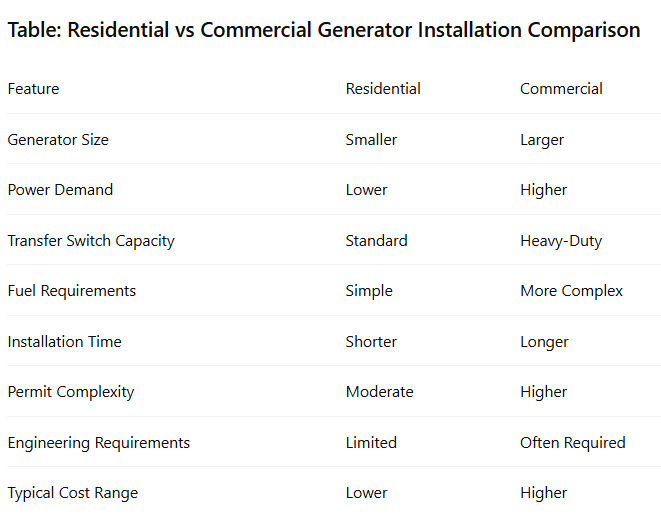
Although commercial projects cost more upfront, they often provide significant value by reducing downtime, protecting inventory, and maintaining business operations during outages.
Natural Gas vs Propane Standby Generator Costs
One of the most important decisions during a standby generator installation is selecting a fuel source. In Florida, natural gas and propane are the two most common options. Each has advantages and disadvantages that affect both installation costs and long-term operation.
Natural Gas Installation Costs
Natural gas generators connect directly to a utility gas line.
Advantages include:
-
Continuous fuel supply
-
No fuel storage tank
-
Lower maintenance requirements
-
Convenient operation
However, installation may require:
-
New gas piping
-
Meter upgrades
-
Utility coordination
-
Additional permits
If natural gas service already exists at the property, installation costs are often lower.
Propane Installation Costs
Propane generators use fuel stored in an on-site tank.
Benefits include:
-
Availability in rural areas
-
Independence from utility gas service
-
Reliable fuel storage
Installation may involve:
-
Propane tank purchase or rental
-
Tank placement
-
Fuel line installation
-
Additional site preparation
These additional requirements can increase initial installation costs.
Fuel Availability in Florida
Natural gas service is common in many urban and suburban areas. However, some rural locations rely primarily on propane because natural gas infrastructure may not be available. Fuel availability often becomes a deciding factor when selecting a generator system.
Long-Term Operating Costs
Operating costs vary depending on:
-
Generator size
-
Runtime hours
-
Fuel prices
-
Maintenance requirements
Natural gas often offers lower long-term fuel costs when utility service is readily available. Propane may have higher fuel costs, but it provides greater flexibility in areas without natural gas access.
Which Option Is Best for Florida Properties?
The best choice depends on the property’s location, utility access, and backup power goals.
Natural gas may be the better option when:
-
Utility gas service already exists
-
Continuous fuel supply is important
-
Lower operating costs are a priority
Propane may be the better option when:
-
Natural gas is unavailable
-
Rural locations are involved
-
Independent fuel storage is preferred
Selecting the right fuel source is an important part of managing both installation costs and long-term generator performance. A professional site evaluation can help determine which option is best for your property and budget.
Step-by-Step Standby Generator Installation Process
Many property owners know they want backup power, but they are not sure what happens during the installation process. A professional standby generator installation involves several steps. Each one helps ensure the system operates safely, meets local code requirements, and performs properly during a power outage. While every project is different, most installations follow a similar process.
Step 1: Site Evaluation
The process starts with a site assessment.
An electrician evaluates:
-
Electrical demand
-
Property layout
-
Fuel availability
-
Generator placement options
-
Local code requirements
This visit helps determine the best location for the generator and identifies potential installation challenges.
Step 2: Load Calculation and Generator Sizing
Choosing the right generator size is one of the most important steps. A load calculation determines how much power the property requires during an outage.
The electrician reviews:
-
Air conditioning systems
-
Appliances
-
Lighting
-
Equipment
-
Business operations
-
Future expansion plans
Proper sizing helps avoid performance issues and unnecessary costs.
Step 3: Permit Approval
Most Florida municipalities require permits before installation begins.
Depending on the project, permits may include:
-
Electrical permits
-
Fuel gas permits
-
Mechanical permits
-
Building permits
Permit requirements vary by jurisdiction, so approval timelines can differ from one city to another.
Step 4: Equipment Selection
Once sizing is complete, the appropriate generator and transfer switch are selected.
Factors include:
-
Power requirements
-
Fuel type
-
Budget
-
Available installation space
-
Future needs
At this stage, equipment is ordered, and project scheduling begins.
Step 5: Site Preparation
Before installation can begin, the site must be prepared.
This may include:
-
Ground leveling
-
Concrete pad installation
-
Utility marking
-
Trenching
-
Clearance verification
Proper site preparation helps protect the generator and ensures compliance with manufacturer guidelines.
Step 6: Generator Installation
Once the foundation is ready, the generator is delivered and installed.
The unit is:
-
Positioned on the pad
-
Secured properly
-
Inspected for damage
-
Prepared for electrical and fuel connections
Proper placement is critical for airflow, accessibility, and long-term reliability.
Step 7: Fuel Connection
The generator is then connected to its fuel source.
Depending on the system, this may involve:
-
Natural gas piping
-
Propane tank connections
-
Fuel regulators
-
Pressure testing
All fuel connections must meet safety and code requirements.
Step 8: Automatic Transfer Switch Installation
The automatic transfer switch (ATS) is installed near the electrical service equipment.
The ATS is responsible for:
-
Detecting outages
-
Starting the generator
-
Switching power sources
-
Returning power to the utility when service is restored
Without a properly installed transfer switch, automatic backup power is not possible.
Step 9: Inspection and Testing
After installation is complete, the system is thoroughly tested.
Testing typically includes:
-
Generator startup
-
Transfer switch operation
-
Load testing
-
Safety verification
-
Utility power simulation
This process confirms that the generator will operate correctly during an actual outage.
Step 10: Ongoing Maintenance
The installation process does not end after startup. Regular maintenance helps ensure reliable operation for years to come.
Maintenance services may include:
-
Oil changes
-
Battery replacement
-
Filter replacement
-
Fuel system inspections
-
Annual performance testing
Routine maintenance reduces the risk of unexpected failures during severe weather events.
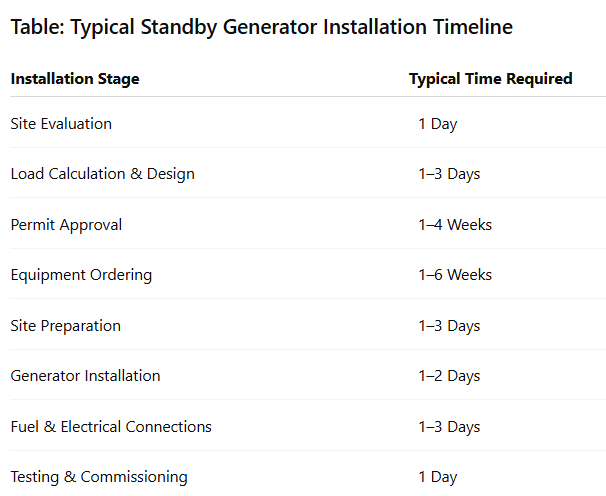
Actual timelines vary based on permitting, equipment availability, and project complexity.
How Long Does Standby Generator Installation Take?
One of the most common questions property owners ask is how long the installation process will take. The answer depends on several factors, including permitting requirements, generator availability, site conditions, and project complexity. While the physical installation itself is often completed within a few days, the overall project timeline is usually longer.
Pre-Installation Timeline
The planning phase often takes several days.
This stage includes:
-
Site evaluation
-
Load calculations
-
Generator sizing
-
Proposal preparation
-
Equipment selection
For residential projects, this process is usually completed quickly. Commercial and industrial projects may require additional planning.
Permit Timeline
Permits often have the biggest impact on project schedules.
Approval times vary depending on:
-
Local jurisdiction
-
Project scope
-
Inspection requirements
-
Workload at permitting offices
Some permits may be approved within days, while others can take several weeks.
Equipment Availability Timeline
Generator availability can affect scheduling.
Factors include:
-
Manufacturer inventory
-
Generator size
-
Fuel type
-
Seasonal demand
Demand often increases before and during hurricane season, which can extend lead times.
Installation Timeline
Once permits and equipment are available, installation moves relatively quickly.
Most residential installations require:
-
One to three days for site work
-
One to two days for equipment installation
-
One day for testing and startup
Commercial projects may take longer depending on system size and complexity.
Inspection Timeline
Most jurisdictions require final inspections before the project can be completed.
Inspection schedules depend on:
-
Local building departments
-
Inspector availability
-
Permit requirements
Passing inspection confirms that the installation meets code requirements.
Common Causes of Installation Delays
Several factors can extend project timelines.
These include:
-
Permit processing delays
-
Equipment shortages
-
Severe weather
-
Utility coordination
-
Unexpected electrical upgrades
-
Fuel system modifications
Planning ahead can help minimize many of these delays. For Florida property owners, scheduling generator installation before hurricane season is often the best way to avoid equipment shortages and long wait times.
Signs You Should Consider Standby Generator Installation
Not every property requires backup power. However, certain situations make a standby generator a smart investment. If any of the following apply to your property, it may be time to consider a standby generator installation.
Frequent Power Outages
Repeated outages are one of the clearest warning signs.
Even short interruptions can affect:
-
Comfort
-
Productivity
-
Security
-
Equipment performance
Properties located in storm-prone areas often benefit most from standby backup power.
Remote Work Dependence
Many homeowners now work from home.
A power outage can interrupt:
-
Video meetings
-
Internet access
-
Cloud-based work
-
Communication systems
A standby generator helps maintain productivity during unexpected outages.
Medical Equipment Needs
Some households depend on electrically powered medical devices.
Examples include:
-
Oxygen equipment
-
CPAP machines
-
Mobility equipment
-
Refrigerated medications
Reliable backup power can provide important peace of mind during emergencies.
Business Downtime Concerns
For commercial facilities, downtime often means lost revenue.
Power outages can disrupt:
-
Customer service
-
Point-of-sale systems
-
Refrigeration
-
Manufacturing operations
-
Data systems
Backup power helps businesses continue operating when utility service is unavailable.
Hurricane Preparedness Goals
Florida property owners understand the risks associated with hurricane season.
A standby generator can help maintain access to:
-
Air conditioning
-
Lighting
-
Refrigeration
-
Communications
-
Security systems
For many homeowners and businesses, backup power is an important part of emergency preparedness planning.
Common Standby Generator Installation Mistakes
A standby generator is a major investment. When installed correctly, it can provide reliable backup power for many years. Unfortunately, some property owners make decisions that increase costs, reduce performance, or create safety concerns. Understanding these common mistakes can help you avoid expensive problems later.
Choosing the Wrong Generator Size
One of the most common mistakes is selecting a generator based solely on price. Some property owners choose a smaller generator to reduce upfront costs. Others purchase a larger unit than they actually need. Both approaches can create problems.
An undersized generator may:
-
Struggle during peak demand
-
Overload during outages
-
Reduce equipment life
-
Cause voltage fluctuations
An oversized generator may:
-
Increase installation costs
-
Consume more fuel
-
Operate less efficiently
A professional load calculation is the best way to determine the proper generator size.
Ignoring Fuel Requirements
Fuel planning is often overlooked during the early stages of a project.
Many people focus on generator capacity without considering:
-
Fuel availability
-
Fuel storage requirements
-
Utility access
-
Long-term operating costs
For example, a natural gas generator may seem ideal until the property owner learns that gas service upgrades are required. Evaluating fuel options early can prevent unexpected expenses later.
Hiring Unlicensed Contractors
Generator installation involves electrical work, fuel systems, permitting, and safety requirements.
Hiring an unlicensed contractor may lead to:
-
Code violations
-
Failed inspections
-
Safety risks
-
Warranty issues
-
Insurance complications
Licensed electricians understand local requirements and help ensure installations meet applicable codes.
Skipping Permit Requirements
Some property owners attempt to reduce costs by avoiding permits. This approach can create serious problems.
Potential consequences include:
-
Project delays
-
Failed inspections
-
Fines
-
Insurance disputes
-
Difficulties during property sales
Permits help verify that installations are completed safely and correctly.
Overlooking Future Power Needs
A generator should support both current and future requirements.
Property owners sometimes forget to consider:
-
Home additions
-
New HVAC equipment
-
Electric vehicle chargers
-
Business expansion
-
Additional machinery
Planning ahead may prevent the need for expensive upgrades later.
Delaying Routine Maintenance
A standby generator is not a “set it and forget it” system. Without regular maintenance, problems may go unnoticed until an outage occurs.
Routine service helps identify:
-
Battery issues
-
Fuel system concerns
-
Oil leaks
-
Wear and tear
-
Performance problems
Preventive maintenance is often far less expensive than emergency repairs.
Checklist: Generator Installation Mistakes to Avoid
- Choose the correct generator size
- Verify fuel availability before installation
- Hire a licensed electrical contractor
- Obtain required permits
- Plan for future electrical needs
- Schedule routine maintenance
- Test the system regularly
Avoiding these mistakes can help maximize reliability, improve safety, and protect your investment.
How to Reduce Standby Generator Installation Costs
While standby generators represent a significant investment, there are several ways to control costs without sacrificing quality or reliability. The goal should never be to cut corners. Instead, property owners should focus on making informed decisions that improve value.
Size the Generator Correctly
Proper sizing is one of the easiest ways to manage costs.
A larger generator increases:
-
Equipment costs
-
Fuel consumption
-
Installation expenses
Many homes do not need whole-house backup power. Instead, some property owners choose to power only essential circuits, reducing both generator size and installation costs.
Install Before Hurricane Season
Demand for generators typically increases before and during hurricane season.
Higher demand can lead to:
-
Longer wait times
-
Equipment shortages
-
Increased pricing
-
Scheduling delays
Installing early often provides more equipment options and greater scheduling flexibility.
Use Existing Utility Connections
Projects are usually less expensive when generators are located near existing:
-
Electrical panels
-
Gas meters
-
Propane tanks
Shorter runs require fewer materials and less labor.
Combine Electrical Upgrades
If a property already needs electrical improvements, it may be cost-effective to complete them during generator installation.
Examples include:
-
Panel upgrades
-
Surge protection installation
-
Service upgrades
-
Circuit reconfiguration
Combining projects can sometimes reduce overall labor costs.
Compare Detailed Quotes
Not all quotes include the same services.
Property owners should compare:
-
Equipment specifications
-
Labor scope
-
Permit costs
-
Fuel system work
-
Warranty coverage
-
Maintenance options
The lowest price is not always the best value.
Invest in Quality Equipment
Lower-cost equipment may save money initially, but higher-quality systems often provide:
-
Better reliability
-
Longer service life
-
Stronger warranties
-
Improved performance
In many cases, quality equipment reduces long-term ownership costs.
When to Hire a Licensed Generator Electrician in Florida
Generator installation is not a typical DIY project. These systems connect directly to a property’s electrical and fuel infrastructure. Improper installation can create serious safety hazards. For that reason, Florida property owners should work with qualified professionals whenever standby generator installation is involved.
Permit Requirements
Most generator projects require permits.
Licensed electricians understand:
-
Local regulations
-
Permit processes
-
Inspection requirements
-
Documentation standards
This helps prevent delays and compliance issues.
Electrical Code Compliance
Electrical codes exist to protect people and property.
A licensed electrician ensures that:
-
Wiring is installed correctly
-
Grounding systems meet code
-
Transfer switches operate safely
-
Electrical connections are properly protected
Code-compliant installations reduce safety risks and improve system reliability.
Fuel System Safety
Generator installations often involve natural gas or propane connections.
Fuel system work must be completed correctly to prevent:
-
Leaks
-
Fire hazards
-
Equipment damage
-
Performance issues
Professional installation helps ensure these systems operate safely.
Insurance and Warranty Protection
Many manufacturers require professional installation to maintain warranty coverage. Additionally, insurance companies may require code-compliant installations performed by qualified contractors. Professional installation can help protect both equipment warranties and insurance eligibility.
Long-Term Reliability
Experienced electricians understand how backup power systems perform under real-world conditions.
They can help with:
-
Proper sizing
-
Equipment selection
-
Future expansion planning
-
Maintenance recommendations
This expertise often improves long-term system performance and reliability.
Benefits of Professional Generator Installation
Working with a licensed electrician provides several advantages:
-
Safer installation
-
Code compliance
-
Proper permitting
-
Reliable operation
-
Manufacturer warranty protection
-
Professional testing and commissioning
Most importantly, it provides confidence that the generator will perform when it is needed most.
For Florida homeowners, business owners, and facility managers, professional installation is one of the best ways to protect a backup power investment.
Choosing the Best Generator Installer in Florida
The quality of the installation is just as important as the quality of the generator itself.
Even the best generator can experience performance issues if it is installed incorrectly. That is why choosing the right electrical contractor is one of the most important decisions in the entire project.
Florida property owners should look beyond price alone and evaluate experience, qualifications, and long-term support.
Verify Licensing and Insurance
Always confirm that the contractor is properly licensed and insured.
A qualified generator installer should have:
-
Appropriate electrical licensing
-
Liability insurance
-
Workers’ compensation coverage
-
Experience with standby generator systems
Licensing helps ensure the contractor understands local codes and safety requirements.
Ask About Generator Experience
Not all electricians specialize in generators.
Before hiring a contractor, ask:
-
How many generator systems have they installed?
-
Do they install residential and commercial systems?
-
Are they familiar with local permitting requirements?
-
Do they provide maintenance services?
Experience often translates into smoother installations and fewer problems later.
Review Local Project Experience
Florida presents unique challenges for generator installations.
These include:
-
Hurricane exposure
-
Flood zones
-
High humidity
-
Local permit requirements
-
Fuel infrastructure considerations
Contractors with local experience often understand these challenges better than companies working outside the area.
Evaluate Maintenance and Support Services
Generator ownership continues long after installation is complete.
Ask whether the contractor offers:
-
Preventive maintenance
-
Annual inspections
-
Emergency service
-
Warranty support
-
System testing
Ongoing support helps protect your investment.
Compare More Than Price
The lowest quote is not always the best choice.
When reviewing proposals, compare:
-
Equipment quality
-
Warranty coverage
-
Scope of work
-
Permit handling
-
Fuel system work
-
Maintenance options
A slightly higher upfront investment may provide better long-term value.
Questions to Ask Before Hiring a Generator Installer
Before signing a contract, consider asking:
-
What generator size do you recommend and why?
-
Will permits be included?
-
What warranty coverage is available?
-
How long will installation take?
-
Do you provide maintenance services?
-
What fuel option is best for my property?
The answers can help identify contractors who prioritize quality and long-term reliability.
Case Example: Florida Business Backup Power Upgrade
Consider a small commercial facility in Central Florida that experienced multiple outages during storm season.
The business relied on:
-
Computers
-
Security systems
-
Refrigeration equipment
-
Customer service operations
After evaluating outage risks, the owner installed a standby generator system sized for critical business functions.
The project included:
-
Generator installation
-
Transfer switch integration
-
Fuel system upgrades
-
Permit approvals
-
Final testing
As a result, the facility was able to continue operating during future outages while reducing downtime and revenue loss. The exact solution will vary by property, but this example shows how proper planning can improve business continuity.
Generator Technology Trends in 2026
Generator technology continues to improve. Modern standby generators are more efficient, easier to monitor, and better equipped to support today’s electrical demands. Several trends are shaping generator installations throughout Florida in 2026.
Smart Generator Monitoring
Many new generators include remote monitoring capabilities.
Property owners can:
-
Check generator status
-
Receive maintenance alerts
-
Monitor performance
-
View operating history
These features make it easier to identify issues before they become major problems.
Mobile App Integration
Mobile applications allow users to monitor their systems from almost anywhere.
Common app features include:
-
Generator status updates
-
Outage notifications
-
Maintenance reminders
-
Performance reports
This added visibility helps improve system management.
Advanced Load Management Systems
Load management technology allows generators to prioritize important electrical loads during outages.
Benefits include:
-
Improved efficiency
-
Better power distribution
-
Reduced generator size requirements
-
Lower operating costs
This technology is becoming increasingly common in residential and commercial installations.
Improved Fuel Efficiency
Manufacturers continue to improve fuel consumption rates.
Modern generators often provide:
-
Better runtime performance
-
Reduced fuel costs
-
Lower emissions
-
More efficient operation
These improvements help reduce long-term ownership expenses.
Hybrid Backup Power Solutions
Some property owners are combining generators with other backup power technologies.
Examples include:
-
Solar energy systems
-
Battery storage systems
-
Energy management platforms
While generators remain the primary backup power source for many properties, hybrid solutions are becoming more common.
Remote Diagnostics
Advanced generators can now provide diagnostic information directly to service providers.
This allows technicians to:
-
Identify problems quickly
-
Schedule repairs efficiently
-
Reduce downtime
-
Improve maintenance planning
Remote diagnostics can help improve overall system reliability.
Conclusion
Power outages remain a reality for many Florida property owners. Whether the cause is a hurricane, severe storm, utility issue, or equipment failure, losing power can quickly become costly and disruptive.
A professionally installed standby generator provides dependable backup power when it matters most. It can protect homes, keep businesses operating, support critical equipment, and reduce the stress that often comes with unexpected outages.
In 2026, standby generator installation costs in Florida vary based on generator size, fuel type, electrical infrastructure, site conditions, and permitting requirements. While every project is different, understanding these factors makes it easier to build a realistic budget and choose the right system.
The most successful projects begin with proper planning. Accurate sizing, professional installation, quality equipment, and ongoing maintenance all play important roles in long-term reliability.
Property owners who invest in the right backup power solution often gain more than convenience. They gain peace of mind knowing their home or business is better prepared for the next outage.
Looking for guidance on standby generator installation in Lakeland, Polk County, Tampa, or nearby areas? Hylton Electric helps residential, commercial, and industrial clients plan reliable backup power solutions. Call +1 863-624-7000 or email ray@hylton-electric.com. Free quotes are available for commercial and industrial projects.
FAQs About Standby Generator Installation
How much does standby generator installation cost in Florida in 2026?
Most Florida homeowners spend between $6,500 and $20,000+ for standby generator installation in 2026. Commercial and industrial projects often cost more because they require larger equipment and more complex electrical work.
The final price depends on several factors:
-
Generator size
-
Fuel type
-
Transfer switch requirements
-
Permit fees
-
Fuel line installation
-
Electrical upgrades
The best way to get accurate pricing is through a professional site evaluation and load calculation.
What size standby generator does a typical Florida home need?
Most Florida homes need an 18 kW to 26 kW standby generator.
The right size depends on:
-
Home size
-
Number of air conditioning units
-
Appliances
-
Water heaters
-
Pool equipment
-
Home office needs
Smaller homes may only need a 10–14 kW generator for essential circuits. Larger homes often require a larger system for whole-house backup power.
A licensed electrician can perform a load calculation to determine the proper generator size.
Does standby generator installation require permits in Florida?
Yes. Most Florida cities and counties require permits for standby generator installation.
Permit requirements often include:
-
Electrical permits
-
Fuel gas permits
-
Mechanical permits
-
Final inspections
Permits help ensure the installation meets local safety and building codes. They also help protect homeowners during insurance claims and future property sales.
How long does standby generator installation take?
Most residential standby generator projects take several weeks from start to finish.
The process usually includes:
-
Site evaluation
-
Generator sizing
-
Permit approval
-
Equipment delivery
-
Installation
-
Testing and inspection
The actual installation often takes only one to three days. However, permit approvals and equipment availability can extend the overall timeline.
Is a standby generator worth it in Florida?
For many Florida property owners, the answer is yes.
A standby generator provides:
-
Automatic backup power
-
Better storm preparedness
-
Protection for food and appliances
-
Support for medical equipment
-
Reduced business downtime
Because Florida experiences hurricanes, tropical storms, and power outages, many homeowners and business owners see a standby generator as a long-term investment.
Can a standby generator power an entire house?
Yes, if the generator is properly sized.
Whole-house generators can power:
-
Air conditioning systems
-
Refrigerators
-
Freezers
-
Lighting
-
Kitchen appliances
-
Electronics
Some homeowners choose to power only essential circuits. This option reduces installation costs while still providing reliable backup power during outages.
What is included in standby generator installation?
A professional standby generator installation includes several components.
Typical services include:
-
Generator installation
-
Automatic transfer switch installation
-
Electrical connections
-
Fuel system connections
-
Site preparation
-
Testing and startup
Some projects may also require trenching, panel upgrades, permit coordination, or concrete pad installation.
How much does an automatic transfer switch cost?
Transfer switch costs vary based on generator size and electrical requirements.
For many residential projects, the transfer switch and installation can range from several hundred dollars to several thousand dollars.
The transfer switch is an important part of the system because it:
-
Detects power outages
-
Starts the generator
-
Transfers electrical loads
-
Restores utility power
Without a transfer switch, automatic backup power is not possible.
Should I choose natural gas or propane for my generator?
Both options work well in Florida.
Natural gas offers:
-
Continuous fuel supply
-
No fuel storage tank
-
Lower maintenance requirements
Propane offers:
-
Reliable fuel storage
-
Availability in rural areas
-
Independence from utility gas service
The best option depends on fuel availability, installation costs, and personal preference.
How often does a standby generator need maintenance?
Most standby generators should be serviced at least once each year.
Routine maintenance may include:
-
Oil changes
-
Filter replacement
-
Battery testing
-
Fuel system inspections
-
Load testing
Regular maintenance helps improve reliability and reduces the chance of unexpected failures during an outage.
Can I install a standby generator myself?
Professional installation is strongly recommended.
Standby generators connect directly to electrical and fuel systems. Improper installation can create serious safety risks and may violate local codes.
Professional installation helps ensure:
-
Safe operation
-
Proper permitting
-
Code compliance
-
Warranty protection
Most manufacturers also recommend professional installation.
Does a standby generator increase home value?
A standby generator can increase a home’s appeal and may add value.
Many buyers view backup power as a desirable feature because it offers:
-
Convenience
-
Safety
-
Storm preparedness
-
Protection from power outages
The exact value increase depends on the property, location, and local real estate market.
How much fuel does a standby generator use?
Fuel usage depends on:
-
Generator size
-
Fuel type
-
Runtime
-
Electrical load
Larger generators consume more fuel than smaller units. Fuel consumption also increases when more appliances and equipment are operating during an outage.
Manufacturers provide fuel usage information for each generator model.
What happens if a standby generator is undersized?
An undersized generator may not provide enough power during an outage.
Common problems include:
-
Overloading
-
Equipment shutdowns
-
Voltage fluctuations
-
Reduced generator lifespan
This is why proper sizing is one of the most important parts of the installation process.
A professional load calculation helps ensure the generator can handle your property’s power needs.
How do I choose the right standby generator installer?
Start by looking for a licensed and insured electrical contractor with generator experience.
Before hiring a company, ask about:
-
Licensing
-
Insurance
-
Generator installation experience
-
Permit handling
-
Maintenance services
-
Warranty support
A qualified installer can help ensure the system is safe, code-compliant, and ready to perform when utility power is unavailable.
Leave a Reply