
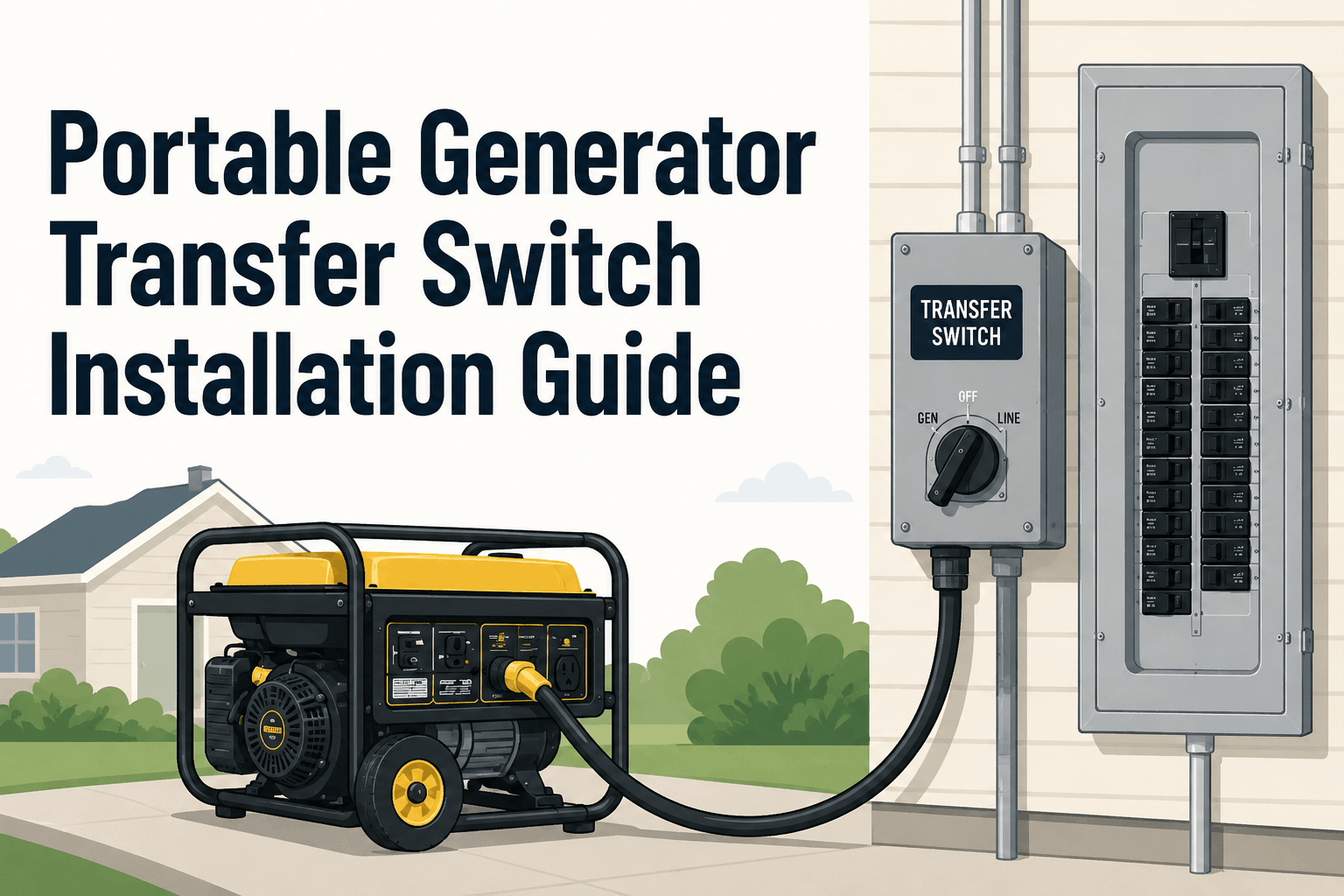
What Is a Portable Generator Transfer Switch?
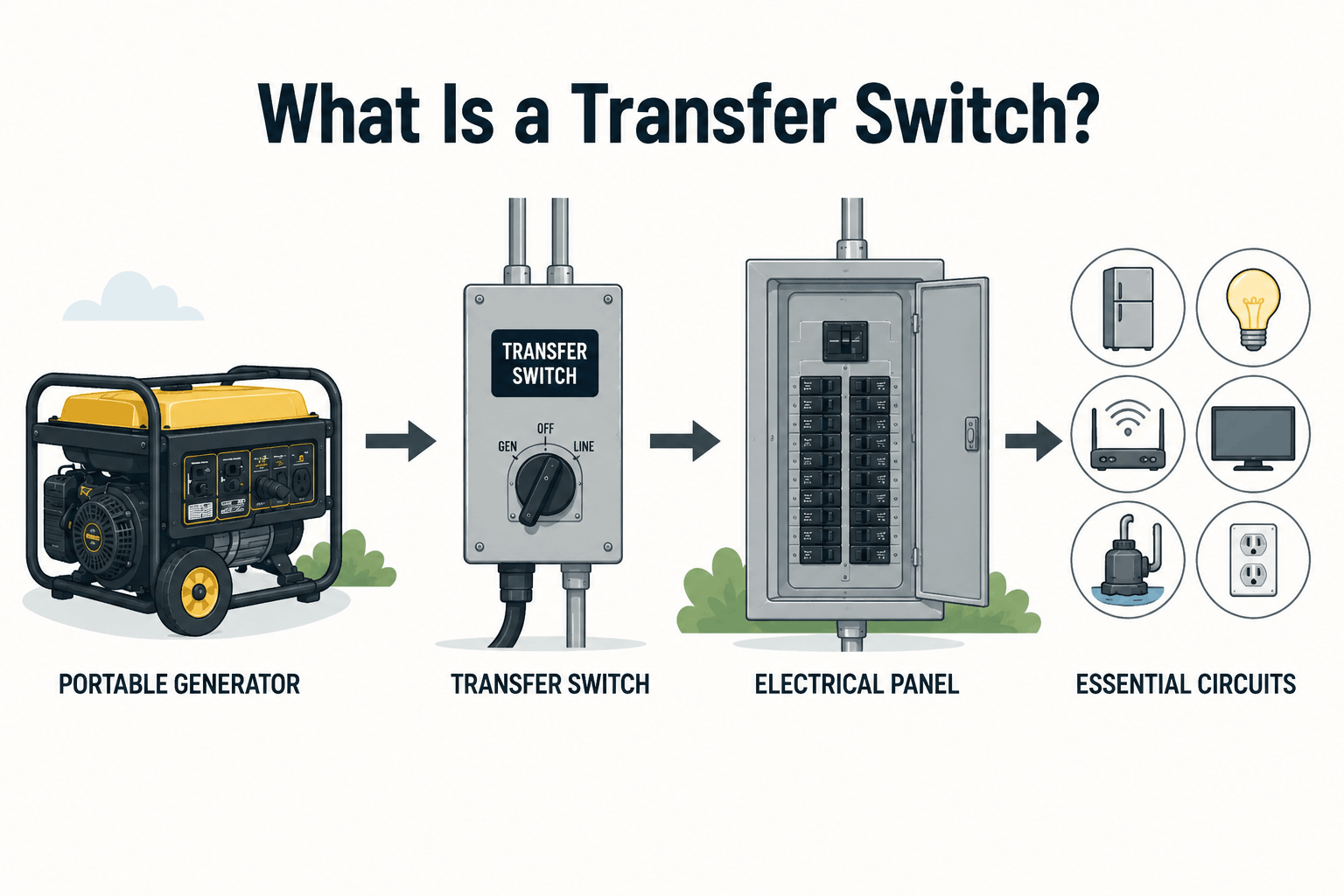
A portable generator transfer switch is a device that safely connects a portable generator to your electrical system during a power outage. Think of it as a traffic controller for electricity.
When utility power is available, your electrical panel receives power from the utility company as usual. When the power goes out, the transfer switch allows you to disconnect from the utility grid and switch selected circuits over to generator power.
Without a transfer switch, electricity from a generator can flow in the wrong direction. This is called backfeeding, and it can create serious safety risks for utility workers, occupants, and electrical equipment. A transfer switch prevents that from happening.
In Simple Terms
Instead of plugging appliances into multiple extension cords, a transfer switch lets your generator power important circuits directly through your electrical panel.
That means you can safely operate things like:
Refrigerators and freezers
Interior lighting
Internet equipment
Well pumps
Medical devices
Garage door openers
Security systems
Essential office equipment
For many Florida property owners, a transfer switch is one of the smartest upgrades they can make before storm season arrives.
Why Florida Property Owners Need a Generator Transfer Switch
Power outages are a fact of life in Florida. While some outages last only a few minutes, others can leave homes and businesses without electricity for hours or even days.
If you’ve ever dealt with a major storm, you already know how quickly things can become stressful. Food starts warming up in the refrigerator. The house gets hotter. Internet service becomes unreliable. Business operations slow down or stop completely.
A portable generator can help, but only if it can deliver power safely where you need it.
Extension Cords Are Not a Long-Term Backup Power Plan
Many people buy a generator and assume a few extension cords will solve the problem. For a short outage, that might work. For a longer outage, it quickly becomes frustrating.
Extension cords create several problems:
Limited access to power
Tripping hazards
Overloaded circuits
Open doors and windows during storms
Increased fire risks
Constant plugging and unplugging
A transfer switch eliminates these issues by creating a dedicated connection between your generator and your electrical system. Instead of running cords throughout the property, you can power selected circuits safely from one central location.
Hurricane Season Makes Backup Power More Important
Florida residents understand how unpredictable hurricane season can be. Even a storm that doesn’t make direct landfall can cause widespread outages. Many homeowners wait until a storm is approaching before thinking about backup power. By then, generators are selling out, and electricians are booked for weeks. Installing a transfer switch before hurricane season gives you one less thing to worry about when severe weather arrives.
Businesses Have Even More at Stake
For commercial properties, power outages are more than an inconvenience.
They can lead to:
Lost revenue
Interrupted operations
Customer service issues
Equipment downtime
Security concerns
Data and network disruptions
A properly installed transfer switch helps keep critical systems running while utility crews work to restore power. For restaurants, retail stores, offices, warehouses, healthcare facilities, and industrial operations, this can make a significant difference during an emergency.
Safety Is the Biggest Reason
The biggest benefit of a transfer switch isn’t convenience. It’s safety. Improper generator connections are one of the most common causes of electrical hazards during power outages.
A professionally installed transfer switch helps:
Prevent backfeeding
Protect electrical equipment
Reduce fire risks
Support code compliance
Provide a safer backup power solution
If you’re investing in a portable generator, installing a transfer switch is often the next step toward creating a safer and more reliable backup power system.
Need help planning a generator connection or transfer switch installation? Hylton Electric provides residential, commercial, and industrial electrical services throughout Lakeland, Polk County, Tampa, and surrounding Florida communities. Call for a free estimate
+1 863-624-7000
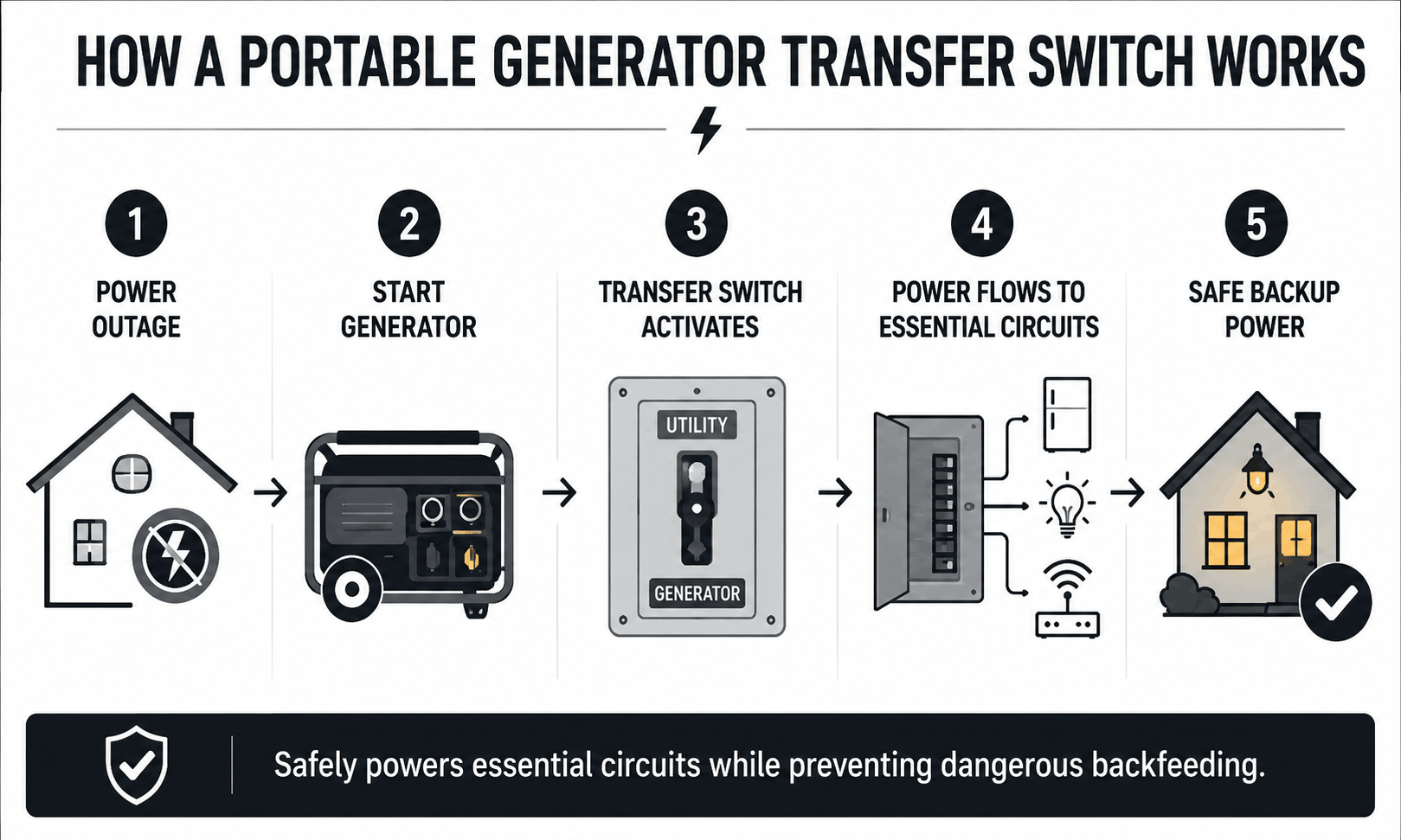
How a Portable Generator Transfer Switch Works
Many people hear the term “transfer switch” but aren’t exactly sure what it does. The good news is that the concept is fairly simple.
A transfer switch acts as a safe bridge between your generator and your electrical system. It controls where your property gets power from and prevents utility power and generator power from being connected at the same time.
Without a transfer switch, electricity can flow in the wrong direction and create serious safety hazards. With a properly installed transfer switch, power moves exactly where it’s supposed to go.
A Simple Example
Imagine a power outage hits your neighborhood. Your refrigerator, lights, internet router, and other important equipment suddenly shut off. You wheel out your portable generator and start it according to the manufacturer’s instructions.
Instead of running extension cords all over the house, you connect the generator to the designated power inlet installed by your electrician. You then switch selected circuits from utility power to generator power using the transfer switch.
Within minutes, your essential systems are running again. The process is cleaner, safer, and far more convenient than managing multiple extension cords.
What Happens During Normal Operation?
When utility power is available, your transfer switch remains connected to the electrical grid. Electricity flows through your electrical panel and supplies power to your home or building just like it normally would.
In this mode:
The generator is not supplying power
The utility company powers all circuits
The transfer switch remains in its normal position
Your electrical system operates as usual
Most property owners don’t even notice the transfer switch during normal conditions.
What Happens During a Power Outage?
When utility power fails, the transfer switch allows you to safely transition to generator power. The exact process depends on the type of transfer switch installed, but the goal is always the same. The system must disconnect from the utility before generator power is introduced. This separation is critical because it prevents backfeeding.
A typical outage process looks like this:
Utility power goes out.
The generator is started.
The transfer switch disconnects utility power.
Generator power is connected.
Selected circuits receive electricity.
This allows essential equipment to continue operating while keeping the electrical system safe.
What Is Backfeeding and Why Is It Dangerous?
Backfeeding occurs when generator power flows back into utility lines. Many homeowners don’t realize how dangerous this can be. If a generator is connected incorrectly, electricity can travel through power lines that utility crews believe are de-energized. This creates a serious risk of injury or death for workers attempting to restore service.
Backfeeding can also:
Damage electrical equipment
Destroy generators
Harm appliances
Create fire hazards
Cause code violations
A transfer switch is specifically designed to prevent this problem. That’s one of the biggest reasons electricians strongly recommend transfer switch installations instead of temporary generator hookups.
How the Transfer Switch Connects to Your Electrical Panel
A transfer switch is typically installed near your main electrical panel. The switch is wired into the designated circuits that you want powered during an outage. These are often called “essential circuits.”
For homeowners, essential circuits commonly include:
Refrigerator
Freezer
Kitchen outlets
Living room lighting
Internet equipment
Medical equipment
Well pumps
Garage door opener
For commercial properties, they may include:
Security systems
Computer networks
Refrigeration equipment
Emergency lighting
Point-of-sale systems
And for industrial facilities, essential loads may include:
Control systems
Monitoring equipment
Safety systems
Critical production equipment
The transfer switch gives you control over which circuits receive generator power and which remain off.
Why You Can’t Power Everything at Once
One of the most common misconceptions about portable generators is that they can power an entire property. In reality, most portable generators have limited capacity. That’s why load planning is such an important part of transfer switch installation.
Your electrician will calculate how much power your generator can safely produce and determine which circuits should be prioritized. For example, powering a refrigerator, lights, internet equipment, and a few outlets may be realistic.
Trying to power an entire home, a central air conditioning system, an electric water heater, and every appliance simultaneously may overload the generator. A properly designed transfer switch installation helps balance power demands and prevent overloads.
Manual Transfer Switches
Manual transfer switches require the property owner to move the switch when power goes out.
The process is straightforward:
Start the generator
Connect the generator
Move the transfer switch
Restore power to selected circuits
Many homeowners choose manual transfer switches because they are reliable and cost-effective. They are especially popular for portable generator installations.
Advantages of Manual Transfer Switches
Lower installation cost
Reliable operation
Simple design
Ideal for portable generators
Easier maintenance
For many Florida homeowners, a manual transfer switch provides an excellent balance between safety and affordability.
Automatic Transfer Switches
Automatic transfer switches operate differently. These systems automatically detect a utility outage and switch power sources without manual intervention. They are most commonly used with standby generators rather than portable generators. When utility power returns, the system automatically switches back to the electrical grid.
Automatic transfer switches are often found in:
Healthcare facilities
Commercial buildings
Industrial facilities
Critical infrastructure locations
Because they provide seamless operation, they are frequently used where power interruptions must be minimized.
How Long Does the Switching Process Take?
For a portable generator system, the transition usually takes only a few minutes.
The exact timeline depends on:
Generator startup time
Transfer switch design
Property size
Circuit configuration
Most homeowners can restore power to essential circuits quickly once the generator is running. That’s significantly faster and safer than manually connecting multiple appliances with extension cords.
Why Professional Installation Matters
A transfer switch may seem simple from the outside, but the installation process involves much more than mounting a box on a wall.
A licensed electrician must evaluate:
Electrical panel capacity
Load requirements
Circuit priorities
Code compliance
Permit requirements
Safety considerations
Improper installation can lead to overloaded circuits, equipment damage, failed inspections, and serious safety risks. That’s why transfer switch installation should always be handled by a qualified electrical contractor.
At Hylton Electric, we help homeowners, businesses, and industrial facilities throughout Lakeland, Polk County, Tampa, and surrounding Florida communities design safe backup power systems that are built for reliability, code compliance, and long-term performance.
Key Takeaway
A portable generator transfer switch allows you to safely power essential circuits during an outage without relying on extension cords or unsafe temporary connections.
By isolating your property from utility power and directing generator power where it’s needed most, a transfer switch improves safety, convenience, and emergency preparedness for residential, commercial, and industrial properties alike.
Types of Generator Transfer Switches
Not all transfer switches work the same way. The best option for your property depends on the type of generator you own, how much power you need during an outage, and your budget.
Some systems are designed to power a few essential circuits. Others can support larger electrical loads and more complex backup power setups. Understanding the differences can help you choose a solution that fits your needs today and in the future.
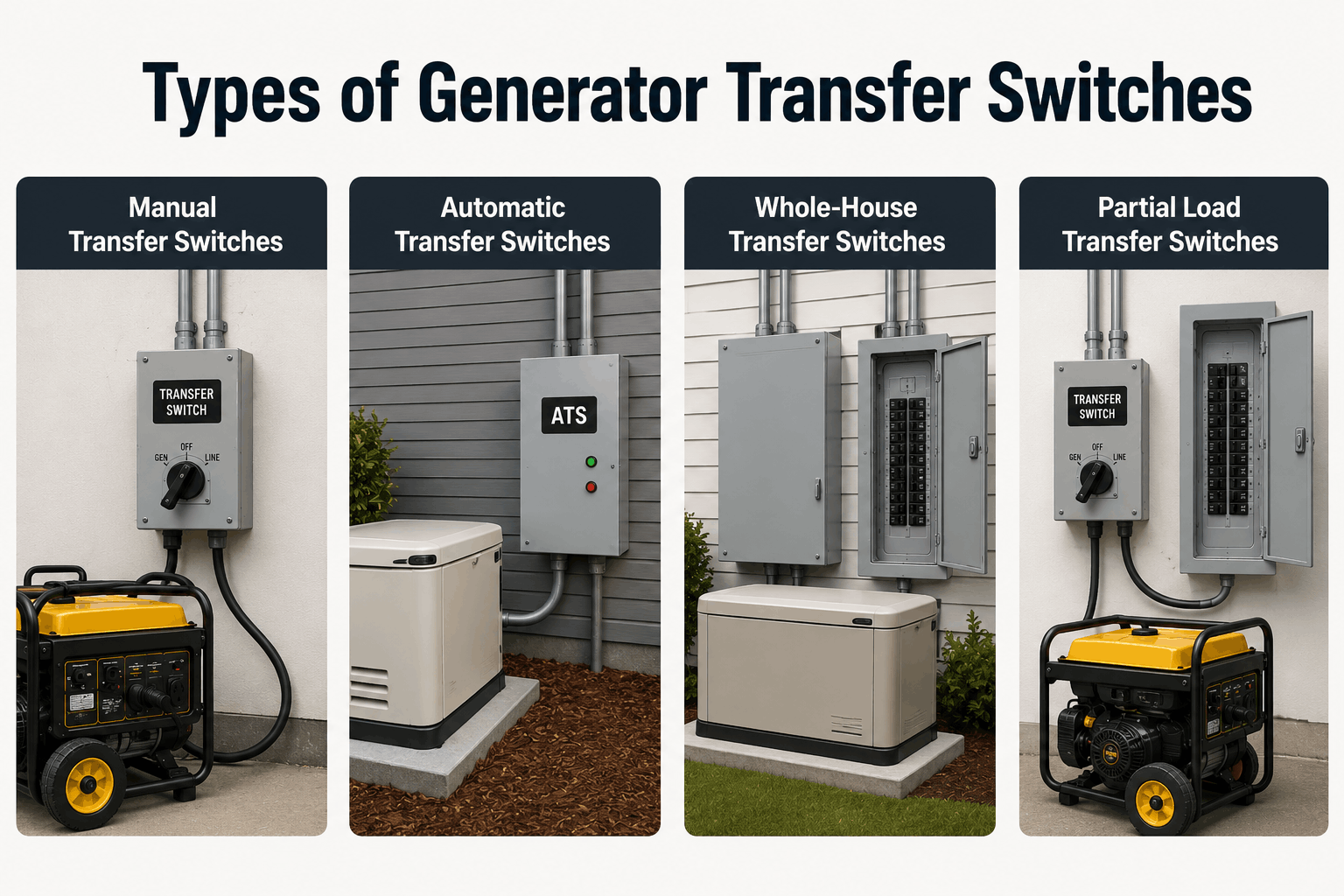
Manual Transfer Switches
A manual transfer switch is the most common option used with portable generators. As the name suggests, the property owner manually switches from utility power to generator power when an outage occurs.
The process is simple:
Start the generator.
Connect it to the power inlet.
Move the transfer switch to generator mode.
Restore power to selected circuits.
Once utility power returns, you switch the system back to normal operation. Many homeowners prefer manual transfer switches because they are reliable, straightforward, and cost-effective.
Benefits of a Manual Transfer Switch
Lower installation cost
Simple operation
Reliable performance
Ideal for portable generators
Easier maintenance requirements
For most residential properties in Lakeland and surrounding Florida communities, a manual transfer switch provides a practical balance between safety and affordability.
Automatic Transfer Switches
An automatic transfer switch works differently. Instead of requiring someone to operate the switch manually, the system detects a power outage and automatically transfers electrical loads to a backup power source.
These systems are most commonly paired with standby generators rather than portable generators. When utility power returns, the transfer switch automatically reconnects the property to the electrical grid. This process happens without the homeowner or facility manager doing anything.
Benefits of an Automatic Transfer Switch
Automatic operation
Faster power restoration
Convenient during emergencies
Ideal for critical systems
Reduced downtime
Automatic transfer switches are often used in healthcare facilities, commercial buildings, manufacturing plants, and other locations where uninterrupted power is important.
Whole-House Transfer Switches
Some property owners want backup power for nearly every circuit in the building. In these situations, a whole-house transfer switch may be the right solution. These systems are typically paired with larger standby generators that can handle substantial electrical loads.
Depending on the generator size, a whole-house system may support:
Air conditioning systems
Refrigerators and freezers
Lighting circuits
Kitchen appliances
Water heaters
Home offices
Entertainment systems
While whole-house backup power offers the highest level of convenience, it also requires larger equipment and a larger investment.
Partial Load Transfer Switches
Many homeowners do not need to power every circuit during an outage. Instead, they focus on keeping the most important equipment running. This is where a partial load transfer switch becomes an excellent option. A partial load setup allows selected circuits to receive generator power while non-essential circuits remain off.
Common examples include:
Refrigerators
Lighting
Internet equipment
Medical devices
Well pumps
Garage door openers
Because fewer circuits are connected, partial load systems often work well with portable generators and can reduce installation costs.
Which Transfer Switch Is Best?
There is no single answer for every property. The right transfer switch depends on several factors, including:
Generator size
Property size
Electrical load requirements
Budget
Future expansion plans
Backup power goals
For example, a homeowner preparing for hurricane season may only need a manual transfer switch connected to essential circuits. A business owner concerned about downtime may benefit from a more advanced backup power solution.
An industrial facility may require a custom-designed system that supports critical equipment and operational continuity. This is why professional planning is important before purchasing equipment.
Why Professional Load Planning Matters
One of the biggest mistakes property owners make is choosing a transfer switch before understanding their electrical loads. A transfer switch should be selected based on how much power your generator can safely provide and which circuits are most important during an outage.
A licensed electrician can help you:
Identify critical loads
Calculate electrical demand
Evaluate panel capacity
Determine generator compatibility
Recommend the right transfer switch size
This planning process helps avoid costly upgrades later and ensures your backup power system performs as expected when you need it most.
Key Takeaway
Manual transfer switches are the most common choice for portable generators because they are affordable, reliable, and easy to operate. However, every property has different backup power needs. The best transfer switch for your home, business, or facility depends on your electrical system, generator size, and long-term goals.
Working with an experienced electrical contractor can help you choose a system that provides safe, reliable power when outages occur.
Transfer Switch vs Interlock Kit: Which Is Better?
If you’ve been researching generator connections, you’ve probably come across two common options: transfer switches and interlock kits. Many property owners assume they do the same thing. While both allow a generator to connect to an electrical system, they work differently and serve different purposes. Choosing the right option depends on your generator, electrical panel, budget, and backup power goals.
What Is a Generator Interlock Kit?
A generator interlock kit is a mechanical device installed on an electrical panel. Its job is to prevent the main breaker and generator breaker from being turned on at the same time. This prevents utility power and generator power from feeding the panel simultaneously.
When properly installed, an interlock kit can provide a safe way to connect a portable generator to a home’s electrical system. Unlike a transfer switch, an interlock kit does not have dedicated circuits built into a separate panel. Instead, it allows the generator to supply power through the main electrical panel.
How a Transfer Switch Differs
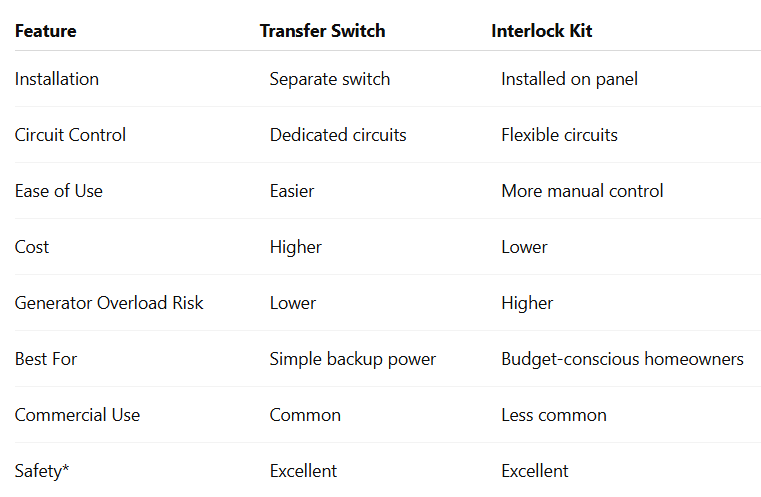
A transfer switch creates a dedicated connection between the generator and selected circuits. During an outage, you choose which circuits receive generator power. This makes power management easier and often more convenient for homeowners.
Instead of deciding which breakers to turn on and off, the critical circuits have already been identified during installation. For many property owners, this simplicity is a major advantage.
Transfer Switch Advantages
Transfer switches remain one of the most popular backup power solutions because they are designed specifically for generator operation.
Benefits include:
Easier operation during outages
Dedicated essential circuits
Better organization
Reduced the chance of overloading the generator
Clear circuit identification
Excellent option for homeowners
Many families prefer transfer switches because they provide a more user-friendly experience during stressful situations such as hurricanes and severe storms.
Interlock Kit Advantages
Interlock kits also have benefits. In some situations, they can be a practical and cost-effective solution.
Benefits may include:
Lower equipment cost
Ability to power different circuits as needed
Uses the existing electrical panel
Flexible circuit selection
When properly installed by a licensed electrician, interlock kits can provide safe generator connections for many homes.
Which Option Is Safer?
This is one of the most common questions homeowners ask. The truth is that both transfer switches and interlock kits can be safe when they are:
Properly designed
Professionally installed
Compatible with the electrical panel
Used according to the manufacturer’s instructions
The biggest safety problems usually occur when generators are connected without either system.
Unsafe generator hookups increase the risk of:
Backfeeding
Electrical fires
Equipment damage
Code violations
Personal injury
Whether you choose a transfer switch or an interlock kit, professional installation is critical.
Which Option Is Easier to Use?
For most homeowners, transfer switches are easier to operate. During an outage, the process is straightforward. The critical circuits have already been selected and labeled.
You simply:
Start the generator.
Connect it to the inlet.
Transfer power.
Use the designated circuits.
Interlock kits require more attention because you may need to manage breakers carefully to avoid overloading the generator. For some homeowners, that’s not a problem. For others, the simplicity of a transfer switch makes it the better choice.
Which Option Is Better for Florida Homes?
There isn’t a universal answer. The right solution depends on your specific property and backup power goals.
A transfer switch may be a better fit if:
You want a simple backup power setup.
You only need essential circuits.
You prefer an easier operation.
You want a dedicated emergency power system.
An interlock kit may be worth considering if:
Your panel supports it.
You want greater circuit flexibility.
You are looking for a lower-cost option.
Your electrical system is compatible.
Because every electrical panel is different, a professional evaluation is the best way to determine which option makes sense for your property.
What About Commercial and Industrial Properties?
Commercial and industrial facilities typically have more complex electrical systems. In many cases, dedicated transfer switches provide better control, reliability, and power management.
Businesses often need to prioritize critical loads, such as:
Security systems
Network equipment
Refrigeration units
Manufacturing equipment
Emergency lighting
Control systems
A properly designed transfer switch solution can help keep these systems operating during an outage while reducing the risk of downtime.
The Importance of a Professional Evaluation
The best backup power solution is not always the cheapest one. It’s the one that safely meets your needs when the power goes out.
Before choosing between a transfer switch and an interlock kit, consider:
Generator size
Electrical panel condition
Essential power requirements
Future expansion plans
Local code requirements
Budget considerations
A licensed electrician can evaluate your system and recommend the safest and most practical option.
Key Takeaway
Both transfer switches and interlock kits can provide safe generator connections when installed correctly. However, transfer switches are often preferred because they are easier to use, provide dedicated emergency circuits, and simplify power management during an outage.
If you’re unsure which option is right for your property, a professional electrical assessment can help you make an informed decision before the next storm or power outage occurs.
What Size Transfer Switch Do You Need?
One of the most common mistakes property owners make is choosing a transfer switch before understanding how much power they actually need. Bigger isn’t always better. Smaller isn’t always cheaper in the long run.
The right transfer switch should match both your generator and the electrical loads you want to power during an outage. That’s why load planning is one of the most important steps in any backup power project.
Start With Your Generator Size
The first thing to consider is the size of your generator. Portable generators come in many different capacities, ranging from small units designed to power a few appliances to larger systems capable of supporting multiple circuits.
For example:
A 3,500-watt generator may power a refrigerator, lights, and a few outlets.
A 7,500-watt generator can often support several essential household circuits.
A 10,000-watt or larger generator may handle a wider range of equipment, depending on the electrical load.
The transfer switch must be compatible with the amount of power your generator can safely produce. Installing a transfer switch that doesn’t match your generator or electrical needs can lead to performance issues and unnecessary expenses.
Identify Your Essential Circuits
The next step is deciding what you actually want to power during an outage. Most homeowners don’t need every circuit in the house running at the same time. Instead, they focus on the essentials.
Common priority circuits include:
Refrigerator
Freezer
Kitchen outlets
Internet equipment
Medical devices
Well pumps
Lighting circuits
Garage door opener
Security systems
Business owners may prioritize:
Point-of-sale systems
Security equipment
Computer networks
Refrigeration systems
Emergency lighting
Industrial facilities often focus on:
Control systems
Critical machinery
Monitoring equipment
Safety systems
Communications infrastructure
The more circuits you plan to power, the larger the transfer switch and generator requirements may become.
Understanding Running Watts vs Starting Watts
Not all electrical equipment uses the same amount of power. Many appliances require additional power when they first start up. This is known as starting wattage or surge wattage. For example, a refrigerator may use a moderate amount of electricity while running, but require significantly more power for a few seconds when the compressor starts.
The same is true for:
Air conditioners
Well pumps
Freezers
Sump pumps
Power tools
Commercial refrigeration equipment
Ignoring startup demands is one of the fastest ways to overload a generator. A proper load calculation takes both running and starting wattage into account.
Sample Load Calculation
Let’s look at a simple example.
A homeowner wants to power:
Refrigerator – 700 watts
Freezer – 600 watts
Internet equipment – 100 watts
LED lighting – 300 watts
Television – 200 watts
Total running load: 1,900 watts
At first glance, a small generator may seem sufficient. However, startup surges from the refrigerator and freezer could temporarily increase power demand. That’s why electricians perform more detailed calculations before recommending equipment.
Can a Portable Generator Run Your Entire Home?
Usually, no. Most portable generators are designed to power selected circuits rather than every electrical load in the home.
Large appliances often require substantial amounts of power, including:
Central air conditioning systems
Electric water heaters
Electric ranges
Clothes dryers
Pool equipment
Trying to power everything at once can quickly overload a generator. This is why many transfer switch installations focus on essential circuits rather than whole-home backup power. If your goal is to power nearly everything in the home, a standby generator system may be worth exploring.
Choosing Between Essential Power and Whole-Property Backup
Every property owner has different priorities. Some people simply want enough power to stay comfortable during a storm. Others want their property to function almost normally during an extended outage.
Questions to consider include:
Do you need refrigeration?
Do you work from home?
Do you rely on medical equipment?
Do you operate a business from the property?
Is uninterrupted internet access important?
Do you have critical equipment that cannot lose power?
Your answers help determine the type of transfer switch and generator setup that makes the most sense.
Why Professional Load Planning Matters
Many online generator calculators provide rough estimates. While these tools can be helpful, they don’t replace a professional evaluation.
A licensed electrician can assess:
Existing electrical loads
Generator capacity
Electrical panel configuration
Circuit priorities
Future electrical needs
Code requirements
This helps ensure the system is safe, reliable, and properly sized for real-world conditions.
Planning for Future Needs
A transfer switch installation should not only solve today’s problems. It should also account for future electrical demands.
For example, you may eventually add:
A larger generator
Additional appliances
Home office equipment
Security upgrades
Commercial equipment
Expanded facility operations
Planning ahead now can save money later and reduce the need for system modifications.
How Hylton Electric Helps
At Hylton Electric, we help homeowners, business owners, and facility managers determine the right backup power solution based on their actual needs.
Our process includes:
Evaluating electrical loads
Reviewing panel capacity
Identifying critical circuits
Recommending compatible equipment
Ensuring code-compliant installation
The result is a backup power system designed to perform when you need it most.
Key Takeaway
The right transfer switch size depends on your generator, electrical system, and the circuits you want to power during an outage.
Before purchasing equipment, it’s important to understand your electrical loads and backup power goals. A professional load assessment can help ensure your transfer switch and generator work together safely, efficiently, and reliably.
Portable Generator Transfer Switch Installation Process
Many homeowners are surprised to learn that installing a transfer switch involves much more than mounting a box on the wall. A safe and reliable installation requires proper planning, load calculations, electrical expertise, and code compliance. While every property is different, most transfer switch installations follow a similar process. Understanding these steps can help you know what to expect and why professional installation matters.
Step 1: Evaluate the Electrical System
Before any equipment is installed, the electrical system should be evaluated. This allows the electrician to determine whether the existing setup can safely support a transfer switch and generator connection.
During this evaluation, several factors are reviewed, including:
Electrical panel condition
Available panel space
Existing electrical loads
Generator compatibility
Circuit layout
Service capacity
Older electrical panels may require upgrades before a transfer switch can be installed safely. Identifying these issues early helps avoid unexpected problems later in the project.
Step 2: Determine Which Circuits Need Backup Power
Not every circuit needs to operate during an outage. In fact, most portable generators are designed to power essential loads rather than an entire property. This is why one of the most important steps is identifying critical circuits.
For homeowners, these often include:
Refrigerators
Freezers
Lighting circuits
Internet equipment
Medical devices
Well pumps
Security systems
For businesses, priorities may include:
Computer systems
Security equipment
Refrigeration
Emergency lighting
Point-of-sale equipment
Industrial facilities may need backup power for:
Control systems
Monitoring equipment
Safety systems
Production equipment
Communications infrastructure
Proper planning ensures that available generator power is used efficiently.
Step 3: Perform Load Calculations
Once the critical circuits are identified, load calculations are performed. This step determines how much electricity the selected circuits require and whether the generator can handle those demands.
The electrician evaluates:
Running wattage
Starting wattage
Peak demand
Future load requirements
Accurate calculations help prevent overloaded generators, nuisance shutdowns, and poor system performance during an outage. Skipping this step can lead to expensive mistakes.
Step 4: Select the Right Transfer Switch
Not all transfer switches are the same. The correct model depends on factors such as:
Generator size
Number of circuits
Electrical panel configuration
Property type
Future expansion plans
Choosing the right equipment ensures safe operation and long-term reliability. This is another reason professional guidance is valuable before purchasing equipment online or from a home improvement store.
Step 5: Obtain Required Permits
Depending on the location and scope of work, permits may be required before installation begins. Electrical permits help ensure the work complies with applicable codes and safety standards.
Permit requirements can vary based on:
Property type
Municipality
Electrical modifications
Generator connection method
Working with a licensed electrical contractor helps simplify this process and reduces the risk of compliance issues later.
Step 6: Install the Transfer Switch
Once planning and permitting are complete, installation can begin. The transfer switch is typically installed near the main electrical panel. The exact process varies depending on the system design, but generally includes:
Mounting the transfer switch
Connecting selected circuits
Installing generator connection components
Routing wiring safely
Labeling circuits
Attention to detail is critical during this stage because even small wiring errors can create safety hazards.
Step 7: Install the Generator Power Inlet
A transfer switch system also requires a safe way to connect the generator. This is usually accomplished through a power inlet box installed on the exterior of the building. The power inlet serves as the connection point between the portable generator and the transfer switch.
When an outage occurs, the generator can be connected quickly without relying on extension cords or temporary wiring methods. This provides a cleaner, safer, and more professional backup power solution.
Step 8: Test the System
Installation is only part of the process. The entire system should be tested to verify that it operates correctly.
Testing typically includes:
Generator connection verification
Circuit testing
Transfer switch operation testing
Safety checks
Load verification
The goal is to ensure the system performs as expected before an actual emergency occurs. A backup power system that hasn’t been tested may not work properly when it’s needed most.
Step 9: Final Inspection and Approval
If permits are required, the final step often involves an inspection. The inspection confirms that the installation meets applicable electrical codes and safety requirements. Once approved, the system is ready for normal operation. This final review provides additional confidence that the installation was completed correctly.
Common Installation Mistakes to Avoid
Transfer switch installations may look simple, but several mistakes can create serious problems.
Common issues include:
Improper wiring
Incorrect generator sizing
Overloaded circuits
Lack of permits
Poor circuit selection
Incompatible equipment
Unsafe generator connections
Many of these problems are avoidable when the project is handled by a qualified electrician.
How Long Does Installation Take?
Most residential transfer switch installations can be completed in a single day.
However, the actual timeline depends on several factors, including:
Electrical panel condition
Number of circuits
Permit requirements
Property complexity
Additional upgrades needed
Commercial and industrial projects may require additional planning and installation time due to larger electrical systems and more complex backup power requirements.
Why Professional Installation Is Worth It
A transfer switch is not something you want to discover is wired incorrectly during a power outage.
Professional installation helps ensure:
Safe operation
Proper load management
Code compliance
Reliable performance
Long-term durability
It also gives property owners peace of mind knowing their backup power system is ready when severe weather or unexpected outages occur.
Key Takeaway
Installing a portable generator transfer switch involves much more than connecting a generator to an electrical panel.
Proper planning, load calculations, equipment selection, permitting, installation, testing, and inspection all play important roles in creating a safe and dependable backup power system.
Working with an experienced electrical contractor helps ensure your transfer switch installation is completed correctly and ready to perform when you need backup power the most.
Cost of Transfer Switch Installation in Florida
One of the first questions homeowners ask is: “How much does a transfer switch installation cost?” The honest answer is that it depends on several factors.
Every property has different electrical requirements, and no two installations are exactly alike. The type of transfer switch, the condition of the electrical panel, the number of circuits involved, and the complexity of the installation can all affect the final cost.
That’s why most electrical contractors provide estimates after evaluating the property’s electrical system and backup power needs.
What Affects the Cost of a Transfer Switch Installation?
Several factors can influence the overall project cost.
Type of Transfer Switch
The type of transfer switch you choose plays a major role in pricing.
For example:
Manual transfer switches are typically more affordable.
Automatic transfer switches generally cost more due to additional equipment and functionality.
Larger systems designed for commercial or industrial applications often require more extensive installation work.
The best option depends on your backup power goals rather than simply choosing the least expensive equipment.
Number of Circuits
A transfer switch that powers six circuits will usually cost less than one designed to support ten or more circuits. The more circuits included in the project, the more planning, wiring, and installation work may be required. Property owners should focus on powering critical equipment rather than attempting to connect every circuit unnecessarily.
Electrical Panel Condition
The condition of the existing electrical panel can significantly impact project costs. If the panel is outdated, damaged, overcrowded, or nearing capacity, upgrades may be recommended before the transfer switch is installed. In some cases, addressing panel issues first can improve safety and provide a stronger foundation for future electrical upgrades.
Generator Compatibility
Not all generators and transfer switches are automatically compatible.
Additional work may be needed to ensure:
Proper electrical connections
Correct breaker sizing
Safe operation
Code compliance
Selecting compatible equipment from the beginning can help avoid unexpected expenses later.
Permit and Inspection Requirements
Depending on the project scope and local requirements, permits and inspections may be necessary. These requirements help verify that the installation meets applicable electrical safety standards. While permit costs vary by location, they are an important part of a properly completed installation.
Leave a Reply