
Key Electrical Statistics
Backup power is becoming more important across Florida. The numbers help explain why.
Severe weather remains one of the biggest causes of power outages in the United States.
Hurricanes and tropical storms can leave communities without power for days.
Backup power systems help reduce disruptions during extended outages.
Electrical installations must meet National Electrical Code safety requirements.
Proper permits and inspections help improve electrical safety and code compliance.
What Is Standby Generator Installation?
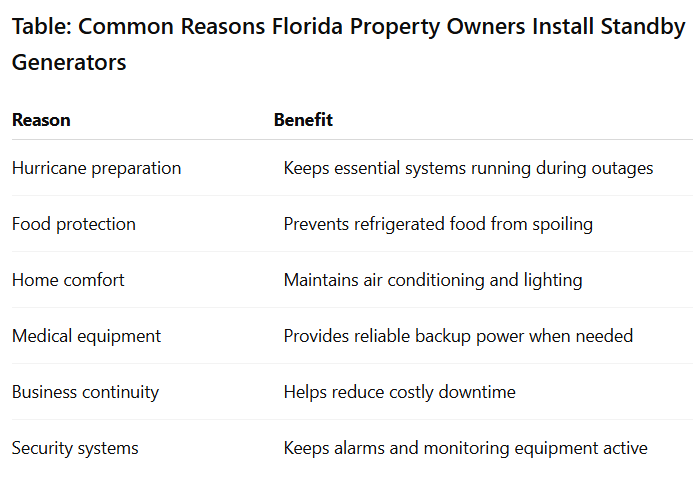
Standby generator installation is the process of connecting a permanent backup generator to your electrical system. The generator sits outside the home or building, much like an air conditioning unit. It connects to a fuel source, such as natural gas or propane, and works alongside an automatic transfer switch.
When utility power fails, the system detects the outage. A few seconds later, the generator starts automatically. The transfer switch safely moves power from the utility company to the generator. Once utility power returns, everything switches back automatically.
Most property owners never need to touch the system during an outage. That convenience is one reason standby generators have become so popular across Florida.
How a Standby Generator Works
The process is simple. First, the system constantly monitors incoming utility power. When power goes out, the generator receives a signal to start. Next, the automatic transfer switch moves the electrical load to the generator.
Your selected circuits begin receiving power again. Depending on the generator size, that may include:
Air conditioning systems
Refrigerators and freezers
Lighting
Medical equipment
Security systems
Computers and internet equipment
Business operations
Once utility power is restored, the transfer switch reconnects your property to the electrical grid. The generator then shuts down and waits for the next outage.
Standby vs Portable Generators
Many people compare standby generators to portable generators before making a decision. While both provide backup power, the experience is very different.
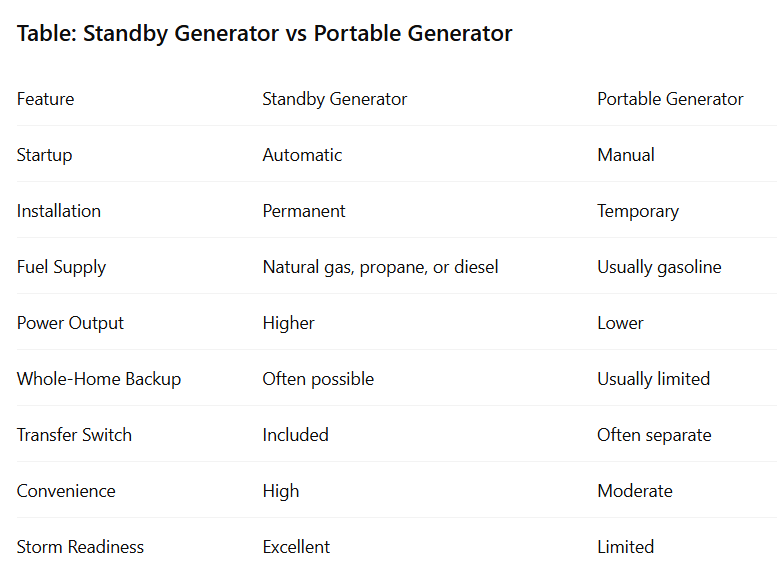
Portable generators can work well for short-term needs. However, many Florida homeowners prefer standby systems because they start automatically and provide more dependable backup power during major storms.
Why Florida Property Owners Choose Standby Systems
Florida weather can be unpredictable. A summer thunderstorm can cause an outage. A hurricane can cause one that lasts much longer.
For homeowners, a standby generator helps keep the house comfortable and safe. It can power essential appliances, lighting, and cooling systems when utility service is unavailable.
For businesses, the benefits can be even greater. A power outage can stop operations, interrupt customer service, and lead to lost revenue. Backup power helps reduce those risks.
Industrial facilities also depend on reliable power. Even a short outage can affect equipment, production schedules, and overall productivity. That is why standby generator installation continues to grow across Florida. For many property owners, it is no longer considered a luxury. It is part of a reliable emergency preparedness plan.
Average Standby Generator Installation Cost in Florida
The cost of a standby generator installation in Florida can vary quite a bit. A small backup system for a home will cost much less than a large system designed to power an entire house or commercial building. The final price depends on the generator size, fuel source, electrical work, permits, and site conditions. That said, most Florida property owners fall within a fairly predictable price range.
Typical Cost Range in Florida
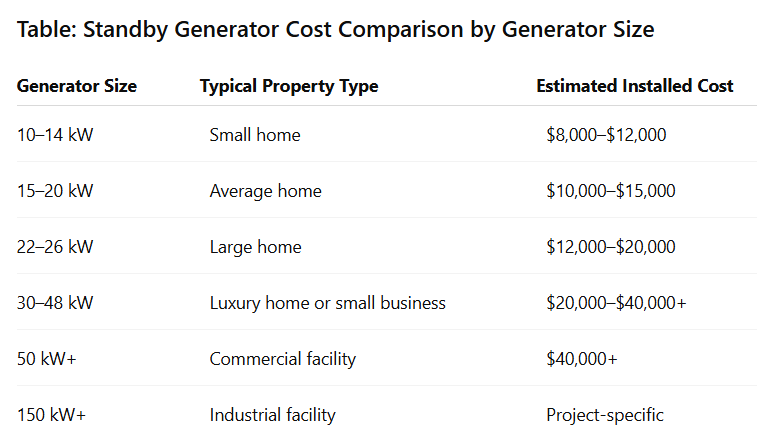
For many homes, a professionally installed standby generator costs between $8,000 and $20,000+. Smaller systems that power only essential circuits typically cost less. Larger whole-home systems cost more because they require larger generators, transfer switches, and additional installation work.
Commercial and industrial projects can range much higher depending on power demands.
It is important to look beyond the generator itself. The equipment is only one part of the project. Labor, permits, fuel connections, and electrical upgrades can add a significant amount to the total cost.
Average Residential Installation Costs
Most Florida homeowners choose generators between 14 kW and 26 kW. These sizes can power essential household systems and, in many cases, support most or all of the home’s electrical load.
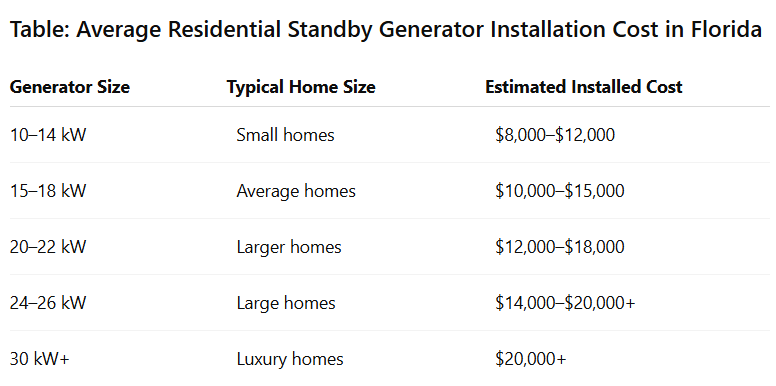
These numbers are general estimates. Actual costs can vary depending on the property’s electrical system and installation requirements. For example, a generator installed close to the electrical panel and fuel source may cost less than one requiring long trenching runs or extensive wiring.
Average Commercial Standby Generator Installation Costs
Commercial properties often require larger systems because they support more equipment and higher electrical loads. Restaurants, office buildings, retail stores, medical facilities, and warehouses all have different backup power needs.
In many cases, commercial standby generator installations start around $20,000 to $30,000 and can exceed $100,000 for larger facilities. Some businesses only want emergency circuits powered. Others need nearly a full building operation during an outage.
The larger the electrical demand, the larger the generator and installation budget.
Average Industrial Generator System Costs
Industrial facilities typically require the most powerful backup systems. Manufacturing plants, processing facilities, distribution centers, and production environments often need continuous power to protect equipment and operations.
Industrial generator projects frequently involve:
Large generator units
Custom power distribution systems
Multiple transfer switches
Advanced controls
Extensive permitting
Specialized electrical work
As a result, costs can range from tens of thousands to several hundred thousand dollars, depending on facility requirements.
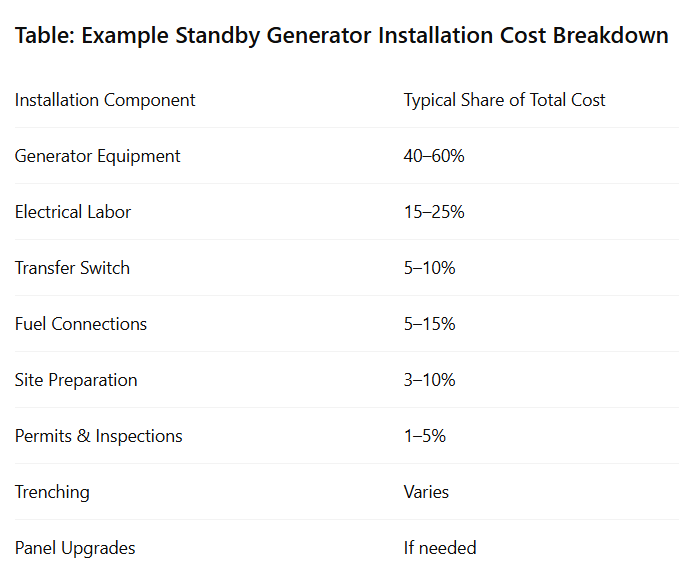
Cost Breakdown of Standby Generator Installation
Many property owners focus only on the price of the generator. However, the generator itself is often just one part of the overall project. Understanding where the money goes can help you build a more realistic budget.
Generator Equipment Cost
The generator unit is usually the largest expense. Generally, larger generators cost more because they produce more power and require larger components.
Several factors affect generator pricing:
Power output
Brand
Fuel type
Warranty coverage
Smart monitoring features
A small residential unit costs much less than a commercial-grade backup system designed for a large facility.
Automatic Transfer Switch Cost
Every standby generator needs an automatic transfer switch. This device acts as the system’s traffic controller. When utility power fails, the transfer switch safely moves the electrical load to the generator. When power returns, it switches everything back. Without a transfer switch, automatic operation would not be possible. Larger systems often require more advanced transfer switches, which can increase project costs.
Electrical Labor Costs
Labor is another major part of the installation budget.
A licensed electrician must:
Install wiring
Connect the transfer switch
Integrate the generator with the electrical panel
Test the system
Verify code compliance
Projects that require more electrical work naturally take longer and cost more.
Fuel Line Installation Costs
Standby generators need a reliable fuel source. Most Florida homeowners choose natural gas or propane. If an existing gas line is already nearby, installation may be relatively straightforward. However, if new gas piping must be installed or extended across the property, costs can increase quickly. Fuel system work often requires coordination between multiple contractors and inspections.
Concrete Pad and Site Preparation Costs
The generator must sit on a stable surface. Most installations use a concrete pad or approved mounting base.
Site preparation may include:
Ground leveling
Excavation
Concrete work
Drainage improvements
Difficult site conditions can increase installation costs.
Permit and Inspection Costs
Florida municipalities typically require permits for standby generator installations. Permit requirements may vary by location, but they often include:
Electrical permits
Mechanical permits
Fuel-related permits
Final inspections
These costs are usually a small percentage of the overall project but should still be included in the budget.
Trenching Costs
Sometimes the generator cannot be installed close to the electrical panel or fuel source. When that happens, trenching may be necessary.
Trenching is commonly used for:
Electrical conduit
Fuel lines
Communication wiring
Longer distances generally mean higher labor and material costs.
Electrical Panel Upgrade Costs
Not every property needs a panel upgrade. However, some older homes and buildings may not have enough capacity to safely support a standby generator.
A panel upgrade may be recommended if:
The panel is outdated.
Breakers trip frequently.
The panel lacks available space.
Service capacity is too small.
While this adds cost to the project, it can also improve safety and electrical reliability.
Need guidance on standby generator installation costs in Lakeland, Polk County, or Tampa?
Call Hylton Electric at +1 863-624-7000 or email ray@hylton-electric.com. We provide practical recommendations and free quotes for commercial and industrial projects. We also serve residential, commercial, and industrial clients throughout Lakeland, Polk County, Tampa, and surrounding areas.
Factors That Affect Standby Generator Installation Cost
Two homes can install the same generator model and end up with very different project costs. Why? Because every property is different. Several factors influence the final installation price. Understanding these factors can help explain why one quote may be higher or lower than another.
Generator Size Requirements
Generator size is usually the biggest cost factor. A generator designed to power a few essential circuits costs much less than one capable of running an entire home or business.
Larger generators require:
Bigger engines
Larger transfer switches
More fuel
Additional installation work
As power requirements increase, project costs usually increase as well.
Home or Building Electrical Load
Electrical load refers to how much power the property uses. A small home has very different needs than a large office building or industrial facility.
Professional load calculations help determine:
Generator size
Fuel requirements
Transfer switch sizing
Overall project scope
Choosing the correct size helps avoid overspending while ensuring reliable performance during outages.
Distance from Electrical Panel
Location matters. If the generator is installed close to the electrical panel, installation is often simpler.
Longer distances may require:
Additional wiring
More conduit
Trenching
Extra labor
These costs can add up quickly on larger properties.
Fuel Type Selection
The fuel source also affects installation cost. Natural gas systems often require access to an existing utility connection. Propane systems require storage tanks. Diesel systems may require separate fuel storage and additional maintenance planning. Each option comes with different installation and operating costs.
Property Layout Challenges
Some properties are easier to work on than others.
Factors that can increase installation complexity include:
Limited access
Sloped terrain
Landscaping obstacles
Existing structures
Flood-prone areas
The more complicated the site, the more labor may be required.
Existing Electrical Infrastructure
Older electrical systems sometimes require upgrades before a generator can be safely connected.
Common examples include:
Outdated electrical panels
Insufficient service capacity
Aging wiring
Code compliance issues
Addressing these issues can increase project costs but often improves overall electrical safety.
Local Permit Requirements
Permit costs are not usually the biggest expense, but they still affect the total project budget. Most Florida cities and counties require permits for standby generator installation. Depending on the project, you may need:
Electrical permits
Mechanical permits
Fuel or gas permits
Final inspections
Permit fees vary by location. A project in one city may cost more than a similar project in another. Working with a licensed electrical contractor helps simplify this process. They can usually handle permit applications and coordinate inspections as part of the project.
Hurricane and Flood Zone Considerations
Florida’s weather creates unique installation challenges. Generators installed in coastal areas or flood-prone locations may require additional planning. In some cases, the generator must be elevated or installed in a specific location to meet local requirements.
High-wind areas may also require stronger mounting systems. These extra requirements can increase installation costs, but they help protect the equipment during severe weather.
Standby Generator Installation Cost by Generator Size
Generator size has one of the biggest impacts on project cost. A larger generator costs more to purchase. It also requires larger electrical components and may use more fuel. That is why proper sizing is so important. Buying a generator that is too small can leave important equipment without power. Buying one that is too large can increase costs unnecessarily.
10–14 kW Systems
These generators are common for smaller homes.
They typically power:
Refrigerators
Basic lighting
Internet equipment
Small appliances
Essential outlets
For homeowners looking for basic backup power, this size is often the most affordable option.
15–20 kW Systems
This is one of the most popular generator ranges in Florida. Many average-sized homes can operate comfortably with a generator in this category.
These systems often support:
Air conditioning
Kitchen appliances
Water heaters
Lighting
Home office equipment
Many homeowners choose this size because it provides a balance between coverage and cost.
22–26 kW Systems
Larger homes often require more power. A 22–26 kW generator can usually support most household systems at the same time.
This size is common for:
Large single-family homes
Homes with multiple HVAC units
Properties with higher electrical demand
While installation costs are higher, many homeowners appreciate the added flexibility.
30–48 kW Systems
These generators are often used for:
Luxury homes
Large residential properties
Small commercial facilities
Multi-building properties
They provide substantial backup power and can support larger electrical loads during extended outages. Because of their size, they typically require more installation work and a larger investment.
Large Commercial and Industrial Systems
Commercial and industrial facilities often require custom generator solutions. Unlike residential projects, there is rarely a one-size-fits-all approach.
Factors that influence system size include:
Equipment loads
Production requirements
Critical operations
Occupancy levels
Emergency systems
A professional load analysis is usually necessary to determine the right system size.
Fuel Type and Its Impact on Installation Cost
The generator itself is important, but the fuel source matters too.
The fuel you choose affects:
Installation cost
Operating cost
Maintenance requirements
Long-term reliability
Florida property owners typically choose natural gas, propane, or diesel. Each option has advantages and disadvantages.
Natural Gas Generators
Natural gas is one of the most popular choices for residential standby generators. If your property already has natural gas service, installation may be easier and more affordable.
Benefits include:
Continuous fuel supply
No on-site refueling
Lower maintenance requirements
Convenient operation
However, natural gas availability varies by location. Some rural areas may not have access to natural gas service.
Propane Generators
Propane is another common option across Florida. These systems use a dedicated propane tank installed on the property.
Many homeowners choose propane because it:
Burns cleanly
Stores well
Works in areas without natural gas service
The main consideration is fuel storage. The tank must be large enough to support the generator during extended outages.
Diesel Generators
Diesel generators are more common in commercial and industrial applications.
They are known for:
High power output
Long operating life
Reliable performance
Many businesses choose diesel systems because they can handle large electrical loads. However, diesel systems require fuel storage and ongoing fuel management.
Which Fuel Type Is Best for Florida?
There is no single answer.
The best choice depends on:
Property type
Fuel availability
Generator size
Budget
Backup power goals
For many homes, natural gas is often the most convenient option. For rural properties, propane may be the better choice. Commercial and industrial facilities frequently use diesel because of its ability to support larger systems.

Standby Generator Installation Process Step by Step
Many property owners are surprised by how much planning goes into a standby generator installation. The process involves much more than placing a generator outside and connecting a few wires. A professional installation follows a series of important steps to ensure safety, performance, and code compliance.
Step 1 – Electrical Load Assessment
The first step is evaluating how much power the property needs.
This helps determine:
Generator size
Transfer switch size
Fuel requirements
Overall project scope
Without a proper load assessment, it is easy to overspend or choose a system that is too small.
Step 2 – Generator Sizing
Once the electrical load is known, the appropriate generator size can be selected. The goal is to match the generator to the property’s actual needs. Proper sizing helps improve efficiency while controlling project costs.
Step 3 – Site Evaluation
Next, the installation team evaluates the property. The goal is to find the safest and most practical location for the generator.
Several factors are considered:
Distance from the electrical panel
Distance from fuel sources
Local code requirements
Ventilation requirements
Accessibility for maintenance
Flood risk and drainage
Choosing the right location can help reduce installation costs and improve long-term performance.
Step 4 – Permit Approval
Before work begins, permits usually need to be approved. Depending on the location, this may include:
Electrical permits
Mechanical permits
Fuel or gas permits
Permit requirements vary across Florida. However, most generator projects require inspections before they can be placed into service.
Step 5 – Concrete Pad Preparation
The generator needs a solid foundation.
Most systems are installed on:
Concrete pads
Composite pads
Approved mounting platforms
The foundation must support the generator’s weight and provide long-term stability. Proper site preparation also helps reduce vibration and water-related issues.
Step 6 – Generator Placement
Once the foundation is ready, the generator is delivered and positioned.
The installation team ensures:
Proper clearance around the unit
Safe access for maintenance
Compliance with local codes
Correct orientation for connections
At this stage, the equipment begins to take shape on the property.
Step 7 – Transfer Switch Installation
The transfer switch is one of the most important parts of the system. This device detects power outages and automatically shifts the electrical load to the generator. The transfer switch also prevents generator power from feeding back into utility lines, which helps protect utility workers and electrical equipment.
Step 8 – Fuel Connection
The generator must be connected to its fuel source.
Depending on the system, this may involve:
Natural gas piping
Propane connections
Diesel fuel systems
Proper fuel connections are critical for safe operation. Every connection must meet code requirements and pass inspection.
Step 9 – System Testing
Before the project is complete, the entire system is tested.
Testing typically includes:
Generator startup
Transfer switch operation
Fuel system verification
Load testing
Safety checks
This step confirms that the generator will perform correctly during a real outage.
Step 10 – Final Inspection
The final step is inspection and approval. Local authorities verify that the installation meets applicable codes and permit requirements. After approval, the generator is ready for normal operation.
Checklist: What Homeowners Should Expect During Installation
Before installation:
Determine backup power goals
Schedule a site assessment
Review generator size options
Discuss fuel sources
Confirm permit requirements
During installation:
Site preparation
Generator placement
Electrical connections
Fuel connections
System testing
After installation:
Final inspection
Owner training
Maintenance planning
Warranty registration
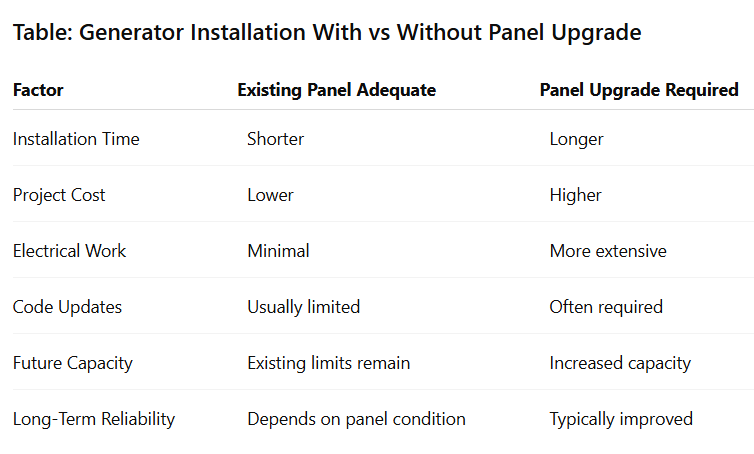
Do You Need an Electrical Panel Upgrade?
Not every generator installation requires a panel upgrade. However, some homes and buildings cannot safely support a standby generator without electrical improvements. This is especially common in older properties. A panel upgrade can add to the project cost, but it often improves safety, reliability, and overall electrical performance.
Signs Your Existing Panel May Need Upgrading
Some warning signs are easy to spot. Others may only become apparent during a professional inspection.
Common signs include:
Frequent breaker trips
Flickering lights
Rust or corrosion inside the panel
Limited breaker space
Outdated electrical equipment
Panels more than a few decades old
Growing electrical demands
If one or more of these issues exist, an upgrade may be recommended before generator installation.
How Panel Upgrades Affect Generator Costs
A generator relies on the electrical panel to distribute power throughout the property. If the panel is outdated or undersized, additional work may be necessary.
This can include:
Replacing the panel
Increasing service capacity
Adding new circuits
Improving grounding systems
While this increases upfront costs, it can help prevent future electrical issues.
Safety Benefits of Upgrading
Safety is one of the biggest reasons for upgrading a panel.
Modern electrical panels offer:
Better overload protection
Improved breaker technology
Greater capacity
Better code compliance
Improved system reliability
For many properties, the panel upgrade provides benefits that extend well beyond generator installation.
Permit Requirements for Standby Generator Installation in Florida
Many property owners overlook permits when budgeting for a generator project. However, permits are an important part of the process. They help ensure the installation meets safety standards and local building requirements.
Electrical Permits
Electrical permits are required for most standby generator installations.
These permits cover:
Wiring connections
Transfer switch installation
Electrical panel modifications
Code compliance
The permit process helps ensure the work is performed safely.
Mechanical and Fuel Permits
Additional permits may be required depending on the fuel source.
For example:
Natural gas installations often require gas permits.
Propane systems may require fuel-related permits.
Some locations require separate inspections for fuel systems.
Requirements vary by municipality.
Inspection Requirements
Most installations include one or more inspections.
Inspectors verify:
Proper wiring methods
Safe equipment placement
Code compliance
Permit compliance
Final approval is typically required before the generator is placed into service.
Why DIY Installation Is Risky
Some homeowners consider handling parts of the installation themselves. For standby generators, that is usually not a good idea.
Generator installations involve:
High-voltage electrical systems
Fuel connections
Transfer switches
Code compliance requirements
Mistakes can create serious safety hazards. Professional installation helps ensure the system operates safely and reliably when it is needed most.
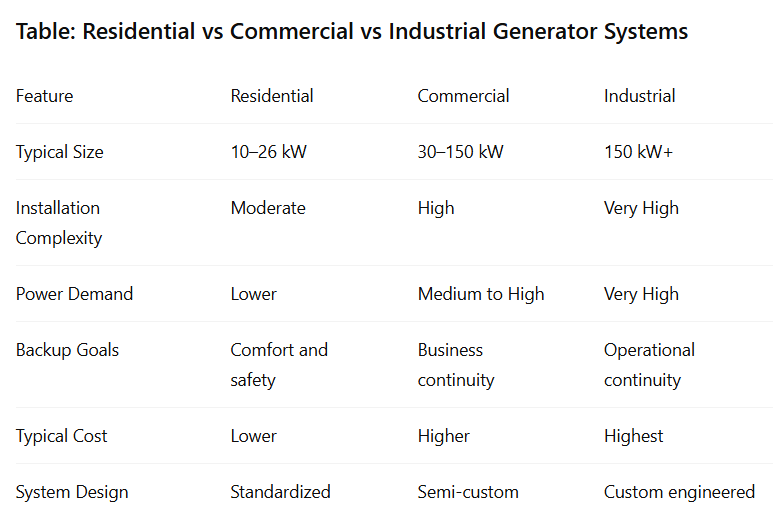
Residential vs Commercial Standby Generator Installation
The basic purpose is the same. Both systems provide backup power during outages. However, residential and commercial installations are often very different in size, complexity, and cost.
Residential System Requirements
Residential systems focus on keeping a home functional during an outage.
Common loads include:
Air conditioning
Refrigerators
Lighting
Internet equipment
Water heaters
Essential appliances
Most residential generators range between 10 kW and 26 kW.
Commercial Backup Power Needs
Commercial properties often require more power. Business owners may need to keep operating during outages to avoid revenue loss.
Common commercial loads include:
HVAC systems
Computers
Point-of-sale systems
Refrigeration equipment
Security systems
Office equipment
Generator size depends on the business type and operational requirements.
Industrial Power Continuity Requirements
Industrial facilities often have the highest backup power demands.
Even a short outage can affect:
Production schedules
Equipment operation
Inventory protection
Employee productivity
Industrial systems are usually custom-designed to meet specific facility needs.
Common Mistakes That Increase Standby Generator Installation Costs
A generator is a long-term investment. Making the wrong decisions early can increase costs later. Fortunately, most mistakes can be avoided with proper planning.
Choosing the Wrong Generator Size
This is one of the most common issues. An undersized generator may struggle to support critical equipment. An oversized generator may cost far more than necessary. A professional load calculation helps determine the right size from the beginning.
Ignoring Future Power Needs
Many people size a generator based only on their current electrical usage. That can become a problem later.
For example, you may plan to add:
An EV charger
A swimming pool
A workshop
Additional HVAC equipment
Home additions
If your power needs grow, the generator may no longer be large enough. Thinking ahead during the planning stage can help avoid expensive upgrades later.
Skipping Load Calculations
Some property owners choose a generator based on square footage alone. That approach can lead to problems. Two homes of the same size can have very different electrical demands.
A professional load calculation looks at the actual equipment and power requirements inside the property. This helps ensure the generator is properly sized.
Hiring Unlicensed Contractors
Generator installation is not a simple electrical project.
The work involves:
Electrical systems
Fuel connections
Transfer switches
Permits
Inspections
Hiring an unlicensed contractor can create safety risks and may result in code violations. It can also create problems with insurance claims and future property sales.
Delaying Necessary Panel Upgrades
Sometimes a property’s electrical panel is no longer suitable for modern power demands.
If a panel upgrade is recommended, delaying it may lead to:
Installation delays
Failed inspections
Future electrical issues
Additional labor costs
Addressing electrical deficiencies during the generator project is often the most practical approach.
Ignoring Maintenance Planning
A standby generator is not a set-it-and-forget-it system. Like any engine-powered equipment, it requires routine maintenance.
Regular service helps:
Improve reliability
Extend equipment life
Reduce repair costs
Ensure proper operation during outages
Skipping maintenance can lead to costly failures when backup power is needed most.
How to Choose the Right Contractor for Standby Generator Installation
The quality of the installation matters just as much as the generator itself. Even a high-quality generator can perform poorly if it is installed incorrectly. Choosing the right electrical contractor helps protect your investment and ensures the system operates safely.
Licensing and Insurance Verification
Always confirm that the contractor is properly licensed and insured. This helps protect both the property owner and the contractor during the project.
A licensed electrical contractor understands:
Florida electrical codes
Permit requirements
Inspection procedures
Safety standards
Never hesitate to ask for proof of licensing and insurance.
Generator Experience
Not all electricians specialize in standby generator systems.
Look for a contractor with direct experience installing:
Residential generators
Commercial generators
Transfer switches
Backup power systems
Experience often leads to smoother installations and fewer surprises.
Warranty Coverage
Ask what warranties are available.
A quality contractor should explain:
Manufacturer warranties
Workmanship warranties
Equipment coverage
Service options
Clear warranty information provides peace of mind after installation.
Permit Handling
Permits can be confusing for property owners.
Many professional contractors handle:
Permit applications
Inspection scheduling
Code compliance documentation
This can save time and reduce stress during the project.
Service and Maintenance Support
The relationship should not end after installation.
Ask whether the contractor provides:
Routine maintenance
Annual inspections
Emergency service
Generator repairs
Long-term support can be just as important as the initial installation.
Checklist: Questions to Ask Before Hiring an Electrician
Before signing a contract, ask:
Are you licensed and insured?
How many generator installations have you completed?
Will you handle permits and inspections?
What warranty coverage is included?
Do you provide maintenance services?
How long will the installation take?
Can you perform load calculations?
Do you offer commercial and industrial generator solutions?
Is Standby Generator Installation Worth the Cost in Florida?
For many property owners, the answer is yes. The value goes beyond convenience. A standby generator can help protect comfort, safety, productivity, and business operations during unexpected outages.
Homeowner Benefits
For homeowners, backup power helps keep daily life running during storms and outages.
A standby generator can support:
Air conditioning
Refrigeration
Lighting
Internet service
Medical equipment
Security systems
This can be especially valuable during Florida’s hurricane season.
Business Benefits
Power outages can be expensive.
When a business loses power, it may also lose:
Revenue
Productivity
Customer trust
Inventory
A standby generator helps reduce downtime and supports business continuity.
Property Value Considerations
Many buyers view standby generators as a desirable feature. While every real estate market is different, backup power systems can make a property more attractive to future buyers. This is particularly true in areas where outages are common.
Long-Term Cost Savings
The upfront investment can seem significant.
However, backup power may help prevent:
Food spoilage
Hotel expenses during outages
Lost business revenue
Equipment damage
Emergency relocation costs
For some property owners, these avoided expenses help justify the investment.
Hurricane Preparedness Advantages
Florida residents understand how quickly severe weather can affect power service.
A standby generator provides:
Automatic operation
Reliable backup power
Improved comfort
Greater peace of mind
Instead of scrambling for fuel during a storm, the system is already prepared.
Example: Florida Homeowner Backup Power Scenario
Consider a family with:
Central air conditioning
Refrigeration
Home office equipment
Security systems
After a hurricane causes a multi-day outage, a properly sized standby generator can keep these essential systems operating. Without backup power, the family may face food loss, uncomfortable indoor temperatures, and disruptions to work and communication.
Future Trends in Standby Generator Installation
Backup power technology continues to improve. Property owners today have more options than ever before.
Smart Generator Monitoring
Many modern generators now include remote monitoring features.
Owners can check:
Generator status
Maintenance alerts
Operating history
Performance data
Some systems can even send notifications directly to a smartphone.
Remote Diagnostics
Advanced monitoring allows technicians to identify potential issues before they become major problems. This can help reduce downtime and improve maintenance planning.
Hybrid Energy Systems
Some property owners are combining generators with battery storage systems. These setups can improve flexibility and provide additional backup power options.
Generator and Solar Integration
Solar energy continues to grow in popularity across Florida. In some cases, generators and solar systems can work together as part of a broader energy strategy. The exact setup depends on the property’s electrical goals and energy requirements.
Conclusion
Power outages are never convenient. In Florida, they are often part of life during storm season. That is why many homeowners, businesses, and facility managers invest in standby generator systems.
The cost of standby generator installation depends on several factors, including generator size, fuel type, site conditions, permits, and electrical upgrades. While costs vary from project to project, understanding these factors makes it easier to plan and budget. More importantly, a properly installed standby generator provides reliable backup power when it matters most.
Whether you need to protect your family, keep a business operating, or support critical industrial equipment, choosing the right system is essential. Working with a licensed electrical contractor helps ensure the generator is properly sized, safely installed, and fully compliant with local codes.
Need help planning a standby generator installation project?
Contact Hylton Electric at +1 863-624-7000 or email ray@hylton-electric.com. We proudly serve Lakeland, Polk County, Tampa, and the surrounding areas. Free quotes are available for commercial and industrial projects, and our team supports residential, commercial, and industrial customers throughout Central Florida.
FAQs About Standby Generator Installation
How much does standby generator installation cost in Florida?
The cost of standby generator installation in Florida depends on the generator size, fuel type, property layout, and electrical work required.
Most homeowners spend between $8,000 and $20,000+ for a professionally installed system. Smaller generators that power only essential circuits typically cost less. Larger whole-home systems cost more because they require larger equipment and additional labor.
Commercial and industrial generator projects often cost significantly more because they support larger electrical loads.
The best way to get an accurate estimate is through a site evaluation and electrical load calculation. Every property has different power requirements, so installation costs can vary even when the same generator model is used.
What size standby generator do most Florida homes need?
Most Florida homes use generators between 14 kW and 26 kW. The right size depends on what you want to power during an outage. Some homeowners only want to operate essential items such as refrigerators, lighting, internet equipment, and a few outlets.
Others want whole-home backup power, including:
Air conditioning
Water heaters
Kitchen appliances
Laundry equipment
Home office equipment
A professional load calculation is the best way to determine the correct size. Choosing the wrong generator can lead to performance issues or unnecessary expenses.
Is a permit required for standby generator installation in Florida?
Yes. In most cases, standby generator installation requires permits. Depending on the location and project scope, permits may include:
Electrical permits
Mechanical permits
Gas permits
Fuel-related permits
Most installations also require inspections before the system can be approved for operation. Permit requirements vary between municipalities. Working with a licensed electrical contractor helps ensure the project meets local codes and inspection requirements. Skipping permits can result in fines, failed inspections, and future issues when selling the property.
How long does standby generator installation take?
Most residential standby generator installations take anywhere from a few days to a few weeks from start to finish. The actual installation work is often completed quickly. However, the overall timeline can be affected by:
Permit approval times
Equipment availability
Fuel system work
Site preparation requirements
Inspection scheduling
Commercial and industrial projects usually take longer because they involve larger systems and more complex electrical work. Your contractor can provide a project timeline after evaluating the property and installation requirements.
Does standby generator installation increase home value?
Many buyers see a standby generator as a valuable feature, especially in Florida. Backup power can make a property more attractive because it provides protection during storms and outages. Buyers often appreciate the convenience of automatic operation and the ability to keep important systems running.
While the exact impact on property value varies by market, a professionally installed standby generator may improve a home’s appeal when compared to similar properties without backup power. The added convenience and peace of mind are often major selling points.
Can my existing electrical panel support a standby generator?
Maybe. Some electrical panels can easily support a standby generator. Others may require upgrades before installation. Factors that may indicate a panel upgrade is needed include:
Limited breaker space
Frequent breaker trips
Outdated equipment
Insufficient service capacity
Visible signs of wear or corrosion
A licensed electrician can inspect the panel and determine whether upgrades are necessary. If an upgrade is required, it can improve safety, increase capacity, and help ensure reliable generator performance.
What is included in standby generator installation?
A professional standby generator installation usually includes several components and services.
Typical project elements include:
Generator equipment
Automatic transfer switch
Electrical wiring
Fuel connections
Site preparation
Permit coordination
Inspections
System testing
Some projects may also require panel upgrades, trenching, or additional electrical work. The exact scope depends on the property’s power needs and existing electrical infrastructure. A detailed proposal should outline everything included in the installation.
Which fuel type is best for Florida standby generators?
The best fuel type depends on the property and available utility services. Natural gas is popular because it provides a continuous fuel supply and requires little owner involvement. Propane is common in areas without natural gas service and offers reliable long-term fuel storage. Diesel is often preferred for commercial and industrial facilities because it supports larger generators and higher electrical loads.
When choosing a fuel source, consider:
Availability
Operating costs
Maintenance requirements
Generator size
Backup power goals
A qualified contractor can help determine which option makes the most sense for your situation.
Can a standby generator power an entire house?
Yes, many standby generators can power an entire house. However, this depends on the generator size and the home’s electrical demand. Some homeowners choose whole-home backup systems. Others prefer to power only critical circuits to reduce installation costs.
Common whole-home loads include:
Air conditioning
Refrigerators
Lighting
Water heaters
Kitchen appliances
Electronics
A professional load calculation helps determine whether whole-home backup is practical and what generator size is required.
How often should standby generators be serviced?
Most standby generators should be inspected and serviced at least once a year. Regular maintenance helps ensure the system is ready when an outage occurs.
Typical maintenance tasks include:
Oil changes
Filter replacement
Battery testing
Fuel system inspection
General system testing
Some manufacturers recommend additional service based on operating hours. Following the maintenance schedule can help extend equipment life and reduce the risk of unexpected failures.
Are standby generators worth it during hurricane season?
For many Florida property owners, yes. Hurricanes and severe storms can cause widespread outages that last for days. A standby generator provides automatic backup power without the need for extension cords or manual startup procedures.
Benefits during hurricane season include:
Improved comfort
Better safety
Reduced food spoilage
Continued communication access
Business continuity
Many homeowners consider standby generators an important part of their overall storm preparedness plan.
What is an automatic transfer switch?
An automatic transfer switch is a critical part of every standby generator system. Its job is to safely switch power sources during an outage. When utility power fails, the transfer switch signals the generator to start and moves the electrical load to the generator. When utility power returns, it transfers the load back to the electrical grid. This process happens automatically and typically takes only a few seconds. Without a transfer switch, a standby generator cannot operate as intended.
How much maintenance does a standby generator require?
Standby generators require relatively little maintenance compared to the benefits they provide.
Routine maintenance typically includes:
Oil and filter changes
Battery inspections
Fuel system checks
Cooling system inspections
Operational testing
Most systems also perform automatic self-tests on a regular schedule. The exact maintenance requirements vary by manufacturer and generator size. Following the recommended maintenance plan helps ensure reliable performance during emergencies.
Can businesses benefit from standby generator installation?
Absolutely. For many businesses, even a short power outage can create significant disruptions.
Backup power can help protect:
Revenue
Inventory
Customer service
Employee productivity
Security systems
Data and communications equipment
Industries such as healthcare, hospitality, retail, manufacturing, and warehousing often rely on standby generators to support ongoing operations. A properly sized system can reduce downtime and improve business continuity.
How do I choose the right standby generator installer?
Choosing the right installer is just as important as choosing the right generator.
Look for a contractor that offers:
Proper licensing and insurance
Generator installation experience
Load calculation services
Permit coordination
Maintenance support
Warranty coverage
You should also ask about previous generator projects and whether the company works with residential, commercial, and industrial systems. A knowledgeable contractor can help you choose the right generator size, avoid costly mistakes, and ensure the installation meets all applicable codes.
Have questions about standby generator installation costs?
Call Hylton Electric at +1 863-624-7000 or email ray@hylton-electric.com. We serve Lakeland, Polk County, Tampa, and the surrounding areas. Free quotes are available for commercial and industrial projects, and we proudly support residential, commercial, and industrial customers throughout Central Florida.
Leave a Reply