
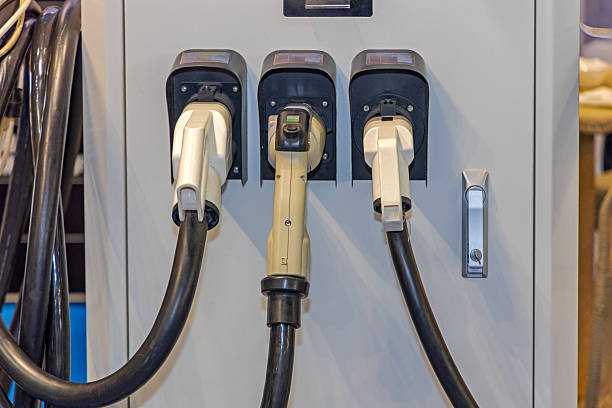
Electric vehicles are becoming more common across Florida. More drivers now depend on public charging stations every day. As demand grows, many businesses are adding DC fast charging stations to their properties. These chargers help drivers recharge quickly while they shop, work, eat, or travel.
DC fast charging stations are much faster than standard EV chargers. In many cases, they can charge a vehicle in less than an hour. Because of this, they are popular at retail centers, hotels, fleet facilities, truck stops, and commercial properties. However, installing a fast charger involves more than picking equipment and choosing a parking space.
Most DC fast charging stations need significant electrical capacity. Some sites require panel upgrades, transformer upgrades, or utility improvements before installation can begin.
Permits, inspections, site layout, and future expansion plans also matter. If these factors are overlooked, costs can increase quickly. That is why planning is important from the start.
Before investing in EV charging infrastructure, property owners should understand the power requirements, installation costs, permitting process, and long-term maintenance needs.
This guide explains what you need to know before installing DC fast charging stations. It covers electrical requirements, site planning, infrastructure upgrades, costs, and common mistakes to avoid.
What Are DC Fast Charging Stations?
DC fast charging stations are high-powered EV chargers. They deliver electricity directly to a vehicle’s battery. Most EV chargers use alternating current, or AC power. The vehicle converts that power into direct current before storing it in the battery.
DC fast charging stations work differently. They convert AC power into DC power inside the charger. The electricity then flows directly into the battery.
This process saves time and allows much faster charging speeds. That is why DC fast charging stations are common at commercial and industrial properties where drivers need quick charging.
How DC Fast Charging Works
Electricity enters the charging station from the utility service. The charger converts AC power into DC power. The converted power then flows directly into the vehicle battery.
Charging speed depends on several factors:
-
Charger output
-
Battery size
-
Battery temperature
-
Vehicle charging capability
-
Current battery level
Many EVs charge fastest when the battery is partly empty. As the battery fills, charging speeds often slow down. This helps protect battery life.
Typical Power Ratings
DC fast charging stations come in different power levels. The right option depends on site demand, available power, and future growth plans.
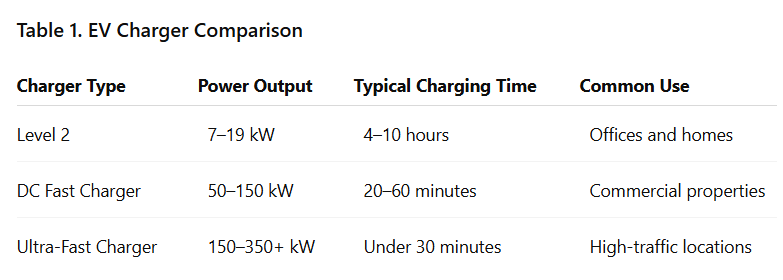
A 50 kW charger may work well for smaller commercial sites. Larger retail centers often choose 150 kW or higher chargers. These systems can serve more vehicles throughout the day.
Businesses That Benefit Most
Many businesses can benefit from fast charging infrastructure.
- Retail centers can attract EV drivers and increase customer visits.
- Hotels can offer charging as a guest amenity.
- Fleet operators can reduce vehicle downtime.
- Industrial facilities can support electric service vehicles and future fleet growth.
- Fuel stations can prepare for changing transportation trends.
For many property owners, DC fast charging stations are also a way to increase property value and prepare for future demand.
Why Businesses Are Installing DC Fast Charging Stations
More businesses are investing in EV charging infrastructure every year. The main reason is simple. More customers, employees, and fleet operators now drive electric vehicles. Adding DC fast charging stations can help a property stay competitive while meeting future demand.
Customer Attraction Benefits
EV drivers often choose locations where they can charge while they spend time on-site. This can increase foot traffic and customer visits. For example, a driver may choose a shopping center with charging stations over one without them. Charging time can also increase the amount of time customers stay at a property. That extra time may lead to additional purchases.
Benefits may include:
-
More customer visits
-
Longer customer stays
-
Improved customer convenience
-
Better customer experience
Fleet Charging Advantages
Fleet operators need vehicles on the road as much as possible. Long charging times can reduce productivity. DC fast charging stations help minimize downtime. Vehicles can charge quickly and return to service faster.
This is especially important for:
-
Delivery fleets
-
Service vehicles
-
Utility fleets
-
Municipal fleets
-
Transportation companies
For many fleet operators, charging speed directly affects daily operations.
Property Value Improvements
EV charging infrastructure can make a property more attractive to tenants, customers, and investors. As EV ownership grows, charging access is becoming an expected amenity in many markets. Properties with charging stations may have an advantage over competing locations. Charging infrastructure can also support future leasing and development goals.
Sustainability and ESG Goals
Many companies are working to reduce emissions and improve sustainability efforts. Installing DC fast charging stations can support those goals. It can also demonstrate a commitment to cleaner transportation options. For some organizations, charging infrastructure is part of a larger environmental strategy.
Future-Proofing Commercial Properties
Electric vehicle adoption continues to grow. Properties that prepare now may avoid larger upgrades later. Planning ahead allows owners to build infrastructure that can support future expansion.
For example, a site may install two chargers today while preparing electrical infrastructure for additional chargers later. This approach can reduce future construction costs and minimize disruption.
Assess Your Site Before Installing DC Fast Charging Stations
Every property is different. Before choosing equipment, a site assessment should be completed. This step helps identify electrical limitations, construction challenges, and future opportunities. A proper assessment can also prevent unexpected costs later in the project.
Available Electrical Capacity
Electrical capacity is often the first issue to evaluate. DC fast charging stations use a large amount of power. Some buildings already have enough capacity. Others may need significant upgrades.
An electrical contractor will typically review:
-
Existing service size
-
Current power usage
-
Available capacity
-
Future load requirements
Load calculations help determine whether the existing electrical system can support new chargers.
Parking Layout Requirements
Charger placement affects both convenience and cost. Poor placement can create traffic problems and increase installation expenses.
When planning locations, consider:
-
Parking space dimensions
-
Vehicle access
-
Charging cable reach
-
Pedestrian pathways
-
Future expansion areas
The best locations balance accessibility with construction costs.
Traffic Flow Planning
Vehicles should be able to enter, charge, and exit without creating congestion. This becomes especially important at busy commercial properties. Good traffic flow planning can improve safety and reduce customer frustration.
Consider:
-
Entry and exit routes
-
Peak traffic periods
-
Vehicle turning space
-
Queue management
Accessibility and ADA Compliance
Charging stations should be accessible to all users. Federal, state, and local requirements may apply. Accessibility planning should occur early in the design process.
Common considerations include:
-
Accessible parking spaces
-
Clear access routes
-
Reach ranges
-
Signage requirements
Distance From Electrical Service Equipment
The farther a charger is from the electrical source, the higher the installation costs may become.
Long conduit runs often require:
-
More trenching
-
More wiring
-
Additional labor
-
Greater material costs
Locating chargers closer to existing electrical infrastructure can often reduce project expenses.
Future Expansion Opportunities
Many businesses start with a small number of chargers. Demand often increases over time. Planning for future growth can save money later.
Property owners should consider:
-
Additional conduit capacity
-
Spare panel capacity
-
Future charger locations
-
Utility expansion needs
Preparing for expansion now is usually less expensive than rebuilding infrastructure later.
Site Assessment Checklist
Before moving forward, confirm the following:
-
Available electrical capacity
-
Utility service capability
-
Panel capacity
-
Transformer capacity
-
Parking availability
-
Internet connectivity
-
Lighting conditions
-
Drainage conditions
-
Future expansion opportunities
Electrical Infrastructure Requirements for DC Fast Charging Stations
Electrical infrastructure is often the biggest part of a DC fast charging project. Many property owners focus on the chargers themselves. However, the electrical system behind the chargers is just as important.
In some cases, infrastructure upgrades cost more than the charging equipment. Understanding these requirements early helps avoid delays and unexpected expenses.
Utility Service Requirements
Every DC fast charging station needs a reliable power source. The first step is determining whether the existing utility service can handle the added load. Some properties already have enough available capacity. Others may need service upgrades before installation can begin.
Utility companies often review:
-
Existing service size
-
Available power
-
Peak demand
-
Future expansion plans
Early coordination with the utility provider can help speed up the project.
Transformer Upgrades
Transformers play a major role in EV charging installations. They deliver power from the utility system to the property. Some existing transformers can support new charging equipment. Others may be undersized.
A transformer upgrade may be required when:
-
Charger demand is high
-
Existing equipment is fully loaded
-
Future expansion is planned
Transformer upgrades can affect both project costs and timelines.
Switchgear Requirements
Switchgear helps control and distribute power throughout a facility. Larger charging installations often require dedicated switchgear.
This equipment helps:
-
Protect electrical systems
-
Manage power distribution
-
Improve system reliability
-
Support future growth
Industrial and large commercial sites often need switchgear evaluations before installation.
Panel Upgrades and Distribution Systems
Electrical panels distribute power to chargers and other equipment. Many older facilities were not designed for high-powered EV charging. As a result, panel upgrades are common.
Signs an upgrade may be needed include:
-
Limited breaker space
-
Aging equipment
-
High existing electrical demand
-
Planned charger expansion
A panel assessment should be part of every site evaluation.
Conduit and Trenching Needs
Power must travel from the electrical source to the charging stations. This usually requires conduit installation. For many projects, trenching is also necessary.
Installation costs often increase when:
-
Chargers are far from the electrical room
-
Parking lots require major excavation
-
Existing underground utilities create obstacles
The shortest practical route is usually the most cost-effective option.
Surge Protection and Grounding
DC fast charging stations contain sensitive electronic components. Power surges can damage this equipment. Proper surge protection helps reduce risk. Grounding is equally important.
A properly grounded system helps:
-
Improve safety
-
Protect equipment
-
Reduce electrical faults
-
Improve reliability
These components should never be overlooked during installation.
Backup Power Considerations
Some businesses want charging stations to remain available during outages. Backup power solutions may help achieve this goal.
Options may include:
-
Generator systems
-
Battery storage systems
-
Hybrid energy systems
The right solution depends on operational needs and budget. Not every site requires backup power. However, it may be valuable for critical facilities and fleet operations.
Power Requirements Explained
Power demand is one of the most important factors when planning DC fast charging stations. Many business owners are surprised by how much electricity these systems require. The charger’s power rating directly affects infrastructure needs, installation costs, and utility requirements.
50 kW DC Fast Chargers
A 50 kW charger is often considered an entry-level DC fast charger.
These systems work well for:
-
Small commercial properties
-
Dealerships
-
Fleet yards
-
Workplace charging
Benefits include:
-
Lower installation costs
-
Reduced utility demand
-
Simpler infrastructure requirements
For many businesses, 50 kW chargers provide a practical starting point.
150 kW DC Fast Chargers
A 150 kW charger offers much faster charging speeds.
These systems are common at:
-
Shopping centers
-
Travel centers
-
Public charging locations
-
Commercial developments
Higher charging speeds improve user experience. However, they also require more electrical capacity. Many properties need infrastructure upgrades before supporting chargers at this level.
350 kW Ultra-Fast Chargers
Ultra-fast chargers provide the highest charging speeds currently available. These systems are often installed along major travel routes and high-volume charging locations.
Benefits include:
-
Reduced charging times
-
Increased vehicle throughput
-
Better support for future EV models
However, these chargers have substantial power requirements. Utility coordination is usually necessary before installation.
Single Charger vs Multi-Charger Installations
The number of chargers can significantly affect power demand. A site with one charger may require only modest upgrades. A site with multiple chargers can create a much larger electrical load.
Property owners should consider:
-
Current demand
-
Future growth
-
Available utility capacity
-
Budget limitations
Planning for future expansion during the first installation often reduces long-term costs.
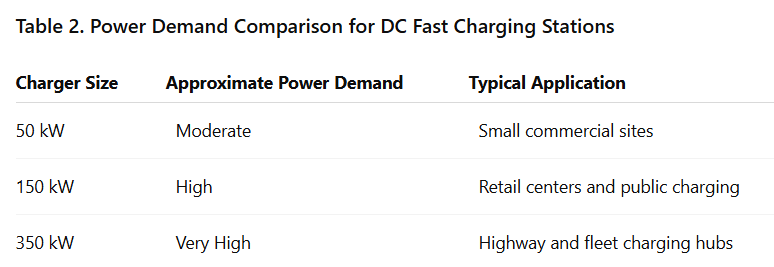
A larger charger does not always mean a better investment. The best choice depends on site demand, customer needs, and available electrical capacity.
Need Help Evaluating Charger Capacity?
Planning a DC fast charging project starts with understanding your electrical system. Hylton Electric provides free commercial and industrial quotes throughout Lakeland, Polk County, and Tampa. Call +1 863-624-7000 or email ray@hylton-electric.com.
Permits, Codes, and Compliance Requirements
Permits and code compliance are critical parts of every DC fast charging project. Skipping this step can lead to delays, failed inspections, and costly corrections. Requirements vary by location, utility provider, and project size. However, most installations follow a similar approval process.
Working with a licensed electrical contractor can help keep the project on schedule and ensure all requirements are met.
Florida Electrical Code Considerations
EV charging installations must comply with current electrical codes. These codes help ensure safety, reliability, and proper system performance.
Code requirements often cover:
-
Electrical equipment ratings
-
Grounding requirements
-
Overcurrent protection
-
Wiring methods
-
Equipment clearances
Code compliance should be considered during the design phase, not after installation begins.
Utility Approval Process
Many DC fast charging projects require utility involvement. This is especially true for larger charging systems.
Utility providers may review:
-
Available power capacity
-
Service upgrade needs
-
Transformer requirements
-
Demand projections
The review process can take time. Starting utility discussions early helps prevent project delays.
Building Permits
Most commercial EV charging projects require permits before construction begins. Permit requirements vary by jurisdiction.
The review process may include:
-
Electrical plans
-
Site plans
-
Equipment specifications
-
Load calculations
Permit approval must usually occur before construction starts.
Inspection Requirements
Inspections help verify that the installation meets applicable codes and safety standards. Several inspections may occur throughout the project.
Common inspection areas include:
-
Wiring installation
-
Grounding systems
-
Equipment mounting
-
Electrical connections
-
Safety devices
Final approval is typically required before the charging stations can operate.
Fire Safety Requirements
Fire safety is an important part of EV charging infrastructure. Proper equipment spacing and installation practices help reduce risks.
Fire safety reviews may consider:
-
Equipment locations
-
Emergency access
-
Electrical protection systems
-
Clearance requirements
Following approved installation practices helps improve safety for both users and property owners.
NEC Requirements for EV Charging Infrastructure
The National Electrical Code contains requirements specifically related to EV charging equipment.
These requirements help address:
-
Equipment installation
-
Circuit protection
-
Wiring methods
-
Grounding systems
Code updates occur periodically, so contractors should follow the latest applicable standards.
Local Jurisdiction Challenges
Every city and county may have slightly different requirements. Some jurisdictions have additional review processes or documentation requirements.
Common challenges include:
-
Permit review delays
-
Utility coordination issues
-
Site-specific regulations
-
Inspection scheduling
Understanding local requirements early can help avoid unnecessary delays.
How Much Does It Cost to Install DC Fast Charging Stations?
Cost is often one of the first questions property owners ask. The answer depends on several factors. A small installation may cost significantly less than a large multi-charger project. The largest expenses often come from infrastructure upgrades rather than the chargers themselves.

Equipment Costs
The charging equipment is usually one of the biggest project expenses.
Costs vary based on:
-
Charger output
-
Number of charging ports
-
Network capabilities
-
Manufacturer
-
Warranty coverage
Higher-powered chargers typically cost more than lower-powered models.
Installation Costs
Installation costs depend on site conditions. Labor requirements can vary widely between projects.
Factors that affect installation costs include:
-
Wiring distances
-
Trenching requirements
-
Electrical complexity
-
Site accessibility
-
Construction requirements
Projects with simple layouts are usually less expensive than those requiring major site work.
Utility Upgrade Costs
Some properties need utility upgrades before chargers can operate.
These upgrades may include:
-
New service connections
-
Transformer upgrades
-
Utility infrastructure improvements
Utility-related costs vary by location and available capacity.
Site Preparation Costs
Site preparation is often overlooked during early budgeting.
Common site work may include:
-
Concrete work
-
Pavement restoration
-
Trenching
-
Drainage improvements
-
Striping and signage
These costs can become significant on larger projects.
Software and Network Fees
Many charging stations use network management software.
These systems help operators:
-
Monitor charger performance
-
Process payments
-
Track usage
-
Manage maintenance
Some providers charge ongoing monthly or annual fees. Property owners should include these expenses in long-term budgeting.
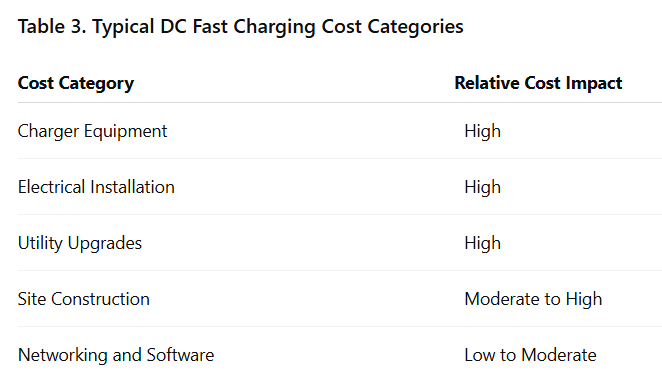
Table Caption: Major factors that influence DC fast charging station project costs.
Factors That Increase Costs
Several factors can raise project expenses.
These include:
-
Long trenching distances
-
Multiple charging stations
-
Utility service upgrades
-
New transformers
-
Extensive site reconstruction
-
Limited electrical capacity
Identifying these issues early helps improve budget accuracy.
Florida Cost Considerations
Florida businesses often face unique project conditions.
Factors that may affect local costs include:
-
Utility requirements
-
Site conditions
-
Coastal environments
-
Hurricane resilience considerations
-
Local permitting requirements
Every project should receive a site-specific evaluation before budgeting decisions are made.
Choosing the Right DC Fast Charging Station
Not all charging stations are the same. The right charger depends on your property, users, and long-term goals. Selecting the wrong equipment can limit future growth and reduce return on investment. Several factors should be evaluated before making a final decision.
Connector Standards
Connector compatibility is one of the first considerations. Different vehicles may use different charging standards.
Property owners should evaluate:
-
Vehicle compatibility
-
Future market trends
-
Fleet requirements
-
Public charging needs
Choosing flexible equipment can help support a wider range of users.
Networked vs Non-Networked Chargers
Some chargers operate independently. Others connect to software platforms through a network.
Networked systems can provide:
-
Remote monitoring
-
Payment processing
-
Usage reporting
-
Performance tracking
Non-networked systems may have lower operating costs but fewer management features.
Smart Monitoring Features
Many modern charging stations include advanced monitoring tools.
These features can help operators:
-
Track charger status
-
Identify maintenance issues
-
Monitor energy use
-
Generate performance reports
Smart monitoring can reduce downtime and improve reliability.
Payment Processing Options
Public charging locations often require payment systems.
Available options may include:
-
Credit cards
-
Mobile apps
-
RFID access
-
Fleet accounts
The right payment solution depends on the intended users.
Scalability Considerations
EV adoption continues to grow. A charging system should support future expansion whenever possible.
Property owners should consider:
-
Additional charger capacity
-
Future electrical demand
-
Infrastructure expansion plans
-
Available space
Planning ahead often reduces future construction costs.
Warranty and Support Evaluation
Long-term support is just as important as equipment quality.
Before selecting a charger, review:
-
Warranty coverage
-
Technical support availability
-
Replacement parts access
-
Service response times
Reliable support can help minimize downtime and protect the investment.
Common Installation Mistakes to Avoid
A DC fast charging project can be a valuable investment. However, mistakes during planning or installation can increase costs and create long-term problems. Many of these issues can be avoided with proper site assessments and electrical planning.
Underestimating Future Demand
Some businesses install only enough capacity for current needs. This can become a problem as EV adoption grows.
Adding chargers later may require:
-
New trenching
-
Additional electrical work
-
Utility upgrades
-
Site reconstruction
Planning for future expansion during the first phase is often more cost-effective.
Skipping Load Analysis
Load calculations are critical. Without them, a property may not have enough electrical capacity to support the chargers.
This can lead to:
-
Overloaded systems
-
Unexpected upgrade costs
-
Project delays
-
Operational issues
A professional load study should be completed before equipment selection.
Ignoring Utility Coordination
Utility companies play a major role in many EV charging projects. Waiting too long to contact the utility provider can delay installation.
Utility reviews may involve:
-
Service capacity
-
Transformer availability
-
Infrastructure upgrades
-
Construction schedules
Early coordination helps keep projects moving.
Poor Charger Placement
Location matters. Poor placement can create traffic congestion and increase installation costs.
Common placement mistakes include:
-
Limited vehicle access
-
Long cable runs
-
Restricted parking access
-
Difficult traffic flow
Careful site planning helps avoid these problems.
Choosing Insufficient Power Capacity
A charger that is too small may not meet user expectations. A charger that is too large may increase costs unnecessarily.
The best solution depends on:
-
Property type
-
Expected traffic
-
Charging demand
-
Future growth plans
Matching charger size to actual demand is important.
Overlooking Maintenance Requirements
Charging stations require ongoing maintenance.
Ignoring maintenance can result in:
-
Equipment failures
-
Customer complaints
-
Reduced reliability
-
Increased downtime
A maintenance plan should be established before the chargers are placed into service.
Hiring Inexperienced Contractors
DC fast charging installations involve complex electrical systems.
Experience matters.
A qualified contractor can help with:
-
Site evaluations
-
Load calculations
-
Utility coordination
-
Permitting
-
Code compliance
Choosing the right contractor often reduces risk throughout the project.
Installation Process Step by Step
Understanding the installation process helps property owners prepare for the project. While every site is different, most DC fast charging installations follow a similar path.
Initial Consultation
The process usually begins with a discussion of project goals.
Topics may include:
-
Property type
-
Expected charger usage
-
Future growth plans
-
Budget considerations
This information helps establish the project scope.
Site Assessment
Next comes a detailed site evaluation.
The assessment identifies:
-
Electrical capacity
-
Parking conditions
-
Utility access
-
Construction challenges
This step forms the foundation of the project.
Load Calculation and Engineering
Engineers review the property’s electrical system.
Load calculations help determine:
-
Available capacity
-
Upgrade requirements
-
Equipment sizing
-
Future expansion opportunities
Proper engineering helps prevent costly surprises later.
Utility Coordination
The utility provider may review the project.
This review can determine:
-
Available service capacity
-
Transformer needs
-
Service upgrades
-
Connection requirements
Utility approval timelines vary by project.
Permitting
Permit applications are submitted once project plans are complete.
Permit packages may include:
-
Electrical drawings
-
Site plans
-
Equipment specifications
-
Load calculations
Approval is generally required before construction starts.
Construction and Infrastructure Upgrades
Once permits are approved, construction begins.
This phase may include:
-
Trenching
-
Conduit installation
-
Concrete work
-
Panel upgrades
-
Transformer upgrades
Project scope determines the amount of construction required.
Charger Installation
After infrastructure work is complete, charging equipment is installed.
This typically includes:
-
Equipment mounting
-
Electrical connections
-
Communication systems
-
Payment system setup
The installation must follow all applicable codes and manufacturer requirements.
Testing and Commissioning
Before opening the chargers to users, testing is performed.
Testing helps verify:
-
Proper operation
-
Safety functions
-
Network connectivity
-
Charging performance
Any issues can be corrected before launch.
Ongoing Monitoring
The project does not end after installation.
Ongoing monitoring helps maintain reliability.
Many operators track:
-
Charger uptime
-
Energy usage
-
Maintenance needs
-
System performance
Regular monitoring can reduce downtime and improve customer satisfaction.
Step-by-Step Installation Summary
-
Initial consultation
-
Site assessment
-
Load calculations
-
Engineering design
-
Utility coordination
-
Permit approval
-
Infrastructure upgrades
-
Charger installation
-
Testing and commissioning
-
Ongoing maintenance
Signs Your Facility Needs Electrical Upgrades Before Installation
Not every property is ready for DC fast charging stations. Many commercial and industrial facilities require electrical upgrades before installation can begin. Identifying these issues early can help avoid delays and budget overruns.
Frequent Breaker Trips
Breaker trips often indicate an electrical system operating near its limits. Adding high-powered charging equipment may place even more stress on the system. If breakers trip regularly, an electrical evaluation should be completed before moving forward.
Limited Service Capacity
Many older facilities were designed for much smaller electrical loads. DC fast charging stations can add substantial demand.
Signs of limited capacity may include:
-
Fully loaded panels
-
Limited spare breakers
-
Existing power constraints
-
Previous expansion challenges
A load analysis can confirm available capacity.
Aging Electrical Equipment
Older electrical equipment may not be suitable for modern charging infrastructure. Equipment nearing the end of its service life can increase reliability concerns.
Common examples include:
-
Outdated panels
-
Aging switchgear
-
Older transformers
-
Worn electrical components
Replacing aging equipment may improve both safety and system performance.
Existing Power Quality Problems
Power quality issues should be addressed before installing chargers.
Common warning signs include:
-
Voltage fluctuations
-
Equipment failures
-
Lighting flicker
-
Unexplained shutdowns
These issues may become more noticeable as electrical demand increases.
Expansion Plans Already Underway
Many businesses are already planning facility growth.
Future projects may include:
-
New equipment
-
Building additions
-
Fleet expansion
-
Production increases
If expansion is already planned, electrical upgrades should be evaluated as part of the overall strategy. Combining projects often reduces future construction costs and minimizes disruptions.
Maintenance Requirements After Installation
Installing DC fast charging stations is only the beginning. Like any electrical system, charging equipment requires routine maintenance to stay reliable and safe. A maintenance plan can help reduce downtime, extend equipment life, and improve the charging experience.
Routine Inspections
Regular inspections help identify small issues before they become major problems.
Technicians should check:
-
Charging cables
-
Connectors
-
Mounting hardware
-
Electrical connections
-
Safety devices
Routine inspections can improve reliability and reduce unexpected failures.
Software Updates
Most modern charging stations use software to manage operations. Manufacturers release updates to improve performance and security.
Software updates may include:
-
Bug fixes
-
Security improvements
-
New features
-
Performance enhancements
Keeping software current helps maintain system efficiency.
Connector Maintenance
Connectors receive daily use and are exposed to weather conditions. Over time, wear and tear can affect performance.
Regular connector maintenance may include:
-
Cleaning
-
Inspection
-
Damage assessment
-
Replacement when needed
Well-maintained connectors provide a better charging experience.
Electrical Testing
Periodic electrical testing helps verify system performance.
Testing may include:
-
Voltage checks
-
Grounding verification
-
Circuit inspections
-
Load testing
These evaluations can help identify issues before equipment failures occur.
Preventive Maintenance Schedules
A preventive maintenance program helps keep charging stations operating efficiently.
Typical maintenance schedules may include:
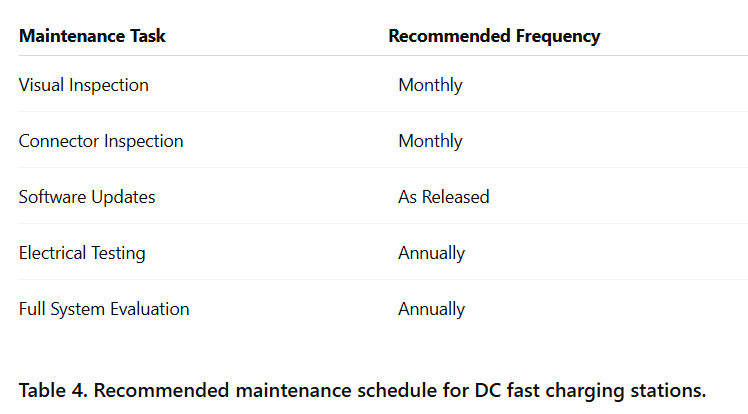
A structured maintenance plan often costs less than emergency repairs.
Downtime Prevention Strategies
Downtime can frustrate customers and reduce revenue opportunities.
Several strategies can help improve reliability:
-
Routine inspections
-
Scheduled maintenance
-
Software monitoring
-
Rapid repairs
-
Equipment performance tracking
Proactive maintenance is usually the best approach.
Future Trends in DC Fast Charging Stations
EV charging technology continues to evolve. Businesses investing today should understand where the industry is heading. Planning for future trends can help protect long-term investments.
Higher-Power Charging Systems
Charging speeds continue to increase. Manufacturers are developing chargers capable of delivering even more power.
Benefits may include:
-
Shorter charging sessions
-
Greater vehicle throughput
-
Improved customer convenience
As battery technology improves, demand for faster charging will likely continue growing.
Battery Energy Storage Integration
Battery storage systems are becoming more common in charging projects.
These systems can help:
-
Reduce peak demand charges
-
Support energy management goals
-
Improve charging reliability
Battery storage may become more attractive as energy costs rise.
Renewable Energy Pairing
Many organizations are combining EV charging with renewable energy systems.
Common examples include:
-
Solar canopies
-
Solar parking structures
-
On-site renewable generation
These systems can support sustainability goals while helping offset energy costs.
Smart Energy Management
Energy management technology is becoming increasingly important.
Smart systems can:
-
Balance electrical loads
-
Reduce peak demand
-
Improve energy efficiency
-
Support future expansion
These tools help businesses manage growing electrical demands.
Fleet Electrification Growth
Commercial fleets continue moving toward electrification.
Many industries are already adopting EV fleets, including:
-
Delivery companies
-
Service contractors
-
Municipal agencies
-
Logistics providers
This trend will likely increase demand for high-capacity charging infrastructure.
Real-World Commercial Applications
DC fast charging stations serve many different industries. The right installation depends on business goals, customer needs, and property type.
Retail Centers
Retail properties often use charging stations to attract EV drivers.
Benefits may include:
-
Increased foot traffic
-
Longer customer visits
-
Improved customer convenience
Charging can become another amenity that helps a property stand out.
Hotels and Hospitality
Hotels increasingly offer EV charging for guests. Travelers often look for charging options before booking accommodations. Charging stations can improve guest satisfaction and support changing travel habits.
Logistics and Fleet Facilities
Fleet operators often need fast and reliable charging.
DC fast charging stations can help:
-
Reduce downtime
-
Improve scheduling
-
Increase vehicle availability
These benefits are especially important for high-use fleets.
Industrial Properties
Industrial facilities may use charging stations for:
-
Service vehicles
-
Employee vehicles
-
Delivery fleets
-
Future electrification plans
Charging infrastructure can support long-term operational goals.
Multi-Tenant Commercial Developments
Many office parks and mixed-use developments are adding EV charging.
Benefits may include:
-
Tenant attraction
-
Tenant retention
-
Property modernization
-
Increased competitiveness
Charging infrastructure is becoming a valuable property feature.
When to Hire a Licensed Electrical Contractor
DC fast charging stations involve complex electrical systems. While some projects appear straightforward, most require professional expertise. Hiring a licensed contractor can help improve safety, reliability, and compliance.
Complex Utility Coordination
Utility coordination is often one of the most challenging parts of a project.
A licensed contractor can help manage:
-
Utility communications
-
Service upgrades
-
Infrastructure reviews
-
Project timelines
This can help reduce delays and confusion.
Large Commercial Installations
Larger charging projects often involve significant electrical work. Professional support becomes increasingly important as project size grows.
Large installations may require:
-
Engineering reviews
-
Load calculations
-
Switchgear upgrades
-
Utility coordination
Industrial Charging Infrastructure
Industrial facilities often have unique power requirements.
Experienced electrical contractors understand:
-
Heavy electrical loads
-
Distribution systems
-
Industrial equipment integration
-
Expansion planning
This experience can help avoid costly mistakes.
Compliance and Safety Requirements
Code compliance is critical for every EV charging installation.
Licensed electricians understand:
-
Electrical codes
-
Permit requirements
-
Inspection processes
-
Safety standards
Following these requirements helps protect people and property.
Long-Term Reliability Concerns
Charging infrastructure is a long-term investment.
Proper installation can improve:
-
System performance
-
Equipment lifespan
-
Reliability
-
Future scalability
Choosing an experienced contractor often delivers value well beyond the initial installation.
Conclusion
DC fast charging stations are becoming an important part of modern commercial and industrial properties. However, successful installations require more than selecting charging equipment.
Electrical capacity, utility coordination, infrastructure upgrades, permitting, site design, and future expansion planning all play a role in project success. Property owners who evaluate these factors early can avoid costly surprises and make better long-term decisions.
As EV adoption continues to grow, businesses that prepare now will be in a stronger position to support customers, fleets, employees, and future operational needs.
Need Guidance on a DC Fast Charging Project?
Whether you are evaluating site capacity or planning a large-scale charging installation, Hylton Electric provides free commercial and industrial quotes throughout Lakeland, Polk County, and Tampa. Call +1 863-624-7000 or email ray@hylton-electric.com.
FAQs About DC Fast Charging Stations
How much power do DC fast charging stations require?
DC fast charging stations require significantly more power than Level 2 chargers. The exact requirement depends on the charger size.
Common power levels include:
-
50 kW chargers
-
150 kW chargers
-
350 kW chargers
Higher-powered chargers place greater demand on the electrical system and utility service.
Before installation, a load calculation should be completed to determine whether the existing electrical infrastructure can support the charger. In many cases, panel upgrades, transformer upgrades, or utility improvements may be required.
The best approach is to evaluate current electrical capacity before selecting charging equipment.
Can an existing commercial building support DC fast charging stations?
Many commercial buildings can support DC fast charging stations, but not all facilities have enough available electrical capacity.
A site assessment typically reviews:
-
Existing service size
-
Current electrical demand
-
Panel capacity
-
Future expansion plans
Some buildings may only need minor upgrades. Others may require new transformers, service upgrades, or electrical distribution improvements. The only way to determine readiness is through a professional electrical evaluation and load study.
How long does installation take?
Project timelines vary based on site conditions and utility requirements.
A typical project may include:
-
Site assessment
-
Engineering
-
Utility review
-
Permitting
-
Construction
-
Testing
Simple projects may move relatively quickly. Projects requiring utility upgrades or major infrastructure work often take longer. Early planning and utility coordination can help reduce delays and improve scheduling.
Do DC fast charging stations require utility approval?
In many cases, yes.
Utility companies often review projects before installation begins, especially when chargers add significant electrical demand.
The utility may evaluate:
-
Available power capacity
-
Existing service size
-
Transformer capability
-
Future load requirements
Some projects can connect to existing infrastructure with minimal changes. Others may require service upgrades or new utility equipment.
Because utility reviews can take time, it is best to involve the utility provider early in the planning process. Early coordination can help avoid delays and provide a clearer picture of project costs and timelines.
What is the difference between Level 2 and DC fast charging?
The biggest difference is charging speed.
Level 2 chargers use AC power and rely on the vehicle to convert electricity before charging the battery.
DC fast charging stations perform this conversion inside the charger. This allows electricity to flow directly into the battery at a much higher rate.
In general:
-
Level 2 chargers are common in homes and offices.
-
DC fast chargers are common at commercial locations.
-
DC chargers can reduce charging times significantly.
The best option depends on how quickly users need to recharge their vehicles and how the property will use the charging infrastructure.
How much does a commercial DC charger installation cost?
Costs vary widely from one project to another.
Several factors affect pricing, including:
-
Charger size
-
Number of chargers
-
Site conditions
-
Utility upgrades
-
Electrical infrastructure needs
-
Permitting requirements
For many projects, electrical upgrades and site construction account for a large portion of the budget.
A detailed site assessment is usually needed before accurate cost estimates can be provided. This evaluation helps identify potential challenges and ensures realistic project planning.
Are permits required for DC fast charging stations in Florida?
Most commercial installations require permits. The exact requirements depend on the location, project scope, and local authority having jurisdiction.
Permit reviews often include:
-
Electrical drawings
-
Site plans
-
Equipment specifications
-
Load calculations
Inspections are typically required during and after construction.
Permit approval helps verify that the installation meets safety standards and applicable electrical codes. Working with a licensed electrical contractor can simplify this process and help prevent delays.
What maintenance do DC fast charging stations require?
Routine maintenance helps keep charging stations operating safely and reliably.
Common maintenance activities include:
-
Visual inspections
-
Connector inspections
-
Software updates
-
Electrical testing
-
Performance monitoring
Regular maintenance can help identify issues before they lead to equipment failures. Most manufacturers also recommend periodic inspections to maintain warranty coverage and ensure long-term system performance.
Can solar panels power DC fast charging stations?
Solar energy can support EV charging systems, but the answer depends on the project’s size and energy demand.
Many businesses combine:
-
Solar panels
-
Battery storage systems
-
Utility power
This approach can help offset energy costs while supporting sustainability goals. However, most DC fast charging stations require substantial power. Because of this, utility power often remains an important part of the system.
A detailed energy analysis can determine whether solar integration is practical for a specific property.
How many chargers can one property support?
The number of chargers depends on available electrical capacity and site conditions.
Important factors include:
-
Utility service size
-
Transformer capacity
-
Panel capacity
-
Property layout
-
Future expansion plans
Some properties can support only a few chargers without upgrades. Others may support larger charging networks. A professional load study can determine the maximum number of chargers a property can reasonably support while maintaining reliable operation.
Are DC fast charging stations profitable for businesses?
Profitability depends on how the charging stations are used. Some businesses generate revenue directly through charging fees.
Others use charging stations to:
-
Attract customers
-
Increase property value
-
Support fleet operations
-
Improve tenant satisfaction
The return on investment varies based on charging demand, energy costs, operating expenses, and business goals. For many commercial properties, the value extends beyond direct charging revenue.
Can industrial facilities install fleet charging systems?
Yes. Many industrial facilities are adding charging infrastructure for fleet vehicles.
Common applications include:
-
Delivery vehicles
-
Service trucks
-
Utility fleets
-
Transportation equipment
Fleet charging systems often require detailed planning because multiple vehicles may charge at the same time. Electrical capacity, charging schedules, and future fleet growth should all be considered during system design.
What safety features are required?
Safety is a critical part of every charging installation.
Most systems include features such as:
-
Ground fault protection
-
Surge protection
-
Emergency shutoff functions
-
Overcurrent protection
-
Equipment grounding
Installations must also comply with applicable electrical codes and manufacturer requirements. Proper design, installation, and maintenance all contribute to safe operation.
What utility upgrades are commonly needed?
Utility upgrades vary by project.
Common upgrades may include:
-
Larger electrical services
-
New transformers
-
Additional utility infrastructure
-
Distribution system improvements
These upgrades are more common with high-powered charging systems and multi-charger installations. The need for utility upgrades should be identified during the early planning stages to avoid delays later in the project.
How do businesses future-proof their charging infrastructure?
Future-proofing starts with long-term planning.
Businesses should consider:
-
Future charger expansion
-
Additional conduit capacity
-
Larger electrical equipment
-
Growing EV adoption
-
Fleet electrification plans
Installing expandable infrastructure during the first phase often costs less than rebuilding systems later. Planning ahead can help protect the investment and support future charging demand.
Have Questions About DC Fast Charging Stations?
Whether you need a site assessment, electrical capacity review, or a complete EV charging installation, Hylton Electric serves residential, commercial, and industrial clients throughout Lakeland, Polk County, and Tampa. Call +1 863-624-7000 or email ray@hylton-electric.com for a free commercial or industrial quote.
Leave a Reply