
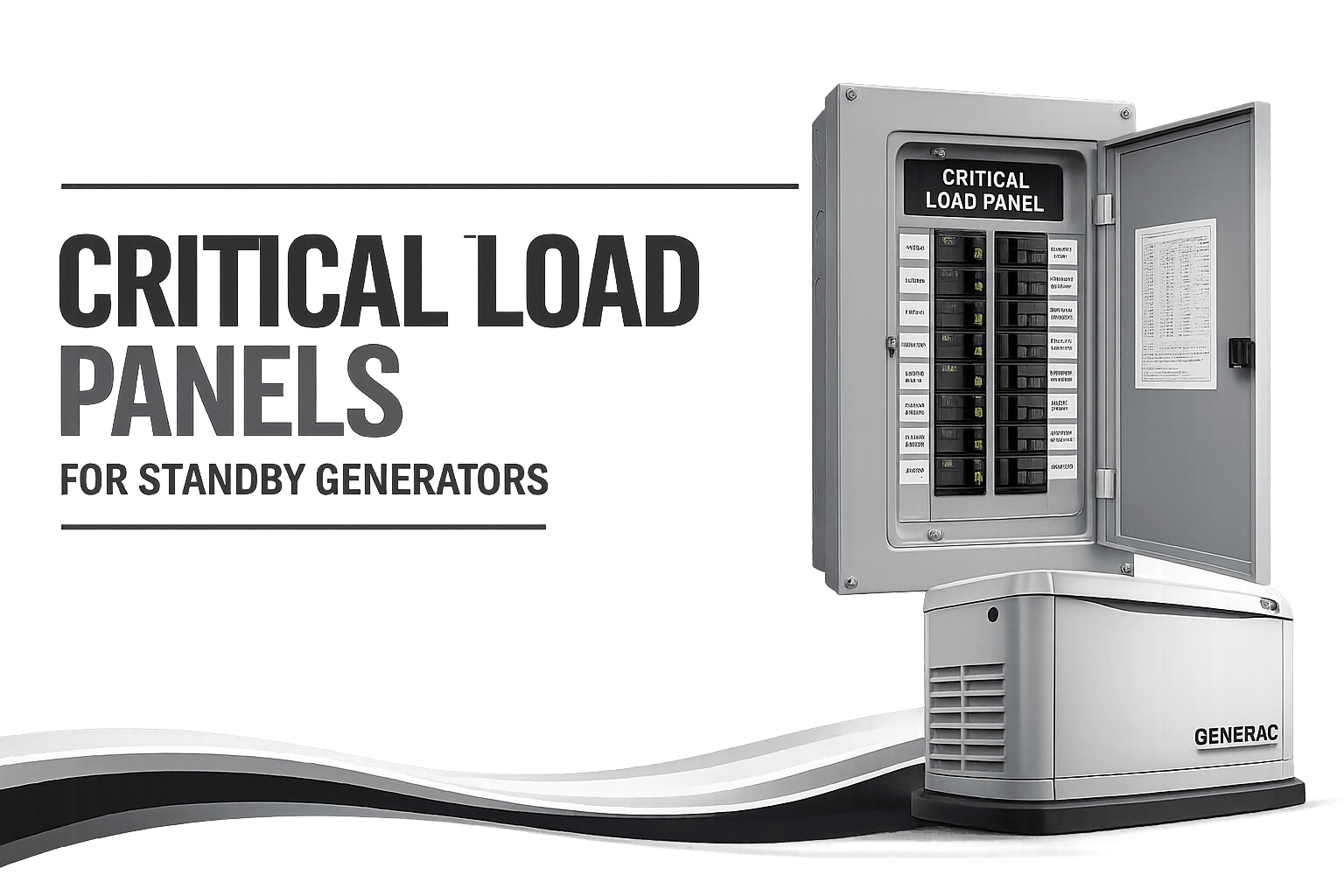
Power outages are common in Florida. Hurricanes, tropical storms, lightning strikes, and equipment failures can leave homes and businesses without power for hours or even days.
Many property owners install standby generators to keep important systems running during an outage. However, a generator can only perform well when it is connected to the right electrical setup. One of the most important parts of that setup is a critical load panel.
A critical load panel helps direct backup power to the circuits that matter most. It allows your generator to focus on essential equipment instead of trying to power everything at once.
Whether you own a home in Lakeland, run a business in Tampa, or manage an industrial facility in Polk County, understanding how critical load panels work can help you make better decisions about backup power.
At Hylton Electric LLC, we help homeowners, businesses, and industrial facilities throughout Lakeland and the Greater Tampa Area improve power reliability. Our team installs generators, transfer switches, electrical panels, and complete backup power systems designed for Florida conditions.
What Is a Critical Load Panel?
A critical load panel is a separate electrical panel that contains only the circuits you want powered during an outage. Think of it as a priority list for your generator.
Instead of supplying power to every circuit in a building, the generator sends power only to the most important ones. This allows essential equipment to keep working even when utility power is unavailable.
For many homeowners, these critical circuits include:
Refrigerators
Freezers
Internet equipment
Medical devices
Security systems
Essential lighting
Garage door openers
Businesses often choose circuits such as:
Computer networks
Point-of-sale systems
Security cameras
Communication equipment
Emergency lighting
Industrial facilities may prioritise:
Control systems
Monitoring equipment
Safety systems
Critical machinery
Production controls
By focusing on key circuits, a critical load panel helps your generator work more efficiently and reduces the amount of power required during an outage.
How Does a Critical Load Panel Work?
A standby generator system usually includes several main components:
Utility power connection
Main electrical panel
Standby generator
Critical load panel
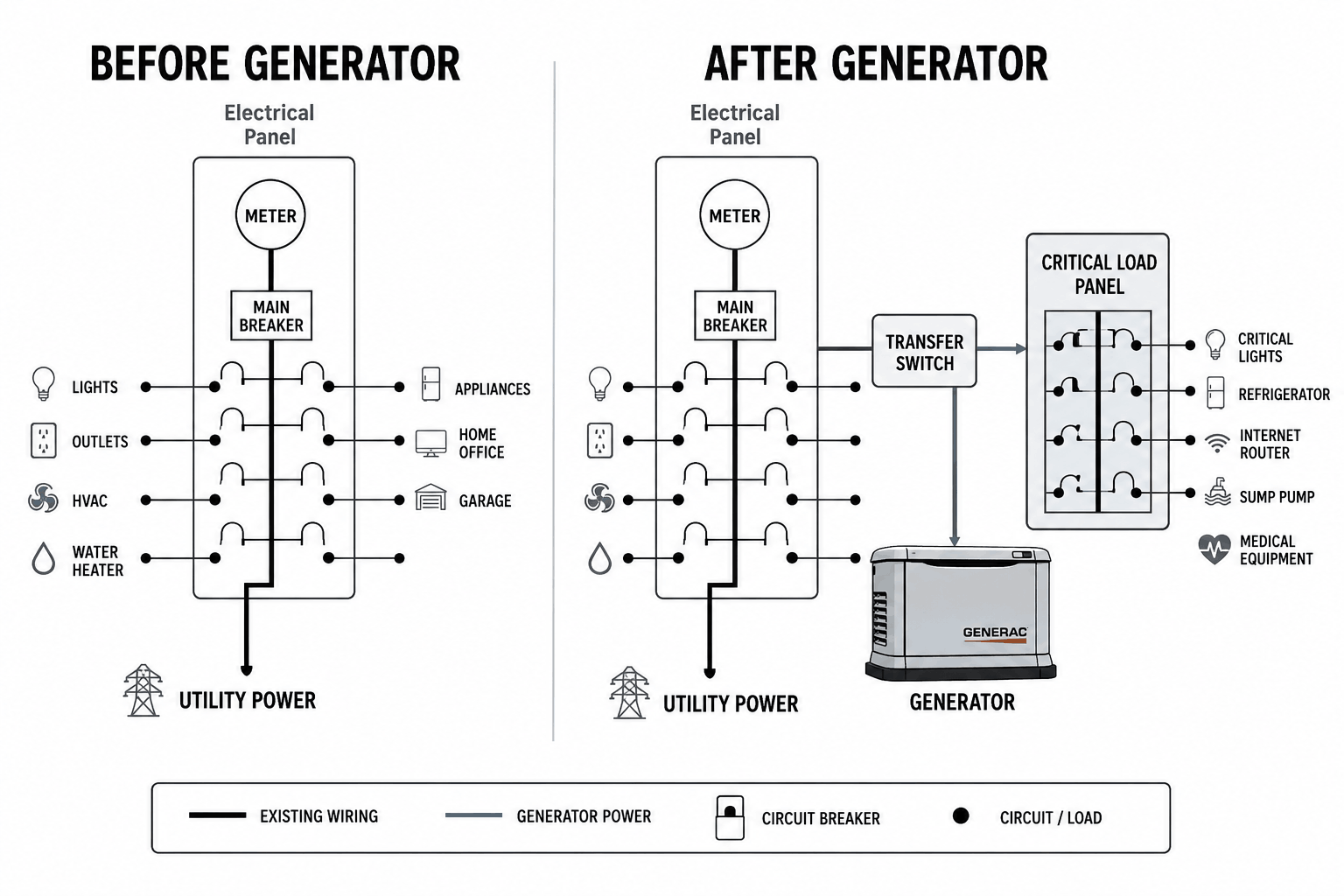
During normal operation, utility power supplies electricity to the building. When an outage happens, the automatic transfer switch detects the loss of power. It then signals the generator to start. Once the generator is ready, the transfer switch safely moves selected circuits from utility power to generator power.
The critical load panel receives power from the generator and distributes it to the circuits that have been selected as priorities. When utility power returns, the transfer switch moves those circuits back to the electrical grid and shuts the generator down. The entire process happens automatically and usually takes only a short time.
Why Not Power the Entire Building?
Many people assume that every standby generator powers an entire home or business. In some cases, that is true. However, whole-house and whole-building systems are often more expensive because they require larger generators. The more equipment you want to power, the larger the generator must be.
A larger generator usually means:
Higher equipment costs
More installation work
Greater fuel consumption
Increased maintenance
More space requirements
For many properties, powering only the essential circuits is the most practical solution. A critical load panel allows you to keep important systems running while reducing the size and cost of the generator system.
Why Critical Load Panels Matter in Florida
Florida weather can be unpredictable. Strong storms, hurricanes, and lightning strikes can interrupt power at any time. In Lakeland, Tampa, and surrounding areas, outages are often caused by:
- Hurricanes and Tropical Storms
High winds and falling trees can damage power lines and electrical equipment. Even if your property is not damaged, nearby utility infrastructure may be affected.
- Lightning Strikes
Florida experiences more lightning activity than most states. Lightning can damage electrical systems and cause unexpected outages.
- Summer Storms
Heavy rain, strong winds, and severe thunderstorms can disrupt power across local neighbourhoods and business districts.
- Utility Equipment Failures
Accidents, equipment problems, and maintenance work can also cause outages without warning. For homeowners, losing power can mean spoiled food, loss of comfort, and safety concerns.
For businesses, outages can result in:
Lost sales
Lower productivity
Customer service problems
Network disruptions
Revenue loss
Industrial facilities face even greater risks. A power interruption can stop production, damage equipment, and create costly downtime. A properly designed critical load panel helps reduce these risks by ensuring that the most important systems continue to receive power.
Benefits of a Critical Load Panel
A critical load panel offers several advantages.
- Better Generator Performance
The generator powers only the circuits that matter most. This helps prevent overloads and improves reliability.
- Lower Installation Costs
Because fewer circuits require backup power, a smaller generator may be enough for your needs.
- Reduced Fuel Use
Generators consume less fuel when they power fewer loads. This can be especially important during long outages.
- Improved Reliability
Keeping electrical demand under control helps the generator perform more efficiently during emergencies.
- Flexibility for Future Changes
As your needs change, circuits can often be added or adjusted within the system.
Which Circuits Should Be Included?
The answer depends on your property and your goals. Homeowners usually focus on safety, comfort, and convenience. Businesses often focus on operations, communication, and customer service. Industrial facilities typically prioritise production, monitoring, and safety systems. The best way to choose critical circuits is through a professional electrical assessment.
An experienced electrician can review your electrical system, identify priority loads, and design a backup power solution that fits your needs and budget.
At Hylton Electric LLC, we help customers throughout Lakeland, Tampa, and Polk County determine which circuits are most important and develop backup power systems that provide dependable protection when outages occur.
Critical Load Panel vs. Whole-House Generator Systems
Many property owners ask the same question: Should I install a critical load panel or a whole-house generator system? The answer depends on your power needs, budget, and goals.
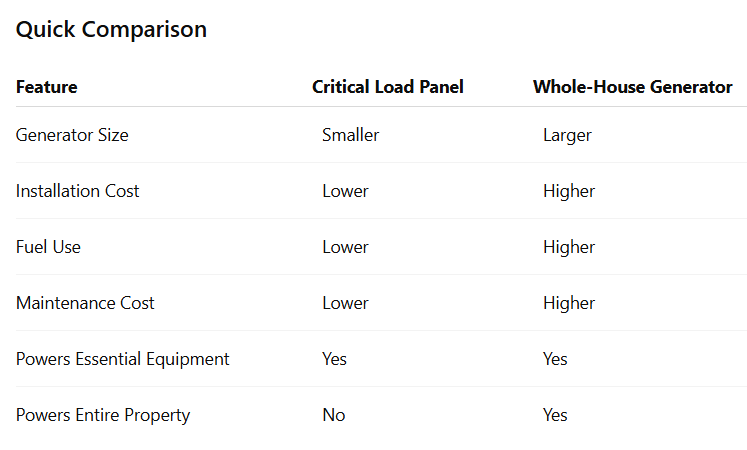
A whole-house generator can power most or all of your home during an outage. Lights, appliances, HVAC equipment, and other circuits continue to work much like they do during normal conditions.
This option offers the highest level of convenience. However, it also requires a larger generator. Larger generators usually cost more to buy, install, maintain, and fuel.
A critical load panel works differently. Instead of powering everything, it powers only the circuits that matter most. This allows the generator to focus on essential equipment.
As a result, many property owners can use a smaller generator and lower their overall project costs. For many homes and businesses in Lakeland, this is the most practical solution.
The best option depends on your needs. A professional electrical assessment can help you choose the right system.
Signs You May Need a Critical Load Panel
Many people do not think about backup power until the lights go out. By then, it is too late to prepare. If any of the situations below sound familiar, a critical load panel may be worth considering.
- You Lose Power Often
Frequent outages can disrupt daily life. Even short outages can create problems for your family or business.
- You Work From Home
Many people rely on computers and internet service to earn a living. Without power, work often comes to a stop. A critical load panel can keep those systems running.
- You Have Medical Equipment
Some medical devices require a constant power source. Backup power can help keep important equipment operating during an outage.
- Your Business Depends on Technology
Most businesses rely on computers, internet access, security systems, and communication equipment. When power goes out, productivity often stops.
- Downtime Costs You Money
Power outages can quickly become expensive. Lost sales, missed deadlines, and production delays can affect your bottom line.
- You Want Better Storm Protection
Florida weather can change fast. A backup power system helps you stay prepared before the next storm arrives.
Generator Sizing and Load Calculations
Choosing the right generator is important. A generator that is too small may struggle during an outage. On the other hand, a generator that is too large may cost more than necessary. That is why load calculations matter.
A load calculation measures how much power your critical circuits need. This helps determine the correct generator size.
What Affects Generator Size?
Several factors affect how much backup power you need.
These include:
Number of critical circuits
Air conditioning systems
Refrigerators and freezers
Water pumps
Medical equipment
Office equipment
Commercial machinery
Industrial systems
Some equipment needs extra power when it starts. Air conditioners, motors, and pumps are common examples. Your generator must handle both startup loads and normal operating loads.
Why Professional Load Assessments Matter
Many people guess when choosing a generator. That can create problems later. An undersized generator may overload during an outage. An oversized generator can increase costs without adding much value.
A professional electrician can evaluate:
Your electrical panel
Current power usage
Critical equipment
Future needs
Generator options
This helps create a system that fits your property and budget.
Residential Uses for Critical Load Panels
Many Florida homeowners invest in backup power because of storms and hurricanes. A critical load panel helps protect the systems you rely on most.
Common Residential Circuits
Homeowners often include:
Refrigerators
Freezers
Internet equipment
Medical devices
Security systems
Smoke alarms
Interior lighting
Garage door openers
Some homeowners also choose limited air conditioning circuits. The final setup depends on generator size and electrical demand.
Benefits for Homeowners
A critical load panel can help you:
Keep food cold
Stay connected
Improve safety
Protect medical equipment
Increase comfort
Reduce outage stress
For many families, these benefits make the investment worthwhile.
Commercial Uses for Critical Load Panels
Businesses often lose money when power goes out. Employees may be unable to work. Customers may be unable to make purchases. Important systems may shut down. A critical load panel helps keep key operations running.
Common Commercial Circuits
Many businesses prioritise:
Computer networks
Internet equipment
Security cameras
Alarm systems
Emergency lighting
Point-of-sale systems
Phone systems
Access control systems
These circuits support day-to-day operations and customer service.
Businesses That Benefit Most
Many industries use backup power systems, including:
Retail stores
Restaurants
Medical offices
Professional offices
Warehouses
Hotels
Schools
For these businesses, even a short outage can create problems.
Florida Electrical Code and Safety Requirements
Generator systems must be installed correctly. Poor installations can create serious safety risks. That is why electrical codes are important.
In Florida, many generator projects require:
Electrical permits
Inspections
Proper grounding
Transfer switches
Code-compliant wiring
One of the most important parts of the system is the transfer switch. A transfer switch safely moves power between the utility company and the generator. Without one, electricity can flow where it should not. This can damage equipment and create safety hazards.
Professional installation helps ensure your system works safely when you need it most. At Hylton Electric LLC, we install code-compliant backup power systems for homeowners, businesses, and industrial facilities throughout Lakeland, Tampa, Polk County, and nearby Florida communities.
Industrial Applications for Critical Load Panels
Industrial facilities often have the most at risk during a power outage. While homeowners may lose comfort and businesses may lose revenue, industrial operations can face production delays, equipment damage, missed deadlines, and costly downtime.
Many manufacturing plants, warehouses, processing facilities, and distribution centres depend on continuous power to operate efficiently. Even a brief outage can disrupt production schedules and affect critical operations.
A critical load panel helps protect the most important parts of an industrial facility. Instead of trying to power the entire building, the generator supplies electricity only to essential equipment. This approach improves reliability and helps reduce the size and cost of the backup power system.
Common circuits connected to industrial critical load panels include control systems, communication equipment, monitoring devices, safety systems, network infrastructure, and production controls. These systems play an important role in keeping operations safe and productive during an outage.
Every facility has different power needs. A professional electrical assessment helps identify which systems should remain operational and ensures the generator is sized correctly.
For many industrial companies, a critical load panel is more than a backup power solution. It is an important part of business continuity and risk management planning.
What to Expect During a Critical Load Panel Installation
Many property owners are unsure what happens during the installation process. While every project is unique, most installations follow the same basic steps.
The process starts with a consultation and electrical evaluation. During this visit, an electrician reviews the property’s electrical system, discusses backup power goals, and identifies the circuits that should remain active during an outage.
After the critical circuits are selected, load calculations are performed. This step determines how much power the generator will need to support those circuits safely.
Next, the system is designed. This includes choosing the critical load panel, transfer switch, generator, and any additional equipment needed for the project. Depending on local requirements, permits and inspections may also be necessary before installation begins.
During installation, the selected circuits are moved from the main electrical panel to the critical load panel. The generator and transfer switch are then connected and integrated into the system.
Once the installation is complete, the entire system is tested. The electrician verifies that the generator starts properly, transfers power correctly, and supports the selected circuits as expected. With proper maintenance, a professionally installed system can provide dependable backup power for many years.
What Affects the Cost of a Critical Load Panel Installation?
One of the first questions property owners ask is how much a critical load panel installation will cost. The answer depends on several factors because no two properties are exactly alike. Generator size is one of the biggest factors. Larger generators generally cost more than smaller units. The number of circuits included in the critical load panel can also affect pricing. More circuits often require additional labour and materials.
The condition of the existing electrical system is another important consideration. Some properties may need an electrical panel upgrade before a generator system can be installed safely.
Other factors that can influence project costs include:
Transfer switch requirements
Generator location
Fuel source availability
Permit and inspection fees
Electrical system complexity
Site accessibility
Trenching or conduit installation
Because every project is different, the best way to receive accurate pricing is through an on-site evaluation. At Hylton Electric LLC, we provide free estimates to help homeowners, businesses, and facility managers understand their options before making a decision.
Why Professional Installation Matters
Backup power systems involve much more than simply connecting a generator. These systems must be designed, installed, and tested correctly to ensure safe and reliable operation.
Improper wiring can create serious safety hazards. Poorly designed systems may fail during an outage when backup power is needed most. Code violations can also lead to inspection issues and costly repairs. Professional installation helps eliminate these risks.
- First, it helps ensure the system complies with current electrical codes and safety standards.
- Second, it protects your investment. A properly designed system is more likely to perform reliably during emergencies.
- Third, professional installation improves long-term performance. Correct generator sizing, proper wiring methods, and thorough testing all contribute to a dependable backup power system.
Working with a licensed electrical contractor also provides peace of mind. You can feel confident knowing your system has been installed by experienced professionals who understand generator and electrical system requirements.
Why Choose Hylton Electric LLC?
Choosing the right electrical contractor is just as important as choosing the right generator. At Hylton Electric LLC, we understand the challenges Florida property owners face during storms, hurricanes, and unexpected power outages. Our team designs backup power solutions that improve safety, reliability, and peace of mind.
We proudly serve residential, commercial, and industrial customers throughout Lakeland, Tampa, Polk County, and nearby communities. Whether you need a standby generator, critical load panel, transfer switch, or electrical panel upgrade, our experienced electricians can help. Customers choose Hylton Electric because of our commitment to quality workmanship and dependable service.
When you work with us, you benefit from:
Free estimates
Licensed electricians
Residential expertise
Commercial expertise
Industrial expertise
Code-compliant installations
Lifetime workmanship warranty
We take the time to understand your goals and recommend solutions that fit your needs and budget. Instead of pushing oversized systems or unnecessary upgrades, we focus on practical solutions that deliver long-term value.
Serving Lakeland, Tampa, and Surrounding Areas
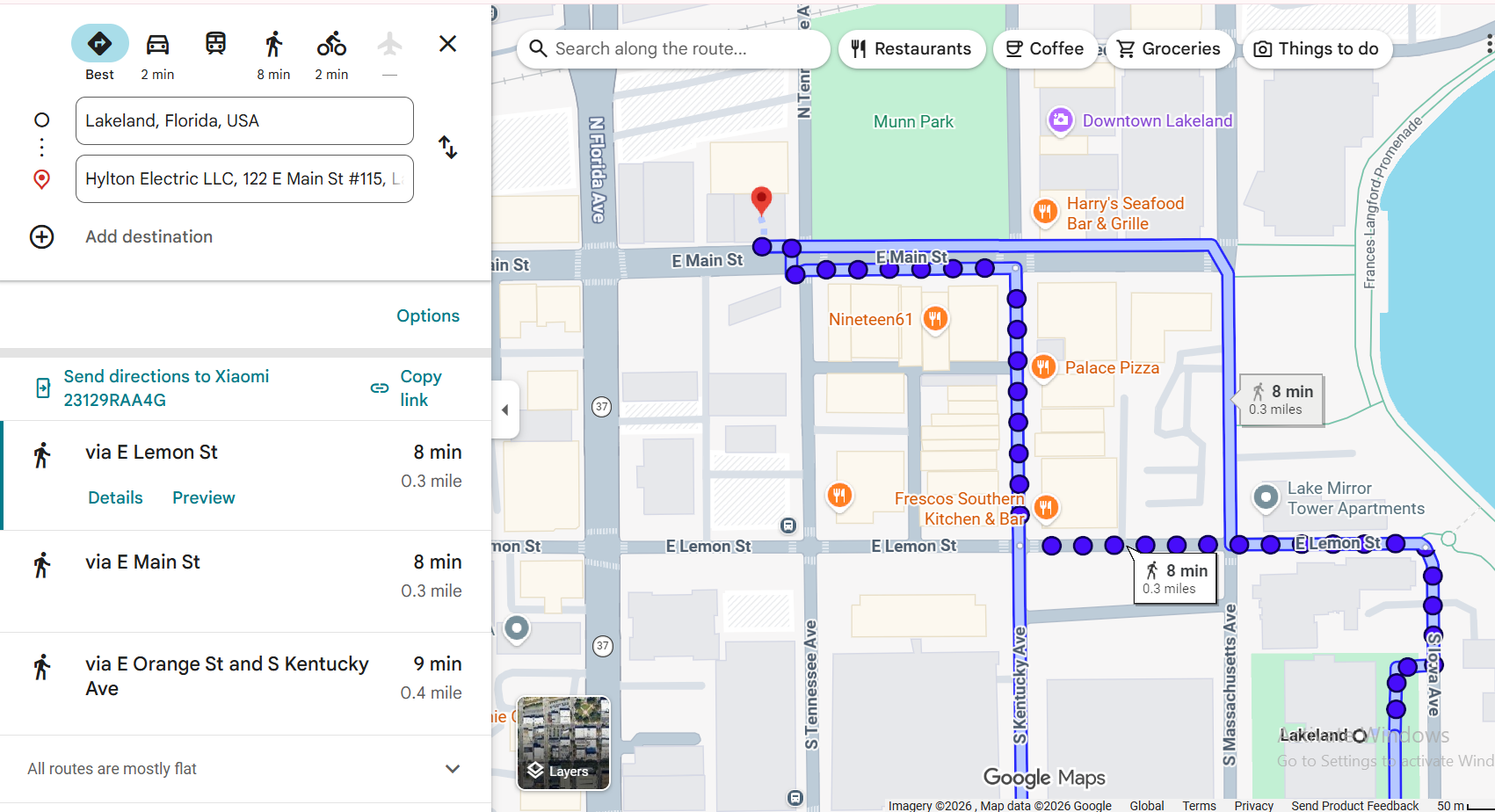
Hylton Electric proudly serves customers throughout Polk County and the Greater Tampa Area.
Our service area includes:
Lakeland
Tampa
Winter Haven
Bartow
Auburndale
Mulberry
Plant City
Brandon
Polk County
Nearby Central Florida communities
Because we work throughout the region, we understand the electrical challenges that Florida property owners face. From hurricane preparation to backup power planning, our team helps customers stay ready for unexpected outages.
Protect Your Property with Reliable Backup Power
Power outages can happen at any time. Hurricanes, severe storms, lightning strikes, and utility failures can leave homes and businesses without electricity when they need it most.
A critical load panel helps ensure that your most important systems continue operating during an outage. By prioritising essential circuits, you can improve generator performance, reduce energy demands, and maintain access to critical equipment.
For homeowners, this may mean protecting food, internet access, lighting, and medical devices. While for businesses, it may mean reducing downtime and continuing to serve customers. For industrial facilities, it may mean protecting production schedules, equipment, and critical operations.
The first step is proper planning. If you are considering a standby generator, critical load panel, or electrical panel upgrade, Hylton Electric LLC is ready to help.
Call +1 863-624-7000 today to schedule your free estimate. Our team can evaluate your electrical system, identify critical circuits, and recommend a backup power solution tailored to your property. When the next outage happens, you’ll have confidence knowing that reliable backup power is already in place.
Frequently Asked Questions About Critical Load Panels and Standby Generators
What is a critical load panel?
A critical load panel is a separate electrical panel that powers only the most important circuits during a power outage. Instead of sending generator power to the entire property, it supplies electricity to essential systems such as refrigerators, medical equipment, security systems, lighting, and internet devices.
Do I need a critical load panel with a standby generator?
Not always. Some standby generators can power an entire home or building. However, many property owners choose a critical load panel because it lowers generator size requirements, reduces installation costs, and helps improve fuel efficiency during long outages.
What circuits should be connected to a critical load panel?
The right circuits depend on your needs. Most homeowners choose refrigerators, freezers, lighting, internet equipment, security systems, and medical devices. Businesses often include computer networks, security equipment, communication systems, and point-of-sale equipment. Industrial facilities may prioritize control systems, monitoring equipment, and safety devices.
Can a standby generator power my entire home?
Yes. A standby generator can power an entire home if it is properly sized. However, many homeowners choose a critical load panel because it provides reliable backup power at a lower cost and often requires a smaller generator.
How much does a critical load panel cost?
The cost depends on several factors. These include generator size, the number of circuits being connected, transfer switch requirements, and the condition of the existing electrical system. The best way to get accurate pricing is through a professional electrical evaluation.
Can a critical load panel save money?
Yes. A critical load panel can reduce the amount of backup power you need. This often allows you to install a smaller generator, which can lower equipment, installation, maintenance, and fuel costs.
Can I add more circuits later?
In many cases, yes. Additional circuits can often be added if the generator has enough available capacity. An electrician can inspect your system and determine whether expansion is possible.
How long does installation take?
Most residential installations take one to two days. Larger commercial and industrial projects may take longer depending on the size and complexity of the electrical system.
What size generator do I need?
The right generator size depends on how much power your critical circuits require. A professional load calculation can help determine the correct generator size and prevent overloading during an outage.
Can a critical load panel power an air conditioner?
Yes, if the generator is large enough. Air conditioners require a significant amount of power, especially during startup. Many homeowners choose to power at least one cooling system during an outage.
What is an automatic transfer switch?
An automatic transfer switch is a device that detects a power outage and automatically switches your electrical system from utility power to generator power. When utility power returns, it safely switches the system back.
Do I need a transfer switch with a standby generator?
Yes. A transfer switch is an important safety device. It prevents dangerous backfeeding into utility lines and allows the generator to operate safely and correctly.
Are critical load panels a good option for businesses?
Yes. Critical load panels help businesses keep essential systems running during outages. This can reduce downtime, protect revenue, and improve customer service when utility power is unavailable.
How do industrial facilities use critical load panels?
Industrial facilities use critical load panels to keep important equipment running during outages. This may include control systems, monitoring equipment, communication systems, safety devices, and critical production equipment.
Do generator installations require permits in Florida?
In many cases, yes. Generator installations, transfer switches, and electrical panel modifications often require permits and inspections. Local requirements may vary depending on the project.
How often should a standby generator be serviced?
Most manufacturers recommend annual maintenance. Regular service helps ensure the generator operates properly when needed and can help extend the life of the equipment.
How long can a standby generator run?
It depends on the generator size, fuel source, and electrical demand. Many standby generators can run for extended periods as long as fuel is available and routine maintenance requirements are met.
Why is a critical load panel important during hurricane season?
A critical load panel helps keep essential systems running when hurricanes or severe storms cause power outages. This can help protect food, maintain internet access, power security systems, and support other important equipment.
Will a critical load panel increase my property’s value?
It can. Many buyers see standby generators and backup power systems as valuable upgrades, especially in areas where power outages are common.
Who installs critical load panels in Lakeland, Florida?
Hylton Electric LLC installs critical load panels, standby generators, transfer switches, and electrical panel upgrades for homeowners, businesses, and industrial facilities throughout Lakeland, Tampa, Polk County, and surrounding Florida communities.
Leave a Reply