
Key Electrical Statistics
Power outages are becoming more common across many parts of the country. For property owners, that means backup power is no longer just a convenience.
Here are a few important facts:
Nearly 70% of major U.S. power outages are linked to severe weather.
Florida experiences thousands of storm-related outages every year.
OSHA warns that improper generator connections can create deadly backfeed conditions.
Transfer switches help isolate generator power from utility power.
Emergency preparedness agencies recommend backup power planning in outage-prone areas.
These numbers highlight a simple fact. If you depend on electricity for comfort, safety, or business operations, a reliable backup power plan matters.
What Is a Generator Manual Transfer Switch?
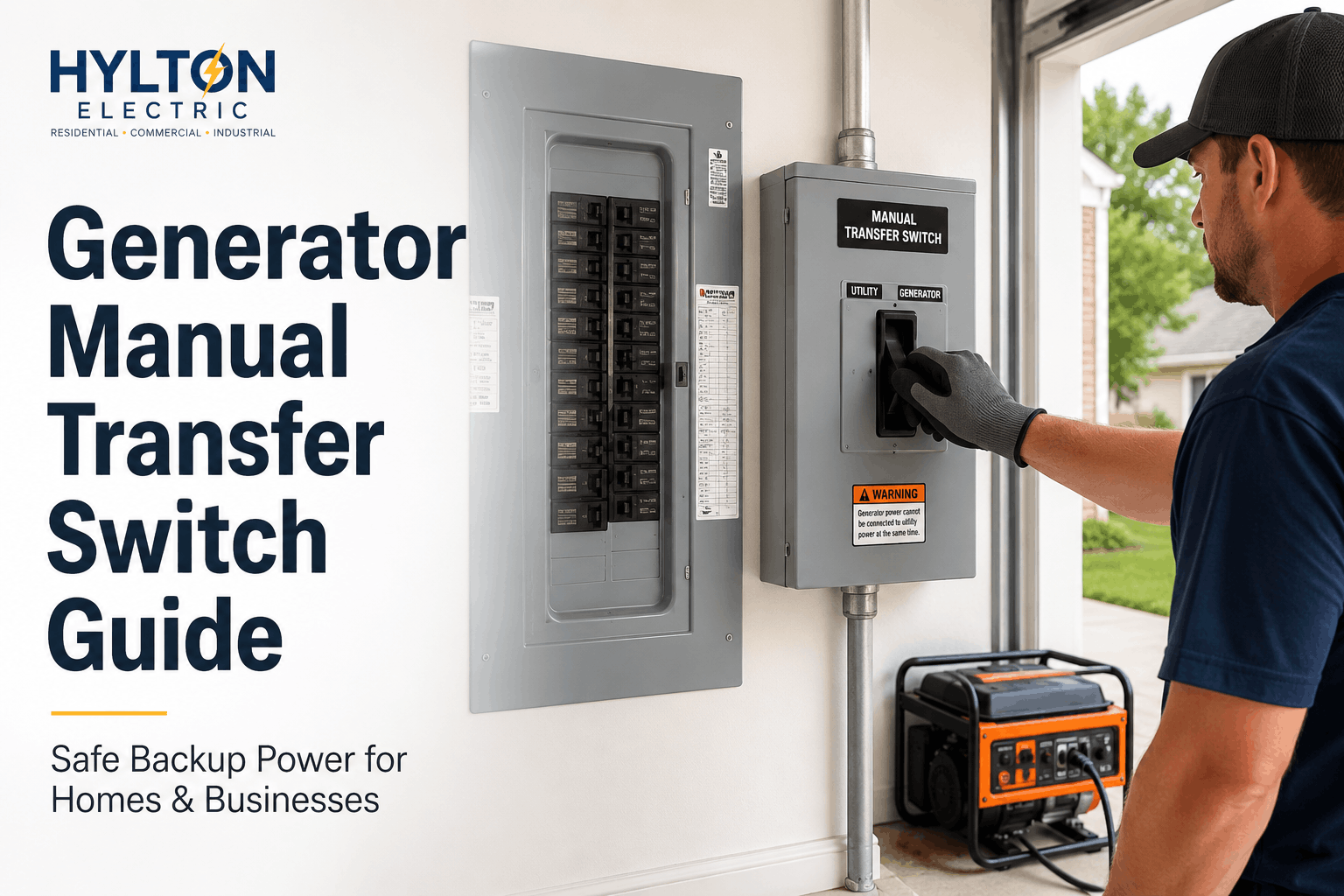
A generator manual transfer switch is a device that safely connects your generator to your electrical system.
When utility power goes out, the switch allows selected circuits to receive power from the generator instead. Once utility power returns, you switch everything back to normal. The process is simple, but the safety benefits are significant.
Without a transfer switch, electricity can flow in the wrong direction. This is called backfeeding. It can damage equipment and create serious risks for utility crews working to restore power.
Definition and Primary Purpose
The main job of a manual transfer switch is to safely change the source of power. During normal conditions, your home or building receives electricity from the utility company. During an outage, the transfer switch allows your generator to take over certain circuits.
This gives you access to important equipment such as:
Refrigerators
Freezers
Air conditioning systems
Internet equipment
Medical devices
Security systems
Office equipment
Instead of running extension cords everywhere, you can power key circuits through your existing electrical system.
How a Manual Transfer Switch Works
The switch has two power sources:
Utility power
Generator power
Under normal conditions, utility power supplies the connected circuits.
When the power goes out:
Start the generator.
Connect it to the generator inlet.
Move the transfer switch to the generator position.
Power selected circuits.
Once utility power returns:
Move the switch back to utility power.
Shut down the generator.
Resume normal operation.
The switch prevents both power sources from operating at the same time.
Why Transfer Switches Are Important
Safety is the biggest reason to install a transfer switch. A properly installed switch helps:
Prevent dangerous backfeeding
Protect utility workers
Reduce equipment damage
Improve generator safety
Support code-compliant installations
For many generator systems, a transfer switch is not just recommended. It is often required by electrical codes. That is why most homeowners and business owners choose professional installation.
Generator Manual Transfer Switch vs Other Backup Power Options
If you’re planning for power outages, you have a few options. However, not all backup power setups offer the same level of safety, convenience, or performance. Understanding the differences can help you choose the right solution for your home or business.
Manual Transfer Switch vs Automatic Transfer Switch
Both options move power from the utility to a generator. The biggest difference is how they operate. A manual transfer switch requires someone to start the generator and move the switch by hand.
An automatic transfer switch does the work for you. When the power goes out, it automatically starts the generator and transfers power to the building. Manual transfer switches are usually more affordable. They are a popular choice for portable generators and smaller backup power systems.
Automatic transfer switches cost more, but they provide a hands-free experience. They are commonly paired with whole-home and commercial standby generators.
Manual Transfer Switch vs Interlock Kit
An interlock kit is another way to connect a generator to your electrical panel. Instead of using a separate transfer switch, the interlock kit works with your main panel. It prevents the main breaker and generator breaker from being on at the same time.
Interlock kits often cost less than transfer switches. However, they require you to manage circuit loads carefully. A manual transfer switch is often easier to use because it clearly identifies which circuits receive backup power. For many homeowners, the simplicity of a transfer switch makes it the preferred option.
Manual Transfer Switch vs Extension Cords
Some people try to power appliances with extension cords during an outage. While this may work for a short time, it comes with several drawbacks. Extension cords can create tripping hazards. They can also overload circuits if used incorrectly.
In addition, extension cords cannot safely power hardwired equipment such as:
Central air conditioning systems
Well pumps
Security systems
Many commercial electrical loads
A manual transfer switch provides a safer and more organized solution. It allows selected circuits to operate through the building’s existing electrical system.
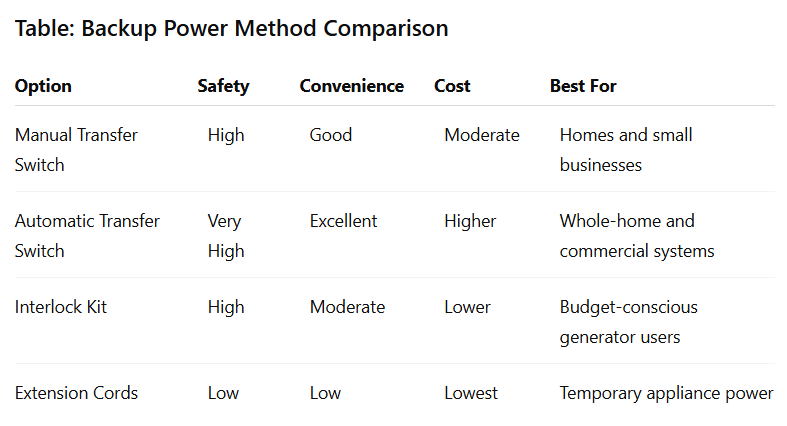
For most homeowners and small businesses, a manual transfer switch offers a good balance of safety, reliability, and cost.
When You Need a Generator Manual Transfer Switch
Not every property needs the same backup power setup. However, there are many situations where a manual transfer switch makes sense. If you rely on electricity for comfort, safety, or daily operations, it is worth considering.
Homes With Portable Generators
Many homeowners buy portable generators after experiencing a major storm. The generator provides power, but the question becomes how to use it safely. A manual transfer switch allows you to power important circuits without running multiple extension cords through the house.
Common circuits include:
Refrigerator
Freezer
Lights
Internet equipment
Garage door opener
Well pump
This setup is cleaner, safer, and easier to manage during an outage.
Small Commercial Buildings
Even a short outage can disrupt business operations. Retail stores, offices, restaurants, and service businesses often need power for:
Computers
Internet systems
Point-of-sale equipment
Refrigeration
Security systems
A manual transfer switch helps keep critical equipment operating until utility power returns.
Offices and Retail Facilities
Employees cannot work efficiently when essential systems are offline. Customers may also be affected. Backup power can help maintain productivity and reduce downtime. For many smaller commercial properties, a manual transfer switch provides a practical and cost-effective solution.
Critical Equipment Applications
Some equipment should not lose power unexpectedly.
Examples include:
Medical devices
Security systems
Communication equipment
Temperature-sensitive storage
A transfer switch helps ensure these important systems can receive generator power when needed.
Checklist: Signs a Transfer Switch Is a Smart Investment
A transfer switch may be a good fit if:
Your area experiences frequent outages
You already own a generator
You use multiple extension cords during outages
You want a safer backup power setup
You work from home
Your business depends on internet access
You have refrigerated inventory or supplies
You want faster recovery during storms
If several of these apply to your situation, a transfer switch may be one of the most valuable upgrades you can make to your backup power system.
Types of Generator Manual Transfer Switches
Not all transfer switches are the same. The right option depends on your generator size, electrical load, and backup power goals. Understanding the main types can make the selection process much easier.
Single-Circuit Transfer Switches
A single-circuit transfer switch powers one dedicated circuit.
These switches are often used for:
Well pumps
Furnaces
Sump pumps
Specific pieces of equipment
They are simple and affordable but provide limited backup power.
Multi-Circuit Transfer Switches
Multi-circuit transfer switches are among the most common choices for homes. They allow several important circuits to operate during an outage.
Typical circuits include:
Kitchen outlets
Refrigerators
Lighting
Internet equipment
Bedroom outlets
This option provides more flexibility while keeping costs manageable.
Whole-Panel Transfer Switches
Some properties need backup power for larger portions of the electrical system. A whole-panel transfer switch allows the generator to supply power to an entire panel rather than a few selected circuits.
These systems are often found in:
Large homes
Commercial buildings
Industrial facilities
They require proper generator sizing and professional installation.
Indoor vs Outdoor Rated Transfer Switches
Transfer switches are available in different enclosure types. Indoor-rated models are installed inside garages, utility rooms, or electrical rooms. Outdoor-rated models are designed to withstand weather exposure. The installation location will determine which type is appropriate.
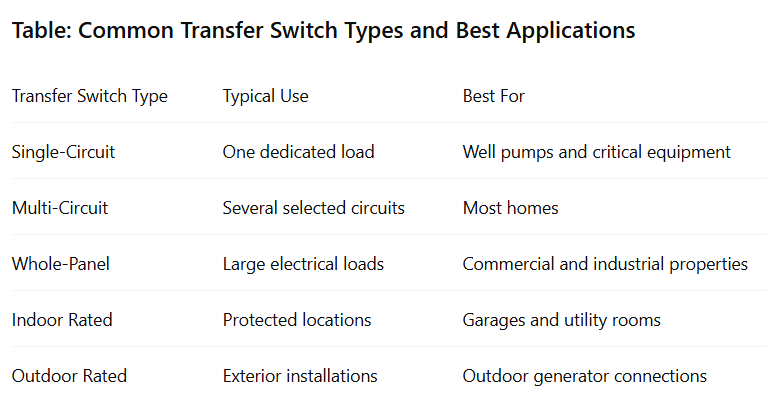
Choosing the right transfer switch starts with understanding your power needs. The next step is matching the switch to your generator and the circuits you want to keep running during an outage.
How to Choose the Right Manual Transfer Switch
Choosing the right transfer switch is not just about price. It also needs to match your generator, your electrical system, and the equipment you want to keep running during an outage. A switch that is too small may not support your needs. A switch that is too large may cost more than necessary. Here are the main factors to consider.
Matching Generator Capacity
Start with your generator size. Every generator has a maximum power output. Your transfer switch should be compatible with that output. For example, a small portable generator may only power a few essential circuits. A larger generator may support much more of the home or building. Before choosing a transfer switch, make a list of the equipment you want to run during an outage.
Common priorities include:
Refrigerators
Freezers
Lighting
Internet equipment
Security systems
Medical equipment
Office equipment
This helps determine how much power you actually need.
Understanding Amp Ratings
Transfer switches are rated by amperage. The amp rating tells you how much electrical current the switch can safely handle.
Common residential transfer switches include:
30-amp models
50-amp models
100-amp models
Commercial and industrial applications may require larger capacities. Choosing the correct rating is important for safety and performance.
Selecting Essential Circuits
Many people assume they need to power their entire property during an outage. In reality, most only need a handful of critical circuits.
Ask yourself:
Which equipment must stay on?
What affects safety?
What affects comfort?
What affects business operations?
Focusing on essential loads often reduces installation costs and generator requirements.
Residential vs Commercial Requirements
Residential and commercial properties have different backup power needs. Homeowners often focus on comfort and convenience. Business owners usually focus on minimizing downtime and protecting operations.
Commercial properties may need backup power for:
Computers
Servers
Security systems
Refrigeration
Communication systems
Customer service equipment
This often requires a more detailed power assessment.
Future Expansion Considerations
Think beyond today’s needs. You may add equipment later that requires backup power.
Examples include:
Additional office equipment
EV chargers
Security upgrades
HVAC equipment
Production equipment
Planning ahead can prevent costly modifications in the future.
Expert Tip
If you’re unsure which size transfer switch you need, start with a professional load calculation. A licensed electrician can identify critical circuits, calculate electrical demand, and recommend a transfer switch that fits both your current and future needs.
Not sure which transfer switch is right for your property? Hylton Electric helps homeowners, businesses, and industrial facilities across Lakeland, Polk County, and Tampa choose safe, code-compliant backup power solutions. Call +1 863-624-7000 or email ray@hylton-electric.com. Free quotes are available for commercial and industrial projects.
Step-by-Step Guide to Using a Generator Manual Transfer Switch
One of the biggest advantages of a manual transfer switch is its simplicity. Once installed, the process is straightforward. Still, it is important to follow the correct steps every time you use your generator.
Step 1 – Confirm Utility Power Failure
Before starting your generator, make sure the outage is affecting your property.
Check:
Interior lights
Neighboring buildings
Utility notifications, if available
This helps confirm that utility power has actually been lost.
Step 2 – Position the Generator Safely
Generators should always operate outdoors.
Place the unit:
Away from doors
Away from windows
Away from vents
On a stable surface
Never operate a generator inside a garage, basement, or enclosed space. Proper placement helps reduce the risk of carbon monoxide exposure.
Step 3 – Connect the Generator to the Inlet
Once the generator is in position, connect it to the generator inlet using the correct power cord.
Before connecting:
Inspect the cord for damage
Verify proper connections
Follow manufacturer instructions
Using the correct equipment helps prevent electrical issues.
Step 4 – Start the Generator
Start the generator according to the manufacturer’s instructions. Allow it to stabilize for a few minutes before transferring electrical loads. Listen for unusual sounds and check for warning indicators.
Step 5 – Transfer Selected Circuits
Move the transfer switch from utility power to generator power. At this point, the selected circuits begin receiving power from the generator. Start with your highest-priority circuits first. This helps manage generator load effectively.
Step 6 – Monitor Generator Load
Avoid overloading the generator.
Pay attention to:
Generator capacity
Connected equipment
Fuel consumption
If the generator struggles under load, disconnect nonessential equipment.
Step 7 – Return to Utility Power
Once utility service is restored:
Move the transfer switch back to utility power.
Turn off connected loads if needed.
Shut down the generator.
Disconnect the power cord.
Store equipment properly.
Following this process helps protect both the generator and the electrical system.
Checklist: Safe Operating Procedures
Always remember these safety practices:
Read the generator manual
Keep generators outdoors
Use approved power cords
Never overload the generator
Keep fuel stored safely
Test the system regularly
Follow local electrical codes
A few simple precautions can make backup power safer and more reliable.
Generator Manual Transfer Switch Installation Process
A transfer switch may look simple from the outside, but proper installation requires electrical knowledge and code compliance. Most installations should be performed by a licensed electrician.
Site Assessment
The process starts with evaluating the property.
The electrician reviews:
Existing electrical service
Panel condition
Generator size
Circuit requirements
Installation location
This helps determine the best setup.
Load Calculation
Next comes a load calculation. This step identifies how much power is needed during an outage. The goal is to ensure the generator and transfer switch can safely handle the selected circuits.
Transfer Switch Placement
The transfer switch is usually installed near the main electrical panel.
Proper placement helps:
Simplify wiring
Improve accessibility
Support maintenance and testing
The exact location depends on the property layout.
Generator Inlet Installation
A generator inlet provides a dedicated connection point for the generator. Instead of running cords through windows or doors, power enters the building through a safe and code-compliant connection.
Electrical Panel Connections
The transfer switch is then connected to the selected circuits. This step requires careful wiring and testing. Proper installation ensures utility power and generator power remain isolated from one another.
Testing and Commissioning
Before the project is complete, the system should be tested.
Testing confirms:
The switch operates correctly
Connected circuits receive power
Generator power transfers properly
Safety mechanisms function as intended
This final step helps ensure reliable performance during an actual outage.
Step-by-Step Installation Overview
A typical project follows these stages:
Site evaluation
Load calculation
Equipment selection
Permit approval
Installation
Inspection
Testing and final verification
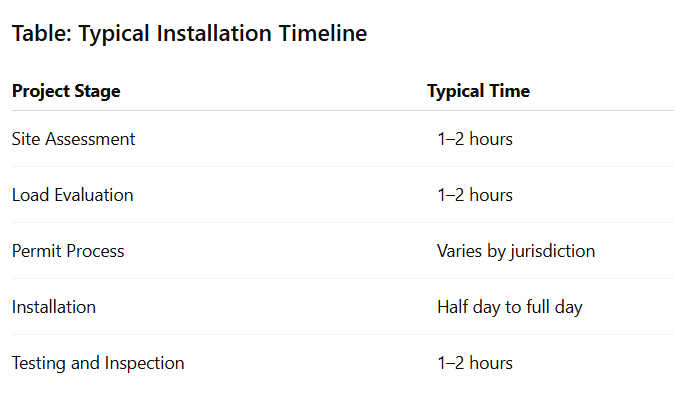
The exact timeline depends on the property’s electrical system, generator size, and local permitting requirements.
Generator Manual Transfer Switch Cost Guide in Florida
One of the most common questions property owners ask is simple: how much does a manual transfer switch cost?
The answer depends on several factors. The type of switch, the number of circuits, labor requirements, and the condition of the existing electrical system can all affect the final price.
While every project is different, understanding the typical cost ranges can help you plan your budget.
Transfer Switch Equipment Costs
The transfer switch itself is only one part of the project.
Basic manual transfer switches designed for a few circuits typically cost less than larger systems designed for multiple circuits or whole-panel applications.
In general, equipment costs increase when:
More circuits are included
Higher amp ratings are required
Commercial-grade equipment is used
Weatherproof enclosures are needed
The right choice depends on your backup power goals.
Installation Labor Costs
Labor is often a significant part of the total project cost.
A licensed electrician must:
Evaluate the electrical system
Install the transfer switch
Connect selected circuits
Install the generator inlet
Test the system
More complex installations require additional labor time.
For example, a transfer switch installed next to a modern electrical panel is usually easier than one installed on an older system that needs upgrades.
Permit and Inspection Costs
Many Florida jurisdictions require permits and inspections for transfer switch installations.
Permit requirements vary by city and county.
These inspections help verify that the installation meets current electrical codes and safety standards.
While permits add to the project cost, they help protect property owners from future compliance issues.
Residential Installation Cost Range
Most residential projects fall within a moderate price range.
The total cost depends on:
Generator size
Number of circuits
Electrical panel condition
Installation complexity
A simple installation for a portable generator typically costs less than a system designed to support larger portions of the home.
Commercial Installation Cost Range
Commercial installations are often more complex.
Many businesses need backup power for:
Computer systems
Refrigeration
Security equipment
Communication systems
Customer-facing operations
Because of these requirements, commercial projects may involve larger transfer switches and more extensive electrical work.
Table: Florida Generator Transfer Switch Cost Breakdown
ItemLow CostAverage CostHigh CostManual Transfer Switch Equipment$300$700$1,500+Generator Inlet Installation$150$350$700+Electrical Labor$500$1,200$3,000+Permits and Inspections$50$200$500+Total Residential Project$1,000$2,500$5,000+Total Commercial Project$2,000$5,000$15,000+
Actual costs vary by property type, electrical system condition, and project scope.
Factors Affecting Total Cost
Several factors influence pricing.
The biggest factors include:
Generator size
Number of circuits
Transfer switch capacity
Panel accessibility
Permit requirements
Existing electrical upgrades needed
In some cases, the transfer switch is only part of the project. Older electrical panels may need repairs or upgrades before installation can move forward.
Investing in a properly installed transfer switch often costs far less than dealing with damaged equipment or unsafe generator connections later.
Common Generator Manual Transfer Switch Problems
Manual transfer switches are generally reliable. However, like any electrical equipment, problems can occur over time.
Knowing the most common issues can help you spot problems early.
Overloaded Circuits
One of the most common problems is overloading.
This happens when too many devices run at the same time and exceed the generator’s capacity.
Signs may include:
Tripped breakers
Generator shutdowns
Flickering lights
Reduced equipment performance
A load calculation helps prevent this issue.
Incorrect Circuit Selection
Sometimes the wrong circuits are connected to the transfer switch.
For example, large appliances may consume more power than expected.
This can leave less capacity available for critical equipment.
Before installation, it helps to identify which circuits truly matter during an outage.
Generator Sizing Issues
Even a perfectly installed transfer switch cannot solve an undersized generator.
If the generator cannot produce enough power, equipment may not operate correctly.
Common signs include:
Frequent overload warnings
Generator strain
Inconsistent power delivery
The generator and transfer switch should always be sized together.
Wiring Problems
Loose or damaged wiring can create performance and safety issues.
Potential warning signs include:
Burn marks
Warm connections
Unusual odors
Intermittent power loss
Electrical wiring should be inspected by a qualified electrician if any of these symptoms appear.
Corrosion and Outdoor Exposure
Outdoor equipment faces constant exposure to moisture, humidity, and weather.
Over time, corrosion can affect:
Connections
Enclosures
Terminals
Generator inlets
Regular inspections help catch these problems before they become serious.
Table: Common Problems and Solutions
ProblemPossible CauseRecommended SolutionBreakers Trip FrequentlyCircuit overloadReduce load and review circuit selectionGenerator Struggles Under LoadUndersized generatorPerform a load assessmentNo Power During TransferWiring or switch issueSchedule professional inspectionCorroded ComponentsWeather exposureReplace damaged partsInconsistent OperationLoose connectionsTighten and inspect wiring
Most problems can be avoided with proper installation, routine testing, and regular maintenance.
Safety Rules Every Property Owner Should Follow
Safety should always come first when using a generator and transfer switch.
A few simple precautions can prevent injuries, equipment damage, and costly repairs.
Never Backfeed a Panel
Backfeeding is one of the most dangerous generator mistakes.
It occurs when generator power flows into utility lines instead of remaining inside the building.
This creates serious risks for utility workers and emergency crews.
A properly installed transfer switch helps prevent this condition.
Follow Manufacturer Instructions
Every generator and transfer switch is slightly different.
Always read and follow the manufacturer’s instructions for:
Startup procedures
Shutdown procedures
Maintenance requirements
Operating limits
Following these guidelines helps ensure safe operation.
Keep Generators Outdoors
Generators produce carbon monoxide.
This gas is colorless, odorless, and dangerous.
Always place generators:
Outdoors
Away from windows
Away from doors
Away from air intakes
Never operate a generator inside a home, garage, or enclosed area.
Test Equipment Regularly
A backup power system is only useful if it works when needed.
Regular testing helps identify problems before an emergency occurs.
Many property owners perform:
Monthly visual inspections
Quarterly generator testing
Annual electrical inspections
Consistent testing improves reliability.
Schedule Professional Inspections
Even if everything appears to be working properly, periodic inspections are a good idea.
A licensed electrician can identify:
Loose connections
Wear and tear
Corrosion
Code compliance concerns
Small issues are often easier and less expensive to fix when caught early.
Safety Checklist for Homeowners and Businesses
Use this checklist to improve safety:
Install a code-compliant transfer switch
Follow the generator manufacturer’s guidelines
Test the system regularly
Avoid overloading circuits
Keep generators outdoors
Schedule professional inspections
Replace damaged equipment promptly
A safe backup power system starts with proper planning and regular maintenance.
When to Hire a Licensed Electrician
Some electrical projects are suitable for DIY work. A generator transfer switch installation is usually not one of them. A transfer switch connects directly to your electrical system. If it is installed incorrectly, it can create safety risks, equipment damage, and code violations. That is why most property owners hire a licensed electrician for this type of work.
New Transfer Switch Installation
Installing a transfer switch involves much more than mounting a box on a wall.
The project often includes:
Evaluating the electrical panel
Selecting appropriate circuits
Running new wiring
Installing a generator inlet
Testing the entire system
A licensed electrician can make sure everything is installed safely and operates as intended.
Electrical Panel Upgrades
Sometimes the transfer switch is not the only issue. Older electrical panels may not have enough capacity for a new generator connection. In other cases, the panel may show signs of wear or damage.
Common warning signs include:
Frequent breaker trips
Rust inside the panel
Overheating components
Outdated equipment
If these issues are present, panel upgrades may be necessary before a transfer switch can be installed safely.
Commercial Generator Systems
Commercial properties often have more complex electrical requirements than homes.
Businesses may rely on:
Computer networks
Security systems
Refrigeration equipment
Communication systems
Customer service operations
Because these systems are critical to daily operations, professional design and installation become even more important. A licensed electrician can help determine which circuits should receive backup power and how much generator capacity is needed.
Code Compliance and Permits
Electrical codes exist to protect people and property. Most generator transfer switch installations require compliance with local codes and permitting requirements.
A licensed electrician can help with:
Permit applications
Code requirements
Inspections
Documentation
This helps reduce delays and ensures the installation meets current standards.
Troubleshooting Existing Systems
If your transfer switch is not working correctly, professional troubleshooting is often the safest option.
Call an electrician if you notice:
Frequent breaker trips
Burning smells
Unusual noises
Power transfer failures
Visible corrosion
Damaged wiring
These issues should be addressed before the next outage occurs.
Case Example: Small Business Backup Power Upgrade
Imagine a small office in Polk County that experiences several storm-related outages each year. The owner already has a portable generator. However, employees lose internet access and cannot use essential office equipment during outages.
After a professional assessment, a manual transfer switch is installed to power:
Internet equipment
Network hardware
Office lighting
Key computer stations
The result is a safer setup and less downtime during future outages. While every project is different, this example shows how a properly planned backup power system can improve reliability without requiring a large investment.
Generator Manual Transfer Switch Trends and Future Considerations
Backup power needs continue to change. As homes and businesses become more dependent on electricity, property owners are paying closer attention to outage preparedness. Several trends are shaping the future of generator systems and transfer switches.
Smart Generator Monitoring
Many newer generators now include remote monitoring features.
These systems allow owners to:
Check generator status
Monitor operating conditions
Receive maintenance alerts
Track performance data
This added visibility can help identify issues before they become major problems.
Hybrid Generator and Battery Systems
Battery storage systems are becoming more common.
Some properties now combine:
Generators
Battery storage
Solar energy systems
These hybrid setups can provide additional flexibility during outages. While they are not necessary for every property, interest in these systems continues to grow.
Increased Storm Preparedness
Florida residents understand the impact of severe weather. As storms become more frequent and more intense, many homeowners and businesses are investing in stronger backup power plans.
This includes:
Portable generators
Standby generators
Transfer switches
Electrical system upgrades
Preparing before storm season often reduces stress when outages occur.
Growing Demand for Business Continuity Planning
For many businesses, power loss means lost productivity and lost revenue. Because of this, backup power is increasingly viewed as part of overall business continuity planning. Property owners are looking beyond emergency response and focusing on how quickly operations can continue during an outage. A transfer switch may seem like a small component, but it plays an important role in keeping critical systems running when utility power is unavailable.
Conclusion
A generator manual transfer switch is one of the safest ways to connect a generator to your electrical system. It allows selected circuits to receive backup power while helping prevent dangerous backfeeding and other electrical hazards.
For many homeowners, it provides a simple and reliable way to keep essential equipment running during an outage. For businesses, it can help reduce downtime and support critical operations when utility power is interrupted. The right transfer switch depends on several factors, including your generator size, electrical load, and backup power goals.
Whether you are planning a new installation or upgrading an existing system, safety should always come first. Proper sizing, professional installation, and routine testing all play an important role in long-term performance. A well-designed backup power system can provide peace of mind long before the next storm arrives.
Thinking about adding a generator transfer switch to your property?
Hylton Electric helps residential, commercial, and industrial customers throughout Lakeland, Polk County, and Tampa with safe, code-compliant electrical solutions. Call +1 863-624-7000 or email ray@hylton-electric.com. Free quotes are available for commercial and industrial projects.
FAQs About Generator Manual Transfer Switch Guide
What does a manual transfer switch do?
A manual transfer switch safely changes the source of power from the utility company to a generator during an outage. Instead of using extension cords throughout a property, the switch allows selected electrical circuits to receive generator power through the existing electrical system.
Key benefits include:
Improved safety
Better organization
Reduced risk of backfeeding
Easier generator operation
It is one of the most common solutions for portable generator installations.
Is a manual transfer switch required for a generator?
In many situations, yes. Electrical codes generally require a safe transfer method whenever a generator is connected to a building’s electrical system. A transfer switch helps ensure that utility power and generator power cannot operate simultaneously.
Requirements may vary depending on:
Property type
Generator type
Local electrical codes
A licensed electrician can determine what is required for your specific installation.
Can I connect a portable generator without a transfer switch?
While you can power individual appliances with extension cords, connecting a generator directly to your home’s wiring without a proper transfer device is unsafe.
Doing so can create backfeeding hazards that may:
Injure utility workers
Damage equipment
Violate electrical codes
For most properties, a transfer switch provides the safest and most practical solution.
What size manual transfer switch do I need?
The correct size depends on:
Generator capacity
Number of circuits
Electrical load requirements
Smaller generators often use 30-amp transfer switches, while larger systems may require 50-amp or higher-rated equipment. A professional load calculation is the best way to determine the proper size.
What is the difference between a transfer switch and an interlock kit?
Both options allow generator power to connect safely to a building. A transfer switch uses dedicated switching equipment for selected circuits. An interlock kit works directly with the electrical panel and prevents the main breaker and generator breaker from operating at the same time. Both can be safe when installed correctly. The best choice depends on the property and backup power goals.
How much does manual transfer switch installation cost in Florida?
The cost of installing a manual transfer switch in Florida depends on several factors. These include the size of the transfer switch, the number of circuits being connected, permit requirements, and the condition of the existing electrical system. A simple residential installation is usually less expensive than a commercial project with multiple critical circuits.
The total cost may include:
Transfer switch equipment
Generator inlet installation
Electrical labor
Permits and inspections
Any required panel upgrades
Properties with older electrical panels may require additional work before installation can begin. The best way to get an accurate price is through a site assessment and load evaluation performed by a licensed electrician.
Can a manual transfer switch power an entire house?
It depends on the size of both the transfer switch and the generator.
Many manual transfer switches are designed to power selected circuits rather than the entire home. This approach helps prioritize important loads such as refrigeration, lighting, internet equipment, and medical devices.
Some larger transfer switch systems can support much more of the home’s electrical system. However, the generator must also be large enough to handle the demand.
Before deciding, consider:
Total electrical load
Generator capacity
Critical appliances
Budget considerations
For most homeowners, powering essential circuits provides a practical balance between performance and cost during an outage.
Are manual transfer switches safe?
Yes, manual transfer switches are very safe when they are properly installed and used correctly. Their primary purpose is to prevent utility power and generator power from connecting at the same time. This protection helps reduce the risk of backfeeding, which can endanger utility workers and damage electrical equipment.
Additional safety benefits include:
Controlled power transfer
Reduced wiring risks
Improved circuit management
Better generator operation
Like any electrical equipment, transfer switches should be inspected periodically and used according to manufacturer guidelines. Professional installation also plays an important role in long-term safety and reliability.
How long does installation take?
Most residential transfer switch installations can be completed within a single day. However, the total timeline depends on several factors, including:
Project complexity
Generator size
Number of circuits
Permit requirements
Electrical panel condition
Some projects move quickly because the electrical panel is already suitable for the installation. Others may require additional upgrades before work can begin.
A typical project often includes:
Site assessment
Equipment selection
Permit approval
Installation
Testing and inspection
Commercial and industrial projects may require additional planning and coordination, which can increase the overall timeline.
Can businesses use manual transfer switches?
Yes. Many businesses use manual transfer switches as part of their backup power strategy. They are often a practical solution for smaller commercial properties that do not require a fully automatic standby generator system.
A manual transfer switch can help power:
Office equipment
Internet systems
Security systems
Refrigeration units
Communication equipment
During an outage, employees can manually transfer power to the generator and keep important operations running. For larger facilities with critical processes, an automatic transfer switch may be a better option. The right solution depends on how much downtime a business can tolerate and which systems must remain operational.
Do transfer switches require maintenance?
Yes, although transfer switches generally require less maintenance than generators. Regular inspections help ensure the equipment remains ready for the next outage.
Recommended maintenance may include:
Visual inspections
Checking wiring connections
Looking for corrosion
Testing the transfer operation
Verifying breaker condition
Many property owners perform routine checks several times per year, especially before storm season. A professional inspection can also identify minor issues before they lead to equipment failure. Keeping the transfer switch in good condition helps improve reliability when backup power is needed most.
What happens if a transfer switch fails?
A failed transfer switch may prevent power from reaching the selected circuits during an outage. The exact symptoms depend on the nature of the problem.
Possible signs include:
Power transfer failures
Tripped breakers
Burn marks
Unusual noises
Intermittent operation
In some cases, worn components or loose connections may be responsible. In others, corrosion or age-related wear may be the cause.
If a transfer switch is not operating correctly, it should be inspected by a licensed electrician. Continuing to use damaged electrical equipment can create safety concerns and increase the risk of additional problems.
Can I install a manual transfer switch myself?
While some experienced individuals may be capable of electrical work, most transfer switch installations should be handled by a licensed electrician. The installation involves direct connections to the electrical panel and must comply with local electrical codes.
Mistakes can lead to:
Electrical shock hazards
Equipment damage
Failed inspections
Backfeeding risks
Code violations
Professional installation helps ensure the system is safe, reliable, and properly sized for the generator. For most homeowners and business owners, hiring a qualified electrician is the safest and most cost-effective choice.
How often should I test my generator transfer switch?
Testing is one of the best ways to make sure your backup power system will work when you need it. Many electricians recommend checking the system several times each year, especially before hurricane season.
A basic test may include:
Starting the generator
Operating the transfer switch
Verifying circuit power
Checking for unusual sounds
Inspecting visible components
Annual professional inspections are also a good idea. They can identify wear, corrosion, or electrical issues that may not be obvious during routine testing. Regular testing improves reliability and gives you confidence that the system is ready for the next power outage.
Leave a Reply